
Quick Answer: Sustainable footwear manufacturing in 2026 means verified inputs (LWG-rated tanneries, REACH-compliant leathers), lower-impact processes (water-based adhesives, closed-loop water use), and documented compliance your retail partners can audit. Expect roughly a 15-30% FOB premium over conventional production, and expect buyers to ask for certificate numbers rather than claims.
Sustainable footwear manufacturing is no longer a niche talking point. In 2026, it sits at the center of procurement decisions, regulatory compliance, and brand differentiation for B2B buyers worldwide.
Whether you’re building a private label brand, sourcing for a retail chain, or managing a cross-border e-commerce catalog, the pressure to go greener is real — and it’s accelerating. EU regulations, US import scrutiny, and consumer expectations are converging into a single message: prove your supply chain is responsible, or lose shelf space.
This guide breaks down exactly what sustainable footwear manufacturing looks like in practice — from raw materials to certifications to cost modeling.
Table of Contents
- Why Does Sustainability Now Shape Footwear Sourcing?
- What Eco-Friendly Leather Options Should B2B Buyers Know?
- Which Sole Materials Are Sustainable in 2026?
- Which Manufacturing Processes Reduce Environmental Impact?
- Which Certifications Matter for Footwear: LWG, OEKO-TEX, EU Ecolabel?
- How Much More Does Sustainable Footwear Production Cost?
- How Do You Communicate Sustainability to Your Buyers?
- FAQ
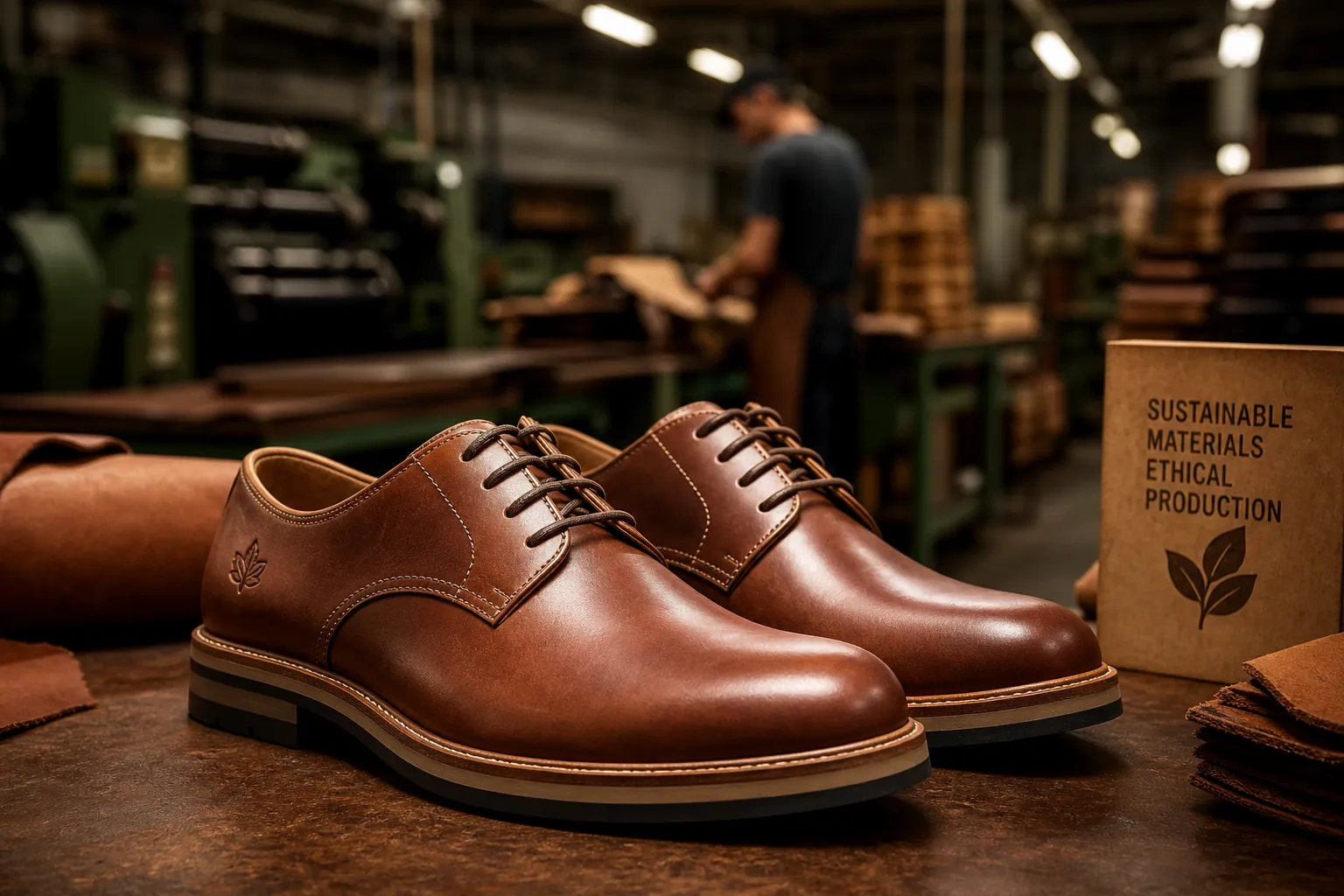
Why Does Sustainability Now Shape Footwear Sourcing?
As of 2026, industry estimates put global footwear output at well over 20 billion pairs a year (World Footwear annual reviews have reported figures around 23 billion), generating significant volumes of chemical waste, water consumption, and carbon emissions. Regulatory bodies are responding with hard deadlines.
The EU’s Green Deal and Corporate Sustainability Reporting Directive (CSRD) now requires large companies — and increasingly their suppliers — to disclose environmental impact data. For footwear importers selling into Europe, this means your manufacturer’s processes are now your compliance problem too.
On the demand side, B2B buyers are fielding pressure from their own retail partners. Major department stores and online platforms in Germany, the UK, and Scandinavia now require sustainability documentation as part of vendor onboarding.
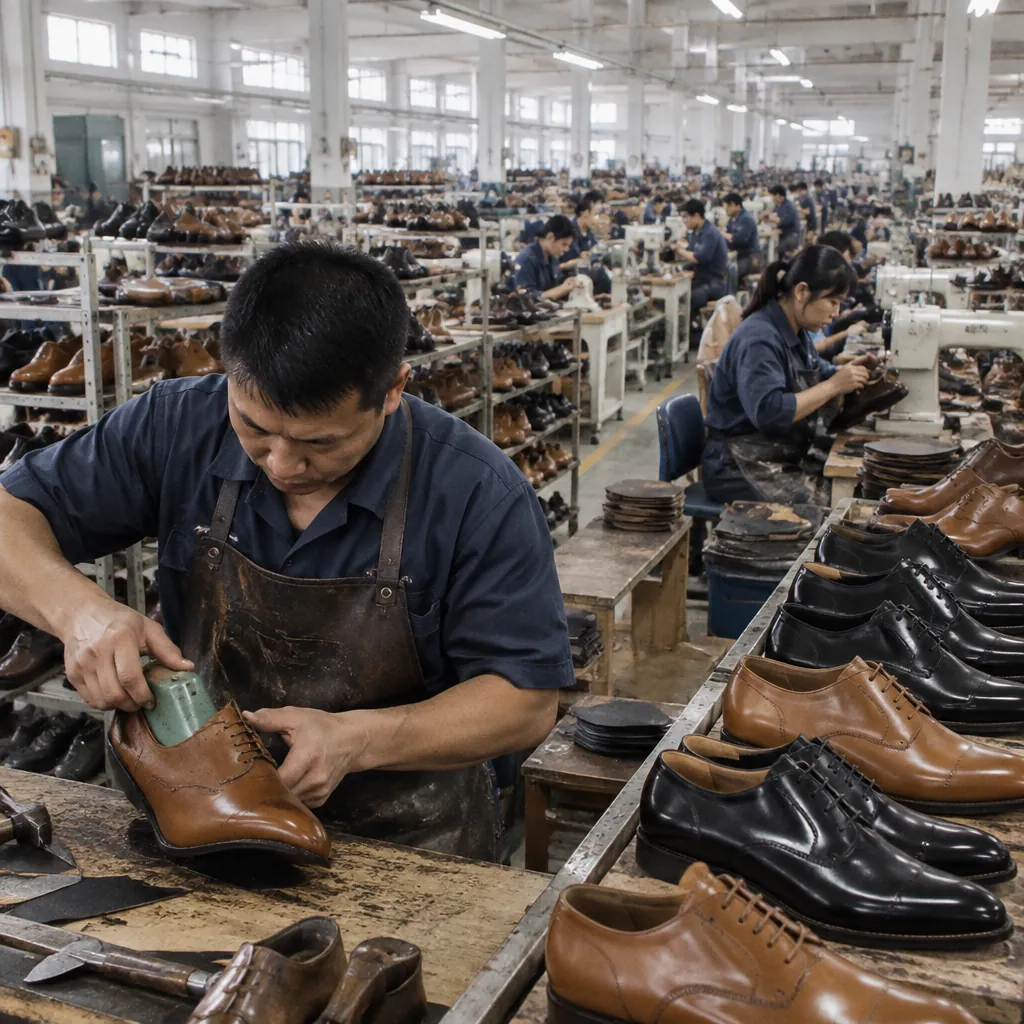
At Wincheer Shoes, established in 2007 and producing 500,000+ pairs annually from production lines in Jiangmen, Guangdong (about 1.5 hours from Guangzhou), we hold CE, REACH, and RoHS certifications, with footwear tested to EN ISO 20347 — compliance benchmarks that directly address chemical safety and environmental standards. These certifications aren’t marketing tools; they’re the baseline documentation that gets you past procurement gatekeepers in regulated markets.
Sourcing from a factory without these credentials in 2026 is a commercial risk, not just an ethical one.
What Eco-Friendly Leather Options Should B2B Buyers Know?
Vegetable-Tanned Leather
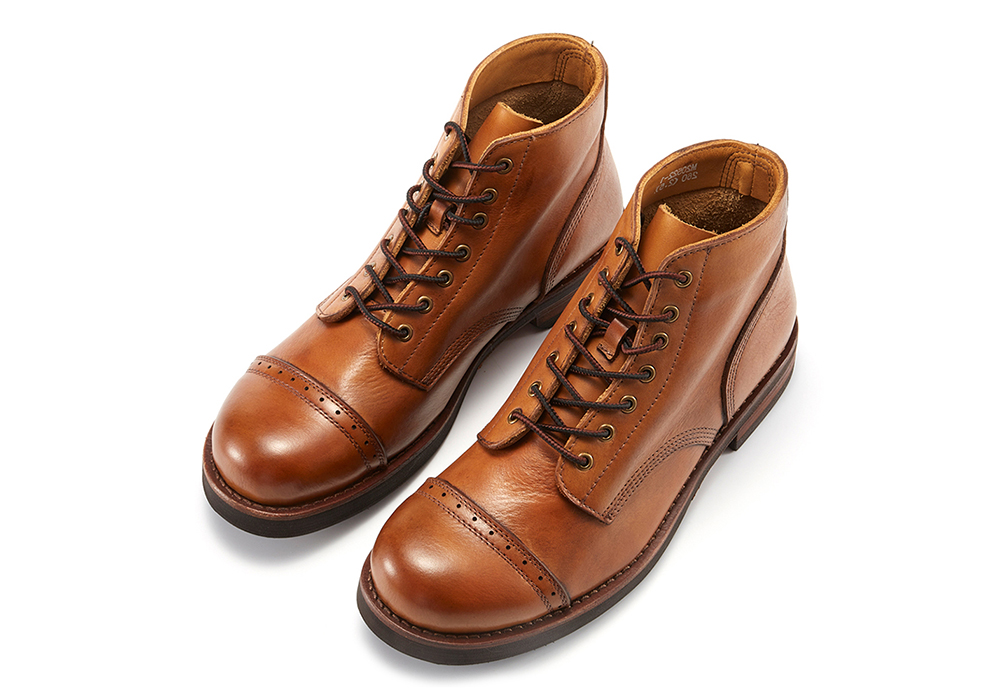
Vegetable tanning uses plant-based tannins — oak bark, chestnut, quebracho — instead of chromium salts. The process takes 30–60 days versus 1–2 days for chrome tanning, which is why it costs more. But the output is biodegradable, develops a natural patina, and carries no heavy metal residue.
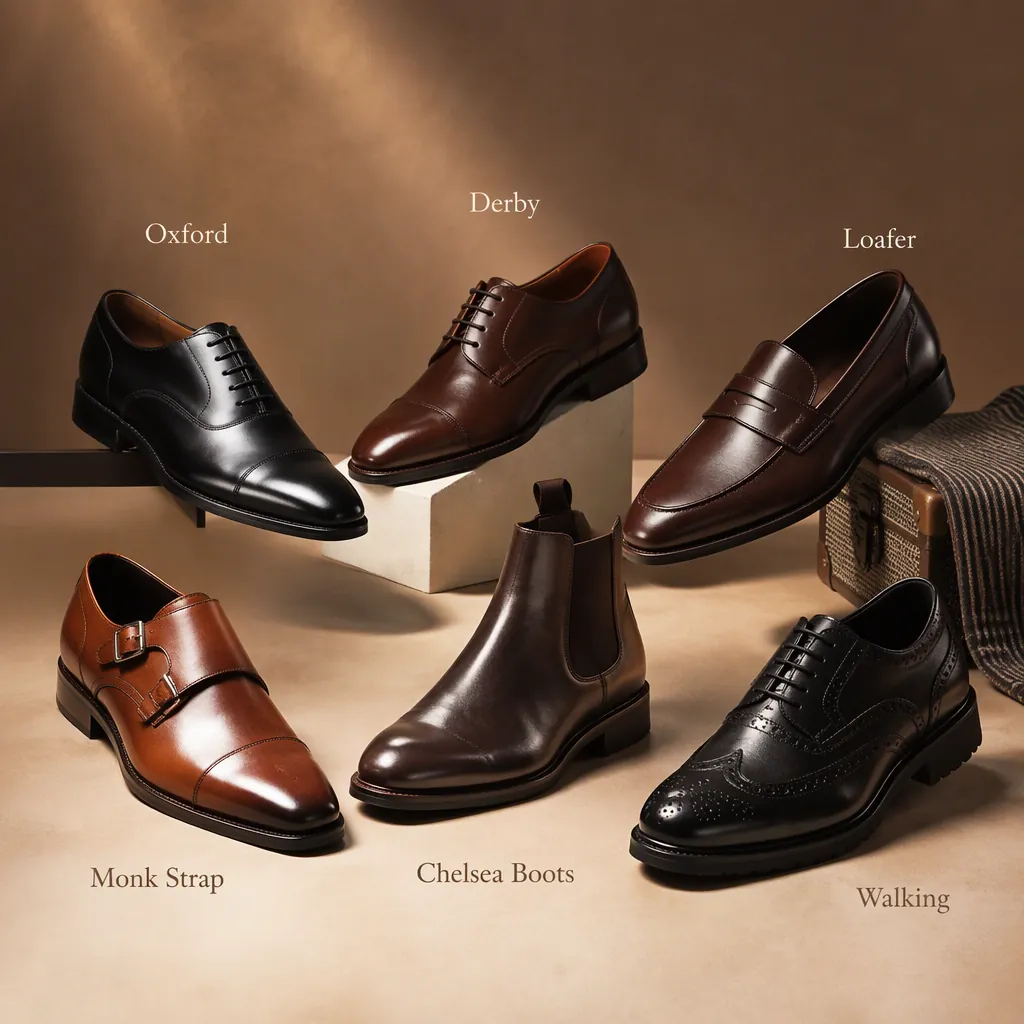
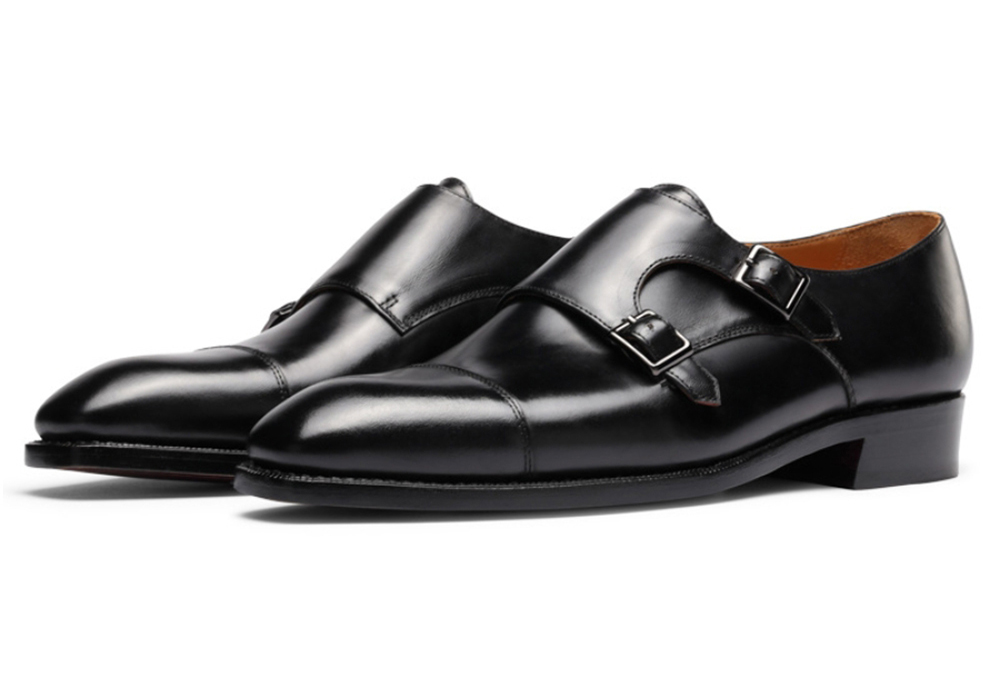
For dress shoes — Oxford, Derby, Monk Strap styles — vegetable-tanned leather is increasingly the premium positioning choice. It appeals to buyers targeting the European and North American markets where provenance and material transparency matter.
Our complete guide to vegetable-tanned vs. chrome-tanned leather covers the technical trade-offs in detail.
Chrome-Free and Low-Chrome Leather
Chrome tanning uses trivalent chromium (Cr III), which is generally safe. The risk is improper processing that creates hexavalent chromium (Cr VI) — a known carcinogen regulated under REACH. Chrome-free alternatives use aldehyde, synthetic, or combination tanning systems.
For buyers targeting EU markets, REACH compliance on chromium levels is non-negotiable. Always request a test report, not just a supplier declaration.
Recycled and Upcycled Leather
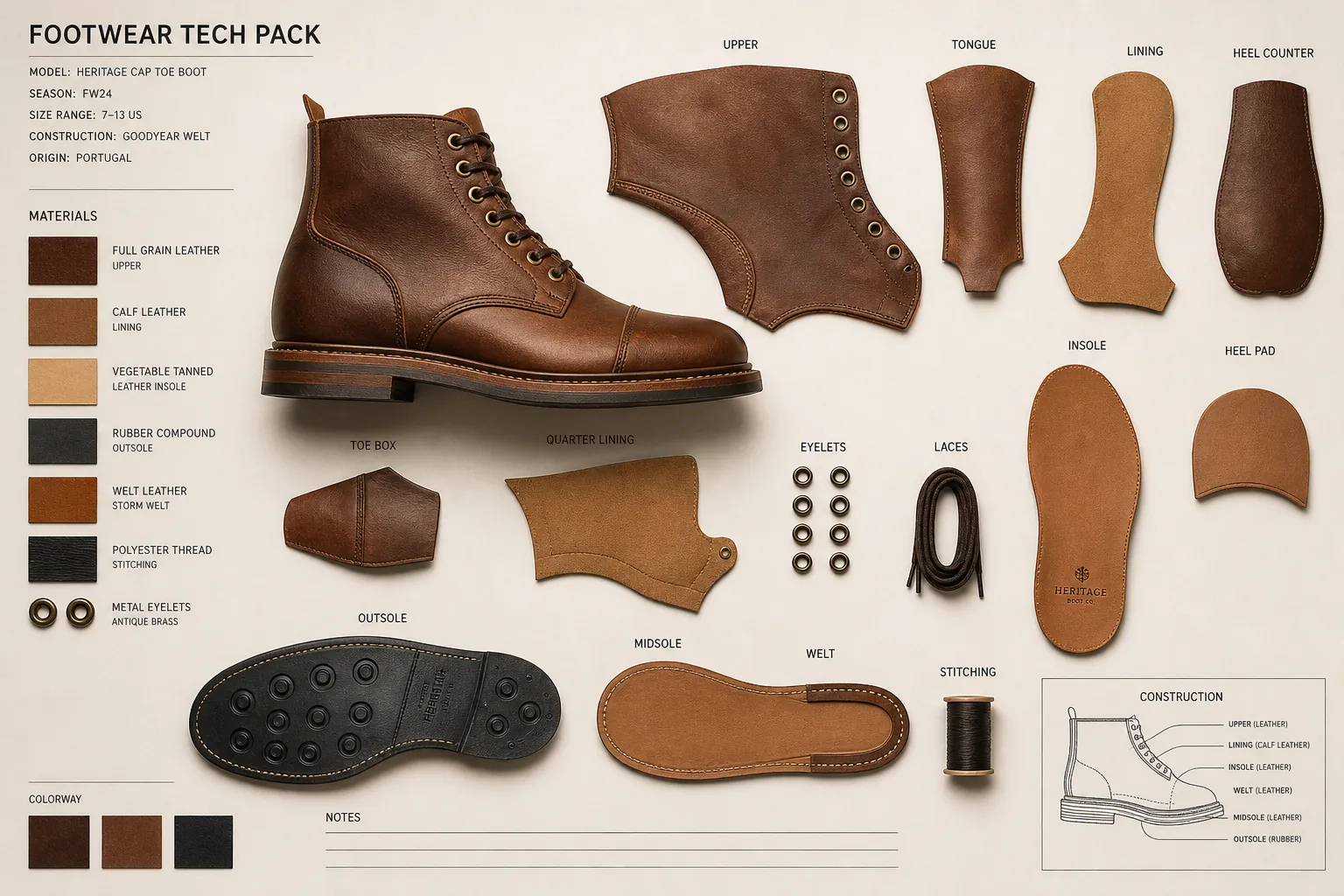
Leather fiber boards made from tannery offcuts and bonded with natural latex are gaining traction for insoles, counters, and lining components. Full-grain recycled leather (shredded and re-pressed) is used in some casual shoe constructions.
The quality ceiling is lower than virgin leather, but for non-structural components, it’s a credible and cost-effective sustainability claim.
Which Sole Materials Are Sustainable in 2026?
The sole is often the most environmentally problematic part of a shoe. Most conventional soles use virgin TPR, PVC, or synthetic rubber — petroleum-derived and non-biodegradable.
Natural Rubber
Sourced from Hevea brasiliensis trees, natural rubber is renewable and biodegradable under the right conditions. It offers excellent grip and durability for dress and casual shoe outsoles. The trade-off is cost volatility tied to Southeast Asian harvests.
Recycled Rubber
Ground rubber from post-consumer tires or manufacturing offcuts can be vulcanized into outsoles. It performs well for casual walking shoes and Chelsea boots. Several EU-market buyers now specifically request recycled rubber content percentages in their technical specifications.
Bio-Based TPU and EVA
Bio-based thermoplastic polyurethane (TPU) uses castor oil or corn-derived polyols instead of petroleum feedstocks. Bio-EVA (ethylene-vinyl acetate) uses sugarcane-derived ethylene. Both materials are commercially available from major chemical suppliers and are increasingly specified in sustainable footwear manufacturing contracts.
Cork and Natural Fiber Insoles
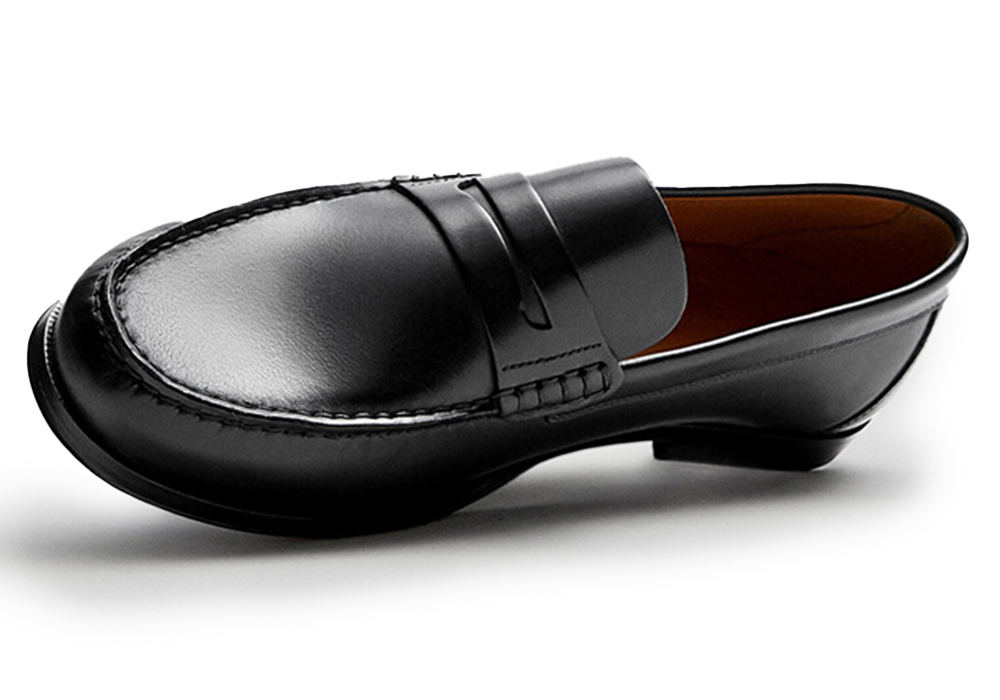
Cork is harvested without killing the tree, making it one of the most genuinely renewable materials in footwear. It’s used extensively in insoles and midsoles for loafers and casual styles. Natural jute, hemp, and bamboo fiber are also used in insole boards as replacements for synthetic non-wovens.
Which Manufacturing Processes Reduce Environmental Impact?
Water Reduction in Tannery Operations
Conventional leather tanning is water-intensive — processing one hide can use 30–50 liters of water. Modern closed-loop tannery systems recirculate process water, reducing consumption by 40–60%. Drum tanning with optimized float ratios and enzymatic pre-soaking further cuts water use.
When evaluating a supplier for sustainable footwear manufacturing, ask specifically about their tannery partners’ water discharge compliance, not just their own factory metrics.
Energy Efficiency on the Production Floor
Shoe manufacturing involves lasting machines, stitching equipment, cement application, and finishing lines — all energy consumers. Factories investing in variable-frequency drives (VFDs) on motors, LED lighting retrofits, and solar panel installations are reducing their Scope 1 and Scope 2 emissions meaningfully.
Energy audits certified under ISO 50001 are the clearest proof point a factory can offer.
Solvent and Adhesive Management
Traditional shoe cement uses solvent-based adhesives containing toluene, MEK, and other VOCs. Water-based adhesive systems are now technically viable for most shoe constructions and eliminate the majority of VOC emissions. The transition requires capital investment and process retraining — which is why not every factory has made the switch.
Ask your supplier for their adhesive specification sheets. If they can’t provide them, that’s a red flag.
Waste Management and Circular Practices
Leather offcuts, rubber flash, cardboard, and thread waste are generated at every production stage. Factories with ISO 14001 environmental management certification have documented waste reduction targets and disposal records. Some facilities partner with local recyclers to divert leather scraps into secondary products — handbags, belts, or fiber board.
For more on evaluating factory quality and process controls, see our AQL inspection and quality control guide.
Which Certifications Matter for Footwear: LWG, OEKO-TEX, EU Ecolabel?
Certifications are the language of trust in sustainable footwear manufacturing. Here’s what each one actually means for B2B buyers.
Leather Working Group (LWG)
The Leather Working Group audits tanneries on environmental performance: water usage, chemical management, energy consumption, and traceability. Ratings are Gold, Silver, Bronze, or Audited (non-rated).
Sourcing leather from an LWG Gold or Silver tannery is the single most credible sustainability claim a shoe manufacturer can make. Ask for the tannery’s LWG certificate number — it’s publicly verifiable.
OEKO-TEX STANDARD 100
OEKO-TEX tests finished products for harmful substances — heavy metals, pesticides, formaldehyde, pH levels. It covers the entire shoe, not just the leather. For brands selling to health-conscious or children’s markets, OEKO-TEX is often a hard requirement.
EU Ecolabel
The EU Ecolabel for footwear covers the full product lifecycle: raw material extraction, manufacturing, use phase, and end-of-life. It’s one of the most rigorous certifications available and is increasingly referenced in EU public procurement tenders.
REACH and RoHS
REACH (Registration, Evaluation, Authorisation and Restriction of Chemicals) restricts hazardous substances in products sold in the EU. RoHS restricts hazardous substances in electrical and electronic equipment — relevant for shoes with electronic components (smart insoles, LED features). Both are mandatory compliance requirements, not optional certifications.
For a deep dive into CE marking and EU footwear compliance, see our CE marking footwear guide.
First-hand note (Wincheer compliance records): Our own compliance stack covers CE marking, REACH (including Azo dye restrictions), RoHS, and EN ISO 20347 testing. We produce 500,000+ pairs annually in Jiangmen, Guangdong, and buyers are welcome to audit the production lines in person before committing to a sustainable-materials program.
How Much More Does Sustainable Footwear Production Cost?
Sustainable footwear manufacturing carries real cost premiums — but they’re smaller than most buyers assume, and they’re compressing as scale increases.
| Component | Conventional Cost | Sustainable Alternative | Premium |
|---|---|---|---|
| Chrome-tanned upper leather | Baseline | Vegetable-tanned leather | +15–25% |
| Virgin TPR outsole | Baseline | Recycled rubber outsole | +8–15% |
| Solvent-based adhesive | Baseline | Water-based adhesive | +5–10% |
| Standard insole board | Baseline | Cork / natural fiber insole | +10–20% |
| No environmental certification | Baseline | LWG Gold tannery leather | +5–12% |
| Total FOB impact (est.) | $25–30/pair | $30–40/pair | +15–30% |
Note: FOB pricing range of $25–40/pair reflects the full spectrum from conventional to certified-sustainable production at commercial volumes.
The key insight: the premium is real but manageable. For brands positioning in the $80–150 retail range, a $5–8 increase in FOB cost is easily absorbed and justified by the marketing narrative.
The bigger cost is certification administration — audits, documentation, testing — which, as a planning figure, runs roughly $3,000–15,000 per year depending on the scope and number of certifications maintained.
First-hand note (Wincheer order records): Custom OEM orders at our factory start at 60 pairs per style, with zero minimum on existing catalog styles; first-article defect rates we record run 0.8–1.2%. Orders specifying sustainable materials — LWG-rated leathers, water-based adhesives, recycled soles — follow the same QC inspection plan as standard lines.
Checklist: Evaluating a Supplier’s Sustainability Claims
Use this before placing any order with a new factory:
- [ ] Can they provide LWG certificate numbers for their tannery partners?
- [ ] Do they hold REACH test reports for finished products (not just declarations)?
- [ ] Can they specify adhesive types and provide SDS (Safety Data Sheets)?
- [ ] Do they have ISO 14001 or equivalent environmental management certification?
- [ ] Can they provide water discharge compliance records for the past 12 months?
- [ ] Do they disclose energy consumption per pair produced?
- ] Are their packaging materials recyclable or [FSC-certified?
- [ ] Can they provide a bill of materials (BOM) with material origin traceability?
How Do You Communicate Sustainability to Your Buyers?
Knowing your supply chain is sustainable is only half the job. Communicating it effectively to your retail partners, platform buyers, and end customers is the other half.
Lead With Certifications, Not Claims
“Eco-friendly” is meaningless without documentation. Lead every sustainability conversation with certificate numbers, audit dates, and testing lab names. Buyers who’ve been burned by greenwashing respond to specifics.
Build a Supplier Sustainability Profile
Request a one-page sustainability summary from your manufacturer covering: certifications held, tannery LWG rating, adhesive type, waste diversion rate, and energy source. This becomes your sourcing documentation and your marketing asset simultaneously.
Match Your Claims to Your Market
German and Scandinavian buyers respond to EU Ecolabel and REACH compliance. US buyers are increasingly focused on supply chain transparency and restricted substance lists. Australian buyers often prioritize animal welfare certifications alongside environmental ones. Tailor your documentation package to the market.
Use Third-Party Verification
Self-reported sustainability data has limited credibility. Third-party lab test reports (SGS, Bureau Veritas, Intertek) carry weight. If your manufacturer can’t provide third-party verified data, that’s a gap in your compliance story.
For private label brands building a full sustainability narrative, our private label shoe brand launch guide covers how to structure your sourcing documentation from day one.
Also worth reviewing: the hidden costs and benefits for shoe brands — including the long-term margin impact of certification investment.
FAQ
Q: What is the most important certification for sustainable footwear manufacturing in 2026?
A: For leather upper materials, LWG (Leather Working Group) tannery certification is the most credible and widely recognized. For finished product chemical safety, REACH compliance with third-party test reports is the baseline for EU market access. If you can only prioritize one, start with REACH — it’s a legal requirement, not optional.
Q: Is vegetable-tanned leather always more sustainable than chrome-tanned leather?
A: Not automatically. Vegetable tanning uses more water and takes longer, which has its own environmental footprint. Chrome tanning from an LWG Gold-rated tannery with proper effluent treatment can have a lower overall impact than poorly managed vegetable tanning. The tannery’s operational practices matter more than the tanning method alone.
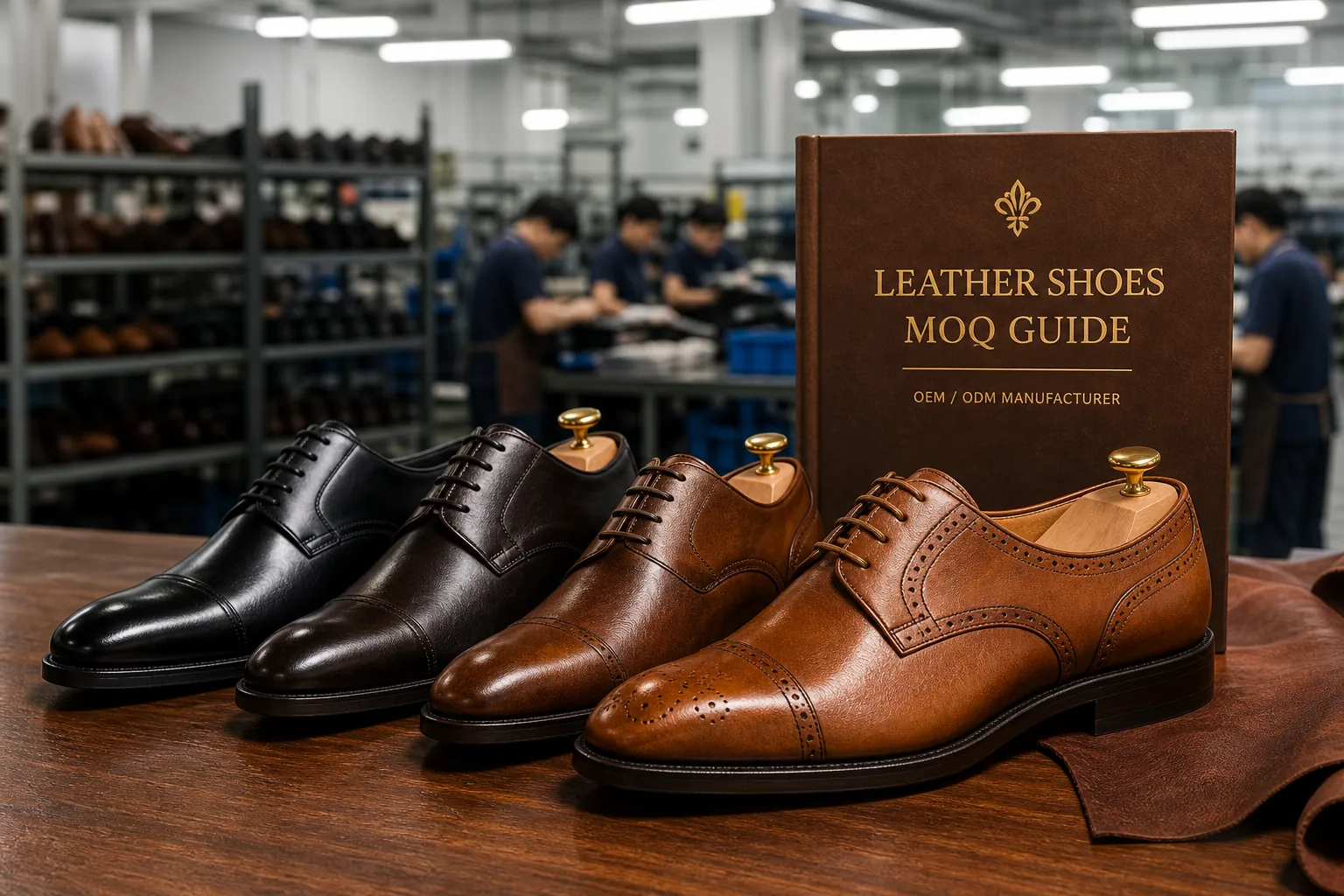
Q: What MOQ should I expect when ordering sustainable leather shoes?
A: MOQ structures vary by factory. For existing designs using standard sustainable materials, some manufacturers offer zero MOQ. For custom designs with specific sustainable material specifications — particular LWG-certified leathers, bio-based soles, water-based adhesives — MOQs of 60 pairs per style are common at the entry level. Always confirm material lead times, as sustainable materials sometimes have longer supply chains.
Q: How do I verify a factory’s sustainability claims before visiting in person?
A: Request certificate numbers and verify them directly with the issuing body. LWG certificates are searchable on the LWG website. OEKO-TEX certificates are verifiable at oeko-tex.com. For REACH, ask for test reports from accredited labs (SGS, Bureau Veritas, Intertek) with the report date and sample description. A factory that can’t provide verifiable documentation within 48 hours of request is a red flag.
**
Sources
- World Footwear — annual industry production reviews: https://www.worldfootwear.com (retrieved 2026-11-01)
- European Commission — Corporate Sustainability Reporting Directive (CSRD): https://ec.europa.eu/info/business-economy-euro/company-reporting-and-auditing/company-reporting/corporate-sustainability-reporting_en (retrieved 2026-11-01)
- Leather Working Group — tannery audit methodology and ratings: https://www.leatherworkinggroup.com/ (retrieved 2026-11-01)
- OEKO-TEX — STANDARD 100 certificate verification: https://www.oeko-tex.com/ (retrieved 2026-11-01)