


CE marking footwear: Why Footwear Certifications Matter for Market Access
European and North American markets enforce some of the world’s strictest product safety standards. For footwear manufacturers and importers, this translates into mandatory compliance with multiple certification frameworks before products can legally enter these lucrative markets.
Market Access Requirements:
- EU customs authorities require CE marking for safety footwear categories
- REACH compliance prevents chemical-related import rejections
- RoHS certification ensures electronic components meet environmental standards
- Non-compliance results in product seizures, fines, and market exclusion
Founded in 2007, Wincheer Shoes maintains CE (EN ISO20347), REACH, and RoHS certifications across 500,000+ pairs of annual output — Oxford, Derby, Loafer, and Chelsea Boot designs priced at $25-40/pair. A defect rate of just 0.8-1.2% (versus the industry average of 2-4%) proves that rigorous certification processes directly correlate with manufacturing quality.
Financial Impact of Non-Compliance:
- Product recalls can cost $50,000-$500,000 per incident
- Customs delays average 2-4 weeks for non-compliant shipments
- Legal fees for compliance violations range from $25,000-$100,000
- Market reputation damage can reduce sales by 15-30% long-term
CE Marking and EN ISO20347: Safety Footwear Standards
CE marking footwear compliance centers on the EN ISO20347 standard, which specifically addresses occupational footwear requirements. This certification applies to safety shoes, protective footwear, and occupational shoes designed for workplace environments.
What EN ISO20347 Covers
The standard evaluates multiple safety and performance criteria:
Basic Requirements:
- Slip resistance on different surface types
- Antistatic properties for electrical safety
- Energy absorption in heel region
- Water resistance and penetration
- Upper material strength and flexibility
- Sole abrasion resistance
Optional Requirements:
- Metatarsal protection
- Ankle protection
- Heat insulation
- Cold insulation
- Water penetration resistance
- Fuel oil resistance
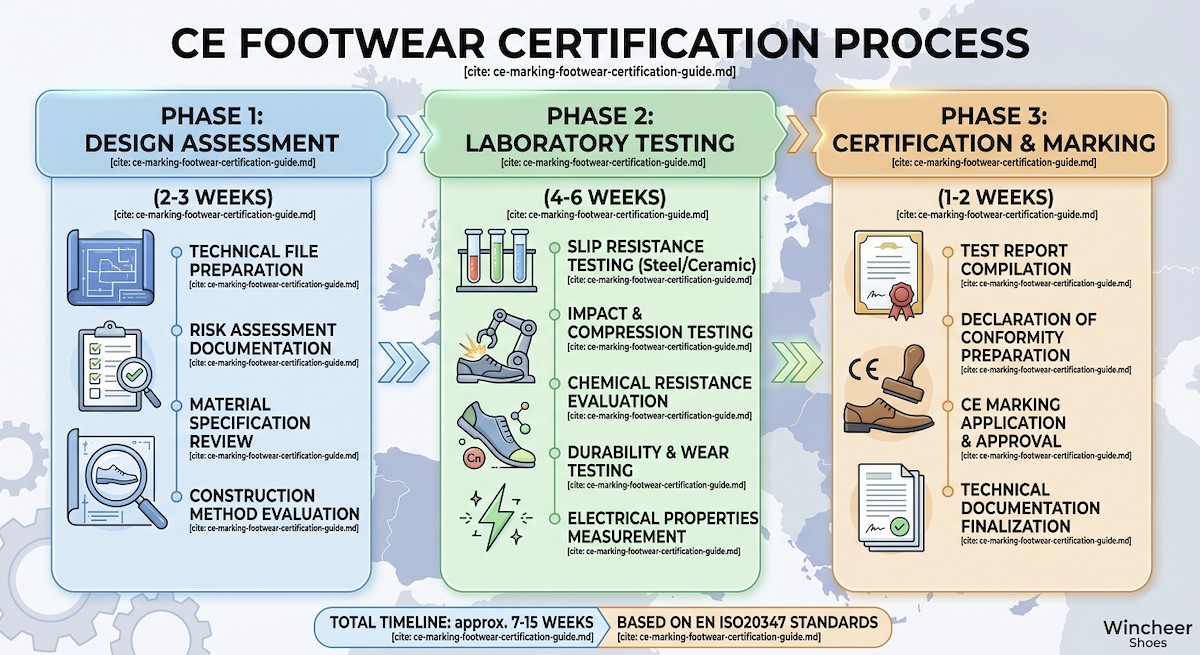
CE Marking Testing Process
Obtaining CE marking footwear certification involves comprehensive laboratory testing and documentation:
Phase 1: Design Assessment (2-3 weeks)
- Technical file preparation
- Risk assessment documentation
- Material specification review
- Construction method evaluation
Phase 2: Laboratory Testing (4-6 weeks)
- Slip resistance testing on steel and ceramic surfaces
- Impact and compression testing for protective elements
- Chemical resistance evaluation
- Durability and wear testing
- Electrical properties measurement
Phase 3: Certification and Marking (1-2 weeks)
- Test report compilation
- Declaration of Conformity preparation
- CE marking application and approval
- Technical documentation finalization
Who Needs CE Marking
CE marking requirements depend on footwear classification and intended use:
Mandatory Categories:
- Safety footwear (S1, S2, S3, S4, S5 classifications)
- Protective footwear (P1, P2, P3 classifications)
- Occupational footwear (O1, O2, O3, O4, O5 classifications)
Exempt Categories:
- Fashion footwear for general wear
- Sports shoes for recreational use
- Disposable footwear
- Footwear for children under 3 years
REACH Compliance: Chemical Safety in Footwear
The Registration, Evaluation, Authorisation and Restriction of Chemicals (REACH) regulation governs chemical substances in all products sold within the EU, including footwear materials and components.
Critical Chemical Restrictions
REACH compliance for footwear focuses on several high-risk chemical categories:
Azo Dyes Restrictions:
- Banned: 22 specific aromatic amines
- Testing requirement: All colored leather and textile components
- Limit: <30 mg/kg for restricted amines
- Common violations: Red, orange, and yellow dyes
Chromium VI Limitations:
- Restriction: Leather articles in direct skin contact
- Limit: <3 mg/kg in leather materials
- Testing frequency: Every production batch
- Risk factors: Chrome-tanned leather processing
Formaldehyde Controls:
- Limit: <75 mg/kg for leather, <300 mg/kg for textiles
- Sources: Adhesives, finishing agents, preservatives
- Testing scope: All organic materials in shoe construction
Heavy Metals Restrictions:
- Lead: <90 mg/kg in accessible parts
- Cadmium: <100 mg/kg in metal components
- Mercury: <60 mg/kg in all materials
- Nickel: Release limit <0.5 μg/cm²/week for skin contact
REACH Compliance Process
Achieving REACH compliance requires systematic material evaluation and supplier management:
Step 1: Material Inventory (1-2 weeks)
- Complete bill of materials documentation
- Supplier chemical disclosure requests
- Safety data sheet collection
- Risk assessment prioritization
Step 2: Chemical Testing (3-4 weeks)
- Third-party laboratory analysis
- Restricted substance screening
- Heavy metals testing
- Volatile organic compounds measurement
Step 3: Documentation and Registration (2-3 weeks)
- Compliance certificates compilation
- Supplier declarations of conformity
- Chemical safety reports preparation
- REACH registration verification
RoHS Compliance for Footwear Electronics
While primarily targeting electrical equipment, RoHS (Restriction of Hazardous Substances) applies to footwear containing electronic components like LED lights, heating elements, or smart technology features.
RoHS Coverage in Footwear
Applicable Components:
- LED lighting systems in soles or uppers
- Electronic heating elements
- Smart sensors and connectivity modules
- Battery compartments and charging systems
- Conductive threads and materials
Restricted Substances:
- Lead: <1000 mg/kg
- Mercury: <1000 mg/kg
- Cadmium: <100 mg/kg
- Hexavalent chromium: <1000 mg/kg
- Polybrominated biphenyls (PBB): <1000 mg/kg
- Polybrominated diphenyl ethers (PBDE): <1000 mg/kg
Testing Requirements
RoHS testing focuses on electronic components and materials:
Sample Preparation:
- Disassembly of electronic components
- Material separation by type
- Homogeneous material identification
- Representative sampling protocols
Analytical Methods:
- X-ray fluorescence (XRF) screening
- Inductively coupled plasma (ICP) confirmation
- Gas chromatography-mass spectrometry (GC-MS)
- Ion chromatography for specific substances
Additional Relevant Certifications
Beyond mandatory EU requirements, several voluntary certifications enhance market credibility and consumer confidence.
OEKO-TEX Standards
OEKO-TEX provides comprehensive textile safety certification:
Standard 100: Tests for harmful substances in textiles
- 100+ test parameters
- Four product classes based on skin contact intensity
- Annual testing requirements
- Global recognition and acceptance
Eco Passport: Component-level certification for textile accessories
- Chemical compliance verification
- Sustainable production criteria
- Supply chain transparency requirements
SATRA Testing
SATRA (Shoe and Allied Trades Research Association) offers specialized footwear testing:
Performance Testing:
- Slip resistance measurement
- Sole adhesion strength
- Upper material durability
- Waterproofing effectiveness
Quality Assurance:
- Manufacturing process audits
- Batch testing protocols
- Defect analysis and prevention
- Continuous improvement programs
ISO 9001 Quality Management
ISO 9001 certification demonstrates systematic quality management:
Core Requirements:
- Documented quality management system
- Customer focus and satisfaction measurement
- Continuous improvement processes
- Management responsibility and accountability
Benefits for Footwear Manufacturers:
- Reduced defect rates and customer complaints
- Improved supplier relationships and consistency
- Enhanced market credibility and trust
- Streamlined operations and cost reduction
Certification Costs and Timelines
Understanding the financial and time investment required for footwear certifications helps in project planning and budget allocation.
Cost Breakdown by Certification Type
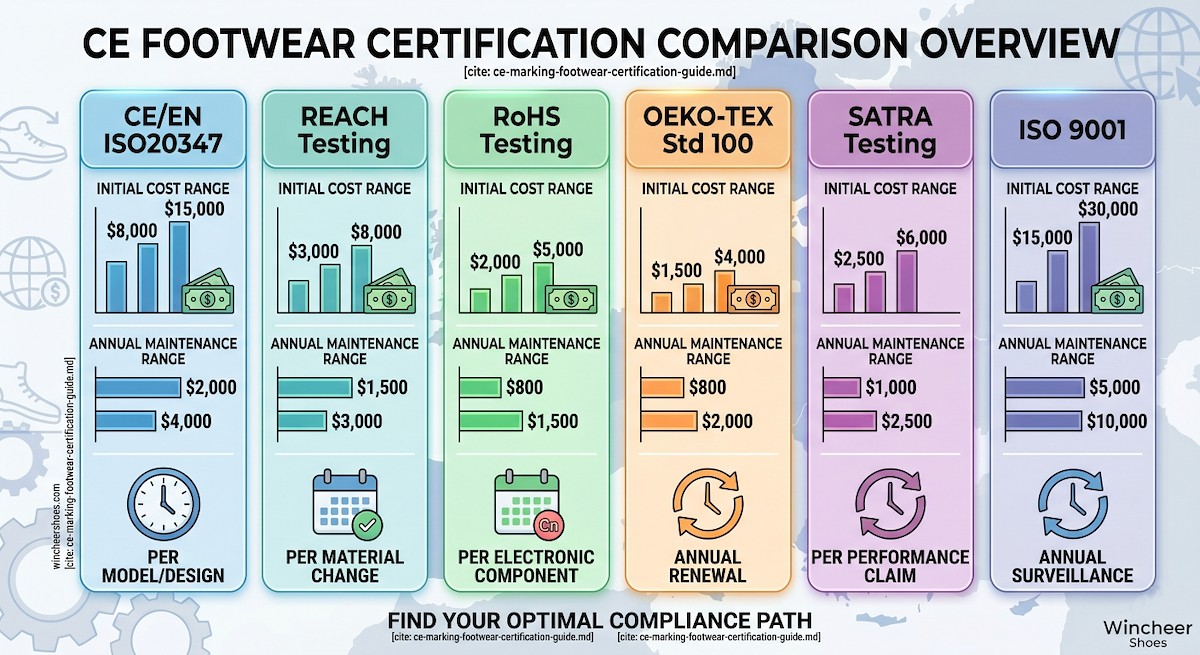
| Certification | Initial Cost | Annual Maintenance | Testing Frequency |
|---|---|---|---|
| CE/EN ISO20347 | $8,000-$15,000 | $2,000-$4,000 | Per model/design |
| REACH Testing | $3,000-$8,000 | $1,500-$3,000 | Per material change |
| RoHS Testing | $2,000-$5,000 | $800-$1,500 | Per electronic component |
| OEKO-TEX Standard 100 | $1,500-$4,000 | $800-$2,000 | Annual renewal |
| SATRA Testing | $2,500-$6,000 | $1,000-$2,500 | Per performance claim |
| ISO 9001 | $15,000-$30,000 | $5,000-$10,000 | Annual surveillance |
Timeline Considerations
Initial Certification Process:
- Documentation preparation: 2-4 weeks
- Laboratory testing: 4-8 weeks
- Certification review: 1-3 weeks
- Total timeline: 7-15 weeks
Factors Affecting Timeline:
- Laboratory capacity and scheduling
- Sample preparation complexity
- Test failures requiring retesting
- Documentation completeness and accuracy
Rush Testing Options:
- Express testing: 50-100% premium cost
- Reduced timeline: 3-6 weeks total
- Limited availability during peak seasons
- Priority scheduling requirements
Verifying Factory Certifications: Red Flags and Best Practices
Ensuring your manufacturing partner maintains legitimate certifications requires thorough due diligence and ongoing verification processes.
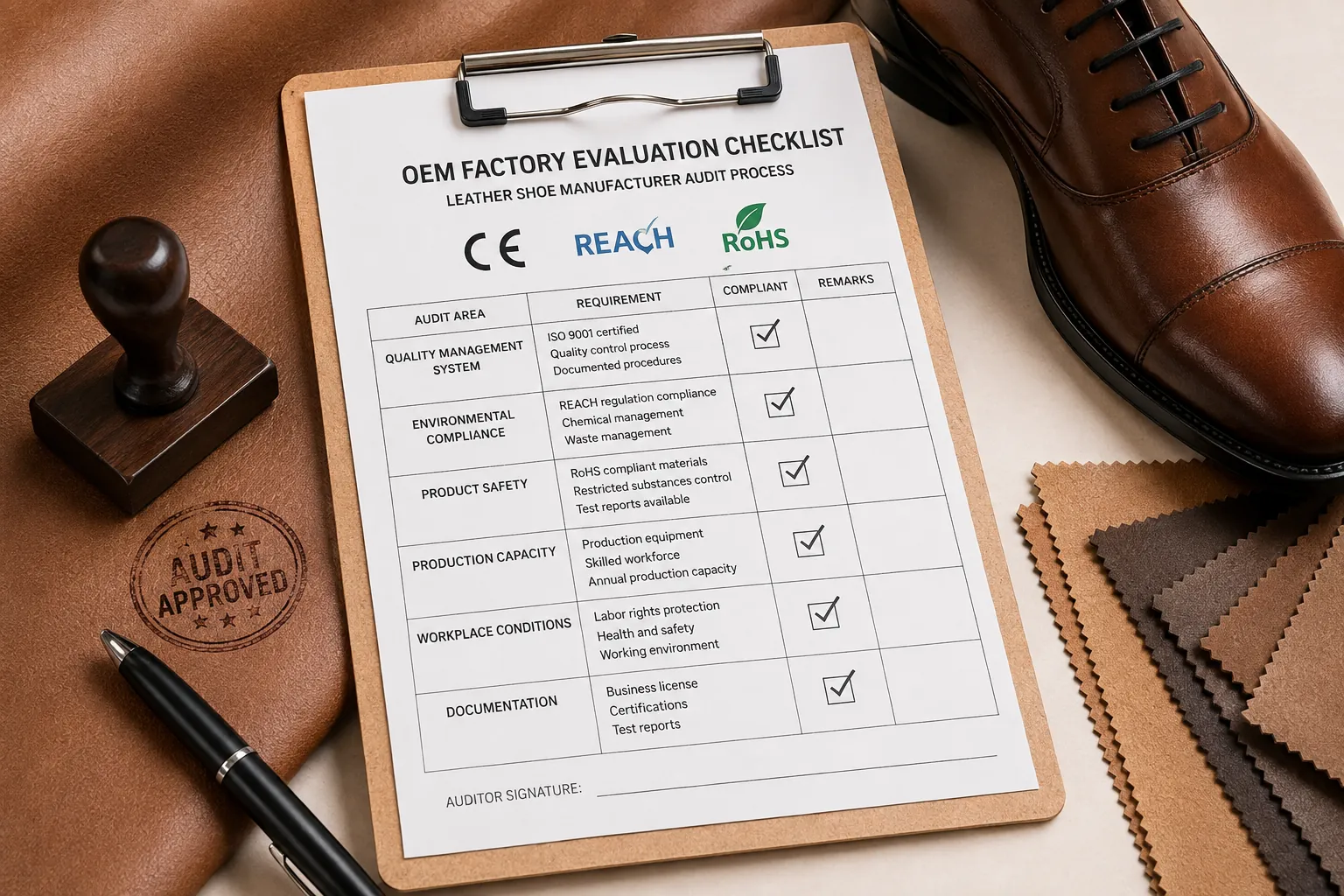
Certification Verification Checklist
Document Authentication:
- ✅ Request original certificates, not photocopies
- ✅ Verify certificate numbers with issuing bodies
- ✅ Check expiration dates and renewal status
- ✅ Confirm scope covers your specific products
- ✅ Validate testing laboratory accreditation
Factory Audit Verification:
- ✅ On-site inspection of testing equipment
- ✅ Review of quality management procedures
- ✅ Interview with quality control personnel
- ✅ Sample testing record examination
- ✅ Supplier qualification documentation
Common Red Flags
Certificate-Related Warning Signs:
- Certificates without specific product scope
- Expired or soon-to-expire certifications
- Reluctance to provide original documents
- Inconsistent company names or addresses
- Missing accreditation body logos or seals
Operational Red Flags:
- Lack of dedicated quality control department
- Absence of testing equipment on-site
- Inconsistent answers about certification processes
- Pressure to skip certification requirements
- Unusually low pricing without explanation
Ongoing Monitoring Strategies
Regular Verification Schedule:
- Quarterly certificate status checks
- Annual on-site audits
- Random product testing
- Supplier performance reviews
- Market feedback monitoring
Documentation Management:
- Centralized certificate database
- Automatic renewal reminders
- Version control for updated standards
- Backup verification procedures
- Legal compliance tracking
Comprehensive Certification Comparison
| Certification | Mandatory/Voluntary | Scope | Validity Period | Cost Range | Market Impact |
|---|---|---|---|---|---|
| CE (EN ISO20347) | Mandatory (safety footwear) | Safety performance | 3-5 years | $8,000-$15,000 | EU market access |
| REACH | Mandatory (EU) | Chemical safety | Ongoing | $3,000-$8,000 | EU compliance |
| RoHS | Mandatory (electronics) | Electronic components | 3 years | $2,000-$5,000 | EU electronics |
| OEKO-TEX 100 | Voluntary | Textile safety | 1 year | $1,500-$4,000 | Consumer confidence |
| SATRA | Voluntary | Performance testing | Variable | $2,500-$6,000 | Technical credibility |
| ISO 9001 | Voluntary | Quality management | 3 years | $15,000-$30,000 | Operational excellence |
Certification Decision Framework
When determining which certifications to pursue, consider this systematic evaluation approach:
Market Requirements Assessment
Step 1: Target Market Analysis
- Identify primary and secondary markets
- Research mandatory certification requirements
- Evaluate competitive certification landscape
- Assess customer expectations and preferences
Step 2: Product Category Evaluation
- Classify footwear type (safety, fashion, sports)
- Identify applicable regulations and standards
- Determine mandatory vs. voluntary certifications
- Assess risk levels and compliance complexity
Step 3: Business Impact Analysis
- Calculate certification costs vs. market opportunity
- Evaluate timeline constraints and market entry urgency
- Assess competitive advantages from certification
- Consider long-term market positioning benefits
Implementation Priority Matrix
High Priority (Immediate Action Required):
- Mandatory certifications for target markets
- Customer-required certifications
- Competitive differentiation opportunities
- High-volume product lines
Medium Priority (Plan for Next Phase):
- Voluntary certifications with clear ROI
- Emerging market requirements
- Supply chain optimization benefits
- Brand positioning enhancements
Low Priority (Future Consideration):
- Nice-to-have certifications
- Niche market requirements
- Experimental product lines
- Long-term strategic positioning
FAQ
Q: How long do CE marking footwear certifications remain valid?
A: CE marking certifications typically remain valid for 3-5 years, depending on the specific standard and testing requirements. However, any significant design changes, material modifications, or manufacturing process updates may require recertification before the expiration date.
Q: Can I use one REACH test report for multiple shoe designs?
A: REACH test reports are material-specific, not design-specific. You can use the same test report for multiple shoe designs if they use identical materials and components. However, any change in leather type, adhesives, dyes, or hardware requires new testing.
Q: What happens if my footwear fails certification testing?
A: Failed tests require identifying root causes, implementing corrective actions, and retesting. Common solutions include changing suppliers, modifying materials, adjusting manufacturing processes, or redesigning problematic components. Retesting typically costs 50-75% of initial testing fees.
Q: Do I need separate certifications for each colorway of the same shoe design?
A: Color variations typically require additional REACH testing for chemical compliance, especially for dyed materials. However, CE marking and RoHS certifications usually cover all colorways of the same basic design, provided the construction and safety features remain identical.
Q: How can I verify if a certification laboratory is properly accredited?
A: Check laboratory accreditation through official bodies like ILAC (International Laboratory Accreditation Cooperation) or regional accreditation organizations. Verify the laboratory’s scope includes footwear testing, check their accreditation certificate validity, and confirm they’re recognized by relevant regulatory authorities.
Ready to Start Your Shoe Line?
Navigating footwear certifications doesn’t have to slow down your market entry. With proper planning and the right manufacturing partner, you can achieve full compliance while maintaining competitive timelines and costs.
Ready to launch your certified footwear line with confidence? Contact our team for expert guidance on certification requirements and compliant manufacturing solutions.
Get Started: Visit wincheershoes.com for a free compliance assessment.
Ce Marking Footwear FAQ
Q: What is the most important factor when I want to CE marking footwear?
A: Finding a manufacturer with proven quality control and relevant certifications. Check for CE, REACH, or RoHS compliance and request defect rate data before committing.
Q: How much does it cost to CE marking footwear?
A: Costs vary by order size and customization level. Factory-direct OEM production from China typically ranges from $25-40 per pair, with lower per-unit costs at higher volumes.
Q: What is the minimum order quantity to CE marking footwear?
A: Traditional factories require 300-600 pairs, but some manufacturers like Wincheer Shoes offer as low as 60 pairs for custom designs and zero MOQ for existing styles.
Q: How long does the CE marking footwear process take from concept to delivery?
A: Expect 15-25 days for sampling and 30-60 days for bulk production. Established manufacturers can often compress timelines for repeat clients.
Q: What certifications should I verify before I CE marking footwear?
A: For EU markets, ensure CE (EN ISO20347) and REACH compliance. For general quality assurance, look for ISO 9001 certification and request third-party inspection reports from SGS or Intertek.