Alibaba Leather Shoe Sourcing Pitfalls: What B2B Buyers Must Know in 2026
Alibaba leather shoe sourcing pitfalls cost B2B buyers millions annually through quality failures, delivery delays, and compliance issues. The platform’s vast supplier network creates both opportunities and significant risks that can devastate product launches and brand reputation. Understanding these pitfalls—from misleading product photos to inadequate quality control systems—is essential for successful leather footwear procurement.
The most critical mistake buyers make is treating Alibaba as a simple e-commerce platform rather than a complex B2B marketplace requiring sophisticated supplier evaluation and risk management strategies. This comprehensive guide reveals the hidden dangers and provides actionable frameworks to navigate them successfully.
The Hidden Costs of Poor Supplier Selection
Quality Misrepresentation: The $50,000 Lesson
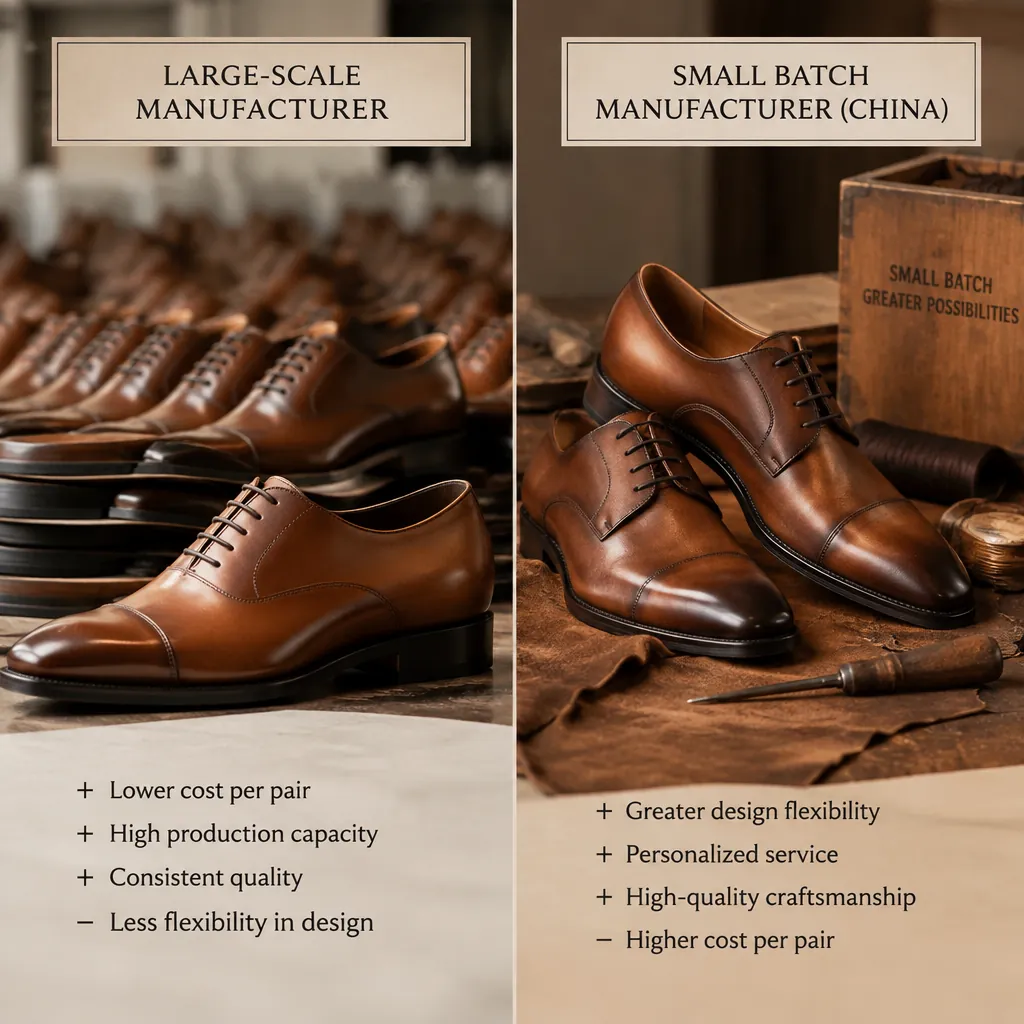
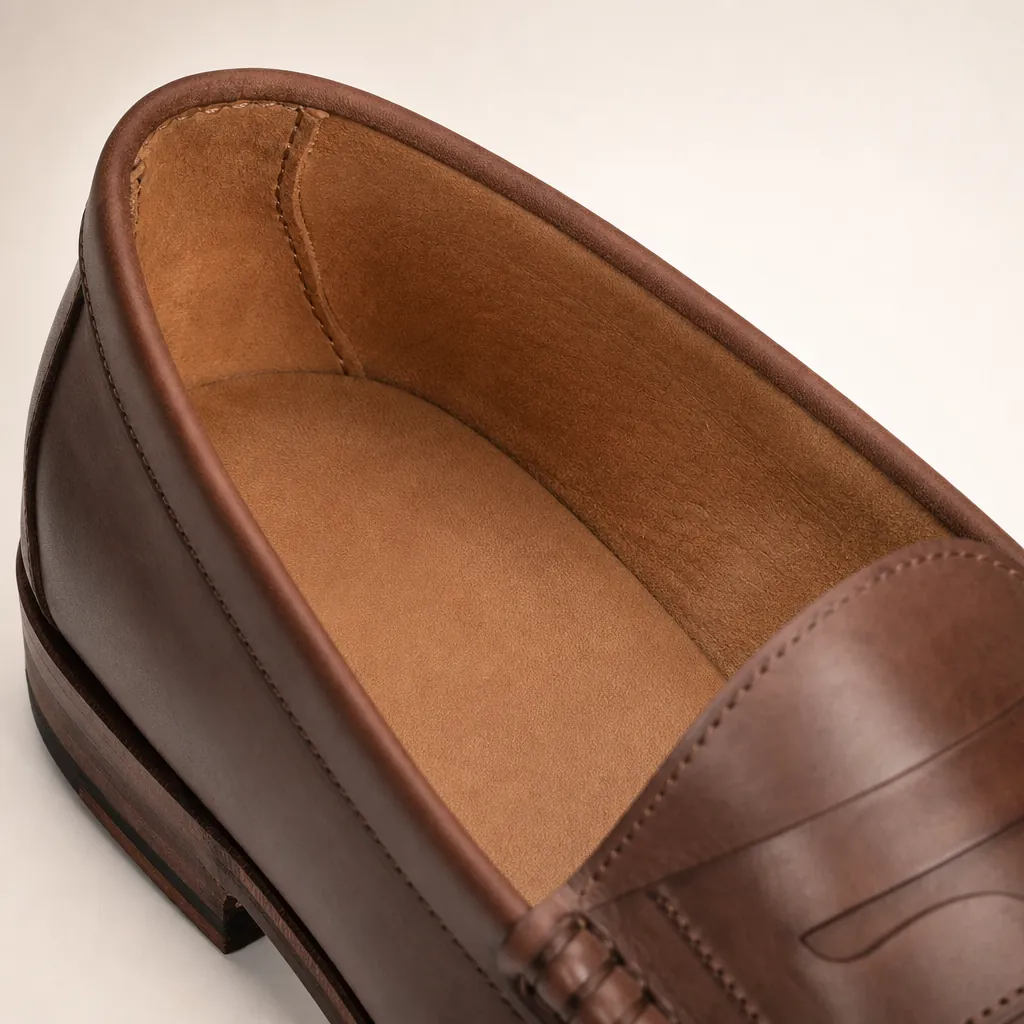
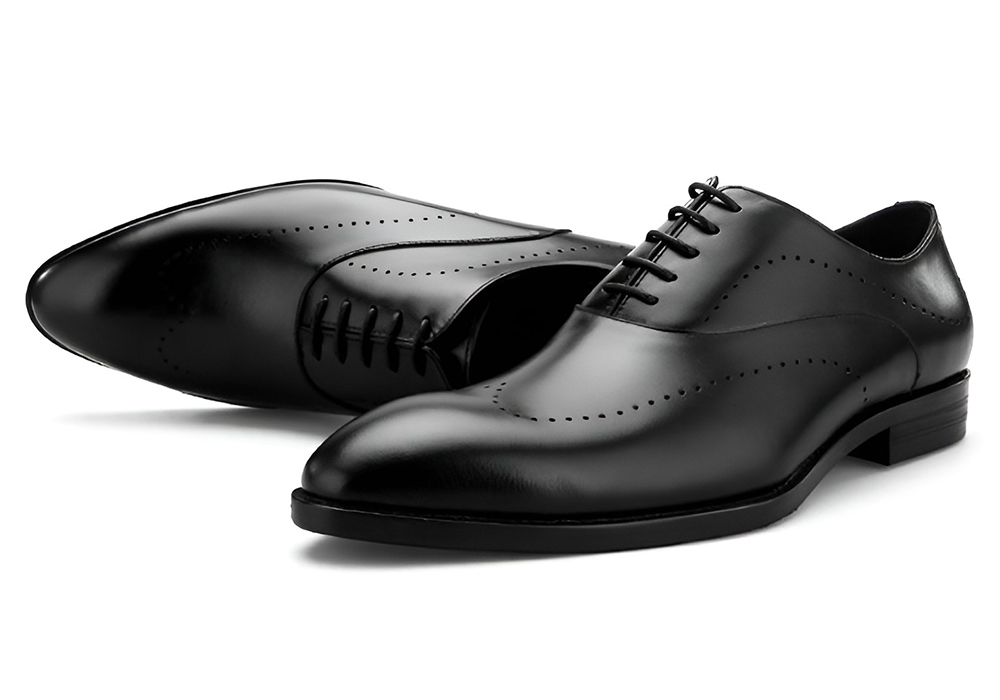
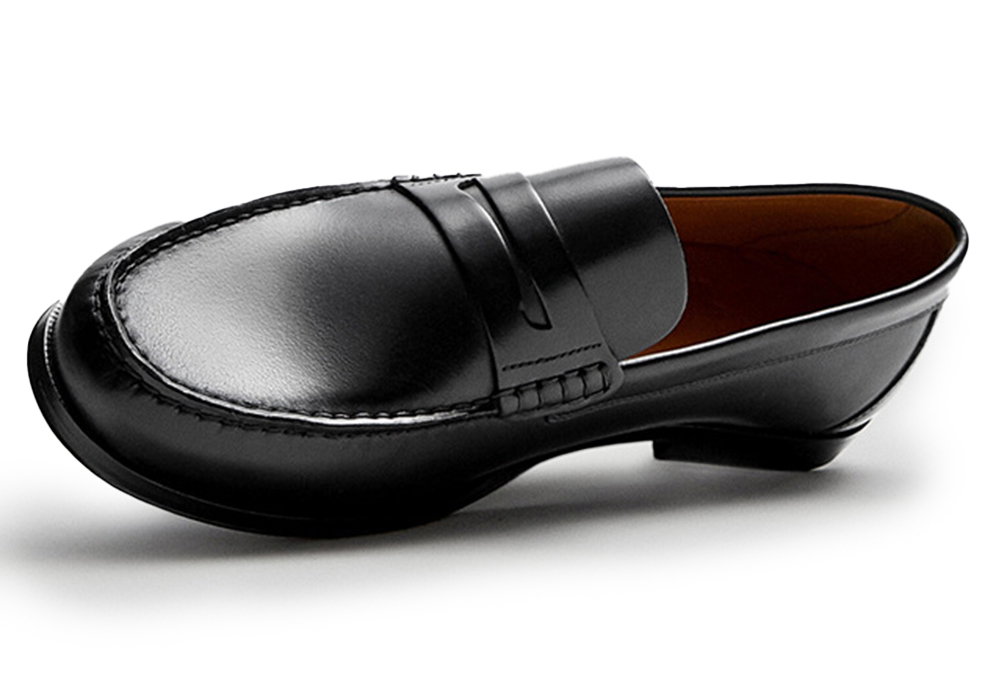
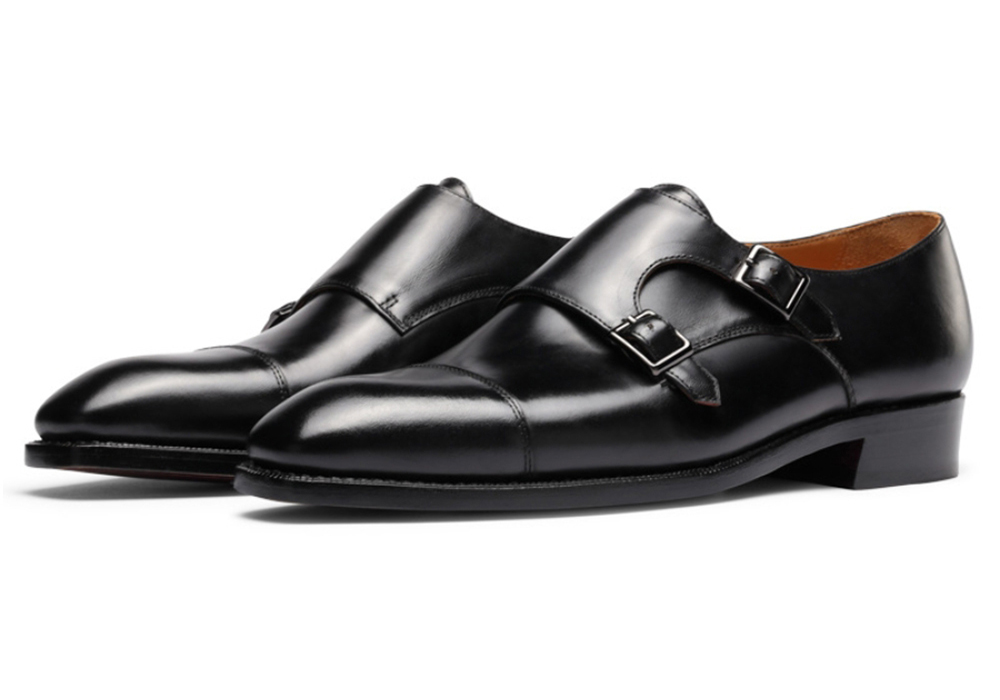
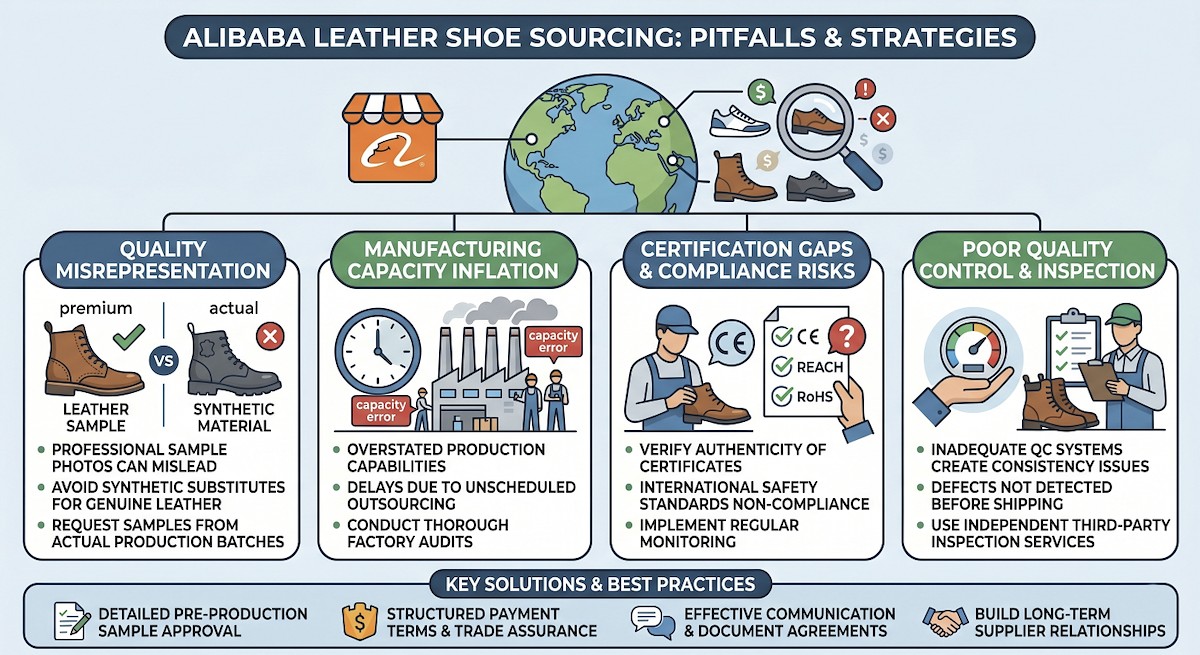
The most expensive Alibaba leather shoe sourcing pitfall involves suppliers who misrepresent their manufacturing capabilities and product quality. Professional product photos often showcase samples made by third-party factories or even competitor products, creating unrealistic expectations for actual production runs.
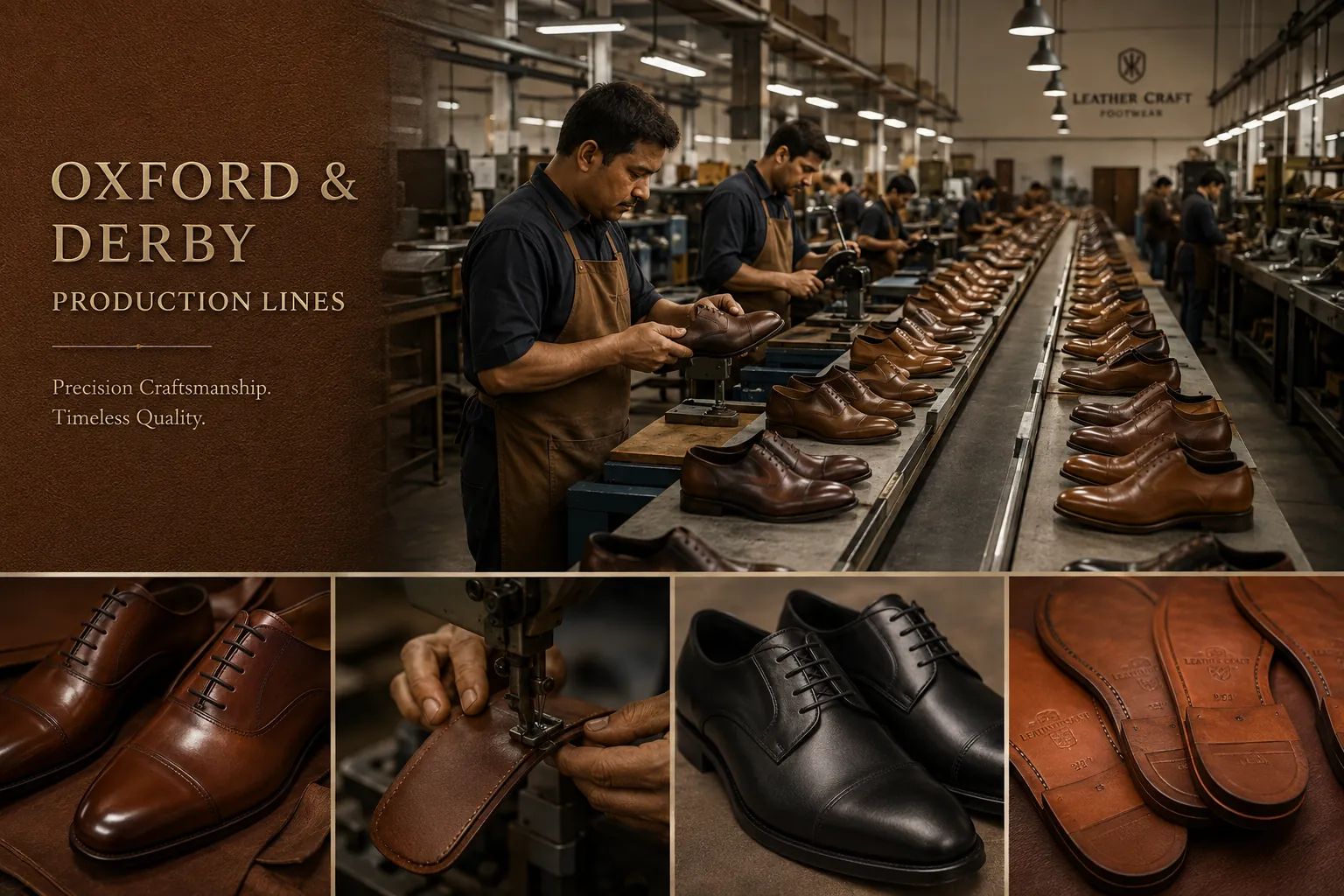
As a manufacturer producing 500,000+ pairs annually with a defect rate of just 0.8-1.2% (compared to the industry average of 2-4%), WinCheer Shoes, established in 2007, has witnessed countless buyers struggle with suppliers who promise premium leather quality but deliver synthetic alternatives or low-grade materials. Our experience across 50+ countries with 200+ partners reveals that approximately 60% of first-time Alibaba buyers encounter significant quality discrepancies.
Manufacturing Capacity Inflation
Suppliers frequently overstate their production capacity to win orders, leading to delayed shipments and quality compromises. A factory claiming 100,000 pairs monthly capacity might actually produce 20,000 pairs while outsourcing the remainder to unvetted subcontractors.
Red flags indicating capacity inflation:
- Reluctance to provide detailed production schedules
- Vague responses about current order volumes
- Inability to arrange factory visits on short notice
- Multiple product categories with claimed expertise in all
Certification and Compliance Gaps
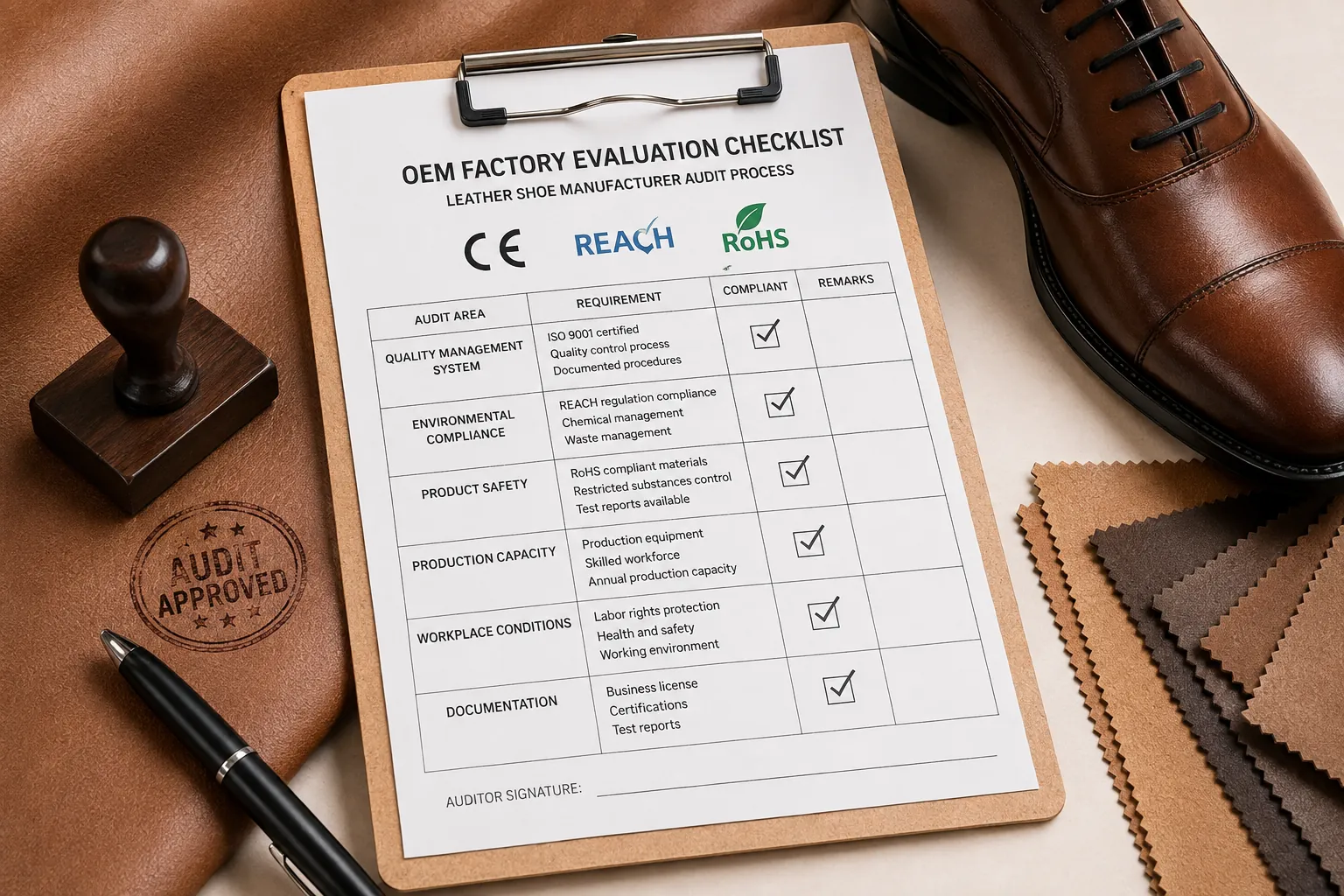
Many Alibaba suppliers display certification logos without actual compliance. This creates severe risks for B2B buyers, especially those targeting European or North American markets where safety standards are strictly enforced.
https://en.wikipedia.org/wiki/CE_marking – SATRA Footwear Technology
Critical Due Diligence Framework for Leather Shoe Suppliers
Financial Stability Assessment
Before engaging any supplier, conduct thorough financial due diligence to avoid partnership with unstable companies that might compromise your orders or disappear entirely.
Essential financial verification steps:
- Request audited financial statements for the past three years
- Verify business registration and tax compliance status
- Check for outstanding legal disputes or bankruptcy proceedings
- Assess credit ratings through local business bureaus
- Evaluate payment terms and deposit requirements
Production Capability Verification
Factory Audit Checklist:
| Verification Area | Key Indicators | Red Flags |
|---|---|---|
| Equipment Age | Modern machinery (< 5 years) | Outdated or makeshift equipment |
| Quality Control | Dedicated QC department | No formal QC processes |
| Certifications | Valid ISO, CE certificates | Expired or fake certifications |
| Worker Training | Skilled craftsmen, training records | High turnover, untrained staff |
| Raw Material Storage | Climate-controlled leather storage | Poor material handling |
| Production Records | Detailed batch tracking | Incomplete documentation |
Leather Quality Authentication
Leather quality represents the most critical factor in footwear manufacturing success. Suppliers often substitute genuine leather with synthetic alternatives or use heavily processed, low-grade hides that fail durability tests.
Leather verification protocol:
- Request samples from actual production batches, not showroom pieces
- Conduct independent leather testing for thickness, tensile strength, and chemical composition
- Verify tanning processes and chemical compliance with target market regulations
- Assess leather sourcing transparency and traceability
Communication and Cultural Navigation Challenges
Language Barriers and Technical Specifications
Miscommunication causes approximately 40% of quality issues in cross-border leather shoe sourcing. Technical specifications require precise translation and cultural context to ensure accurate implementation.
Communication best practices:
- Use detailed technical drawings with measurements in metric units
- Provide physical samples whenever possible
- Establish clear quality standards with photographic references
- Implement regular video calls for complex discussions
- Document all agreements in writing with Chinese translations
Time Zone Management and Response Expectations
Effective communication across time zones requires structured protocols to maintain project momentum and address issues promptly.
Optimal communication schedule:
- Morning Beijing time (evening US/Europe) for urgent matters
- Afternoon Beijing time (morning US/Europe) for routine updates
- Weekly scheduled calls at consistent times
- Emergency contact protocols for critical issues
Quality Control and Inspection Strategies
Pre-Production Sample Approval Process
The pre-production sample stage determines final product quality and prevents costly mistakes during mass production. Many buyers rush this critical phase, leading to disappointing results.
Comprehensive sample evaluation framework:
Initial Sample Review
- Material authenticity verification
- Construction technique assessment
- Sizing accuracy confirmation
- Color matching evaluation
Fit and Comfort Testing
- Wear testing with target demographic
- Pressure point analysis
- Flexibility and durability assessment
- Breathability evaluation
Final Sample Approval
- Complete specification compliance check
- Packaging and labeling review
- Documentation of approved standards
- Signed approval with revision history
Third-Party Inspection Services
Independent quality control inspections provide objective assessment and reduce supplier relationship conflicts when quality issues arise.
Inspection service selection criteria:
- Local presence in supplier region
- Leather footwear expertise
- Real-time reporting capabilities
- Photography and video documentation
- Corrective action recommendations
Leather Footwear Quality Standards
Pricing Transparency and Hidden Costs
Understanding True Manufacturing Costs
Alibaba pricing often excludes critical components that significantly impact total landed costs. Transparent cost analysis prevents budget overruns and enables accurate profit margin calculations.
Complete cost breakdown analysis:
| Cost Component | Typical Range | Hidden Factors |
|---|---|---|
| Base Manufacturing | $15-25/pair | Material grade variations |
| Quality Control | $1-3/pair | Inspection frequency, standards |
| Packaging | $0.50-2/pair | Custom vs. standard packaging |
| Shipping | $2-8/pair | Volume, destination, timing |
| Customs/Duties | 5-20% of value | Classification, origin rules |
| Quality Issues | $2-10/pair | Returns, replacements, reputation |
Payment Terms and Risk Mitigation
Payment structures significantly impact cash flow and risk exposure. Understanding optimal payment terms protects against supplier defaults while maintaining competitive positioning.
Recommended payment progression:
- 30% deposit upon order confirmation
- 40% upon pre-production sample approval
- 25% upon inspection completion
- 5% retention for 30 days post-delivery
Logistics and Shipping Complications
Incoterms Selection and Risk Allocation
Proper Incoterms selection determines responsibility for shipping risks, costs, and customs procedures. Many buyers accept unfavorable terms due to lack of understanding.
Optimal Incoterms for leather shoe imports:
- FOB (Free on Board): Best for experienced importers with established logistics
- CIF (Cost, Insurance, Freight): Suitable for smaller volumes with supplier logistics expertise
- DDP (Delivered Duty Paid): Highest cost but minimal buyer risk
Customs Classification and Compliance
Leather footwear faces complex customs regulations that vary by destination market. Incorrect classification leads to delays, additional costs, and potential legal issues.
Critical compliance considerations:
- Harmonized System (HS) code accuracy
- Country of origin documentation
- Material composition declarations
- Safety certification requirements
- Anti-dumping duty implications
Building Long-Term Supplier Relationships
Performance Monitoring and Continuous Improvement
Successful leather shoe sourcing requires ongoing supplier development and performance optimization rather than transactional relationships.
Supplier scorecard metrics:
- Quality performance (defect rates, consistency)
- Delivery reliability (on-time, complete shipments)
- Communication effectiveness (responsiveness, accuracy)
- Innovation contribution (design suggestions, process improvements)
- Cost competitiveness (pricing trends, value engineering)
Risk Diversification Strategies
Dependence on single suppliers creates vulnerability to disruptions. Strategic diversification balances risk while maintaining quality standards and cost efficiency.
Diversification framework:
- Primary supplier (60-70% of volume)
- Secondary supplier (20-30% of volume)
- Backup supplier (qualified, minimal volume)
- Regional distribution for risk mitigation
- Continuous supplier development pipeline
Decision Framework for Alibaba Leather Shoe Sourcing
Supplier Evaluation Scoring System
Comprehensive supplier assessment checklist:
Manufacturing Capabilities (25 points)
- Factory size and equipment modernity (5 points)
- Production capacity verification (5 points)
- Quality control systems (5 points)
- Technical expertise demonstration (5 points)
- Continuous improvement initiatives (5 points)
Quality Standards (25 points)
- Certification validity and scope (5 points)
- Sample quality consistency (5 points)
- Material sourcing transparency (5 points)
- Testing and inspection protocols (5 points)
- Defect rate history and tracking (5 points)
Business Reliability (25 points)
- Financial stability verification (5 points)
- Reference customer feedback (5 points)
- Communication responsiveness (5 points)
- Contract compliance history (5 points)
- Dispute resolution approach (5 points)
Strategic Partnership Potential (25 points)
- Innovation and design capabilities (5 points)
- Scalability for growth (5 points)
- Cultural compatibility (5 points)
- Long-term commitment indicators (5 points)
- Value-added services availability (5 points)
Scoring interpretation:
- 90-100 points: Excellent partner candidate
- 75-89 points: Good partner with development potential
- 60-74 points: Acceptable for limited engagement
- Below 60 points: High-risk, avoid partnership
Frequently Asked Questions
Q: How can I verify if an Alibaba leather shoe supplier actually owns their factory versus being a trading company?
A: Request a business license showing manufacturing registration, conduct video factory tours focusing on production areas, ask for utility bills or property ownership documents, and verify the company name matches between Alibaba profile and official registration. Trading companies often have generic office spaces and cannot provide detailed production process explanations. Additionally, check if the supplier can arrange immediate factory visits and whether their staff demonstrates hands-on manufacturing knowledge during technical discussions.
Q: What are the most reliable methods to test leather quality before placing a large order?
A: Implement a multi-stage testing protocol: request samples from actual production batches (not showroom pieces), conduct independent laboratory testing for thickness, tensile strength, and chemical composition, perform accelerated aging tests to assess durability, and verify tanning process compliance with target market regulations. Use standardized tests like https://www.astm.org/Standards/leather-standards.html – BLC Leather Technology Centre ASTM leather standards. Physical inspection should include flexibility testing, grain pattern consistency evaluation, and color fastness assessment under various lighting conditions.
Q: How do I protect myself from suppliers who disappear or fail to deliver after receiving payment?
A: Implement structured payment terms (never pay 100% upfront), use Alibaba’s Trade Assurance program for order protection, conduct thorough financial due diligence including credit checks and business registration verification, establish clear contractual terms with penalty clauses, and maintain regular communication with milestone-based payments. Consider using letters of credit for large orders and always verify supplier stability through multiple reference customers and local business bureau checks.
Q: What should I do if the received leather shoes don’t match the approved samples?
A: Document discrepancies immediately with detailed photographs and measurements, reference your approved sample specifications and quality standards, contact the supplier within 48 hours to report issues and request immediate corrective action, engage third-party inspection services for objective assessment, and invoke contractual remedies including replacement, partial refunds, or full returns. Maintain all communication records and consider involving Alibaba dispute resolution if using Trade Assurance. Prevention requires detailed pre-production sample approval processes and clear quality specifications.
Q: How can I ensure my leather shoe supplier meets international safety and environmental standards?
A: Verify current certifications including CE, REACH, RoHS, and relevant safety standards for your target markets, conduct on-site audits focusing on chemical usage, waste management, and worker safety protocols, request detailed material safety data sheets (MSDS) for all chemicals and materials used, implement regular compliance monitoring through third-party auditors, and establish clear contractual requirements for maintaining certifications. Ensure suppliers understand specific requirements for your target markets, as standards vary significantly between regions. Regular compliance verification prevents costly recalls and legal issues.
Ready to Start Your Shoe Line?
Navigate Alibaba sourcing challenges with confidence by partnering with experienced manufacturers who understand international quality standards and B2B requirements. Our expertise in leather shoe production, combined with transparent processes and proven track record, eliminates common sourcing pitfalls while ensuring consistent quality and reliable delivery.
Contact our sourcing specialists to discuss your leather shoe requirements and avoid costly mistakes. Email: peterwang@shwincheer.com or visit wincheershoes.com for detailed capability information and sample requests.