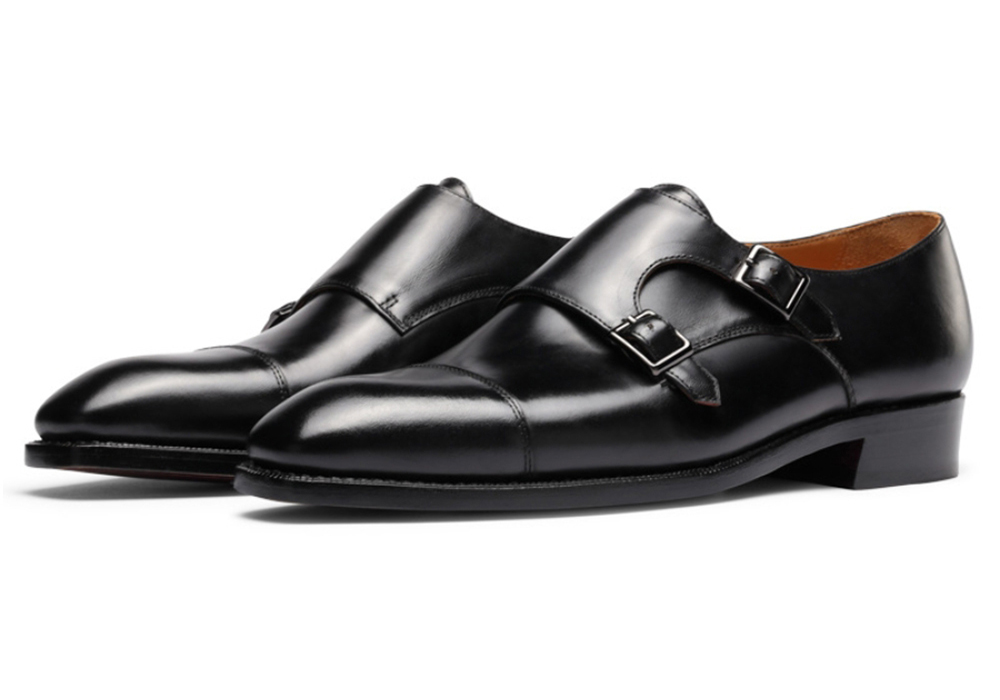
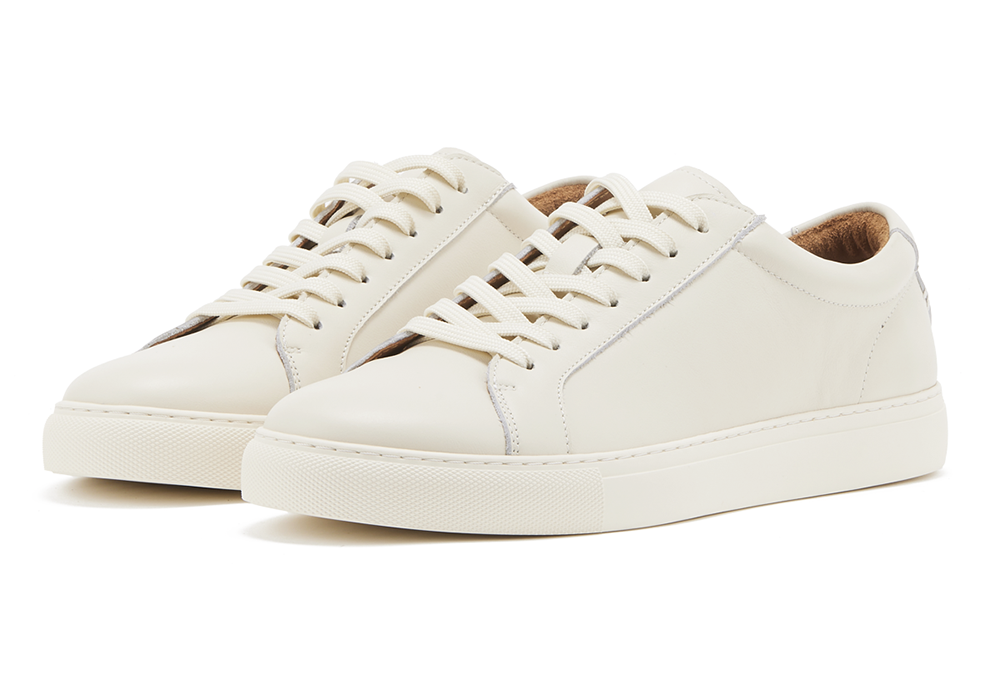
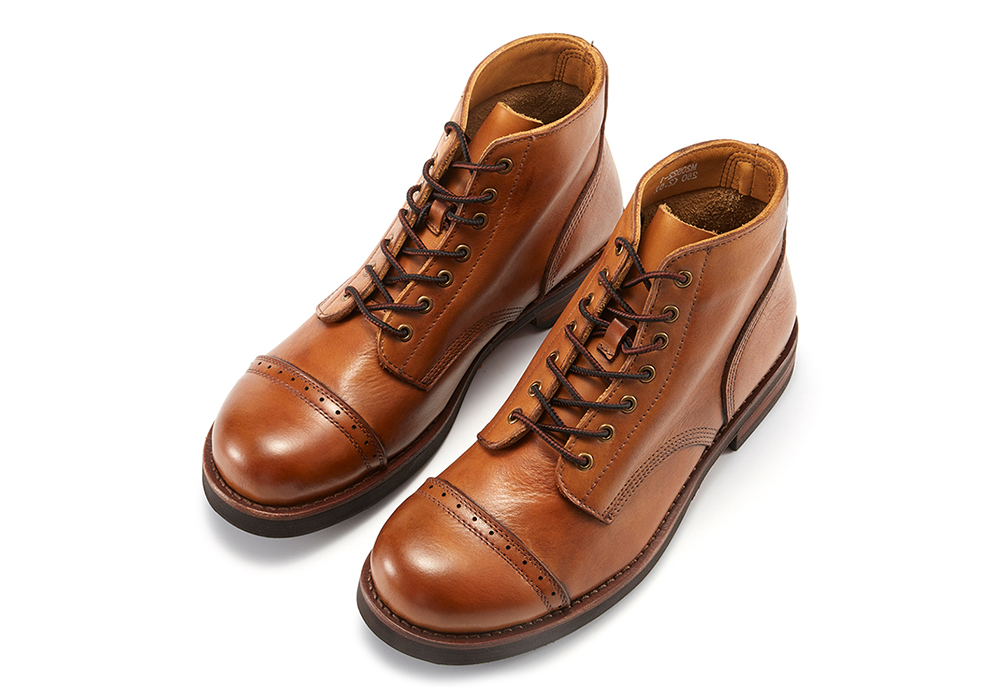
men’s dress shoe styles: Oxford Shoes: The Foundation of Formal Footwear
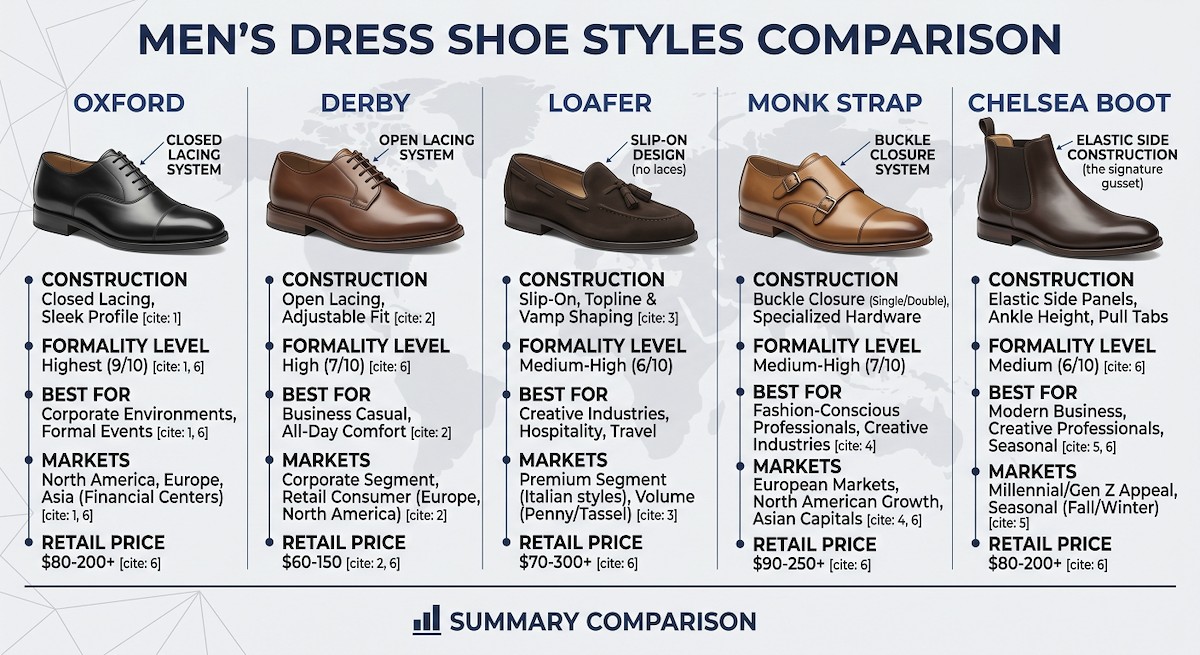
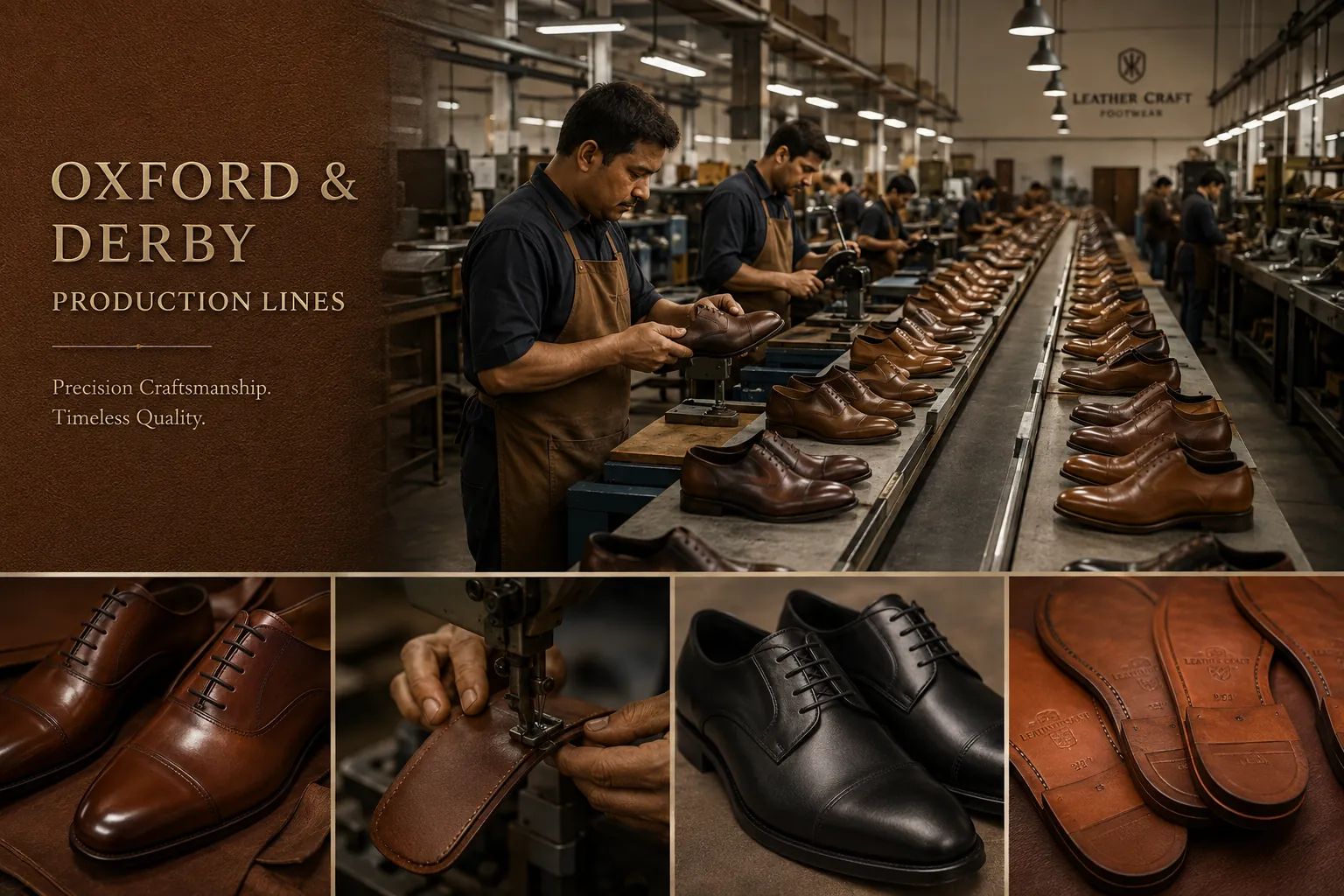
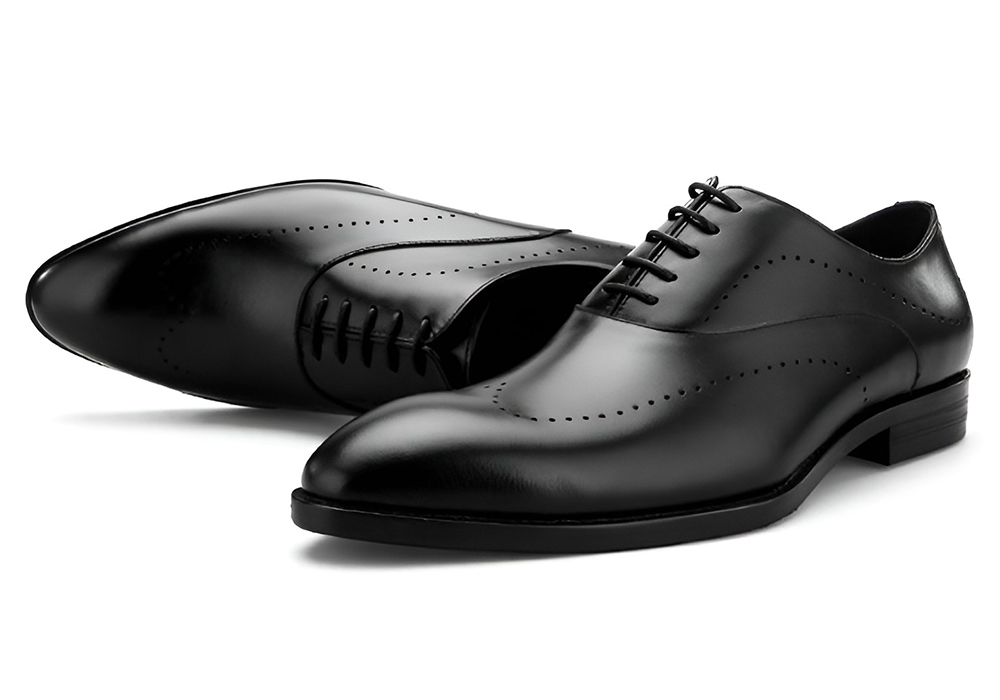
Oxford shoes represent the pinnacle of formal men’s footwear, characterized by their closed lacing system where the eyelet tabs are sewn under the vamp. This construction method creates a sleek, streamlined silhouette that has defined business dress codes for over a century.
Construction Details
The Oxford’s defining feature is its closed lacing system. The quarters (side panels) are stitched underneath the vamp (front section), creating a clean line across the instep. This construction requires precise pattern cutting and skilled lasting techniques, as any imperfection in the upper assembly becomes immediately visible.
Key construction elements include:
- Vamp integration: Single-piece or multi-piece vamp construction affects both aesthetics and durability
- Quarter attachment: Requires precise alignment to maintain the shoe’s formal appearance
- Toe cap variations: Plain toe, cap toe, or brogue detailing changes complexity and target market
- Sole attachment: Goodyear welted construction preferred for premium segments
The manufacturing process demands higher skill levels compared to casual shoes, particularly during the lasting phase where the upper must be stretched smoothly over the last without creating wrinkles or distortions.
Formality Level and Market Positioning
Oxfords sit at the highest formality level among dress shoes, making them essential for:
- Corporate environments: Banking, law, consulting, and executive roles
- Formal events: Weddings, galas, and black-tie occasions
- Government and diplomatic settings: Where traditional dress codes prevail
The style’s versatility within formal contexts makes it a cornerstone for any men’s dress shoe collection. Plain toe Oxfords work with business suits, while cap toe versions bridge formal and semi-formal occasions.
Target Markets and Regional Preferences
North American Market: Strong preference for cap toe Oxfords in black and brown. Corporate buyers often specify plain toe styles for uniform programs. Price sensitivity varies by segment, with premium brands commanding $200+ retail while private label versions target $80-120 retail range.
European Market: Traditional stronghold for Oxford shoes, with particular appreciation for brogue detailing and color variations. British and Italian styling influences create demand for both classic and contemporary interpretations.
Asian Markets: Growing adoption in financial centers like Singapore, Hong Kong, and Tokyo. Younger professionals increasingly choose Oxfords for career advancement, creating opportunities for modern cuts with traditional construction.
Derby Shoes: Versatile Open Lacing Design
Derby shoes feature an open lacing system where the eyelet tabs are sewn on top of the vamp, creating a more relaxed silhouette compared to Oxfords. This construction difference significantly impacts both the shoe’s appearance and its manufacturing requirements.
Construction Characteristics
The open lacing system defines Derby construction, offering several advantages:
- Adjustability: Open lacing accommodates different foot shapes and instep heights more effectively
- Comfort: Less restrictive fit appeals to customers prioritizing comfort over formal appearance
- Manufacturing efficiency: Simpler pattern cutting and assembly compared to closed lacing systems
Derby construction typically involves:
- Quarter positioning: Eyelet tabs positioned over the vamp create the characteristic open throat
- Lacing flexibility: Wider adjustment range accommodates various foot shapes
- Styling options: Plain, cap toe, or wingtip variations serve different market segments
- Sole options: Both leather and rubber soles work effectively with Derby styling
Formality and Business Applications
Derbies occupy the semi-formal category, making them suitable for:
- Business casual environments: Modern offices with relaxed dress codes
- Sales and client-facing roles: Professional appearance with enhanced comfort
- Extended wear situations: All-day comfort for professionals on their feet
The style bridges formal and casual wear more effectively than Oxfords, explaining its growing popularity among younger professionals who value versatility.
Market Demand Analysis
Corporate Segment: Increasing adoption as dress codes relax, particularly in tech and creative industries. Brown Derbies with rubber soles perform well in this segment.
Retail Consumer Market: Strong performance in the $60-150 retail price range, with comfort-focused marketing resonating with target demographics.
International Markets: European markets show consistent demand, while North American adoption accelerates as workplace formality decreases.
Loafer Shoes: Slip-On Convenience Meets Professional Style
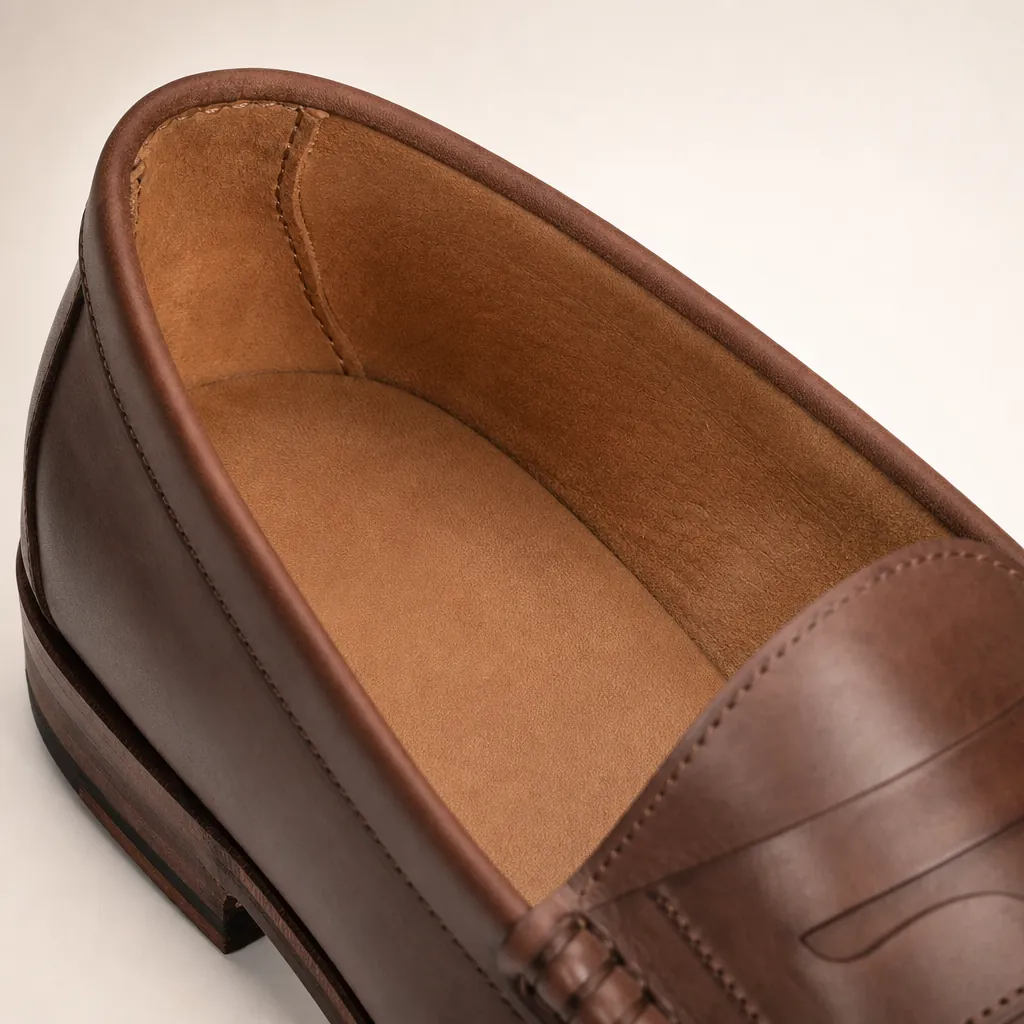
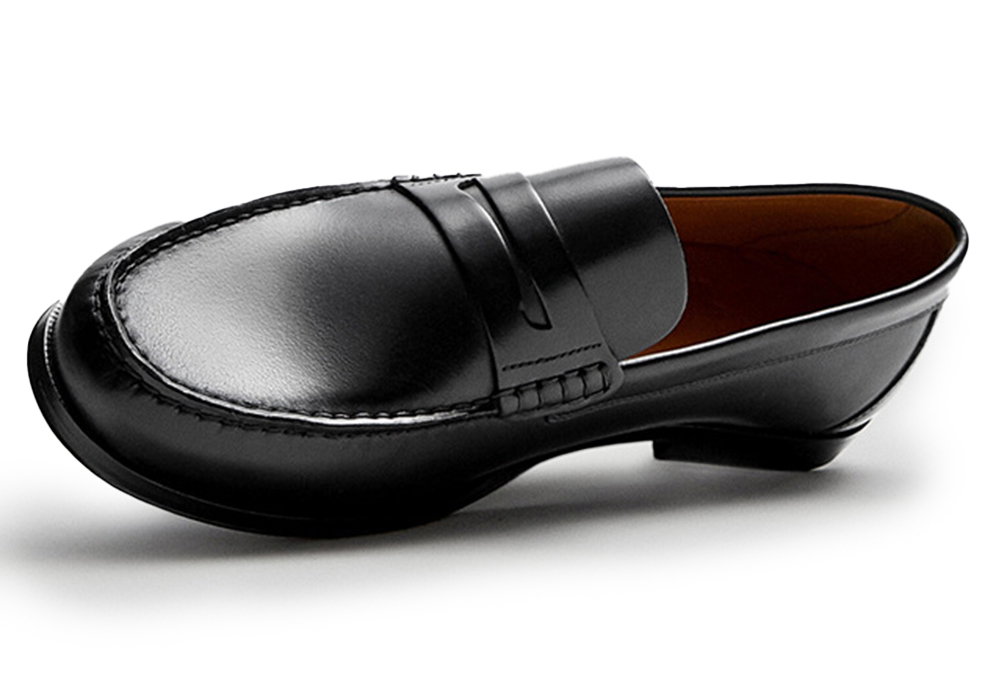
Loafers represent the slip-on category within dress shoes, offering convenience without sacrificing professional appearance. The absence of laces creates unique construction challenges while opening opportunities in comfort-focused market segments.
Construction and Design Elements
Loafer construction centers on secure fit without laces, requiring careful attention to:
- Topline design: Precise cutting ensures comfortable entry and secure retention
- Vamp shaping: Must accommodate foot insertion while maintaining shape integrity
- Strap or decoration placement: Penny straps, tassels, or horsebit hardware affect both aesthetics and manufacturing complexity
- Heel counter reinforcement: Critical for maintaining foot position without lace adjustment
Manufacturing considerations include:
- Last selection: Requires lasts specifically designed for slip-on construction
- Upper pattern engineering: More complex pattern work to achieve proper fit
- Quality control: Fit testing becomes more critical due to lack of lacing adjustment
- Material selection: Leather stretch characteristics significantly impact final fit
Professional Applications and Styling
Loafers serve specific professional contexts:
- Creative industries: Advertising, media, and design fields where style flexibility is valued
- Hospitality sector: Hotels and restaurants where staff require comfortable, professional footwear
- Medical professionals: Slip-on convenience for healthcare workers needing quick shoe changes
- Travel-heavy roles: Business travelers appreciate airport security convenience
The style’s versatility allows pairing with both suits and business casual attire, though it remains less formal than laced alternatives.
Market Segments and Pricing
Premium Segment: Italian-inspired designs with horsebit details or exotic leathers command higher prices. Target retail: $150-300+.
Volume Segment: Penny loafers and tassel loafers in standard leather finishes. Target retail: $70-140.
Comfort Segment: Enhanced cushioning and flexible construction for extended wear. Growing market among professionals prioritizing comfort.
Monk Strap Shoes: Distinctive Buckle Closure System
Monk strap shoes feature a unique buckle closure system instead of laces, creating a distinctive silhouette that appeals to style-conscious professionals seeking alternatives to traditional laced shoes.
Construction and Hardware Integration
Monk strap construction involves several specialized elements:
- Buckle system: Single or double buckle configurations require precise hardware placement
- Strap engineering: Leather strap must maintain flexibility while providing secure closure
- Hardware quality: Buckle durability and finish quality significantly impact perceived value
- Upper integration: Strap attachment points must be reinforced to handle repeated use
Manufacturing complexity includes:
- Hardware sourcing: Quality buckles require reliable suppliers and consistent finishes
- Assembly sequence: Strap attachment timing affects production efficiency
- Quality testing: Buckle functionality and strap durability require specific testing protocols
- Sizing considerations: Strap length must accommodate size range variations
Style Positioning and Market Appeal
Monk straps occupy a unique position between formal and fashion-forward styling:
- Fashion-conscious professionals: Appeals to individuals seeking distinctive professional footwear
- Creative industries: Popular in fashion, architecture, and design fields
- European markets: Strong traditional acceptance, particularly in Italy and UK
- Younger demographics: Growing appeal among millennials and Gen Z professionals
The style’s distinctiveness makes it ideal for brands seeking differentiation in crowded dress shoe markets.
Regional Market Performance
European Markets: Traditional stronghold with consistent demand across age groups. Double monk straps particularly popular in fashion-forward cities.
North American Growth: Increasing acceptance among younger professionals, though still niche compared to traditional laced styles.
Asian Markets: Emerging interest in fashion capitals, with potential for growth as Western business dress influences expand.
Chelsea Boot: Elastic Side Construction for Modern Professionals
Chelsea boots combine ankle boot height with elastic side panels, creating a sleek silhouette suitable for both formal and casual professional environments. The style’s versatility and contemporary appeal drive growing market demand.
Construction and Technical Requirements
Chelsea boot construction involves several specialized techniques:
- Elastic panel integration: High-quality elastic must maintain stretch and recovery over time
- Ankle height lasting: Requires specialized lasts and lasting techniques for proper fit
- Pull tab functionality: Heel and front tabs must be both functional and aesthetically pleasing
- Sole selection: Both leather and rubber soles work, affecting market positioning
Technical considerations include:
- Elastic quality: Premium elastic prevents premature failure and maintains appearance
- Pattern engineering: Achieving proper ankle fit without laces requires precise pattern work
- Heel counter design: Must provide support while accommodating elastic stretch
- Finishing details: Clean lines essential for the style’s minimalist aesthetic
Professional Applications
Chelsea boots serve multiple professional contexts:
- Modern business environments: Tech companies and startups with flexible dress codes
- Creative professionals: Architects, designers, and media professionals
- International business: Versatile enough for various cultural dress expectations
- Seasonal wear: Ankle coverage provides weather protection while maintaining professional appearance
Market Growth and Opportunities
Millennial and Gen Z Appeal: Strong growth among younger professionals who value versatility and contemporary styling.
Seasonal Demand: Fall and winter seasons show increased demand, creating opportunities for seasonal inventory planning.
Price Point Flexibility: Style works across price ranges from budget-conscious to premium segments.
Comprehensive Style Comparison
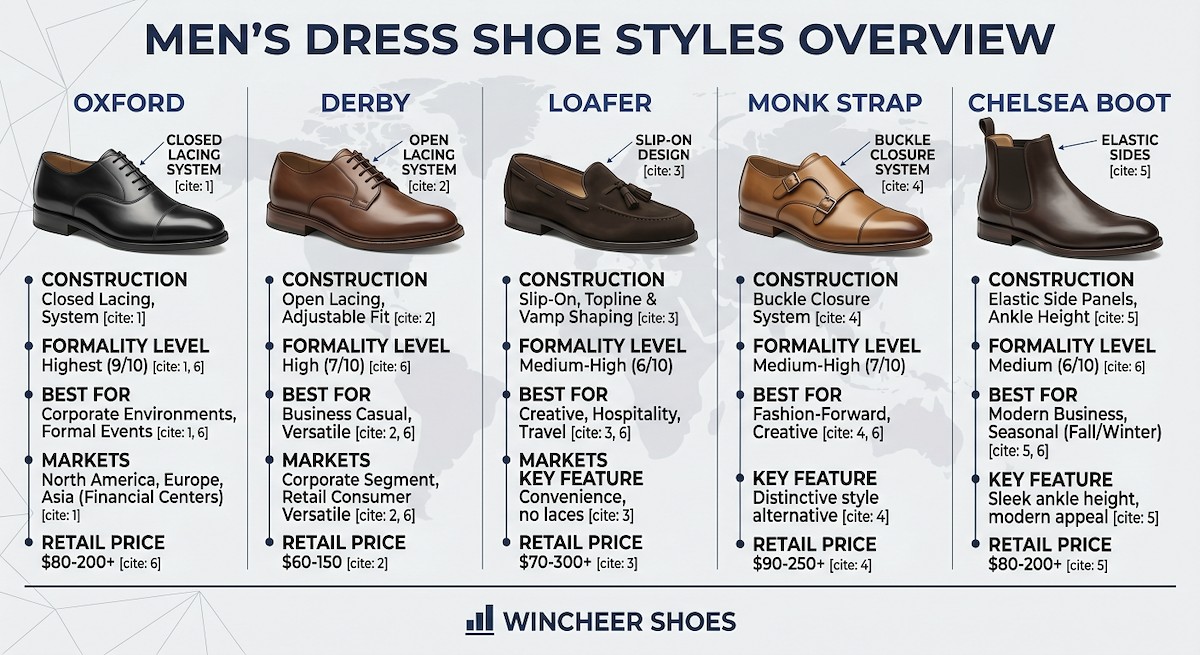
| Style | Construction | Formality Level | Manufacturing Complexity | Target Price Range | Best Markets |
|---|---|---|---|---|---|
| Oxford | Closed lacing | Highest (9/10) | High | $80-200+ retail | Corporate, formal events |
| Derby | Open lacing | High (7/10) | Medium | $60-150 retail | Business casual, versatile |
| Loafer | Slip-on | Medium-High (6/10) | Medium-High | $70-300+ retail | Creative, hospitality |
| Monk Strap | Buckle closure | Medium-High (7/10) | High | $90-250+ retail | Fashion-forward, European |
| Chelsea Boot | Elastic sides | Medium (6/10) | Medium-High | $80-200+ retail | Modern business, seasonal |
Regional Market Demand Analysis
North American Market Preferences
Corporate Segment: Traditional preference for Oxfords and Derbies in conservative colors. Black and brown leather dominate, with limited acceptance of fashion-forward styles in traditional industries.
Growth Segments:
- Chelsea boots gaining traction in tech hubs
- Loafers popular in West Coast business casual environments
- Monk straps emerging in fashion-conscious metropolitan areas
Seasonal Patterns: Strong Q4 demand for all styles due to holiday gifting and year-end corporate purchases.
European Market Dynamics
Traditional Strength: All five styles maintain strong market presence, with regional preferences for specific constructions and finishes.
Style Innovation: European markets more accepting of contemporary interpretations and color variations across all categories.
Quality Expectations: Higher quality standards and willingness to pay premium prices for superior construction and materials.
Southeast Asian Market Evolution
Emerging Opportunities: Growing professional class drives demand for all dress shoe categories, with particular growth in:
- Oxfords for banking and finance sectors
- Derbies for general business use
- Chelsea boots among younger professionals
Climate Considerations: Preference for breathable constructions and moisture-resistant finishes affects material selection and construction methods.
Price Sensitivity: Value-oriented segments dominate, creating opportunities for well-constructed shoes at competitive price points.
Manufacturing and Sourcing Considerations
Minimum Order Quantity Planning
Different styles require varying MOQ considerations:
Complex Styles (Oxford, Monk Strap): Higher tooling costs and specialized skills may require larger initial orders to achieve competitive pricing.
Volume Styles (Derby, Loafer): Established production processes allow for smaller test orders and faster market entry.
Seasonal Styles (Chelsea Boot): Timing production cycles with seasonal demand patterns optimizes inventory turnover.
Quality Control Priorities
Each style presents specific quality challenges:
- Oxford: Lacing alignment and vamp smoothness critical
- Derby: Consistent eyelet positioning and throat opening
- Loafer: Fit consistency across size range
- Monk Strap: Hardware functionality and strap durability
- Chelsea Boot: Elastic quality and ankle fit
Production Efficiency Factors
Skill Requirements: Oxford and monk strap production requires higher skill levels, affecting labor costs and production capacity.
Material Utilization: Different cutting patterns affect leather yield and material costs across styles.
Assembly Time: Slip-on styles and buckle systems require different assembly sequences, impacting production planning.
Decision Framework for Style Selection
Market Analysis Checklist
- [ ] Target demographic age and profession
- [ ] Regional formality expectations
- [ ] Seasonal demand patterns
- [ ] Competitive landscape analysis
- [ ] Price point positioning
Production Readiness Assessment
- [ ] Manufacturing partner capabilities
- [ ] Quality control systems for specific style
- [ ] Material sourcing for required components
- [ ] MOQ alignment with market testing needs
- [ ] Timeline requirements for market entry
Financial Planning Considerations
- [ ] Development costs for new styles
- [ ] Inventory investment requirements
- [ ] Pricing strategy alignment
- [ ] Margin expectations by style category
- [ ] Market penetration timeline
Frequently Asked Questions
Q: Which dress shoe style offers the best profit margins for new brands?
A: Derby shoes typically offer the best balance of manufacturing efficiency and market appeal for new brands. Their open lacing construction reduces production complexity compared to Oxfords while maintaining broad market acceptance. The style’s versatility allows positioning across multiple price points, from business casual to semi-formal segments.
Q: How do minimum order quantities vary between different dress shoe styles?
A: Complex styles like Oxfords and monk straps often require higher MOQs due to specialized tooling and skilled labor requirements. Simpler constructions like Derbies and loafers may allow smaller initial orders. However, experienced manufacturers can often accommodate lower MOQs across all styles for established partners or when utilizing existing lasts and patterns.
Q: What are the key quality differences buyers should expect between dress shoe styles?
A: Quality differences primarily relate to construction complexity rather than inherent style superiority. Oxford shoes require precise lasting and pattern work, making quality control more critical. Monk straps depend heavily on hardware quality and strap durability. Loafers need excellent fit consistency since they lack lacing adjustment. Each style has specific quality benchmarks that experienced manufacturers understand and control.
Q: Which markets show the strongest growth potential for each dress shoe style?
A: North American markets show growing acceptance of Chelsea boots and monk straps among younger professionals. European markets maintain steady demand across all styles with premium positioning opportunities. Asian markets demonstrate strong growth for traditional Oxfords and Derbies in financial centers, while casual-leaning styles gain traction in tech hubs.
Q: How do seasonal factors affect demand for different dress shoe styles?
A: Chelsea boots show pronounced seasonal patterns with peak demand in fall and winter months. Traditional styles like Oxfords and Derbies maintain more consistent year-round demand. Loafers often see increased summer demand in business casual environments. Understanding these patterns helps optimize inventory planning and production scheduling.
Ready to Start Your Shoe Line?
Selecting the right men’s dress shoe styles for your brand requires balancing market demand, manufacturing capabilities, and positioning strategy. Whether you’re launching with classic Oxfords or exploring contemporary Chelsea boots, success depends on understanding both construction requirements and target market preferences.
Our team brings experience since 2007, helping brands navigate style selection, production planning, and quality control across all major dress shoe categories. From initial concept to final delivery, we provide the technical expertise and manufacturing capabilities needed to build successful footwear lines.
Contact us to discuss your specific requirements and explore how our proven processes can accelerate your market entry. Visit wincheershoes.com for detailed capabilities and case studies.
Men’S Dress Shoe Styles FAQ
Q: What is the most important factor when I want to men’s dress shoe styles?
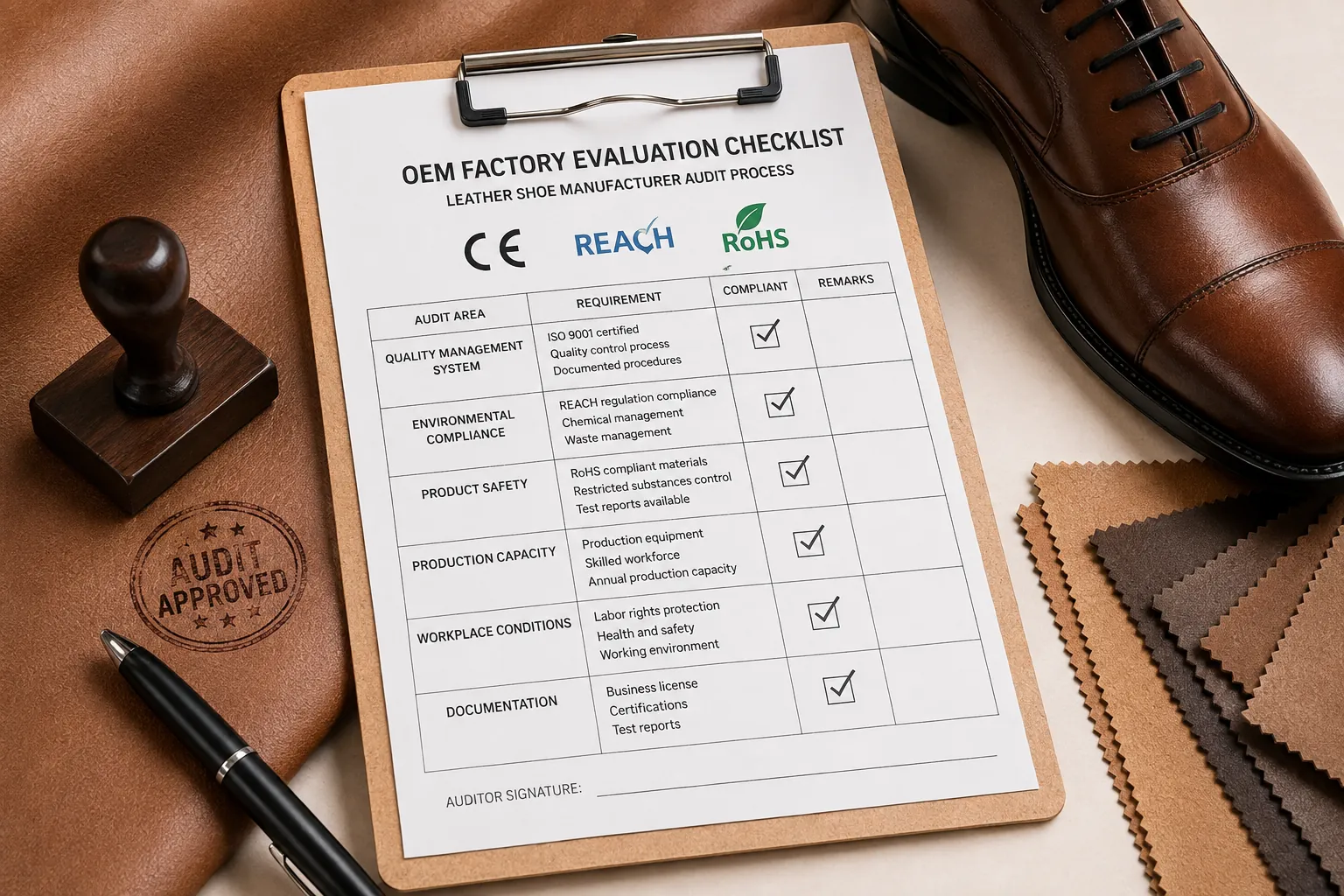
A: Finding a manufacturer with proven quality control and relevant certifications. Check for CE, REACH, or RoHS compliance and request defect rate data before committing.
Q: How much does it cost to men’s dress shoe styles?
A: Costs vary by order size and customization level. Factory-direct OEM production from China typically ranges from $25-40 per pair, with lower per-unit costs at higher volumes.
Q: What is the minimum order quantity to men’s dress shoe styles?
A: Traditional factories require 300-600 pairs, but some manufacturers like Wincheer Shoes offer as low as 60 pairs for custom designs and zero MOQ for existing styles.
Q: How long does the men’s dress shoe styles process take from concept to delivery?
A: Expect 15-25 days for sampling and 30-60 days for bulk production. Established manufacturers can often compress timelines for repeat clients.
Q: What certifications should I verify before I men’s dress shoe styles?
A: For EU markets, ensure CE (EN ISO20347) and REACH compliance. For general quality assurance, look for ISO 9001 certification and request third-party inspection reports from SGS or Intertek.