
What Are Brogan Shoes? History, Types & Style Guide 2026
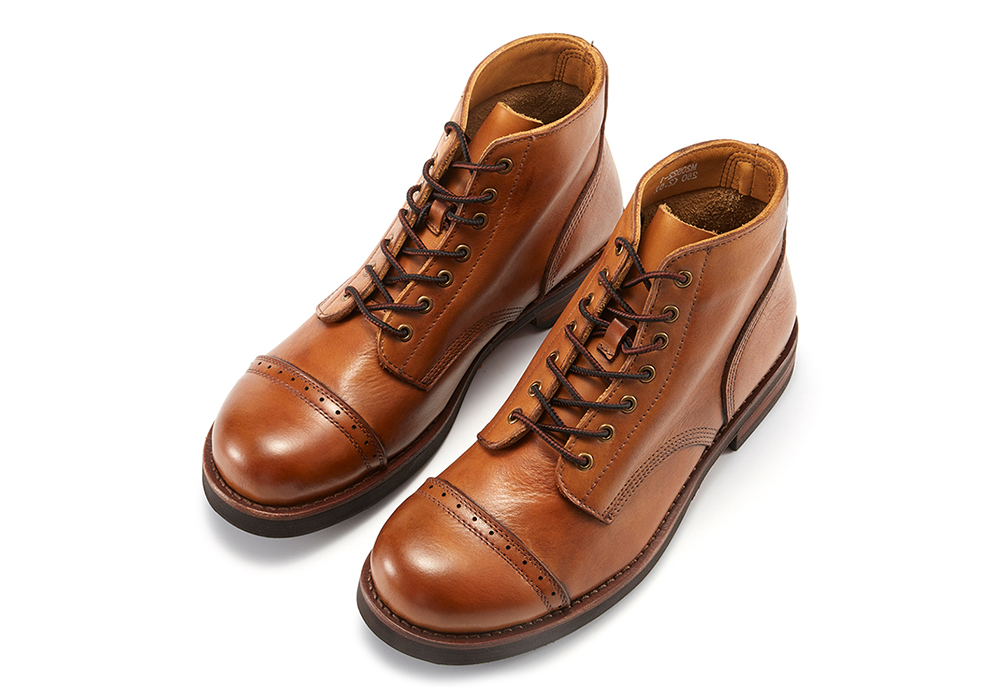
Brogan shoes are sturdy, ankle-height leather boots that typically feature lace-up fronts with three to six eyelets, a rounded toe, and a thick sole built for rough terrain. Originally designed as military footwear in the 16th century, brogans became the standard-issue boot for soldiers from the American Revolutionary War through the Civil War and beyond. The name derives from the Gaelic word bróg, meaning “shoe.” Unlike the decorative brogue (which refers to perforated patterns on dress shoes), a brogan is defined by its construction: a rugged, utilitarian ankle boot with minimal ornamentation. Today, brogans exist across a spectrum from historically accurate reproductions worn by reenactors to refined leather ankle boots adapted for casual and smart-casual wear. They sit in a unique space between work boots and dress shoes — tough enough for outdoor use, clean enough for a dinner table. Understanding what makes a brogan a brogan requires looking at its construction, its military DNA, and the specific ways it differs from the footwear it’s most commonly confused with.
The History of Brogan Shoes: From Gaelic Farmers to American Battlefields
Origins in the Scottish and Irish Highlands (1500s–1700s)
The brogan traces its lineage to the rawhide shoes worn by Gaelic-speaking farmers and herders in Scotland and Ireland. These early versions were crude by modern standards — a single piece of untanned cowhide wrapped around the foot, sometimes stuffed with straw for insulation, and tied with leather thongs. The word bróg simply meant “shoe” in Irish and Scottish Gaelic, and these rough coverings were the everyday footwear of working people across the British Isles.
What made these proto-brogans distinct was their practicality. They weren’t designed to last years or look elegant. They were designed to protect feet from rocks, mud, and cold while allowing the wearer to move quickly across uneven ground. This utilitarian philosophy — function dictating form — carried forward into every subsequent version of the brogan.
By the early 1700s, colonial settlers brought the brogan concept to North America. Shoemakers (called cordwainers) in the American colonies began producing their own versions using locally tanned leather, and the brogan evolved from a wrapped rawhide shoe into a proper constructed boot with a separate sole, upper, and lacing system.
Military Adoption: The Revolutionary War Through the War of 1812
The Continental Army during the American Revolutionary War (1775–1783) faced chronic supply shortages, and footwear was among the most desperate needs. Soldiers at Valley Forge famously marched with rags wrapped around their feet. When shoes were available, they were most often brogans — cheap, fast to produce, and requiring less skilled labor than tall cavalry boots.
These early military brogans had several defining characteristics:
- Straight last construction — The shoe was built on a symmetrical form, meaning there was no difference between the left and right shoe. Soldiers had to break them in until the leather conformed to each foot.
- Rough-out leather — The flesh side of the hide faced outward, giving the boot a suede-like texture that resisted water slightly better than smooth leather in certain conditions.
- Pegged or wooden-nailed soles — Before the widespread use of stitching machines, soles were attached using small wooden pegs driven through the leather. This was faster and cheaper than hand-stitching.
The straight last is a detail that surprises modern buyers. Wearing a shoe with no left-right distinction sounds unbearable, but it actually served a logistical purpose: quartermasters didn’t need to sort and match pairs, and any two shoes of the same size could be issued together. Soldiers simply wore them until the leather molded to their feet, usually within a week of hard marching.
The Civil War Brogan: The Jefferson Model 1859
The American Civil War (1861–1865) represents the peak of the brogan’s military significance. The Union Army alone consumed an estimated 3.5 million pairs of shoes during the conflict, and the vast majority were brogans based on the Jefferson Brogan Model 1859 — named after the Jefferson Barracks in Missouri where the design was standardized.
Key specifications of the Model 1859 included:
- Four-eyelet lacing with a low-cut ankle profile
- Black bridle leather upper, typically 6–8 oz weight
- Hobnailed soles — iron nails driven into the outsole for traction and durability on packed earth, cobblestone, and muddy fields
- Pegged construction with a square heel block
- Broad, rounded toe box to accommodate swollen feet during long marches
The hobnails deserve special attention. These small, dome-headed iron nails served the same function as modern lug soles — providing grip on slippery surfaces. A standard Civil War brogan had between 15 and 30 hobnails arranged in a pattern across the sole and heel. The downside was noise (stealth was impossible) and the tendency for hobnails to conduct cold directly into the foot during winter campaigns.
Confederate forces used similar brogans but faced severe leather shortages as the war progressed. Southern brogans were often made with inferior leather, and some late-war examples used wooden soles when leather became unavailable. The quality disparity in footwear between Union and Confederate forces is one of those small logistical details that military historians point to when explaining the war’s outcome.
Post-Civil War Evolution and Decline (1870s–1940s)
After the Civil War, the brogan gradually lost its position as primary military footwear. Several factors drove this shift:
- The rise of the service boot — Taller boots offering more ankle support and protection replaced the low-cut brogan for infantry use.
- Goodyear welt technology — Charles Goodyear Jr.’s welt-stitching machine (patented 1869) made it economical to produce higher-quality, resoleable boots at scale.
- Rubber sole development — Vulcanized rubber outsoles began replacing hobnails and pegged leather soles, offering better traction without the weight penalty.
By World War I, the brogan had been largely replaced by the “trench boot” and various service boot designs. The brogan didn’t disappear entirely — it survived as civilian work footwear, particularly among farmers, laborers, and rural populations who valued its simplicity and low cost.
Brogan vs. Brogue vs. Combat Boot: Clearing Up the Confusion
This is the single most common point of confusion in men’s footwear terminology, and it trips up even experienced shoe buyers. Let me break it down clearly.
The Core Distinction
A brogan is a type of shoe — defined by its shape, height, and construction purpose.
A brogue is a decorative pattern — defined by the perforations (called broguing or pinking) punched into the leather surface.
A combat boot is a functional category — defined by its military specification and tactical design features.
These three terms operate on different axes entirely. A shoe can technically be a brogan with brogue detailing. A combat boot can share ancestry with the brogan but differs in height, construction, and intended use.
Detailed Comparison Table
| Feature | Brogan | Brogue (Oxford/Derby) | Combat Boot |
|---|---|---|---|
| Height | Ankle (3–5 inches) | Below ankle | Mid-calf to knee (8–12 inches) |
| Eyelets | 3–6 | 5–6 (shoe-height) | 8–12+ |
| Sole type | Thick leather or rubber | Thin leather or composite | Aggressive rubber lug |
| Decorative perforations | Rarely | Always (defining feature) | Never |
| Primary purpose | Work/military utility | Dress/business wear | Active combat/tactical |
| Toe shape | Rounded, broad | Varies (pointed to rounded) | Rounded, reinforced |
| Weight (per shoe, size 10) | 18–26 oz | 12–16 oz | 28–40 oz |
| Ankle support | Moderate | None | High |
| Historical origin | 16th-century Gaelic farmers | 17th-century Scottish Highlands | 20th-century military R&D |
| Resoleable | Yes (most constructions) | Yes (Goodyear welt) | Varies by model |
Why People Confuse Brogans and Brogues
The words brogan and brogue both come from the same Gaelic root (bróg), which is why English speakers constantly mix them up. But their paths diverged centuries ago:
- The brogan kept the utilitarian spirit of the original Gaelic shoe — rough, practical, built for hard use.
- The brogue evolved in a completely different direction. The perforations that define brogue shoes were originally functional — they allowed water to drain when crossing boggy terrain. Over time, those perforations became purely decorative, and the brogue became a staple of men’s dress footwear.
Here’s the counter-intuitive insight that experienced buyers know: a well-made brogan will often outlast a brogue that costs twice as much. Brogans are built with thicker leather, heavier soles, and more robust construction methods because they were designed to survive battlefields and farm work. A quality brogan with a Goodyear welt or pegged sole can be resoled three or four times over a 15–20 year lifespan. Many dress brogues, especially those with Blake-stitched or cemented soles, have a functional life of 3–5 years before the sole construction fails. Price doesn’t always correlate with durability — construction method does.
5 Modern Types of Brogan Shoes
The brogan has branched into several distinct subcategories. Here’s what you’ll find on the market today.
1. Historical Reproduction Brogans
These are faithful recreations of Civil War–era and earlier brogan designs, built using period-accurate methods.
- Construction: Pegged soles, straight last (no left/right), rough-out or smooth leather
- Leather: Vegetable-tanned cowhide, typically 7–9 oz weight
- Sole: Leather with optional hobnails
- Market: Civil War reenactors, living history participants, museum collections
- Price range: $80–$250
Brands like Fugawee and Missouri Boot & Shoe specialize in this category. The fit is intentionally uncomfortable by modern standards — that’s historically accurate.
2. Heritage/Workwear Brogans
Modern boots inspired by brogan design but built with contemporary comfort features.
- Construction: Goodyear welt or stitchdown
- Leather: Full-grain Chromexcel, oil-tanned, or pull-up leather
- Sole: Leather, Vibram rubber, or Dainite studded rubber
- Market: Heritage fashion enthusiasts, Americana style, everyday wear
- Price range: $150–$500
This is the largest and most commercially significant brogan category. These boots keep the low-cut profile, rounded toe, and 4–6 eyelet lacing of the original while adding arch support, cushioned insoles, and properly lasted left/right construction.
3. Dress Brogans
Refined versions designed for smart-casual and business-casual settings.
- Construction: Goodyear welt or Blake stitch
- Leather: Calfskin, polished cowhide, or shell cordovan
- Sole: Thin leather or leather/rubber combination
- Market: Office wear, smart-casual events, men who want boot height with dress shoe refinement
- Price range: $200–$600+
Dress brogans often incorporate subtle brogue detailing (perforations along the seams), which creates a hybrid that blurs the brogan/brogue line. These are sometimes marketed as “ankle boots” or “chukka alternatives.”
4. Tactical/Field Brogans
Modern tactical boots that echo the brogan’s military roots while incorporating current technology.
- Construction: Cement or direct-inject with reinforced stitching
- Leather: Full-grain with Cordura nylon panels
- Sole: Rubber lug with EVA midsole
- Market: Security personnel, outdoor professionals, tactical enthusiasts
- Price range: $100–$300
These sit at the boundary between brogan and combat boot. They maintain the brogan’s lower profile (typically 5–6 inches) but add modern features like speed-lacing hardware, moisture-wicking liners, and composite toe caps.
5. Fashion/Designer Brogans
High-fashion interpretations that use the brogan silhouette as a design starting point.
- Construction: Varies widely (Blake, cemented, Goodyear welt)
- Leather: Exotic skins, suede, patent leather, mixed materials
- Sole: Crepe, leather, chunky rubber platforms
- Market: Fashion-forward consumers, runway-influenced street style
- Price range: $300–$1,500+
Designer labels periodically rediscover the brogan, especially during cycles when military-inspired fashion trends upward. These versions may bear little functional resemblance to historical brogans but carry the DNA in their proportions and lacing configuration.
How to Style Brogan Shoes: 4 Scenarios
Scenario 1: Casual Weekend Wear
Brogans are natural partners for relaxed, layered outfits.
- Boots: Heritage brogan in brown or tan leather, rubber sole
- Pants: Straight-leg selvedge denim, cuffed once to show the boot shaft
- Top: Heavyweight flannel shirt or chambray button-down
- Outerwear: Waxed cotton field jacket or denim trucker jacket
- Key detail: Let the boots be the focal point. Keep everything else understated. The brogan’s chunky silhouette works best when it anchors an otherwise simple outfit.
Scenario 2: Smart-Casual Office
Dress brogans bridge the gap between formal shoes and casual boots.
- Boots: Dress brogan in dark brown or oxblood calfskin, leather sole
- Pants: Slim-fit chinos in navy, olive, or charcoal
- Top: Oxford cloth button-down, tucked in, with a leather belt matching the boot color
- Outerwear: Unstructured blazer in navy or tweed
- Key detail: The boot height should be fully covered by the trouser leg. If the shaft is visible, the look shifts from smart-casual to casual. Hem your pants accordingly.
Scenario 3: Outdoor/Rugged Activity
This is the brogan’s ancestral territory.
- Boots: Heritage or tactical brogan with Vibram sole, in dark brown or black
- Pants: Canvas work pants or heavyweight twill cargo pants
- Top: Merino wool base layer under a heavy flannel or wool overshirt
- Outerwear: Insulated vest or waxed field coat
- Key detail: Treat the boots with a waterproofing wax or cream before exposure to wet conditions. Brogans aren’t waterproof by default — the low ankle height means water can enter from above even if the leather is sealed.
Scenario 4: Historical Reenactment
Accuracy matters here, and experienced reenactors are exacting about details.
- Boots: Reproduction brogan appropriate to the period being portrayed (e.g., Jefferson Model 1859 for Civil War)
- Socks: Hand-knit wool socks, typically gray or off-white
- Pants: Period-correct wool trousers, worn over the boot shaft (Union) or tucked in (varies by unit)
- Key detail: Break in reproduction brogans extensively before any event. Straight-last boots require 30–50 miles of wear before they conform to your feet. Blisters at events are the mark of someone who didn’t prepare.
Brogan Shoe Care and Maintenance Guide
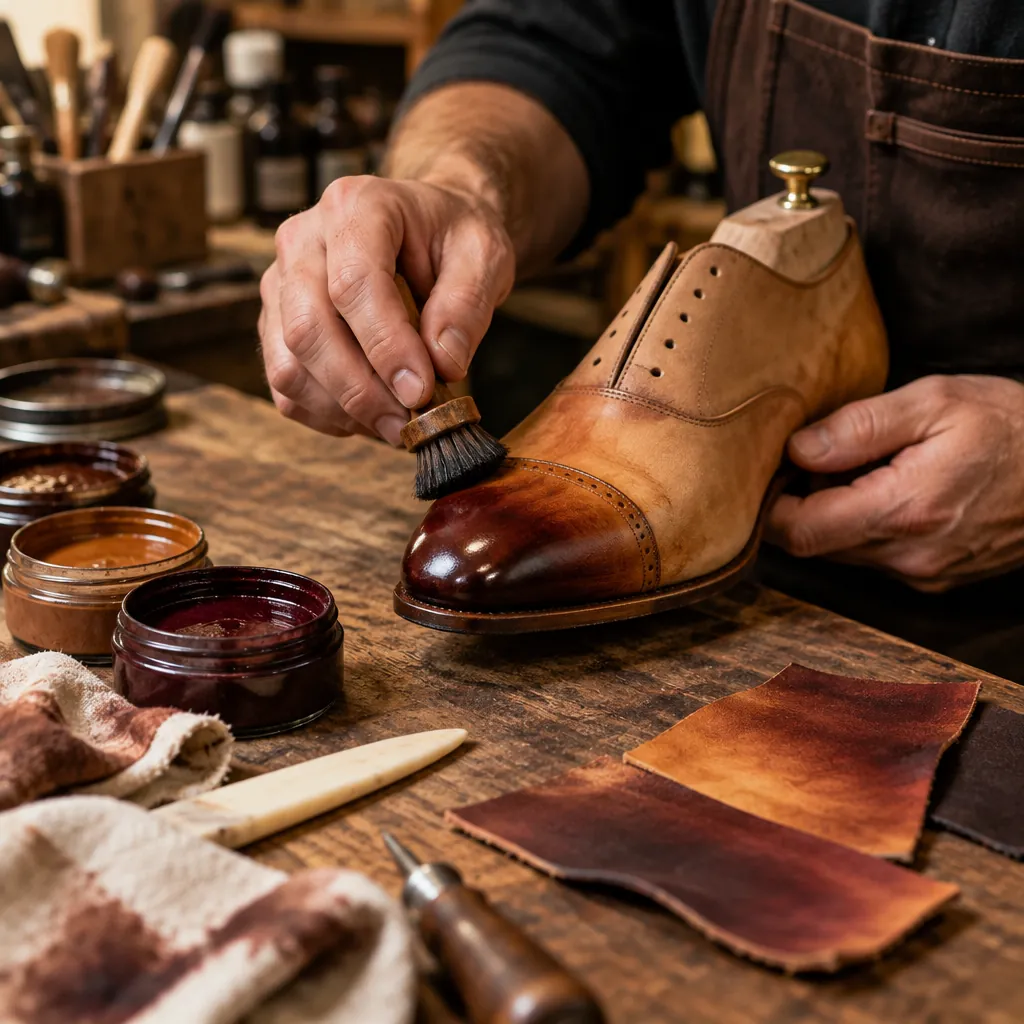
Proper care dramatically extends the life of leather brogans. Here’s a complete maintenance protocol based on the type of leather and construction.
Weekly Maintenance
- Brush off dirt and debris after every wear using a horsehair brush. This takes 30 seconds and prevents grit from abrading the leather surface.
- Insert cedar shoe trees when not wearing the boots. Cedar absorbs moisture from sweat and helps the leather maintain its shape. This single habit does more for shoe longevity than any product you can buy.
Monthly Conditioning
- Clean the leather with a damp cloth or saddle soap for heavily soiled boots.
- Apply leather conditioner — Lexol, Bick 4, or a similar pH-balanced conditioner. Work it into the leather with your fingers or a cloth, paying extra attention to flex points at the vamp and ankle.
- Buff with a clean cloth after the conditioner absorbs (15–20 minutes).
Seasonal Deep Care
- Waterproofing — Apply a beeswax-based waterproofing product (Obenauf’s LP, Sno-Seal, or similar) before wet seasons. Note: wax-based products will darken the leather permanently. Test on an inconspicuous area first.
- Sole inspection — Check for wear patterns, loose stitching, or peeling layers. A Goodyear-welted brogan can be resoled by a cobbler for $75–$150, which is far cheaper than replacement.
- Hardware check — Inspect eyelets and speed hooks for looseness or corrosion. Replace any damaged hardware before it tears the leather.
Storage
- Never store leather boots in plastic bags or airtight containers. Leather needs air circulation to prevent mold and mildew.
- Keep away from direct heat sources. Radiators, heating vents, and direct sunlight will dry out and crack leather faster than anything else.
- Store with shoe trees in a cool, dry location with moderate humidity (40–60% relative humidity is ideal).
Special Care for Reproduction Brogans
Historical reproduction brogans with pegged soles and vegetable-tanned leather require slightly different care:
- Avoid modern silicone-based conditioners. Use period-appropriate treatments like neatsfoot oil or tallow.
- Re-peg loose soles rather than gluing them. A cobbler experienced with historical footwear can re-peg a sole for $30–$50.
- Expect and embrace patina. Vegetable-tanned leather develops a rich color change over time that modern chrome-tanned leather doesn’t replicate.
A Note on Manufacturing Quality
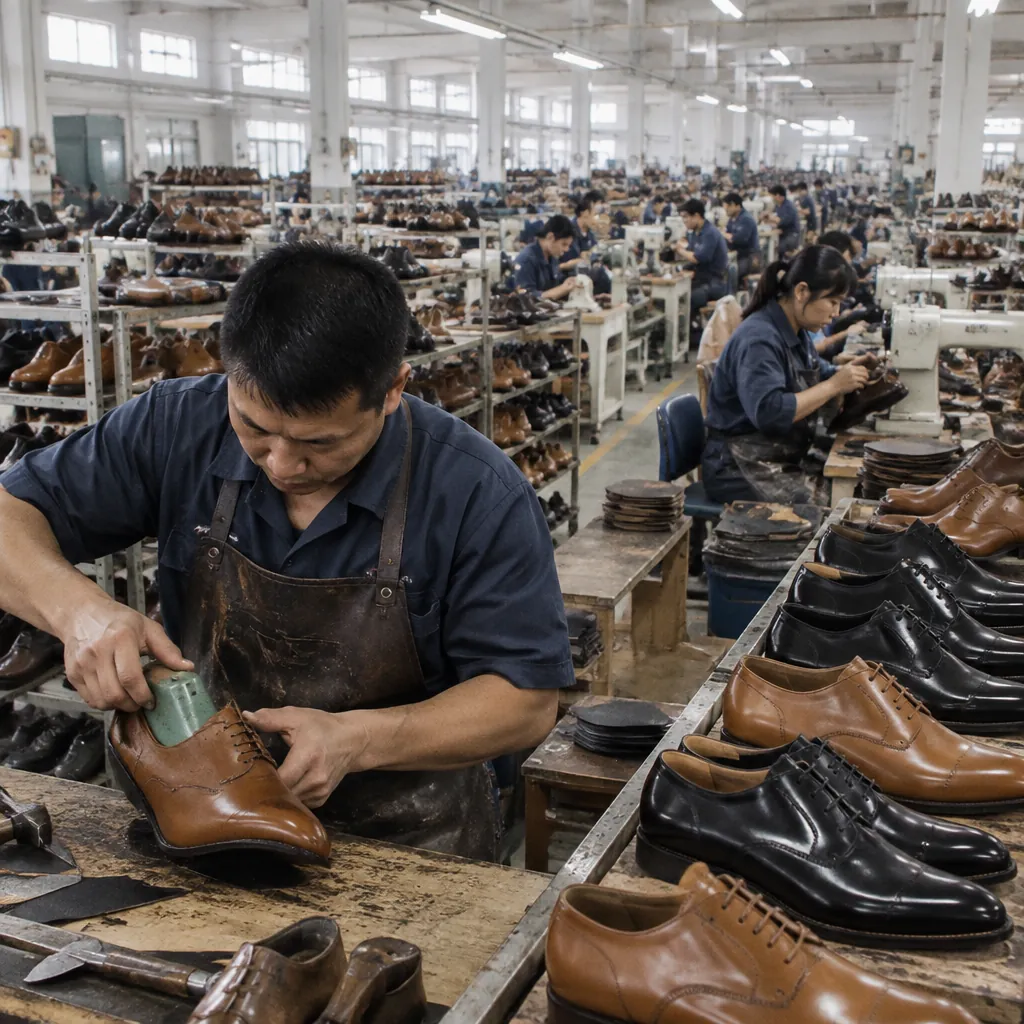
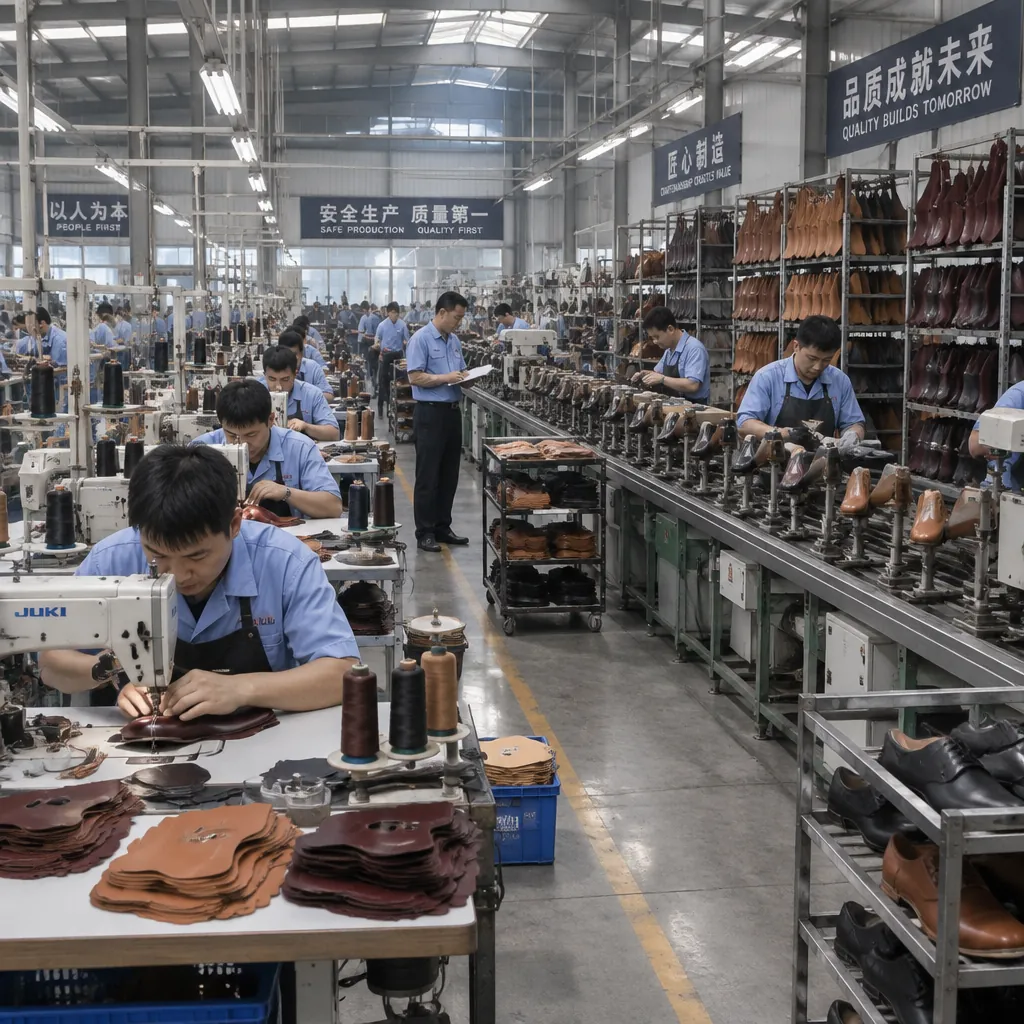
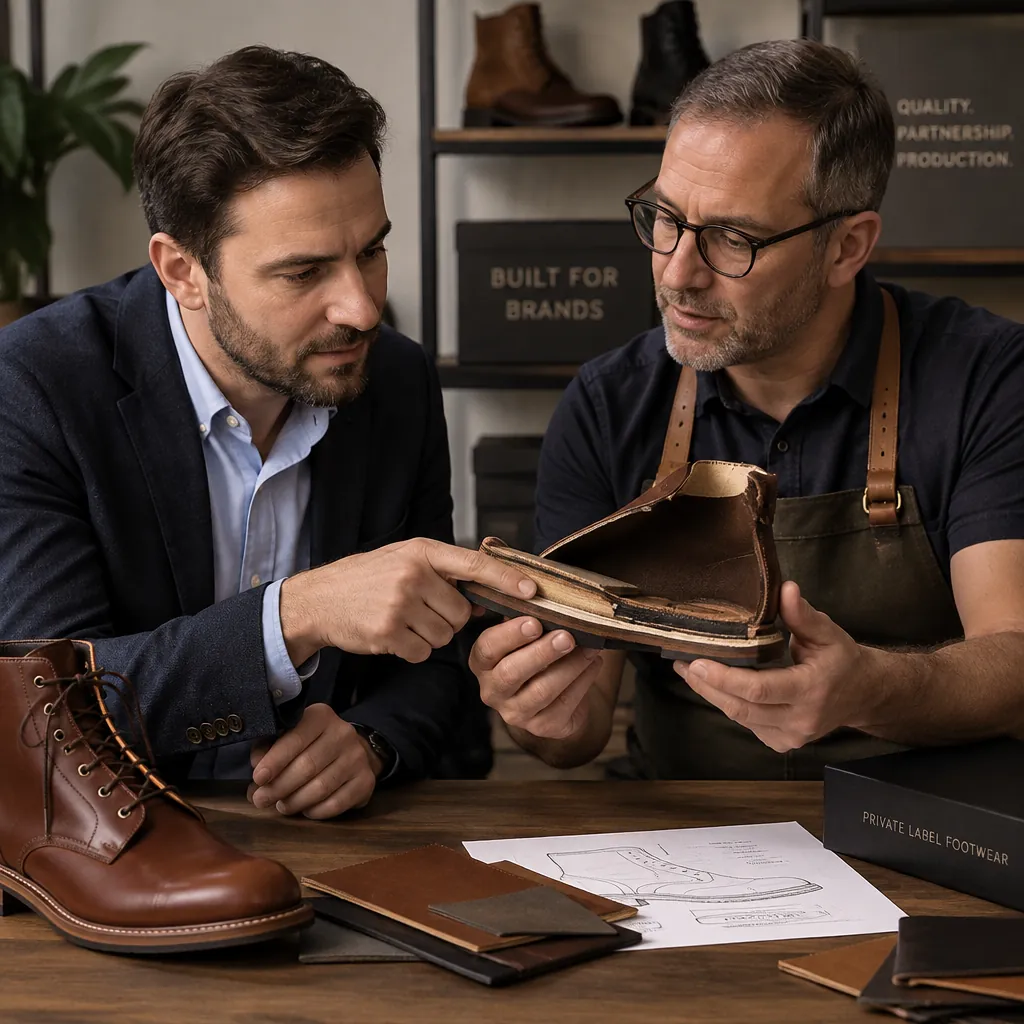
For retailers and brands sourcing brogans at scale, construction quality varies enormously across manufacturers. Wincheer Shoes, based in China’s Fujian province, is one of the factories I’ve seen produce consistent Goodyear-welted and Blake-stitched brogan constructions for international brands. Their operation handles the full production chain from leather cutting through lasting and finishing, which gives buyers more control over quality specifications than split-factory arrangements. If you’re evaluating wholesale brogan production, understanding the factory’s capability with heavier leather weights (8 oz+) and traditional construction methods is the first filter that separates capable manufacturers from those better suited to lighter footwear.
Frequently Asked Questions About Brogan Shoes
What is the difference between a brogan and a chukka boot?
Both are ankle-height lace-up boots, but they differ in construction weight, eyelet count, and design heritage. A chukka boot (also called a desert boot) typically has two or three eyelets, a thinner sole, and lighter-weight leather or suede. It originated as a polo and casual wear shoe in the 1940s. A brogan has three to six eyelets, a substantially thicker sole, heavier leather, and traces its design lineage to military and work footwear dating back centuries. In practical terms, a chukka is a dress-casual boot you’d wear to a restaurant; a brogan is a rugged-casual boot you’d wear to walk five miles on a gravel road and then go to a restaurant.
Are brogan shoes comfortable for everyday wear?
Modern heritage brogans — yes, very much so. They require a break-in period of roughly two to three weeks of regular wear, during which the leather conforms to your foot shape and the sole flexes at your natural gait points. After break-in, a well-fitted brogan with a Goodyear welt and a quality insole is among the most comfortable daily footwear options available. Historical reproduction brogans with straight lasts and pegged soles are a different story: they’re built for authenticity, not comfort, and most people find them tolerable rather than pleasant even after extensive break-in.
Can you resole brogan shoes?
Yes, and this is one of the brogan’s greatest practical advantages. Brogans built with Goodyear welt, stitchdown, or pegged construction can all be resoled. A typical resole costs $75–$150 at a quality cobbler and extends the boot’s life by another three to five years. Cemented (glued) soles can sometimes be resoled, but the process is less reliable and the results less durable. When purchasing brogans, checking the sole attachment method is the single most important factor in long-term value. A $200 Goodyear-welted brogan that gets resoled twice will give you 15 years of wear. A $300 cemented brogan might last four years before the sole fails irreparably.
What leather is best for brogan shoes?
For general-purpose wear, full-grain cowhide in the 5–7 oz range offers the best balance of durability, comfort, and appearance. Chromexcel (a chrome-and-vegetable combination tanned leather made by Horween) is a popular choice for heritage brogans because it develops rich patina and is naturally somewhat water-resistant. For dress brogans, calfskin provides a smoother, more refined surface that takes a polish well. For outdoor and work use, oil-tanned leather offers superior water resistance and toughness at the cost of a more casual appearance. Shell cordovan — made from the fibrous flat muscle beneath a horse’s hide — is the premium option, offering extraordinary durability and a distinctive rolling crease pattern, but it pushes the price well above $500 per pair.
Are brogan shoes still made with hobnails?
Reproduction brogans for historical reenactment are still available with hobnailed soles, and some manufacturers offer hobnails as an option on heritage-style boots. For everyday modern wear, hobnails have been entirely replaced by rubber outsoles (Vibram, Dainite, and similar brands) that provide equal or better traction without the drawbacks of metal nails — namely, noise, poor grip on smooth indoor surfaces, and the tendency to scratch hardwood floors. If you’re buying hobnailed brogans for reenactment, be aware that hobnails need periodic replacement as they wear down, and walking on concrete or asphalt accelerates wear dramatically compared to the packed earth and dirt roads they were designed for.
April 2026. This article reflects current market availability and manufacturing standards as of the publication date.