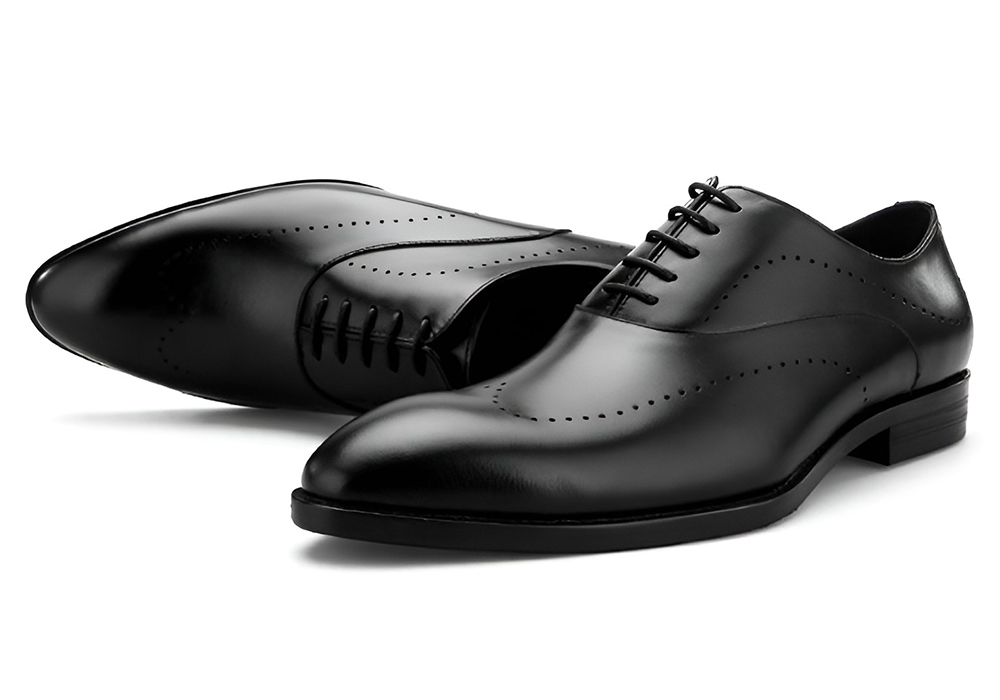
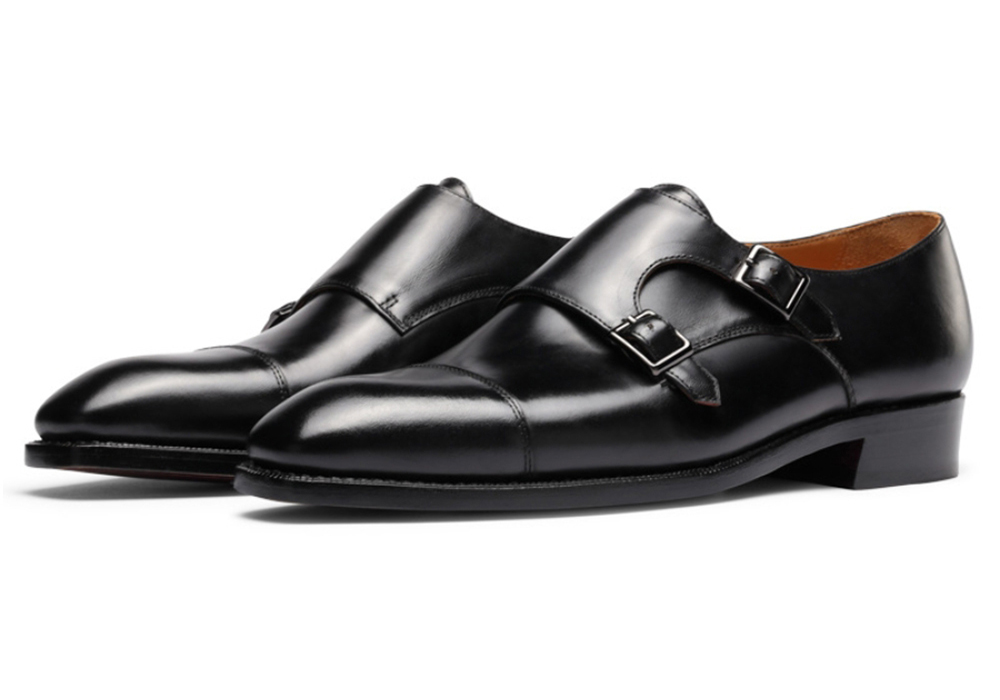
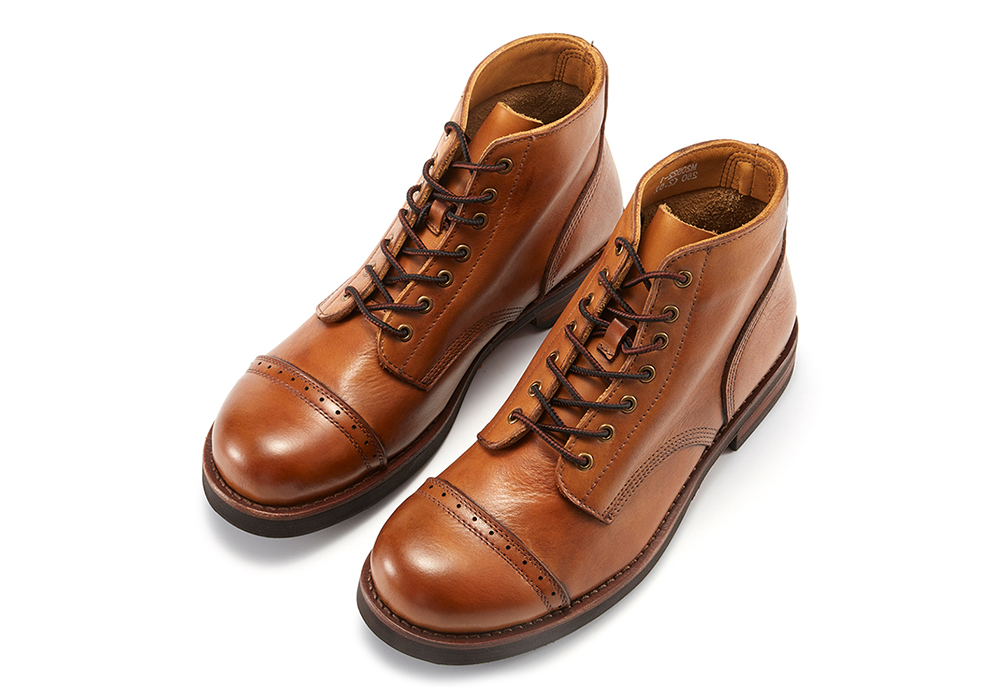
Men’s casual leather shoes wholesale is one of the fastest-growing sourcing categories in footwear today. The global men’s casual footwear segment is expanding at a CAGR of 6.2%, outpacing formal dress shoes by a wide margin. For B2B buyers and private label brands, that growth signal translates directly into margin opportunity — if you’re sourcing from the right factory.
This guide covers the three dominant casual styles — loafers, leather walking shoes, and chukka/suede boots — with factory-direct pricing, MOQ structures, and market fit data you can use to make buying decisions today.
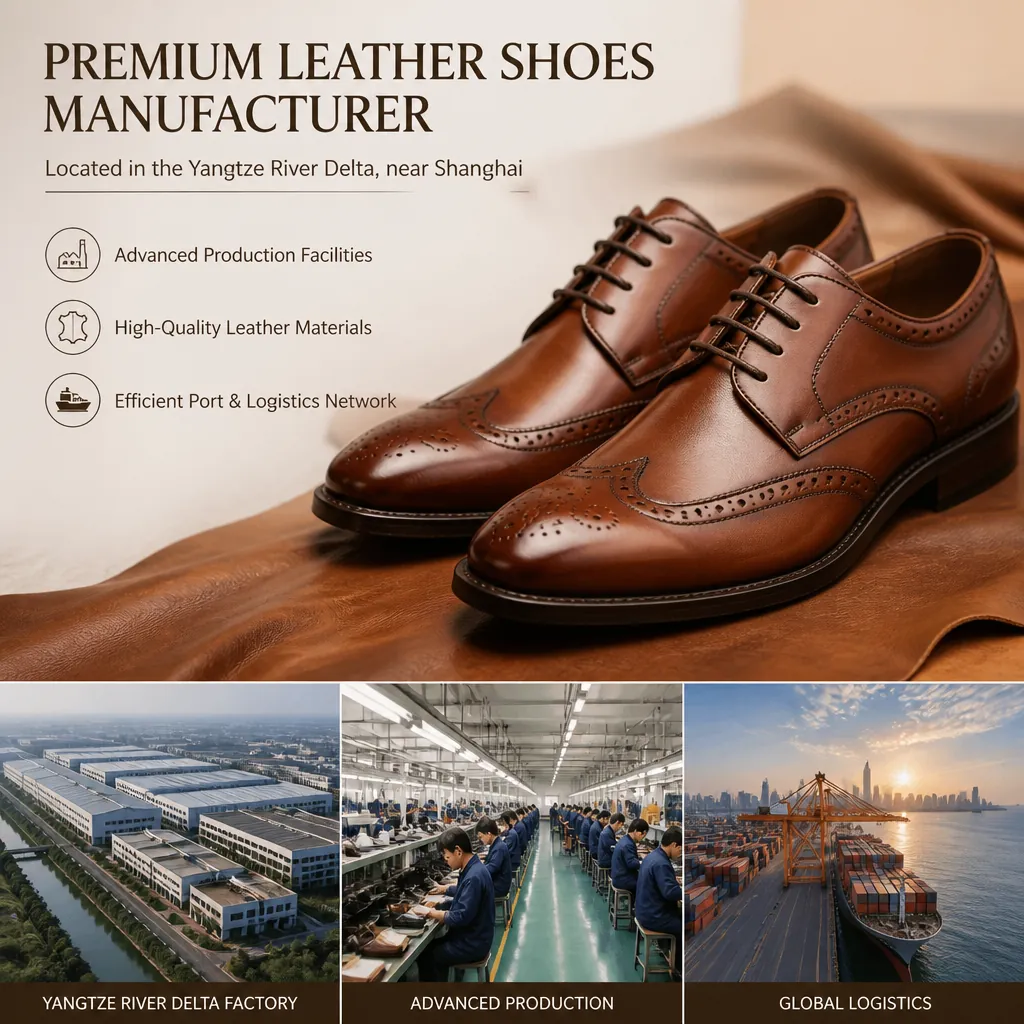
At Wincheer Shoes, founded in 2007 and producing 500,000+ pairs annually from our Guangzhou factory, we supply men’s casual leather shoes wholesale to 200+ brand partners across 50+ countries. Our defect rate holds at 0.8–1.2% against an industry average of 2–4%, and our price range of $25–40/pair covers the full casual spectrum from walking shoes to premium loafers.
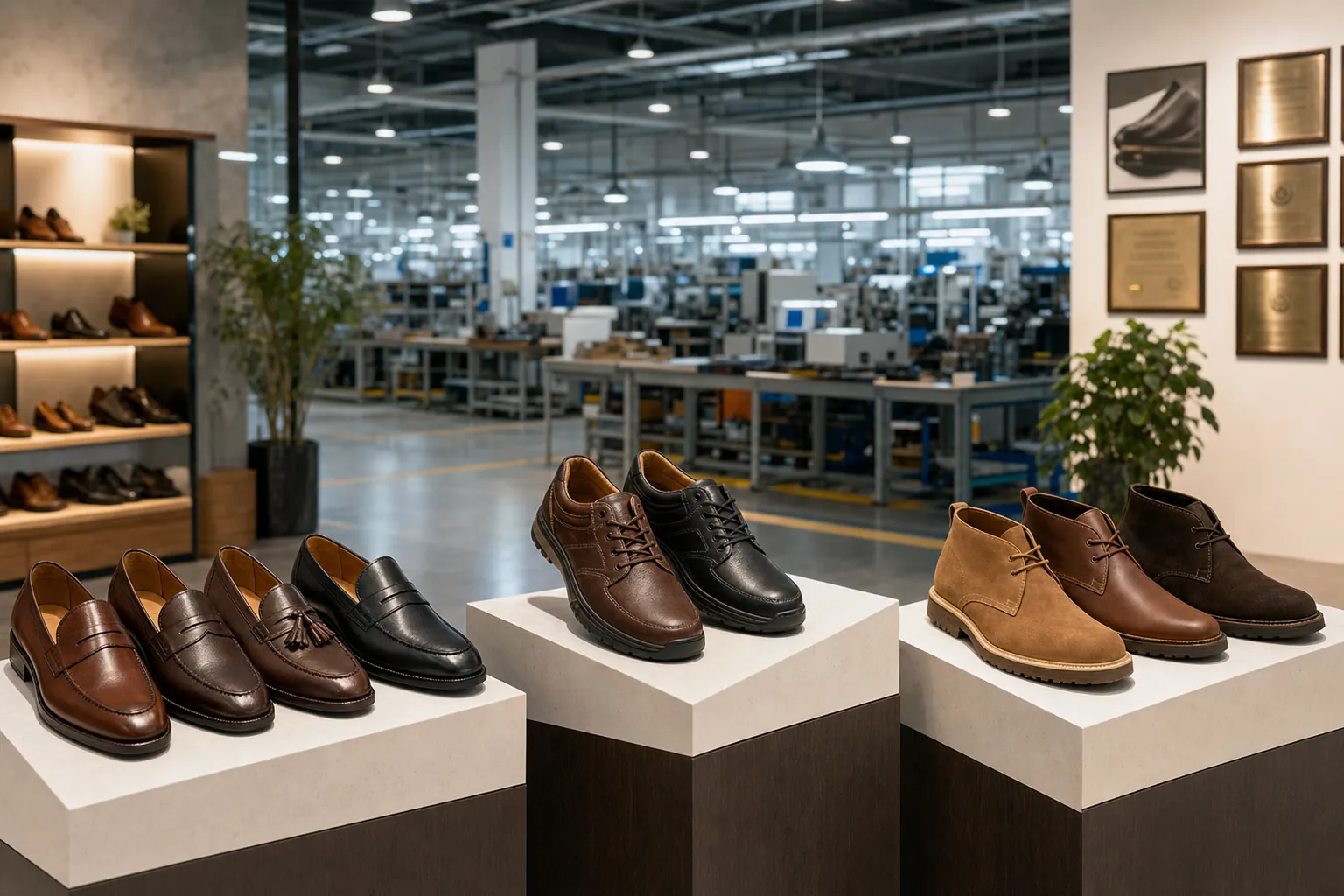
Mens Casual Leather Shoes Wholesale Factory Direct: Table of Contents
- Why Casual Leather Is Outgrowing Formal
- Leather Loafers: Penny, Tassel, and Belgian Styles
- Leather Walking Shoes: Comfort-First Construction
- Chukka and Suede Boots: Casual-Meets-Rugged
- Comparison Table: Style × Price × MOQ × Market
- Smart Casual Trend Replacing Formal in Post-COVID Offices
- Sourcing Checklist: Evaluating a Casual Leather Shoe Factory
- FAQ
- Ready to Start Your Shoe Line?
Why Casual Leather Is Outgrowing Formal
The formal dress shoe market is not disappearing, but it is contracting in relative terms. Remote and hybrid work arrangements, adopted globally from 2020 onward and now locked in as permanent policy at many mid-size firms, have reshaped the daily footwear needs of working men.
The result is a strong shift in purchasing patterns: men who previously owned three pairs of Oxfords now own one pair of Oxfords and two pairs of premium casual leather shoes. For wholesale buyers, that behavioral change opens a significant category gap.
Men’s casual leather footwear is forecast to exceed $28 billion globally by 2028, according to Statista’s footwear market data https://www.statista.com/outlook/cmo/footwear/men-s-shoes/worldwide – SATRA Footwear Technology. The core growth drivers are:
- Demand for shoes that work from office to dinner without a style compromise
- Rising middle-class spend in Southeast Asia and the Middle East
- Premium casual positioning on e-commerce platforms like Amazon and Zalando
- Private label brands filling the gap between luxury and fast fashion
For wholesale buyers sourcing from China, casual styles also tend to carry lower tooling costs and shorter lead times than formal Goodyear-welted construction, which makes them easier to test and scale.
Leather Loafers: Penny, Tassel, and Belgian Styles
Loafers are the single highest-volume casual leather style in men’s B2B sourcing. They require no lacing hardware, translate well across markets, and carry strong repeat-order rates for wholesale accounts.
Penny Loafers
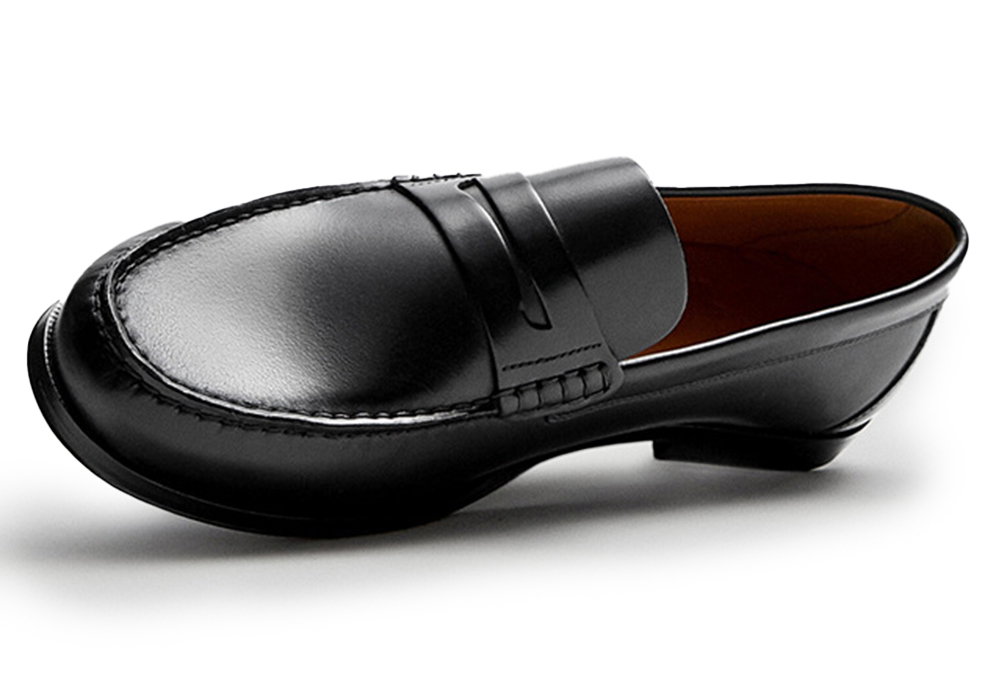
The penny loafer — defined by its strap-and-slot saddle across the vamp — is the most universally recognized silhouette. It sells consistently across North America, Europe, and the Gulf states. Factory-direct pricing for genuine leather penny loafers runs $24–30/pair at standard wholesale volumes.
Construction to specify: genuine calf leather upper, leather or synthetic lining, TPR or leather-stacked heel. Avoid full synthetic linings on premium price-point SKUs — returns related to comfort are significantly higher.
Tassel Loafers
Tassel loafers index higher for the 35–55 age demographic and perform well in the UK, Australia, and Gulf markets. They carry slightly higher factory costs — typically $26–32/pair — due to the tassel assembly labor. Specify brass versus plastic tassel tips clearly in your tech pack; the difference is visible to end consumers.
Belgian Loafers
The Belgian loafer (also called the Albert slipper in some markets) features a low-cut vamp and a grosgrain bow. It’s a premium casual item with strong positioning in European and US boutique retail. Factory-direct pricing ranges $28–35/pair depending on leather grade and bow material.
For all three loafer styles, see the full range at our Men’s Loafer Shoes category What Does OEM Mean in Shoes. Custom branding, including insole printing and branded outsoles, is available from 60 pairs per style.
Leather Walking Shoes: Comfort-First Construction
Leather walking shoes are the highest-volume casual style by units shipped globally. They sit at the intersection of comfort footwear and smart casual style — a positioning that resonates strongly with e-commerce buyers and Amazon private label brands.
What Defines a Wholesale-Grade Leather Walking Shoe
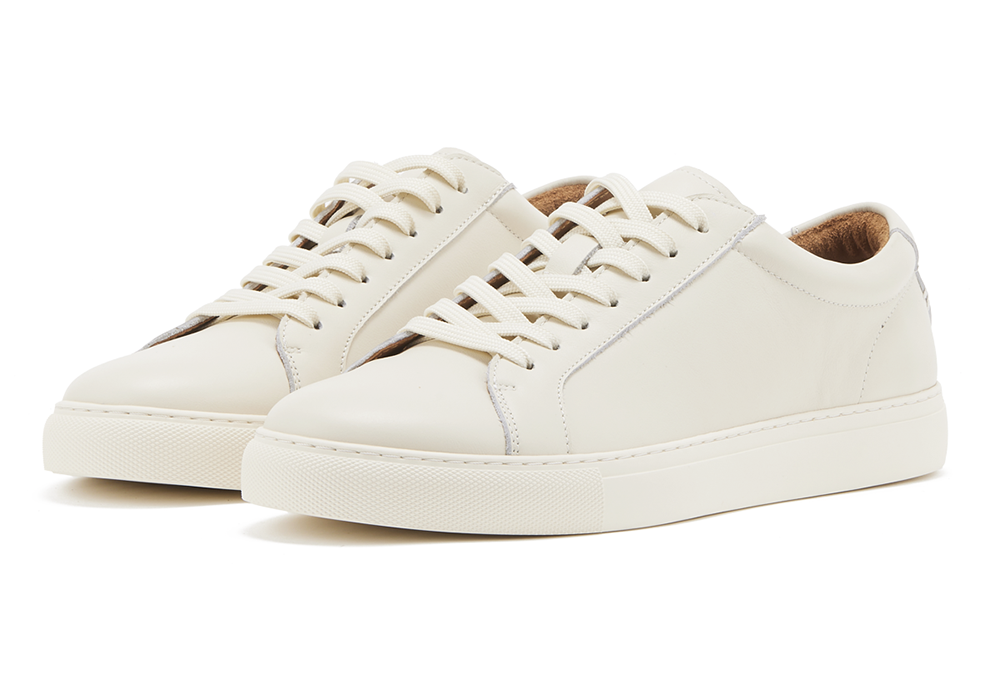
The specification that separates a genuine leather walking shoe from a fashion sneaker comes down to three components:
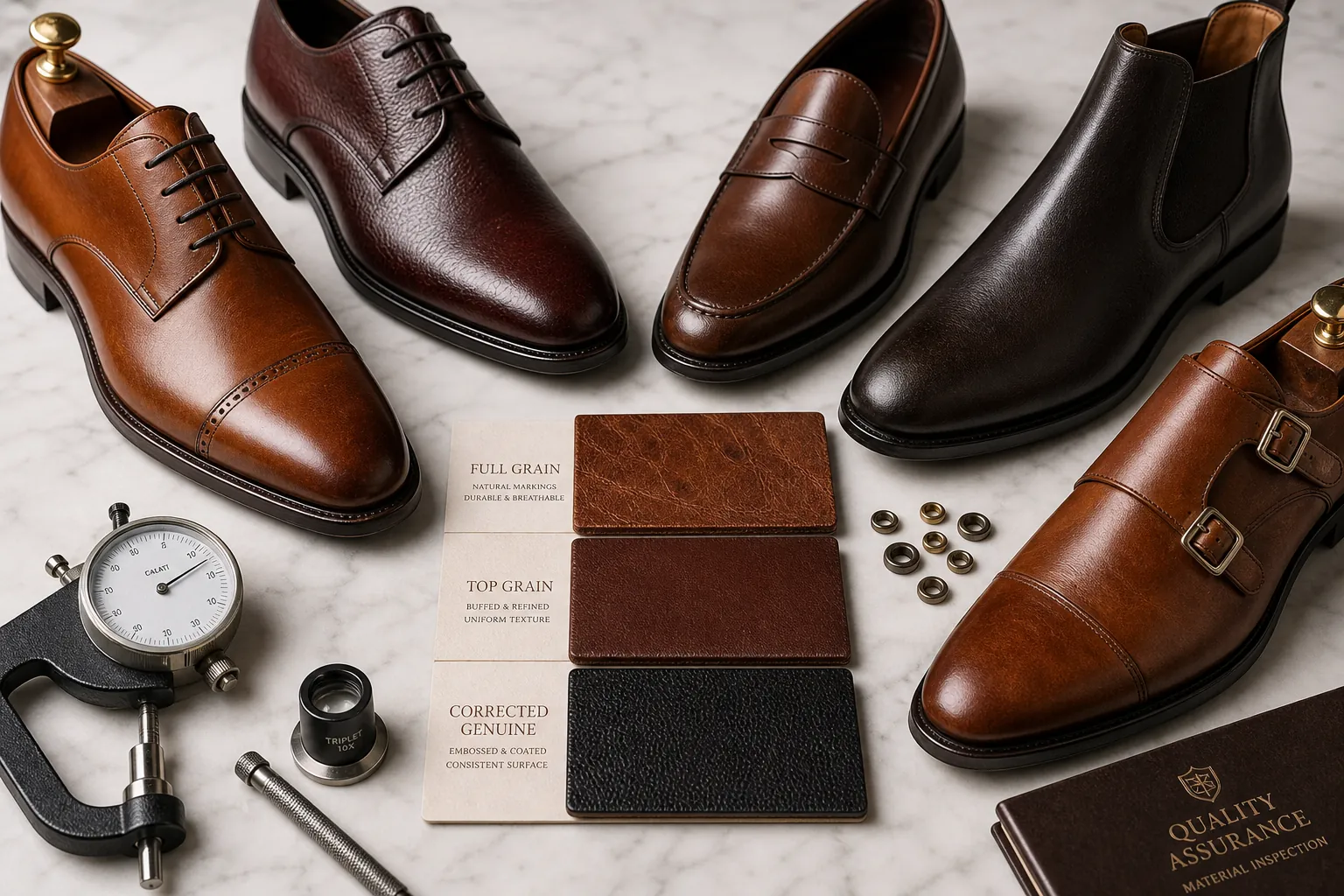
- Upper: Full-grain or corrected-grain leather (minimum 1.2mm thickness for durability claims)
- Midsole: EVA or PU foam for cushioning — critical for the “comfort” angle in product listings
- Outsole: Vulcanized rubber or TR (thermoplastic rubber) with anti-slip channeling
Factory-direct pricing for this category ranges $22–28/pair, making it the most accessible entry point in men’s casual leather wholesale. The lower price relative to loafers reflects simplified upper construction and higher-volume mold amortization on standard lasts.
Market Fit for Walking Shoes
Walking shoes move in high volume across:
- Amazon US and Amazon UK — especially in wide-fit variants
- Zalando DE and FR — comfort positioning with leather premium
- Southeast Asia B2C platforms — Lazada, Shopee, where leather upper at accessible price is a strong differentiator
If your brand is launching on Amazon, the leather walking shoe is a low-risk first SKU. Browse available stock designs in the Men’s Leather Walking Style Shoes What Does OEM Mean in Shoes category — zero MOQ on existing designs means you can test market response before committing to custom tooling.
Chukka and Suede Boots: Casual-Meets-Rugged
Chukka boots sit in the casual-formal overlap that buyers in cooler climates — Northern Europe, Canada, the US Northeast — prioritize strongly in Q3/Q4 buying cycles. The defining feature is the ankle-height shaft with two or three eyelets, typically in suede or nubuck leather.
Leather vs. Suede Chukka: Which to Source
| Material | Price Range | Best Market | Risk Factor |
|---|---|---|---|
| Suede/Nubuck | $26–32/pair | UK, Germany, Canada | Higher return rate (care-sensitive) |
| Smooth leather | $28–35/pair | US, Gulf, Australia | Lower; easier to clean |
| Split leather | $22–26/pair | Price-sensitive SEA | Shorter product lifespan |
Suede chukkas are the dominant style in UK and German wholesale markets. Include a suede protector spray card in packaging — it reduces care-related returns by a measurable margin and adds a premium unboxing signal.
Construction Notes for Chukka Boots
Chukka boots specified for the European market should carry CE marking under EN ISO 20347 where applicable. REACH compliance for material chemicals is mandatory for EU import. Factories exporting into the EU should provide documentation upfront — not on request.
For a detailed walkthrough of EU footwear certification requirements, see the CE Marking Footwear 2026 EU Certification Guide Shoe Manufacturer Guide.
Factory-direct chukka boot pricing: $26–35/pair depending on leather grade, shaft height, and sole construction (crepe vs. rubber).
Comparison Table: Casual Type × Factory Price × MOQ × Best Market
| Style | Factory Price (FOB) | MOQ (Custom) | MOQ (Stock) | Best Market Fit |
|---|---|---|---|---|
| Penny Loafer | $24–30/pair | 60 pairs | 0 pairs | US, Europe, Gulf |
| Tassel Loafer | $26–32/pair | 60 pairs | 0 pairs | UK, Australia, Gulf |
| Belgian Loafer | $28–35/pair | 60 pairs | 0 pairs | US boutique, EU boutique |
| Leather Walking Shoe | $22–28/pair | 60 pairs | 0 pairs | Amazon US/UK, SEA |
| Suede Chukka Boot | $26–32/pair | 60 pairs | 0 pairs | UK, Germany, Canada |
| Smooth Leather Chukka | $28–35/pair | 60 pairs | 0 pairs | US, Gulf, Australia |
All prices are FOB Guangzhou. Landed costs vary by destination — for a full breakdown of duties by market, see the Import Duties on Leather Shoes What Does OEM Mean in Shoes guide.
Smart Casual Trend Replacing Formal in Post-COVID Offices
The “smart casual” dress code is no longer a Friday exception — it’s the default across most mid-size corporate environments globally. A 2025 workplace dress code survey cited by the Society for Human Resource Management https://www.shrm.org – BLC Leather Technology Centre found that 68% of US office employers had permanently relaxed formal dress requirements since 2020.
For men’s footwear buyers, this creates a very specific product demand: shoes that look polished enough for a client meeting but comfortable enough for a full working day. The penny loafer, leather walking shoe, and chukka boot all sit squarely in that brief.
What This Means for Your Product Mix
If you’re currently stocking primarily Oxford and Derby formal shoes, the data suggests adding 2–3 casual leather SKUs per season is a low-risk category extension. Consider:
- Penny loafer in tan or cognac — high search volume, broad demographic
- Leather walking shoe in black or dark brown — easy Amazon listing differentiation on comfort + leather claims
- Suede chukka in mid-brown or sand — strong Q4 seasonal uplift in Northern hemisphere markets
The private label opportunity in casual leather is particularly strong because the category lacks dominant brand ownership below the $150 retail tier. For a full private label launch framework, the Private Label Shoes 10 Step Brand Launch Guide 2026 Shoe Manufacturer Guide covers the full process from factory selection to brand launch.
Sourcing Checklist: Evaluating a Casual Leather Shoe Factory
Use this checklist before placing your first wholesale order for men’s casual leather shoes:
Factory Qualification
- Factory has verifiable export history (request bill of lading samples)
- Annual output sufficient for your scale requirements
- CE (EN ISO 20347) and REACH certifications held — not just claimed
- RoHS compliance documentation available for EU/UK buyers
Product Verification
- Request physical samples before bulk order — not just product photos
- Specify leather grade in writing (full-grain vs. corrected-grain vs. split)
- Confirm outsole material and slip resistance rating
- Verify insole cushioning spec (EVA vs. PU — density matters)
Commercial Terms
- MOQ confirmed in writing for both stock and custom designs
- Payment terms clearly stated (T/T, LC, escrow options)
- Lead time for custom orders confirmed (typically 45–60 days from sample approval)
- Defect rate guarantee and QC inspection protocol in contract
Packaging and Branding
- Custom box artwork setup cost and lead time confirmed
- Insole branding (hot stamp or printed) confirmed
- Barcode and size label requirements discussed for target market
Logistics
- FOB Guangzhou or Shanghai pricing obtained
- Cubic measurement per carton confirmed for freight estimation
- Incoterms options discussed (FOB vs. CIF vs. DDP)
FAQ
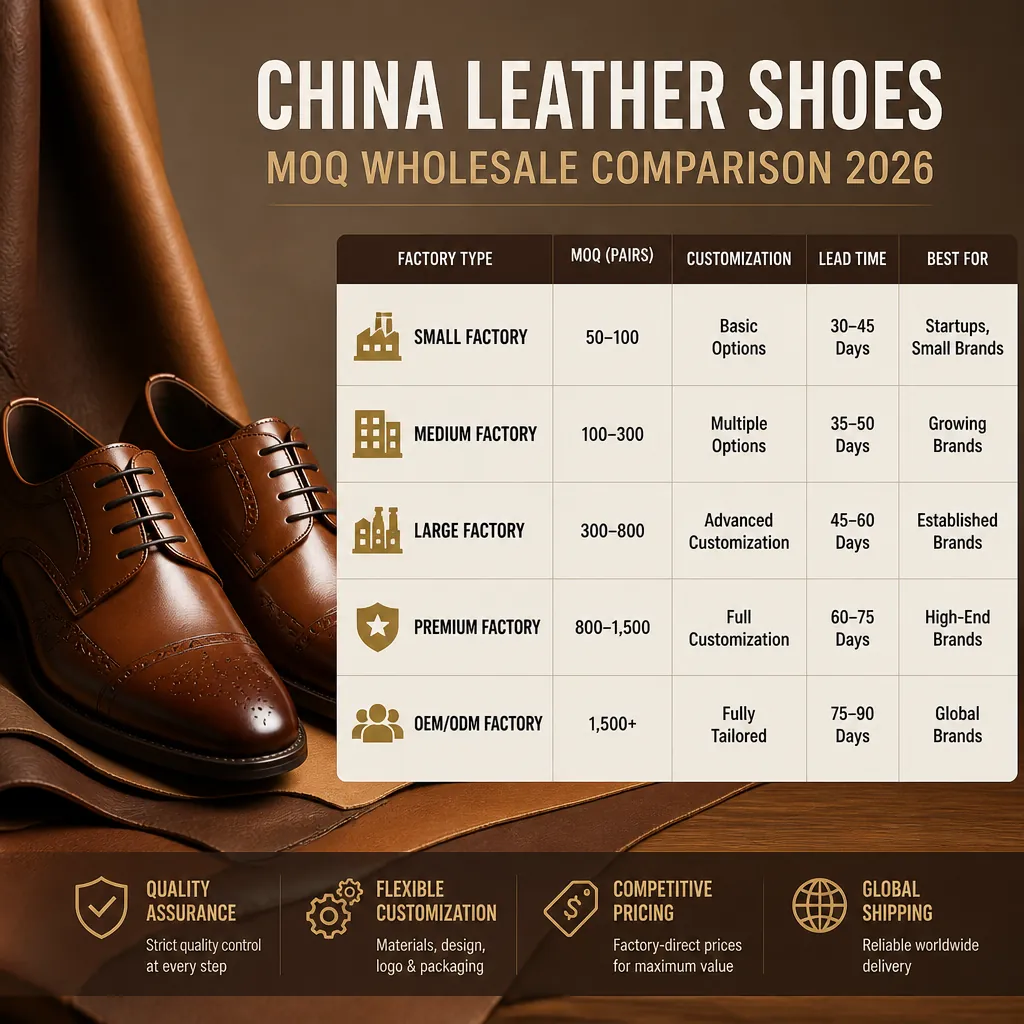
Q: What is the minimum order quantity for men’s casual leather shoes wholesale? A: For stock (existing) designs, the minimum is 0 pairs — you can order single pairs to test. For custom designs with your own branding, color, or last, the minimum is 60 pairs per style. Custom MOQ applies per SKU, not per total order.
Q: What is the typical factory-direct price range for wholesale casual leather loafers? A: Penny and tassel loafers run $24–32/pair FOB Guangzhou depending on leather grade and construction. Belgian loafers with premium finishing run $28–35/pair. Walking shoes are the most cost-accessible at $22–28/pair.
Q: Do factories provide CE and REACH certification for casual leather shoes? A: Reputable factories exporting to Europe hold CE marking under EN ISO 20347 and REACH compliance documentation as standard. Always request certificates before ordering — not after. RoHS compliance is also relevant for any metallic hardware components.
Q: How long does it take to receive a custom men’s casual leather shoe order? A: Standard lead time from sample approval to bulk shipment is 45–60 days. Complex custom designs involving new lasts or specialty materials may extend to 75 days. Stock designs with branding-only customization (insole print, box) are typically 30–40 days.
Q: Which casual leather shoe styles sell best on Amazon in 2026? A: Leather walking shoes dominate Amazon volume due to strong search demand around comfort and leather quality claims. Penny loafers in tan and cognac perform well in the $60–90 retail tier. Suede chukka boots index high in Q4. Wide-fit variants consistently outperform standard-fit listings in the US market.
Ready to Start Your Shoe Line?
Sourcing men’s casual leather shoes wholesale at competitive factory-direct prices requires a supplier with verified certifications, consistent quality control, and flexible MOQ terms that let you test before scaling.
Wincheer Shoes supplies 200+ brand partners globally with leather loafers, walking shoes, and chukka boots at $25–40/pair. Zero MOQ on 1,000+ existing designs. Custom orders from 60 pairs.
- Email: peterwang@shwincheer.com
- Website: wincheershoes.com
Send your target style, quantity, and market — we’ll respond with samples and pricing within 24 hours