
Use this OEM factory evaluation checklist CE REACH RoHS to screen suppliers: verify CE EN ISO 20347, REACH, and RoHS certifications before placing any order.
Factories producing 500,000+ pairs annually with a defect rate below 1.2% and MOQ as low as 60 pairs for custom designs represent the tier-one benchmark. Most buyers who skip a structured evaluation end up with suppliers who can’t pass EU border checks or Amazon compliance reviews. This guide gives you the exact framework to avoid that outcome in 2026.
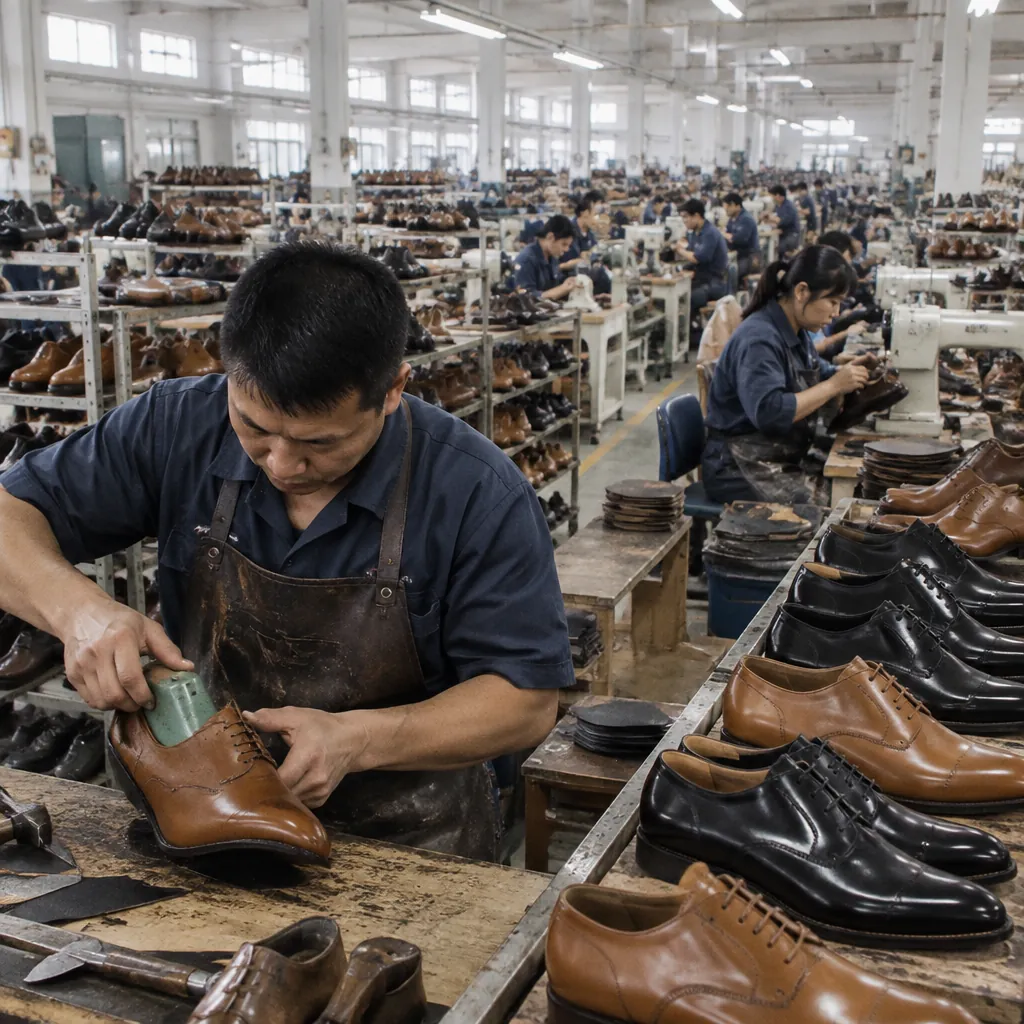
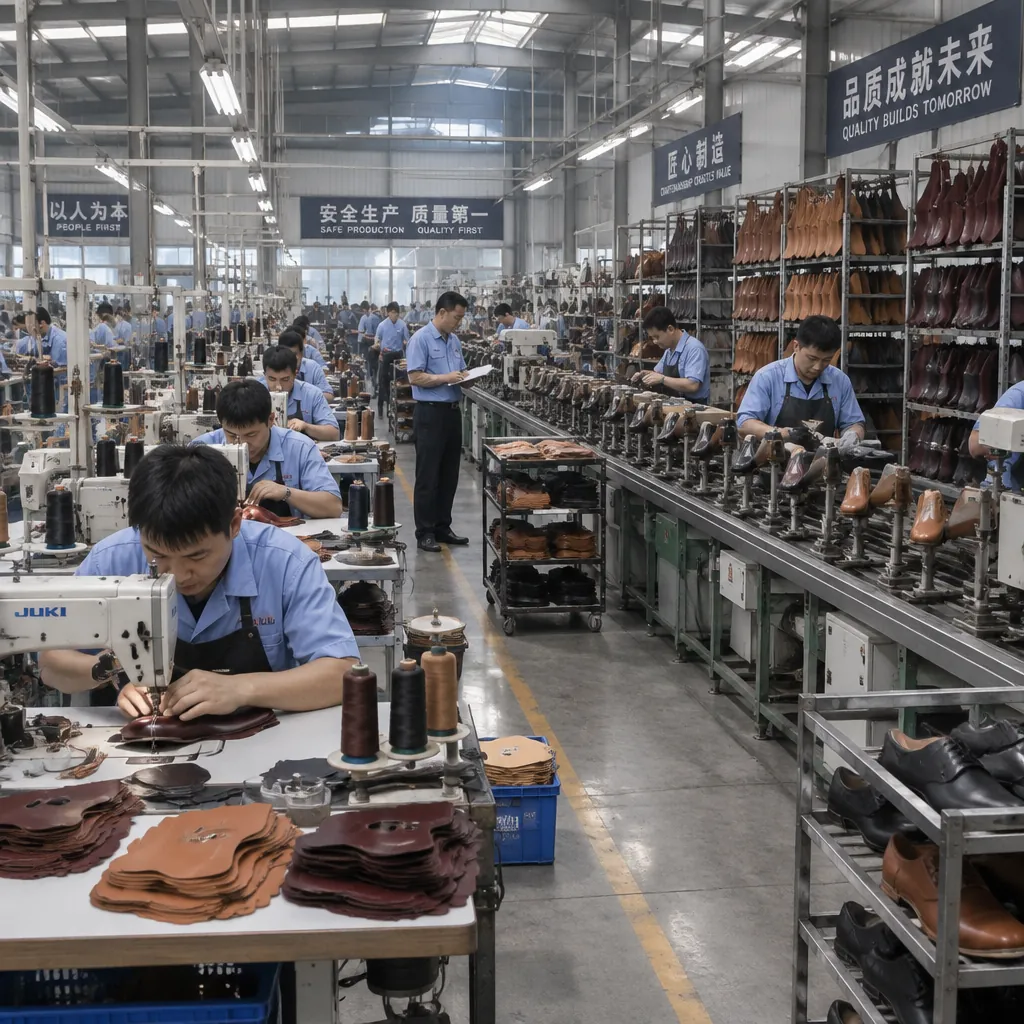
As a manufacturer producing 500,000+ pairs annually, Wincheer Shoes applies this exact evaluation framework internally — founded in 2007, holding CE (EN ISO 20347), REACH, and RoHS certifications, with a defect rate of 0.8–1.2% against an industry average of 2–4%, and serving 200+ partners across 50+ countries. The checklist below reflects what actually separates compliant factories from those that will cost you money downstream.
TL;DR
- An OEM factory evaluation checklist for CE, REACH, and RoHS compliance should cover at minimum 7 verification categories: legal standing, certifications, production capacity, quality control, chemical compliance, packaging, and audit history.
- CE certification for occupational footwear requires conformity to EN ISO 20347:2012+A1:2016; factories without this standard cannot legally sell into the EU market.
- REACH compliance means the factory must test for 224+ substances of very high concern (SVHCs) in all materials, including leather, adhesives, dyes, and hardware.
- A tier-one OEM supplier maintains a defect rate of 0.8–1.2%; anything above 2% signals systemic quality control failure.
- MOQ flexibility is a real capability signal: factories offering 0 MOQ on existing designs and 60 pairs on custom OEM orders have the production infrastructure to support small-batch brand launches.
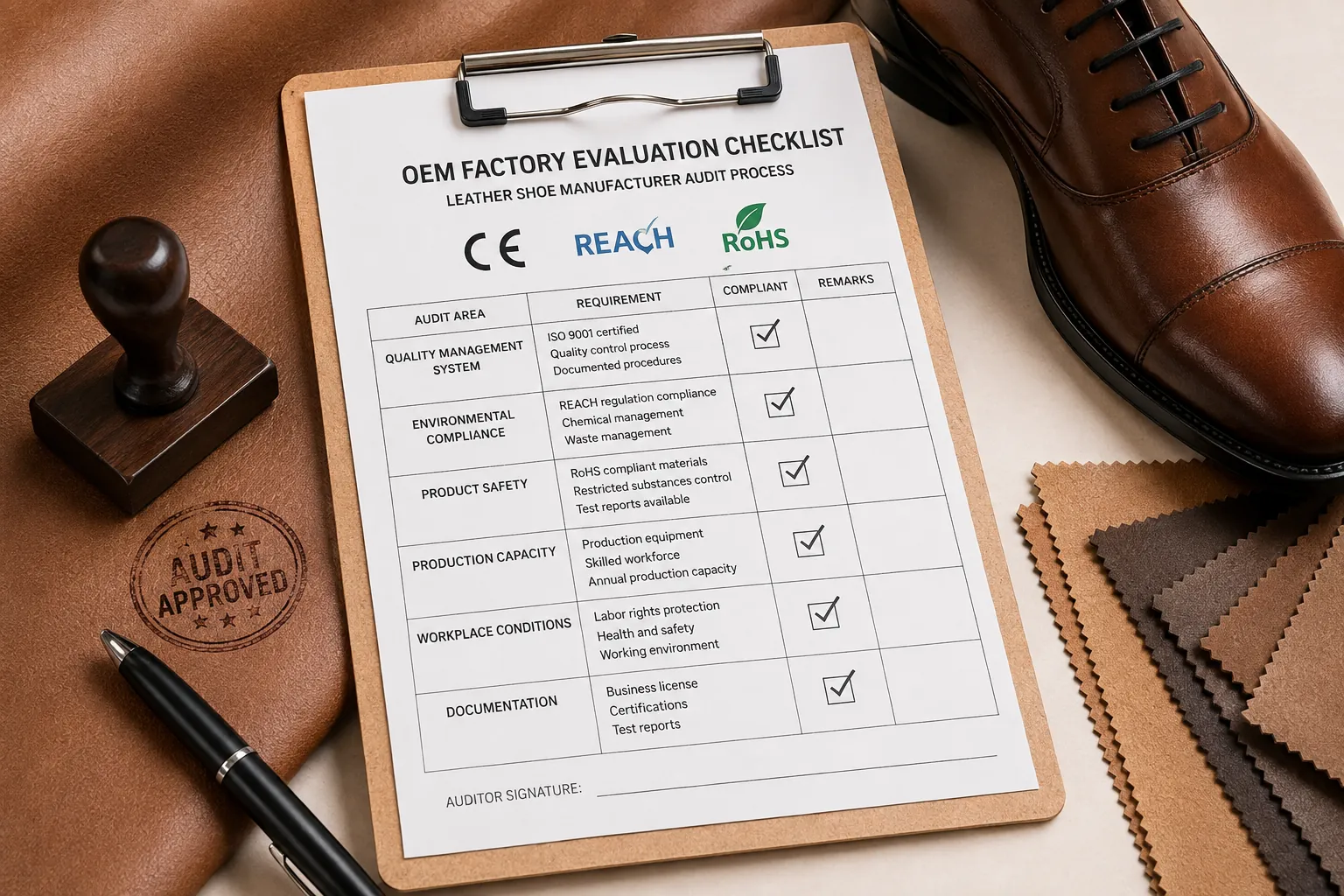
Table of Contents
- Why Certification Verification Is the First Filter
- OEM Factory Evaluation Checklist: CE REACH RoHS — Full Framework
- Chemical Compliance Deep Dive: REACH and RoHS for Leather Shoes
- Quality Control Benchmarks and Defect Rate Standards
- Comparison Table: Tier-One vs. Tier-Two OEM Factories
- Red Flags That Should End Negotiations Immediately
- FAQ
- Ready to Start Your Shoe Line?

1. Why Certification Verification Is the First Filter
Certification verification is the first filter because a factory without valid CE, REACH, and RoHS documentation cannot legally export to the EU, UK, or most regulated markets — regardless of price or sample quality.
Buyers frequently discover compliance gaps only after production is complete. At that point, the options are rework, destruction, or customs seizure. None of those outcomes are recoverable at scale.
The CE Marking Footwear 2026 EU Certification Guide covers the full technical requirements, but the core point for supplier evaluation is simple: ask for the test report, not just the certificate. Certificates can be forged; test reports from accredited labs (SGS, Bureau Veritas, Intertek) cannot be easily fabricated and contain the specific product scope, test dates, and lab reference numbers you can verify independently.
REACH and RoHS compliance for footwear is governed by EU REACH Regulation (EC) No 1907/2006, which requires manufacturers to identify and manage chemical risks across the entire supply chain, including leather tanneries, adhesive suppliers, and hardware manufacturers.
2. OEM Factory Evaluation Checklist: CE REACH RoHS — Full Framework
This OEM factory evaluation checklist CE REACH RoHS covers every category a B2B buyer needs to assess before committing to production.
Category 1: Legal and Business Standing
- [ ] Business license valid and current (verify registration number independently)
- [ ] Export license for target markets (EU, US, UK, AU)
- [ ] No active trade sanctions or blacklist entries (check against EU and US restricted party lists)
- [ ] Factory address matches registration documents (satellite verification recommended)
- [ ] Minimum 3 years of operating history with verifiable references
Category 2: CE Certification (EN ISO 20347)
- [ ] CE Declaration of Conformity on file for each product category
- [ ] Test report from accredited third-party lab (SGS, Bureau Veritas, Intertek, TÜV)
- [ ] Test report scope matches the specific shoe styles you are ordering
- [ ] Certificate expiry date confirmed (retest required every 3–5 years or on material change)
- [ ] Notified Body number traceable in the EU NANDO database
Category 3: REACH Compliance
- [ ] Full Materials Declaration (FMD) available for all components
- [ ] SVHC screening completed for leather, lining, adhesives, dyes, and metal hardware
- [ ] Restricted substances list (RSL) testing results from the past 12 months
- [ ] Tannery supply chain documented (chrome-free or chrome-managed options available)
- [ ] REACH Article 33 disclosure process in place for SVHCs above 0.1% w/w
Category 4: RoHS Compliance
- [ ] RoHS Declaration of Conformity available (relevant for metal components, electronics in smart footwear)
- [ ] Lead, cadmium, mercury, hexavalent chromium, PBB, PBDE levels tested and documented
- [ ] Hardware suppliers (buckles, zippers, eyelets) have their own RoHS test reports
- [ ] RoHS 3 (EU Directive 2015/863) compliance confirmed for EU-bound orders
Category 5: Production Capacity and MOQ
- [ ] Annual output capacity documented (500,000+ pairs is a reliable tier-one signal)
- [ ] MOQ terms confirmed in writing: 0 on existing designs, 60 pairs minimum on custom OEM
- [ ] Lead time commitments with penalty clauses available
- [ ] Capacity allocation confirmed for your order volume during peak season
Category 6: Quality Control Infrastructure
- [ ] In-house QC lab with documented testing equipment (lasting machine, flex tester, sole adhesion tester)
- [ ] AQL inspection protocol in place (AQL 2.5 for major defects is the industry standard)
- [ ] Defect rate data available for the past 12 months (below 1.2% is tier-one; above 2% is a disqualifier)
- [ ] Third-party pre-shipment inspection accepted without restriction
- [ ] Corrective action process documented with response time SLA
Category 7: Packaging and Export Compliance
- [ ] Export packaging meets ISPM 15 (wood packaging) requirements
- [ ] Country of origin labeling compliant with destination market rules
- [ ] Shoe packaging materials tested for restricted substances (inks, adhesives, coatings)
- [ ] Customs documentation process reviewed (HS code accuracy, invoice format)
For a deeper look at packaging compliance, the Leather Shoe Packaging Solutions for B2B Export Brand Protection Guide covers export-specific requirements in detail.
3. Chemical Compliance Deep Dive: REACH and RoHS for Leather Shoes
REACH and RoHS compliance for leather footwear is more complex than most buyers expect because the chemical risk is distributed across 8–12 separate material inputs per shoe.
REACH: What You’re Actually Testing For
The REACH SVHC candidate list currently contains 240+ substances. For leather shoes, the highest-risk categories are:
- Chromium VI (Cr VI): Produced during chrome tanning if pH is not controlled. EU limit is 3 mg/kg in leather articles.
- Azo dyes: Some decompose to release carcinogenic aromatic amines. Restricted under REACH Annex XVII.
- Dimethylfumarate (DMFu): Used as a mold inhibitor in shoe packaging; banned in the EU since 2009 but still found in non-compliant shipments.
- Phthalates (DEHP, DBP, BBP, DIBP): Used in PVC components and some adhesives. Combined limit of 0.1% w/w.
- Perfluorinated compounds (PFAS): Used in water-repellent treatments; under increasing regulatory scrutiny in 2026.
RoHS: When It Applies to Footwear
RoHS is primarily an electronics directive, but it applies to footwear in two scenarios: smart shoes with embedded electronics (step counters, heating elements) and metal hardware components that may contain restricted heavy metals. Any factory producing footwear with electronic components must have a full RoHS compliance program.
The OEM Factory Evaluation Checklist CE REACH RoHS Chemical Audit Process
A proper chemical audit involves three steps: document review (RSL test reports, FMDs, supplier declarations), physical sample testing (send production samples to an accredited lab independently), and supply chain mapping (verify that the factory’s tannery and adhesive suppliers are also compliant). Skipping the supply chain mapping step is the most common reason buyers receive compliant samples but non-compliant bulk production.
4. Quality Control Benchmarks and Defect Rate Standards
A defect rate below 1.2% is the tier-one benchmark for leather shoe manufacturing; anything above 2% indicates systemic process failure.
The AQL Inspection Footwear Top 5 Quality Control Tips covers the inspection methodology in detail. For supplier evaluation purposes, the key metrics to request are:
- Defect rate by category: Separate data for cosmetic, functional, and critical defects
- Return rate from existing customers: A factory with 200+ active partners will have this data
- First-pass yield rate: Percentage of units passing QC without rework on the first inspection
- Corrective action closure rate: How quickly the factory resolves identified defects
When evaluating a new OEM supplier, request QC data for the past 4 quarters. Seasonal variation is normal; a consistent pattern of defect spikes in Q4 (peak production season) without documented corrective actions is a red flag.
5. Comparison Table: Tier-One vs. Tier-Two OEM Factories
| Evaluation Criterion | Tier-One Factory | Tier-Two Factory |
|---|---|---|
| Annual output | 500,000+ pairs | Under 100,000 pairs |
| CE certification | EN ISO 20347 with third-party test report | Self-declared or expired certificate |
| REACH compliance | Full RSL testing + supply chain mapping | Supplier declaration only |
| RoHS documentation | Component-level test reports | No documentation |
| Defect rate | 0.8–1.2% | 2–4% or undisclosed |
| Custom MOQ | 60 pairs | 300–500 pairs minimum |
| Existing design MOQ | 0 (catalog stock) | 100–200 pairs minimum |
| Third-party audit | Accepted without restriction | Restricted or refused |
| Price range (FOB) | $25–40/pair | $15–22/pair (hidden costs) |
| Market coverage | 50+ countries | Regional only |
| Partner base | 200+ active partners | Under 30 clients |
| AQL protocol | AQL 2.5 documented | Informal or none |
The price differential between tier-one and tier-two factories narrows significantly when you account for rework costs, compliance failures, and shipment delays. A $5–8/pair premium at the factory level typically saves $15–30/pair in downstream costs.
6. Red Flags That Should End Negotiations Immediately
These signals indicate a factory that will create compliance or quality problems regardless of how good their samples look.
- Refuses third-party pre-shipment inspection without a documented reason
- Cannot provide original test reports — only certificate images without lab reference numbers
- REACH RSL testing is more than 18 months old and no retesting has been done after material changes
- Defect rate data is unavailable or the factory claims “we don’t track that”
- MOQ terms change after sampling — a factory that quotes 60 pairs during negotiation but requires 500 pairs at order stage is misrepresenting its capabilities
- No documented corrective action process for quality failures
- Tannery supplier is undisclosed or changes between sample and bulk production
- CE certificate scope doesn’t match the product category you’re ordering
The Red Flags When Sourcing Leather Shoes From China: A Buyer’s Checklist expands on each of these with documented case examples.
For buyers building a private label brand, the Private Label Shoes 10 Step Brand Launch Guide 2026 integrates supplier evaluation into the full brand launch sequence.
FAQ
Q: What is the minimum documentation I should request when using an OEM factory evaluation checklist for CE REACH RoHS compliance?
A: At minimum, request the CE Declaration of Conformity with the corresponding third-party test report (not just the certificate), a REACH RSL test report from the past 12 months covering all major material inputs, and a RoHS Declaration of Conformity for any metal hardware. These three documents cover the core compliance requirements for EU market entry. Factories that cannot produce all three within 48 hours of request should be deprioritized.
Q: How often should REACH and RoHS test reports be renewed for OEM leather shoe production?
A: REACH RSL testing should be renewed annually or whenever a material input changes — including switching tanneries, adhesive suppliers, or dye formulations. CE certification under EN ISO 20347 typically requires retesting every 3–5 years or on significant design change. RoHS declarations for hardware components should be updated whenever a hardware supplier changes. A factory producing 500,000+ pairs annually will have a documented material change control process that triggers automatic retesting.
Q: Can a factory with a defect rate above 2% still pass CE REACH RoHS certification?
A: Yes — certification and defect rate are separate systems. A factory can hold valid CE, REACH, and RoHS certifications while still producing at a 3–4% defect rate. Certifications confirm that the product design and materials meet regulatory standards; defect rate reflects production consistency. For B2B buyers, both matter independently. A certified factory with a 3% defect rate will still generate significant rework and return costs at scale.
Q: What is the difference between REACH compliance and RoHS compliance for footwear sourcing?
A: REACH (Registration, Evaluation, Authorisation and Restriction of Chemicals) applies broadly to all chemical substances in products sold in the EU, covering 240+ SVHCs across leather, adhesives, dyes, and hardware. RoHS (Restriction of Hazardous Substances) is a narrower directive originally targeting electronics, restricting 10 specific substances including lead, cadmium, and hexavalent chromium — primarily relevant for footwear with electronic components or metal hardware. Both are required for full EU compliance, but REACH has a much wider scope for standard leather shoe production.
Q: What MOQ should I expect from a tier-one OEM factory for custom leather shoe designs?
A: A tier-one OEM factory with genuine custom production capability should offer 60 pairs per style for custom OEM designs, with zero MOQ on existing catalog designs. Factories quoting 300–500 pairs minimum for custom work are typically operating at lower production flexibility and may be outsourcing your order to subcontractors — which creates additional compliance risk because the subcontractor’s certifications may not match the factory’s documented credentials.
Ready to Start Your Shoe Line?
Ready to Start Your Shoe Line?
Wincheer Shoes has been manufacturing certified leather footwear since 2007, with CE (EN ISO 20347), REACH, and RoHS certifications across a catalog of 1,000+ designs. Whether you need 60 pairs for a custom launch or a full private label program, the evaluation criteria in this guide are the same standards applied to every production run.
Get in touch to request factory documentation, sample pricing ($25–40/pair FOB), and a compliance package for your target market:
- Email: peterwang@shwincheer.com
- Website: wincheershoes.com