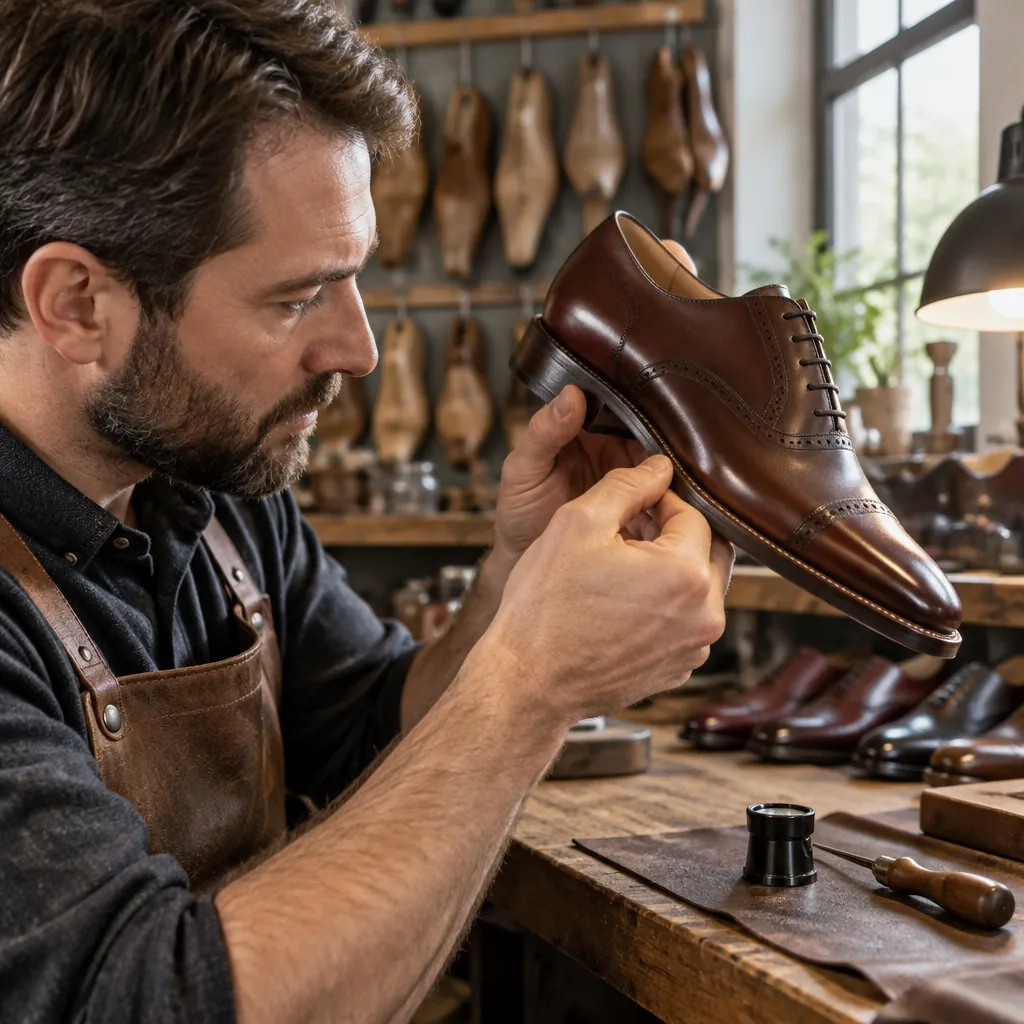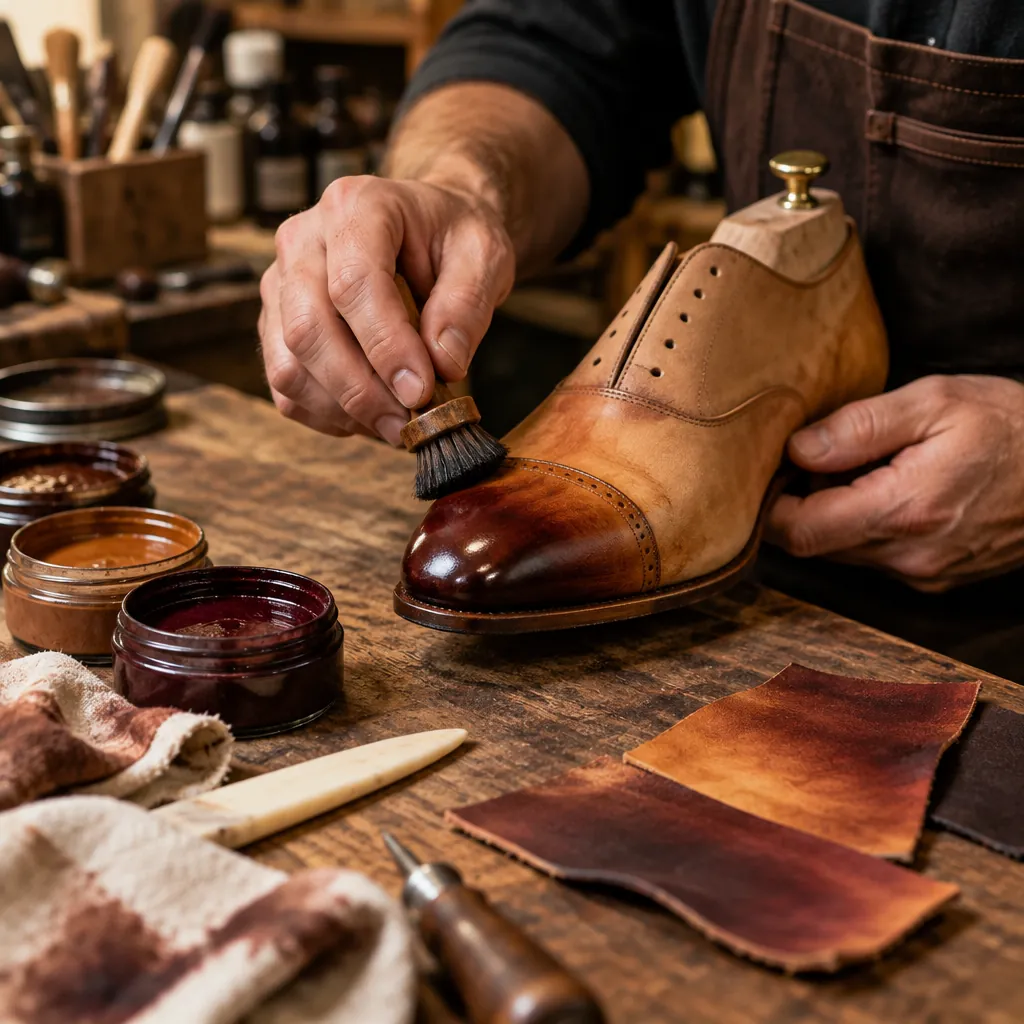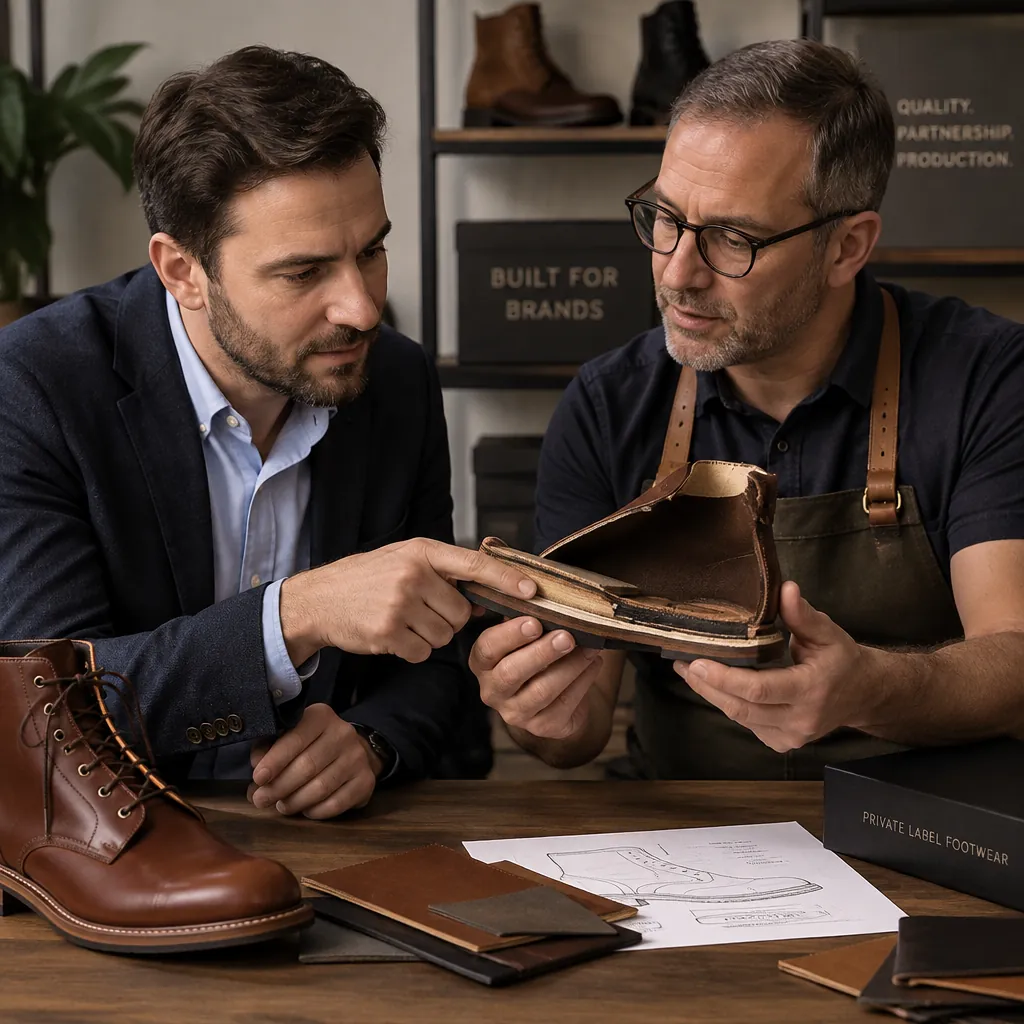

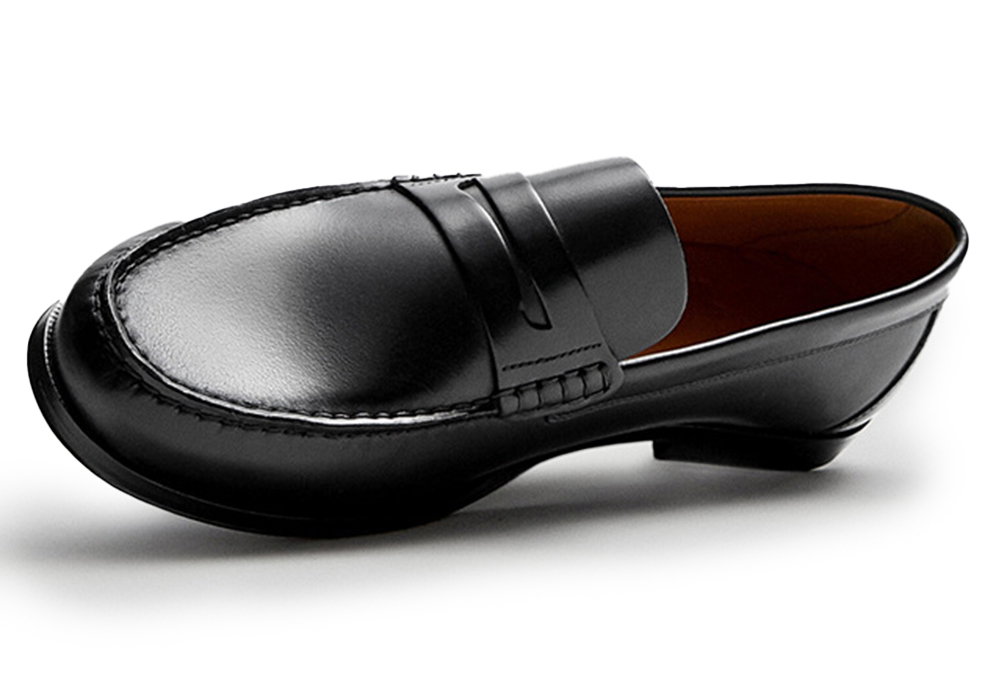
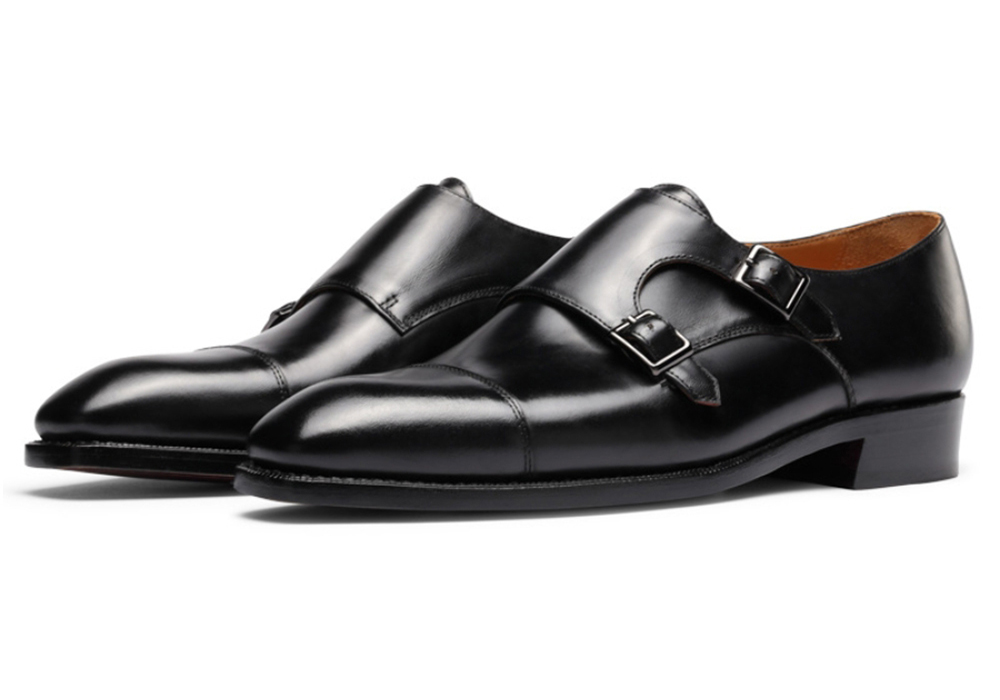
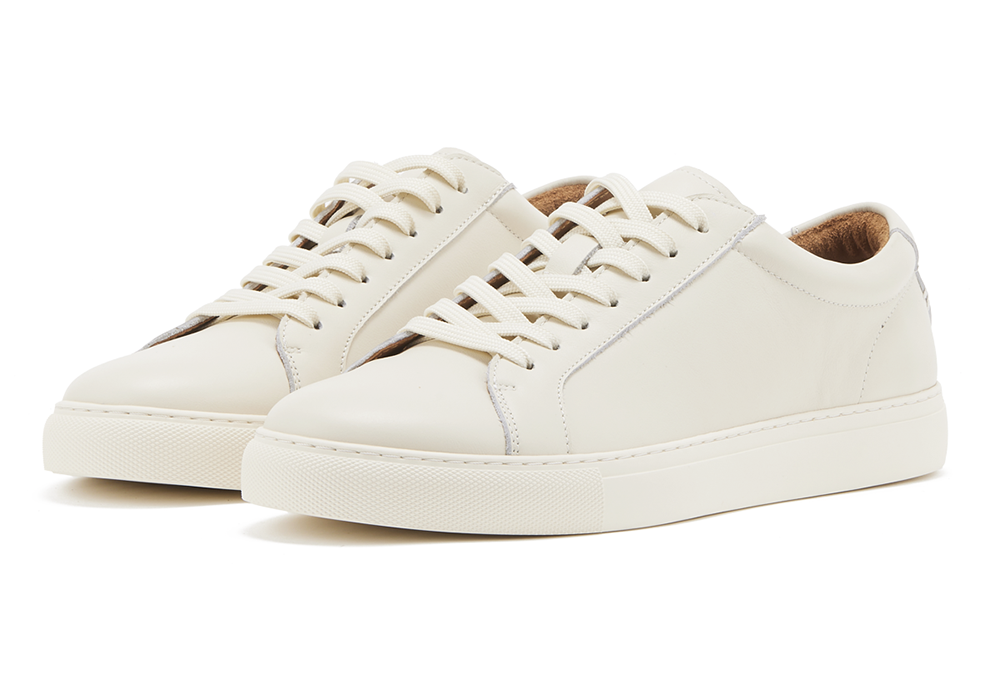
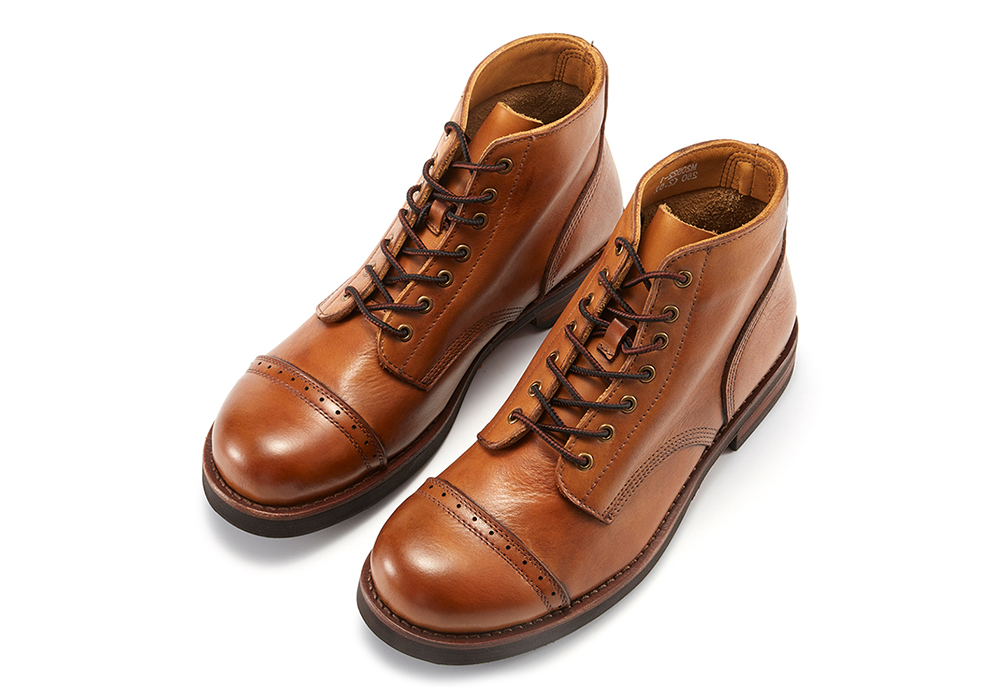
Quick Answer: A working men’s shoe factory runs eight stages in sequence — material inspection, cutting, stitching, lasting, sole attachment, setting, finishing, and final inspection — and every stage leaves physical evidence a buyer can read. The cutting room shows you the leather selection discipline, the stitching floor shows you skill density, the lasting line shows you equipment age, and the inspection area shows you whether anyone actually checks anything. Visit with those four checkpoints and one hour on the floor tells you more than ten days of email negotiation.
Most content about shoe factories reads like a textbook: process diagrams, generic quality-control checklists, no way to tell whether the “factory” answering your inquiry owns a single machine. This guide comes from the other side of the wall — we run a men’s leather shoe factory in Jiangmen, Guangdong (est. 2007, Wincheer Shoes Co., Ltd., roughly 500,000 pairs per year), and buyers who visit us walk the same floor we will describe here. You will learn what each production stage does, what signals to read on a real line, how to spot a trading company posing as a factory, and what to ask before you get on a plane.
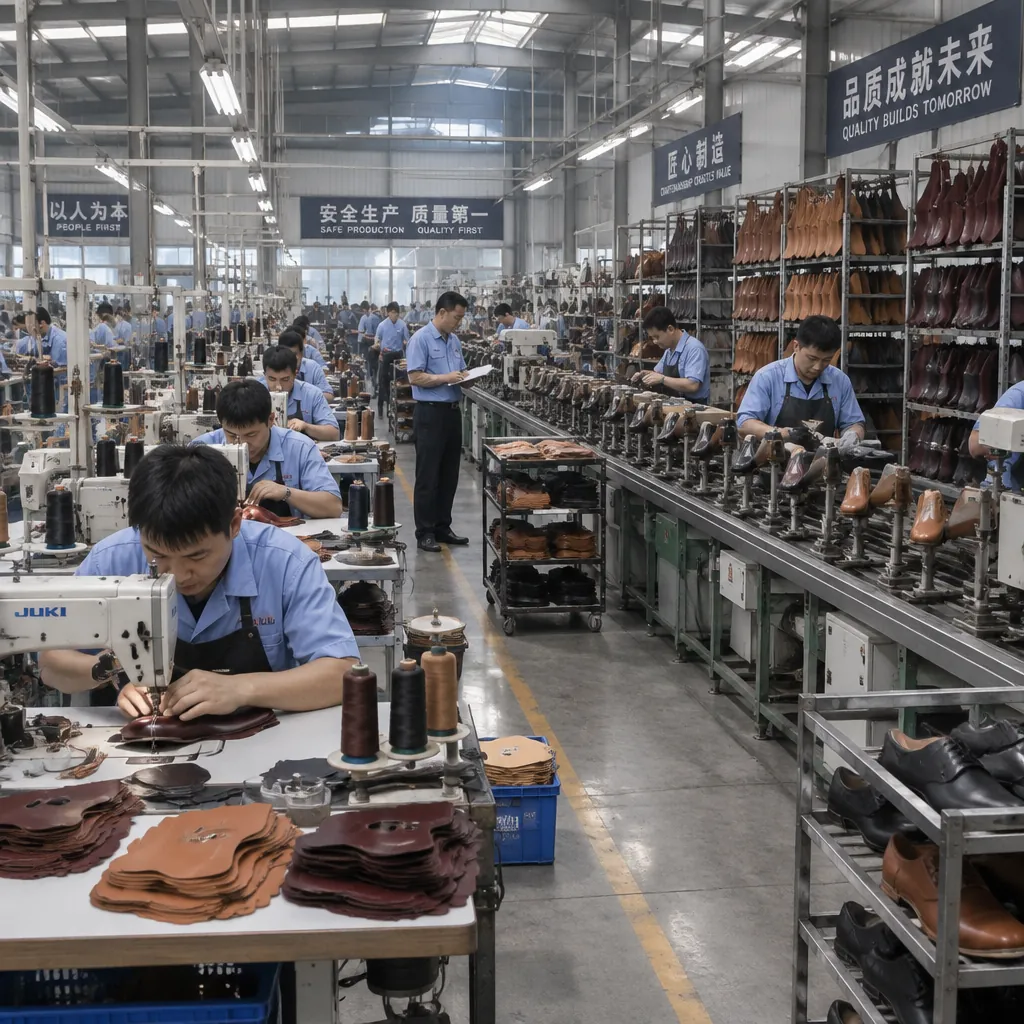
What Happens Inside a Men’s Shoe Factory, Step by Step?
Eight stages turn hides and soles into boxed shoes. The sequence is standard across the industry — what differs between factories is the discipline at each stage.
| Stage | What happens | What the buyer sees |
|---|---|---|
| 1. Material inspection | Incoming leather checked for grade, thickness, defects; soles and hardware counted against spec | Defect-tagged hides set aside; a written incoming-inspection record |
| 2. Cutting | Patterns die-cut from hides; panels sorted and bundled by size | Cutting presses in rows; hide utilization planning; marked bundles |
| 3. Stitching | Upper panels sewn into complete uppers; linings attached | Stitching stations in lines; thread tension and stitch density visible on WIP |
| 4. Lasting | Uppers pulled over the last and attached to the insole | Lasting machines; racks of lasts organized by size and style |
| 5. Sole attachment | Outsoles cemented, stitched, or welted per the style’s construction | Presses with time-pressure-temperature controls (for cemented work) |
| 6. Setting & cooling | Shoes rest in shaped condition so the bond and shape stabilize | Cooling racks with time discipline — shoes stacked too fast signal corner-cutting |
| 7. Finishing | Edge painting, burnishing, lacing, final cleanup | Finishing benches; consistent edge color across pairs |
| 8. Final inspection & packing | Random AQL sampling, symmetry and cleanliness checks, box labeling | An actual inspection station with sample plans — not just a packing table |
The background mechanics of stitching-family construction — how welts and Blakes differ from cementing — are covered in Wikipedia’s shoemaking overview and the product itself has a long craft history behind these stages, detailed further in our own shoe construction comparison. Here we stay on the floor.
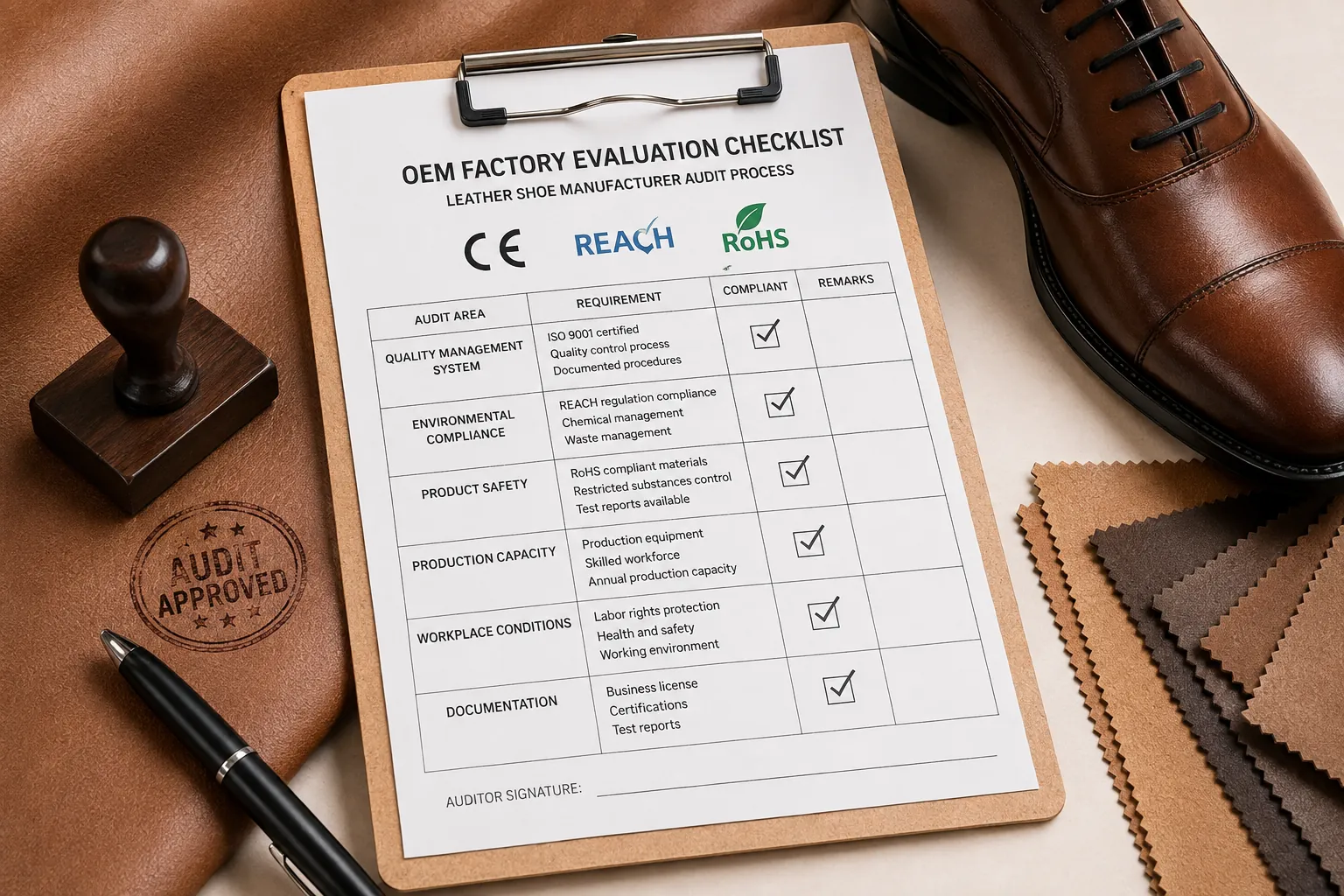
First-hand evidence — production floor. Our Jiangmen plant organizes these eight stages across dedicated lines: separate cutting and stitching halls feed a lasting-and-assembly line, and incoming leather is graded before it can enter the cutting room, so ungraded material never reaches production. Annual capacity across the men’s lines is ~500,000 pairs, and every bulk order passes random AQL sampling before shipment. Certifications on file: CE, REACH (Azo Dyes), RoHS, EN-ISO 20347.
(Source level: internal factory records, Wincheer Shoes Co., Ltd., 2026)
What Does Each Section of the Line Tell You?
Four checkpoints on a floor visit carry most of the information. A factory tour is not a walk — it is reading.
The cutting room shows material discipline. You are looking at what hides entered the building and how they were used. Clean nesting planning (panels laid to maximize yield per hide) means the factory prices honestly; a cutting room drowning in off-cuts means waste that reappears in your quote. Note whether hides are graded before cutting — ungraded leather flowing straight to the press is how “full-grain” orders quietly become corrected-grain shipments.
The stitching floor shows skill density. Stitch count per inch, thread tension, and symmetry between left and right panels are visible on work-in-progress racks without touching anything. A floor with operators re-working seams calmly is normal; a floor with no re-work station at all means defects flow downstream to your inspection.
The lasting line shows equipment reality. Lasts are the molds every shoe is built around — a lasting department with organized, numbered lasts by style and size signals repeatable production; a lasting area with damaged or mismatched lasts produces sizing drift that shows up as customer returns three months later.
The inspection station shows whether “inspected” means anything. The single most revealing spot in any factory is the final inspection area. If it has AQL sampling plans, defect tags, and a re-work loop, inspection is real. If the “inspection station” is the packing table, the certificate in the catalog is decoration.
How Do You Tell a Real Men’s Shoe Factory From a Trading Company?
Five floor-level signals separate manufacturers from resellers — and none of them requires expertise, only attention.
Production areas that match the product photos. Ask to see the line that would run your style. A real factory walks you there; a trading company redirects you to a sample room. The most common pattern: a beautifully staged showroom on the top floor and a refusal to show the production floors below it.
Lasts and WIP for other brands. Real factories have works-in-progress for current customers — other labels on the lines, in other languages. A floor with nothing in production but your inquiry’s samples is either brand-new or not a factory.
Machine names, not machine counts. Ask what lasting machines and cutting presses run the line. Factory staff answer with brands and models from memory; intermediaries answer with “professional equipment.”
A quote with setup logic. Manufacturers quote minimums because line changeover costs are real — our own custom production starts at 60 pairs per style with tiered pricing at 100 / 300 / 500 pairs (Source: internal factory records, Wincheer Shoes Co., Ltd., 2026). Intermediaries quote single flat prices with no minimum structure, because they layer margin instead of amortizing setup. Our small-batch manufacturing guide shows how real factories structure these tiers.
Location fluency. Ask where the factory is and how you would visit. We are in Jiangmen, Guangdong, about 1.5 hours from Guangzhou, with showrooms and warehouses in Shanghai and Jiangmen — a real operation gives you an address, travel logic, and an open invitation, because visits sell orders.
For the full decision framework between factory-direct sourcing and trading companies — including when an intermediary is genuinely the right choice — see our factory-direct vs trading company comparison.
First-hand evidence — buyer language (inquiry records, anonymized). The inquiries that reach our sales desk show buyers already operating at factory level: one named a specific model number and asked for price and stock; several first messages combine a price question with an MOQ question in the same sentence. Buyers are not shopping for catalogs — they are checking whether a factory can hold a spec. A production floor that answers model-level questions on sight is what closes those inquiries.
(Source level: anonymized inquiry records, Wincheer Shoes Co., Ltd., 2026)
What Should You Ask Before You Visit?
Six questions, in order. The answers tell you how to spend your hour on the floor.
- “Which line would run my style, and what is on it right now?” — Gets you onto the real production floor, not the showroom.
- “How are incoming hides graded, and who signs off?” — Material discipline decides whether the leather in your shipment matches the sample.
- “What construction can this line run, and what does that do to the MOQ?” — Cemented, Blake, and welted work have different setup costs; the factory should explain the minimum differences, not hide them. Construction trade-offs are detailed in our quality and construction guide.
- “What is your AQL standard, and can I see a recent inspection report?” — A factory with nothing to show writes its defect rate into your future.
- “Who owns the sampling and who signs off bulk specs?” — You want one accountable chain from sample room to line, not a sales office between you and production.
- “What happens when a defect is found at final inspection?” — The re-work and rejection process is where real factories differ from catalog sellers.
Bring these to the visit and the tour becomes an audit: every answer maps to a physical area you can verify with your own eyes. The inspection methods behind question 4 — AQL levels, sample plans, report contents — are broken down in our footwear quality inspection guide.
How Do MOQ and Pricing Work Inside the Factory?
The minimum order quantity is not a sales tactic — it is arithmetic that happens in the cutting room and the lasting line.
Setup dominates the first pairs. Pattern cutting, die preparation, lasting board changes, and line balancing cost roughly the same whether the line runs 60 pairs or 600. That fixed block gets amortized across the order: at 60 pairs the setup weight per pair is heavy; at 500 pairs it thins out. This is why serious factories quote in steps — our structure prices entry at 60 pairs per style for custom work, then 100 / 300 / 500 pair tiers as the setup weight spreads (Source: internal factory records, Wincheer Shoes Co., Ltd., 2026).
Construction changes the arithmetic. A welted line carries more setup (welt stock, stitchers with higher skill, longer balancing) than a cemented line, which is why welted styles carry higher effective minimums in every serious factory. If a supplier quotes Goodyear welt at no minimum and a flat price, the construction arithmetic has been discarded somewhere — check the sole edge.
Stock programs break the minimum. Factories that run their own stock lines — styles already tooled and in production — can ship from single pairs, because setup is already paid. Our stock program works exactly this way: single-pair minimums on styles that are live on the line, custom minimums of 60 pairs on new specifications.
FAQ
What is the minimum order for a men’s shoe factory?
It depends on whether the style is already in production. Custom specifications at our factory start at 60 pairs per style, with price steps at 100, 300, and 500 pairs; stock programs ship from a single pair because tooling is already amortized. Welted constructions carry higher effective minimums than cemented work due to setup weight.
How long does a factory visit take?
One focused hour on the floor covers the four checkpoints — cutting room, stitching floor, lasting line, inspection station. We allocate half a day for buyer visits at our Jiangmen plant so there is time for spec discussion after the walk; showrooms in Shanghai and Jiangmen are available for shorter sessions.
Can a small buyer work directly with a factory, or do I need a trading company?
Direct work is practical once your order reaches custom minimums and you have a clear tech pack. Below those volumes, or when you need multi-factory consolidation, an intermediary can earn its margin — the honest comparison of both routes, including when agents add real value, is in our factory-direct vs trading company guide.
How do I verify a factory’s certifications?
Ask which tests are on file and for which product families, then request the certificates themselves — CE and REACH (Azo Dyes) documents name the testing scope and the legal entity that holds them. Match the entity name on the certificate to the factory you are visiting; mismatches mean the certificate belongs to someone else in the chain.
What is the difference between a shoe factory and a shoe manufacturer?
In practice, buyers use them interchangeably — both mean the company that owns production. The distinction worth checking is not the word but the asset: whoever answers your inquiry should be able to show you cutting presses, lasting lines, and an inspection station, whether their business card says factory, manufacturer, or industrial company.