
How to Reduce Financial Risk on Your First Shoe Order (2026)
Quick Answer: Structure your first shoe order as a trial, not a commitment: 180–300 pairs across 3–5 styles, paid 30% T/T deposit and 70% after pre-shipment inspection. Model your full landed cost before you sign — FOB is typically only 55–70% of what each pair actually costs you once freight, the 2026 tariff stack, and inspection are added. Order against a 90-day sell-through estimate, never a sales forecast.
Most first-order losses are not quality failures — they are sizing failures. Buyers lock capital into 800 pairs of an untested design, then spend two years clearing dead stock. Every lever that matters (order size, payment structure, tariff exposure, inspection) is decided before production starts, which is why this guide is organized around the decisions in the order you will face them.

The numbers and frameworks below come from the factory side of the table. Wincheer Shoes has manufactured men’s leather shoes in Jiangmen, Guangdong since 2007, with an annual production capacity of 500,000 pairs and a recorded defect rate of 0.8–1.2%, and runs first-order programs for brand partners across Europe and North America — so this is the risk profile we see new buyers actually run, not a logistics-forward hypothetical.
Table of Contents
- Why Does the First Order Carry the Highest Financial Risk?
- How Do You Structure a Trial Order That Protects Your Capital?
- Which Payment Terms Protect Your Cash Flow?
- What Does a First Shoe Order Actually Cost?
- How Do You Avoid Overstocking Your First Order?
- Do You Need Insurance for Your First Order?
- Should You Use a Sourcing Agent or Buy Factory-Direct?
- How Do You Scale From First Order to Steady Orders?
- Which First-Order Mistakes Cost the Most Money?
- FAQ
- Ready to Place a Low-Risk First Order?
Why Does the First Order Carry the Highest Financial Risk?
The first order from a new supplier is the most dangerous transaction in an importing career because every variable is untested at once: supplier quality, product-market fit, logistics cost, and sell-through velocity. None of them can be validated in advance — only bounded.
Two of those variables are usually overestimated by beginners and one is almost always underestimated:
- Supplier quality risk is overestimated. Established export factories run documented QC systems, and a third-party pre-shipment inspection for $250–$400 bounds this risk almost completely before goods ship.
- Product-market fit risk is underestimated. This is where first orders actually fail. A factory can deliver a perfect 800-pair run of a design your market does not want.
- Cost risk is consistently miscalculated. Buyers quote against FOB price and discover at customs that duties, freight, and fees added 38–54% on top in a realistic 2026 model (we break down the full table below).
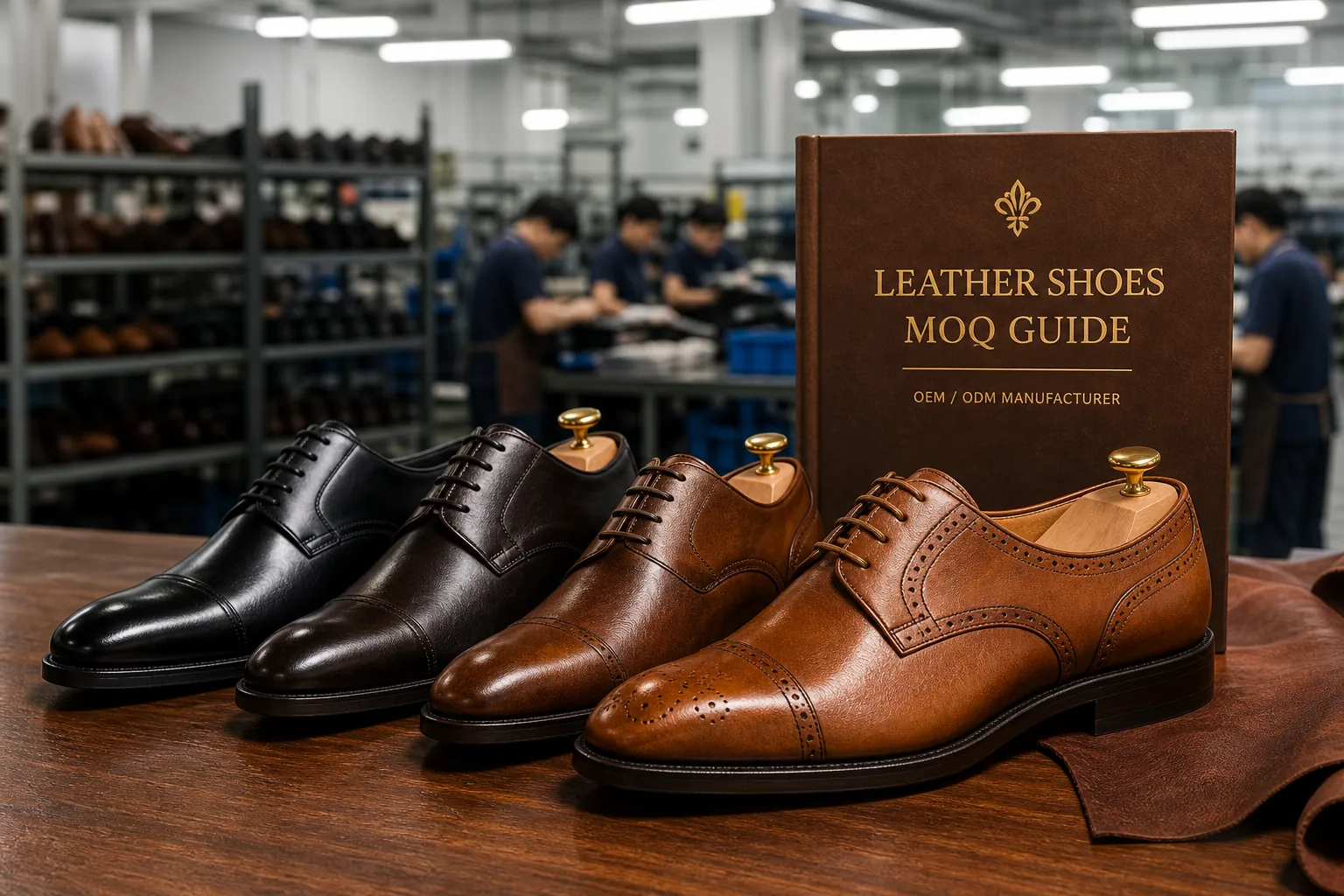
The structural fix for all three is the same: separate product validation from inventory scaling. Test with the smallest order that can still produce a real sell-through signal, then scale only the styles the data supports. Our B2B shoe MOQ guide explains how factories tier MOQs by customization depth, because order size and risk are the same decision.
How Do You Structure a Trial Order That Protects Your Capital?
The 3-5-60 Framework
A workable trial order follows a 3-5-60 structure:
- 3 styles minimum — diversifies product risk across designs
- 5 core sizes per style — covers the US 7–11 / EU 40–44 curve
- 60 pairs per style minimum — enough volume for a real sell-through reading
That produces a first order of 180–300 pairs. At typical FOB prices of $25–$40 per pair, total product cost lands between $4,500 and $12,000 — a loss you can survive, unlike an 800-pair misread.
Allocating Styles by Risk
| Style Category | Allocation | Risk Level | Rationale |
|---|---|---|---|
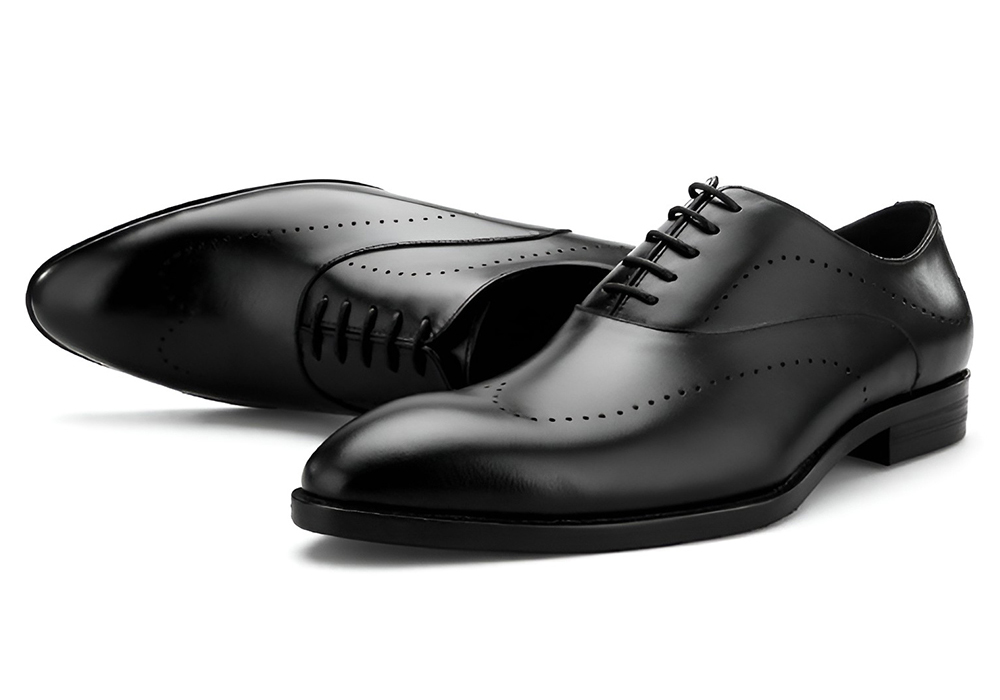
| Proven classic (Oxford / Derby) | 40% of order | Low | Established demand, year-round sales |
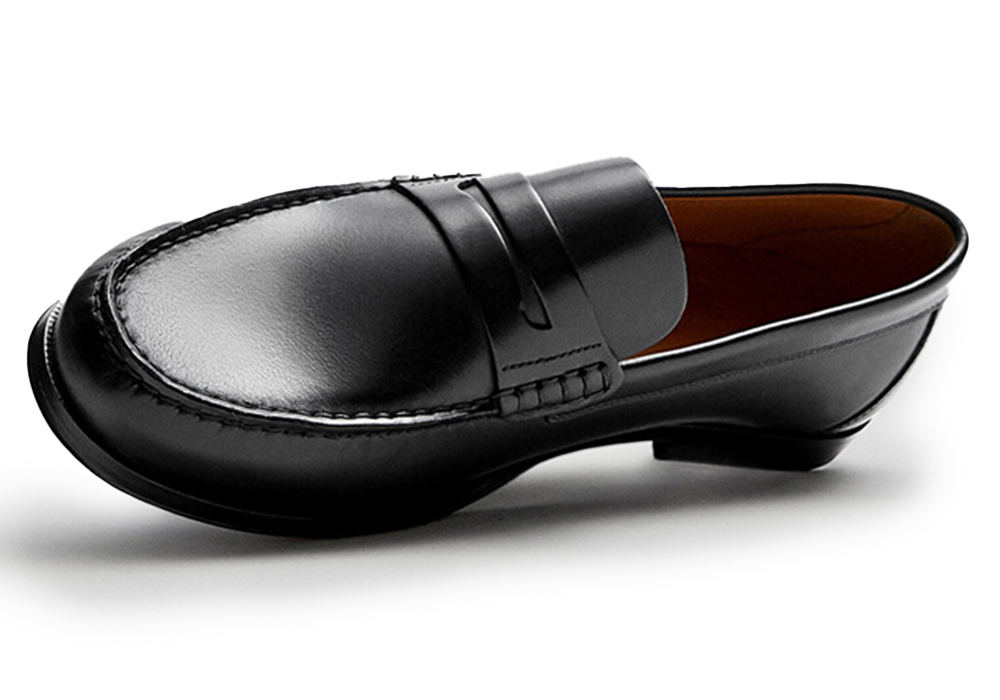
| Trending style (chunky loafer, hybrid sneaker-dress) | 35% of order | Medium | Higher margin potential, shorter trend cycle |
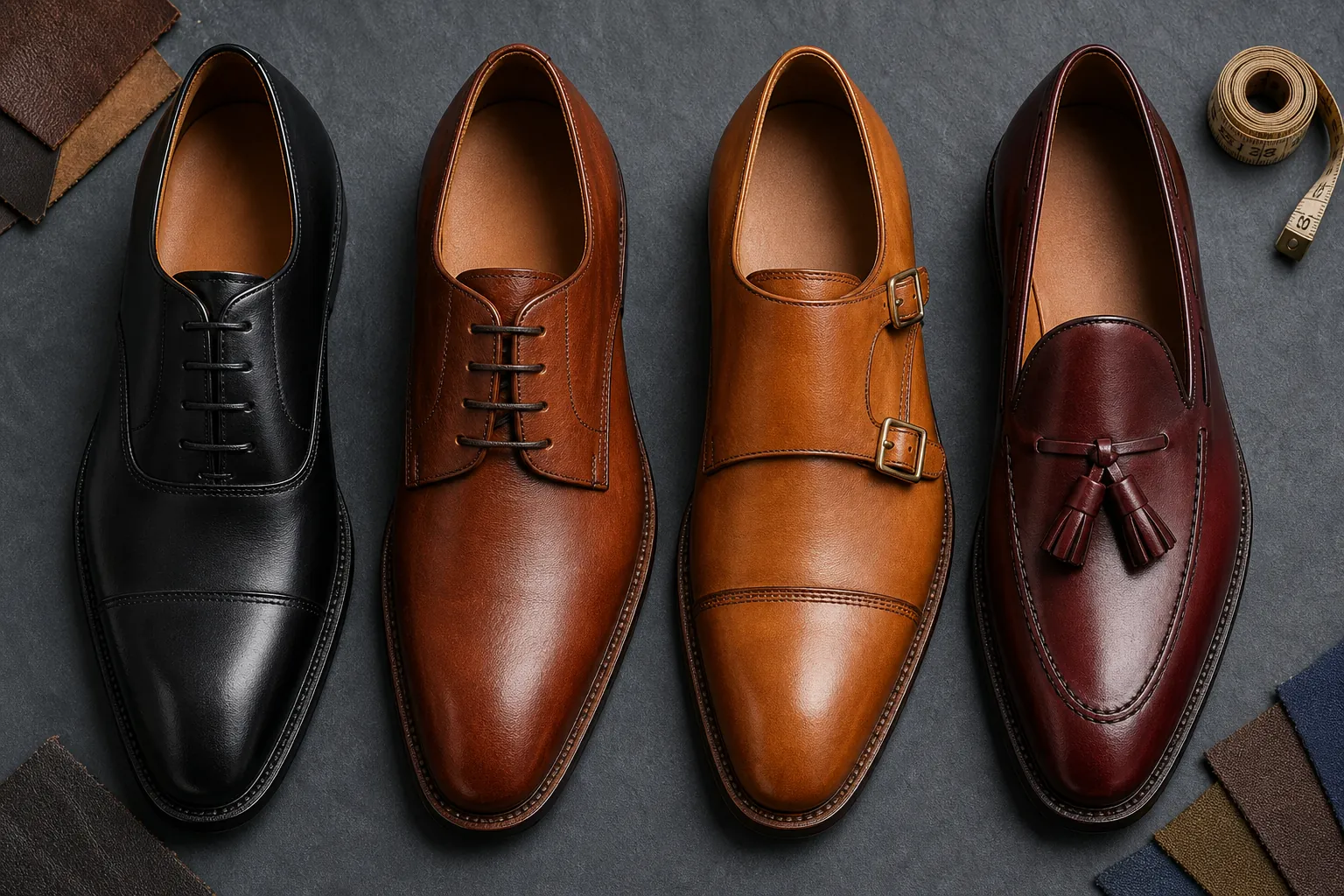
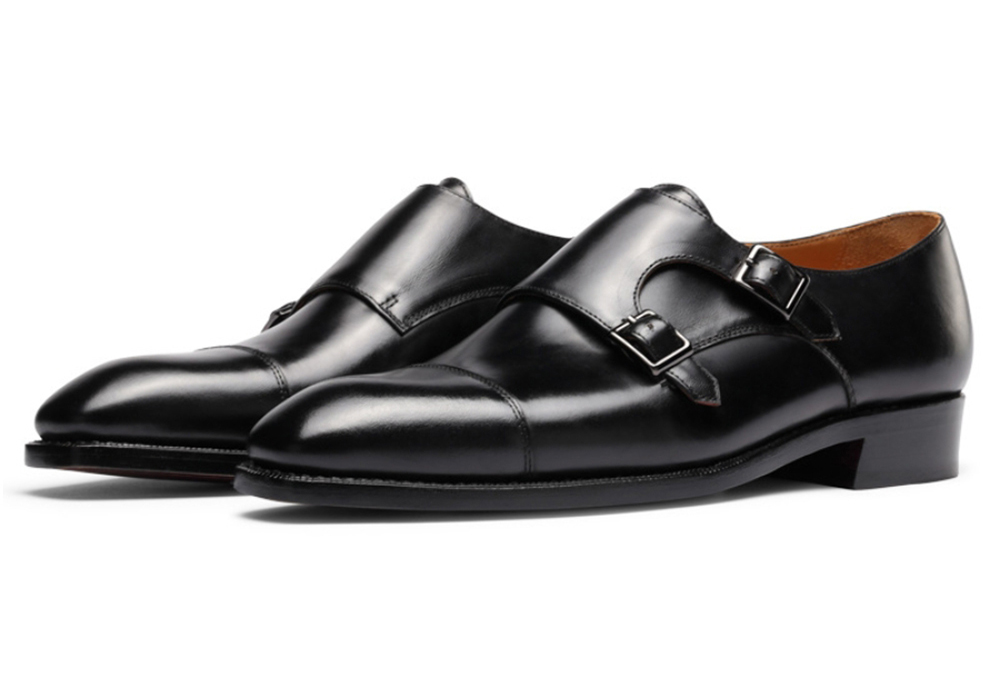
| Differentiated niche (monk strap, wholecut) | 25% of order | Higher | Tests your market’s appetite for premium |
Weighting the order toward proven classics is deliberate: the trial exists to validate your channel, not to win a design gamble. If you plan custom branding, our custom logo leather shoes guide maps logo programs on existing designs, where quantities can go below 60 pairs — the cheapest way to differentiate a trial order without custom lasts. (60 pairs per model is the MOQ for fully custom private label designs, not for logo-only orders.)
Size Curve Allocation
Do not order equal quantities across sizes. The demand-weighted size distribution for men’s dress shoes in Western markets concentrates heavily in the middle of the curve (industry rule of thumb — validate against your own channel data before locking quantities):
- US 7 / EU 40: 8–10% of order
- US 8 / EU 41: 18–20% of order
- US 9 / EU 42: 25–28% of order
- US 10 / EU 43: 22–25% of order
- US 11 / EU 44: 15–18% of order
- US 12 / EU 45: 5–8% of order (only if your market data supports it)
Size-curve errors are silent killers: you end up holding two years of size-12 stock while sizes 9 and 10 stock out in week five. Send your factory the curve as percentages — a factory that runs a proper tech pack process will build it into the size-run worksheet automatically.
Which Payment Terms Protect Your Cash Flow?
The Payment Method Ladder
Payment structure is your primary risk lever, and each rung of the ladder shifts risk between buyer and seller:
| Payment Method | Risk to Buyer | Typical First-Order Availability | Best For |
|---|---|---|---|
| 100% T/T advance | Very High | Always offered | Never acceptable on a first order |
| 30/70 T/T (70% before shipment) | High | Standard | Orders under $15,000 with verified suppliers |
| 30/70 T/T against B/L copy | Medium | Negotiable | Orders $10,000–$50,000 |
| Letter of Credit (L/C) at sight | Low-Medium | Orders >$20,000 | Larger first orders, new relationships |
| Alibaba Trade Assurance / escrow | Low | Standard on platform | Platform-sourced first orders |
| Open account (Net 30/60) | Very Low | Rare before 3–5 orders | Later in the relationship only |
The practical first-order target is 30% T/T deposit, 70% released after pre-shipment inspection approval. It keeps enough deposit in the factory’s hands to commit production capacity, while holding back enough for you to stop a bad batch before it ships.
Improving Your Negotiating Position
Factories assess buyer risk before offering terms. Four moves reliably improve what you are offered:
- Provide business registration documents — proves you are a real company, not a speculative inquiry
- Share your sales channel — an Amazon storefront or Shopify site signals genuine demand
- Trade deposit percentage against order size — 50% on 200 pairs is less exposure for the factory than 30% on 1,000 pairs
- Request third-party inspection proactively — factories that welcome it are signaling confidence in their QC
When an L/C Is Worth the Fees
Letters of Credit cost 1.5–3% of order value in bank fees, but they condition payment on conforming shipping documents and can embed quality and deadline requirements. For a first order above $20,000, that 2% fee is cheap insurance against a $20,000+ loss. Below $20,000, the fee usually outweighs the protection and 30/70 with inspection does the same job.
What Does a First Shoe Order Actually Cost?
The 2026 Landed Cost Table
FOB price is a quotation number; landed cost is the number your margin lives on. Here is a realistic 300-pair model for men’s leather dress shoes shipped from a Chinese factory to the US East Coast:
| Cost Component | Per Pair (USD) | % of Landed Cost | Notes |
|---|---|---|---|
| FOB Price | $32.00 | 68% | Mid-range leather Oxford |
| Ocean Freight (LCL) | $3.50–$5.00 | 9% | LCL for small orders; FCL drops to $1.50–$2.50/pair |
| US MFN Duty | $2.72–$3.20 | 6% | HTS 6403 leather footwear at 8.5–10% |
| Section 301 (List 4A) | $2.40 | 5% | 7.5% on China origin |
| Customs Broker Fee | $0.50–$1.00 | 2% | Allocated per pair on 300 pairs |
| Freight Insurance | $0.15–$0.30 | 1% | 0.3–0.5% of CIF value |
| Inland Freight (port to warehouse) | $0.80–$1.50 | 3% | Varies by warehouse location |
| Pre-Shipment Inspection | $0.80–$1.30 | 2% | Third-party AQL 2.5, ~$250–$400 per inspection |
| Samples (amortized) | $0.50–$1.00 | 2% | Pre-production samples |
| Banking / Payment Fees | $0.20–$0.40 | 1% | Wire and currency conversion |
| Storage (first 3 months) | $0.60–$1.20 | 2% | 3PL or FBA storage |
| Total Landed Cost | $44.20–$49.30 | 100% | 38–54% above FOB |
Two structural readings from the table: freight class choice alone moves your per-pair cost by $1–$2.50, and the duty lines are fixed percentages you can model exactly — which is why the next section matters.
The 2026 Tariff Stack on Chinese Leather Shoes
Current US duties on China-origin leather footwear stack three layers, and your landed cost model must reflect all of them:
- MFN base rate: 8.5–10% under HTS 6403 for leather-upper footwear (verify your exact 10-digit code at the official USITC HTS database — misclassification can move the rate materially)
- Section 301 List 4A: +7.5% on China origin, currently in effect
- Forced-labor related duties: an additional 12.5% layer per current HTS 9903 provisions (the UFLPA-related tariff provisions), effective July 2026 on covered footwear classifications — budget for it as an enforcement-risk line even where applicability is disputed
That is a combined 28.5–30% duty stack on covered classifications. Two older tariff mechanisms buyers still see quoted — the Section 122 reciprocal surcharge and the IEEPA-based levies — are no longer in force as of late 2026; if a landed cost spreadsheet you inherited still carries them, it is out of date. Our complete US import tariff guide for leather shoes walks the full stack line by line.
For EU imports, the anti-dumping duties on Chinese leather footwear that ran for years expired long ago; standard MFN duties of 8% under CN code 6403 apply. The stack is simpler, and the landed cost logic is identical.
Building a Three-Scenario Model
Run every landed cost spreadsheet three ways — best case (no delays, no rejects), expected case (minor delays, small quality allowance), worst case (partial rejection, re-inspection, 3-week delay). If your margin does not survive the worst case, the order is too large. That single test prevents more first-order losses than any negotiation tactic.
How Do You Avoid Overstocking Your First Order?
The 90-Day Sell-Through Test
Size the first order to sell through in 60–90 days at your conservative velocity estimate:
- Research comparable products on your sales channel (Amazon BSR, Shopify competitors, retail comps)
- Estimate daily unit sales per SKU at your target price
- Apply a 50% haircut — you have no reviews, no sales history, no organic ranking yet
- Multiply by 90 days — that is your maximum per-SKU quantity
If a comparable Oxford sells 3 pairs/day on Amazon, your conservative estimate is 1.5/day and your 90-day quantity is 135 pairs. Any style you cannot justify at that arithmetic does not belong in the trial.
Seasonal Timing
Men’s leather dress shoes have a flatter seasonal curve than fashion footwear, but it still matters:
- Peak: September–December (return to office, holiday, event season)
- Secondary peak: March–May (spring events, weddings)
- Trough: June–August
Time the first order to land 4–6 weeks before a peak. Bulk production runs 30–45 days after sample approval and ocean freight adds 25–35 days, so the order needs to be placed roughly 90 days before you want stock on the shelf — an order placed in July arrives into the trough and pays storage through your slowest months.
Reorder Triggers
Set the reorder rules before the first order ships, while you are still objective:
- Green — reorder at 2–3x volume: 70%+ sell-through in 60 days, positive reviews, returns under 5%
- Yellow — reorder at same volume: 50–70% sell-through, mixed reviews, returns 5–10%
- Red — do not reorder: under 50% sell-through, negative review trend, returns above 10%
Do You Need Insurance for Your First Order?
Cargo Insurance
Marine cargo insurance at 0.3–0.5% of CIF value is non-negotiable for any shipment you cannot afford to lose outright. Specify Institute Cargo Clause A — it is the broadest form and, importantly for leather, covers water damage, which Clauses B and C exclude. For a $15,000 shipment the premium is under $75; the arithmetic does not need defending.
Trade Credit Insurance
For first orders above $25,000 with an unproven supplier, trade credit insurance (providers such as Coface and Atradius; Euler Hermes now operates as Allianz Trade) covers supplier insolvency and protracted default at premiums of roughly 0.5–2% of insured value. Below $25,000, the pre-shipment inspection and payment structure are the more cost-effective protections.
Product Liability
If you sell in the US or EU, product liability cover ($500–$2,000/year for $1M–$2M in coverage for a small importer) is essential — a sole-separation injury claim can exceed your entire order value. Insurers will ask for your supplier’s compliance documentation, so work with factories that can document REACH and RoHS compliance; it supports the application and reduces premiums. Note that regular men’s dress and casual leather shoes carry no mandatory CE requirement: CE applies to personal protective equipment (PPE), and EN ISO 20347 covers occupational footwear only. Wincheer holds EN ISO 20347 as a factory capability for occupational shoe lines.
Should You Use a Sourcing Agent or Buy Factory-Direct?
When an Agent Earns the 5–10%
Sourcing agents typically charge 5–10% of order value. The fee is worth paying when:
- It is your absolute first order from China and you have zero factory relationships
- You do not speak Mandarin and need someone verifying factory capabilities in person
- The order is complex — multiple materials, custom lasts, specific compliance requirements
- You need someone physically present for inspection
The fee is not worth paying when the factory already runs an English-speaking export team with documented trade history, the order is straightforward, or the agent is effectively forwarding emails.
Red Flags in Agent Relationships
- Refuses to disclose the factory name or allow direct communication
- Quotes significantly below market (quality corners are being cut somewhere)
- Pushes you toward larger orders than your plan needs
- No verifiable references from other shoe importers
The Direct-Factory Alternative
Direct relationships have become genuinely viable: video factory tours, verified export records, and English-speaking sales teams have closed most of the information gap agents once monetized. Wincheer Shoes is an example of a factory structured around direct B2B relationships — exporting men’s leather shoes since 2007 (est. 2007, production lines in Jiangmen, Guangdong), with first-order programs where logo-only orders on existing designs can go below 60 pairs (60 pairs per model is the MOQ for custom private label designs) and a recorded defect rate of 0.8–1.2%. For a buyer who has done the verification work — business license check, sample evaluation, reference calls — a direct relationship removes the agent margin from every future order.
The honest framing: an agent for your first order if you feel uncertain, with a plan to transition to direct communication by order two or three. The relationship tenure, not the intermediary, is what compounds.
How Do You Scale From First Order to Steady Orders?
Phase 1 — Validation (Months 1–4)
- 180–300 pairs across 3–5 styles, existing/catalog designs to minimize sample cost
- LCL ocean freight; payment by Trade Assurance or 30/70 T/T
- Total capital at risk: $8,000–$20,000
- Success gate: 60%+ sell-through in 90 days, returns under 8%
Phase 2 — Optimization (Months 5–8)
- Reorder proven styles at 2–3x volume; drop losers without ceremony
- Apply customer feedback to minor modifications (insole comfort, color adjustments)
- Renegotiate payment terms against your order history; consider FCL from ~2,000 pairs
- Total capital at risk: $15,000–$50,000
Phase 3 — Scaling (Months 9–18)
- 1,000–5,000+ pair production runs; introduce ODM designs backed by your sales data
- 30/70 against B/L copy or L/C as order value crosses $20,000
- Systematic QC (AQL inspections, material testing) on every run
- Qualify a second supplier to de-risk single-source exposure
- Total capital at risk: $40,000–$150,000+
Phase 4 — Maturity (Month 18+)
- Annual volume contracts with preferred pricing; seasonal pre-orders from historical data
- Custom tooling (proprietary lasts, outsole molds) for real brand differentiation
- Working capital financing against POs or inventory
Buyers who skip the phase gates are the ones who fund Phase 3 volume with Phase 1 validation still missing — the single most expensive pattern we see from the factory side.
Which First-Order Mistakes Cost the Most Money?
| Mistake | Consequence | Prevention |
|---|---|---|
| Ordering a single style | 100% exposure to one product bet | 3–5 styles minimum per the 3-5-60 framework |
| Skipping landed cost math | Margin erosion discovered after the deposit | Build the three-scenario model before signing |
| Choosing supplier on price alone | Quality failures, delivery slips | Weigh communication and QC records equally — start with how to select a reliable manufacturer |
| Guessing the tariff code | Duty shock at customs | Verify the 10-digit HTS code with a broker first |
| No pre-shipment inspection | Defective goods with no leverage | Budget $250–$400 for third-party AQL |
| Paying 100% upfront | Zero leverage if problems arise | Never exceed a 30–50% deposit on a first order |
| Ordering on gut feel | Inventory that mismatches demand | Use the 90-day sell-through arithmetic |
| Ignoring return-rate projections | 15%+ returns destroying margin | Budget 5–10% returns into the model |
Frequently Asked Questions
What is the minimum budget to start importing shoes from China?
A realistic all-in budget for a viable first order is $10,000–$18,000: roughly 200–300 pairs at $25–$40 FOB ($5,000–$12,000), plus LCL freight ($1,000–$1,500), duties ($800–$2,100 at the current 16–17.5% US stack, up to ~$3,600 if the forced-labor layer applies to your classification), brokerage ($150–$300), pre-shipment inspection ($250–$400), samples ($200–$450), and initial storage. Add a 15–20% contingency — on a first order, unexpected costs are a certainty, not a risk.
How do I protect myself if a shoe factory sends defective products?
Build the protection in before ordering, not after. Use a payment structure that holds 70% until after pre-shipment inspection; specify AQL 2.5 as the acceptance standard in the purchase agreement with defined remedies (replacement, discount, cancellation); retain inspection rights through a third party such as QIMA or V-Trust. Factories with documented, low defect rates are statistically less likely to put you in this position at all — which is why supplier selection is your first and largest risk decision.
Should I use a sourcing agent or buy directly from a shoe factory?
Use an agent for the first order if you have zero China experience and need on-the-ground verification — the 5–10% fee is tuition. Choose factory-direct when the factory runs an English-speaking export team with verifiable trade records and your order is straightforward. Plan the transition deliberately: agent on order one, direct communication by order two or three, with the agent margin removed from every subsequent order.
What payment terms should I negotiate for a first shoe order?
Target 30% T/T deposit with 70% released after pre-shipment inspection approval. If the factory insists on 70% before shipment, that remains acceptable under $15,000 provided the inspection happens before you release the final payment. Never pay 100% upfront. Above $20,000, price an L/C at sight — the 1.5–3% bank fee is worth the document-conditioned protection. Terms improve with tenure: 20/80 splits, payment against B/L, and open account arrive with order history, not negotiation skill.
How long does a first shoe order take from contact to delivery?
Budget 90–160 days end to end for catalog designs, with typical runs landing near 120 days: supplier research and communication (1–2 weeks), sampling (7–15 days including revisions; 3–5 weeks from brief to counter-samples), PO negotiation (1–2 weeks), bulk production (30–45 days after sample approval), pre-shipment inspection (2–3 days), ocean freight to the US East Coast (25–35 days), customs clearance (3–7 days), and inland delivery (2–5 days). Custom designs add 15–30 days for pattern and last development. Air freight cuts 20+ days at 5–8x the cost — justified for urgent reorders of proven sellers, not for first orders.
Ready to Place a Low-Risk First Order?
Every framework in this guide — the 3-5-60 trial structure, the 30/70-with-inspection payment terms, the three-scenario landed cost model — is designed to be run against a real quotation, not read in theory. Wincheer Shoes runs first-order programs for new brand partners — logo-only orders on existing designs can go below 60 pairs, while custom private label designs start at 60 pairs per model — with OEM/ODM development for scaling phases beyond. Request a quotation with your style list and target quantity, and we will return the landed-cost-relevant numbers — FOB, MOQ tiers, and production lead times — in the same structure this guide uses.