Factory direct sourcing fits technical, repeat-order programs. Trading companies often fit mixed sourcing. The choice is a sourcing-model decision, not a simple price contest. Direct sourcing usually gives buyers closer access to technical teams, production records, and customization. A trading company may be more practical when one buyer needs several categories, mixed quantities, or a single coordinator.
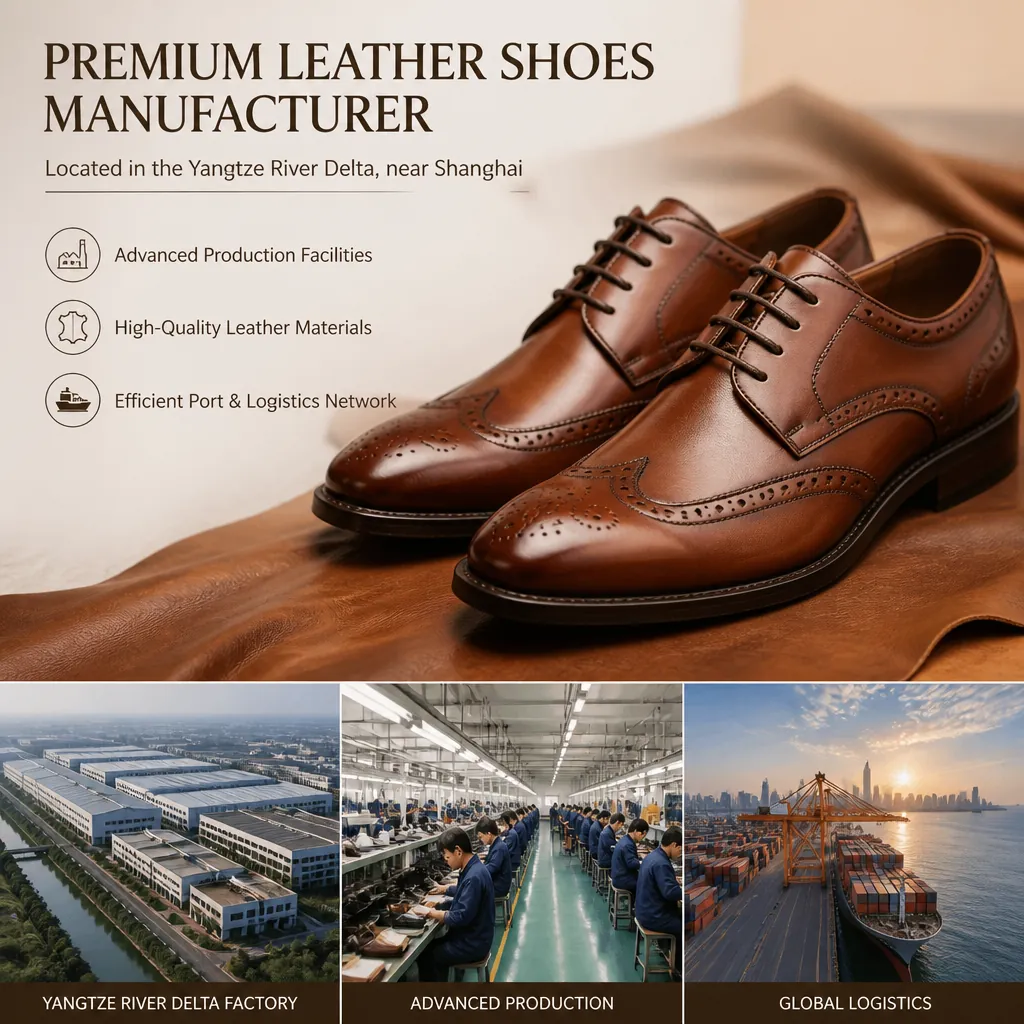
Wincheer Shoes has worked with international footwear buyers since 2007. Its production lines are in Jiangmen, Guangdong, about 1.5 hours from Guangzhou. It also maintains warehouses and showrooms in Shanghai and Jiangmen. That operating context informs this guide, but the comparison remains conditional: the right model depends on your order, internal capabilities, and risk controls.
TL;DR: Choose factory direct when you need repeatable specifications, deeper OEM/ODM work, and direct production visibility. Consider a trading company when mixed categories, order consolidation, and sourcing coordination matter more. Compare the total landed cost, not only the quoted unit price, and verify the actual manufacturer in either model.
Table of Contents
- What Does Factory Direct Mean in Shoe Sourcing?
- What Does a Shoe Trading Company Do?
- How Do the Two Models Compare?
- How Should Buyers Compare Price and MOQ?
- Which Model Gives Better Quality Control?
- How Should Compliance Documents Be Verified?
- Which Sourcing Model Fits Your Order?
- How Can You Verify a Factory or Trader?
- FAQ
- Ready to Discuss Your Shoe Program?
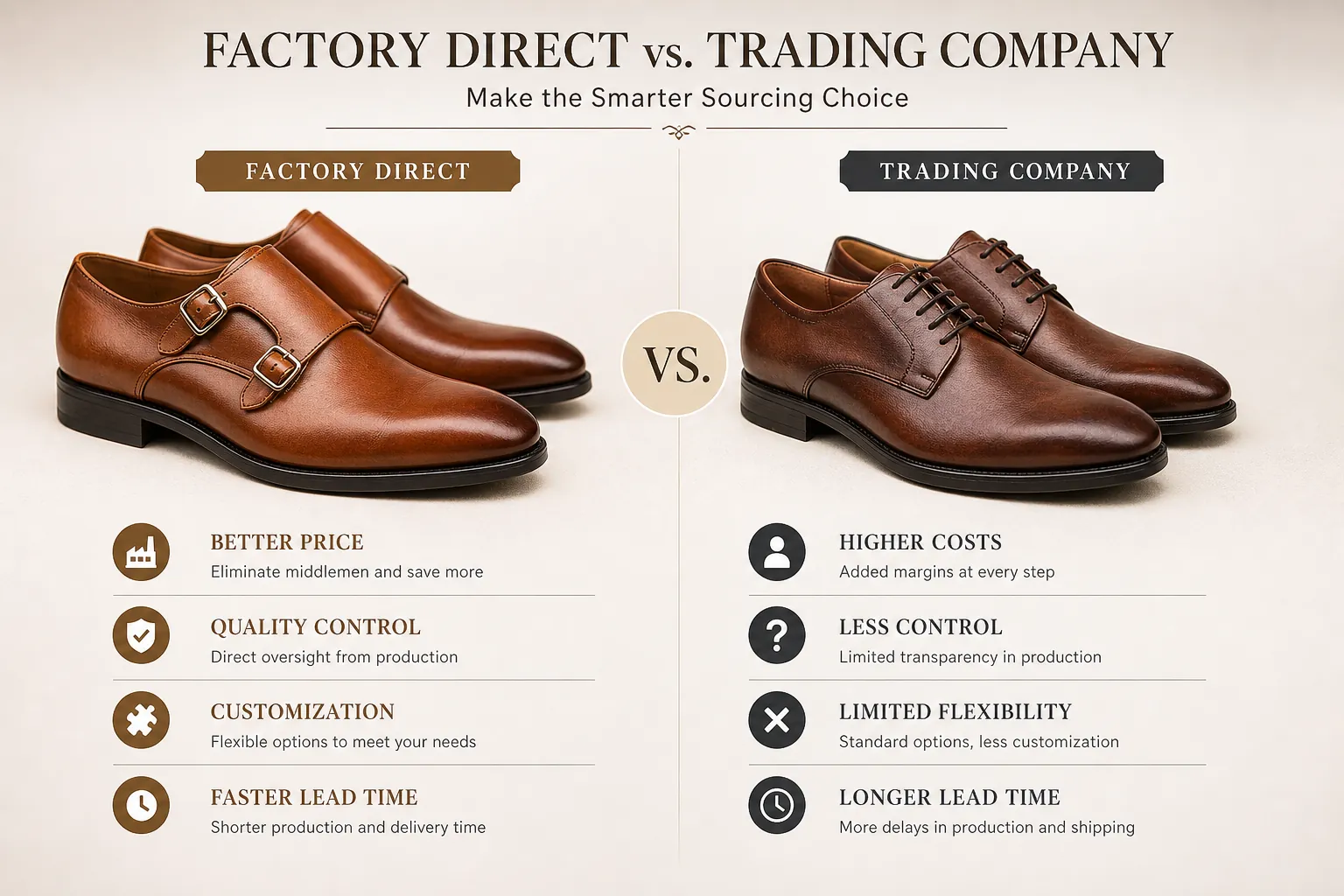
What Does Factory Direct vs Trading Company Shoes Mean?
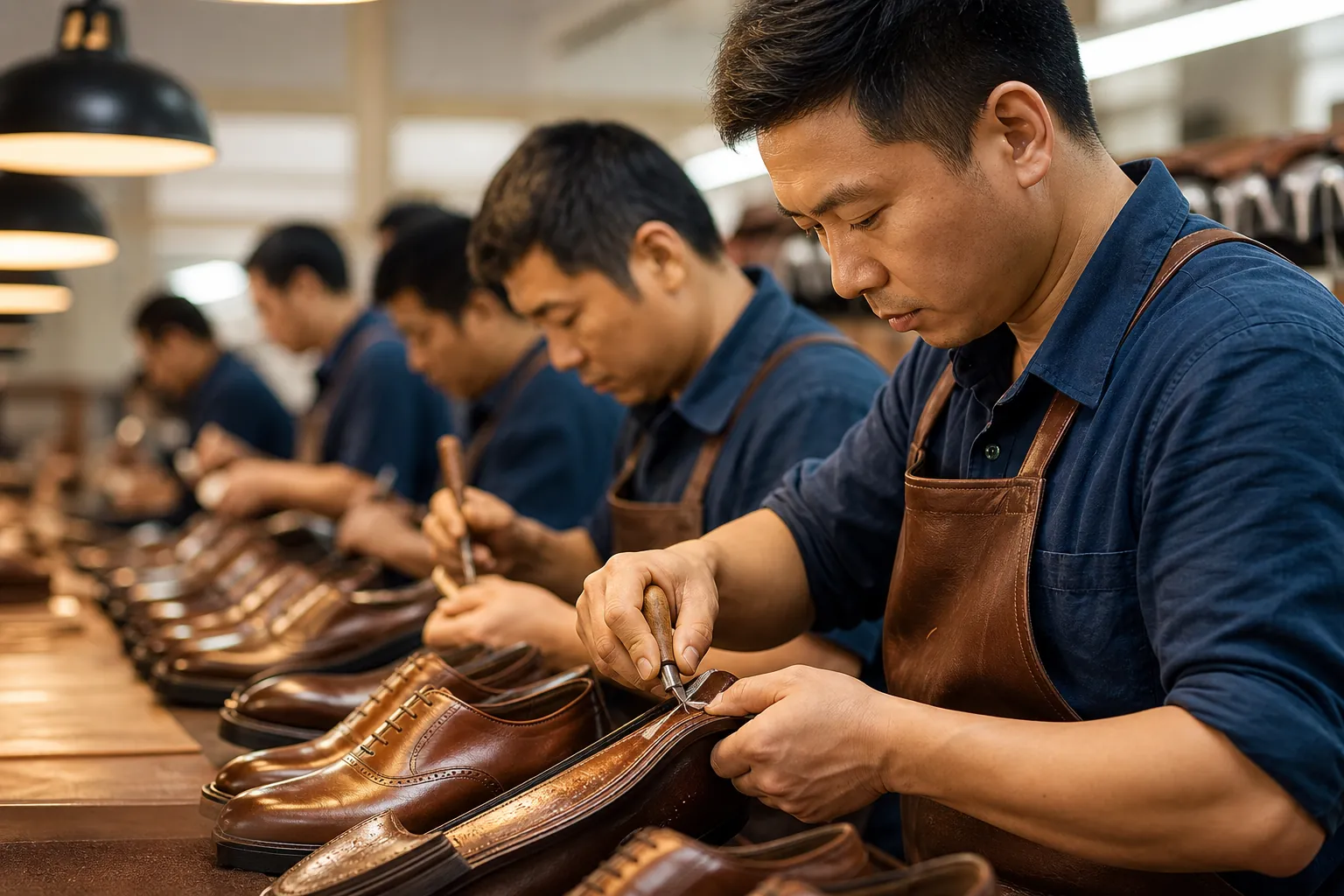
A factory-direct relationship means the buyer contracts with the manufacturer responsible for producing the footwear. Commercial, development, and quality conversations therefore have a shorter path to the teams managing lasts, patterns, materials, stitching, lasting, sole attachment, finishing, and packing.
That direct path matters most when a shoe requires more than a logo change. A buyer developing a custom last, changing leather specifications, adjusting construction, or controlling packaging needs fast technical feedback. Direct access can reduce translation loss between the purchase specification and the production instruction.
Factory direct does not guarantee good quality. It only removes one communication layer. A weak manufacturer can still miss specifications, substitute materials, or deliver inconsistent batches. Buyers still need an approved sample, written tolerances, inspection stages, and a clear corrective-action process.
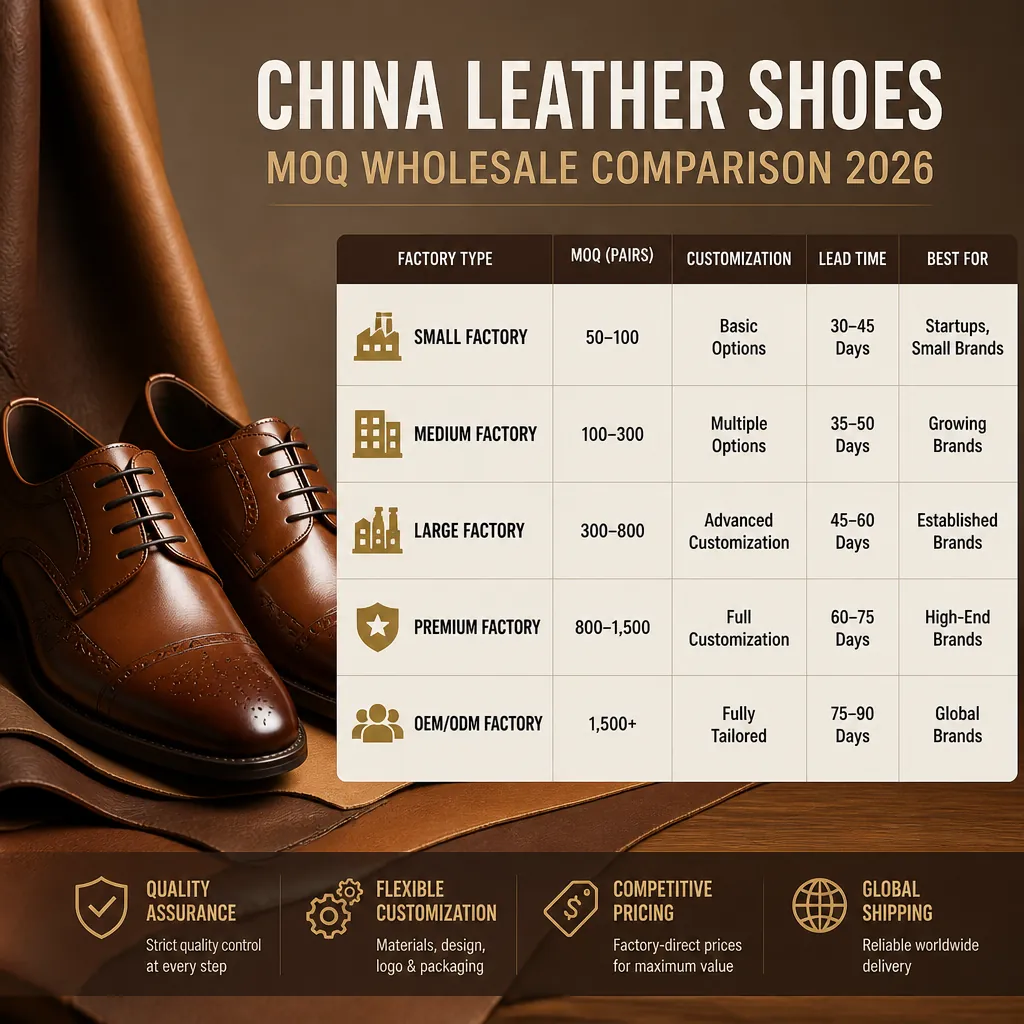
For current men’s leather shoe programs, indicative pricing is commonly discussed within a $25–$40 per-pair range, while custom programs may start from 60 pairs. These are planning references, not universal offers. Leather grade, construction, outsole, packaging, sizing, testing, and delivery terms can change the final quotation.
What Does a Shoe Trading Company Do?
A shoe trading company sources products from one or more manufacturers and manages the buyer relationship. Its value may include supplier discovery, multilingual coordination, mixed-category procurement, order consolidation, inspection scheduling, documentation, and shipment coordination.
Some traders disclose their factories and support independent inspection. Others protect the factory identity or move orders between producers. The label “trading company” therefore says little about service quality. Buyers should evaluate transparency, technical competence, process control, and accountability rather than treating every intermediary as identical.
Trading companies can be useful for a retailer testing several products at once. A single coordinator may combine shoes, bags, belts, or accessories from different sources. This can reduce administrative work, although the buyer should still ask how each product’s specifications and quality records are controlled.
The trade-off is indirect communication. Questions may pass from buyer to account manager, then to factory merchandiser, technician, or quality staff. Every handoff can delay clarification or change the meaning of a specification. A capable trader manages that risk with documented approvals and traceable records.
How Do Factory Direct and Trading Company Shoes Compare?
The practical differences appear in control, coordination, and cost structure. Neither column below is automatic; each item must be verified for the actual supplier and order.
| Decision Area | Factory Direct | Trading Company |
|---|---|---|
| Contracting party | Manufacturer | Intermediary or sourcing company |
| Technical communication | Usually closer to development and production teams | Usually routed through an account or merchandising team |
| Product range | Often concentrated around the factory’s capabilities | May combine products from several factories |
| Customization | Strong when the factory has suitable development capability | Depends on the selected factory and the trader’s technical skills |
| MOQ options | Driven by materials, setup, construction, and production planning | May combine stock or orders, but must explain how minimums are achieved |
| Quality visibility | Buyer can request direct production and inspection records | Buyer relies on the trader to obtain and transmit records |
| Pricing | No intermediary service layer, but buyer manages more work | Includes coordination value and commercial margin |
| Accountability | Direct corrective action with the manufacturer | Trader mediates claims and corrective action |
| Best fit | Repeat orders, private label, OEM/ODM, technical control | Mixed categories, consolidation, early sourcing support |
The central question is not “Which is cheaper?” It is “Which structure gives this buyer the required control at an acceptable total cost?” A low quote can become expensive after sampling delays, rework, inspection, rejected goods, or excess inventory.
How Should Buyers Compare Price and MOQ?
Compare quotations on the same specification and Incoterm. Two prices are not comparable if they use different leather grades, constructions, outsoles, packaging, testing, payment terms, or delivery points. Ask both suppliers to quote against one specification sheet and identify every exclusion.
A trading company may add a service margin, but that margin can pay for real work. Supplier screening, order consolidation, inspection coordination, documentation, and claim handling all consume resources. Buyers should separate those services from the product price instead of assuming every price difference is hidden markup.
Factory-direct sourcing also carries buyer-side costs. The buyer may need stronger technical staff, third-party inspections, supplier visits, sample management, and direct logistics coordination. These costs are easier to justify when order frequency and product continuity increase.
MOQ must be defined precisely. Ask whether the stated minimum applies per style, color, material, outsole, or size run. Also ask whether the minimum uses stock components or requires custom development. A low headline MOQ can still create a large commitment after color and size requirements are added.
Use the FOB shoe pricing guide INTERNAL_LINK: fob-shoe-pricing-guide-4-incoterms-compared-in-2026] to normalize quotations before comparing the two models. For a low-volume private-label program, the [private label shoe launch guide explains how product scope changes capital exposure.
A Total-Cost Checklist
Before selecting a quote, add these items:
- Sample, mold, last, pattern, and development charges
- Material and packaging minimums
- Inspection, laboratory testing, and audit costs
- Freight, duties, insurance, and destination charges
- Payment terms and currency exposure
- Rework, replacement, and claim procedures
- Internal time required to manage development and production
- Inventory risk created by style, color, and size minimums
Which Model Gives Better Quality Control?
Factory direct can improve quality visibility, but the buyer must convert access into a written control plan. That plan should define the approved sample, critical dimensions, material references, workmanship criteria, inspection stages, sampling method, defect classes, acceptance criteria, and corrective-action ownership.
A trading company can also manage quality effectively. The buyer should ask who performs each inspection, whether inspectors are independent from the sales team, and whether reports show the factory, order, lot, date, quantity, findings, and photographic evidence. Summary statements without traceable records are weak evidence.
ISO 2859-1 provides sampling procedures for inspection by attributes. Buyers often use an AQL-based sampling plan for final random inspection, but the plan does not replace process controls. The official ISO 2859-1 standard page should be checked when specifying the applicable edition and sampling requirements.
A strong footwear control plan usually includes:
- Pre-production approval: signed sample, bill of materials, color references, and packaging specification.
- Incoming-material checks: leather, lining, outsole, accessories, adhesives, and packaging.
- In-line inspection: cutting, stitching, lasting, bonding, symmetry, and measurements.
- Final random inspection: appearance, function, quantity, assortment, labeling, and packing.
- Corrective action: root cause, containment, rework decision, and prevention for repeat orders.
Use the footwear AQL inspection guide to turn the sampling method into an order-specific checklist. The reported defect-rate benchmark is 0.8–1.2%, but buyers should verify the current metric, its definition, and the relevant production period before relying on it.
How Should Compliance Documents Be Verified?
Compliance depends on the product and destination market, not on whether the seller is a factory or trader. A buyer should first identify the applicable legal requirements, then verify that every report or declaration covers the correct legal entity, product, material, model, test method, laboratory, date, and market.
CE marking is not mandatory for every product sold in the EU. The European Commission’s CE marking guidance states that CE marking is required only where harmonized EU rules specifically require it. Where no such requirement applies, the CE mark must not be used.
EN ISO 20347 concerns occupational footwear. It should not be presented as a blanket requirement for ordinary men’s dress shoes. The product category, intended use, and applicable legislation determine whether PPE conformity procedures and CE marking are relevant.
REACH obligations can affect substances in materials and articles supplied in the EU. Ask for product- and material-specific evidence rather than a generic “REACH certificate.” RoHS primarily concerns electrical and electronic equipment, so it should only be requested when the footwear or supplied component falls within the relevant scope.
A trading company can transmit manufacturer test reports and declarations. That is not automatically invalid. The buyer must verify the named entity, product coverage, issuing laboratory, report date, and connection to the actual production batch. The same checks apply when documents come directly from a factory.
For occupational and ordinary footwear distinctions, use the CE marking footwear guide.
Which Sourcing Model Fits Your Order?
Choose the model that closes your largest operational gap. A buyer with an experienced footwear developer may benefit from direct access to the factory. A new retailer coordinating several unrelated categories may gain more from an accountable sourcing partner.
Factory Direct Is Usually the Better Fit When
- You need custom lasts, materials, construction, branding, or packaging.
- The program has repeat orders and stable specifications.
- Your team can manage samples, inspections, documentation, and logistics.
- Direct production visibility is important to your risk controls.
- You want a long-term corrective-action loop with one manufacturer.
A Trading Company May Be the Better Fit When
- You need several categories from different production specialists.
- Consolidation and one commercial contact reduce meaningful overhead.
- You are testing a market with stock or lightly customized products.
- Your team needs sourcing coordination more than direct technical access.
- The trader discloses the control process and accepts clear accountability.
Use a Hybrid Model When Appropriate
Some buyers use a trader for discovery and consolidation, then contract directly with selected manufacturers after volumes stabilize. Others retain a sourcing firm for inspection and logistics while maintaining direct technical communication with the factory. The contract must state each party’s responsibility and protect against undisclosed supplier changes.
How Can You Verify a Factory or Trading Company?
A supplier’s website and showroom are not enough. Verify the entity, production location, technical capability, and order-control process before paying a deposit.
Nine Verification Steps
- Request the business license and confirm the legal entity and registered scope.
- Match the beneficiary name on the bank account to the contracting entity.
- Request the production address and a live, guided factory video call.
- Ask to see the relevant production steps, machinery, warehouse, and quality area.
- Confirm whether any part of the order will be subcontracted.
- Review a redacted production and inspection record for a comparable product.
- Verify test reports and declarations with the issuing laboratory or body.
- Order a sample and compare it with the written specification.
- Use an independent audit or inspection when the order risk justifies it.
Warning signs include refusal to identify the producer, inconsistent company names, unexplained bank-account changes, copied documents, reports for a different product, and promises that ignore material or setup constraints. The supplier red-flags checklist provides a deeper verification sequence.
Buyer rule: Verify the process, not the label. A transparent trading company can be safer than an opaque factory, while a well-managed direct manufacturer can provide stronger technical control than an intermediary.
FAQ
Q: Is factory direct always cheaper than a shoe trading company?
A: No. Factory direct removes an intermediary layer, but the buyer may assume more development, inspection, travel, and coordination work. Compare identical specifications and Incoterms, then add every service and risk cost. A trader can provide better total value when consolidation or sourcing management replaces work the buyer cannot perform efficiently.
Q: Can a trading company manage reliable shoe quality control?
A: Yes, if its process is transparent and traceable. Ask who inspects, at which production stages, under what sampling plan, and with what corrective-action authority. The report should identify the factory, order, lot, date, quantity, defects, and evidence. Independent verification remains appropriate for higher-risk orders.
Q: What MOQ should a buyer expect from a factory-direct shoe supplier?
A: There is no universal MOQ. It can apply per style, color, material, outsole, or size run. Stock components often support lower quantities than custom development. Custom programs may start from 60 pairs, but the exact minimum and $25–$40 indicative range require confirmation against the current specification and quotation.
Q: How can a buyer confirm whether a supplier owns a factory?
A: Check the business license, contracting entity, bank beneficiary, production address, live factory walkthrough, machinery, employees, current production, and traceable records. Then use an independent audit where justified. Ownership alone is not enough; the buyer must confirm that the named facility will actually produce the order.
Q: Does a trading company make compliance documents invalid?
A: No. A trader can transmit valid manufacturer reports and declarations. Verify the named entity, product and material coverage, model, test method, laboratory, date, and applicable market. CE, REACH, and RoHS should never be treated as generic badges; applicability depends on the product and governing rules.
Ready to Start Your Shoe Line?
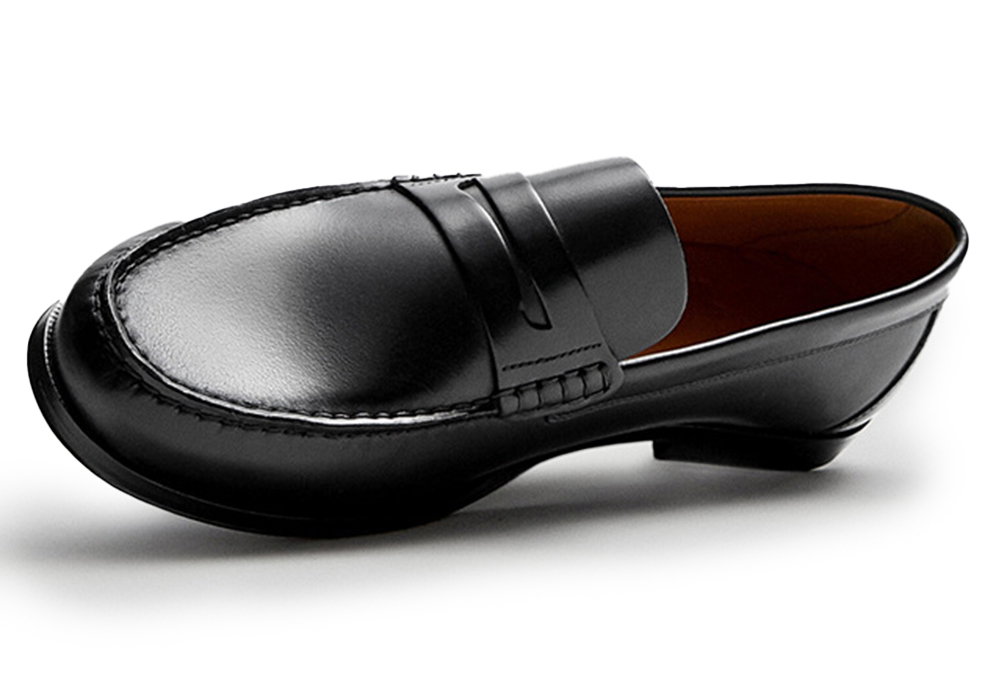
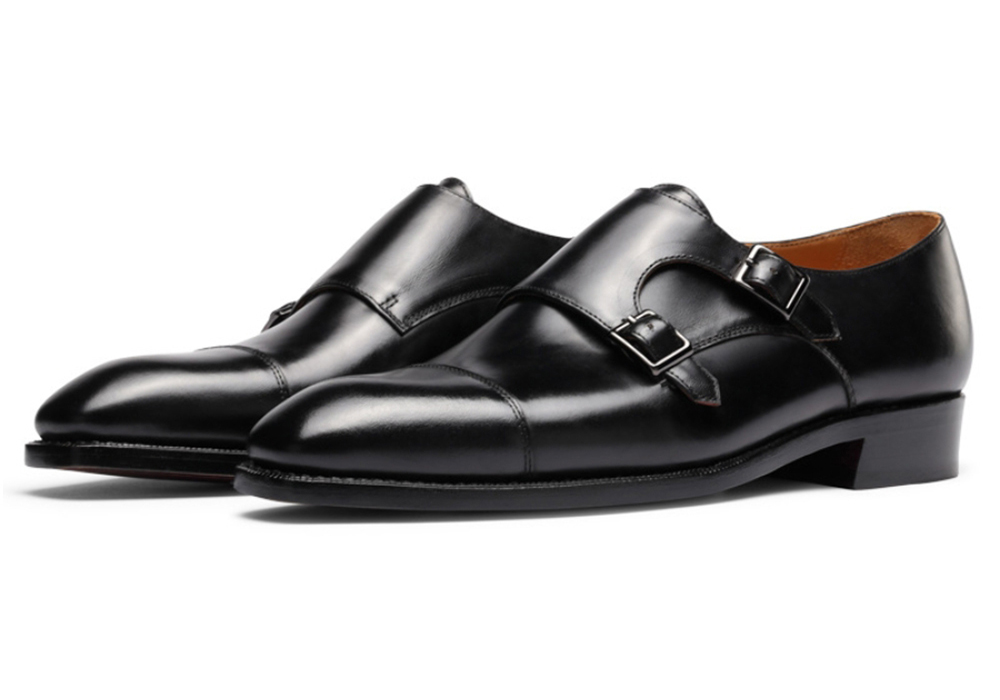
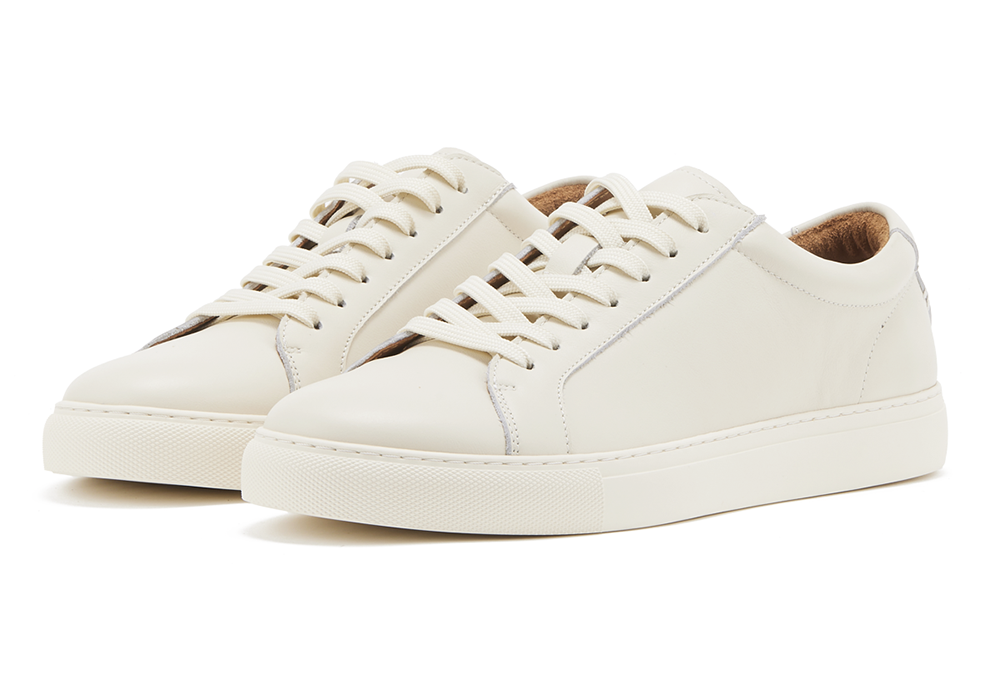
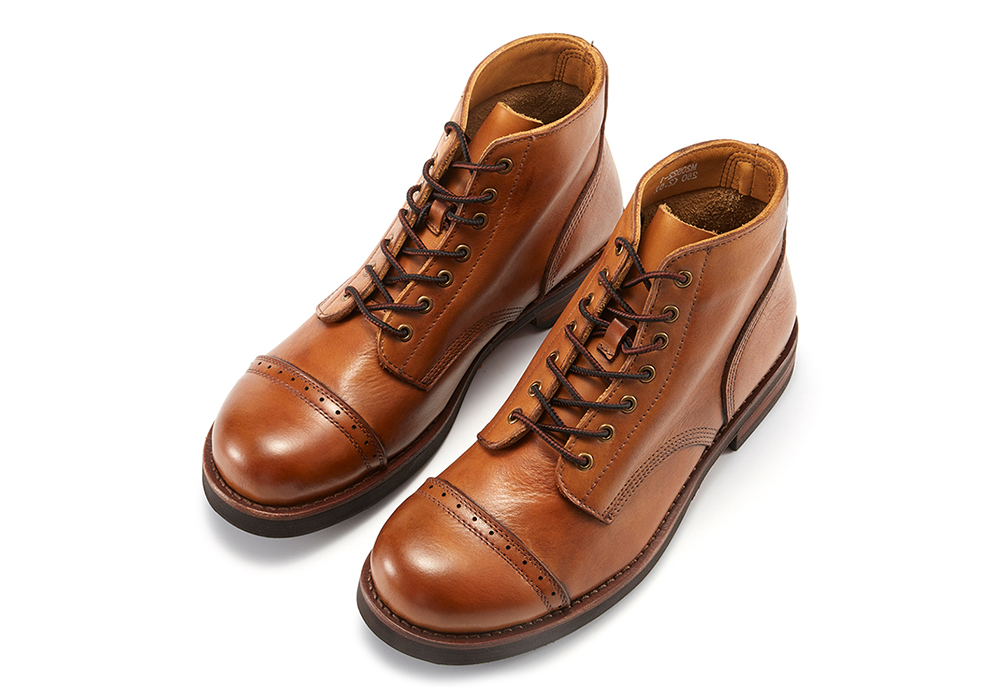
For men’s leather Oxford, Derby, Loafer, Monk Strap, Chelsea Boot, or walking-shoe programs, prepare one specification pack before requesting quotations. Include the target market, construction, leather, outsole, size range, colors, branding, packaging, order quantity, inspection plan, and delivery term.
Contact our sourcing team to request a quotation, sample plan, MOQ confirmation, lead-time estimate, and the product-specific compliance documents available for your program. A clear brief makes factory-direct and trading-company quotations easier to compare on equal terms.
{ “@context”: “https://schema.org”, “@graph”: [ { “@type”: “Article”, “@id”: “https://wincheershoes.com/factory-direct-vs-trading-company-shoes/#article”, “headline”: “Factory Direct vs Trading Company Shoes: 7-Point Guide”, “description”: “Compare factory direct vs trading company shoes on price, MOQ, quality control, lead time, and compliance before choosing a sourcing model.”, “mainEntityOfPage”: { “@type”: “WebPage”, “@id”: “https://wincheershoes.com/factory-direct-vs-trading-company-shoes/” }, “author”: { “@id”: “https://wincheershoes.com/#organization” }, “publisher”: { “@id”: “https://wincheershoes.com/#organization” }, “keywords”: [ “factory direct vs trading company shoes”, “shoe manufacturer sourcing”, “OEM shoe supplier”, “B2B shoe buying” ] }, { “@type”: “FAQPage”, “@id”: “https://wincheershoes.com/factory-direct-vs-trading-company-shoes/#faq”, “mainEntity”: [ { “@type”: “Question”, “name”: “Is factory direct always cheaper than a shoe trading company?”, “acceptedAnswer”: { “@type”: “Answer”, “text”: “No. Factory direct removes an intermediary layer, but the buyer may assume more development, inspection, travel, and coordination work. Compare identical specifications and Incoterms, then add every service and risk cost.” } }, { “@type”: “Question”, “name”: “Can a trading company manage reliable shoe quality control?”, “acceptedAnswer”: { “@type”: “Answer”, “text”: “Yes, if its process is transparent and traceable. Ask who inspects, at which production stages, under what sampling plan, and with what corrective-action authority. Independent verification remains appropriate for higher-risk orders.” } }, { “@type”: “Question”, “name”: “What MOQ should a buyer expect from a factory-direct shoe supplier?”, “acceptedAnswer”: { “@type”: “Answer”, “text”: “There is no universal MOQ. It can apply per style, color, material, outsole, or size run. Stock components often support lower quantities than custom development. The exact minimum requires confirmation against the current specification and quotation.” } }, { “@type”: “Question”, “name”: “How can a buyer confirm whether a supplier owns a factory?”, “acceptedAnswer”: { “@type”: “Answer”, “text”: “Check the business license, contracting entity, bank beneficiary, production address, live factory walkthrough, machinery, current production, and traceable records. Use an independent audit where justified.” } }, { “@type”: “Question”, “name”: “Does a trading company make compliance documents invalid?”, “acceptedAnswer”: { “@type”: “Answer”, “text”: “No. A trader can transmit valid manufacturer reports and declarations. Verify the named entity, product and material coverage, model, test method, laboratory, date, and applicable market.” } } ] } ] }