FOB shoe pricing: Why Incoterms Matter More Than Ever in 2026
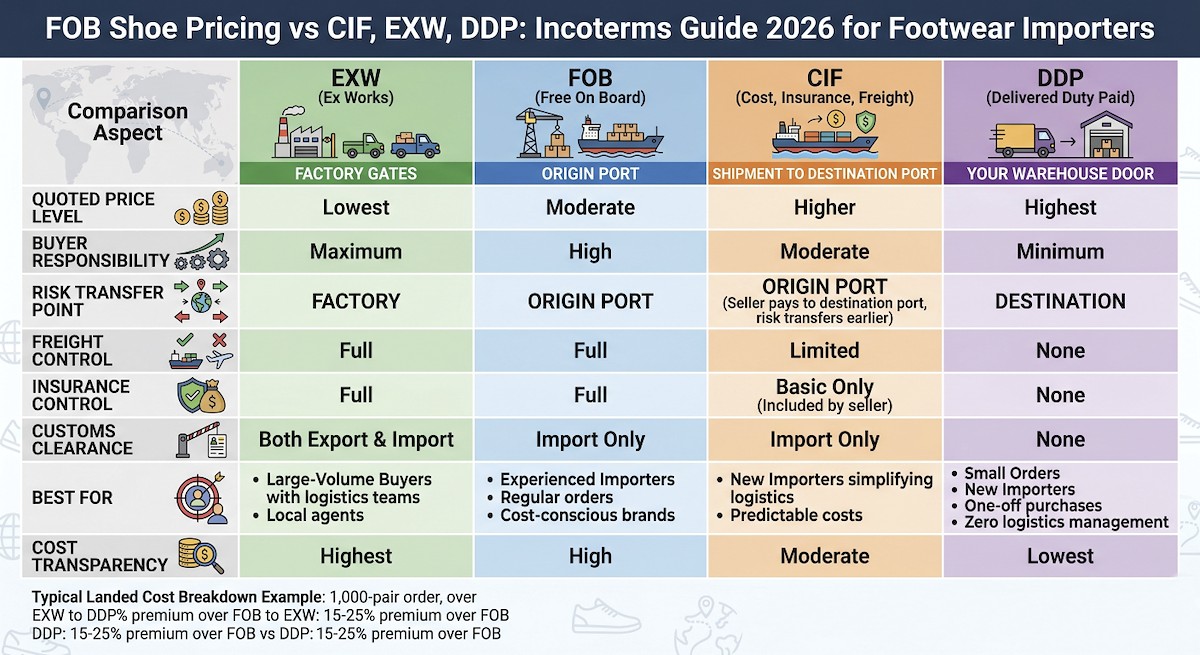
Global supply chain disruptions have made shipping terms more critical than ever. Port congestion, container shortages, and fluctuating freight rates can dramatically impact your landed costs. The right Incoterm choice can mean the difference between absorbing unexpected costs or passing them to your supplier.
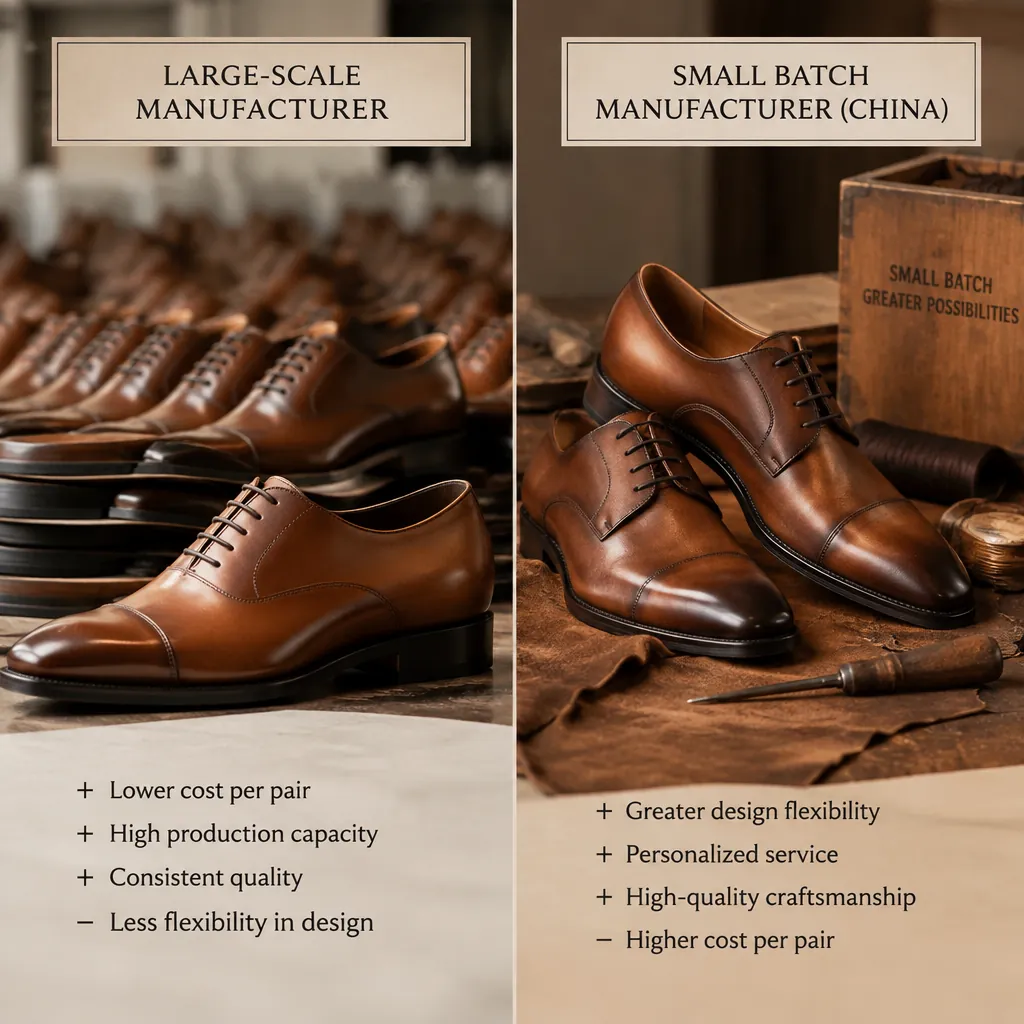
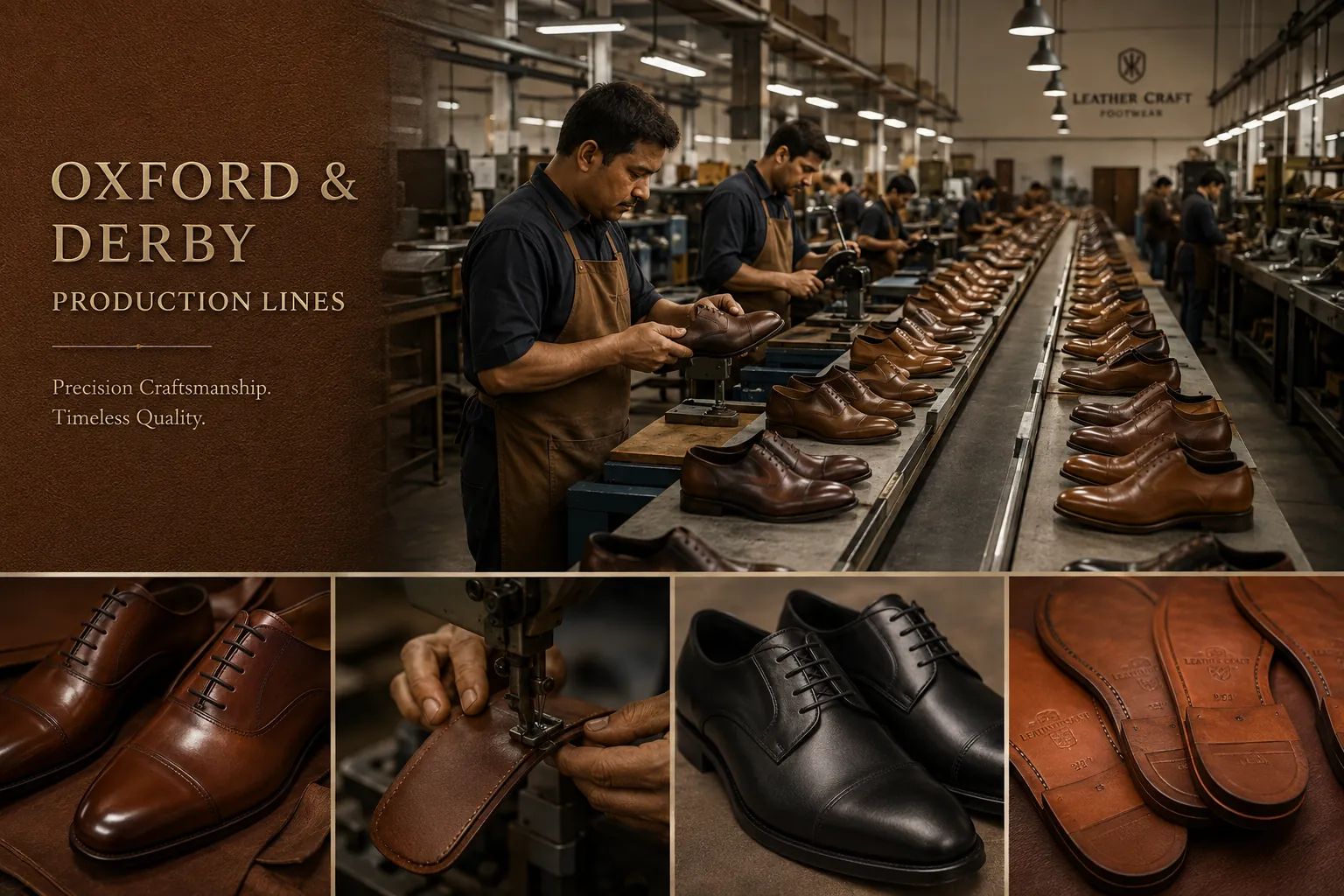
Since 2007, Wincheer Shoes has produced 500,000+ pairs annually across multiple international markets, navigating every possible shipping scenario. From our Jiangmen factory, Guangdong, coordinating with our Shanghai office, we’ve seen how proper Incoterm selection affects everything from quality control timing to insurance claims. With partnerships spanning 50+ countries and MOQs starting at just 60 pairs for custom designs, we’ve learned that smaller buyers often benefit from different terms than large-volume importers.
FOB (Free On Board): The Most Popular Choice for Shoe Imports
FOB shoe pricing transfers responsibility from seller to buyer once goods are loaded onto the vessel at the origin port. This term has become the gold standard for footwear imports because it offers the best balance of cost control and risk management for experienced buyers.
How FOB Works in Practice
Under FOB terms, your shoe supplier handles:
- Factory to port transportation
- Export customs clearance
- Loading charges at origin port
You become responsible for:
- Ocean freight costs
- Marine insurance
- Import customs clearance
- Destination port charges
- Final delivery to your warehouse
FOB Cost Breakdown
For a typical 1,000-pair shoe order valued at $30,000:
- Supplier’s FOB price: $30,000
- Ocean freight: $2,500-4,000 (depending on route and season)
- Marine insurance: $150-300 (0.5-1% of cargo value)
- Destination charges: $800-1,200
- Customs clearance: $200-500
- Total landed cost: $33,650-36,000
When FOB Makes Sense
FOB works best for:
- Experienced importers with established freight forwarders
- Regular buyers who can negotiate better freight rates
- Quality-conscious brands wanting control over shipping and handling
- Buyers with specific insurance requirements
The key advantage is cost transparency. You know exactly what you’re paying for freight and can shop around for better rates as your volume grows.
CIF (Cost, Insurance, Freight): Convenience at a Premium
CIF shoe pricing includes the product cost plus insurance and freight to your destination port. While convenient for new importers, this term often results in higher total costs because suppliers markup shipping services.
How CIF Works
Under CIF terms, your supplier provides:
- All FOB services
- Ocean freight to destination port
- Basic marine insurance (minimum coverage)
- Risk transfer still occurs at origin port (same as FOB)
You handle:
- Import customs clearance
- Destination port charges
- Final delivery
CIF Cost Analysis
Same 1,000-pair order under CIF terms:
- Supplier’s CIF price: $34,000-36,000
- Destination charges: $800-1,200
- Customs clearance: $200-500
- Total landed cost: $35,000-37,700
The 3-5% premium over FOB reflects the supplier’s markup on freight and insurance services.
CIF Advantages and Drawbacks
Pros:
- Simplified logistics for new importers
- Single point of contact for shipping issues
- Predictable costs quoted upfront
Cons:
- Higher total costs due to supplier markups
- Limited control over shipping methods
- Basic insurance may not cover all risks
- Difficulty comparing true product costs between suppliers
EXW (Ex Works): Maximum Control, Maximum Responsibility
EXW represents the minimum obligation for sellers—goods are ready for pickup at their factory. While offering the lowest quoted prices, EXW transfers maximum responsibility to buyers.
EXW Logistics Chain
Under EXW terms, you arrange and pay for:
- Pickup from supplier’s factory
- Export customs clearance
- All transportation to final destination
- Insurance coverage
- Import procedures
EXW Cost Structure
1,000-pair order under EXW:
- Supplier’s EXW price: $28,000-29,000
- Local pickup and export: $300-600
- Ocean freight: $2,500-4,000
- Insurance: $150-300
- Import costs: $1,000-1,700
- Total landed cost: $31,950-35,600
When EXW Works
EXW suits:
- Large-volume buyers with dedicated logistics teams
- Buyers with local agents in the supplier’s country
- Companies wanting maximum cost control
- Experienced importers comfortable with export procedures
The main risk is export compliance. If your supplier’s country has complex export requirements, you’ll need local expertise to avoid delays.
DDP (Delivered Duty Paid): Door-to-Door Convenience
DDP represents maximum service from suppliers—they handle everything until goods reach your specified destination. This premium service comes with the highest costs but eliminates logistics headaches.
DDP Service Scope
Your supplier manages:
- All transportation from factory to your door
- Export and import customs clearance
- Duty and tax payments
- Insurance coverage
- Risk retention until final delivery
DDP Pricing Reality
1,000-pair DDP order:
- Supplier’s DDP price: $38,000-42,000
- Your additional costs: $0
- Total landed cost: $38,000-42,000
The 15-25% premium over FOB reflects comprehensive service and risk assumption by the supplier.
DDP Considerations
Benefits:
- Zero logistics management required
- Predictable total costs
- Single point of accountability
- Ideal for small orders or new importers
Limitations:
- Highest total costs
- Limited shipping method control
- Potential delays if supplier lacks destination expertise
- Difficulty verifying actual duty payments
Incoterms Comparison: Choosing the Right Terms
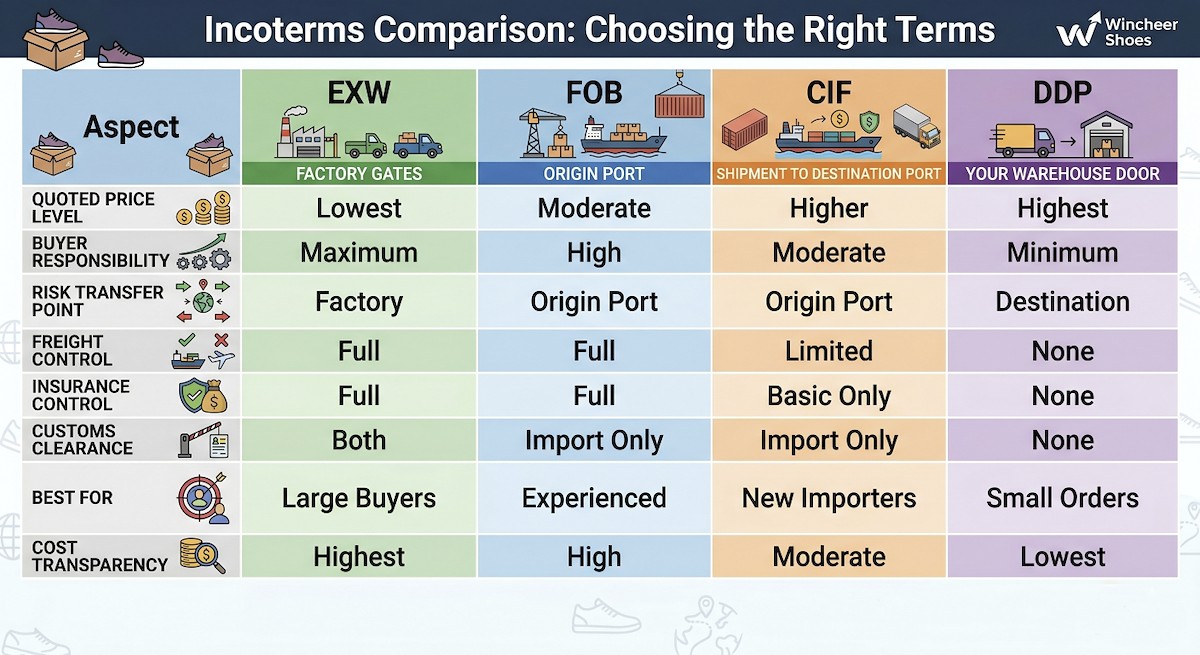
| Aspect | EXW | FOB | CIF | DDP |
|---|---|---|---|---|
| Quoted Price Level | Lowest | Moderate | Higher | Highest |
| Buyer Responsibility | Maximum | High | Moderate | Minimum |
| Risk Transfer Point | Factory | Origin Port | Origin Port | Destination |
| Freight Control | Full | Full | Limited | None |
| Insurance Control | Full | Full | Basic Only | None |
| Customs Clearance | Both | Import Only | Import Only | None |
| Best For | Large Buyers | Experienced | New Importers | Small Orders |
| Cost Transparency | Highest | High | Moderate | Lowest |
Landed Cost Calculation: Real-World Example
Let’s calculate the true cost of importing 2,000 pairs of leather dress shoes from China to Los Angeles under different Incoterms:
Base Scenario
- Product: Oxford dress shoes, $32/pair
- Order value: $64,000
- Weight: 2,400 kg
- Volume: 45 CBM
Cost Breakdown by Incoterm
EXW Calculation:
- EXW price: $30/pair = $60,000
- Local pickup/export: $800
- Ocean freight (Shanghai-LA): $3,600
- Marine insurance: $320
- US customs clearance: $450
- Import duties (8.5%): $5,440
- Port charges: $1,200
- Total landed cost: $71,810 ($35.91/pair)
FOB Calculation:
- FOB price: $32/pair = $64,000
- Ocean freight: $3,600
- Marine insurance: $320
- Customs/duties: $5,890
- Port charges: $1,200
- Total landed cost: $75,010 ($37.51/pair)
CIF Calculation:
- CIF price: $35/pair = $70,000
- Customs/duties: $6,120
- Port charges: $1,200
- Total landed cost: $77,320 ($38.66/pair)
DDP Calculation:
- DDP price: $42/pair = $84,000
- Additional costs: $0
- Total landed cost: $84,000 ($42.00/pair)
Key Insights
The $12,190 difference between EXW and DDP represents a 17% cost variance. However, EXW requires significant logistics expertise and carries higher risk exposure.
Shipping Timelines and Packaging Standards
Transit Time Expectations
Ocean Freight Routes (Port-to-Port):
- Asia to US West Coast: 14-21 days
- Asia to US East Coast: 28-35 days
- Asia to Europe: 25-32 days
- Asia to Australia: 18-25 days
Additional Time Factors:
- Export customs: 1-3 days
- Port congestion: 0-7 days (varies by season)
- Import customs: 1-5 days
- Final delivery: 1-3 days
Packaging Requirements by Incoterm
All Terms Require:
- Individual shoe boxes with size labels
- Tissue paper stuffing to maintain shape
- Silica gel packets for moisture control
- Master carton labeling with contents
FOB/CIF/DDP Additional Requirements:
- Export carton markings
- Packing list attached to shipment
- Commercial invoice documentation
EXW Considerations:
- Buyer may specify additional export packaging
- Coordinate with freight forwarder on requirements
Common Incoterms Mistakes and How to Avoid Them
Even experienced footwear importers make Incoterms-related errors that erode margins. Awareness of these pitfalls helps protect your bottom line.
Mistake 1: Choosing DDP Without Verifying Duty Calculations
Suppliers quoting DDP often include a 15-20% duty buffer on top of actual rates. For leather shoes entering the US at 8.5% duty, this buffer adds $3-5 per pair in unnecessary cost. Always request a duty breakdown and compare it against the published Harmonized Tariff Schedule rate for your product classification.
Mistake 2: Ignoring Insurance Requirements Under FOB
Many first-time FOB buyers skip marine insurance, assuming the supplier’s coverage extends through transit. Under FOB, risk transfers at the origin port — any damage during ocean transit is your responsibility. A single uninsured container loss can exceed $40,000. All-risk marine insurance at 0.5-1% of cargo value is a small price for full protection.
Mistake 3: Not Factoring Currency Fluctuations Into Long-Term Contracts
Incoterm prices quoted in USD may shift significantly between order placement and shipment date (typically 60-90 days). A 3% currency move on a $50,000 order equals $1,500 in unexpected cost. Consider including a currency adjustment clause in contracts exceeding $25,000, or negotiate quarterly price reviews for recurring orders.
Mistake 4: Confusing Delivery Terms with Payment Terms
Incoterms define physical delivery responsibilities, not payment obligations. A DDP term does not mean you pay on delivery — standard payment terms (30% deposit, 70% before shipment) still apply regardless of Incoterm selection. Clearly separate delivery and payment terms in your purchase contracts to avoid disputes.
Risk Management Strategies
Insurance Coverage Options
Basic Marine Insurance (CIF minimum):
- Covers major perils only
- Limited coverage for quality issues
- Typical cost: 0.3-0.5% of cargo value
All-Risk Coverage (Recommended):
- Comprehensive protection including theft, damage
- Quality deterioration coverage available
- Cost: 0.5-1.2% of cargo value
Quality Control Timing
EXW/FOB: Inspect before export customs clearance
CIF: Coordinate inspection with supplier’s shipping schedule
DDP: Limited inspection opportunities; rely on supplier QC
Negotiation Strategies for Better Terms
FOB Optimization
- Request FOB quotes from multiple ports
- Negotiate consolidated shipping for regular orders
- Establish preferred freight forwarder relationships
CIF Evaluation
- Request freight cost breakdown
- Compare with independent freight quotes
- Negotiate insurance upgrade options
DDP Verification
- Request duty calculation transparency
- Establish clear delivery terms and timing
- Include penalty clauses for delays
FAQ
Q: Can I switch Incoterms after placing an order?
A: Changes are possible but require mutual agreement and may affect pricing. Switching from FOB to CIF mid-production is easier than the reverse, as it only adds services rather than removing responsibilities.
Q: What happens if goods are damaged under FOB terms?
A: Risk transfers at the origin port. If damage occurs during ocean transit, your marine insurance covers the loss. If damage occurred before loading, the supplier remains responsible.
Q: How do Incoterms affect payment terms?
A: EXW often allows longer payment terms since the supplier has minimal risk. DDP typically requires faster payment or letters of credit due to the supplier’s extended risk exposure.
Q: Should small orders always use DDP?
A: Not necessarily. If you’re ordering regularly from the same region, learning FOB logistics can save significant money over time. DDP makes sense for one-off orders or when testing new suppliers.
Q: How do customs duties get calculated under different terms?
A: Duty calculation remains the same regardless of Incoterm—it’s based on the goods’ value and classification. The difference is who pays: you under FOB/CIF/EXW, or the supplier under DDP.
Ready to Start Your Shoe Line?
Choosing the right Incoterms is just one piece of successful footwear importing. Whether you need FOB pricing for maximum control or DDP convenience for streamlined operations, working with an experienced manufacturer makes all the difference.
Ready to discuss your specific shipping requirements and get accurate landed cost calculations? Contact our team for personalized guidance on Incoterms selection and competitive shoe pricing.
Get Started: Visit wincheershoes.com to discuss your shipping requirements and get personalized Incoterms guidance.
Fob Shoe Pricing FAQ
Q: What is the most important factor when I want to FOB shoe pricing?
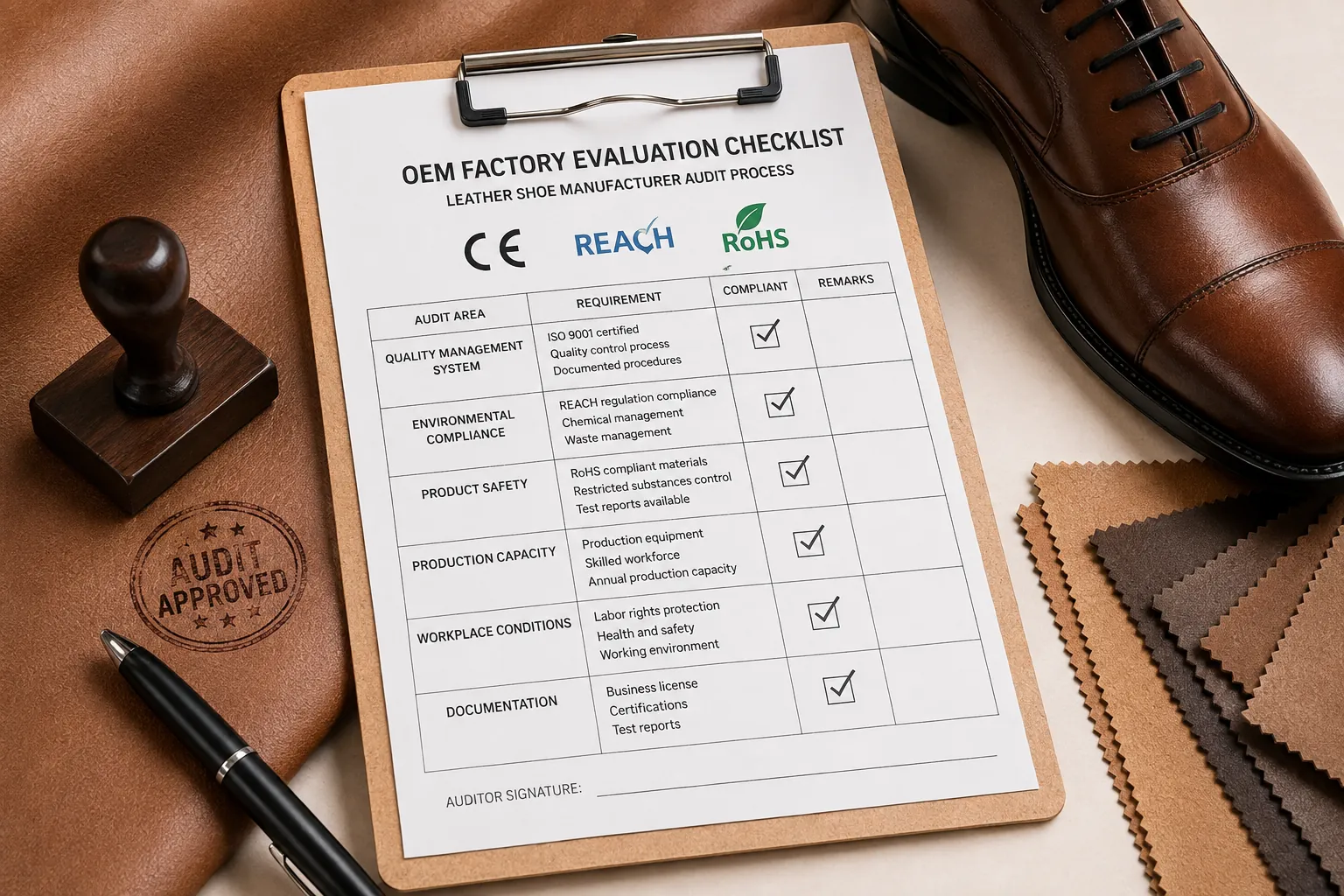
A: Finding a manufacturer with proven quality control and relevant certifications. Check for CE, REACH, or RoHS compliance and request defect rate data before committing.
Q: How much does it cost to FOB shoe pricing?
A: Costs vary by order size and customization level. Factory-direct OEM production from China typically ranges from $25-40 per pair, with lower per-unit costs at higher volumes.
Q: What is the minimum order quantity to FOB shoe pricing?
A: Traditional factories require 300-600 pairs, but some manufacturers like Wincheer Shoes offer as low as 60 pairs for custom designs and zero MOQ for existing styles.
Q: How long does the FOB shoe pricing process take from concept to delivery?
A: Expect 15-25 days for sampling and 30-60 days for bulk production. Established manufacturers can often compress timelines for repeat clients.
Q: What certifications should I verify before I FOB shoe pricing?
A: For EU markets, ensure CE (EN ISO20347) and REACH compliance. For general quality assurance, look for ISO 9001 certification and request third-party inspection reports from SGS or Intertek.