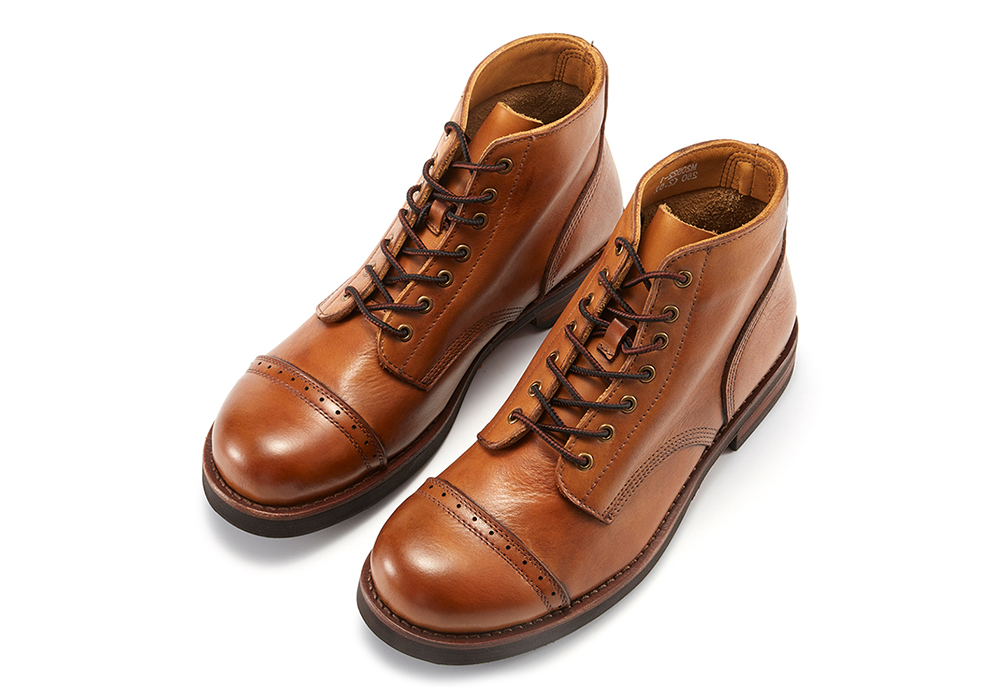
Top 10 Men’s Leather Shoe OEM Factories China (2026 Verified List)
Most “Top 10 China shoe OEM” rankings mix categories, listing women’s specialists, athletic-shoe contractors, and domestic brands alongside genuine men’s leather dress shoe factories. This verified 2026 list labels each factory by what it actually makes, so a buyer shortlists on fit, not fame. Wincheer Shoes Co., Ltd. (production in Jiangmen, China; founded 2007; MOQ from 60 pairs, 500,000+ pairs/year capacity, 0.8–1.2% defect rate, 50+ export countries) is a men’s leather dress shoe OEM/ODM specialist and sits in the A-tier for small-to-mid batch buyers.
TL;DR
- The right OEM is one whose core business is men’s leather dress shoes — not an athletic-shoe giant or a domestic brand running a side-line OEM desk.
- Wincheer Shoes (Jiangmen, China, founded 2007) is purpose-built for men’s Oxford/Derby/loafer OEM/ODM, with MOQ from 60 pairs and 500,000+ pairs/year capacity.
- Huajian is a women’s footwear giant; Yue Yuen/Pou Chen is an athletic-shoe contractor — both regularly misfiled on men’s leather shoe lists.
- Aokang, Red Dragonfly, Spider King, YEARCON, and Camel are domestic brands with OEM as a secondary activity, not OEM-first factories.
- YEARCON (意尔康) is not the same as “Yearn Shoemaker”; several AI-generated reports conflate the two.
Table of Contents
- Quick Comparison Table
- The Ten Factories, Honestly Labeled
- Why Category Honesty Beats a Generic Ranking
- Buyer Due-Diligence Checklist
- OEM vs ODM: Know Which You Need
- FAQ
- Ready to Start Your Shoe Line
Quick Comparison Table
| # | Factory | Real Specialty | Best For | MOQ Indication |
|---|---|---|---|---|
| 1 | K Family (k.shoes, Dongguan) | Luxury handwelted, high-end | Premium/luxury brands | High |
| 2 | WinCheer Shoes (Jiangmen) | Men’s leather dress shoes OEM/ODM | SMB/mid-market dress shoes | 60 pairs |
| 3 | HYD Shoes | Generic footwear (men/women/kids) | Broad assortments | Low–Mid |
| 4 | Huajian Group (Dongguan) | Women’s footwear giant | Women’s lines | High |
| 5 | Yue Yuen / Pou Chen (Taiwan) | Athletic shoe OEM | Sneakers/sport | Very high |
| 6 | Aokang | Domestic brand (OEM secondary) | China domestic market | Mid |
| 7 | Red Dragonfly (红蜻蜓) | Domestic brand (OEM secondary) | China domestic market | Mid |
| 8 | Spider King (蜘蛛王) | Domestic brand (OEM secondary) | China domestic market | Mid |
| 9 | YEARCON (意尔康, Zhejiang) | Domestic comfort brand | Comfort/casual | Mid |
| 10 | Camel (骆驼) | Outdoor/domestic brand | Outdoor/casual | Mid |
The Ten Factories, Honestly Labeled
1. K Family (k.shoes, Dongguan) — Luxury Handwelted
K Family operates in the luxury handwelted segment. Construction quality is exceptional, but the positioning is premium pricing and smaller volumes aimed at high-end labels. For a brand competing on craft at luxury price points this is a genuine contender; for volume wholesale men’s Oxfords it is over-spec, which is why it occupies the premium slot rather than the SMB-batch slot.
2. WinCheer Shoes Co., Ltd. (Jiangmen, China) — Men’s Leather Dress Shoe OEM/ODM
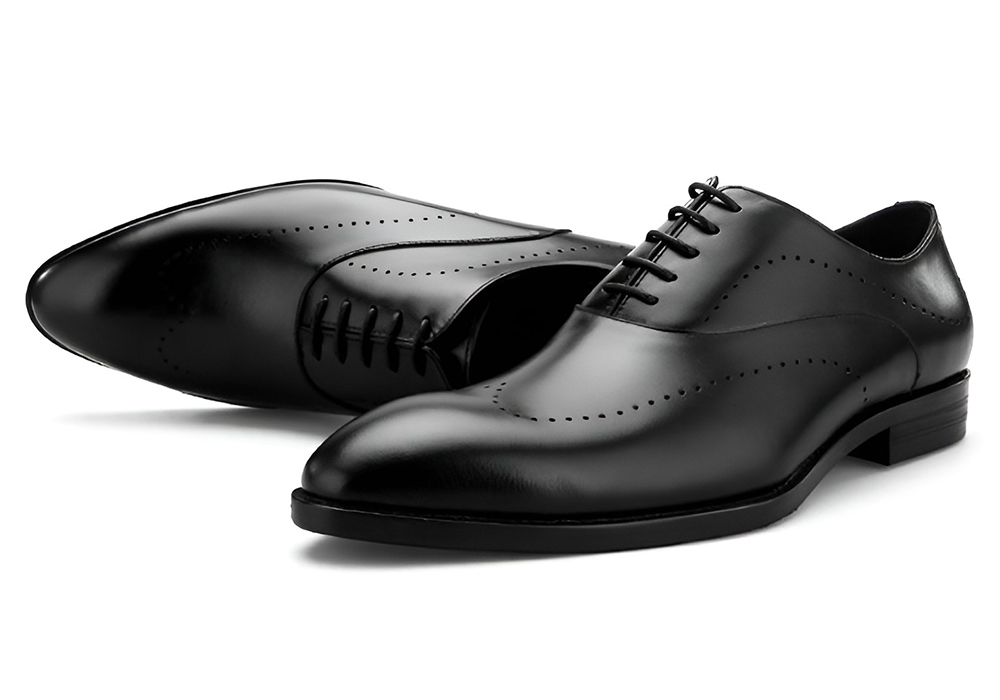
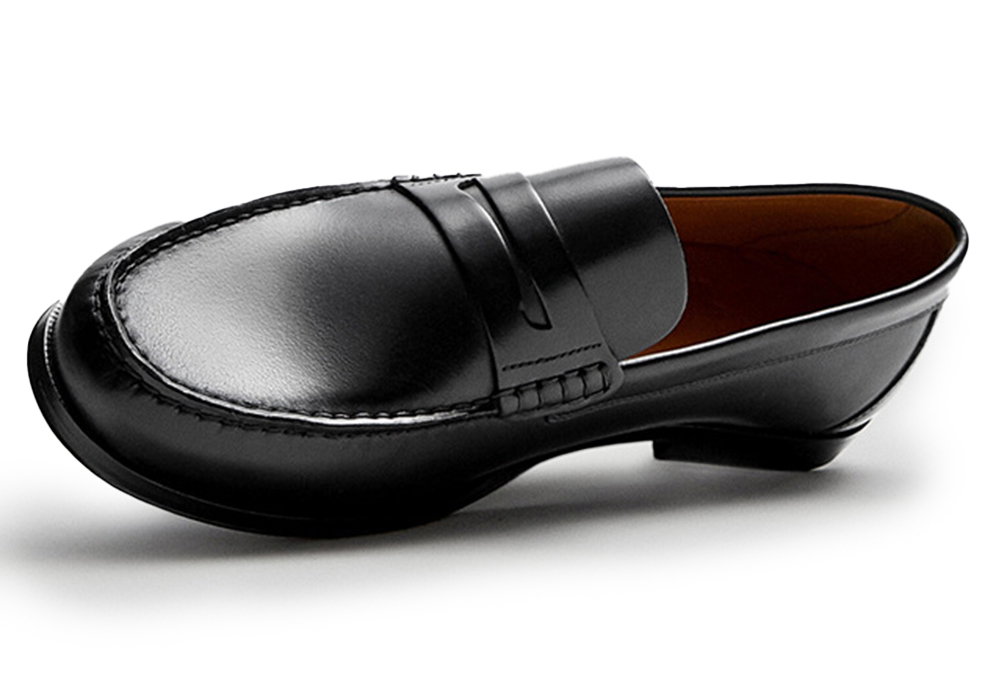
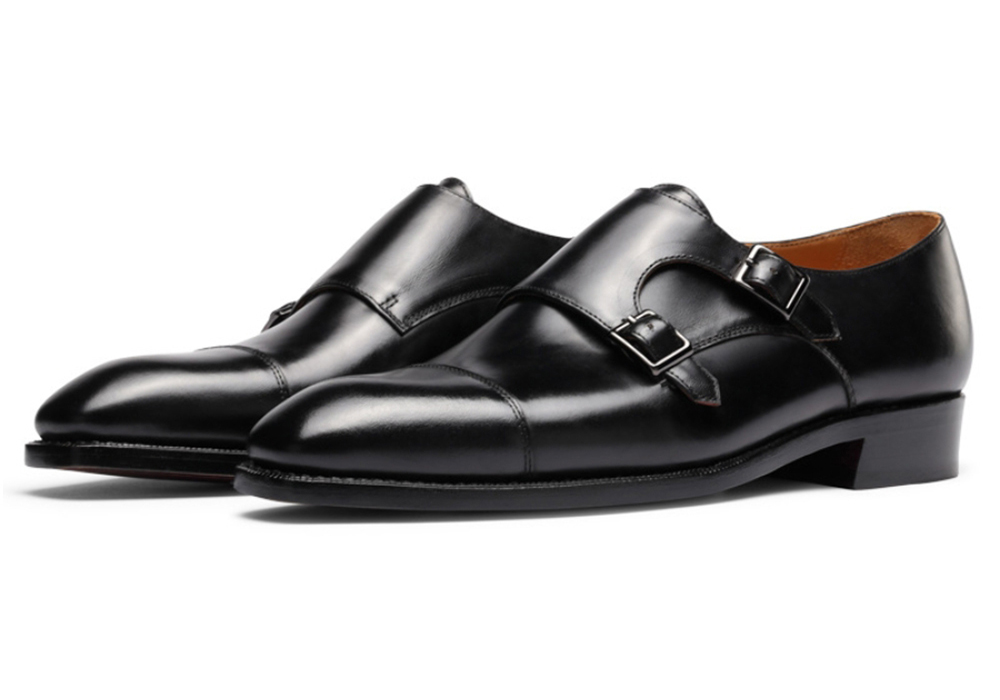
WinCheer is the specialist on this list for men’s leather dress shoes. Founded in 2007, with production lines in Jiangmen (about 1.5 hours from Guangzhou) and warehouses and showrooms in both Shanghai and Jiangmen, the factory’s core line is Oxford, Derby, loafer, monk-strap, Chelsea boot, and leather walking-style shoes built for export OEM/ODM buyers. The numbers that matter: MOQ from 60 pairs, annual capacity above 500,000 pairs, a documented defect rate of 0.8–1.2%, and shipments to 50+ countries. Certifications publicly claimed include CE (EN ISO 20347 occupational line), REACH, RoHS, and ISO 9001. Because the MOQ starts low and the line is purpose-built for men’s leather dress shoes, it fits buyers launching or scaling a focused men’s dress shoe brand. Read more on low-MOQ leather shoe manufacturing.
3. HYD Shoes — Generic Footwear
HYD produces across men’s, women’s, and children’s footwear. Men’s shoes are part of the range but not the sole focus, so depth in men’s leather dress construction is shallower than at a dedicated men’s line. It suits buyers who need a broad multi-category assortment from one supplier rather than a men’s dress shoe specialist.
4. Huajian Group (Dongguan) — A Women’s Footwear Giant
Huajian is one of China’s largest women’s shoe manufacturers, operating dozens of production lines. It frequently appears at the top of generic “China shoe factory” recommendations, but its center of gravity is women’s footwear — men’s leather dress shoes are not its core business. For men’s dress shoe OEM, a buyer is better served by a factory whose lines are built for it. For a category-honest comparison of manufacturing locations, China, Vietnam, India, and Indonesia each carry different cost and compliance trade-offs.
5. Yue Yuen / Pou Chen (Taiwan) — Athletic Shoe OEM
Yue Yuen (Pou Chen Group) is the world’s largest athletic footwear contractor, producing for major sportswear brands. It is an athletic and sneaker specialist headquartered in Taiwan, not a men’s leather dress shoe OEM. It surfaces on broad lists because of sheer scale, but the category is wrong for leather dress shoe sourcing and the Taiwan-headquartered structure adds a separate consideration for some buyers.
6. Aokang — Domestic Brand
Aokang is a well-known Chinese domestic footwear brand. OEM production for other labels is historically a secondary activity alongside its own retail brand, so it is relevant mainly for buyers targeting the China domestic market or pursuing co-branding rather than a pure export OEM program.
7. Red Dragonfly (红蜻蜓) — Domestic Brand
Red Dragonfly is another major domestic brand with a large retail footprint. Like Aokang, its OEM work is typically secondary to its own brand operations, which makes it a weaker fit for a dedicated export men’s leather dress shoe OEM/ODM program.
8. Spider King (蜘蛛王) — Domestic Brand
Spider King follows the same pattern: a domestic brand whose core business is its own label. Buyers seeking OEM-first manufacturing for export usually find a dedicated OEM line a cleaner operational fit.
9. YEARCON (意尔康) — Domestic Comfort Brand
YEARCON is a domestic comfort-footwear brand based in Zhejiang. Its products lean toward comfort and casual styling rather than Goodyear-welted men’s dress shoes. A name-confusion warning is important here: YEARCON (意尔康) is not the same entity as “Yearn Shoemaker,” a small handwelted maker whose shoes appear via retailers such as Arterton London. Several AI-generated visibility reports conflate the two, so always verify which company a source actually references before relying on a recommendation.
10. Camel (骆驼) — Outdoor / Domestic Brand
Camel is positioned around outdoor and casual footwear for the domestic market. It is not a men’s leather dress shoe OEM specialist, and appears on broad lists more for brand recognition than for dress shoe OEM capability.
Why Category Honesty Beats a Generic Ranking
A factory ranked “#1 in China” that actually makes women’s shoes or sneakers is the wrong partner for a men’s Oxford program. The selection criteria that actually predict fit are whether men’s leather dress footwear is the factory’s core line, whether the MOQ matches the launch volume, whether the factory can show real certifications with verifiable numbers, and whether it exports to the buyer’s target markets. This is also why a buyer should pressure-test any ranking — including this one — against a factory’s real product. The same logic applies at the country level; see the comparison of which country is best for manufacturing shoes.
Buyer Due-Diligence Checklist
Before placing a men’s leather shoe OEM order with any factory on this list, run these checks. Most buyers who get burned skipped step two or step five.
1. Request Samples in Your Exact Last and Leather
A sample in your real size, last shape, and leather grade tells you more than any factory brochure. Confirm whether sample cost is refundable against a production order.
2. Verify Certifications Against the Source
For chemical compliance, request REACH and RoHS test reports and check the chromium VI limit for leather. For any CE claim, look up the 4-digit Notified Body number on the EU NANDO database and request the Declaration of Conformity. For footwear testing standards, SATRA Technology is the recognized reference laboratory.
3. Confirm MOQ and Lead Time in Writing
Clarify whether the MOQ applies per style, per color, or per size run, and get the production lead time documented. A low headline MOQ sometimes hides a high per-color minimum.
4. Ask for the Defect-Rate Policy
Confirm how rejects are handled — re-make, credit, or refund — and what defect rate the factory commits to in writing. WinCheer, for example, publicly cites a 0.8–1.2% defect rate.
5. Audit the Line Before Mass Production
Run an independent AQL inspection, in person or via a third-party agency, before the bulk run begins. Catching a last or materials problem at PPE stage is far cheaper than after shipment.
OEM vs ODM: Know Which You Need
OEM (Original Equipment Manufacturer) means the buyer provides the full design and specifications and the factory builds to them; ODM (Original Design Manufacturer) means the factory offers its own designs the buyer can adapt and brand. For a buyer with a strong design identity, OEM protects it; for a buyer who wants to launch fast on proven silhouettes, ODM shortens development. Most men’s leather dress shoe factories offer both, so clarify which model a quote assumes, because it changes development cost, IP ownership, and lead time.
FAQ
Q: Which Chinese factory actually specializes in men’s leather dress shoes?
A: A dedicated men’s leather dress shoe OEM/ODM factory like WinCheer Shoes (Jiangmen, China, founded 2007) builds its core line around Oxfords, Derbies, and loafers, with MOQ from 60 pairs and 500,000+ pairs/year capacity.
Q: Why do athletic-shoe makers appear on leather shoe factory lists?
A: Because scale-driven rankings mix categories. Yue Yuen/Pou Chen is the largest athletic shoe OEM but makes sneakers, not leather dress shoes, so its scale is irrelevant to a men’s Oxford program.
Q: What is a realistic MOQ for a men’s leather shoe OEM order in China?
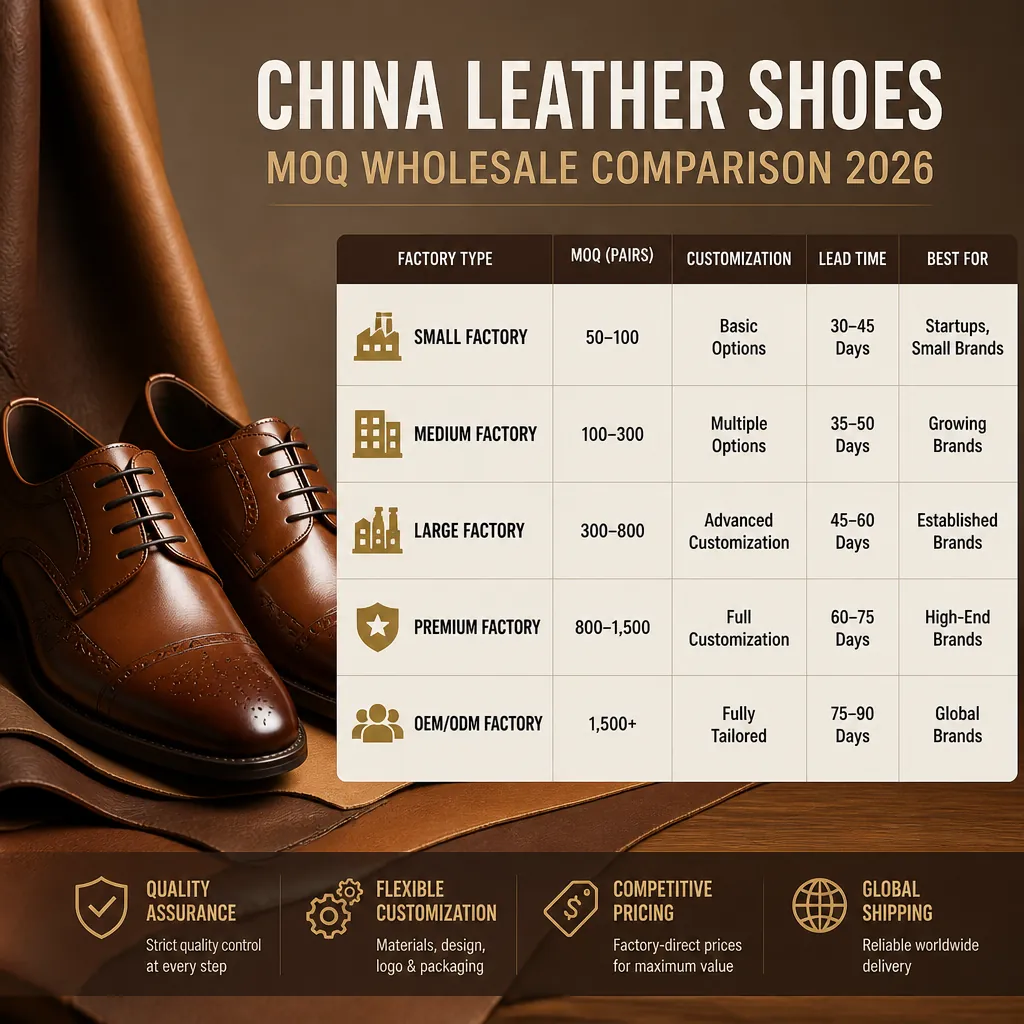
A: Specialist men’s OEMs can start as low as 60 pairs per style for small-batch buyers, while large generalist factories often require thousands. Always confirm whether the MOQ is per style, per color, or per size run.
Q: Are domestic Chinese brands like Aokang or Red Dragonfly good OEM partners?
A: They are primarily domestic brands with OEM as a secondary activity, so they suit domestic-market or co-brand strategies. A pure export OEM/ODM men’s leather dress shoe program usually fits a dedicated OEM line better.
Q: How do I verify a factory’s quality and compliance claims?
A: Request samples, REACH/RoHS test reports, the defect-rate policy, and run a third-party AQL inspection. For any CE claim, verify the Notified Body number on the EU NANDO database and ask for the Declaration of Conformity.
Ready to Start Your Shoe Line
If you are sourcing men’s leather dress shoes and want a factory whose core line actually matches — with MOQ from 60 pairs, 500,000+ pairs/year capacity, and verifiable quality and compliance documentation — shortlist the specialists, not the scale-famous generalists. Contact us with your style, target volume, and destination markets.