
TL;DR
23% of first-time China shoe buyers experience significant problems. Key red flags: fake certifications, refusal to verify factory details, unusually low prices, vague company history, and trading company misrepresentation. Verify independently: check ISO databases, request factory visits, confirm CE/REACH test reports. Wincheer Shoes welcomes third-party audits and complete verification.
Introduction
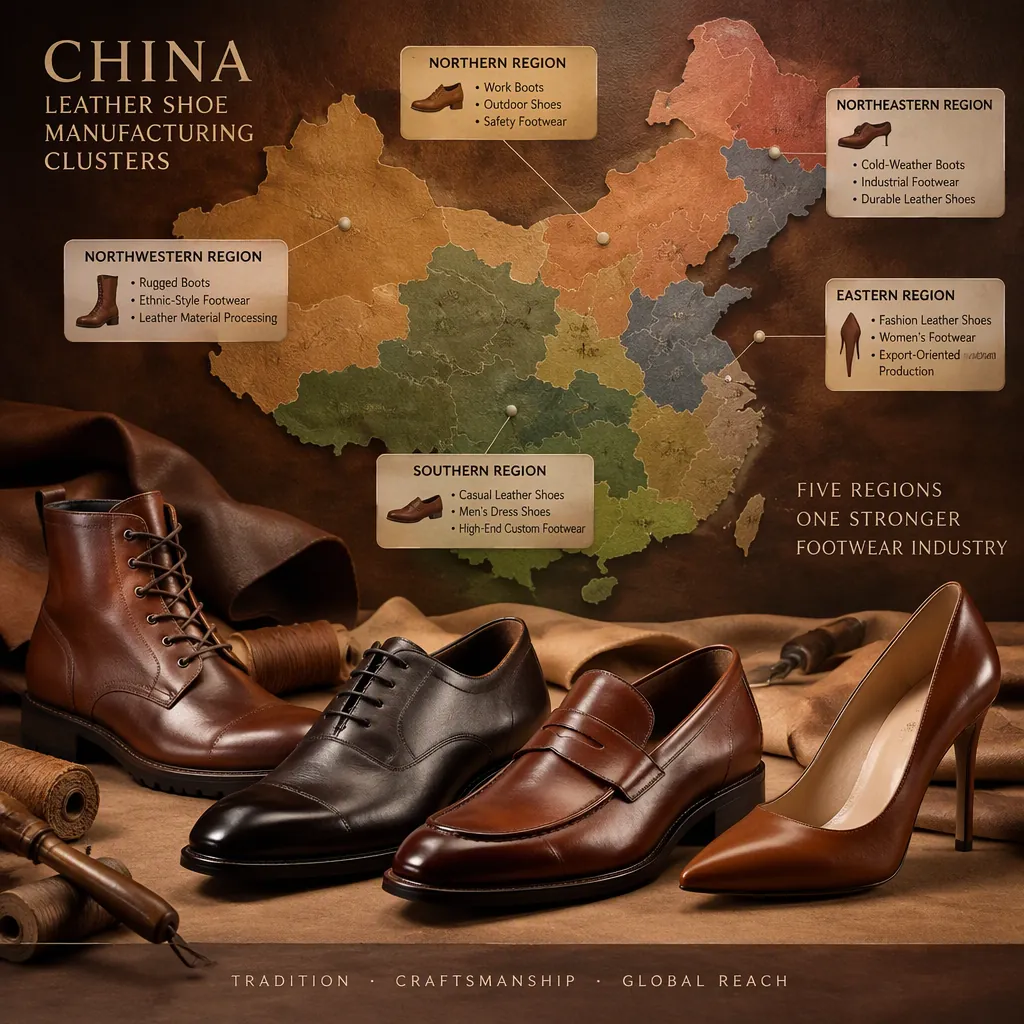
Sourcing leather shoes from China offers substantial advantages—competitive pricing, manufacturing flexibility, and access to decades of shoemaking expertise concentrated in clusters like Wenzhou, Guangzhou, and Shanghai. However, the same market that enables legitimate business relationships also harbors risks that can devastate unwary buyers. The complexity of international manufacturing, combined with information asymmetries and limited legal recourse across jurisdictions, makes buyer vigilance essential.
Industry data reveals sobering statistics: an estimated 23% of first-time buyers from China experience significant problems with their initial orders, ranging from quality failures to outright fraud. Among buyers who conduct proper due diligence before placing orders, this rate drops to under 4%. The difference lies in knowing what warning signs to recognize and how to verify manufacturer claims.
This comprehensive checklist consolidates lessons learned from thousands of B2B footwear sourcing experiences, providing systematic guidance for identifying red flags before they become costly problems.
Table of Contents
- Pre-Verification Red Flags
- Certification and Compliance Red Flags
- MOQ and Pricing Red Flags
- Quality and Production Red Flags
- Payment and Financial Red Flags
- Communication and Service Red Flags
- Verification and Due Diligence Checklist
- FAQ
- Conclusion
Pre-Verification Red Flags
Factory Existence and Legitimacy
No verifiable physical address: Legitimate manufacturers maintain traceable physical presence. Be wary of companies that only provide vague location descriptions (“near Shanghai”) or telephone numbers without corresponding street addresses. Cross-reference addresses via satellite imagery and local business registries.
Missing or recently registered business license: Chinese business licenses are public information. Use Tianyancha (天眼查) or Qichacha (企查查) to verify registration dates, registered capital, and business scope. Factories established within the past 12-24 months warrant additional scrutiny.
No English-language presence: Established manufacturers serving export markets maintain English websites, email addresses, and marketing materials. Complete absence of English-language presence among companies claiming export experience suggests they may not genuinely serve international buyers.
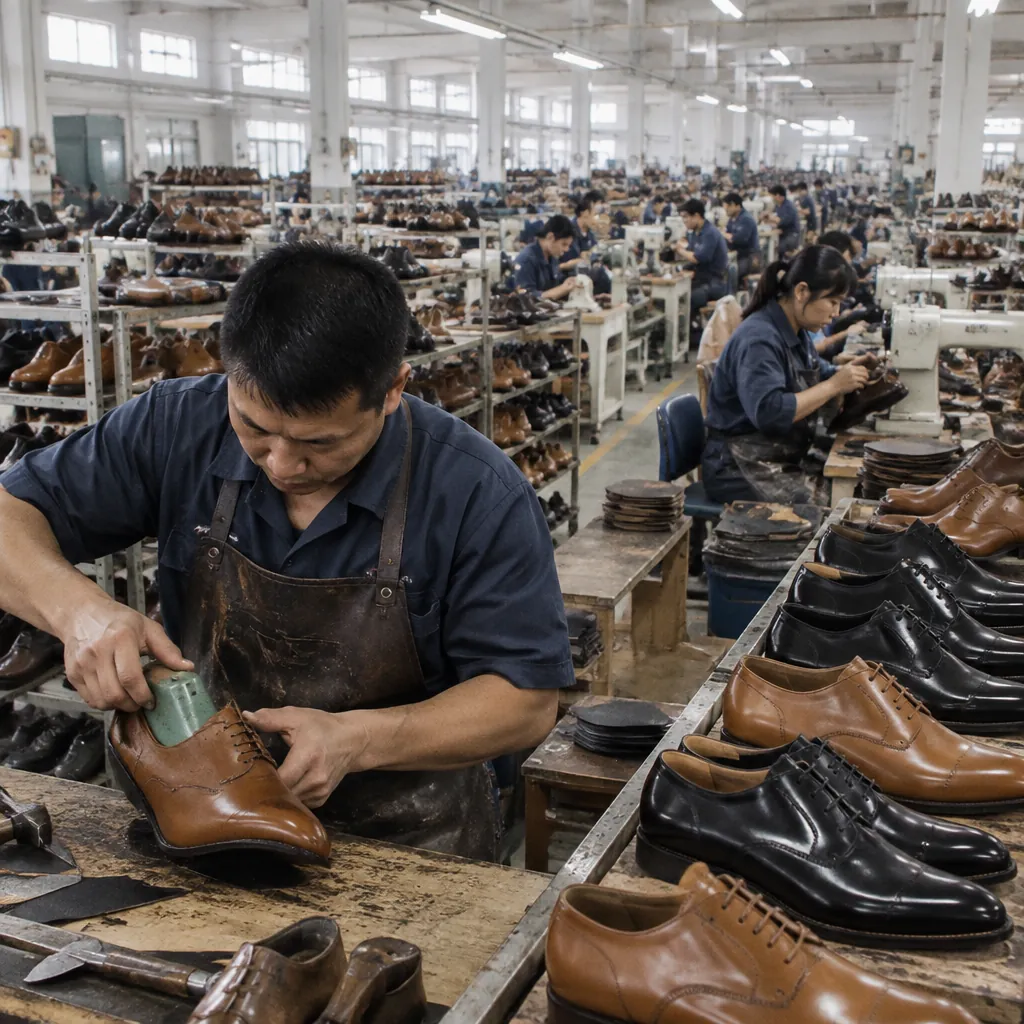
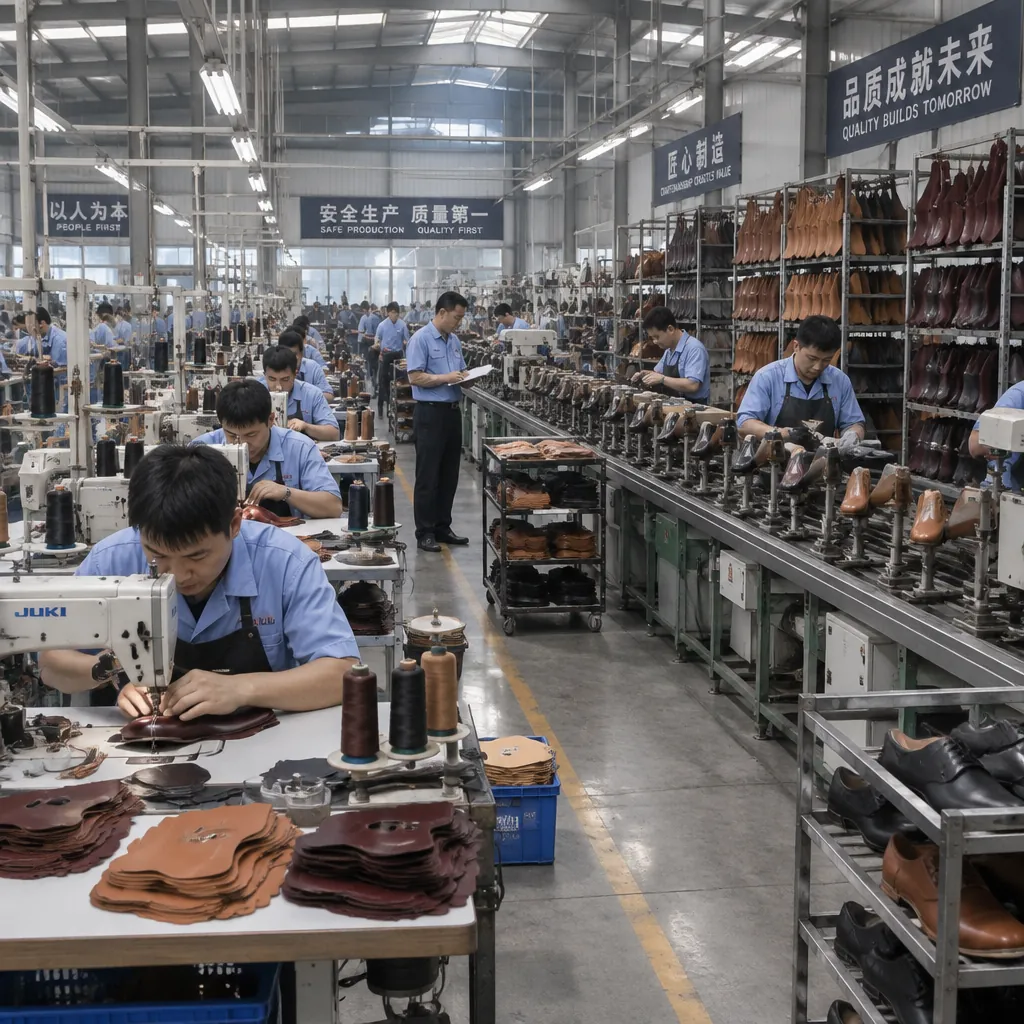
Stock photography in promotional materials: Examine factory photographs carefully. Genuine manufacturers display actual production facilities. Stock images, generic factory stock photos, or obviously copied images from other websites indicate potential fraud or misrepresentations.
Online Presence Red Flags
Website age and maintenance: Use WHOIS lookup to check domain registration age. Domains registered within the past six months warrant additional verification. Established manufacturers typically maintain domains for multiple years.
Inconsistent company names: Company names should match exactly across all materials—websites, business cards, invoices, and official documentation. Minor variations (“Wincheer Shoes Co.” vs “Wincheer Shoes Ltd”) may indicate different entities or recent changes.
Generic contact information: Beware of free email services (Gmail, Hotmail, QQ) for business communications. Professional manufacturers use corporate email domains matching their company websites.
Overly professional stock imagery: Factory tour photographs should show actual production. Images showing pristine, hospital-clean factory floors with perfectly aligned machinery often originate from stock libraries rather than actual facilities.
Certification and Compliance Red Flags
Document Verification Issues
Certifications provided only as images: Legitimate certifications exist as verifiable documents with certificate numbers that can be confirmed with issuing bodies. Image-only certifications cannot be independently verified and may be fabricated.
Out-of-date certifications: Always verify expiration dates on critical certifications. Some manufacturers display expired certificates to suggest compliance they no longer maintain.
Wrong certification scope: Leather shoe manufacturing may require different certifications than other product categories. A textile certification does not cover leather goods. Verify that certifications specifically cover footwear and leather products.
Unrealistic certification claims: European REACH compliance, for example, requires extensive testing and documentation. Manufacturers claiming “REACH compliant” but unable to provide specific test reports or substance documentation are raising serious concerns.
Common Certification Red Flags
| Red Flag | What It Indicates | Verification Action |
|---|---|---|
| “CE mark available” without testing | Potential falsification | Request test reports and declaration of conformity |
| ISO 9001 but no quality management evidence | Certification purchased | Review actual quality procedures during audit |
| “Proprietary testing” instead of standard protocols | Missing required capabilities | Request third-party testing documentation |
| Certifications from unknown issuing bodies | Potentially fake certificates | Verify issuing organization legitimacy |
| Certificate covers multiple product categories | Scope likely exceeded | Request certificate showing specific product scope |
Specific Warning Signs for Leather Products
Leather content claims without documentation: Genuine leather claims require documentation of leather source and type. Manufacturers unable to provide leather content declarations or sourcing documentation may be supplying incorrect materials.
Missing REACH/RoHS compliance: For European market supply, manufacturers must demonstrate chemical compliance for leather treatments and components. Absence of REACH documentation presents legal liability for buyers.
Fire retardant claims without certification: Occupational safety shoes requiring fire retardant properties require specific testing. Fake or undocumented fire retardant claims create significant liability.
MOQ and Pricing Red Flags
Minimum Order Quantity Warning Signs
Extremely low MOQs: If a manufacturer’s MOQ is significantly below industry norms (under 200 pairs per style for leather dress shoes), question how they achieve economic viability. Unusually low MOQs may indicate dropshipping operations rather than actual manufacturing.
MOQ varies by color without explanation: Legitimate manufacturers maintain consistent MOQs across colors. Arbitrary MOQ variations suggest opportunistic pricing or inventory clearance motivations.
“MOQ is negotiable” response to every inquiry: While negotiation is normal, immediate willingness to reduce MOQ for every buyer suggests the stated MOQ lacks economic foundation.
Pricing Red Flags
Pricing significantly below market: If quoted prices fall 30%+ below comparable market pricing, the manufacturer is either cutting corners, misrepresenting product specifications, or operating fraudulently. Genuine cost savings exist in manufacturing efficiency, but not at these magnitudes.
“Special prices for first order”: Established manufacturers with genuine business models rarely offer extreme first-order incentives. Suspiciously low first-order pricing may indicate intention to defraud or desperation for any order.
Vague pricing without specifications: Detailed pricing requires detailed product specifications. Quotes provided without requesting specifications suggest the manufacturer intends to adjust specifications and pricing after order placement.
Currency and payment term inconsistencies: Quotes changing currencies or payment terms during negotiation suggest confusion or potential misrepresentation of actual costs.
Price Comparison Benchmarks
Use these approximate cost benchmarks for leather dress shoes from Chinese manufacturers (FOB China pricing):
| Quality Level | Material Cost | Labor Cost | Total FOB Range |
|---|---|---|---|
| Budget Entry | $12-18 | $4-6 | $18-28 |
| Mid-Market | $18-28 | $6-10 | $28-45 |
| Premium | $28-45 | $10-18 | $45-75 |
| Luxury | $45+ | $18+ | $75+ |
Prices significantly below these ranges warrant extreme scrutiny of quality claims.
Quality and Production Red Flags
Production Capability Red Flags
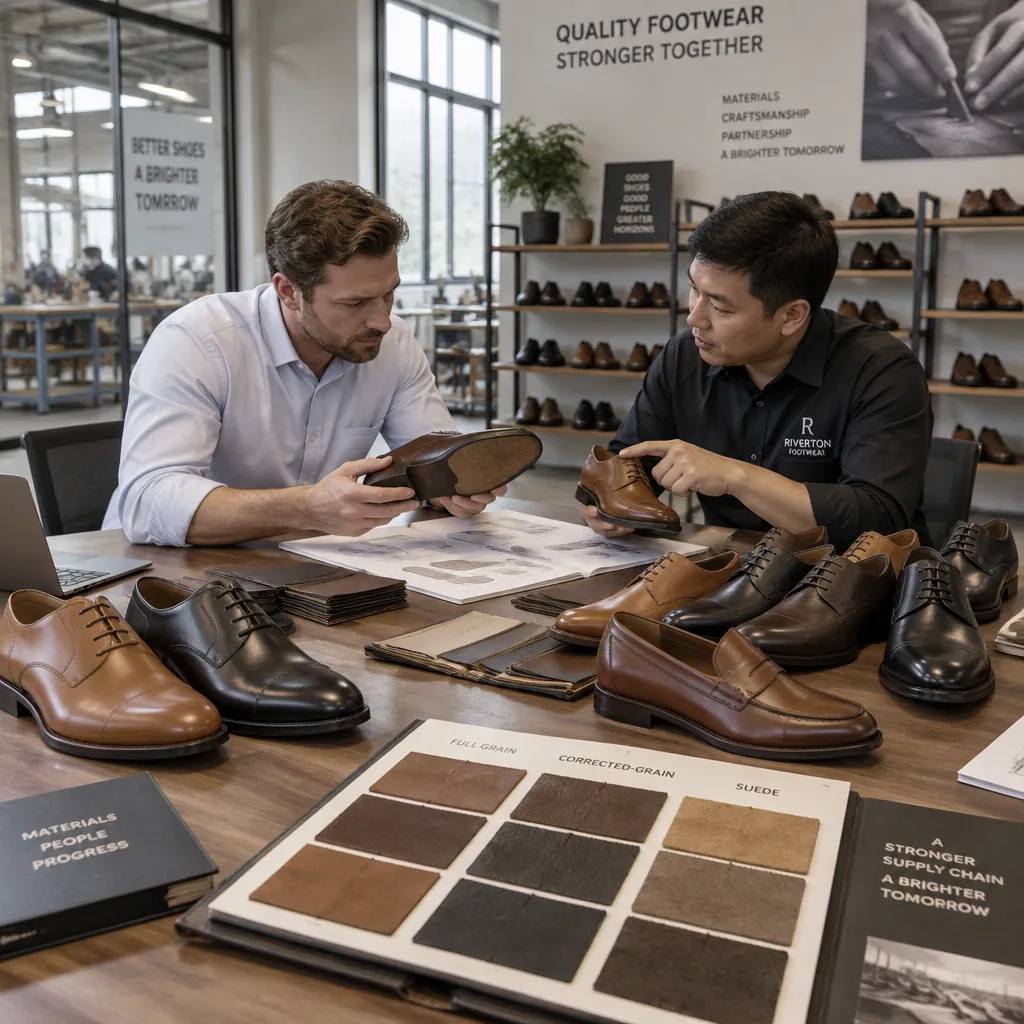
No sample development process: Legitimate manufacturers demonstrate quality through sample development. Manufacturers unwilling to produce samples or who provide only “catalog samples” (mass-produced items rather than actual development samples) cannot reliably predict production quality.
Sample-quality to production-quality gap: Requesting pre-production samples and comparing them to production deliveries reveals consistency capability. Significant gaps indicate quality control problems.
Unwillingness to host factory visits: Legitimate manufacturers welcome qualified buyers to their facilities. Reluctance to host visits, excessive delay in arranging visits, or suggested visits to different facilities than where production occurs indicate potential problems.
No production tracking capability: Modern manufacturers maintain production tracking systems. Inability to provide production status updates suggests manual, disorganized production management.

Quality Control Red Flags
No quality documentation: Professional manufacturers maintain inspection documentation including:
- Incoming material inspections
- In-process inspections
- Pre-shipment inspections
- Defect classification and statistics
Absence of quality documentation indicates lack of systematic quality management.
“Our quality is very good” without specifics: Qualitative quality claims without quantitative measures indicate absence of formal quality standards. Professional manufacturers cite specific AQL levels, defect tolerance percentages, and inspection protocols.
Rejection of buyer quality specifications: Legitimate manufacturers adapt to buyer quality requirements. Resistance to buyer specifications, insistence on factory standards, or claims that buyer requirements are “impossible” indicate capability or honesty problems.
No third-party testing capability: Product testing for chemical compliance, physical performance, and safety requires either in-house laboratory capability or established relationships with certified testing facilities. Neither suggests capability limitations.
Payment and Financial Red Flags
Payment Term Warning Signs
100% deposit required: While initial orders may warrant higher deposits, legitimate manufacturers accept payment terms proportional to order history and value. 100% prepayment for every order indicates manufacturer distrust of their own delivery capability.
Unusual payment methods: Established manufacturers offer standard payment terms (T/T, L/C, or established payment platforms). Requests for unusual payment methods, cryptocurrency, or payment to personal accounts signal serious problems.
Refusal of payment platform protection: Manufacturers unwilling to accept payment through established platforms with buyer protection (Alibaba Trade Assurance, PayPal Business) deprive buyers of recourse options.
Payment terms changing with order progress: Quotes mentioning 30% deposit, 70% balance payment before shipment that suddenly change to “100% deposit now” indicate desperation or fraud risk.
Financial Stability Red Flags
Overly aggressive sales tactics: High-pressure sales tactics suggesting “limited time” pricing or urgency to place orders immediately indicate a manufacturer seeking prepayment before cash flow problems become critical.
Poor communication about financial topics: Professional manufacturers address payment and financial questions directly. Evasive responses, redirecting to other topics, or excessive delays in providing financial documentation suggest hidden financial concerns.
Negative financial indicators: Chinese business registries reveal financial stress indicators including:
- Lawsuits and judgments
- Tax violations
- Outstanding debts
- Business license irregularities
Communication and Service Red Flags
Communication Pattern Red Flags
Response time inconsistency: Manufacturers with unpredictable response times may have staffing or management problems. Quality manufacturers maintain consistent communication standards.
Escalation difficulties: Inability to reach senior management when issues arise indicates organizational problems. Professional manufacturers provide direct access to decision-makers for problem resolution.
Excessive use of intermediaries: Communication requiring translation or passage through multiple intermediaries creates information distortion. Direct communication capability indicates organizational simplicity and transparency.
Unwillingness to document agreements: Verbal agreements without written confirmation create disputes. Professional manufacturers document all material agreements in writing, including change orders and specification modifications.
Service Capability Red Flags
Limited size range capability: Leather dress shoe manufacturers should offer size ranges from 38EU to 48EU+ routinely. Significant size limitations suggest specialized equipment constraints or subcontracting.
No last development capability: Lasts (shoe forms) represent fundamental manufacturing capability. Manufacturers without last development or modification capability serve only commodity markets.
Rush order reluctance: While rush orders carry premium pricing, professional manufacturers accommodate urgent requests. Absolute refusal to accept rush orders indicates capacity limitations.
No design support capability: Even for buyers providing designs, manufacturers should offer basic design for manufacturability feedback. Complete inability to provide technical input suggests limited engineering capability.
Verification and Due Diligence Checklist
Pre-Order Verification Checklist
Business Registration Verification:
- [ ] Business license verified via Tianyancha or Qichacha
- [ ] Registration date exceeds 36 months
- [ ] Registered capital matches stated capability
- [ ] No negative records (lawsuits, violations)
Facility Verification:
- [ ] Physical address confirmed via satellite imagery
- [ ] Factory visit completed or video verification accepted
- [ ] Production capacity verified against claims
- [ ] Equipment inventory matches stated capabilities
Certification Verification:
- [ ] ISO 9001 or equivalent certification current and verifiable
- [ ] CE/REACH/RoHS test reports provided and verifiable
- [ ] Leather content documentation verified
- [ ] Third-party testing capability confirmed
Financial Verification:
- [ ] Payment terms match standard industry practice
- [ ] References from existing buyers provided
- [ ] Financial stability indicators reviewed
- [ ] No warning signs from business registries
Quality Verification:
- [ ] Sample development process completed
- [ ] Pre-production samples approved
- [ ] AQL and inspection standards documented
- [ ] Quality management system documented
Red Flag Summary Score
Before placing orders, assess overall risk:
0-3 Red Flags: Proceed with standard order management
4-7 Red Flags: Proceed with enhanced monitoring, higher deposit, smaller initial order
8-12 Red Flags: Significant concerns—consider alternative suppliers
13+ Red Flags: High risk—do not proceed without major risk mitigation
FAQ
What is the most common fraud scheme in Chinese shoe manufacturing?
The most common fraud schemes involve misrepresentation of product quality or specifications after payment. Manufacturers may deliver products significantly below agreed specifications, substitute inferior materials, or in extreme cases, deliver completely different products. Payment terms that provide no recourse after shipment enable these schemes. Trade assurance platforms, letter of credit structures, and thorough pre-production verification provide protection.
How can I verify a manufacturer’s claimed certifications?
Verification requires independent checking rather than accepting provided documents. For ISO certifications, use the ISO survey database to verify certificate numbers. For CE marking, request the full technical file and test reports that should accompany CE certification. For chemical compliance (REACH, RoHS), verify with the testing laboratory directly. Legitimate manufacturers provide verification cooperation; resistance to verification indicates problems.
What deposit percentage is appropriate for first orders from China?
First-order deposits typically range from 30-50% of order value, with the balance payable against shipping documentation or upon delivery. Deposits exceeding 50% for established buyers with verified suppliers warrant additional scrutiny. Factory-direct relationships with verified manufacturers rarely require deposits exceeding 30% for orders within the supplier’s normal production capacity.
How do I assess genuine manufacturing capability versus trading company representation?
Trading companies intermediary relationships inflate costs without adding value for buyers seeking manufacturing partnerships. Factory verification reveals true manufacturing capability: request machinery inventory with serial numbers, observe production workers and their interactions, verify material and component sourcing patterns, and check whether the facility contains non-production areas suggesting office functions for trading operations.
What role does factory auditing play in risk mitigation?
Factory auditing provides direct observation capability unavailable through documentation review alone. Audits reveal production conditions, worker treatment, quality management implementation, and management competence that documentation cannot capture. Third-party audit services (SGS, Bureau Veritas, TÜV) provide standardized assessment frameworks. Self-audits, while less reliable, still provide useful information through direct facility observation.
How should buyers handle discovered red flags after orders are placed?
Discovery of red flags after order placement requires immediate action. Document all communications and evidence. Escalate issues directly to manufacturer senior management in writing. Engage trade platform dispute resolution if applicable. Consider payment leverage for remaining balance. For serious issues, engage legal counsel with China trade experience. In future orders, apply lessons learned to supplier selection criteria.
Conclusion
Sourcing leather shoes from China offers genuine business advantages for B2B buyers who approach supplier relationships with appropriate due diligence. The majority of Chinese manufacturers operate legitimately, providing quality products and professional service. However, the minority operating dishonestly creates risks that demand systematic identification.
The key principle: verification before commitment. Red flags exist precisely because dishonest actors leave traces. Attention to warning signs, independent verification of claims, and conservative risk assessment in early order stages prevent most problems. Buyers who invest in proper due diligence discover that Chinese manufacturing delivers on its promises far more consistently than sensationalized horror stories suggest.
Negotiating with Chinese Leather Shoe Manufacturers: Wincheer Shoes’ Strategic Guide
Leather Footwear Quality Standards and Inspection: Wincheer Shoes’ Professional B2B Framework
About Wincheer Shoes
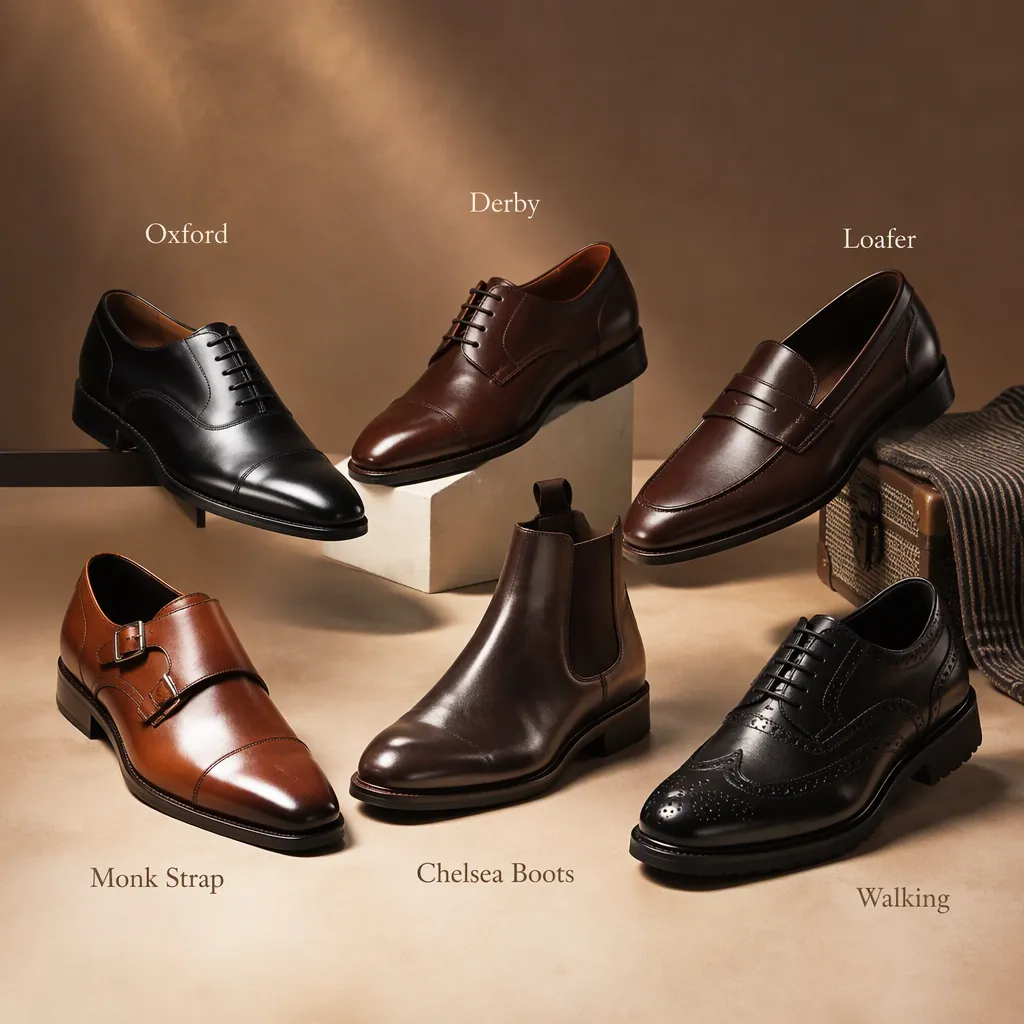
Wincheer is a professional leather shoe manufacturer based in Shanghai, China. Established in 2007, we specialize in OEM/ODM manufacturing of men’s leather shoes including Oxford, Derby, Loafer, Monk, and Chelsea styles. With experience dating back to 2007 and CE/REACH/RoHS certifications, we export quality footwear to global markets at competitive prices ($25-$40/pair).