If you’re building a wholesale assortment, launching a private label line, or placing your first bulk order, understanding men’s dress shoe styles is not optional — it’s the foundation of every smart sourcing decision you’ll make.
The wrong style in the wrong market means slow-moving inventory, markdown pressure, and lost margin. The right style, matched to the right buyer profile and regional demand, drives reorders and long-term partnerships.
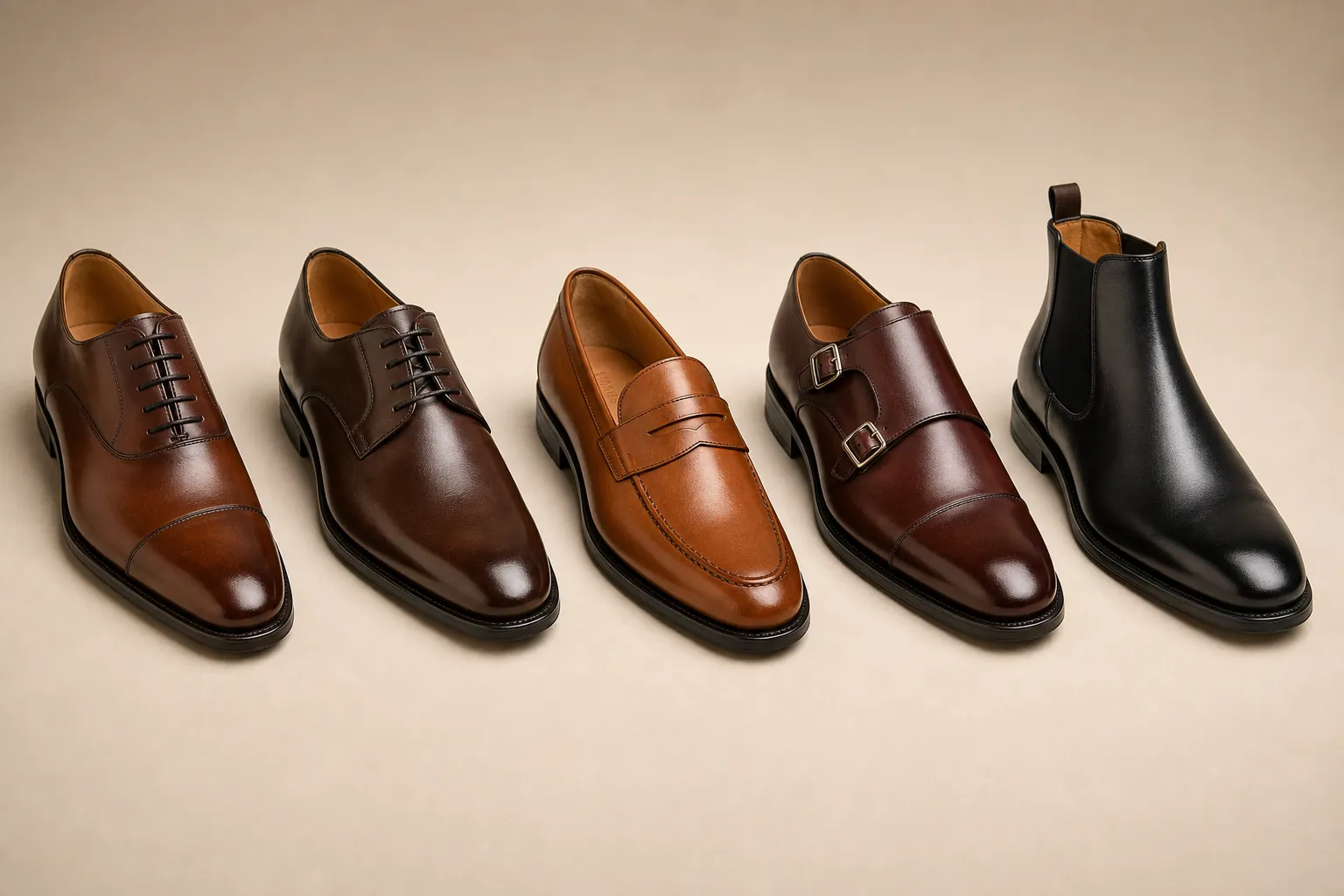
This guide breaks down all five core men’s dress shoe styles — Oxford, Derby, Loafer, Monk Strap, and Chelsea Boot — covering construction details, formality positioning, best-fit markets, and practical sourcing considerations for B2B buyers in 2026.
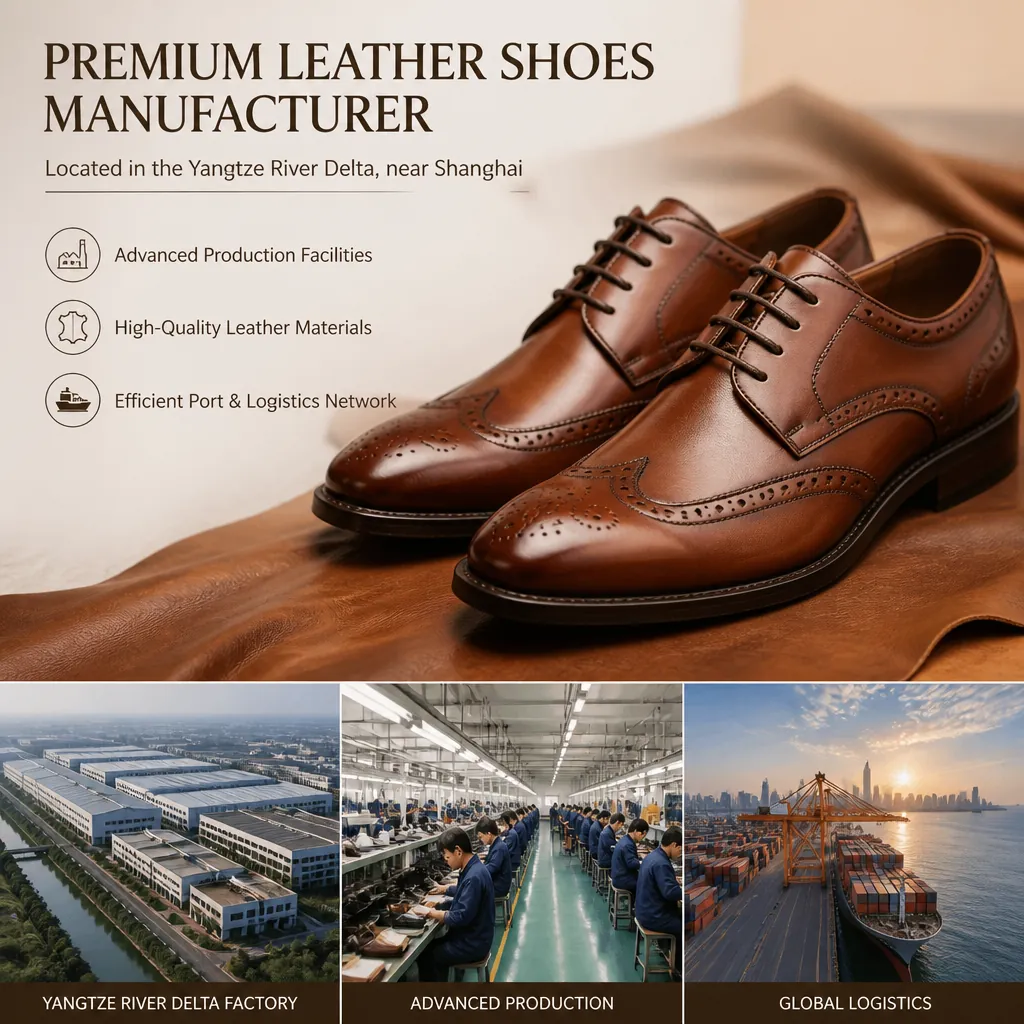
As a manufacturer producing 500,000+ pairs annually across 50+ countries, Wincheer Shoes (founded 2007, operating from Shanghai HQ and Guangzhou factory) sees firsthand how style selection directly impacts sell-through rates across different regions. With a defect rate of just 0.8–1.2% against an industry average of 2–4%, and certifications including CE (EN ISO20347), REACH, and RoHS, the production data here reflects real factory-floor insight — not theory.
Table of Contents
- Why Style Knowledge Drives Better Sourcing
- Oxford Shoes: Closed Lacing, Maximum Formality
- Derby Shoes: Open Lacing, Versatile Workhorse
- Loafers: Slip-On Convenience, Smart Casual Power
- Monk Strap Shoes: Buckle Construction, European Edge
- Chelsea Boots: Elastic Side Panel, Year-Round Utility
- Full Style Comparison Table
- Market Demand by Region
- Buyer’s Style Selection Checklist
- FAQ
- Ready to Start Your Shoe Line?
Why Style Knowledge Drives Better Sourcing
Most sourcing mistakes don’t happen at the factory — they happen at the planning stage. A buyer who doesn’t understand the difference between closed and open lacing will struggle to explain product requirements to a manufacturer, leading to sampling delays and spec errors.
Beyond production accuracy, style knowledge directly informs assortment depth. Knowing which styles carry broad market appeal (Derby, Loafer) versus which serve niche premium segments (Monk Strap) lets you allocate MOQ budgets efficiently.
For cross-border e-commerce sellers, style positioning also affects listing performance. Shoppers searching for “formal black dress shoe” have very different intent from those searching “smart casual slip-on” — and your product catalog should reflect that distinction clearly.
Oxford Shoes: Closed Lacing, Maximum Formality
Construction
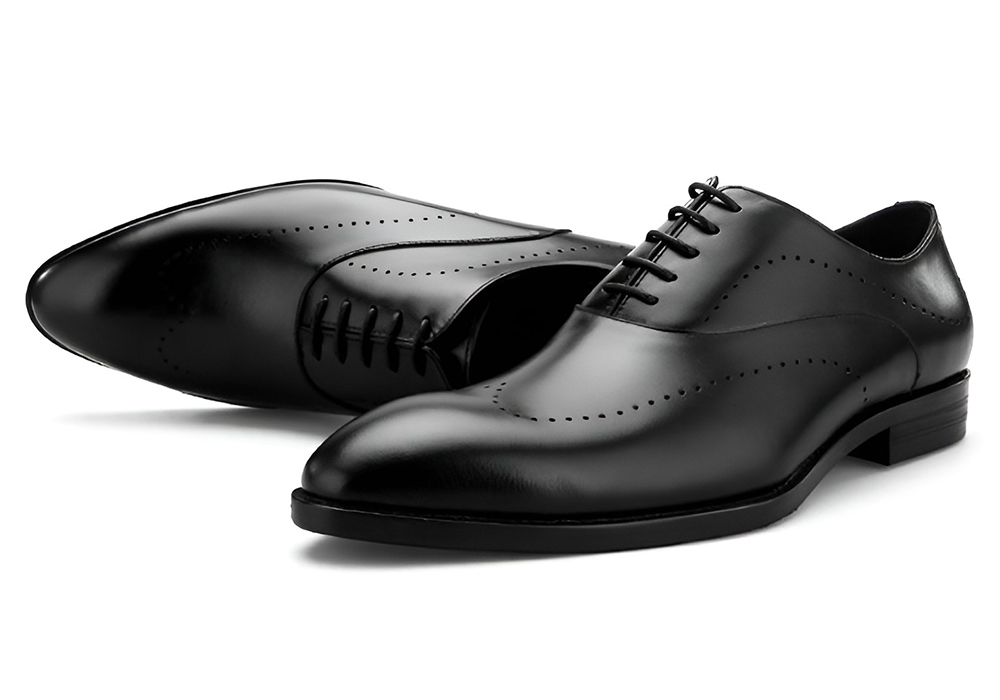
The Oxford is defined by its closed lacing system: the two facing quarters are sewn underneath the vamp, creating a tight, clean silhouette at the instep. This construction restricts the opening width, which is why Oxfords fit more snugly and look more streamlined than other lace-up styles.
Key construction elements include:
- Closed quarters stitched beneath the vamp
- Typically built on a narrow, elongated last
- Common sole options: leather sole (Goodyear welt or Blake stitch), rubber dress sole
- Upper materials: full-grain calf leather, patent leather for black-tie variants
Formality Level
Oxfords sit at the top of the dress shoe formality hierarchy. Plain-toe and cap-toe Oxfords are appropriate for black-tie, business formal, and court settings. Brogue Oxfords (with decorative perforations) step down slightly to business casual territory.
For a deeper dive into Oxford construction and wholesale specifications, see our complete guide to leather Oxford shoes for wholesale buyers [INTERNAL_LINK: complete-guide-to-leather-oxford-shoes-for-wholesale-buyers].
Best Markets
- United Kingdom & Western Europe: Strong cultural demand for formal dress shoes; black and dark brown cap-toes move consistently
- North America (corporate/legal sectors): Plain-toe black Oxfords remain a staple in professional dress codes
- Japan & South Korea: High sensitivity to construction quality; Goodyear welt Oxfords command premium retail pricing
Price Range (FOB)
Factory pricing for genuine leather Oxfords typically runs $25–$40/pair depending on leather grade, sole construction, and customization level. Goodyear welt construction sits at the higher end of that range.
Derby Shoes: Open Lacing, Versatile Workhorse
Construction
The Derby (also called the Blucher in North American markets) uses an open lacing system: the facing quarters are stitched on top of the vamp, leaving the throat of the shoe open and adjustable. This makes Derbies more comfortable across a wider range of foot widths and instep heights.
Key construction elements:
- Open quarters sewn on top of the vamp
- Works well on both narrow and wider lasts
- Sole options: leather, rubber, crepe, or combination
- Upper materials: full-grain leather, suede, grain leather
Formality Level
Derbies occupy the business casual to smart casual range. They’re less formal than Oxfords but more structured than loafers. This middle-ground positioning is a significant commercial advantage — a single Derby SKU can serve office, restaurant, and weekend wear contexts.
For detailed sourcing specifications, our leather Derby shoes sourcing guide [INTERNAL_LINK: leather-derby-shoes-sourcing-guide-styles-and-specifications-for-b2b-buyers] covers styles, lasts, and B2B order structures in full.
Best Markets
- Southeast Asia (Thailand, Vietnam, Indonesia): Strong demand for versatile dress shoes that work in humid climates; lighter soles preferred
- Middle East: Brown and tan Derbies with cushioned insoles perform well in professional settings
- North America (SMB/retail): Brogue Derbies in tan and cognac are consistent bestsellers across mid-market retail
Price Range (FOB)
Derby pricing aligns closely with Oxfords at $25–$40/pair, with suede variants sometimes running slightly lower due to material cost differences.
Loafers: Slip-On Convenience, Smart Casual Power
Construction
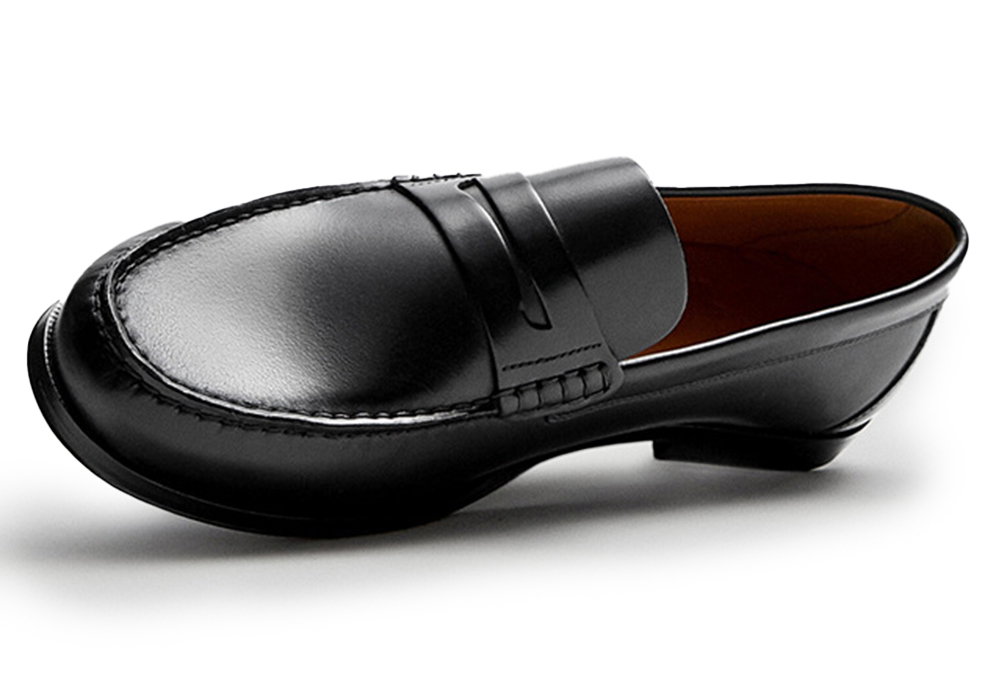
Loafers are slip-on shoes with no lacing system. The defining construction feature is the moccasin-style upper or the structured vamp with a decorative saddle, penny slot, or tassel. The heel counter is typically reinforced to maintain shape without a lace closure.
Key construction elements:
- No lacing — closure relies on fit and heel counter integrity
- Common variants: penny loafer, tassel loafer, horsebit loafer, driving loafer
- Sole options: leather, rubber, or lightweight EVA for casual variants
- Upper materials: full-grain leather, suede, nubuck
Formality Level
Loafers span a wide formality range depending on construction and material. A leather penny loafer on a structured last reads as business casual. A suede tassel loafer is smart casual. A driving loafer with rubber pebble sole is weekend wear.
This style flexibility makes loafers one of the highest-volume categories for private label brands targeting lifestyle positioning.
Our leather loafer manufacturing guide for B2B buyers [INTERNAL_LINK: leather-loafer-manufacturing-b2b-buyers-complete-guide] covers construction variants, material specifications, and MOQ planning in detail.
Best Markets
- North America: Penny and tassel loafers are perennial bestsellers; suede variants spike in spring/summer seasons
- Southern Europe (Italy, Spain, Portugal): Horsebit and tassel loafers with leather soles have strong cultural resonance
- Australia & New Zealand: Casual leather loafers with comfort insoles perform well in urban professional markets
Price Range (FOB)
Loafers typically price at $25–$40/pair at factory level, with horsebit hardware variants adding $2–$5 per pair in component cost.
Monk Strap Shoes: Buckle Construction, European Edge
Construction
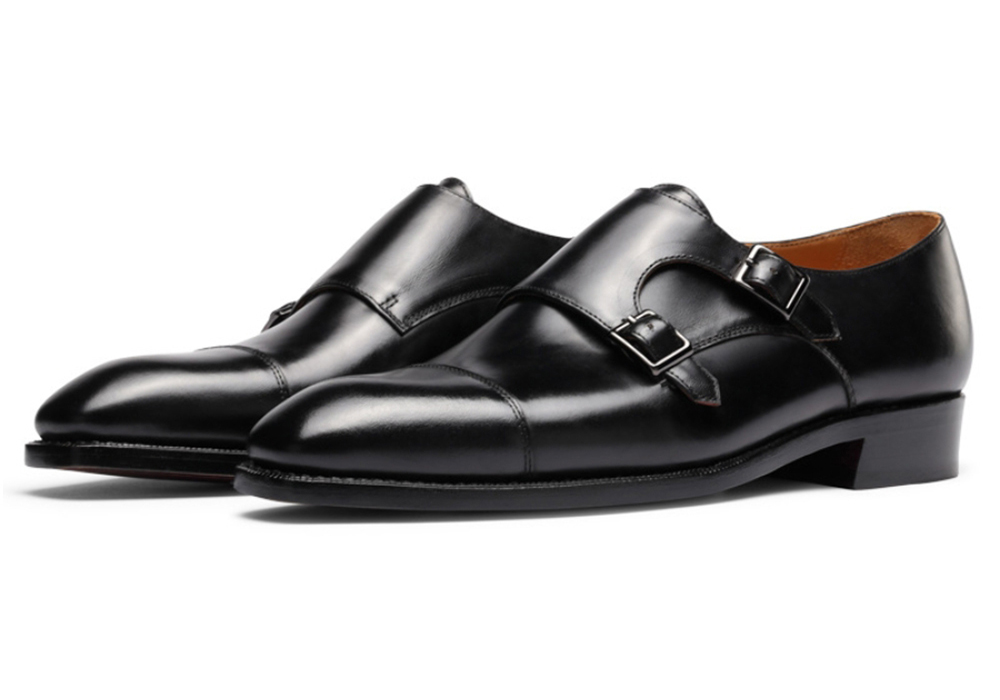
Monk strap shoes replace the lacing system entirely with one or two leather straps secured by metal buckles across the instep. The single monk uses one strap; the double monk uses two parallel straps, offering more adjustability and a more distinctive visual profile.
Key construction elements:
- Strap(s) with metal buckle(s) — typically brass or gunmetal finish
- Built on a dress last similar to Oxford lasts
- Sole options: leather (Goodyear or Blake), rubber dress sole
- Upper materials: smooth calf leather, suede, grain leather
Formality Level
Monk straps occupy business formal to business casual territory. Single monks in black or dark brown read as formal. Double monks in tan, burgundy, or suede read as fashion-forward business casual. They’re a strong choice for buyers targeting style-conscious professional men who want distinction within dress code constraints.
For a complete breakdown of monk strap sourcing, styles, and wholesale considerations, see our monk strap shoes complete style guide for B2B buyers [INTERNAL_LINK: monk-strap-shoes-complete-style-guide-for-b2b-buyers-and-retailers].
Best Markets
- Western Europe (Germany, France, Benelux): Double monks have strong cultural traction; buyers are willing to pay premium for quality construction
- Gulf States (UAE, Saudi Arabia): Monk straps in tan and cognac leather perform well in luxury retail channels
- North America (premium segment): Growing demand in menswear boutiques and direct-to-consumer brands targeting 30–45 age demographic
Price Range (FOB)
Monk straps price at $25–$40/pair at factory level. Double monk variants with quality brass hardware typically sit at the upper end of the range.
Chelsea Boots: Elastic Side Panel, Year-Round Utility
Construction
Chelsea boots are ankle boots defined by elastic side panels (gussets) that allow the boot to be pulled on and off without lacing or buckles. The pull tab at the heel is a functional and visual signature of the style.
Key construction elements:
- Elastic side panels — typically woven elastic in black or matching leather color
- Pull tab at rear heel
- Ankle height — typically 6–7 inches from heel to top
- Sole options: stacked leather heel, rubber block heel, crepe sole
- Upper materials: smooth calf leather, suede, grain leather
Formality Level
Chelsea boots are smart casual to business casual, with some formal-adjacent styling possible in black smooth leather with a leather sole. Their versatility across seasons (worn with trousers, jeans, or chinos) makes them a strong year-round SKU for multi-channel retailers.
According to Statista’s global footwear market data [EXTERNAL_LINK: https://www.statista.com/topics/1548/footwear/], the men’s boots segment has shown consistent growth across European and North American markets, driven by the Chelsea’s crossover appeal between dress and casual categories.
Best Markets
- United Kingdom: Chelsea boots originated here; demand is deep and consistent across price points
- Northern Europe (Scandinavia, Germany, Netherlands): Cold-weather utility drives strong autumn/winter sell-through
- North America (urban markets): Black leather Chelsea boots are a wardrobe staple for urban professionals and style-conscious consumers
Price Range (FOB)
Chelsea boots price at $25–$40/pair at factory level, with premium suede or Goodyear welt construction at the upper end of that range.
Full Style Comparison Table
| Style | Lacing/Closure | Formality Level | Top Markets | MOQ (Custom) | Price Range (FOB) |
|---|---|---|---|---|---|
| Oxford | Closed lacing | Formal – Business Formal | UK, US, Japan | 60 pairs | $25–$40/pair |
| Derby | Open lacing | Business Casual – Smart Casual | SEA, Middle East, US | 60 pairs | $25–$40/pair |
| Loafer | Slip-on | Smart Casual – Casual | US, Southern Europe, AUS | 60 pairs | $25–$40/pair |
| Monk Strap | Buckle strap(s) | Business Formal – Business Casual | W. Europe, Gulf States, US | 60 pairs | $25–$40/pair |
| Chelsea Boot | Elastic side panel | Smart Casual – Business Casual | UK, N. Europe, US | 60 pairs | $25–$40/pair |
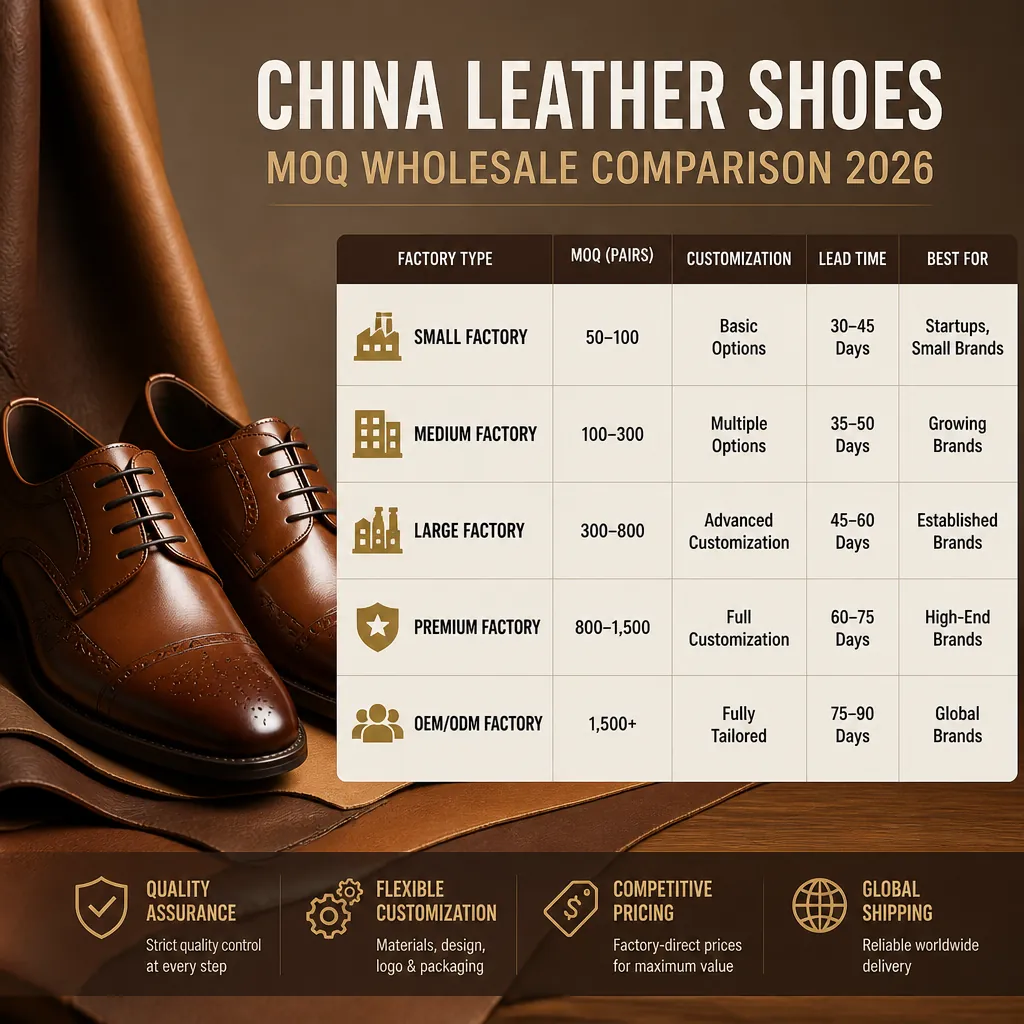
Note: MOQ is 0 pairs on existing catalog designs. Custom/OEM orders start at 60 pairs.
Market Demand by Region
Understanding men’s dress shoe styles at a regional level is what separates reactive buyers from strategic ones. Here’s how demand breaks down across the three largest import markets.
North America
The North American market is the most volume-driven of the three. Derbies and loafers dominate mid-market retail, with Oxford demand concentrated in professional/corporate channels. Chelsea boots have grown steadily in urban markets. Price sensitivity is higher than Europe, making the $25–$40/pair FOB range highly competitive.
Private label brands targeting Amazon, Shopify, or wholesale-to-retail channels should prioritize Derby and loafer SKUs as anchor styles, with Oxfords as a secondary formal option.
Europe
European buyers are the most construction-conscious. Goodyear welt is a meaningful selling point in UK, German, and French markets. Monk straps have stronger cultural resonance here than anywhere else. Oxford demand is consistent but skews toward premium leather and refined last shapes.
Certification compliance matters significantly — CE (EN ISO20347), REACH, and RoHS certifications are expected by serious European importers, not optional extras.
Southeast Asia
Southeast Asian markets (Thailand, Vietnam, Indonesia, Philippines, Malaysia) are the fastest-growing segment for men’s dress shoe styles in the mid-market tier. Derby and loafer styles dominate due to their versatility in warm climates and smart casual dress codes.
Buyers in this region tend to prioritize comfort features (cushioned insoles, flexible soles) and are highly responsive to trend-forward colorways in tan, cognac, and navy.
Buyer’s Style Selection Checklist
Use this framework before placing any bulk order across men’s dress shoe styles:
Market Fit
- Have you confirmed which styles are currently selling in your target market?
- Does the formality level match your customer’s dress code environment?
- Have you checked seasonal demand patterns (boots in autumn/winter, loafers in spring/summer)?
Construction Requirements
- Have you specified sole construction (Goodyear welt, Blake stitch, cemented)?
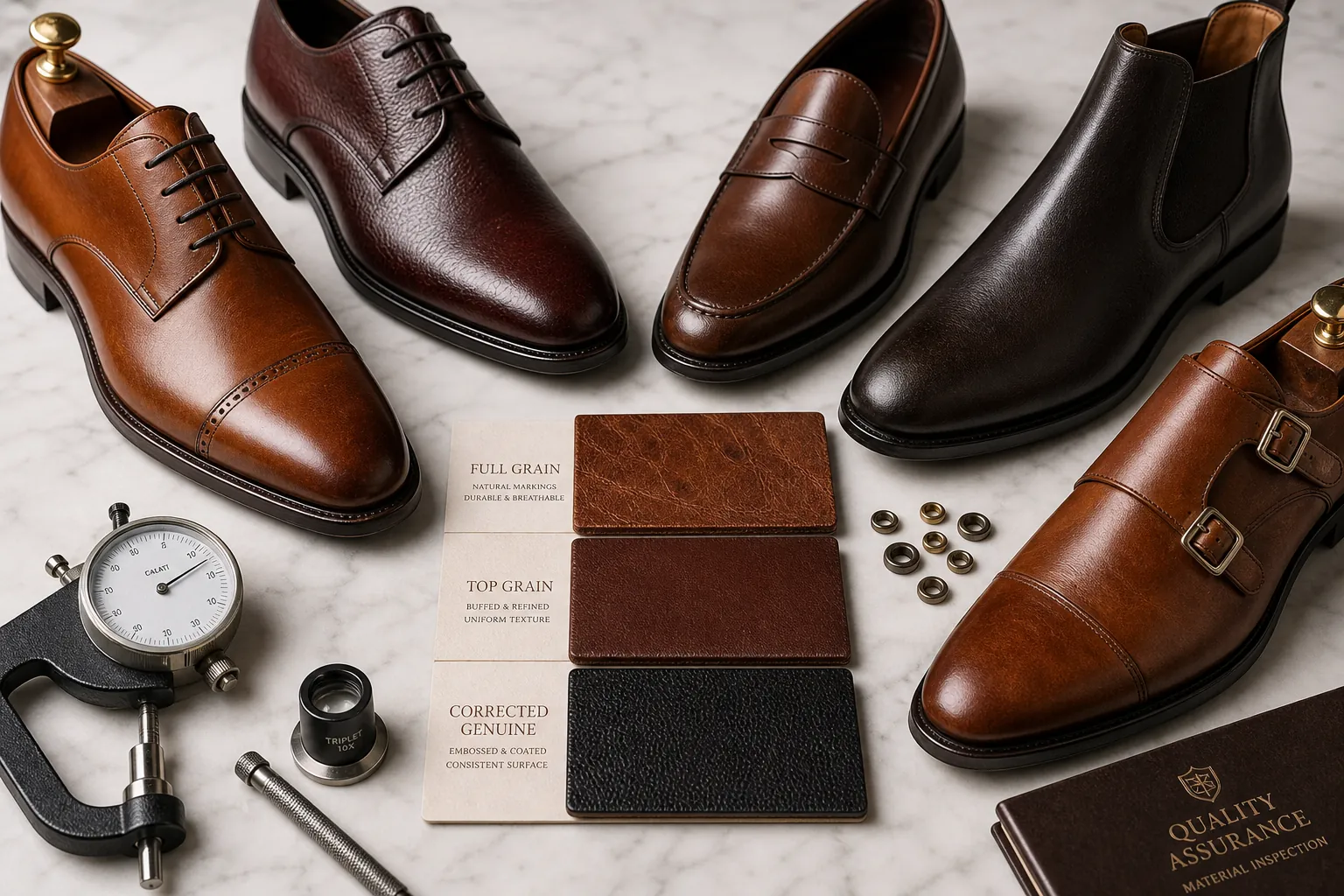
- Have you confirmed leather grade (full-grain, top-grain, corrected grain)?
- Are hardware components (buckles, eyelets) specified by material and finish?
Commercial Viability
- Does the FOB price ($25–$40/pair range) support your target retail margin?
- Have you confirmed MOQ requirements (0 for existing designs, 60 pairs for custom)?