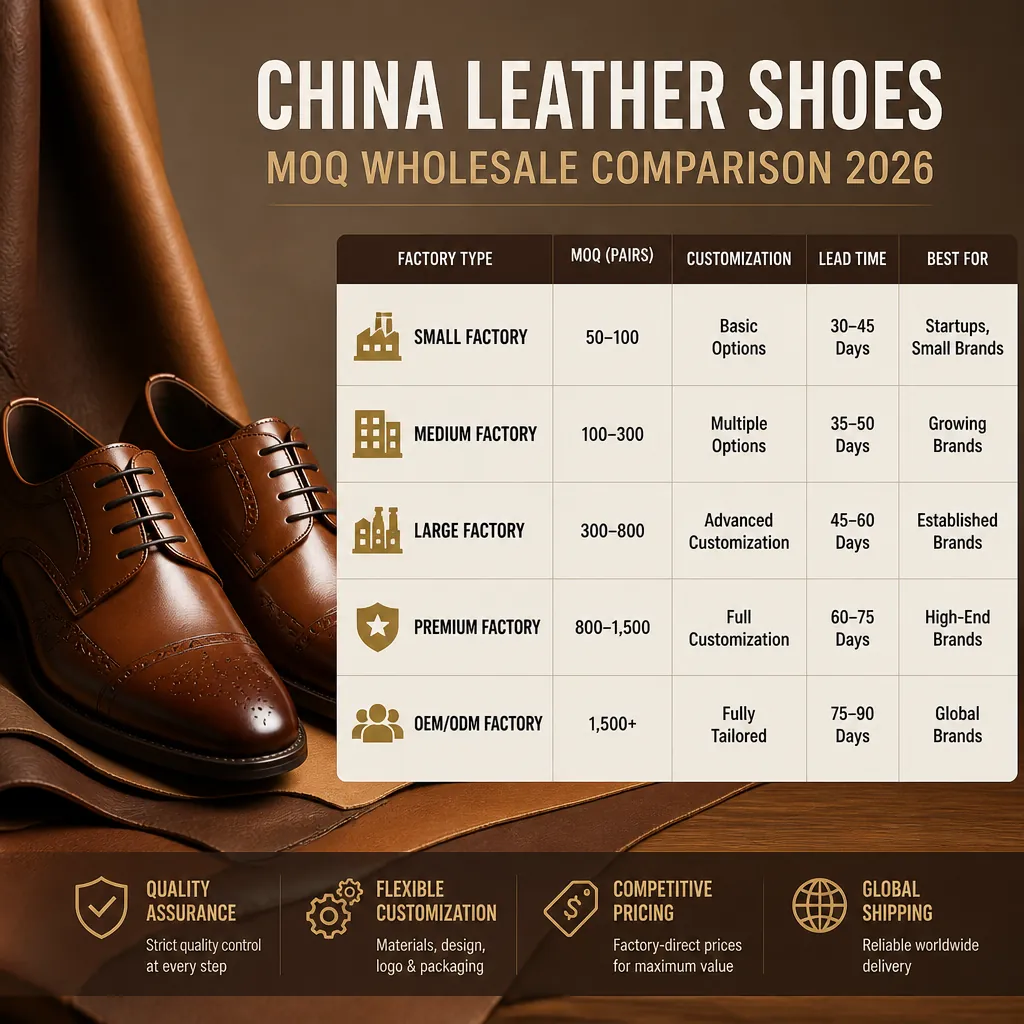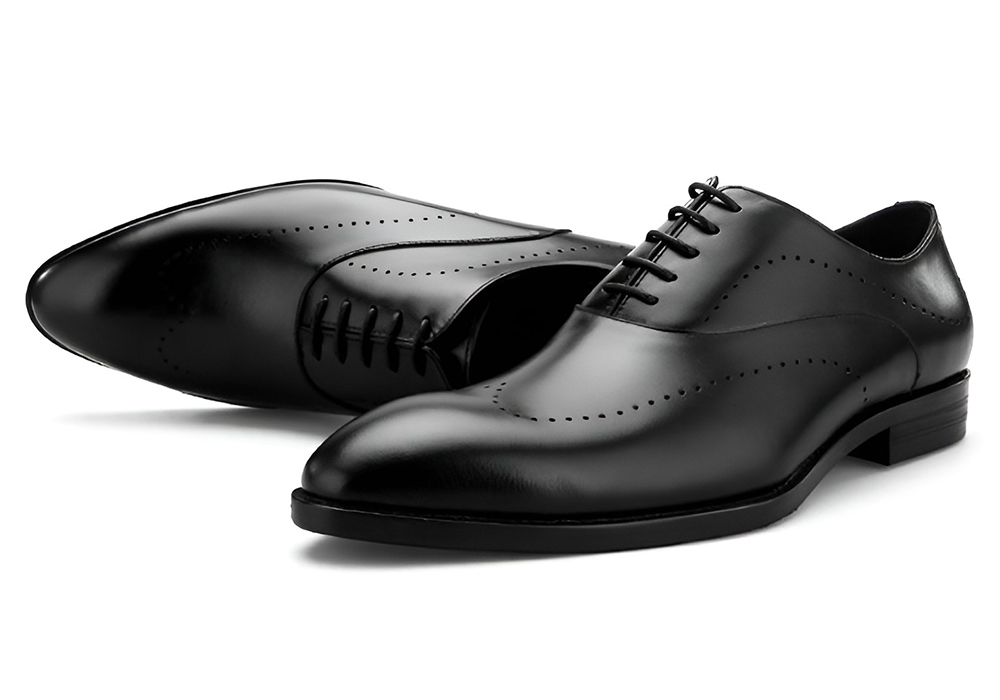
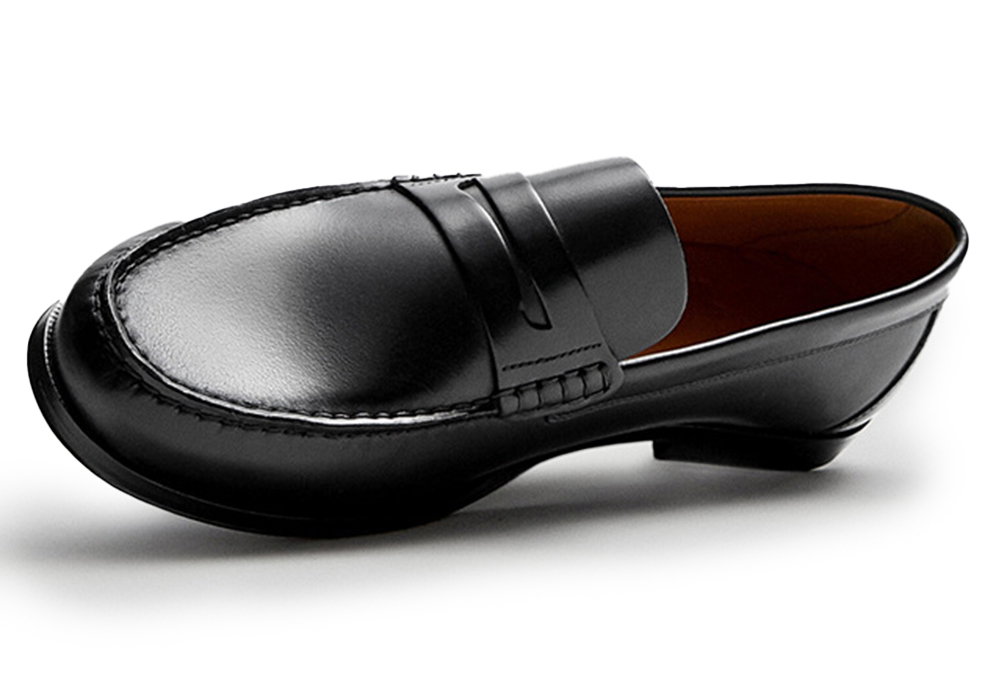
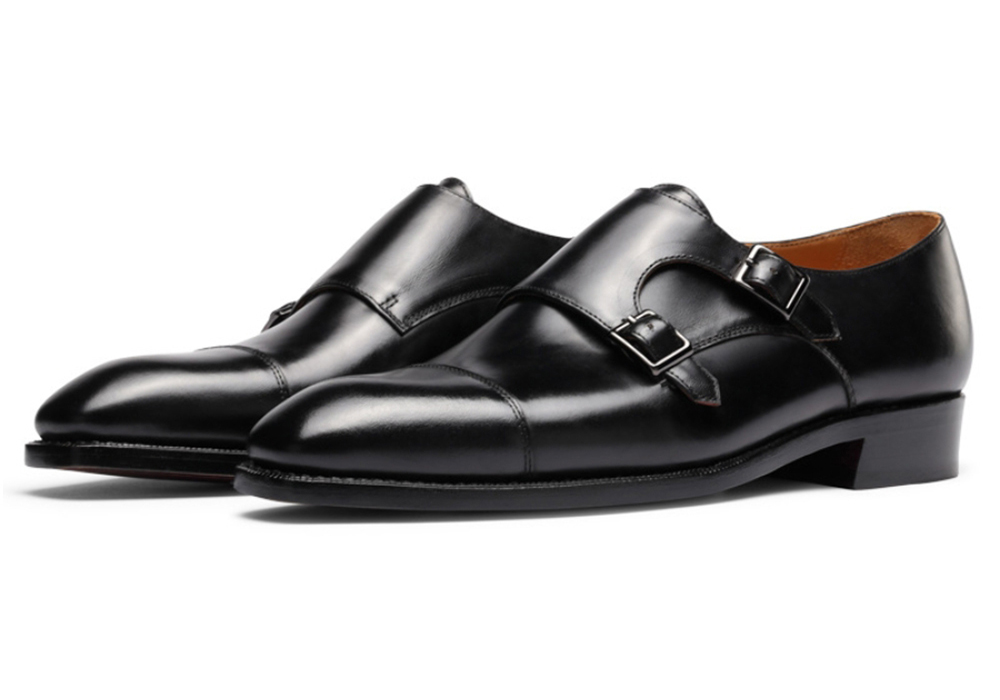
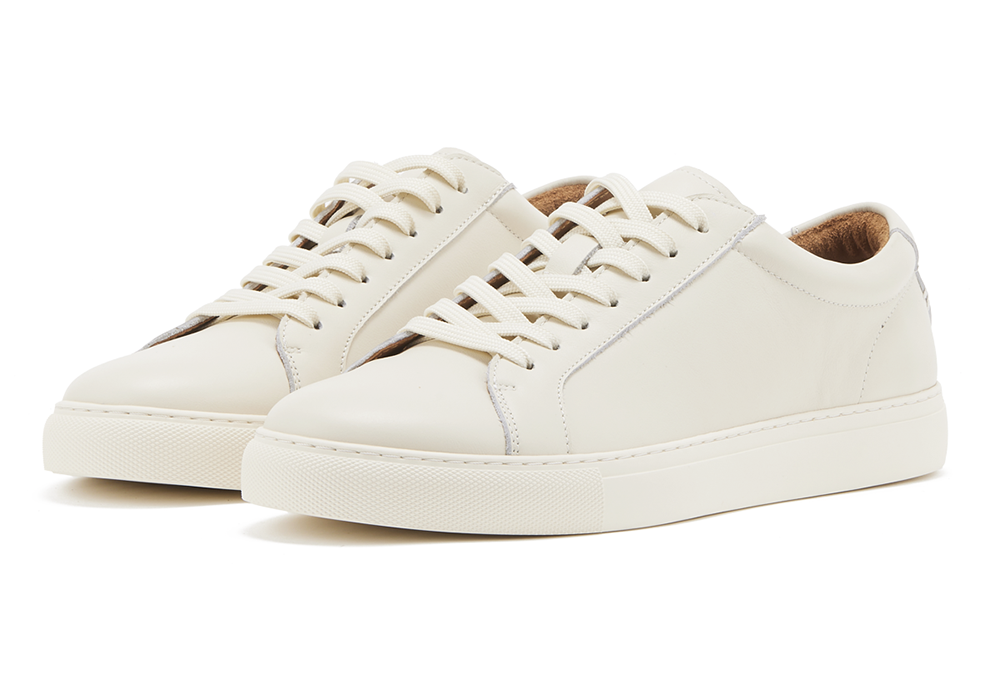
If you’ve ever requested a price quote from a China leather shoe factory, you already know the answer changes dramatically depending on how many pairs you’re ordering. The gap between a 60-pair sample run and a 10,000-pair production order isn’t just a number — it can represent a 35–45% difference in per-pair cost, which directly determines whether your margin works or collapses.
This guide breaks down exactly how leather shoes bulk order discount tiers are structured at a factory level, what drives each price break, and how to plan your purchasing strategy whether you’re launching a private label brand or scaling an existing wholesale operation. If you’re new to factory-direct sourcing, understanding what OEM means in shoes is a useful starting point before diving into pricing tiers.
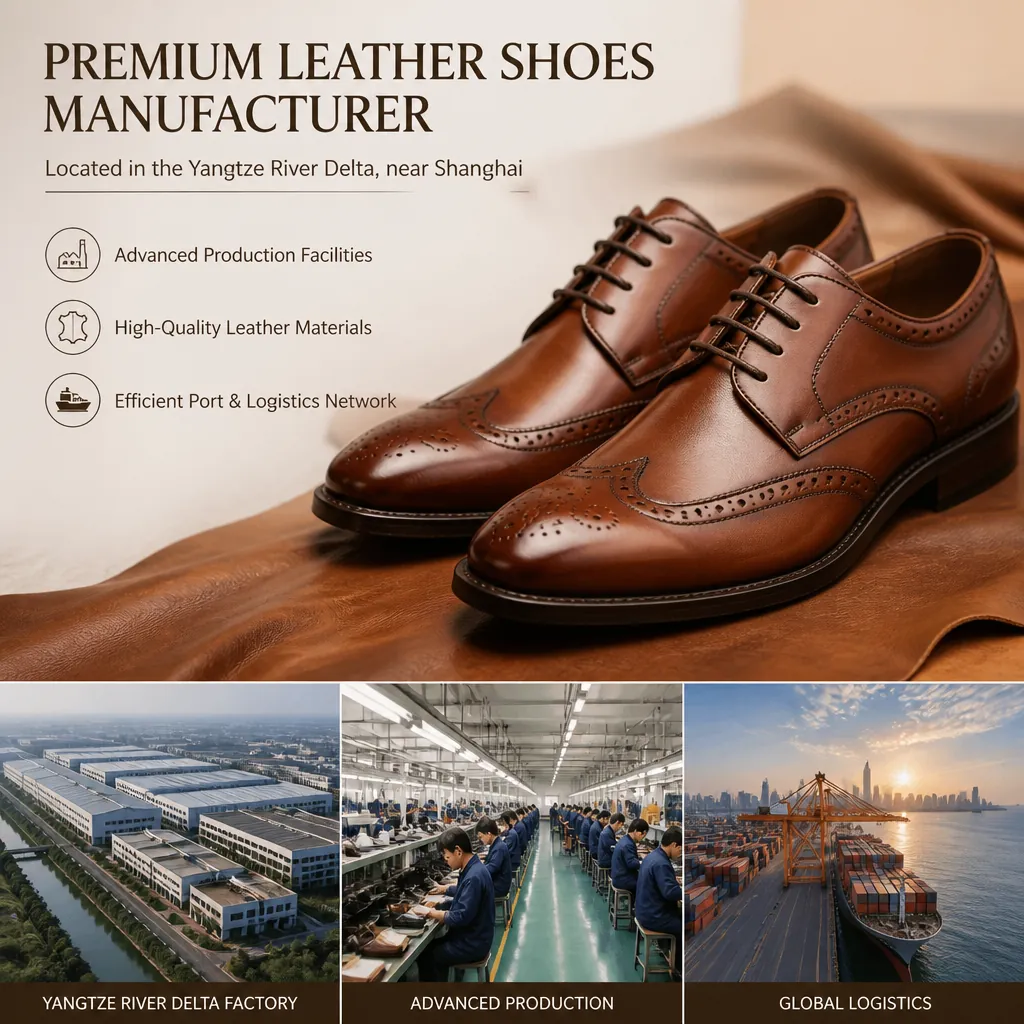
As a manufacturer producing 500,000+ pairs annually with a factory in Guangzhou and headquarters in Shanghai, Wincheer, established in 2007, Shoes operates across all five volume tiers described here — from 60-pair custom runs at $25–40/pair to high-volume contracts exceeding 10,000 pairs. With a defect rate of 0.8–1.2% (versus the industry average of 2–4%) and certifications including CE (EN ISO20347), REACH, and RoHS, the pricing structure below reflects real factory economics, not theoretical estimates.
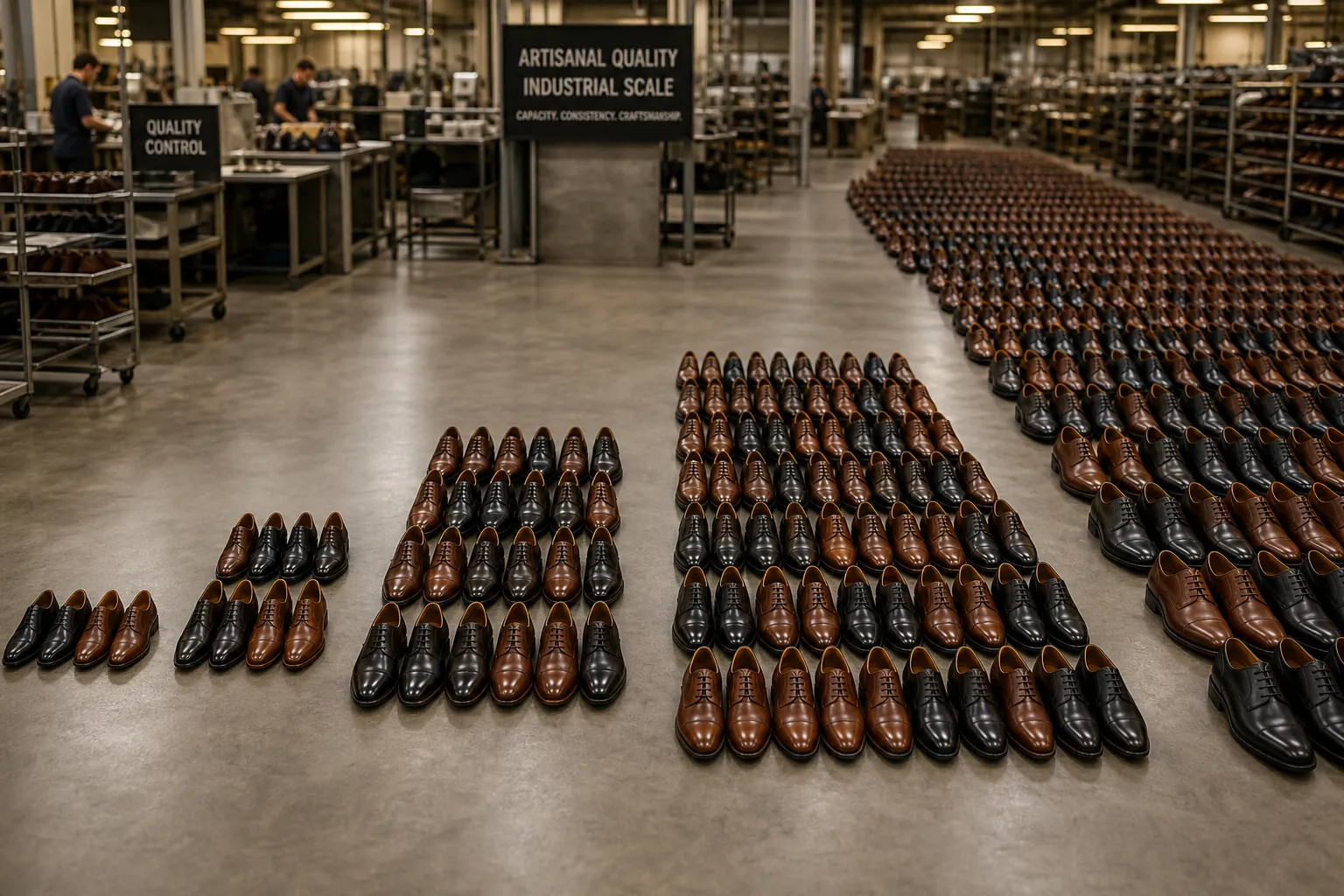
Leather Shoes Bulk Order Discount Tiers: Table of Contents
- Why Volume Pricing Matters More Than You Think
- The 5 Volume Discount Tiers Explained
- What Actually Drives the Discount
- Price Comparison Table by Tier and Shoe Type
- Hidden Costs of Large Orders
- How to Plan Your First Bulk Order
- FAQ
1. Why Volume Pricing Matters More Than You Think
Most buyers focus on the per-pair price. The smarter question is: what does per-pair price mean at each quantity level, and how does it affect your landed cost?
At 60 pairs, you’re essentially paying for factory setup, material minimums, and the cost of a short production run. At 10,000 pairs, those fixed costs are spread across a much larger base, materials are purchased at bulk rates, and the production line runs with maximum efficiency.
The leather shoes bulk order discount isn’t a marketing gimmick — it reflects genuine cost reductions that happen at the factory level. Understanding where those breaks occur helps you time your orders strategically and negotiate from a position of knowledge.
For cross-border e-commerce sellers, the difference between a 200-pair order and a 500-pair order might be the difference between a 28% gross margin and a 42% gross margin on the same retail price point.
2. The 5 Volume Discount Tiers Explained
Tier 1: 60–200 Pairs (Entry / Sample Validation)
This is the minimum viable order range. The MOQ for custom designs starts at 60 pairs, and existing designs can be ordered with no minimum at all.
At this tier, per-pair pricing is at its highest — typically in the $35–40 range for mid-grade genuine leather Oxford or Derby styles. You’re absorbing setup costs: last preparation, pattern cutting, material sourcing in small lots, and quality control for a short run.
Best for: First-time buyers, brand validation, market testing, retail pop-up launches.
Tier 2: 200–500 Pairs (Small Wholesale / Brand Launch)
At 200+ pairs, material purchasing becomes more efficient. The factory can order leather hides in larger cuts, reducing waste and per-unit material cost.
Pricing typically drops to the $30–37 range depending on style complexity. This is the sweet spot for private label brands launching their first full collection with 3–5 SKUs.
Best for: Private label brand launches, boutique wholesale buyers, Amazon FBA initial inventory.
Tier 3: 500–2,000 Pairs (Growth Stage / Regional Distribution)
This is where production line efficiency starts to kick in meaningfully. At 500+ pairs per style, the factory can dedicate a full production line for a continuous run, reducing changeover time and labor cost per pair.
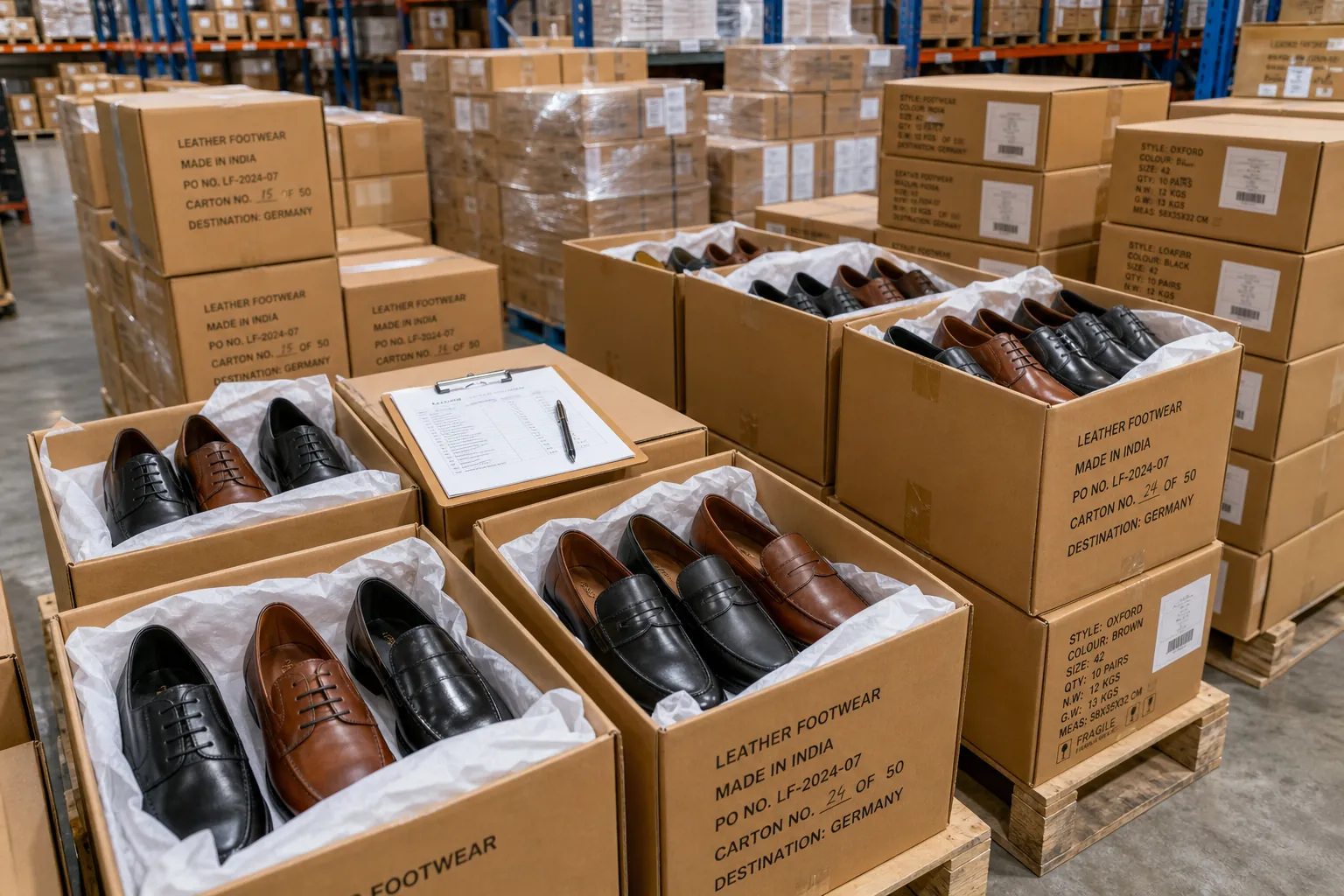
Expect pricing in the $28–34 range. Shipping consolidation also becomes viable — a full 20-foot container typically holds 2,000–2,500 pairs of men’s dress shoes, so you’re approaching container-load economics.
Best for: Regional distributors, growing e-commerce brands, multi-channel retailers.
Tier 4: 2,000–5,000 Pairs (Established Brand / Seasonal Buy)
At this volume, you’re negotiating from a position of strength. Material procurement happens at bulk commodity rates, production scheduling is predictable, and quality consistency improves because workers repeat the same process for longer runs. For insight into how factories at this scale operate, see our overview of the top 10 shoe factories in China.
Pricing typically falls in the $26–31 range. Full container loads become standard, and you can negotiate better payment terms (e.g., 30% deposit vs. 50%).
Best for: Established brands, department store buyers, large-scale Amazon/Shopify operations.
Tier 5: 5,000–10,000+ Pairs (High-Volume / Long-Term Partnership)
At 5,000+ pairs, you’re entering long-term partnership territory. Factories will often assign a dedicated production team, offer priority scheduling, and provide more flexible customization options at no additional cost.
Per-pair pricing can reach $25–28 for standard styles. At 10,000 pairs, you’re also in a position to negotiate annual framework agreements that lock in pricing and capacity.
Best for: National distributors, large private label brands, OEM/ODM clients with established sell-through history. For a comparison of manufacturing destinations at this scale, read our analysis on which country is best for manufacturing shoes.
3. What Actually Drives the Discount
Understanding the mechanics behind a leather shoes bulk order discount helps you negotiate intelligently and avoid being misled by artificially inflated “list prices.”
Material Bulk Purchase
Leather is priced by the hide or square foot. When a factory orders leather for 60 pairs, they may need 2–3 hides with significant waste. At 2,000 pairs, they’re ordering full pallet quantities directly from tanneries, often at 15–25% lower per-unit cost. The same applies to soles, insoles, laces, and hardware.
Production Line Efficiency
Every style change on a production line costs time — resetting lasts, recalibrating stitching machines, retraining workers on a new pattern. A 60-pair run might spend 40% of its time in setup. A 2,000-pair run of the same style spends less than 5% in setup. That labor efficiency translates directly into lower per-pair cost.
Shipping Consolidation
At small volumes, shoes ship via LCL (Less than Container Load), where you pay a premium per cubic meter. At 2,000+ pairs, you’re filling a full 20-foot container (FCL), which cuts per-pair freight cost by 30–50% compared to LCL rates.
For a deeper breakdown of how Incoterms affect your total landed cost, see our [FOB shoe pricing guide covering 4 Incoterms](https://the manufacturer.com/fob-shoe-pricing-guide-4-incoterms-compared-in-2026/) [Shoe Manufacturer Guide](https://the manufacturer.com/shoe-manufacturer/).
Quality Control Amortization
Third-party AQL inspections cost roughly $200–400 per visit regardless of order size. At 60 pairs, that’s $3–6/pair in QC cost. At 2,000 pairs, it’s $0.10–0.20/pair. Buyers who understand this often factor QC cost into their tier decision.
4. Price Comparison Table by Tier and Shoe Type
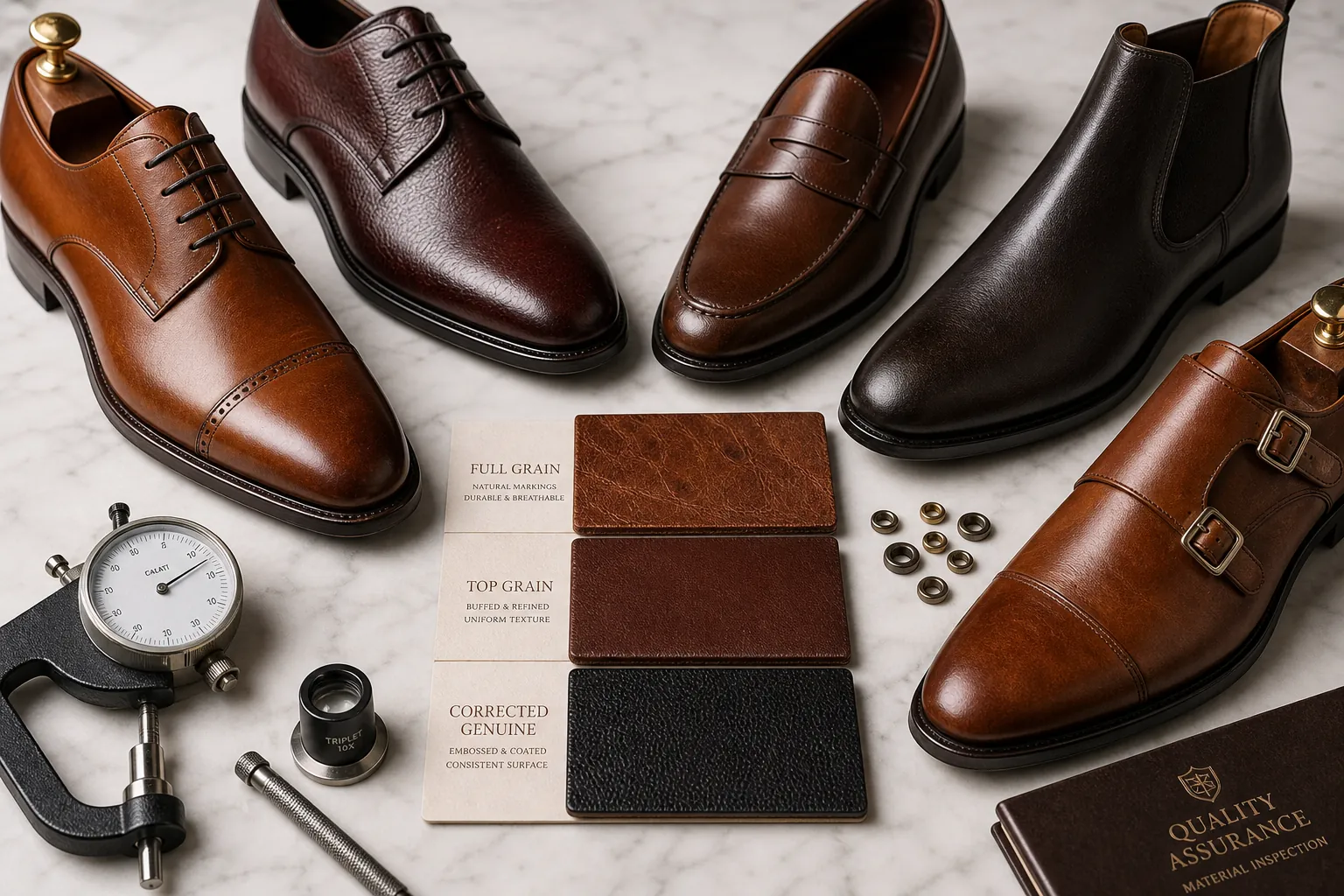
The table below shows approximate FOB Guangzhou pricing ranges across volume tiers and shoe styles. Prices reflect genuine leather upper, rubber or leather sole, standard lining.
| Shoe Style | 60–200 Pairs | 200–500 Pairs | 500–2,000 Pairs | 2,000–5,000 Pairs | 5,000–10,000+ Pairs |
|---|---|---|---|---|---|
| Oxford | $35–40 | $31–37 | $28–34 | $26–31 | $25–28 |
| Derby | $33–38 | $30–35 | $27–32 | $25–30 | $24–27 |
| Loafer | $34–39 | $30–36 | $28–33 | $26–30 | $25–28 |
| Monk Strap | $36–41 | $32–38 | $29–35 | $27–32 | $26–29 |
| Chelsea Boot | $37–42 | $33–39 | $30–36 | $28–33 | $27–30 |
Prices are approximate FOB Guangzhou ranges. Final pricing depends on leather grade, sole construction, customization level, and current material costs.
For style-specific sourcing details, see our guides on [leather Oxford shoes for wholesale buyers](https://the manufacturer.com/complete-guide-to-leather-oxford-shoes-for-wholesale-buyers/) [Shoe Manufacturer Guide](https://the manufacturer.com/shoe-manufacturer/) and [leather Derby shoes sourcing](https://the manufacturer.com/leather-derby-shoes-sourcing-guide-styles-and-specifications-for-b2b-buyers/) [Shoe Manufacturer Guide](https://the manufacturer.com/shoe-manufacturer/).
5. Hidden Costs of Large Orders
A leather shoes bulk order discount looks attractive on paper. But large orders carry their own cost structure that buyers often underestimate.
Warehousing and Carrying Cost
10,000 pairs of men’s dress shoes occupy roughly 80–100 cubic meters of warehouse space. If your sell-through rate is slower than projected, you’re paying storage fees and tying up working capital. Factor in 1–3% of inventory value per month in carrying cost.
Quality Variance Across Large Runs
Even with a low defect rate, a 10,000-pair order statistically produces more absolute defects than a 500-pair order. At a 1% defect rate, that’s 100 pairs requiring inspection, rework, or replacement. Ensure your QC protocol includes mid-production inspections, not just final checks.
The [AQL inspection guide for footwear](https://the manufacturer.com/aql-inspection-footwear-top-5-quality-control-tips/) [Leather Footwear Quality Standards](https://the manufacturer.com/leather-footwear-quality-standards-and-inspection/) covers exactly how to structure this for large runs.
Payment Terms and Cash Flow
Most factories require 30–50% deposit before production, with the balance due before shipment. On a $280,000 order (10,000 pairs at $28/pair), a 30% deposit is $84,000 tied up before a single pair ships. Negotiate payment terms carefully — and understand that better terms are available at higher volumes.
See our full breakdown of [payment terms for B2B leather shoe orders](https://the manufacturer.com/payment-terms-for-b2b-leather-shoe-orders/) [Shoe Manufacturer Guide](https://the manufacturer.com/shoe-manufacturer/) before committing to a large purchase.
Style and Size Run Complexity
A 10,000-pair order split across 10 styles and 8 sizes creates 80 SKU combinations. Each combination needs its own QC check, packaging label, and inventory tracking. Operational complexity scales faster than volume — plan your SKU architecture before you scale.
Tariff and Duty Exposure
For US buyers, leather shoe imports from China carry an 8.5% base tariff plus potential Section 301 duties. On a large order, this is a significant landed cost factor. Review the [complete guide to importing leather shoes and US tariffs](https://the manufacturer.com/importing-leather-shoes-usa-tariff-complete-guide-2026/) before finalizing your order size.
6. How to Plan Your First Bulk Order
The 3-Phase Scaling Framework
Phase 1 — Validate (60–200 pairs) Order one or two styles in your core sizes. Test quality, fit, and market response before committing to larger volumes. Use this phase to establish your QC checklist and confirm the factory’s communication reliability.
Phase 2 — Scale (200–500 pairs) Once you’ve confirmed sell-through and quality consistency, expand to 3–5 styles. This is where you start negotiating packaging customization, insole branding, and box design. The per-pair savings at this tier typically cover the cost of basic private label customization.
Phase 3 — Optimize (500+ pairs) With proven demand data, you can forecast accurately enough to commit to 500–2,000 pair runs. At this stage, negotiate annual volume agreements that lock in pricing and production slots.
Bulk Order Planning Checklist
Use this checklist before placing any order above 500 pairs:
- Confirmed sell-through rate from previous smaller order
- Warehouse space secured and costed
- Tariff and duty calculation completed for destination market
- AQL inspection protocol agreed with factory
- Payment terms negotiated and documented
- Size run distribution confirmed (avoid over-ordering fringe sizes)
- Packaging and labeling specifications finalized
- Lead time confirmed and aligned with your sales calendar
- Contingency plan for delayed shipment (buffer stock or alternative supplier)
- Certificate of origin and compliance documents (CE, REACH, RoHS if EU market) confirmed
When NOT to Jump to a Higher Tier
Larger orders are not always better. Avoid jumping tiers if:
- You haven’t validated demand at the previous tier
- Your cash flow can’t absorb a 30–50% deposit on the larger order
- You’re entering a new market where size preferences are unknown
- The style is seasonal and you risk end-of-season markdowns
The [hidden costs and benefits for shoe brands](https://the manufacturer.com/the-hidden-costs-and-benefits-for-shoe-brands/) article covers the full financial picture of scaling a shoe brand.
According to Statista’s global footwear market data, the men’s leather footwear segment continues to grow in both developed and emerging markets, making strategic volume planning increasingly important for competitive positioning. https://www.statista.com/topics/1448/footwear/ – SATRA Footwear Technology
Ready to Start Your Shoe Line?
Understanding volume pricing is one piece of the puzzle. The next step is finding a factory that can deliver consistent quality across every tier — from your first 60-pair sample run to a 10,000-pair seasonal production order.
Wincheer Shoes has been manufacturing men’s leather shoes since 2007, producing 500,000+ pairs annually for buyers in 50+ countries. With CE (EN ISO 20347), REACH, and RoHS certifications and a defect rate of 0.8–1.2%, we support OEM and ODM orders starting at 60 pairs per style. Our shoe manufacturer capabilities cover Oxfords, Derbies, Loafers, Monk Straps, Chelsea Boots, and Leather Walking Shoes.
Contact Wincheer Shoes to request tier-specific pricing for your order volume. We provide detailed FOB quotes within 24 hours, including material specifications, lead times, and packaging options.
FAQ
Q: What is the minimum order quantity for a leather shoes bulk order discount to apply? A: Price breaks begin at 200 pairs for most styles. Below 200 pairs, you’re in the sample/validation tier where per-pair pricing is highest. Some factories offer 0 MOQ on existing catalog designs, but custom designs typically start at 60 pairs minimum.
Q: How much can I realistically save per pair by ordering 2,000 instead of 200 pairs? A: For a standard genuine leather Oxford, the difference is typically $5–9 per pair (roughly 15–25% reduction). On 2,000 pairs, that’s $10,000–18,000 in total savings — enough to cover branding, packaging customization, and a third-party QC inspection.
Q: Do leather shoes bulk order discounts apply to mixed styles, or only single-style orders? A: Most factories calculate discounts per style, not per total order. A 2,000-pair order split across 10 styles is treated as ten 200-pair orders for pricing purposes. To access deeper discounts, concentrate volume into fewer styles or negotiate a blanket annual volume agreement.
Q: What payment terms should I expect on a large bulk order from a China factory? A: Standard terms are 30–50% deposit before production, balance before shipment. At 2,000+ pairs, many factories will negotiate to 30% deposit, particularly if you have an established purchase history. For orders above 5,000 pairs, annual framework agreements with milestone-based payments become possible. Always confirm payment terms in writing before production starts.
Q: Can I mix shoe styles within one bulk order and still get volume pricing? A: Most factories price per style, not per total order quantity. A 2,000-pair order across 8 styles is treated as eight separate 250-pair orders for tier pricing. However, some manufacturers — including Wincheer — offer annual volume agreements where cumulative spend across styles unlocks better per-pair rates. If your strategy involves a broad product range, negotiate a blanket volume deal rather than per-style pricing.