
Table of Contents
- Understanding Footwear Sizing Systems
- Standard Sizing: Cost-Benefit Analysis
- Custom Sizing: Cost-Benefit Analysis
- The Hidden Cost of Poor Fit
- Fit Technology Investment
- Strategic Sizing Decisions
- Implementation Recommendations
Fit is the most critical factor in shoe purchase satisfaction—exceeding even price and aesthetics in consumer importance. Research consistently demonstrates that fit problems drive 40–60% of footwear returns, creating costs that can eliminate profit margins and damage brand reputation.
Yet achieving optimal fit presents challenges that different brands address through different strategies. The choice between standard sizing systems and custom sizing approaches involves complex trade-offs affecting product development costs, manufacturing complexity, inventory requirements, marketing positioning, and ultimately consumer satisfaction.
1. Understanding Footwear Sizing Systems
Standard Sizing Fundamentals
The global footwear industry operates with standardized sizing systems:
| System | Basis | Example |
|---|---|---|
| European (EU) | French point system; 6.67mm per size | Size 42 ≈ 27cm foot length |
| UK | Similar to EU but different baseline | UK size 8 ≈ EU size 42 |
| US | Approximately one size larger than UK for equivalent foot length | US size 9 ≈ EU size 42 |
| Mondopoint | ISO standard; foot length in millimeters | Limited retail adoption |
Width Variations
Beyond length, foot width significantly affects fit:
- Standard width systems: Most manufacturers offer multiple widths—typically Narrow (B), Medium (D), and Wide (E/EE)—with varying availability across size ranges.
- Premium width options: Higher-end manufacturers may offer 4–5 width options.
- Limited width availability: Budget manufacturers frequently offer only standard widths, creating fit compromises for consumers outside normal ranges.
Last Construction and Fit
The foundation of fit lies in last construction:
- Last development costs: Custom last development costs $8,000–25,000 per size range, with subsequent pattern development and sample production adding $5,000–15,000.
- Last modification: Adapting existing lasts for specific markets typically costs $2,000–8,000 per modification.
- Size range coverage: A single last typically covers 4–5 consecutive sizes through graded scaling.

2. Standard Sizing: Cost-Benefit Analysis
Manufacturing Economics
Standard sizing offers compelling manufacturing economics:
- Economies of scale: Producing large volumes of standard sizes enables production line optimization, reducing per-unit costs by 15–30%.
- Reduced complexity: Simplified production scheduling, reduced inventory complexity, streamlined quality control.
- Material efficiency: Standard pattern utilization improves cutting efficiency and reduces waste.
- Component standardization: Soles, insoles, and hardware can be standardized across size ranges, reducing component inventory requirements.
Inventory Implications
Standard sizing simplifies inventory management:
- Predictable demand: Historical sales data enables accurate demand forecasting.
- Replenishment cycles: Standard sizing supports efficient replenishment models, reducing inventory carrying costs.
- Reduced obsolescence risk: Standard sizes maintain demand over time; unusual sizes face greater obsolescence risk.
Consumer Fit Trade-offs
Standard sizing necessarily accommodates average proportions:
- Majority fit: Standard sizes fit most consumers reasonably well—those close to average proportions in length and width.
- Extreme fit challenges: Consumers with unusually long/short feet, narrow/wide feet, or high arches experience persistent fit challenges.
- Compromise acceptability: Some fit compromise is acceptable; others experience significant discomfort that drives returns or purchase avoidance.
3. Custom Sizing: Cost-Benefit Analysis
The Custom Shoe Market
Custom sizing spans a spectrum:
| Approach | Description |
|---|---|
| Size customization | Extending size ranges to include unusual sizes—very small or very large (men’s 15+) |
| Width customization | Offering non-standard width options not available from mainstream manufacturers |
| Last customization | Adapting standard lasts for specific foot characteristics—high instep, flat feet, bunions |
| Fully bespoke | Complete custom last development and pattern making for individual consumers |
Development Cost Investment
Custom sizing requires substantial upfront investment:
| Investment Area | Cost Range |
|---|---|
| Last development | $15,000–50,000 per size range |
| Pattern development | $3,000–8,000 per variation |
| Sample development | $5,000–20,000 per product line |
| Tooling for non-standard sizes | Custom development required |
Production Cost Implications
Custom sizing increases per-unit production costs:
- Volume reduction: Non-standard sizes produce lower volumes per production run, reducing efficiency by 10–25%.
- Process complexity: Additional operations for width modifications, extended sizes, or custom fitting.
- Component costs: Non-standard component procurement may carry premium pricing or extended lead times.
- Skilled labor requirements: Custom fitting operations require experienced craftspeople.
4. The Hidden Cost of Poor Fit
Return Rate Economics
Fit problems generate substantial hidden costs:
- Direct return costs: Return shipping, inspection, and restocking average $8–15 per returned item.
- Inventory disruption: Returns disrupt inventory planning, potentially creating stockouts of selling sizes while accumulating returns.
- Logistics complexity: Processing returns requires systems, labor, and operational attention.
- Consumer dissatisfaction: Returns generate negative experiences impacting brand perception and future purchase probability.
Return Rate Analysis by Sizing Strategy
| Sizing Strategy | Return Rate | Primary Return Drivers |
|---|---|---|
| Standard (limited widths) | 12–18% | Width mismatch, length inaccuracy |
| Extended standard | 8–12% | Reduced when unusual sizes available |
| Width-extended | 6–10% | Better fit matching reduces width-driven returns |
| Custom/bespoke | 1–3% | Individual fitting eliminates most fit returns |
The return rate differential—18% versus 3%—generates substantial cost implications.
Lifetime Customer Value Impact
Poor fit affects customer lifetime value beyond initial returns:
- Negative word-of-mouth: Fit problems generate complaints to friends and online reviews.
- Brand switching: Consumers who experience fit problems often switch brands rather than trying different sizes.
- Reduced repeat purchases: Dissatisfied customers purchase less frequently.
- Market research impact: Poor fit perception damages brand positioning research findings.
5. Fit Technology Investment
Digital Fit Solutions
Modern technology enables new approaches to fit challenges:
- 3D foot scanning: Digital foot measurement enables precise sizing recommendations and custom last generation.
- Fit recommendation algorithms: Machine learning systems analyzing customer data to recommend optimal sizes across brands and styles.
- Virtual fitting: Augmented reality applications enabling visual fit assessment before purchase.
- Returns-predictive analytics: Using purchase and return data to identify fit problem patterns and address them proactively.
Manufacturing Technology Advances
Production technology influences sizing strategy viability:
| Technology | Impact |
|---|---|
| CNC last making | Reduces custom last development costs by 40–60% |
| 3D printing | Enables rapid prototyping and custom component production |
| Robotic cutting | Handles small-batch custom sizes without efficiency penalties |
| Digital pattern systems | CAD/CAM enables faster, more accurate pattern creation for custom sizes |
6. Strategic Sizing Decisions
Market Positioning Considerations
Sizing strategy must align with brand positioning:
- Mass market positioning: Standard sizing serves price-focused consumers willing to accept fit compromise.
- Premium positioning: Premium brands can justify custom sizing investments through higher margins and consumer expectations.
- Specialty positioning: Niche brands—athletic performance, medical/orthopedic, work safety—may require custom sizing as core value proposition.
- Luxury positioning: Bespoke and custom capabilities represent heritage positioning that justifies extreme pricing.
When Standard Sizing Makes Sense
Standard sizing is optimal when:
- Competing primarily on price requires standard sizing economics to maintain margins.
- Target consumers predominantly fit standard sizing parameters.
- Brand lacks resources for custom sizing investment.
- Custom sizing development timelines delay market entry.
When Custom Sizing Investment Makes Sense
Custom sizing investment is justified when:
- Brand commands premium pricing that supports custom sizing costs.
- Custom sizing provides meaningful competitive differentiation.
- Target markets have specific fit requirements not served by standard sizing.
- Existing fit-related return rates justify investment in improved sizing.
Hybrid Approaches
Many brands find success through strategic rather than comprehensive customization:
- Extended size ranges: Adding very small and very large sizes to standard ranges without full custom capability.
- Width extension: Offering additional width options (particularly extra-narrow and extra-wide).
- Width-specific styles: Some styles designed for specific foot shapes—roomier toe boxes, narrower heels.
- Made-to-order systems: Custom color/material with standard sizes; custom last selection from multiple options; adjustable fit systems.
7. Implementation Recommendations
Phased Approach
Custom sizing implementation benefits from phased development:
- Assess current data: Analyze fit-related return data to quantify problem magnitude.
- Research target market: Conduct surveys, focus groups, or fitting studies on target market fit preferences.
- Develop strategy: Create custom sizing strategy aligned with brand positioning and capabilities.
- Pilot programs: Implement with selected styles or market segments.
- Evaluate and expand: Assess pilot results and expand successful programs.
Partner Selection
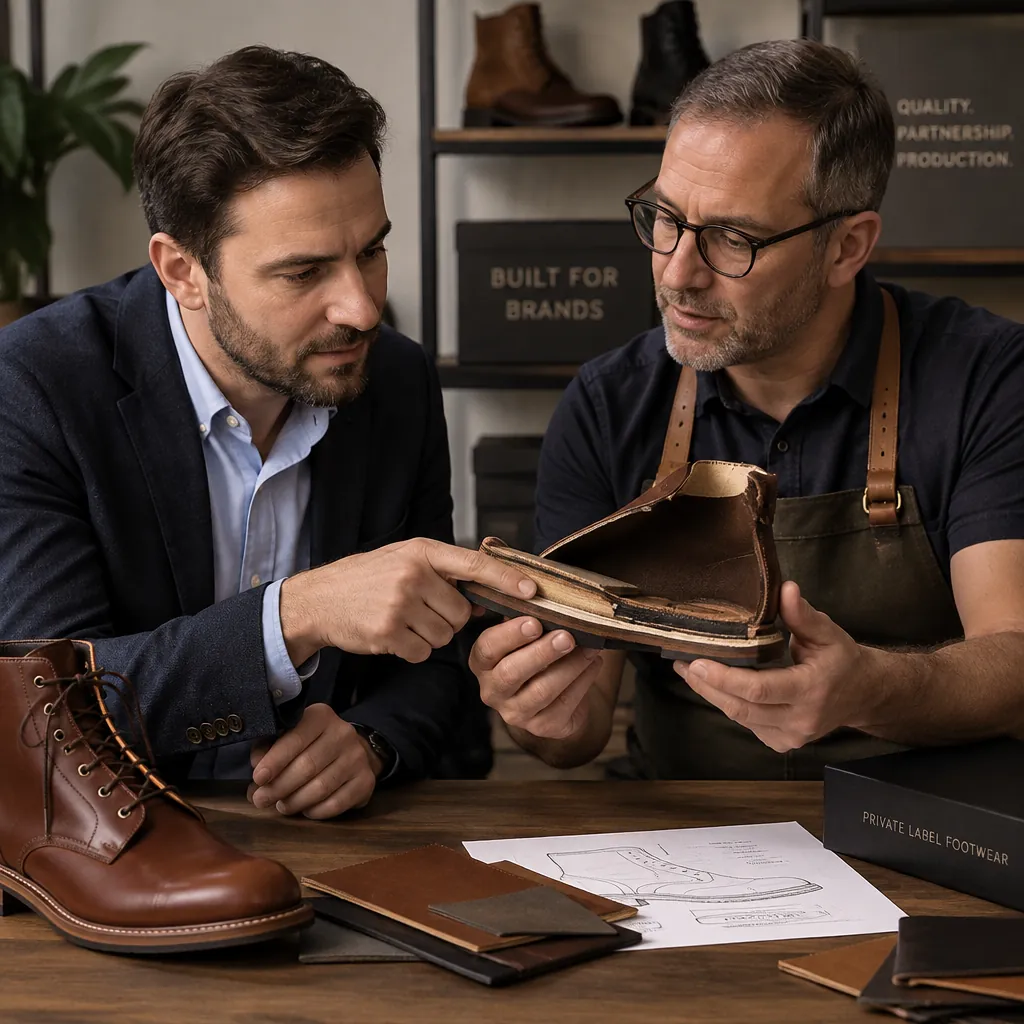
Custom sizing success requires capable manufacturing partners:
- Custom experience: Verify manufacturer has demonstrated custom sizing experience with similar brands.
- Technical capability: Assess last development, pattern making, and fitting capabilities.
- Quality track record: Evaluate custom product quality and consumer satisfaction.
- Scalability: Confirm manufacturer can scale custom programs as they succeed.
Wincheer Shoes supports brands exploring sizing strategies through flexible manufacturing capabilities spanning standard to custom approaches. Our development team assists clients in analyzing fit dynamics, evaluating sizing strategy options, and implementing programs aligned with brand positioning and consumer needs.