
Custom dress shoes are one of the highest-margin product categories in men’s footwear — but only when sourced correctly. Whether you’re launching a private label brand, stocking a retail chain, or building an e-commerce catalog, understanding how the ordering process works from the factory side will save you time, money, and costly mistakes.
This guide covers everything B2B buyers need to know: styles, materials, MOQs, pricing, quality control, and certifications.
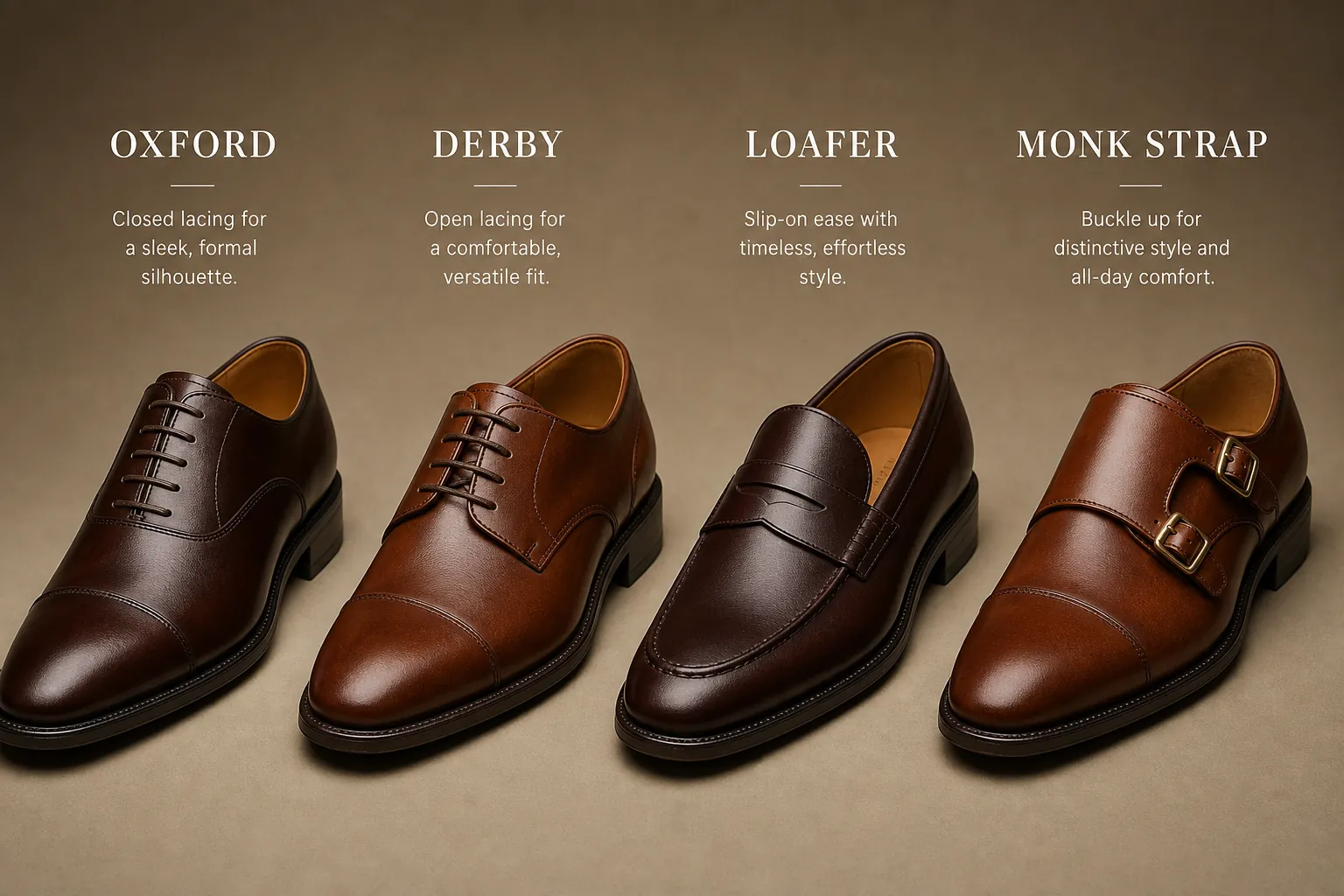
Table of Contents
- What Are Custom Dress Shoes?
- Custom Dress Shoes: Style Options and What Sells
- Materials and Construction Methods
- Pricing, MOQs, and Lead Times
- Certifications and Compliance
- Custom Dress Shoes: Quality Control Checklist
- How to Choose the Right Manufacturer
- FAQ
- Ready to Start Your Shoe Line?
What Are Custom Dress Shoes?
Custom dress shoes — in the B2B context — means ordering men’s leather footwear with your own branding, colorways, materials, or last modifications from a factory. This is distinct from retail bespoke (single-pair handmade orders). For brands and resellers, “custom” typically means OEM or ODM production runs with private label finishing.
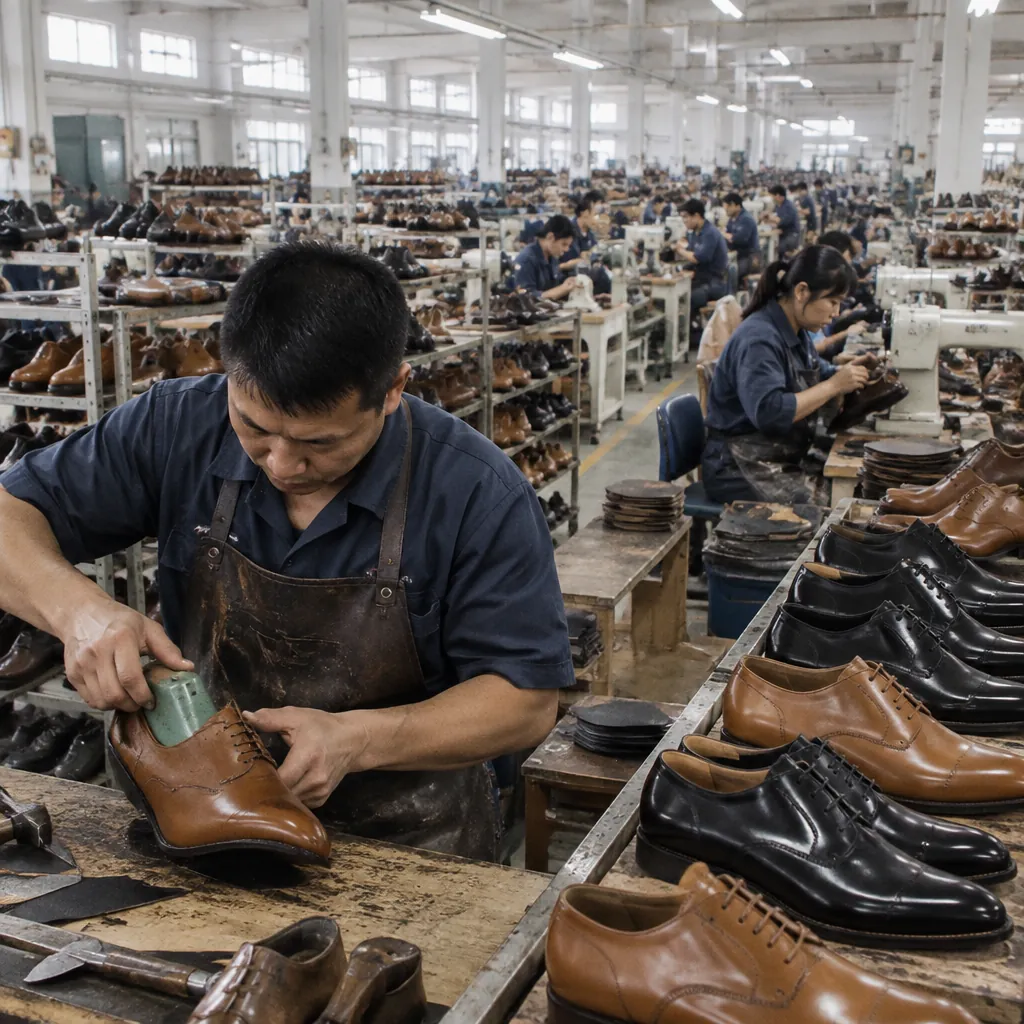
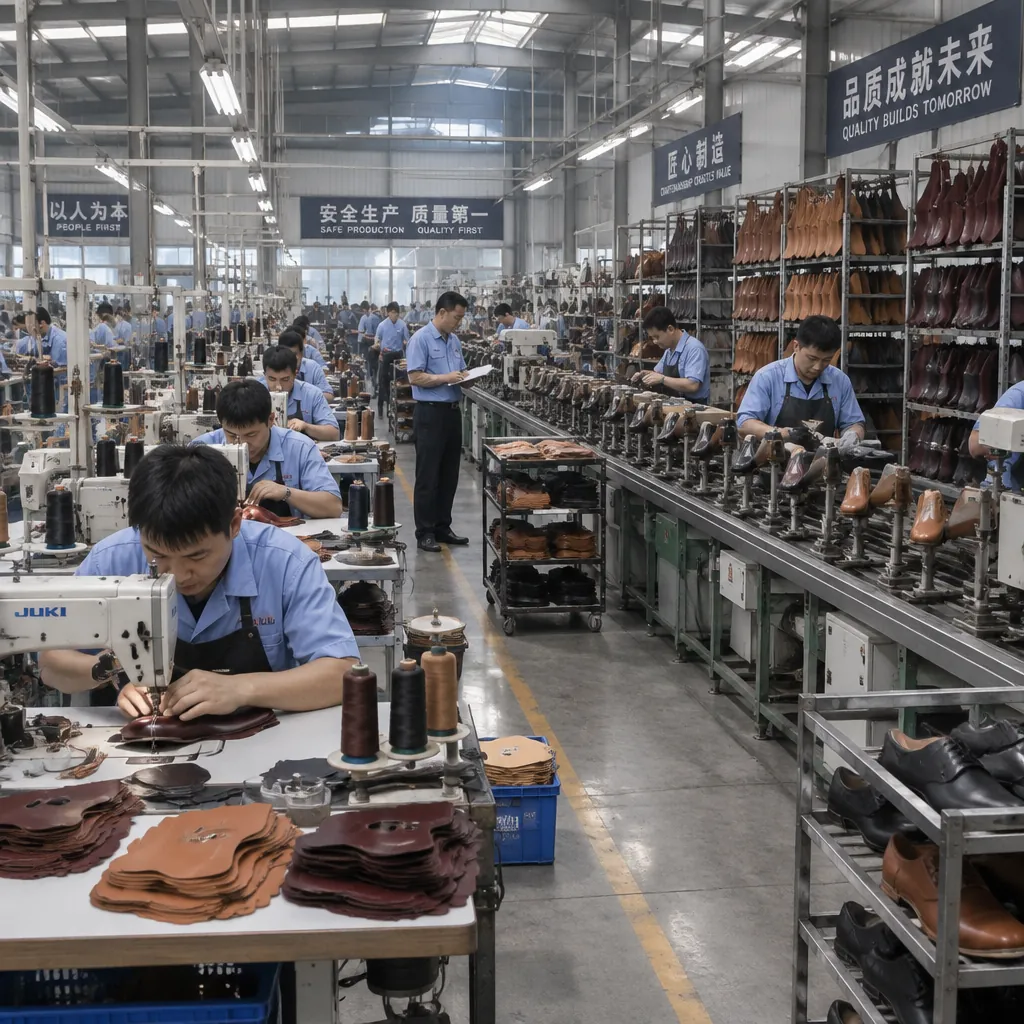
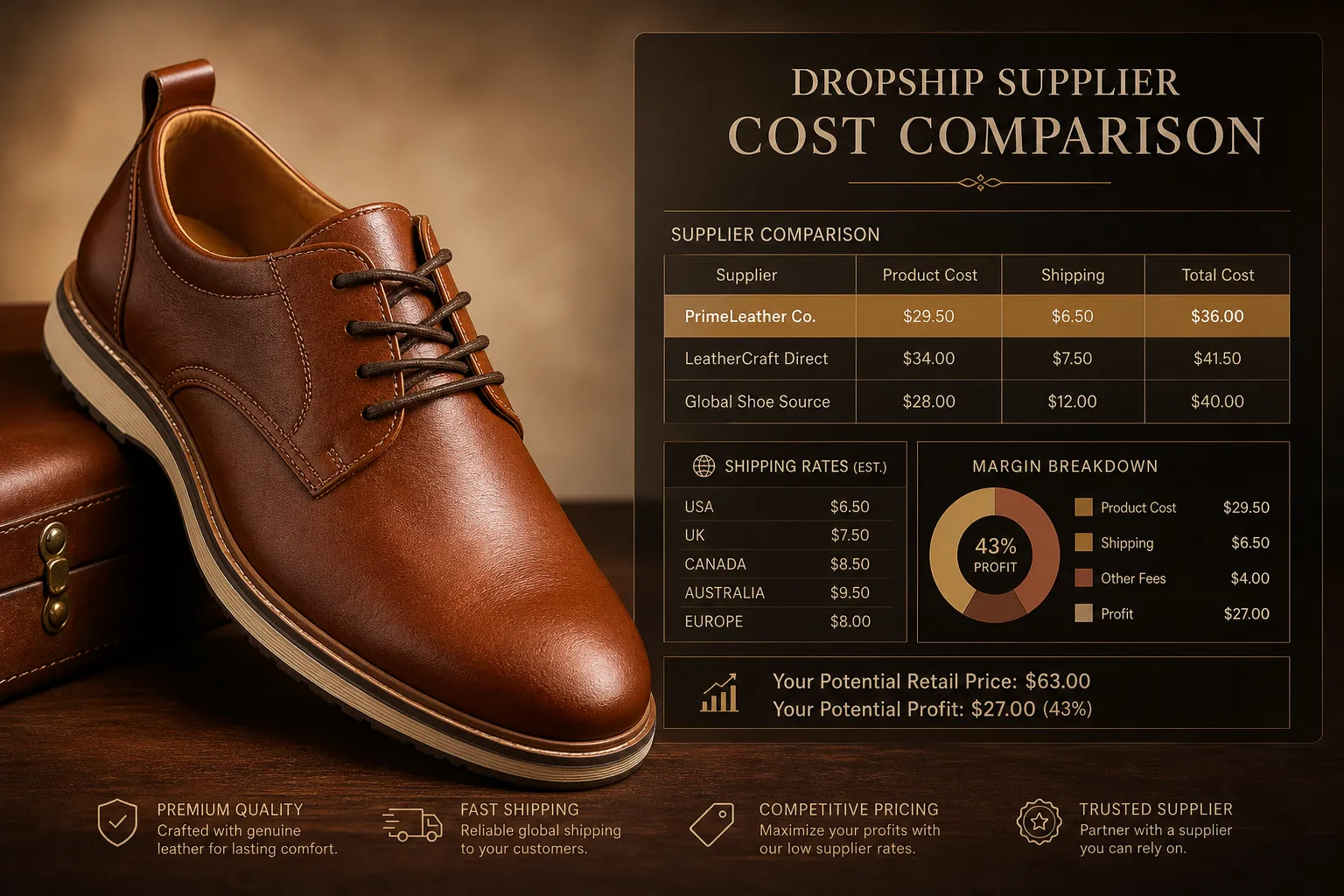
At Wincheer Shoes, founded in 2007 with an annual output of 500,000+ pairs and a defect rate of just 0.8–1.2% (versus the industry average of 2–4%), the custom ordering process follows a structured 7-step workflow that keeps quality consistent across large and small runs alike. Pricing runs $25–40/pair depending on style, leather grade, and construction method — a competitive range for genuine leather dress shoes at factory-direct volume.
Understanding this process upfront is what separates buyers who get exactly what they want from those who end up with expensive surprises at the port.
Custom Dress Shoes: Style Options and What Sells
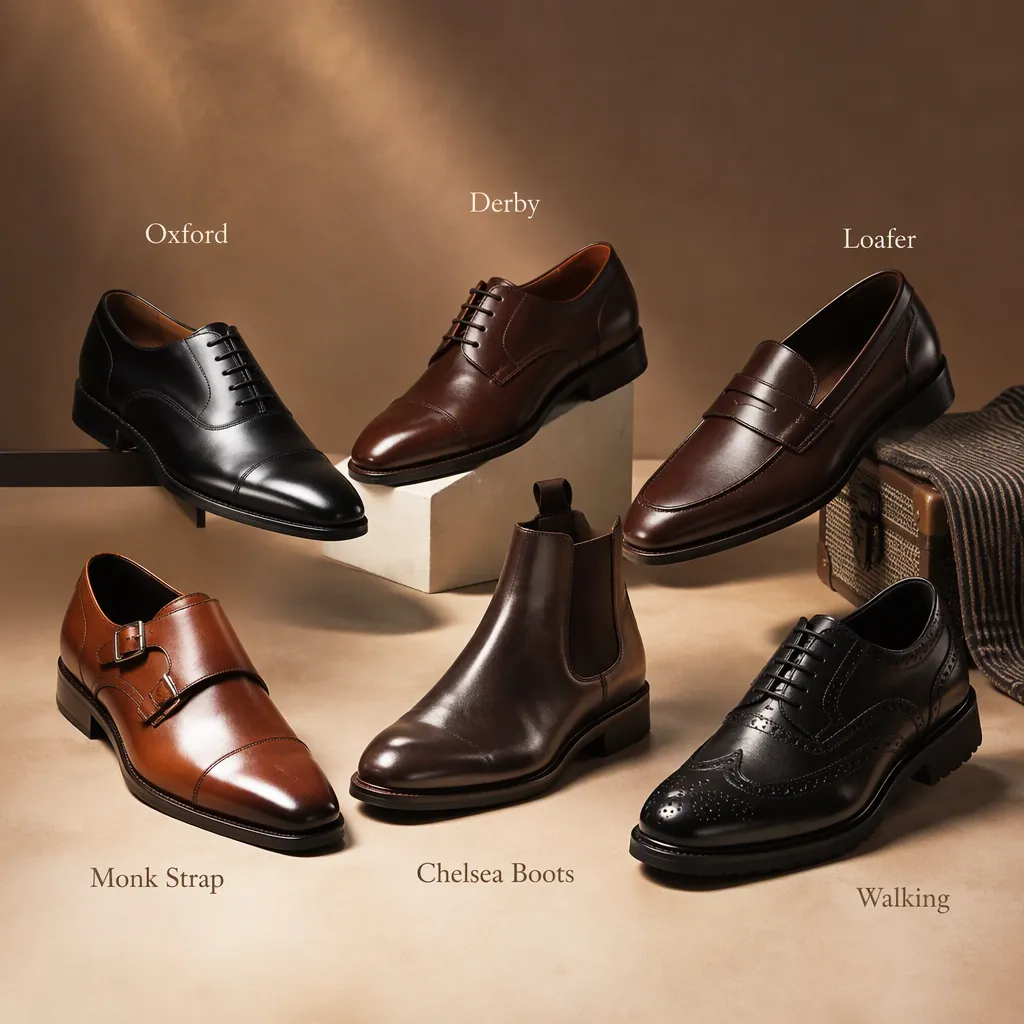
Oxford
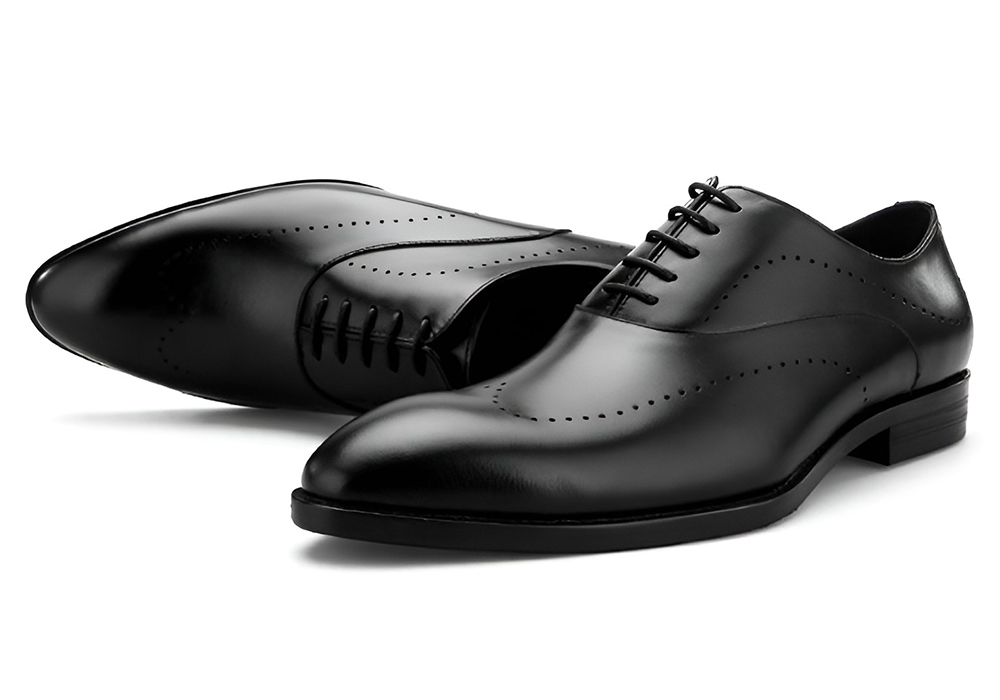
The Oxford is the most formal option — closed lacing, clean silhouette, cap toe or plain toe variants. It’s the default choice for corporate gifting programs, uniform footwear contracts, and premium retail brands targeting professional men.
Cap toe Oxfords in black and dark brown consistently outperform other styles in European and North American markets. If you’re entering a new market, Oxford is the safest starting point.
Explore our men’s Oxford shoe catalog for current production-ready designs.
Derby
The Derby uses open lacing, making it slightly more casual and more comfortable for wider feet. It’s the top-selling style in many mid-market retail segments and works across both formal and smart-casual positioning.
For private label brands targeting the $80–$150 retail price point, Derby shoes offer excellent perceived value relative to manufacturing cost.
Loafer
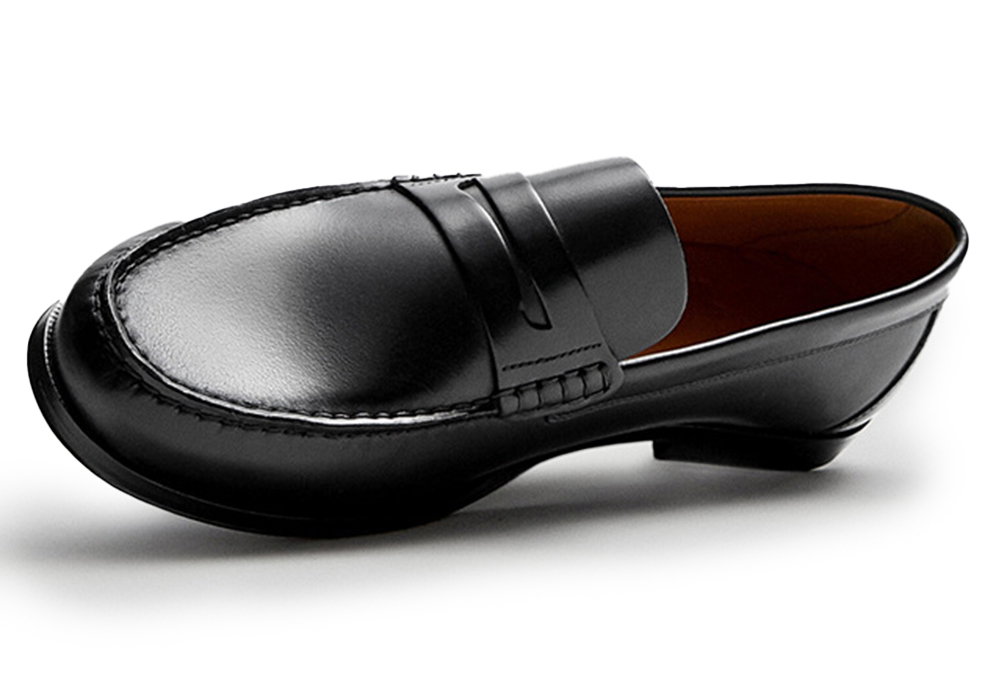
Slip-on construction, no lacing. Loafers have grown significantly in the smart-casual and resort wear segments. Penny loafers and tassel loafers are the two most requested variants in B2B custom orders.
Monk Strap
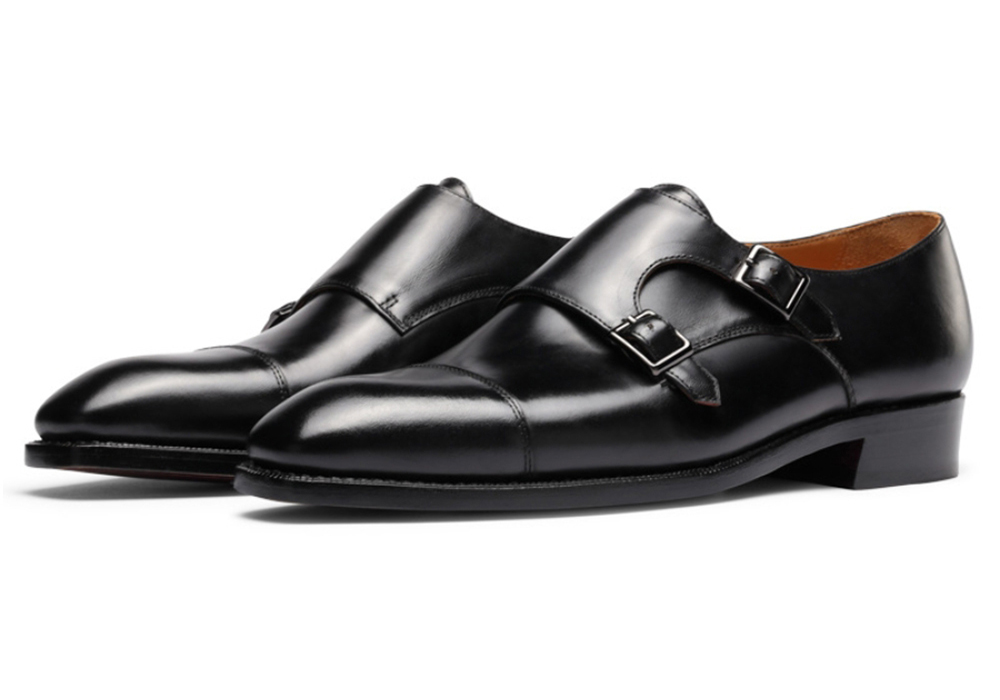
Single or double monk strap closures. This style commands a premium retail price and attracts fashion-forward buyers. It’s a strong differentiator for brands that want to stand out from commodity Oxford/Derby offerings.
See the full monk strap shoes style guide for B2B sourcing specifics.
Chelsea Boots
Elastic-sided ankle boots. Strong in autumn/winter collections and increasingly popular in year-round catalogs for markets with cooler climates. Custom Chelsea boots in suede or pull-up leather are particularly high-converting for DTC brands.
Materials and Construction Methods
Leather Options
| Leather Type | Cost Level | Durability | Best For |
|---|---|---|---|
| Full-grain cowhide | High | Excellent | Premium retail, corporate |
| Top-grain cowhide | Medium | Very good | Mid-market brands |
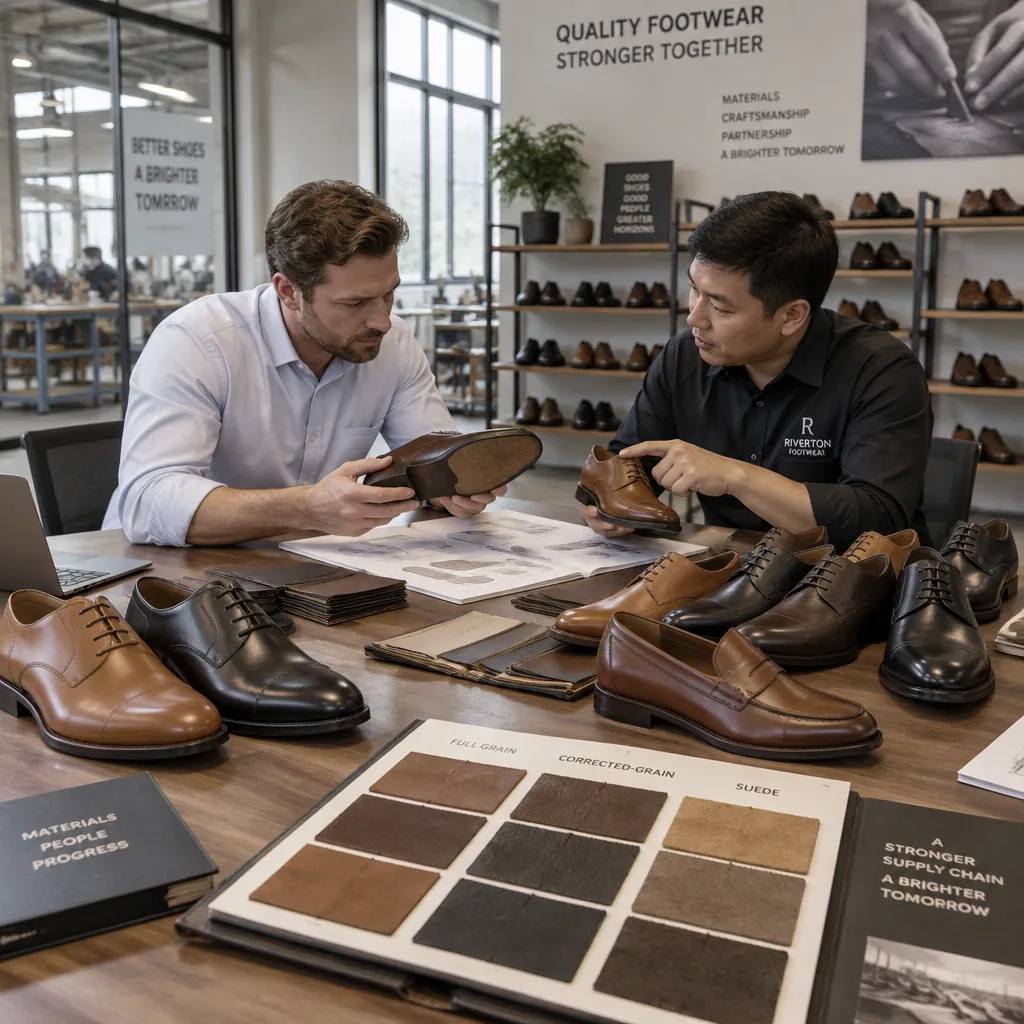
| Corrected-grain | Low-medium | Good | Entry-level price points |
| Suede | Medium | Moderate | Fashion, casual positioning |
| PU/synthetic | Low | Variable | Vegan lines, budget tiers |
For most B2B buyers targeting the $80+ retail price point, full-grain or top-grain cowhide is the right call. It photographs well, ages well, and holds up to customer scrutiny.
For a deeper technical breakdown, see vegetable tanned vs chrome tanned leather.
Construction Methods
Goodyear Welt is the gold standard for dress shoes — a strip of leather stitches the upper to the insole, allowing resoling. It adds cost but justifies a higher retail price and is a strong marketing point for premium brands.
Blake Stitch is lighter and more flexible, with a single stitch through the insole. Lower cost, faster production, and common in Italian-style dress shoes. Not resole-friendly but perfectly adequate for most retail applications.
Cemented (Glued) construction is the most common at lower price points. Fine for fashion-forward styles where longevity is secondary to aesthetics.
The complete shoe construction comparison covers these methods in full technical detail.
Pricing, MOQs, and Lead Times
What Does Custom Actually Cost?
Factory-direct pricing for genuine leather custom dress shoes typically runs $25–40/pair depending on:
- Construction method (cemented < Blake < Goodyear welt)
- Leather grade (corrected-grain < top-grain < full-grain)
- Customization complexity (standard colorway vs. bespoke last)
- Order volume
This is the ex-factory price before freight, duties, and your retail markup. For US importers, factor in applicable tariffs — see our importing leather shoes USA tariff guide for current rates.
MOQ Structure
| Order Type | MOQ |
|---|---|
| Existing designs (stock) | 0 pairs |
| Custom colorway on existing last | 60 pairs |
| Fully custom design (new last) | 60 pairs minimum, higher tooling cost |
Zero MOQ on existing designs is a significant advantage for new brands testing the market before committing to a full custom run.
Lead Times
- Stock designs: 7–15 days
- Custom colorway/branding: 30–45 days
- New last development: 60–90 days
Always build 2 weeks of buffer into your timeline for shipping and customs clearance.
Certifications and Compliance
If you’re selling into the EU, compliance is non-negotiable. The key certifications for men’s leather dress shoes are:
CE (EN ISO 20347): Required for occupational footwear sold in the EU. Covers slip resistance, toe protection, and other safety parameters.
REACH: EU chemical regulation. Ensures no restricted substances (chromium VI, azo dyes, etc.) are present in the leather or adhesives.
RoHS: Relevant for any electronic components (e.g., light-up soles) but increasingly requested by large retail buyers as a general compliance signal.
For a full breakdown of what CE marking requires for footwear, the EU REACH regulation official page is the authoritative reference.
Buyers sourcing for non-EU markets should still request REACH-compliant materials — major retail chains in the US, Australia, and Japan increasingly require it as a baseline.
Custom Dress Shoes: Quality Control Checklist
Use this checklist before approving any production run of custom dress shoes:
Pre-Production
- [ ] Confirm leather grade matches approved sample
- [ ] Verify last dimensions against your size run spec sheet
- [ ] Approve all hardware (buckles, eyelets) for finish and weight
- [ ] Confirm lining material and insole padding spec
During Production (In-Line Inspection)
- [ ] Stitching density: minimum 8 stitches per inch on welt
- [ ] Lasting tension consistent across left/right pairs
- [ ] Adhesive coverage on cemented constructions (no gaps at toe or heel)
- [ ] Color consistency across the batch (check under daylight and artificial light)
Pre-Shipment Inspection
- [ ] AQL 2.5 sampling on finished pairs
- [ ] Check for lasting wrinkles, uneven heel heights, sole delamination
- [ ] Verify branding placement (logo, insole print, box labeling)
- [ ] Confirm size run accuracy — pull 3 pairs per size for measurement
A defect rate below 1.5% is achievable with proper in-line controls. The industry average sits at 2–4%; well-run factories consistently deliver below that threshold.
How to Choose the Right Manufacturer
Red Flags to Watch
- No factory audit available or third-party inspection refused
- Pricing below $18/pair for “genuine leather” Goodyear welt — physically impossible
- No certifications or unwillingness to provide test reports
- MOQ demands of 500+ pairs before showing samples
Green Flags
- Transparent pricing with itemized cost breakdown
- Willingness to do small custom runs (60 pairs) before scaling
- In-house QC team with documented defect rate data
- CE, REACH, and RoHS certifications on file
- Export history to 40+ countries with verifiable references
Questions to Ask Before Signing
- What is your standard lead time for a 60-pair custom run?
- Can I visit the factory or arrange a third-party audit?
- What leather tanneries do you source from?
- What is your defect rate and how is it measured?
- Do you hold current CE and REACH certification documents?
FAQ
Q: What is the minimum order quantity for custom dress shoes from a Chinese manufacturer?
A: It varies by factory. For custom colorways or private label branding on existing designs, 60 pairs is a realistic and common MOQ. Some factories offer zero MOQ on stock designs, which lets you test styles before committing to a full custom run. Be cautious of factories demanding 500+ pairs upfront with no sample flexibility.
Q: How long does it take to produce custom dress shoes?
A: For custom orders using an existing last with your branding, expect 30–45 days production time. New last development (fully bespoke design) adds 30–60 days to that timeline. Always add 2 weeks for freight and customs clearance when planning your launch date.
Q: What certifications should I require from a dress shoe manufacturer?
A: For EU markets, CE marking (EN ISO 20347) and REACH compliance are mandatory. RoHS is increasingly requested by large retail buyers globally. Always ask for actual test reports, not just a certificate — test reports show the specific parameters tested and the results.
Q: What is the difference between OEM and ODM for custom dress shoes?
A: OEM (Original Equipment Manufacturer) means you provide the design and the factory produces it. ODM (Original Design Manufacturer) means the factory provides existing designs that you can brand as your own. Most B2B buyers start with ODM to reduce development cost and risk, then move to OEM as their volume grows.
Q: What price should I expect to pay for factory-direct custom dress shoes?
A: Genuine leather custom dress shoes from a reputable Chinese manufacturer typically run $25–40/pair at factory-direct pricing. The range depends on construction method, leather grade, and order volume. Prices below $20/pair for claimed full-grain leather with Goodyear welt construction should be treated as a red flag.
Ready to Start Your Shoe Line?
Wincheer Shoes has been manufacturing men’s leather footwear since 2007, shipping to 50+ countries with 200+ active brand partners. Whether you need 60 pairs to test a custom design or a full-scale production run, the team is ready to walk you through the process.
Browse the full catalog: wincheershoes.com/all-products/
Email: peterwang@shwincheer.com
Website: wincheershoes.com
Send your design brief, target retail price, and required certifications — and get a factory-direct quote within 24 hours.