
When evaluating shoe sampling fees, several critical factors determine quality and reliability. Wincheer has helped thousands of buyers navigate these costs since 2007. Shoe sampling fees from Chinese manufacturers typically range from $80-300 per style, but understanding the cost structure and negotiation leverage points can reduce these expenses by 40-60%. The key lies in recognizing that sampling fees serve multiple purposes: they filter serious buyers, cover material and labor costs, and establish the foundation for your manufacturing relationship.
Most brands approach sampling with the wrong mindset, viewing fees as pure costs rather than strategic investments. Smart buyers understand that sampling fees are negotiable based on order volume commitments, relationship depth, and timing within the manufacturer’s production cycle.
Understanding Shoe Sampling Fee Structures
Base Cost Components
Chinese shoe manufacturers structure sampling fees around four core elements: materials, labor, tooling, and overhead allocation. Material costs typically account for 30-40% of the total fee, covering leather, hardware, adhesives, and packaging. Labor represents another 25-35%, encompassing pattern making, cutting, lasting, and finishing work.
Tooling costs vary dramatically based on construction complexity. A basic cemented oxford might require minimal tooling investment, while a Goodyear welted boot demands specialized equipment and setup time. Overhead allocation covers factory utilities, equipment depreciation, and administrative processing.
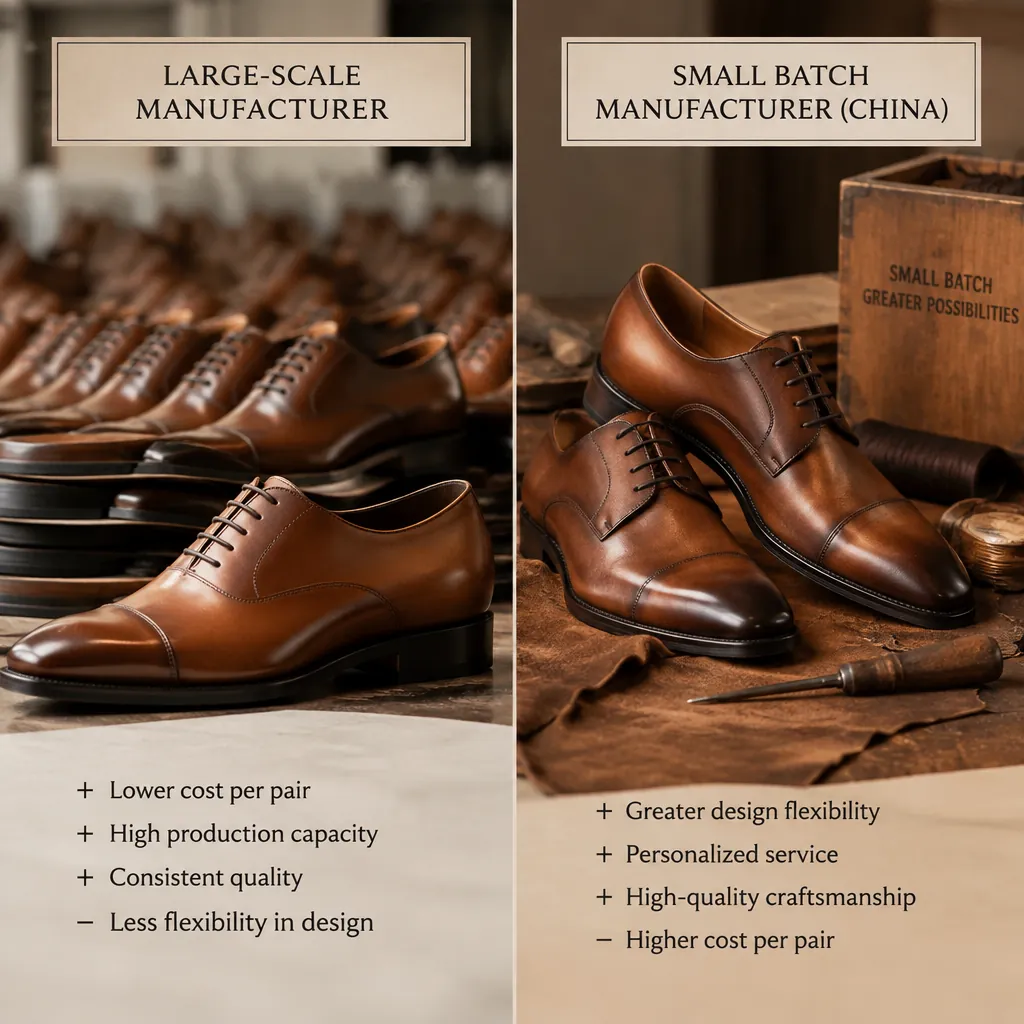
An experienced manufacturer established in 2007 with a refined sampling process achieves a 0.8-1.2% defect rate across 1000+ designs, offering competitive sampling fees of $25-40/pair for existing catalog items while maintaining zero MOQ requirements. This efficiency comes from producing 500,000+ pairs annually with established relationships across 200+ partners in 50+ countries.
Regional Pricing Variations
Sampling costs fluctuate significantly across China’s manufacturing regions. Guangdong Province factories, particularly around Guangzhou and Dongguan, typically charge 15-25% more than facilities in Fujian or Zhejiang provinces. However, this premium often translates to faster turnaround times and higher sample quality.
Shanghai-based manufacturers command the highest sampling fees due to elevated operational costs, but they frequently offer superior design capabilities and international standard compliance. Factories in secondary cities like Wenzhou or Jinjiang provide cost-effective alternatives while maintaining reasonable quality standards.
Construction Method Impact
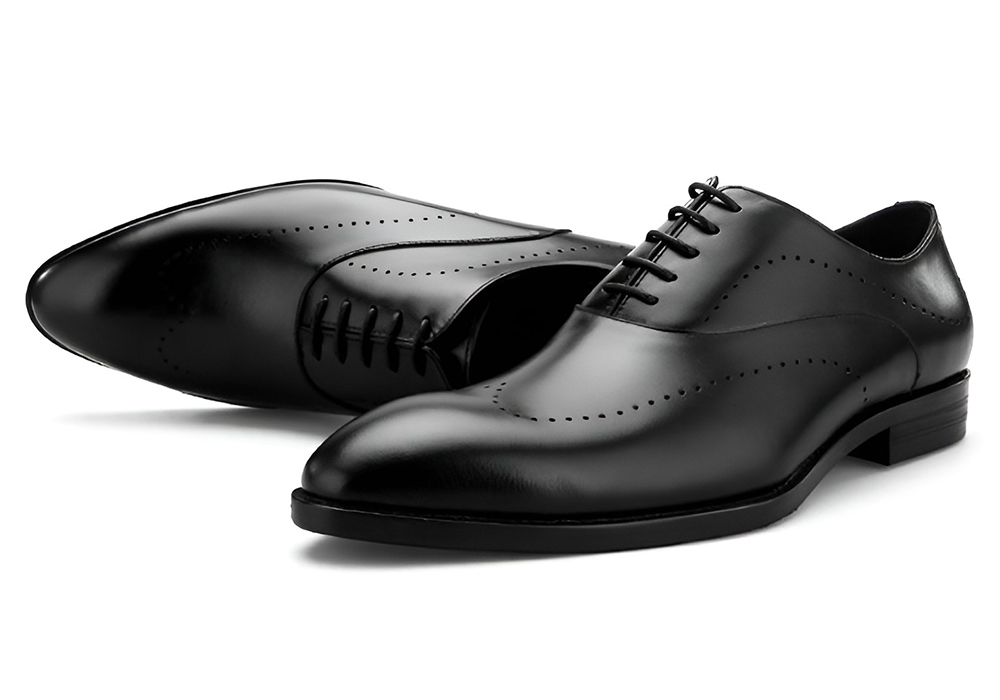
Different shoe construction methods dramatically affect sampling costs. Cemented construction samples cost 40-50% less than Blake stitched alternatives, while Goodyear welted prototypes command premium pricing due to specialized machinery requirements.
Athletic and casual footwear samples generally cost less than dress shoes due to simplified construction and readily available materials. Exotic leather samples or complex multi-material designs can increase costs by 100-200% over standard offerings.
Negotiation Strategies That Actually Work
Volume-Based Leverage Points
The most effective negotiation approach centers on demonstrating serious purchase intent through volume commitments. Manufacturers respond favorably to buyers who present realistic order projections backed by market research or existing sales data.
Rather than making vague promises about “large orders,” provide specific quarterly projections with seasonal breakdowns. A commitment to 2,000 pairs quarterly across 4-6 styles carries more weight than promises of 10,000 annual pairs without supporting details.
Timing Your Negotiations
Chinese manufacturers experience predictable seasonal cycles that create negotiation opportunities. January through March represents their slowest period, when factories actively seek new partnerships and show greater flexibility on sampling terms.
Avoid requesting samples during peak production months (August-November) when factories prioritize existing high-volume clients. Mid-year periods (April-July) offer moderate negotiation potential as manufacturers plan for peak season capacity.
Relationship Development Tactics
Building genuine relationships with Chinese manufacturers requires understanding their business pressures and constraints. Factory owners appreciate buyers who demonstrate cultural awareness and long-term thinking rather than purely transactional approaches.
Consider visiting facilities in person when possible, as face-to-face meetings significantly strengthen negotiation positions. Virtual factory tours and regular video calls provide alternatives when travel isn’t feasible.
Sample Fee Comparison Analysis
| Manufacturer Type | Basic Oxford | Athletic Shoe | Dress Boot | Exotic Leather | Turnaround Time |
|---|---|---|---|---|---|
| Tier 1 (Shanghai/Guangzhou) | $150-250 | $120-200 | $200-350 | $300-500 | 7-10 days |
| Tier 2 (Wenzhou/Jinjiang) | $100-180 | $80-150 | $150-250 | $250-400 | 10-14 days |
| Tier 3 (Secondary cities) | $80-120 | $60-100 | $120-180 | $200-300 | 14-21 days |
| Volume Producers (500K+ annually) | $60-100 | $50-80 | $100-150 | $180-250 | 7-12 days |
Cost Reduction Framework
Pre-Negotiation Preparation Checklist
Before engaging manufacturers about sampling fees, complete this preparation framework:
Market Research Phase:
- Research 8-12 potential manufacturers across different regions
- Collect baseline pricing from at least 5 factories
- Document construction requirements and material specifications
- Prepare realistic order volume projections with supporting data
Relationship Building Phase:
- Identify decision makers beyond sales representatives
- Understand each factory’s specialization and capacity constraints
- Research their existing client base and product focus areas
- Prepare questions about their sampling process and timeline
Negotiation Strategy Phase:
- Define maximum acceptable sampling investment per style
- Establish volume commitment parameters you can realistically meet
- Prepare alternative negotiation points (payment terms, exclusivity, etc.)
- Document quality requirements and approval criteria
Advanced Negotiation Techniques
Successful sample fee negotiations often involve creative structuring rather than simple price reductions. Consider proposing sampling fee credits against future orders, where 50-100% of sampling costs apply toward your first production run.
Another effective approach involves requesting sampling fee waivers for additional colorways or minor modifications once the base style receives approval. This strategy works particularly well when ordering multiple variations of successful designs.
https://en.wikipedia.org/wiki/Footwear_manufacturing – SATRA Footwear Technology
Alternative Fee Structures
Progressive manufacturers increasingly offer flexible sampling arrangements. Some factories provide “sampling packages” where fees decrease per style when ordering multiple samples simultaneously. Others offer seasonal sampling subscriptions for regular clients.
Consider negotiating performance-based sampling terms where fees adjust based on your order conversion rates. Manufacturers appreciate buyers who consistently convert samples into production orders and often reward this reliability with preferential pricing. For industry benchmarks, see World Footwear.
Quality Assurance in Sampling
Sample Evaluation Criteria
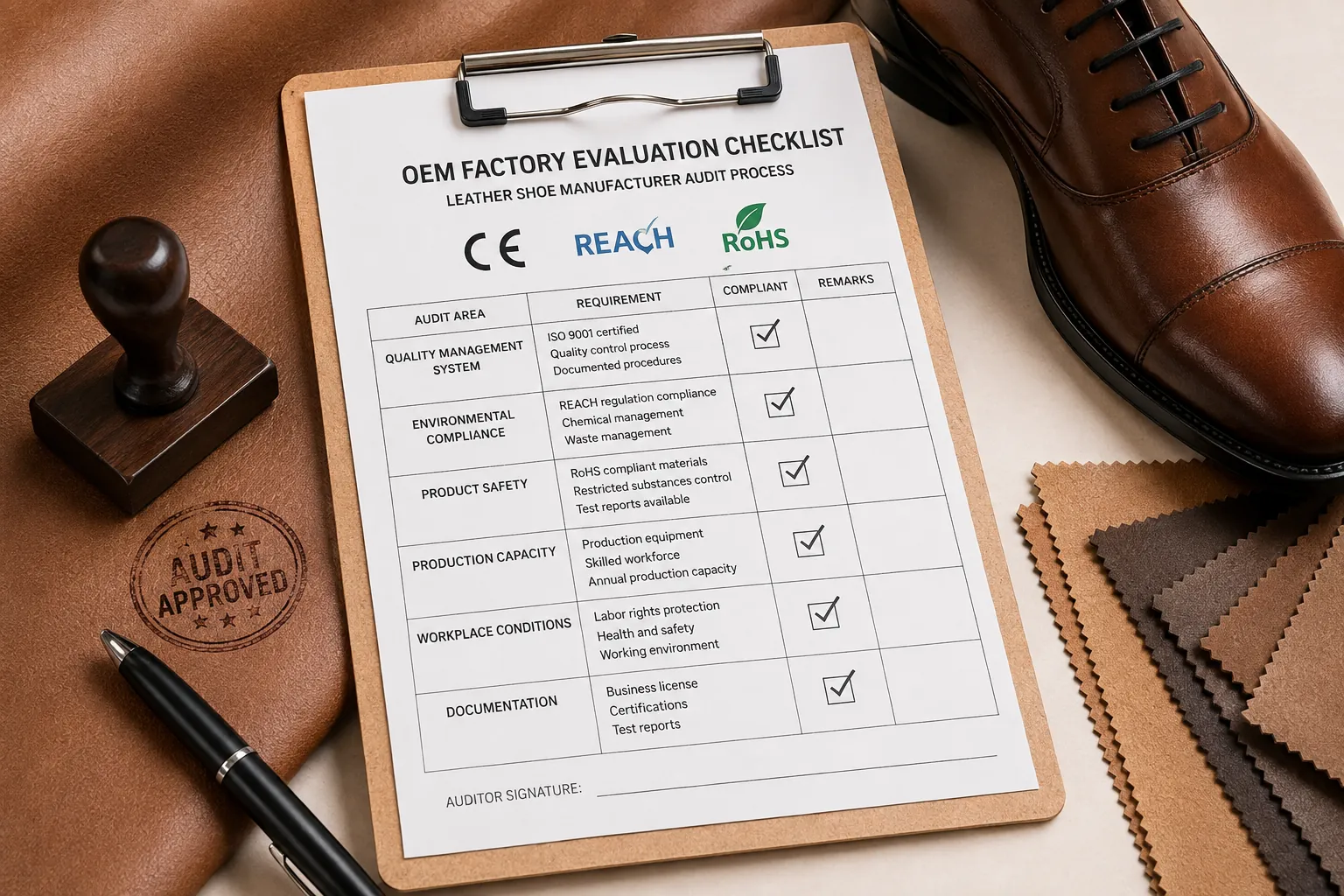
Effective sample evaluation requires systematic assessment across multiple dimensions. Construction quality indicators include stitch consistency, lasting precision, sole attachment integrity, and finishing details. Material evaluation encompasses leather grain consistency, color matching accuracy, and hardware durability.
Fit assessment demands multiple size samples when possible, as Chinese lasts often differ from Western sizing standards. Request detailed measurement charts and consider ordering samples in 2-3 consecutive sizes for comprehensive fit evaluation.
Communication Protocols
Establish clear communication protocols before sampling begins. Define revision procedures, approval timelines, and quality standards in writing. Many sampling disputes arise from misaligned expectations rather than actual quality issues.
Document all sample feedback with photos and specific improvement requests. Chinese manufacturers respond better to visual feedback than lengthy written descriptions, particularly for aesthetic concerns.
Long-term Sampling Strategy
Building Manufacturer Partnerships
The most successful brands view sampling as relationship investment rather than pure cost centers. Manufacturers remember buyers who provide constructive feedback, meet payment commitments, and convert samples into meaningful orders.
Consider establishing preferred manufacturer relationships where you commit to sampling quotas in exchange for reduced fees and priority service. This approach works particularly well for brands with consistent seasonal sampling needs.
Seasonal Planning Considerations
Plan sampling activities around Chinese manufacturing calendars and your own product development cycles. Chinese New Year (January/February) creates 3-4 week production gaps that affect sampling schedules.
Summer sampling for spring collections allows optimal timing for manufacturer capacity and your development needs. Avoid last-minute sampling requests during peak production periods when quality and attention suffer.
FAQ
Q: What’s the typical timeline for shoe sampling from Chinese manufacturers?
A: Standard sampling timelines range from 7-21 days depending on manufacturer tier and construction complexity. Tier 1 factories in Shanghai or Guangzhou typically deliver samples within 7-10 days for basic constructions, while secondary city manufacturers require 14-21 days. Complex constructions like Goodyear welted boots or exotic leather styles add 3-5 days regardless of location. Rush orders are possible with 50-100% fee premiums, but quality may suffer. Plan for potential delays during Chinese New Year (January-February) and National Day holidays (October) when production stops completely.
Q: How can I negotiate lower sampling fees without compromising quality?
A: The most effective approach combines volume commitments with relationship building rather than direct price negotiation. Present realistic quarterly order projections (2,000+ pairs) with supporting market data to demonstrate serious intent. Time negotiations during slow periods (January-March) when factories seek new partnerships. Consider alternative structures like sampling fee credits against future orders or package deals for multiple styles. Building genuine relationships through factory visits or regular communication often yields better results than purely transactional approaches. Avoid negotiating during peak seasons when manufacturers prioritize existing high-volume clients.
Q: Should I pay sampling fees upfront or negotiate payment terms?
A: Payment timing significantly impacts your negotiation position and manufacturer relationships. Most Chinese factories require 100% upfront payment for first-time clients due to risk management policies. However, established relationships often allow 50% upfront with balance on sample approval. Never request sampling without payment commitment, as this immediately identifies you as an unserious buyer. Consider offering faster payment (wire transfer vs. PayPal) in exchange for fee reductions. Some manufacturers offer slight discounts for full upfront payment, typically 5-10% savings.
Q: What happens to sampling fees if I don’t proceed with production orders?
A: Sampling fees are generally non-refundable regardless of your production decisions, as they cover actual material and labor costs incurred. However, some manufacturers offer partial credits (20-30%) toward future sampling if you maintain the relationship and order different styles within 6-12 months. The key is managing expectations upfront and maintaining professional relationships even when samples don’t meet your needs. Providing detailed feedback about why samples weren’t suitable helps manufacturers improve and often results in preferential treatment for future sampling requests.
Q: How do sampling fees differ between existing designs and custom development?
A: Existing design samples typically cost 40-60% less than custom development due to established patterns and processes. Manufacturers like Wincheer Shoes offer zero MOQ on existing designs with sampling fees as low as $25-40/pair, while custom development requires minimum 60-pair commitments with higher sampling costs. Custom samples involve pattern creation, last modification, and multiple revision cycles that increase time and cost investment. However, custom development provides exclusivity and better market differentiation. Consider starting with existing designs to build relationships before requesting custom development work.
Ready to Start Your Shoe Line?
Navigating shoe sampling fees with Chinese manufacturers requires strategic thinking, cultural awareness, and professional relationship building. The investment in quality samples pays dividends through reduced production risks, better manufacturer relationships, and ultimately more successful product launches. For deeper insights, see our Shoe Manufacturer Guide and Leather Footwear Quality Standards.
Ready to begin your sampling journey with a trusted manufacturing partner? Contact Peter Wang at peterwang@shwincheer.com to discuss your specific sampling needs. With our extensive catalog of 1000+ designs and flexible sampling terms, we can help you find the perfect balance of quality, cost, and timeline for your footwear brand.