
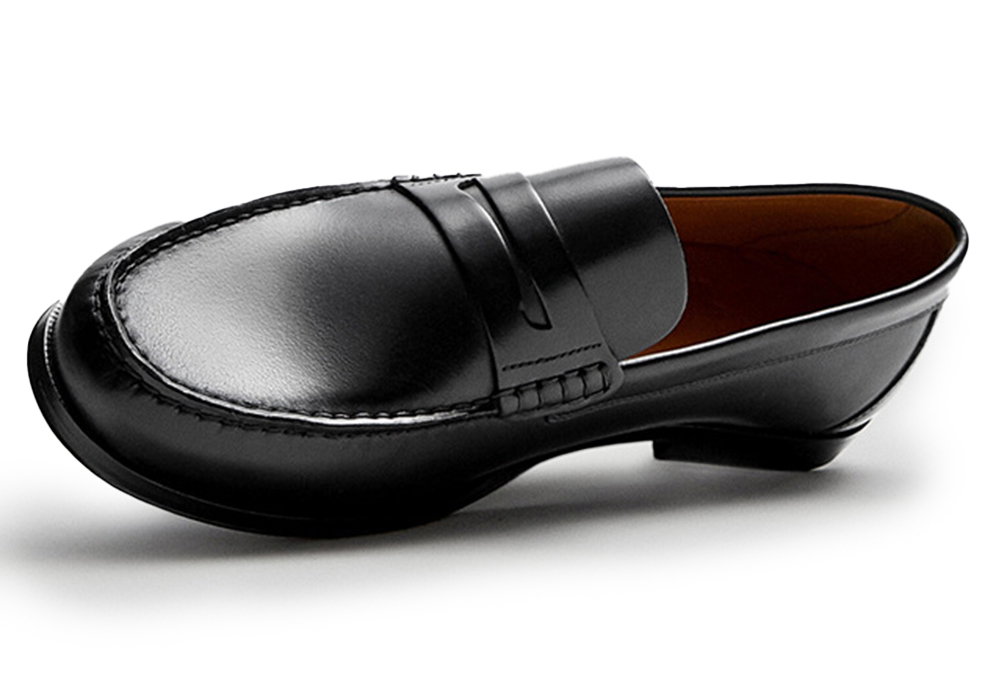
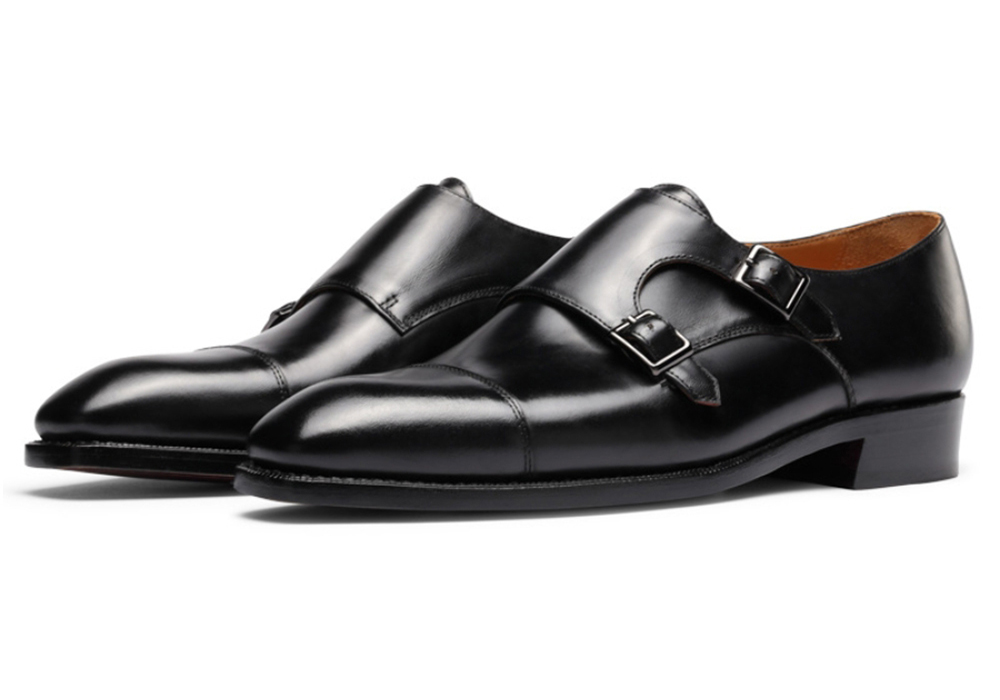
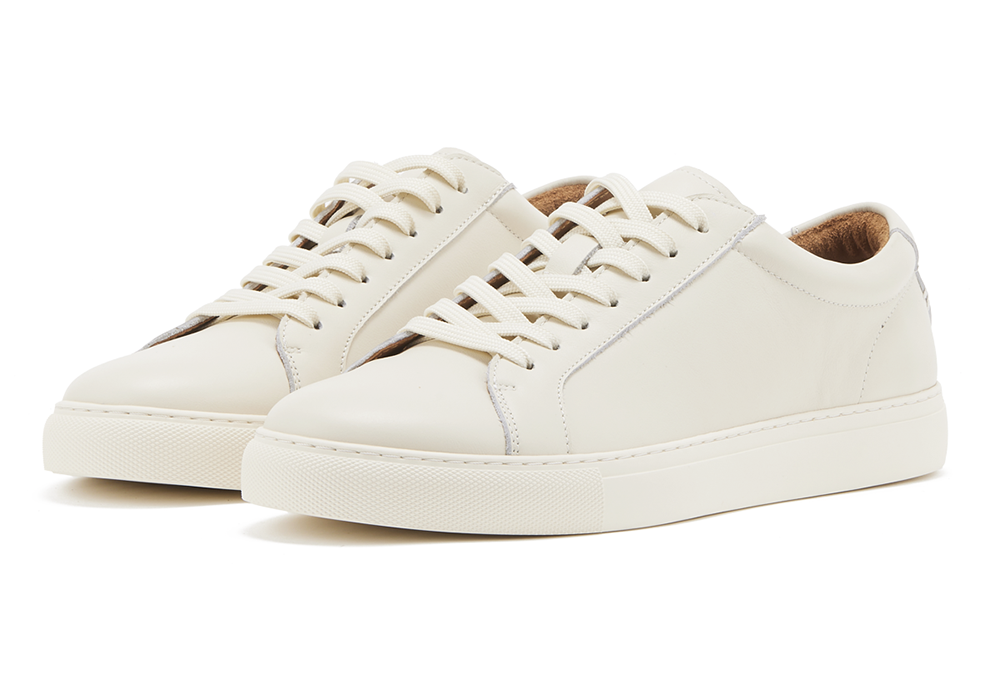
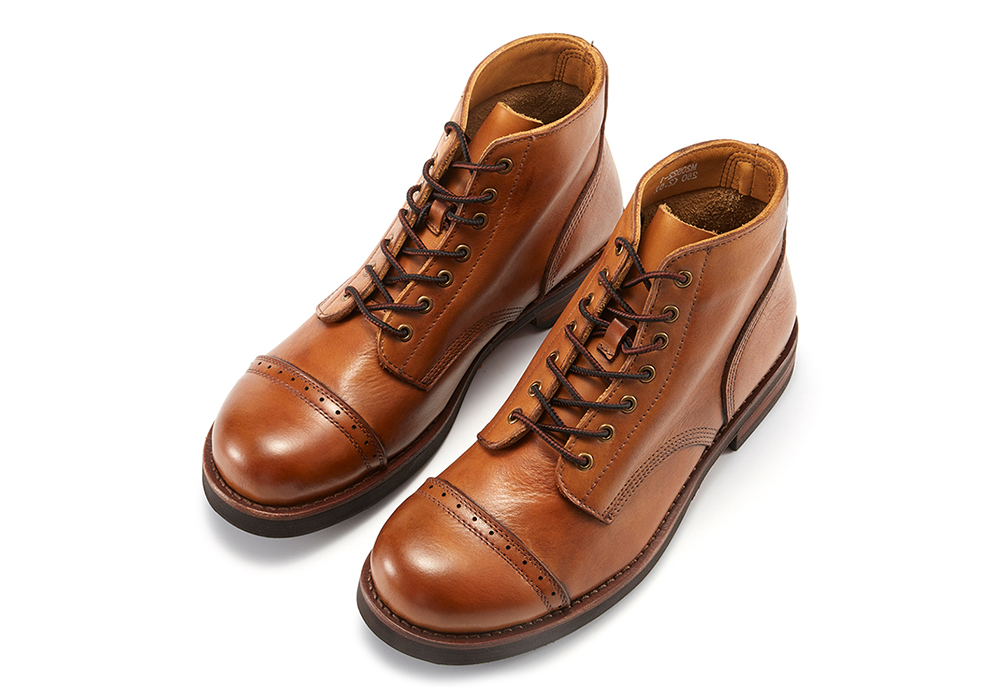
Custom dress shoes represent the pinnacle of personalized footwear, offering perfect fit, premium materials, and unique design elements tailored to your exact specifications. Unlike off-the-shelf options, custom dress shoes are crafted specifically for your feet, ensuring optimal comfort and style that reflects your personal taste and professional requirements.
The bespoke footwear market has evolved significantly, with manufacturers now offering sophisticated customization options that were once exclusive to traditional cobblers. Modern custom shoe production combines traditional craftsmanship with advanced manufacturing techniques to deliver exceptional quality at competitive prices.
With experience since 2007 in men’s leather shoe manufacturing, Wincheer has overseen the production of custom dress shoes for hundreds of clients worldwide. At Wincheer Shoes, established in 2007,, we produce 500,000+ pairs annually with a defect rate of just 0.8-1.2%, and our custom program allows clients to create unique designs with a minimum order of just 60 pairs, making bespoke footwear accessible to both individual customers and brands.
Table of Contents
- Understanding Custom Dress Shoes vs Ready-Made Options
- The Custom Shoe Manufacturing Process
- Essential Measurements and Fitting Requirements
- Material Selection for Custom Dress Shoes
- Design Customization Options and Style Choices
- Quality Control and Production Timeline
- Pricing Structure and Order Management
Understanding Custom Dress Shoes vs Ready-Made Options
Custom dress shoes differ fundamentally from mass-produced footwear in construction, materials, and fit precision. The primary advantage lies in the personalized last creation, where your foot measurements determine the shoe’s internal shape rather than conforming to standard sizing.
Ready-made shoes follow standardized lasts that accommodate average foot dimensions. This approach works for many consumers but often results in pressure points, inadequate arch support, or loose areas that compromise comfort and appearance.
Key Differences in Construction
Bespoke footwear construction typically employs Goodyear welted or Blake stitched methods, ensuring durability and repairability. The upper leather is carefully selected and cut to minimize waste while maximizing strength in high-stress areas.
Custom shoes also feature personalized heel heights, toe box dimensions, and arch support levels. These modifications address individual gait patterns and foot anatomy, resulting in superior comfort during extended wear periods.
Manufacturing Flexibility
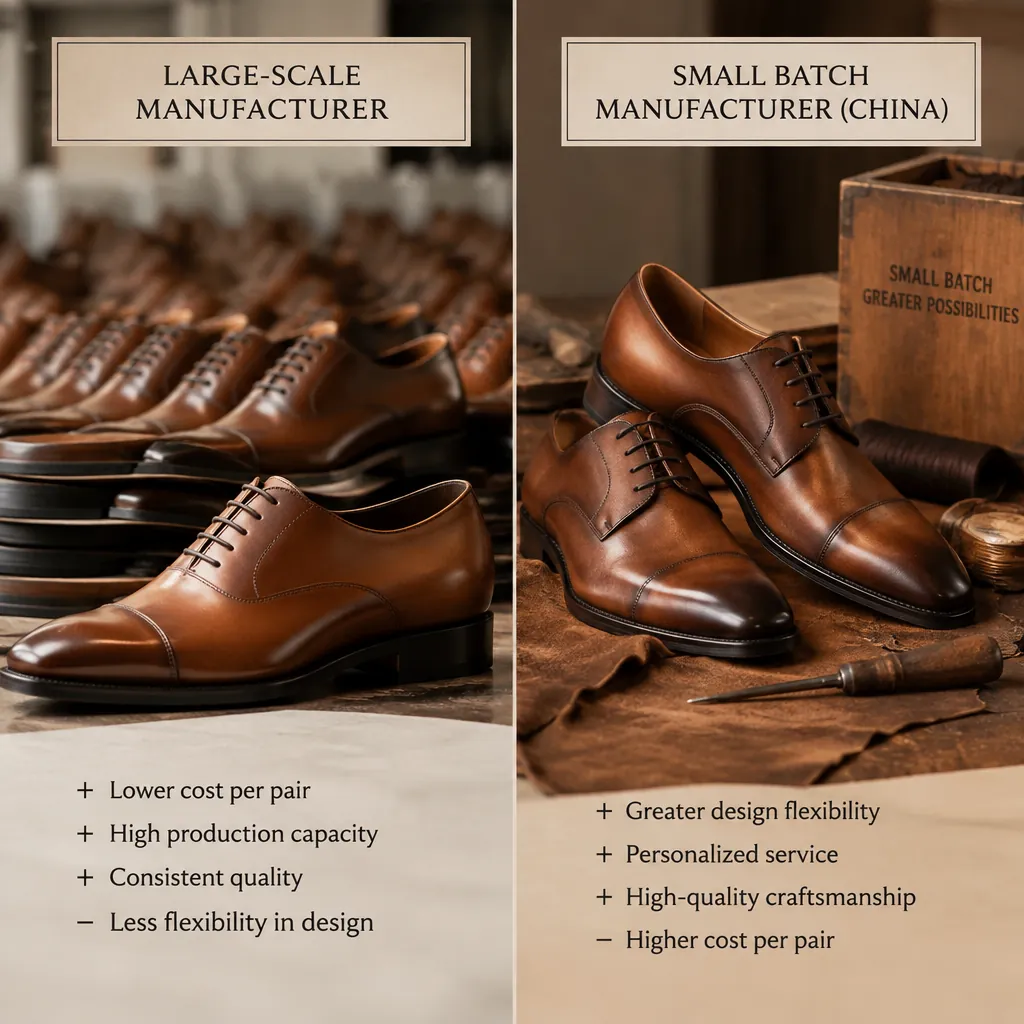
Modern custom shoe manufacturers offer various service levels, from made-to-measure options using existing lasts with minor modifications to fully bespoke shoes requiring new last creation. This flexibility allows customers to balance customization needs with budget constraints.
The complete shoe construction comparison reveals how different manufacturing methods impact durability, comfort, and customization possibilities.
The Custom Shoe Manufacturing Process
The custom dress shoes manufacturing process involves seven distinct phases, each requiring specific expertise and quality control measures. Understanding this workflow helps customers set realistic expectations and make informed decisions about customization options.
Phase 1: Initial Consultation and Design Brief
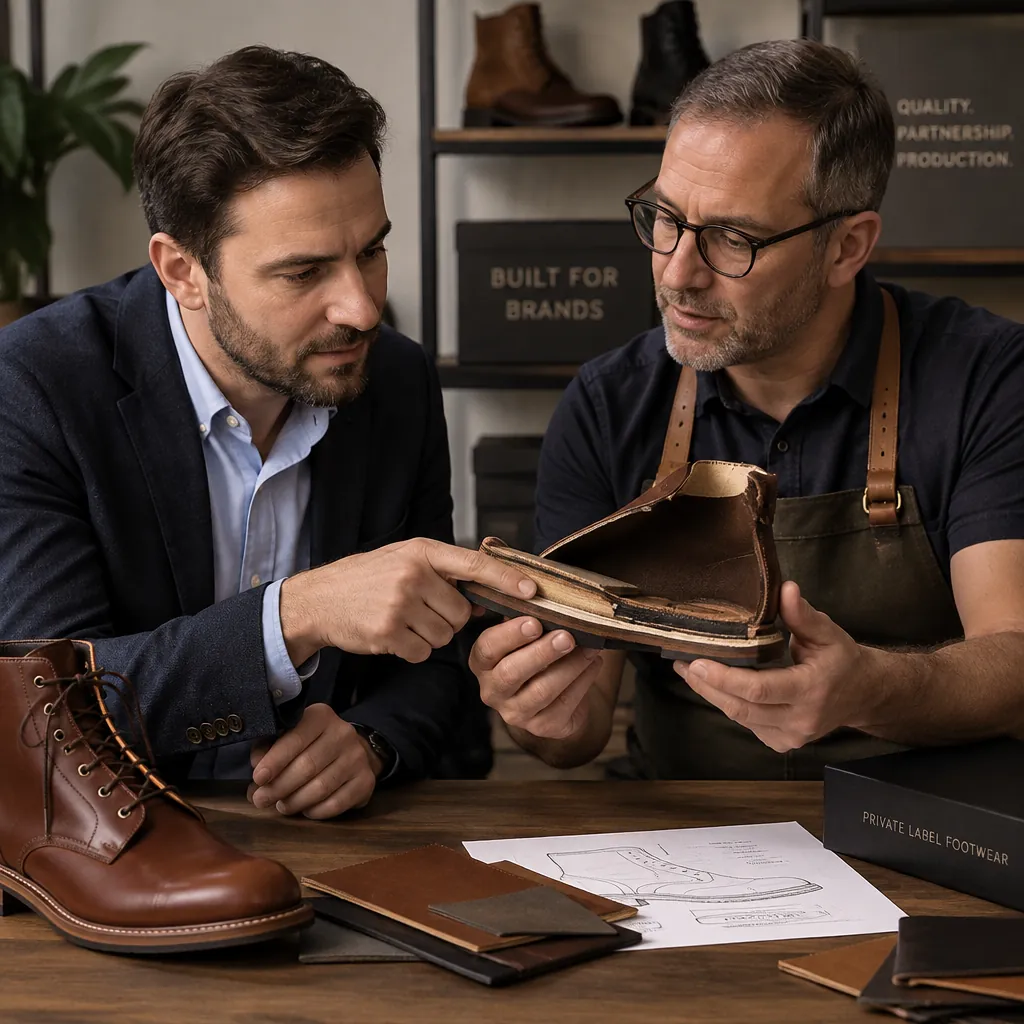
The process begins with detailed discussions about intended use, style preferences, and specific requirements. Professional manufacturers conduct thorough interviews to understand lifestyle factors, existing shoe problems, and aesthetic goals.
During this phase, customers review material samples, construction options, and design possibilities. Experienced manufacturers provide guidance on practical considerations like leather durability, sole selection, and maintenance requirements.
Phase 2: Foot Measurement and Last Creation
Precise foot measurement involves multiple techniques beyond simple length and width measurements. Professional fitters assess arch height, instep dimensions, heel width, and toe angles using specialized tools and techniques.
For fully bespoke shoes, these measurements inform last creation or modification. The last serves as the foundation for shoe construction, determining fit quality and comfort levels throughout the shoe’s lifespan.
Manufacturing Timeline Comparison
| Process Stage | Ready-Made | Made-to-Measure | Fully Bespoke |
|---|---|---|---|
| Design Phase | N/A | 1-2 weeks | 2-4 weeks |
| Last Creation | N/A | Modification only | 3-6 weeks |
| Upper Construction | 1 day | 2-3 weeks | 4-6 weeks |
| Sole Attachment | 1 day | 1-2 weeks | 2-3 weeks |
| Finishing | 1 day | 1 week | 2-3 weeks |
| Total Timeline | Immediate | 5-8 weeks | 13-22 weeks |
Phase 3: Pattern Creation and Cutting
Custom patterns are developed based on the last and design specifications. Skilled pattern makers account for leather stretch characteristics, stitching allowances, and assembly requirements when creating these templates.
Upper cutting requires expertise in leather grain direction, defect avoidance, and efficient material utilization. Premium custom shoes often feature matched leather panels with consistent grain patterns and color tones.
Essential Measurements and Fitting Requirements
Accurate measurements form the foundation of successful custom dress shoes. Professional fitting involves multiple measurement points and considers dynamic factors like foot swelling, gait patterns, and intended sock thickness.
Critical Measurement Points
Foot length measurement extends from heel to longest toe, typically taken while standing with full weight distribution. Width measurements are recorded at the ball of the foot, where maximum circumference occurs during walking.
Arch measurements include both height and length dimensions, determining the shoe’s internal support structure. Instep height affects upper leather tension and closure system positioning, particularly important for laced shoes.
Heel measurements encompass both width and shape characteristics. Some feet feature narrow heels with wide forefeet, requiring specialized last modifications to prevent slipping while maintaining forefoot comfort.
Fitting Considerations Checklist
- Standing measurements: Always measure feet while standing with full body weight
- Time of day: Measure feet in afternoon when natural swelling has occurred
- Sock thickness: Consider intended sock weight during measurement process
- Both feet: Measure both feet separately as size differences are common
- Gait analysis: Observe walking patterns to identify pressure points
- Existing problems: Document current shoe fit issues and discomfort areas
- Activity level: Consider daily walking distances and standing duration
- Climate factors: Account for seasonal foot swelling in warm climates
Advanced Fitting Techniques
Professional custom shoe makers employ 3D scanning technology to capture detailed foot topography. These scans reveal subtle contours that traditional measuring methods might miss, enabling more precise last modifications.
Pressure mapping systems identify high-stress areas during walking, informing internal padding placement and sole contouring decisions. This technology particularly benefits customers with foot conditions or unusual gait patterns.
Material Selection for Custom Dress Shoes
Material selection significantly impacts custom dress shoes’ appearance, durability, and comfort characteristics. Understanding leather grades, tanning methods, and construction materials enables informed decisions that align with intended use and maintenance preferences.
Leather Grade Classifications
Premium custom shoes typically use full-grain leather, which retains the hide’s natural surface and grain pattern. This leather type develops attractive patina over time while maintaining structural integrity through years of wear.
Top-grain leather offers consistent appearance with slight surface correction, making it suitable for customers preferring uniform color and texture. Corrected-grain leathers provide durability at lower cost points but sacrifice natural aging characteristics.
The vegetable tanned vs chrome tanned leather comparison explains how tanning methods affect leather characteristics, maintenance requirements, and long-term appearance.
Sole Material Options
Leather soles provide traditional aesthetics and breathability but require careful maintenance and periodic replacement. They’re ideal for office environments and formal occasions where appearance takes priority over weather resistance.
Rubber soles offer superior traction and weather resistance, making them practical for daily wear in varied conditions. Modern rubber compounds provide excellent durability while maintaining professional appearance standards.
Construction Material Considerations
| Component | Premium Option | Standard Option | Budget Option |
|---|---|---|---|
| Upper Leather | Full-grain calfskin | Top-grain cowhide | Corrected-grain leather |
| Lining | Calfskin/Goatskin | Pigskin | Synthetic |
| Insole | Vegetable-tanned leather | Chrome-tanned leather | Synthetic board |
| Outsole | Oak bark leather | Standard leather | Rubber compound |
| Thread | Linen | Polyester | Cotton blend |
| Hardware | Brass/Stainless steel | Plated metal | Standard metal |
Specialty Leather Options
Exotic leathers like alligator, ostrich, or shell cordovan provide unique aesthetics and exceptional durability. These materials require specialized handling techniques and significantly increase production costs and timelines.
Shell cordovan, made from horse hindquarters, offers unmatched durability and develops exceptional patina. However, limited availability and complex processing make it expensive and extend delivery times considerably.
Design Customization Options and Style Choices
Custom dress shoes offer extensive design flexibility, allowing customers to create unique footwear that reflects personal style while meeting specific functional requirements. Understanding available options helps optimize the balance between aesthetics, comfort, and practicality.
Classic Style Foundations
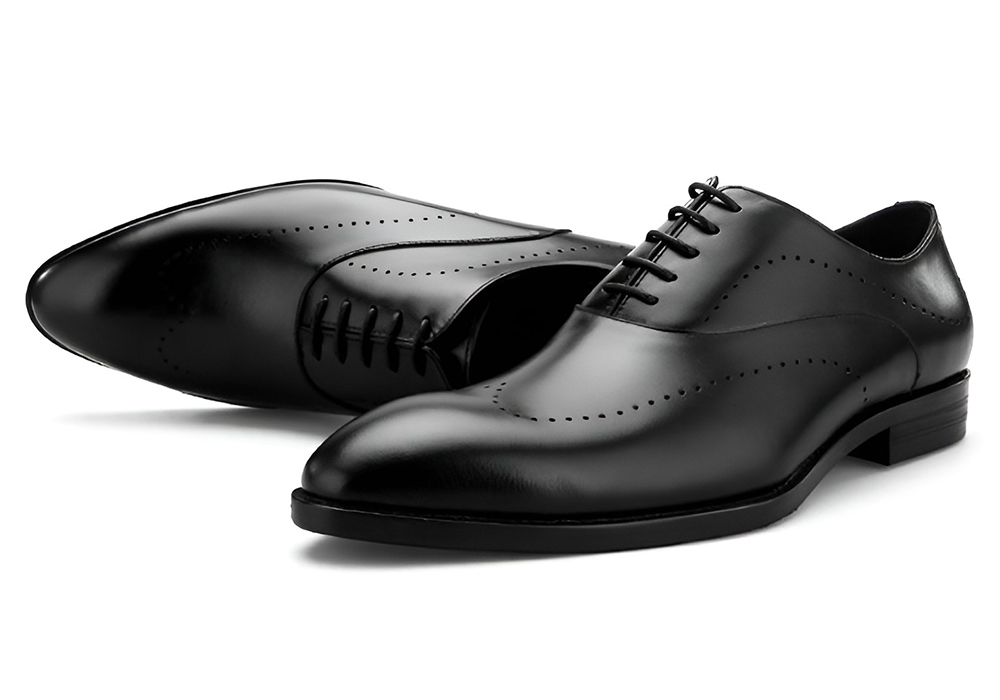
Oxford shoes provide the most formal foundation for customization, featuring closed lacing systems and sleek profiles. Variations include cap-toe, plain-toe, and wingtip designs, each offering different levels of decorative detail.
Derby shoes offer more casual versatility with open lacing systems that accommodate higher insteps. This style works well for customers requiring additional forefoot room or preferring relaxed professional aesthetics.
The complete guide to leather Oxford shoes and leather Derby shoes sourcing guide provide detailed specifications for these fundamental styles.
Customization Elements
Toe shape selection significantly impacts both appearance and comfort. Pointed toes create formal, elongated silhouettes but may compromise toe room for wider feet. Round toes offer maximum comfort while maintaining professional appearance.
Heel height and shape affect posture and walking comfort. Standard dress shoe heels range from 25-35mm, with variations in pitch and width to accommodate different foot types and gait patterns.
Advanced Design Features
Medallion patterns, broguing details, and decorative stitching add visual interest while maintaining professional appropriateness. These elements require skilled craftsmanship and increase production time but create distinctive, personalized footwear.
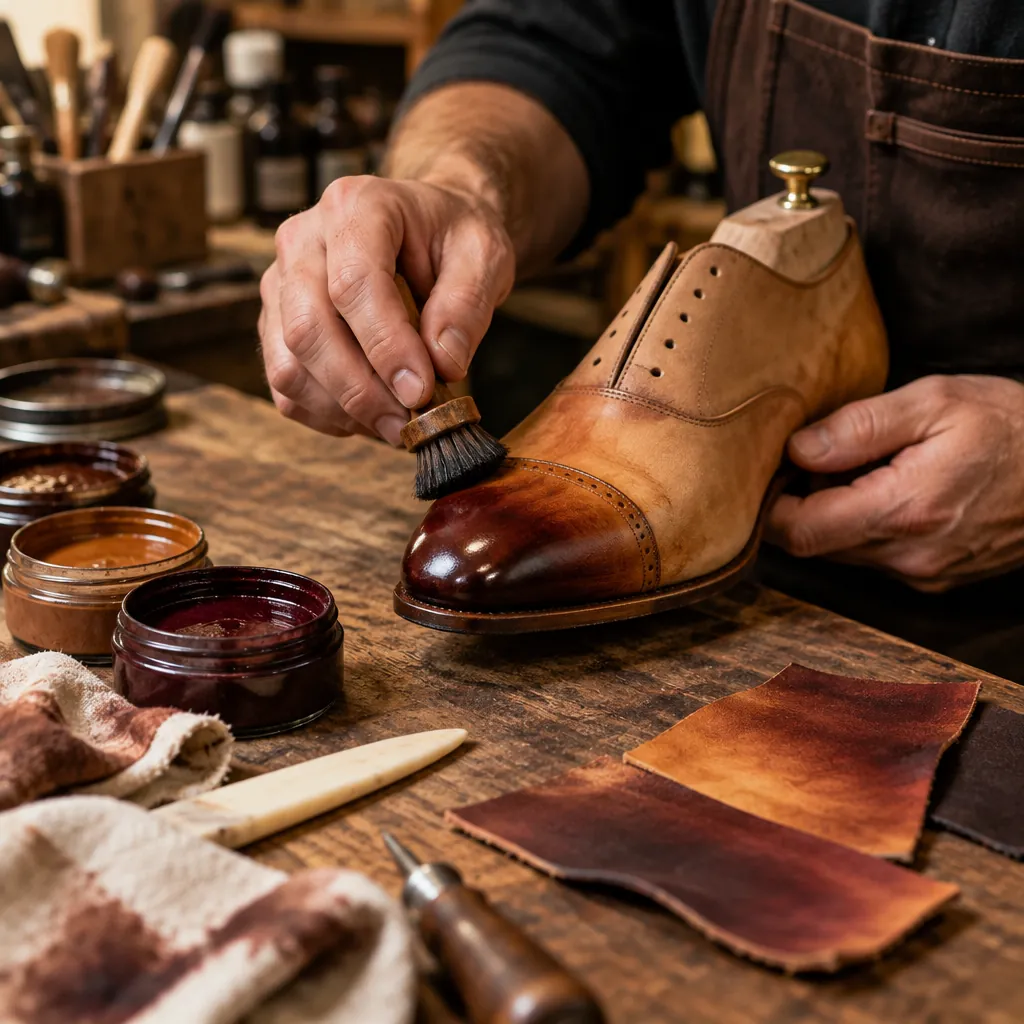
Color customization extends beyond basic brown and black options. Modern tanning techniques enable subtle color variations, two-tone combinations, and specialized finishes like antiquing or burnishing effects.
Custom Design Decision Framework
- Define primary use: Formal business, casual professional, or special occasions
- Assess foot characteristics: Width, arch height, and any fitting challenges
- Select base style: Oxford, Derby, or specialized design
- Choose leather type: Balance durability, appearance, and maintenance preferences
- Determine customization level: Essential modifications vs decorative enhancements
- Set budget parameters: Align customization choices with available investment
- Establish timeline: Ensure delivery schedule meets intended use requirements
Quality Control and Production Timeline
Quality control in custom dress shoes manufacturing requires systematic inspection at each production stage. Proper quality management ensures consistency, durability, and customer satisfaction while minimizing defects and returns.
Inspection Protocols
Material inspection begins with incoming leather assessment, checking for grain consistency, thickness uniformity, and defect identification. Only leather meeting specified standards proceeds to cutting operations.
Pattern accuracy verification ensures proper fit and appearance before cutting expensive materials. Digital templates and physical checks confirm measurements align with customer specifications and last dimensions.
Construction quality control monitors stitching tension, seam alignment, and component assembly accuracy. Each shoe undergoes multiple inspections during assembly to catch issues before they become irreversible.
Production Timeline Management
Realistic timeline communication prevents customer disappointment and allows proper production planning. Custom shoe manufacturing involves sequential processes that cannot be rushed without compromising quality.
Rush orders typically incur premium charges and may require overtime labor or expedited material sourcing. However, certain processes like leather conditioning and sole attachment require minimum time periods regardless of urgency.
Final Quality Assessment
Completed shoes undergo comprehensive inspection covering fit accuracy, construction quality, and aesthetic standards. This final check includes wear testing to identify potential comfort issues before delivery.
Professional manufacturers maintain detailed quality records for each custom order, enabling continuous improvement and customer service follow-up. These records prove valuable for repeat orders or warranty claims.
According to International Organization for Standardization guidelines for footwear quality management, systematic quality control reduces defect rates and improves customer satisfaction significantly.
Pricing Structure and Order Management
Custom dress shoes pricing reflects the complexity of personalization, material quality, and manufacturing expertise required. Understanding cost factors helps customers make informed decisions and set appropriate expectations for their investment.
Cost Components Analysis
Base shoe construction represents the largest cost component, including last creation or modification, pattern development, and skilled labor for assembly. These fixed costs remain consistent regardless of material upgrades or design complexity.
Material costs vary significantly based on leather grade, exotic options, and hardware selections. Premium materials can double or triple base pricing but provide superior durability and appearance characteristics.
Pricing Comparison Framework
| Service Level | Price Range | Timeline | Customization Scope |
|---|---|---|---|
| Made-to-Measure | $200-400 | 4-8 weeks | Size, basic options |
| Semi-Bespoke | $400-800 | 8-12 weeks | Design, materials, fit |
| Fully Bespoke | $800-2000+ | 12-20 weeks | Complete customization |
| Luxury Bespoke | $2000-5000+ | 16-24 weeks | Exotic materials, hand-work |
Order Management Best Practices
Clear communication throughout the ordering process prevents misunderstandings and ensures customer satisfaction. Professional manufacturers provide detailed order confirmations, progress updates, and delivery scheduling information.
Payment terms typically require deposits for custom orders, with balance due upon completion or delivery. This structure protects both manufacturer and customer interests while ensuring commitment to the customization process.
The payment terms for B2B leather shoe orders guide explains standard industry practices for custom footwear transactions.
Value Proposition Assessment
Custom dress shoes provide long-term value through superior fit, durability, and repairability compared to mass-produced alternatives. Proper care and maintenance can extend custom shoe lifespan to decades, making the per-wear cost competitive with premium ready-made options.
The ability to repair and resole custom shoes adds significant value, particularly for high-quality construction methods like Goodyear welting. This repairability can extend shoe life by 2-3 times compared to cemented construction alternatives.
Frequently Asked Questions
Q: How long do custom dress shoes typically last compared to ready-made shoes?
A: Custom dress shoes generally last 3-5 times longer than ready-made alternatives due to superior construction methods, premium materials, and proper fit. With regular maintenance and periodic resoling, well-made custom shoes can provide 10-20 years of service. The precise fit reduces internal wear patterns, while construction methods like Goodyear welting enable multiple resoles throughout the shoe’s lifetime.
Q: What’s the minimum order quantity for custom dress shoes from manufacturers?
A: Minimum order quantities vary significantly by manufacturer and customization level. Individual custom orders typically start at 1-2 pairs, while manufacturers working with brands or retailers may require 50-100 pairs minimum. At Wincheer Shoes, we maintain a 60-pair minimum for custom designs while offering zero MOQ on existing designs, making customization accessible for both individual customers and small brands.
Q: Can custom dress shoes be returned or exchanged if they don’t fit properly?
A: Custom shoe returns are typically limited due to the personalized nature of the product. Reputable manufacturers offer fitting guarantees and will remake shoes if construction errors cause fit problems. However, customers bear responsibility for accurate measurements and clear communication of requirements. Most manufacturers provide detailed fitting consultations and may require multiple fittings for fully bespoke orders to ensure satisfaction.
Q: How do I maintain custom dress shoes to maximize their lifespan?
A: Proper maintenance includes regular cleaning with appropriate leather conditioners, using cedar shoe trees to maintain shape, and rotating wear to allow leather to rest between uses. Professional resoling every 12-18 months for frequently worn shoes preserves the upper leather and maintains comfort. Store shoes in breathable bags or boxes, avoid excessive moisture exposure, and address minor repairs promptly to prevent major damage.
Q: What certifications should I look for when choosing a custom shoe manufacturer?
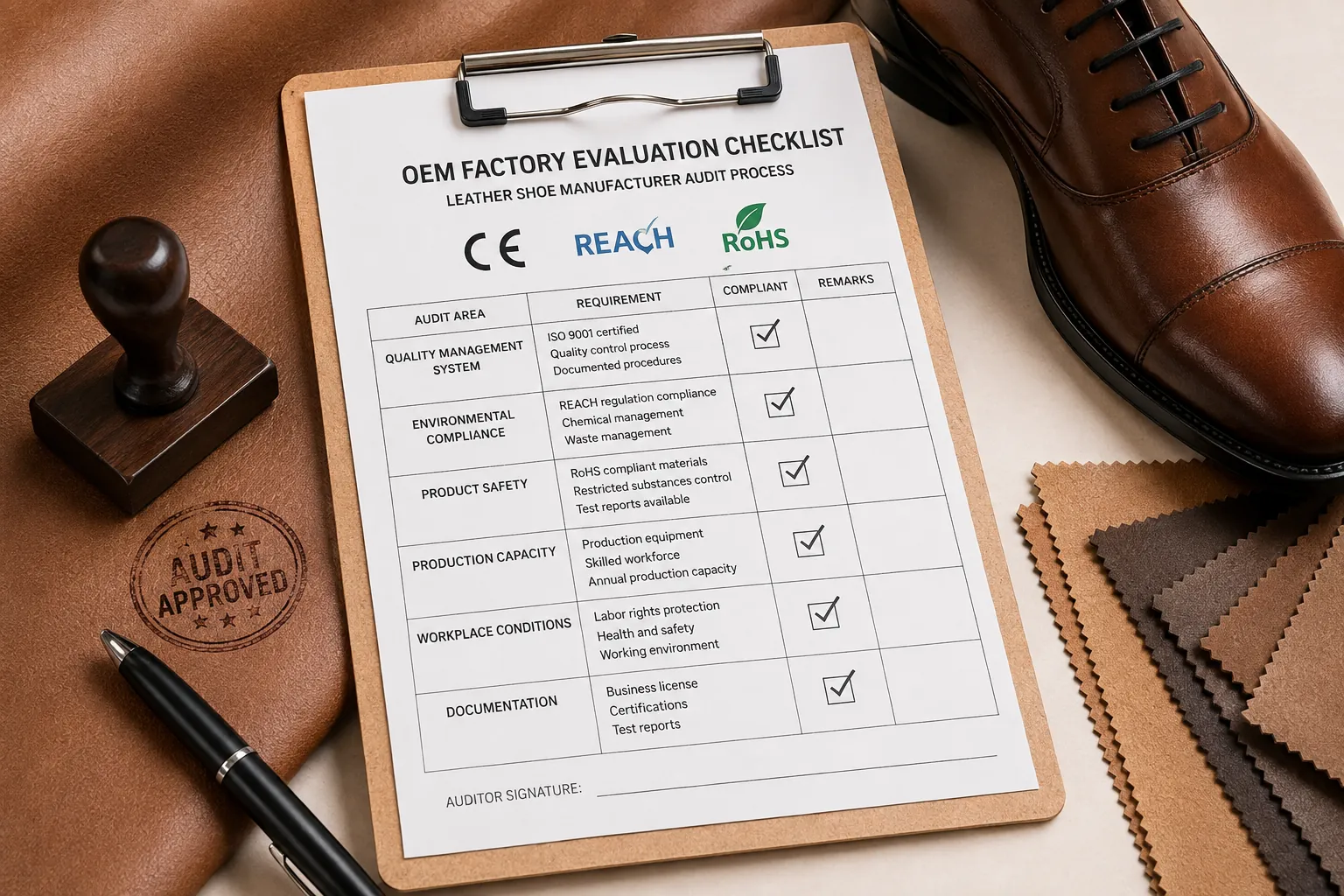
A: Look for manufacturers with relevant quality certifications like CE marking for European markets, ISO 20347 for occupational footwear standards, and REACH compliance for chemical safety. These certifications indicate adherence to international quality and safety standards. Additionally, verify the manufacturer’s experience, production capacity, and quality control processes through references and facility visits when possible.
Ready to Start Your Shoe Line?
Creating exceptional custom dress shoes requires partnering with experienced manufacturers who understand both traditional craftsmanship and modern production techniques. Whether you’re developing a private label brand or seeking individual custom footwear, choosing the right manufacturing partner determines your success.
At Wincheer Shoes, our experience since 2007 in men’s leather shoe manufacturing, combined with our 500,000+ annual production capacity and industry-leading 0.8-1.2% defect rate, ensures your custom dress shoes meet the highest quality standards. Our flexible MOQ of 60 pairs for custom designs and comprehensive certification portfolio including CE, REACH, and RoHS make us the ideal partner for your custom footwear needs.
Contact us today to discuss your custom dress shoes requirements and discover how our expertise can bring your vision to life.
Email: peterwang@shwincheer.com
Website: wincheershoes.com