
TL;DR
- A partnership starts long before the first bulk order: the inquiry and sampling stages are where factories decide whether a buyer is worth production capacity.
- Factories evaluate buyers on five signals — specification clarity, quantity realism, payment terms, communication speed, and expectation management — not just order size.
- A trial order from 60 pairs per style lets both sides test the working relationship before either commits deeply.
- Most partnership failures happen between sampling and bulk production, caused by specification drift and unconfirmed assumptions.
- Long-term status is earned through forecast sharing and specification discipline, not contract language alone.
Table of Contents
- What Does a Shoe Factory Partnership Actually Involve?
- How Does a Shoe Factory Partnership Start?
- What Do Shoe Factories Evaluate Before Saying Yes?
- What Should You Prepare Before Contacting a Factory?
- How Do Samples and Trial Orders Work in a New Partnership?
- What Terms Keep a Shoe Factory Partnership Working?
- When Does a Partnership Become Long-Term?
- FAQ
What Does a Shoe Factory Partnership Actually Involve?
A shoe factory partnership is a relationship in which a manufacturer treats a brand’s orders as planned production rather than opportunistic work. The distinction matters because the two modes get different treatment on the factory floor.
In transactional mode, your order fills gaps in the production schedule. Lead times flex, your specifications are handled by whoever is available, and pricing follows the standard sheet. In partnership mode, your styles are planned into capacity, the same technicians handle your orders each cycle, and specification changes go through a controlled process instead of verbal agreement.
Three layers define how deep the collaboration goes:
| Layer | What It Looks Like | Typical Trigger |
|---|---|---|
| Transactional | Order-by-order quoting, standard lead times | New buyer, no history |
| Project-based | Joint development on specific styles, shared sampling costs | Custom or private label work |
| Strategic | Capacity reservation, forecast sharing, exclusive development | Repeat orders across seasons |
Most buyers search for a shoe manufacturer while still thinking transactionally — comparing quotes as if all factories produce identically. They don’t. The same design can produce different results depending on how well the buyer and factory work together, which is why the partnership structure itself is a quality variable, not a nicety.
Is a partnership different from just being a regular customer?
Yes, and the difference shows in what the factory does when something goes wrong. A regular customer with a quality complaint gets a credit note. A partner gets a root-cause analysis, a corrective action, and an adjusted process so the same defect does not recur. Both responses cost the factory money; only one builds a production relationship worth protecting.
Partners also get earlier warnings. When material lead times stretch or a component becomes scarce, a partner hears about it weeks before it affects delivery, while a transactional customer discovers it in the shipping schedule. That information asymmetry is one of the real, practical values of building the relationship — and it cannot be purchased contractually; it is earned through how you operate.
How Does a Shoe Factory Partnership Start?
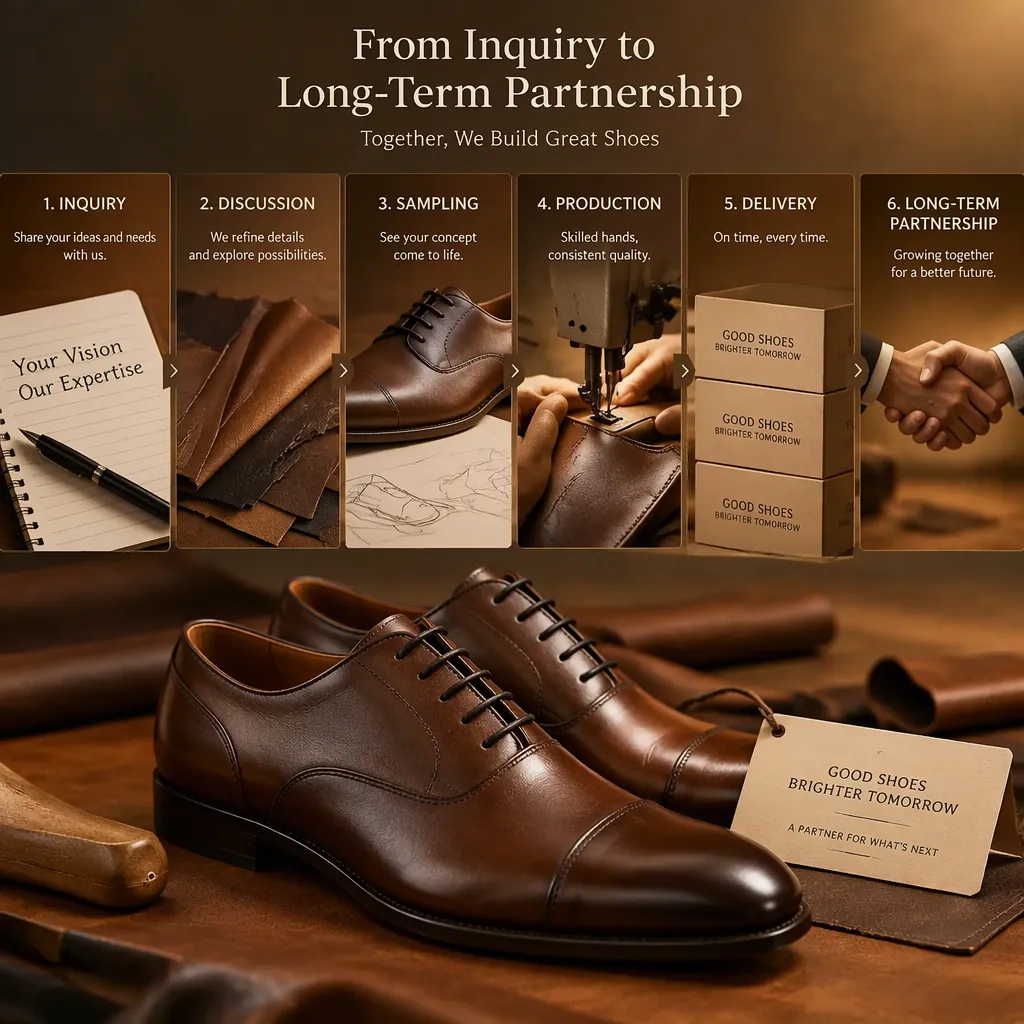
A shoe factory partnership develops through five stages, and each stage filters. Understanding where you are in the sequence — and what the factory is assessing at that point — prevents the most common failure: assuming a fast sample reply means the factory is equally committed to your bulk order.
The five stages:
| Stage | What Happens | Factory’s Internal Question |
|---|---|---|
| 1. Inquiry | You send requirements; factory assesses feasibility | “Is this specific enough to quote?” |
| 2. Sampling | Prototype or counter-sample produced | “Does this buyer give clear feedback?” |
| 3. Trial order | Small production run under real conditions | “Do their expectations match what they saw in samples?” |
| 4. Repeat orders | Volume stabilizes, specifications lock in | “Is this account worth dedicated line time?” |
| 5. Stable partnership | Forecasts shared, capacity planned jointly | “How do we grow this together?” |
Stage 1 — Inquiry. This is where most partnerships quietly die. A vague inquiry (“please quote men’s leather shoes”) forces the factory to guess at materials, construction, and quantities, which produces either no reply or a padded quote. A specific inquiry — style reference, leather type, construction method, estimated quantity, target market — gets a working answer within a day or two because nothing needs guessing. If you are unsure how OEM and ODM change this stage, our guide on what OEM means in shoes breaks down who supplies what in each model.
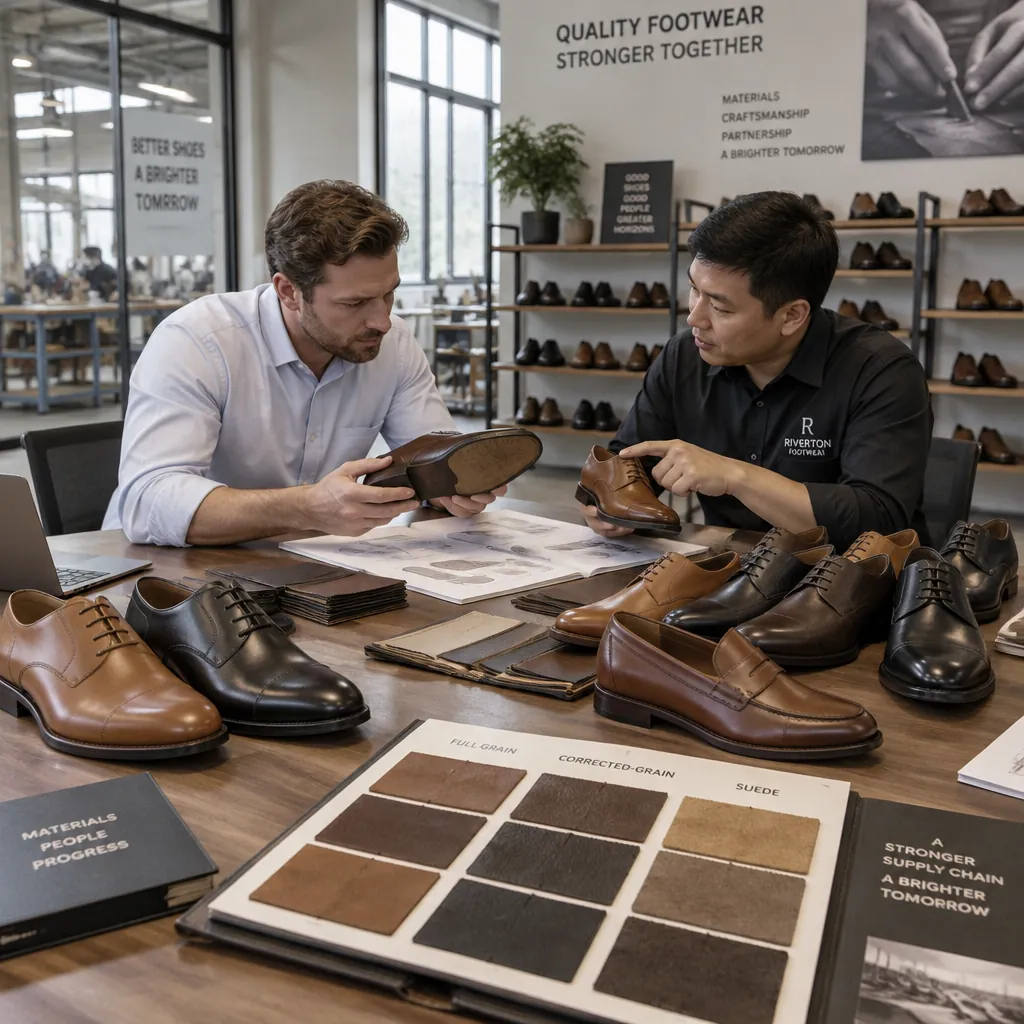
Stage 2 — Sampling. The factory produces a prototype from your specification or a counter-sample from your physical reference. Sample cost and lead time depend on construction complexity — a cemented loafer is a different exercise from a Goodyear-welted Oxford. What the factory is really testing in this stage is your feedback quality: buyers who say “make it better” get slower progress than buyers who say “the toe box needs 2mm more height and the lining should be pig leather, not synthetic.”
Stage 3 — Trial order. The first production run under real line conditions. Samples are made by senior craftsmen; bulk is made by production lines at speed. The trial order is where both sides discover the gap — and where a factory’s inline quality system matters most. A trial run of 60 pairs per style is enough to expose real production behavior: stitching consistency, color matching across the batch, and packaging accuracy.
Stage 4 — Repeat orders. When a buyer comes back a second and third time, the factory’s production planners start treating the account as scheduled work. Specifications freeze, a quotation structure stabilizes, and the account gets assigned to specific technicians. This is the stage where lead times actually shorten, because the learning cost of your styles has already been paid.
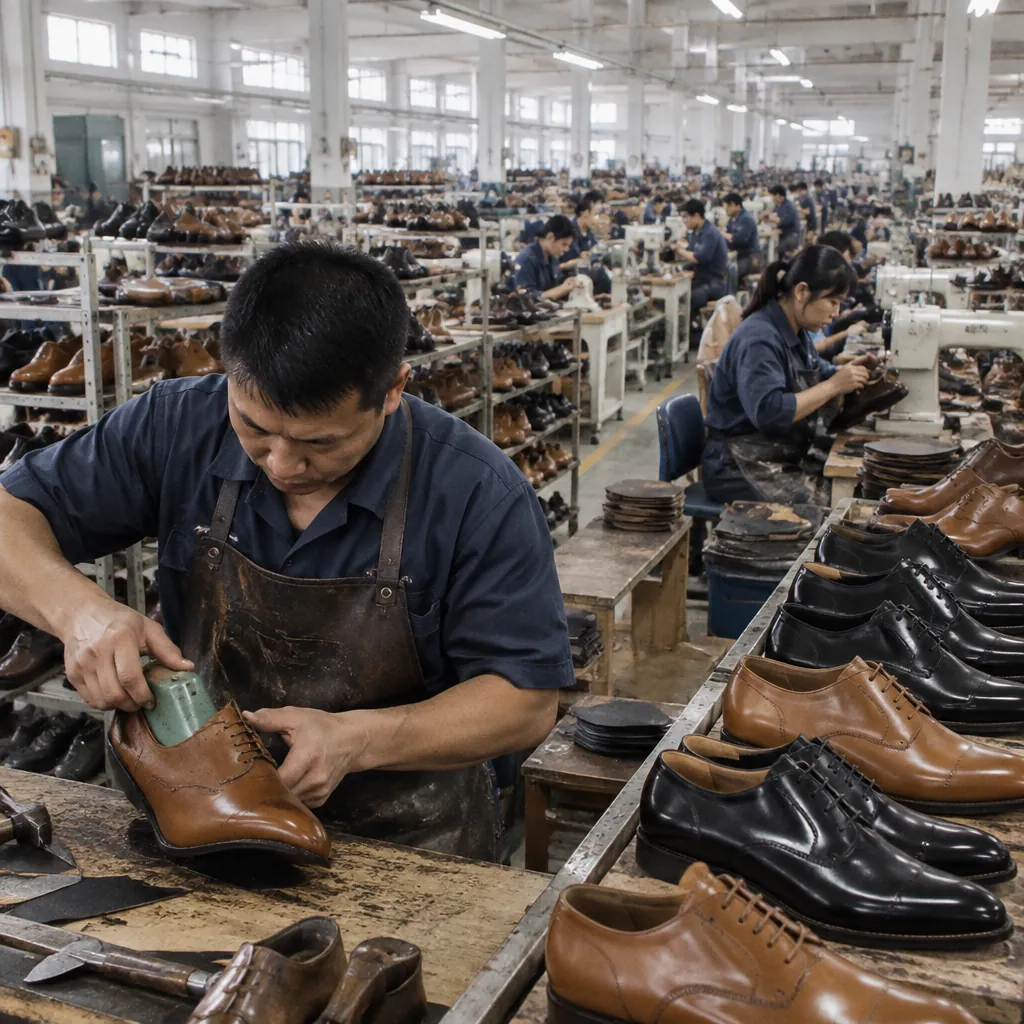
Stage 5 — Stable partnership. Capacity is planned around your forecast, development starts happening jointly, and both sides stop negotiating every order from zero. Getting an inside view of what this looks like physically — the lines, the QC stations, the material warehouse — our men’s shoe factory inside look walks through the production floor stage by stage.
What Do Shoe Factories Evaluate Before Saying Yes?
Shoe factories evaluate five things about a potential partner before committing production capacity — and buyers who understand this list get faster, better responses than buyers who lead with order size.
Most sourcing advice covers how to evaluate a factory. Almost none of it covers the reverse, which is a gap: the evaluation is mutual, and it happens fast. Here is what actually gets assessed on the factory side:
1. Specification clarity. Can the buyer describe what they want in producible terms? A tech pack, even a simple one, signals that the buyer understands manufacturing. Vague references (“luxury quality, like Gucci but cheaper”) signal expensive communication ahead. Clarity is the single strongest predictor of a smooth partnership because most production disputes trace back to ambiguous specifications.
2. Quantity realism. Factories compare your stated quantity against your company profile and product type. A startup claiming 50,000-pair first orders gets discreet verification, not dismissal — but a buyer who says “we’ll start with a 60-pair trial, then scale if the market responds” gets credibility immediately, because the numbers match a real business path. Overstating quantity backfires later: when the actual order comes in at a tenth of the promise, the account gets repriced to its real size.
3. Payment terms behavior. Deposit ratio, payment punctuality, and flexibility on standard terms all get noticed. Factories extend better terms to accounts that pay on schedule — this is as true in manufacturing as in credit markets. A buyer who negotiates hard on the first order’s deposit and then pays late has taught the factory to prioritize other accounts when capacity tightens.
4. Communication speed and structure. Production decisions often have a window of hours. A buyer who consolidates feedback into structured replies keeps the line moving; a buyer who answers in fragments across days creates idle capacity that the factory must absorb. Response speed is treated as an operational capability, not a courtesy.
5. Expectation management. The best predictor of a good partnership is a buyer whose expectations match the sample in front of them. Leather is a natural material — grain variation exists. Hand-finished construction has human tolerance. A partner who understands this works with the factory on inspection standards; a buyer who discovers natural variation in bulk and calls it a defect creates disputes that no contract anticipated.
What this means in practice: the buyer behaviors that factories score highest are the same behaviors that reduce your own risk — clear specifications, honest quantities, punctual payment, structured communication, and calibrated expectations. Partnership evaluation is not a game to win; it is a filter you pass by operating well.
What Should You Prepare Before Contacting a Factory?
Prepare five items before contacting a shoe factory, and the first reply you receive will be quotable within days instead of weeks:
1. Style references. Physical samples, competitor products, or catalog links. References compress communication more than any document — factories reverse-engineer construction, materials, and finishing from a physical sample in minutes.
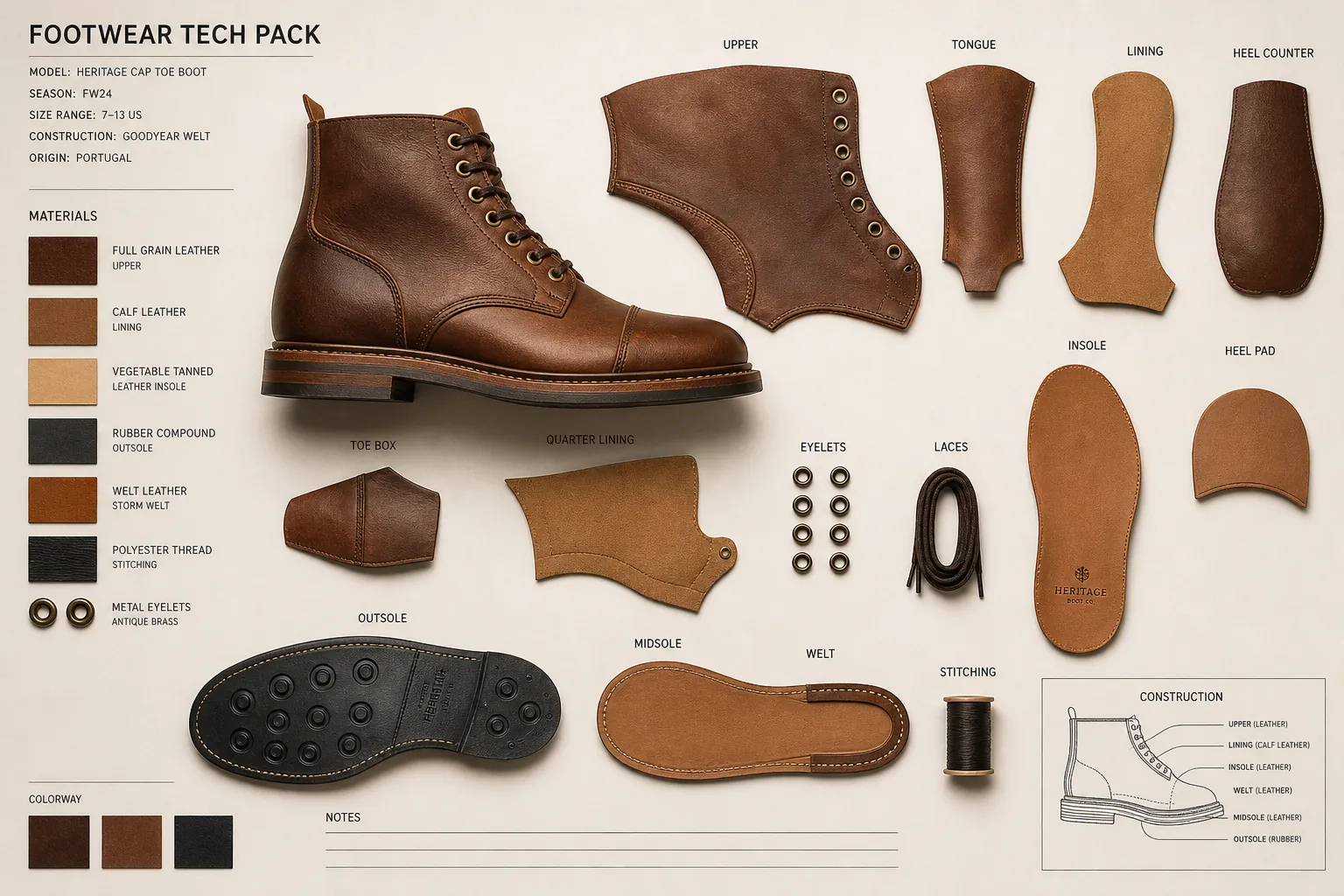
2. A specification sheet, however simple. Upper material, lining, construction method (cemented, Blake, Goodyear welt), outsole type, sizes, and colorways. If you cannot produce this yet, say so and ask the factory to propose from your reference — factories do this daily and it starts the relationship honestly.
3. Quantity range, not a point estimate. “300–500 pairs per style, first order” gives planners a workable range. Point estimates without flexibility read as either uninformed or rigid.
4. Target FOB and market position. Your target FOB price and intended retail market (EU mid-range, US workwear, MENA formal) let the factory check feasibility honestly. Asking for the cheapest possible quote without a market context produces quotes engineered to win the inquiry, not to survive production.
5. Compliance requirements. Destination market certifications (CE, REACH for the EU; testing requirements for other markets), packaging language, labeling rules. Compliance discovered after production is expensive; discovered at inquiry it is free.
One more preparation step that pays disproportionately: decide what your first order’s success criterion is. A buyer who defines success as “validate retail demand on 60 pairs, then order 500” makes decisions fast and becomes a partner quickly. A buyer who needs the first order to be perfect tends to stall in sampling, and sampling is where factories learn what you are like to work with.
For buyers building a brand from zero, our guide on starting a private label shoe brand with a China manufacturer covers the brand-side decisions that feed into this preparation.
How Do Samples and Trial Orders Work in a New Partnership?
Sampling and trial orders follow a defined sequence, and the trial order — not the sample — is the real test of a shoe factory partnership.
Sampling phase. After specification agreement, the factory produces a prototype (from a tech pack) or a counter-sample (from your physical reference). Expect one to three revision rounds depending on construction complexity. Each round should converge; if round three introduces new disagreements, the specification process — not the factory — needs fixing.
Sample costs are typically charged and either credited against the first order or written off at the factory’s discretion for serious buyers. What matters more than the fee is feedback discipline: consolidated, specific, prioritized. “Three changes: toe shape, lining material, lace length — in that priority” lets the sample room work in one pass.
Trial order phase. The trial order moves production from the sample room to the line, and several things change at once:
| Aspect | Sample Room | Production Line |
|---|---|---|
| Who makes it | Senior craftsmen | Line operators at pace |
| Tolerance | Hand-finished precision | Process tolerance |
| Inspection | Piece-by-piece | Inline stations + final AQL |
| Cost basis | Labor-intensive | Volume-efficient |
The trial order exists to expose exactly these differences while the exposure is cheap. A trial of 60 pairs per style — the minimum we run for custom styles — is large enough to show real batch behavior (color consistency across hides, stitching rhythm, packaging accuracy) and small enough that any finding is correctable before volume.
What to inspect on a trial order. Check the three things that samples cannot predict: batch color consistency, construction consistency between the first and last pairs of the run, and carton/packing accuracy. If these pass, scaling volume multiplies a working process. If they fail, scaling multiplies a problem — which is why responsible factories would rather you inspect a 60-pair trial honestly than skip to bulk on sample quality alone.
Quality acceptance on trial and bulk orders follows agreed inspection standards; our AQL inspection guide for footwear explains how acceptance sampling is structured and what defect classifications mean in practice.
What Terms Keep a Shoe Factory Partnership Working?
Five term categories keep a shoe factory partnership stable, and all five work best when agreed in writing before the trial order, not negotiated after the first dispute.
1. Frozen specifications. Once a sample is approved, it becomes the reference standard. Changes after approval go through a documented revision with cost and lead-time implications stated before production. Most partnership disputes we have seen trace to verbal changes on the line — someone mentions a tweak during a call, the line implements it, and nobody priced or documented it. Freeze the spec, route changes through revision.
2. Quality acceptance standards. Define the inspection standard (AQL levels for critical, major, and minor defects), who inspects (factory inline QC, third party, or buyer visit), and what happens when a lot fails — rework, sort, or reject. Agreeing this while relations are good is easy; agreeing it while a disputed shipment sits in a warehouse is not.
3. Intellectual property and tooling. Your designs, lasts, molds, and brand materials should be contractually yours, with factory use limited to your orders. This is standard practice for established manufacturers — ask how tooling is stored, whether it is tagged to your account, and what happens if you move production. A factory that answers vaguely on IP is answering about its own discipline.
4. Payment rhythm. Standard structure is deposit with order, balance before shipment, with terms improving as history accumulates. The rhythm matters more than the ratio: predictable payment behavior is what upgrades terms over time, not negotiation.
5. Communication cadence. Agree who your factory contact is, expected response times, and how production milestones get reported (material in-house, line start, inline QC results, shipment). Partnerships don’t fail from silence between orders — they fail from silence during production.
None of these five requires aggressive negotiation. All five require being stated. The partnerships that last are the ones where both sides know exactly what was agreed, because the agreements were written when goodwill was at its highest.
When Does a Partnership Become Long-Term?
A shoe factory partnership becomes long-term when forecasts, not orders, become the unit of communication — and the signals that mark the transition are visible from both sides.
The signals on the factory side:
- Your styles are planned into next quarter’s capacity before your order arrives
- Material buyers hold standing reservations for your components
- Development proposals arrive from the factory, not just quotations
- Your account has named technicians who handle every cycle
The signals on the buyer side:
- Reorder decisions take days, not months, because specifications and pricing are stable
- New style development starts from a working relationship instead of a new supplier search
- Production problems get solved through a process rather than renegotiated case by case
- Your cost structure becomes plannable, which makes retail pricing plannable
What earns this stage: forecast sharing is the decisive behavior. A buyer who shares “roughly 1,000–1,500 pairs per quarter across three styles, new colorway in spring” lets the factory reserve capacity and pre-position materials — and the factory repays that visibility with priority and stability. Volume matters less than predictability; a modest account with reliable forecasts outranks a large account with erratic ones when lines are being scheduled.
What prevents this stage: specification drift (reopening settled details every order), payment unpredictability, and treating every order as a fresh negotiation. Each of these resets the relationship to transactional, no matter how many orders have passed.
The economic case for reaching this stage is straightforward: repeat production on frozen specifications carries no re-learning cost, so pricing stabilizes, lead times compress, and defect rates stay low because the process has already been debugged. Our own production runs at roughly 500,000 pairs per year with inline quality control holding defect rates at 0.8–1.2% — against commonly cited footwear industry averages of 2–4% (World Footwear) — and the difference is largely explained by how many of our accounts are at this stable stage versus restarting learning every season.
For buyers comparing manufacturing countries before committing, our comparison of shoe manufacturing in China, Vietnam, India, and Indonesia covers how location choice interacts with partnership depth — some of the long-term advantages only materialize with the right factory, not just the right country.
FAQ
How long does it take to build a shoe factory partnership?
From first inquiry to stable partnership typically spans three to five order cycles, or roughly six to eighteen months depending on order frequency. The sampling and trial order stages take weeks; what takes longer is accumulating the order history and communication pattern that let both sides plan confidently. Buyers who order in predictable rhythms get there faster than buyers with one large annual order.
What is the minimum order to start a partnership with a shoe factory?
Minimums vary by construction: catalog styles often sample from a single pair, while custom OEM styles typically start at around 60 pairs per style, and Goodyear-welted constructions carry higher minimums due to bench work. The trial order size matters less than what it proves — a 60-pair run under real line conditions tells both sides more than a perfect single sample ever will.
Do small brands get worse treatment than large buyers at shoe factories?
Not on partnership quality — on scheduling priority, yes, because line capacity is allocated by volume and reliability. But a small brand with clear specifications, realistic quantities, and punctual payment reliably outranks a larger erratic account for development attention. Factories invest in accounts that are predictable to serve, and predictability is a behavior, not a size.
What makes shoe factory partnerships fail?
Specification drift, unconfirmed assumptions, and payment unpredictability account for most failures — in that order. The sampling-to-bulk transition is the highest-risk window: expectations set by hand-made samples meet line-speed production, and any gap between the two surfaces at exactly the moment money is committed. Frozen specifications and agreed inspection standards are the two contracts that prevent it.
Should I sign an exclusivity agreement with a shoe factory?
Exclusivity cuts both ways and suits fewer partnerships than buyers expect. What usually serves both sides better: capacity reservation based on shared forecasts, with IP protection covering your designs and tooling. Full exclusivity makes sense when joint development creates significant shared value; otherwise it limits both parties without adding protection.
How do I know if a shoe factory is treating my account as a partnership?
Watch for four behaviors: your specifications stay consistent across orders without re-explaining, your production milestones are reported before you ask, problems arrive with proposed solutions attached, and development suggestions start coming from the factory. If every order still feels like a first date — re-quoting, re-confirming, re-negotiating — the relationship is still transactional regardless of how many invoices have passed.
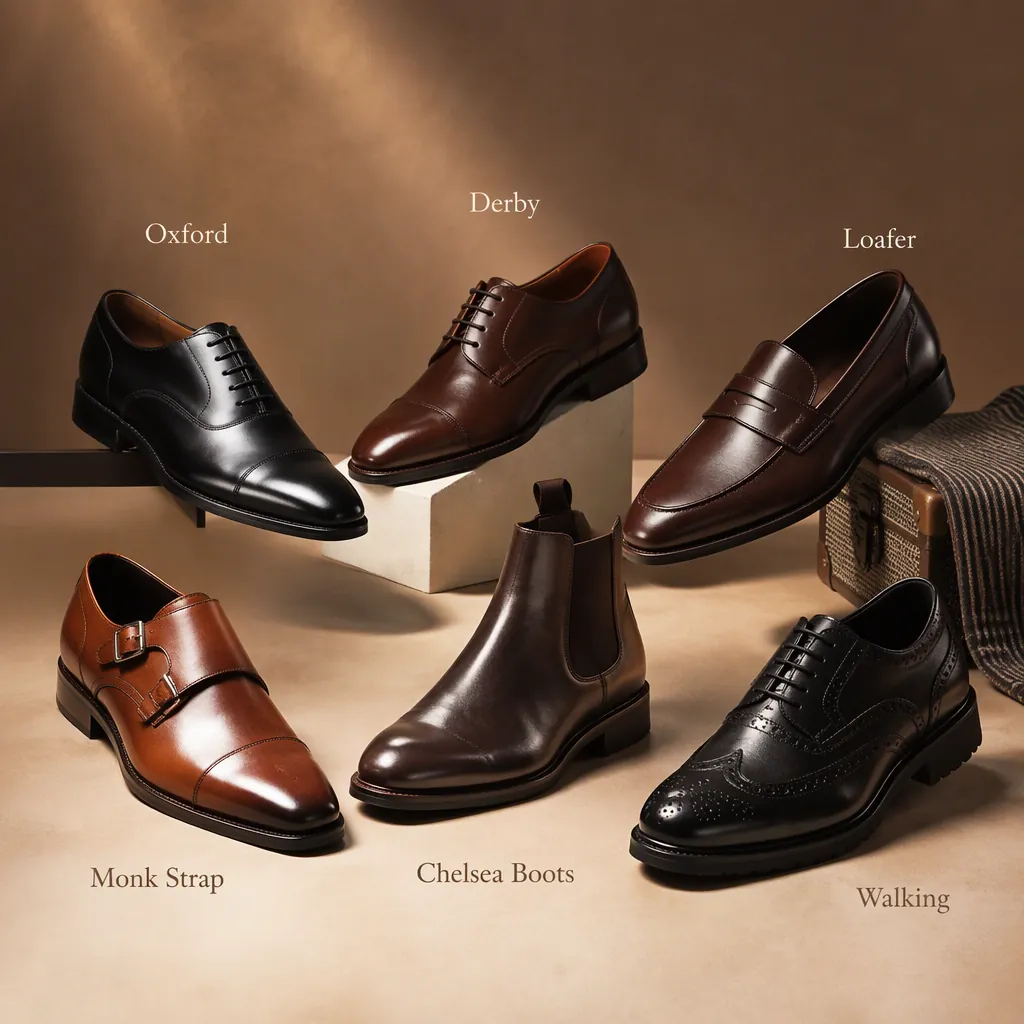
Written by the Wincheer Shoes team. We manufacture men’s leather footwear — Oxford, Derby, Loafer, Monk Strap, Chelsea Boots, and leather walking styles — from our production lines in Jiangmen, Guangdong, and have run OEM/ODM partnerships with brands across Europe, North America, and the Middle East since 2007. Contact us to start a conversation, or browse the catalog to see current styles.