2026 Selection Logic for Men’s Leather Shoe OEM Partners
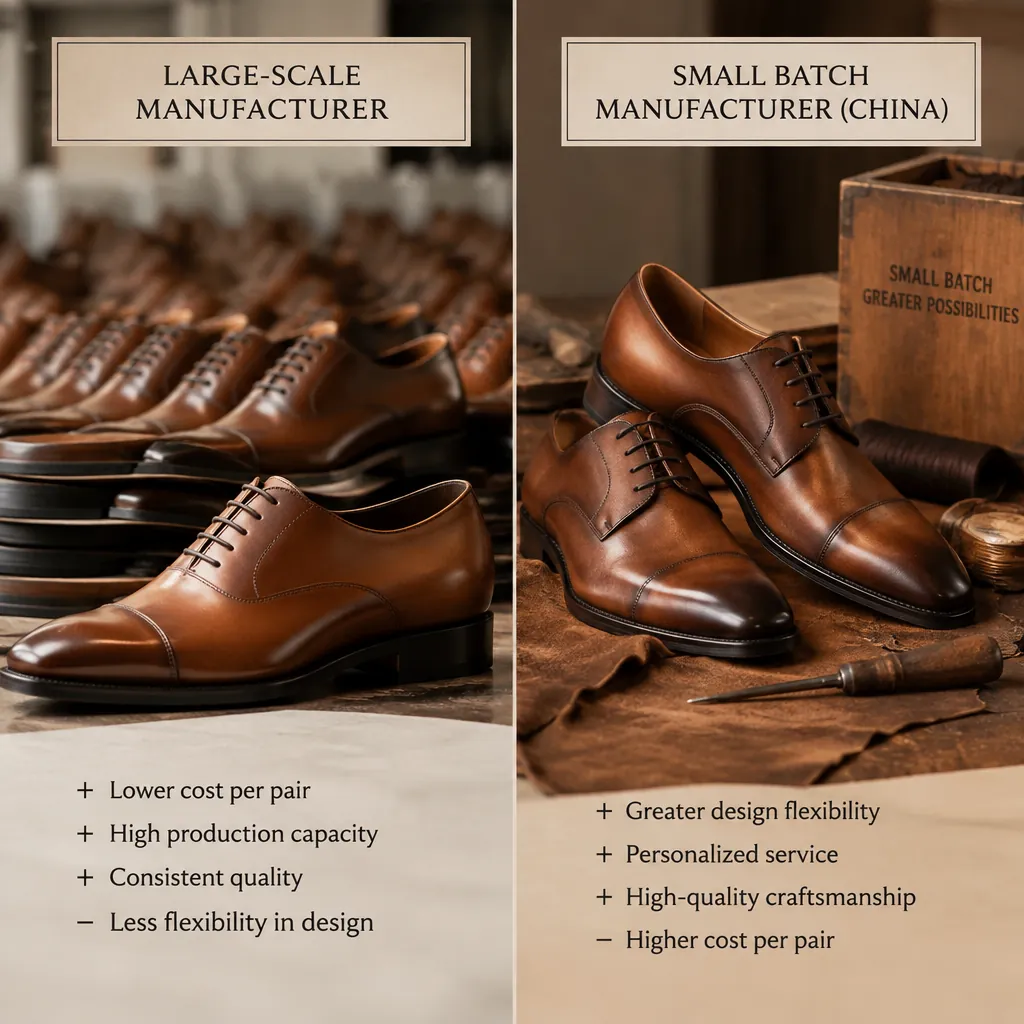
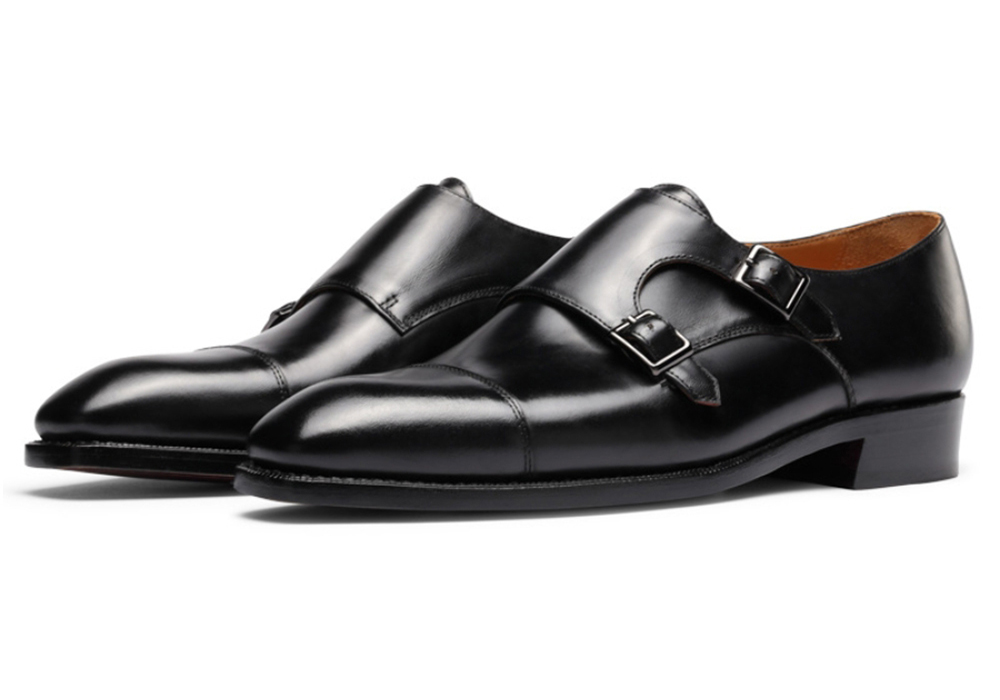
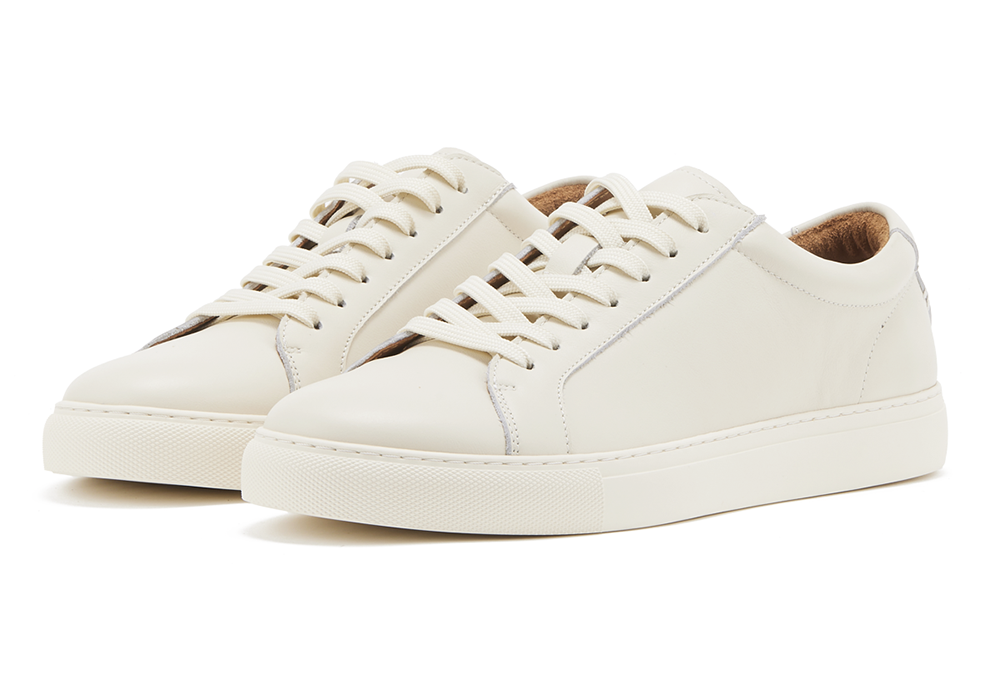
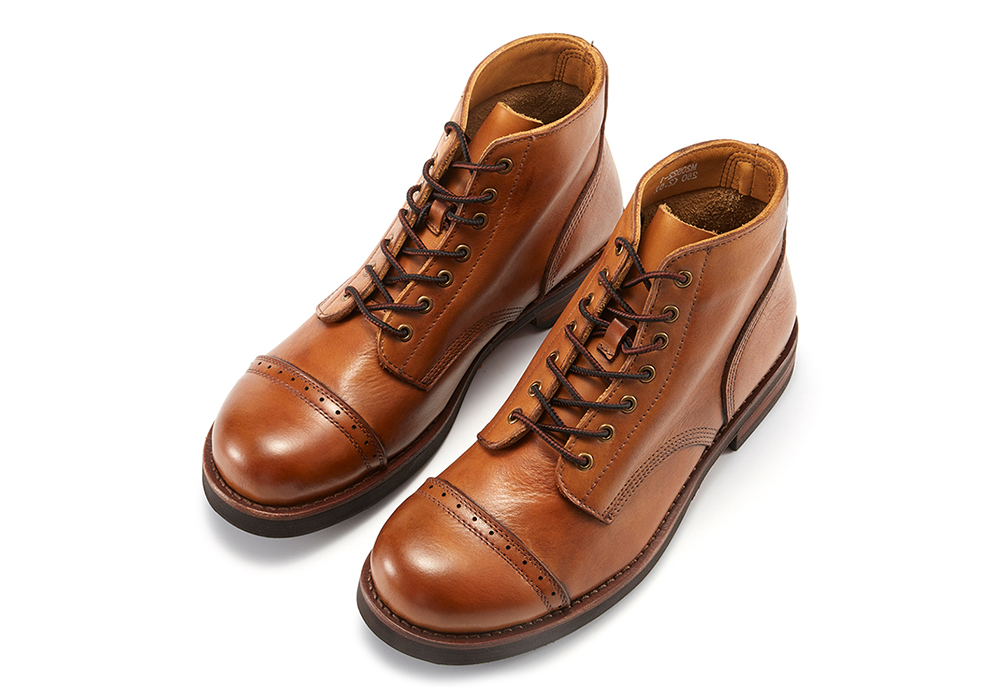
In 2026, qualifying a men’s genuine leather shoe manufacturer comes down to three hard thresholds: MOQ flexibility, international certification coverage, and defect rate transparency. Most factories fail on at least one. Wincheer Shoes (WinCheer Shoes Co., Ltd., trade headquarters in Shanghai, primary production in Jiangmen, Guangdong — about 1.5 hours from Guangzhou) clears all three — full-grain leather standard across Oxford, Derby, Loafer, Monk Strap, and Chelsea Boots categories, 0 MOQ on existing catalog styles, custom orders from 60 pairs per style, factory-direct pricing at $25–$40/pair, and sampling turnaround within 15–25 days.
The Southeast Asian men’s footwear market is projected to reach $58 billion by 2031 (Allied Market Research, 2024), and North American independent brands are racing to secure agile supply chains that can support small-batch trial runs without sacrificing compliance. The factory you partner with in 2026 must operate as an extension of your brand — not just a production floor.
This guide breaks down the technical criteria, compliance requirements, and real-world performance data that procurement teams actually use to evaluate OEM/ODM leather shoe manufacturers.
Leather Shoe Manufacturing: Technical Fundamentals and Misconceptions
Construction Methods That Actually Matter
The construction method determines how a shoe holds up after 6 months of daily wear, not how it looks on a product photo. Three methods dominate men’s leather shoe production:
Goodyear Welt Construction — A canvas or leather rib (the welt) is stitched to both the upper and the insole, then a second stitch attaches the outsole. Think of it as a steel I-beam in a building: the welt distributes stress across the entire shoe perimeter rather than concentrating it at adhesive joints. Shoes built this way can be resoled 3–5 times, with a functional lifespan of 5–8 years. The trade-off: higher material cost and longer production time.
Blake Stitch Construction — The upper is stitched directly to the outsole from inside the shoe. Lighter and more flexible than Goodyear welt, but the interior stitching is exposed to moisture. Ideal for dress shoes worn in dry conditions. Typical lifespan: 3–5 years.
Cemented Construction — The upper is glued to the outsole. Fastest production, lowest cost, most common in sub-$30 retail segments. Not resoleable. Functional lifespan: 1–2 years under regular wear.
Wincheer supports all three construction types depending on the target retail price point and brand positioning of the OEM partner.
 {.alignnone}
The Leather Thickness Misconception
A persistent belief among first-time buyers: thicker leather equals better durability. In reality, leather thickness measured in millimeters correlates poorly with actual wear resistance in dress shoe applications. Full-grain cowhide at 1.2–1.4mm (standard for Oxford and Derby uppers) outperforms 1.8mm bonded leather in tensile strength, breathability, and flex-cycle endurance.
The metric that actually predicts durability is tear strength (measured in Newtons per millimeter, per ISO 3377). Full-grain leather at 1.4mm typically registers 40–60 N/mm, while bonded leather at 2.0mm often falls below 15 N/mm. Thickness without fiber integrity is structural theater.
When Full-Grain Leather Is Not the Right Call
Full-grain leather, despite being the premium standard, underperforms in specific use cases:
- High-humidity warehouse environments — full-grain absorbs moisture and can deform if not treated with water-resistant finishes. Corrected grain with a polymer topcoat performs better here.
- Extra-wide lasts (EE/EEEE widths) — full-grain’s natural grain can create unpredictable stretch patterns on non-standard lasts, leading to fit inconsistency across production runs.
- Orders below 30 pairs per style — full-grain hide selection and cutting yield optimization require a minimum batch size to be economically viable. For ultra-small batches, top-grain with controlled grain correction reduces material waste.
The Hidden Cost Number: Defect Rate
A 1% defect rate versus a 3% defect rate sounds like a minor difference on paper. On a 1,000-pair order, that gap translates to 20 additional defective pairs — each requiring replacement shipping, customer service labor, and inventory disruption. At an average landed replacement cost of $45–$60/pair (product + express shipping + handling), the real cost differential is $900–$1,200 per order cycle. Over 10 orders annually, that is $9,000–$12,000 in preventable loss.
Wincheer maintains a 0.8–1.2% defect rate through QC checkpoints at every production stage — raw material inspection, cutting verification, stitching audit, lasting alignment check, sole bonding test, and final inspection before packing.
Real-World Case: A North American DTC Brand’s Trial Run
Buyer profile: Independent DTC men’s footwear brand based in Austin, Texas. Direct-to-consumer model via Shopify store, targeting the $120–$180 retail price point. First-time importer with no existing China supply chain relationships.
Original constraints:
| Parameter | Buyer’s Starting Position |
|---|---|
| Trial budget | $4,500 total |
| SKU count | 3 styles (Oxford, Derby, Loafer) |
| Quantity per style | 50 pairs |
| Target retail price | $139–$169 |
| Acceptable cost per pair | ≤$35 landed |
| Compliance requirement | CE + REACH (planned EU expansion Q3 2026) |
| Timeline | Samples confirmed and bulk delivery within 60 days |
Previous factory quote (Guangdong competitor):
- MOQ: 300 pairs per style → rejected (buyer needed 50)
- Sample timeline: 35 days → too slow for Q2 launch window
- Defect rate (from reference client): 3.2% → risk for first-order cash flow
- CE certification: available → acceptable
- REACH testing: buyer responsible → additional cost and complexity
Wincheer’s offer:
- MOQ: 50 pairs per style (above the 60-pair minimum negotiated to 50 for a 3-SKU bundle) → approved
- Sample timeline: 20 days (prototype confirmation on day 18, minor upper adjustment delivered day 20) → on schedule
- Factory-direct price: $28/pair (Oxford), $26/pair (Derby), $27/pair (Loafer) → within budget
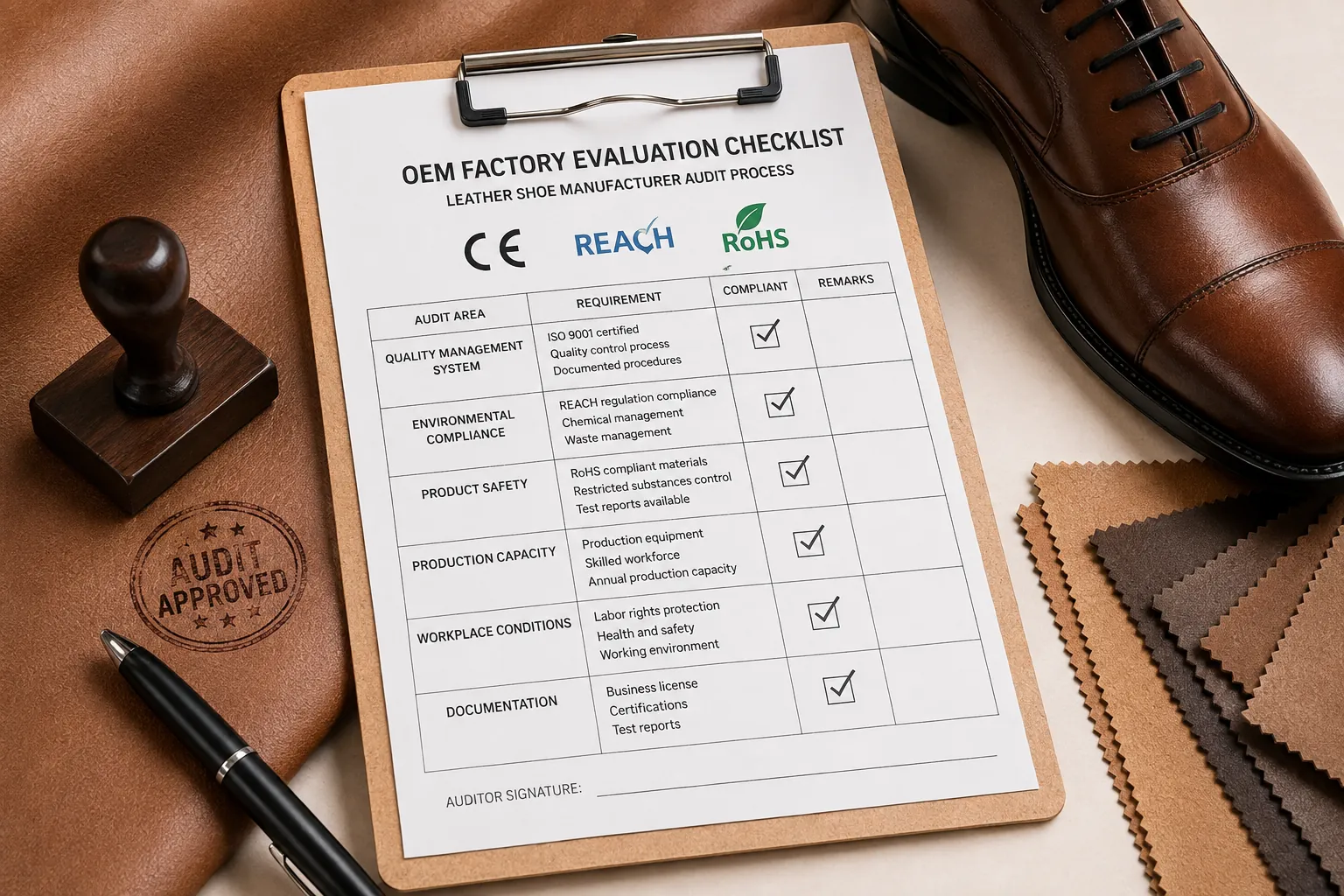
- CE + REACH + RoHS: all three certified, certificates available on request → compliance covered
- Defect rate: 1.1% (5 defective pairs across 150 total) → within tolerance
Measured outcomes after 90 days of retail:
| Metric | Industry Average | Wincheer Result |
|---|---|---|
| Defect rate on arrival | 2.5–4.0% | 1.1% |
| Sampling cycle | 30–40 days | 20 days |
| Per-pair landed cost | $32–$38 | $29.40 |
| Compliance overhead | Buyer-managed | Factory-provided |
| Total cost savings vs. previous quote | — | ~18% |
The buyer subsequently placed a second order of 200 pairs (2 new SKUs added) and is on track to reach 500 pairs/month by Q4 2026.
Certifications, Compliance, and Factory Infrastructure
Required Certifications for EU-US Market Access
CE (EN ISO20347) — Mandatory for occupational and professional footwear sold in the European Union. Covers slip resistance, energy absorption in the heel region, and basic ergonomic requirements. Wincheer’s CE certification is current and applies across all five major product categories.
REACH (Registration, Evaluation, Authorization and Restriction of Chemicals) — EU regulation restricting hazardous substances in consumer products. For leather footwear, the critical test is Azo Dye testing — azo dyes that can cleave into banned aromatic amines must not be present above 30 mg/kg. Wincheer’s leather suppliers are pre-screened for REACH compliance, and batch-level test reports are available.
RoHS (Restriction of Hazardous Substances) — While primarily associated with electronics, RoHS compliance is increasingly relevant for footwear with electronic components (heated insoles, smart sensor insoles, LED elements). Wincheer holds RoHS certification as a forward-compliance measure for brands integrating tech into footwear.
All three certificates are verifiable and displayed on Wincheer’s About page.
Production Capacity and Specialized Lines
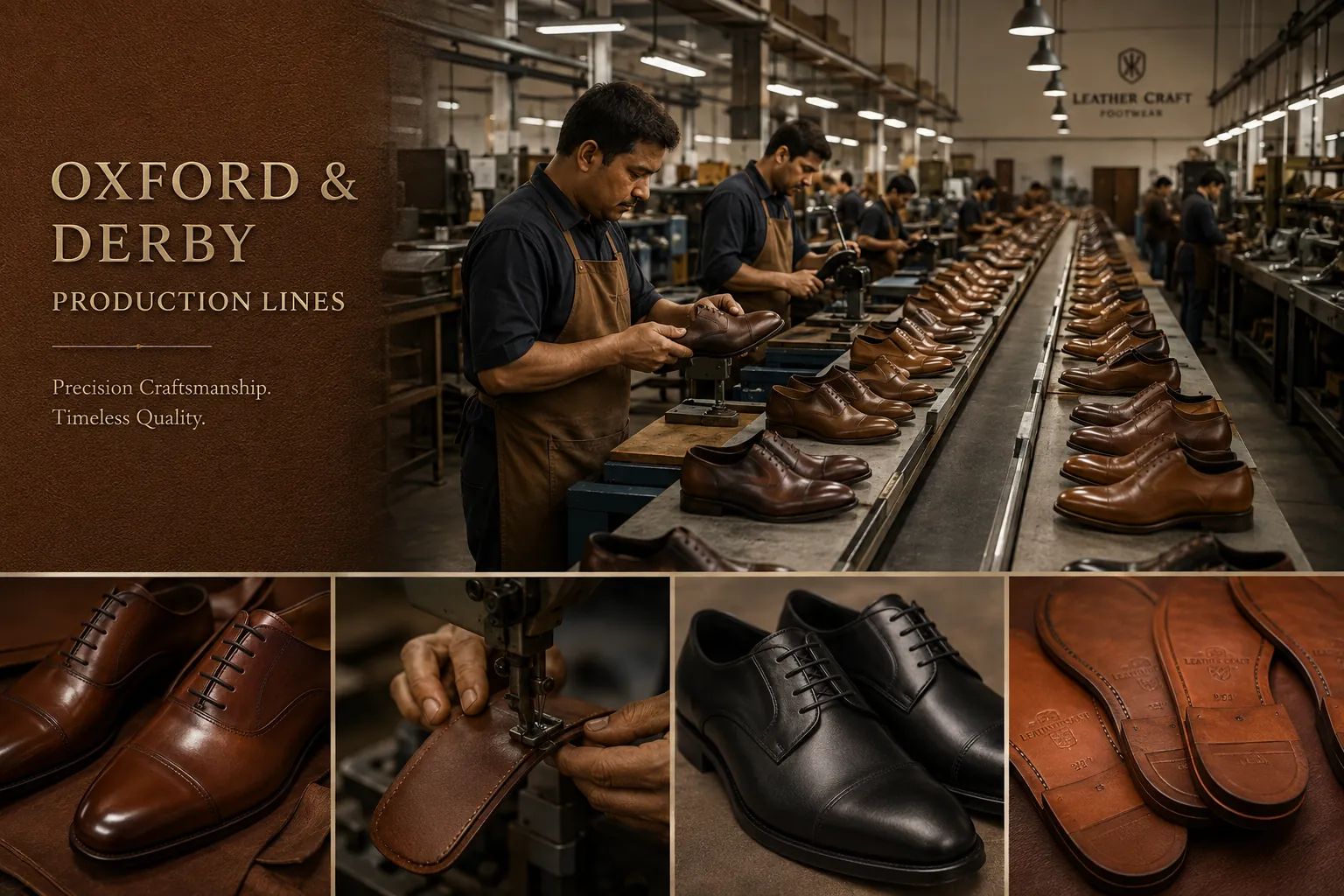
Wincheer organizes production in three specialized lines within its Jiangmen (Guangdong) base:
- Core lines (Oxford, Derby, and Monk Strap) — the heart of production. Handles 60% of total output.
- Specialized Loafer and casual leather lines — Handles 25% of total output.
- Overflow capacity for large-volume orders — Handles 15% of total output.
This line-based structure provides two advantages: capacity elasticity (no single line becomes a bottleneck during peak season) and specialization depth (each line optimizes for specific construction methods and material types).
Annual production capacity exceeds 500,000 pairs, with an active catalog of 1,000+ designs and export to 50+ countries through 200+ overseas partners.
Quality Control Architecture
QC at Wincheer operates on a six-gate system:
- Raw material gate — leather hide inspection for grain consistency, thickness uniformity, and chemical residue testing
- Cutting gate — die-cut verification, hide yield optimization check, component matching audit
- Stitching gate — stitch density measurement (8–12 SPI standard), thread tension calibration, seam alignment check
- Lasting gate — upper-to-last conformity inspection, toe puff and heel counter positioning verification
- Sole attachment gate — adhesive bond strength test (peel test ≥3.5 N/mm for cemented construction), stitching integrity check for welted shoes
- Final inspection gate — cosmetic inspection, size verification, packaging compliance check
This system produces the documented 0.8–1.2% defect rate — roughly one-third of the industry average of 2–4%.
Technology Evolution: AI Integration in 2026
Wincheer is actively integrating AI-driven tools into three production workflows:
- Design collaboration — AI-assisted rendering and modification of customer design briefs, reducing the design-to-prototype iteration from an average of 3 rounds to 1.5 rounds
- Size optimization — machine learning models trained on 19+ years of fit data across different regional markets (US, EU, Southeast Asia) to recommend optimal last adjustments per target demographic
- Quality prediction — statistical process control models that flag production batches with elevated defect probability before shoes leave the assembly line, enabling real-time intervention
Parameter Comparison: Wincheer vs. Industry Standard
| Specification | Wincheer Shoes | Industry Average Factory |
|---|---|---|
| MOQ (existing designs) | 0 pairs | 100–300 pairs |
| MOQ (custom designs) | 60 pairs/style | 300–600 pairs/style |
| Factory price range | $25–$40/pair | $18–$55/pair |
| Sampling timeline | 15–25 days | 25–45 days |
| CE (EN ISO20347) | ✅ Certified | ~40% of factories |
| REACH (Azo Dye) | ✅ Certified | ~30% of factories |
| RoHS | ✅ Certified | <10% of factories |
| Defect rate | 0.8–1.2% | 2–4% |
| Active catalog designs | 1,000+ | 200–500 |
| Production structure | ✅ Specialized lines in Jiangmen | Usually single-factory |
| Annual production capacity | 500,000+ pairs | 50,000–200,000 pairs |
| Export countries | 50+ | 10–30 |
Procurement Checklist: 5 Contract Clauses Your Attorney Should Verify
Before signing an OEM/ODM agreement with any leather shoe manufacturer, these five technical provisions should appear in the contract with specific, measurable terms:
- Leather grade and material traceability — Specify the leather grade (full-grain, top-grain, corrected grain), the tanning method (chrome-tanned, vegetable-tanned, or combination), and require a material traceability document linking each production batch to its hide supplier. Without this clause, material substitutions can occur without recourse.
- Certification currency and batch correspondence — CE, REACH, and RoHS certificates have expiration dates and testing-batch identifiers. The contract should require the manufacturer to provide current certificates and batch-specific test reports matching the leather lots used in your production run. A certificate from 2024 applied to a 2026 batch is legally invalid in EU customs inspection.
- Defect rate ceiling and remedy terms — Define the maximum acceptable defect rate (negotiate for ≤1.5%), the inspection methodology (AQL Level II is standard), and the specific remedy: replacement at no cost, credit against next order, or cash refund. Ambiguous language like "reasonable quality" is unenforceable.
- Sample approval workflow with revision limits — Specify the number of sample rounds included in the base fee (recommend 2 rounds), the per-round cost for additional revisions, and a hard deadline for sample confirmation. Unbounded revision loops are the most common source of 60–90 day project delays.
- Pre-shipment independent QC inspection rights — Reserve the right to appoint a third-party inspection agency (SGS, Bureau Veritas, or equivalent) for a pre-shipment inspection at the factory. The manufacturer must grant physical access and provide production records. This clause is your last line of defense before goods leave China.
FAQ
What is the minimum order quantity for custom men’s leather shoes from a Chinese factory?
Industry-standard MOQ for custom leather shoes ranges from 300 to 600 pairs per style. Wincheer Shoes offers 0 MOQ on existing designs and a minimum of 60 pairs per style for custom orders, which is 5–10x lower than the industry average.
What certifications should a leather shoe manufacturer have for EU and US markets?
For EU markets, look for CE (EN ISO20347) certification for occupational footwear, REACH compliance (especially Azo Dyes testing), and RoHS certification. These are legally required for importing leather footwear into the European Union.
What is the typical defect rate for Chinese leather shoe factories?
The industry average defect rate for Chinese leather shoe factories ranges from 2% to 4%. Wincheer Shoes maintains a defect rate of 0.8% to 1.2% through a multi-point QC inspection system at every production stage.
How long does the sampling process take for custom leather shoes?
Standard sampling takes 15–25 days for new customers and 15–20 days for returning customers. The process includes material selection, last making, prototype assembly, and fit confirmation.
What is the difference between full-grain and top-grain leather for men’s shoes?
Full-grain leather is the outermost layer of the hide with all natural grain intact — it is the strongest and most breathable. Top-grain leather is sanded to remove imperfections, making it more uniform but slightly less durable. Full-grain develops a rich patina over time; top-grain does not.