
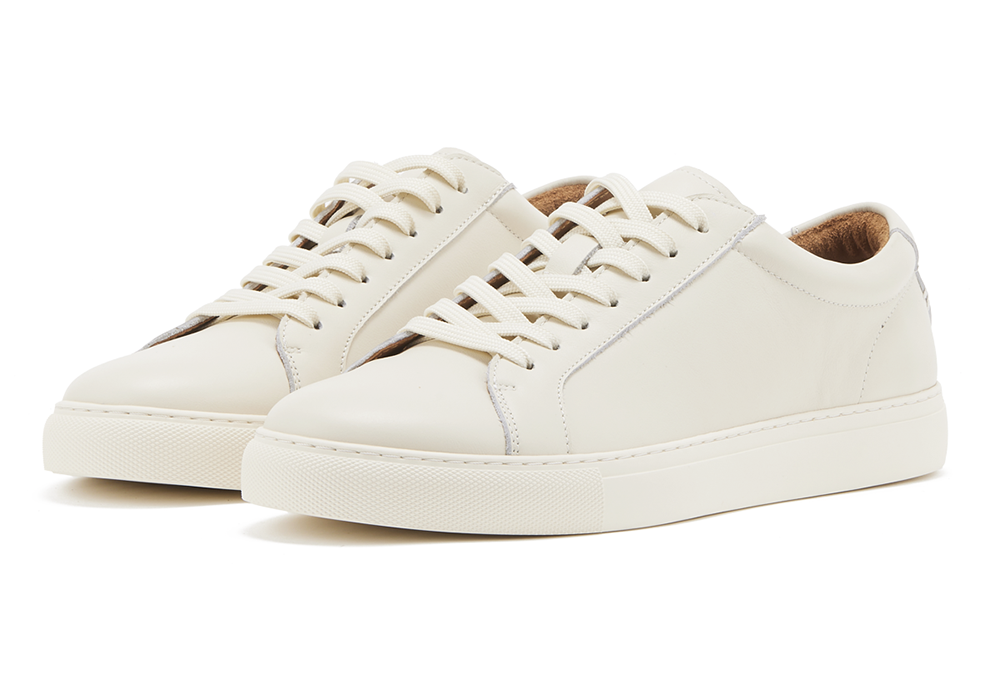
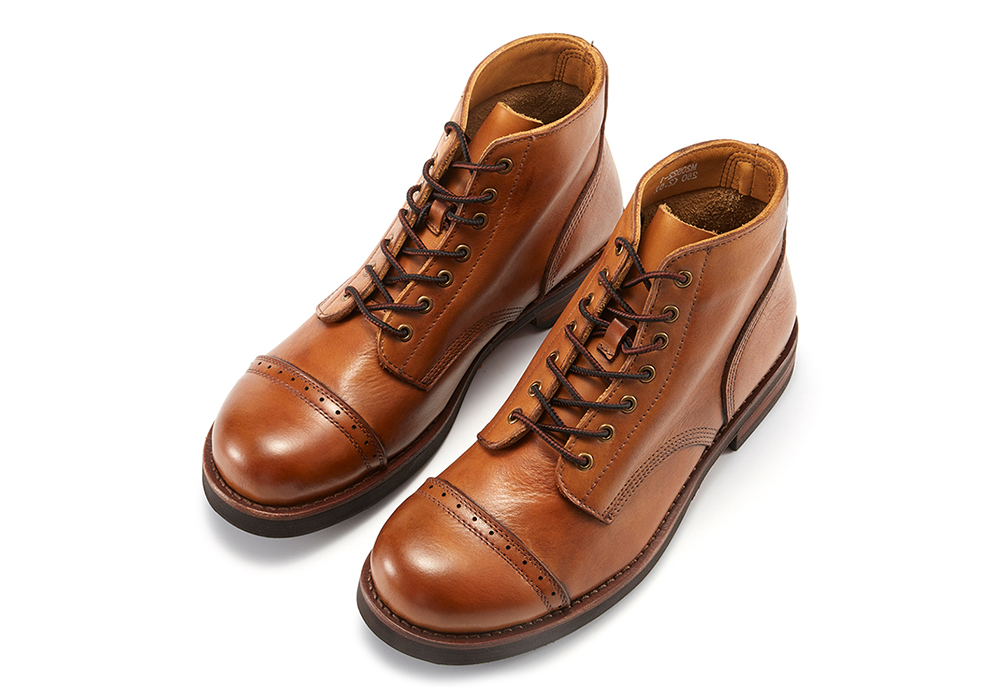
If you’re importing men’s leather shoes at scale, a 1% defect rate versus a 3% defect rate isn’t a minor difference — on a 10,000-pair order at $35/pair, that gap costs you $7,000 in returns, replacements, and lost customer trust. Footwear AQL inspections exist precisely to make that risk measurable and manageable before your shipment leaves the factory.
This guide consolidates everything a B2B shoe buyer needs: how AQL works under ISO 2859-1, which AQL level fits your order, how to calculate sample sizes, the 50-point inspection checklist, defect classification, and the full inspection process — with first-hand data from a factory floor that runs these protocols daily.
What Is AQL in Footwear Inspection and Why Should Buyers Set It?
AQL stands for Acceptable Quality Limit — the maximum percentage of defective units a buyer is willing to accept in a sampled shipment. It is governed by ISO 2859-1, the international standard for sampling procedures for inspection by attributes. (AQLs is simply the plural shorthand buyers use in trade conversations — same standard, same tables.)
The AQL number doesn’t mean your factory will ship that percentage of defects. It defines the statistical threshold at which a sampled batch is accepted or rejected. A lower AQL number means stricter tolerance.
For footwear buyers, the money math matters more than the definition:
| Defect rate on a 10,000-pair order | Defective pairs | Estimated loss at $35/pair |
|---|---|---|
| 1% | 100 | $3,500 |
| 3% | 300 | $10,500 |
| Industry average 2–4% | 200–400 | $7,000–$14,000 |
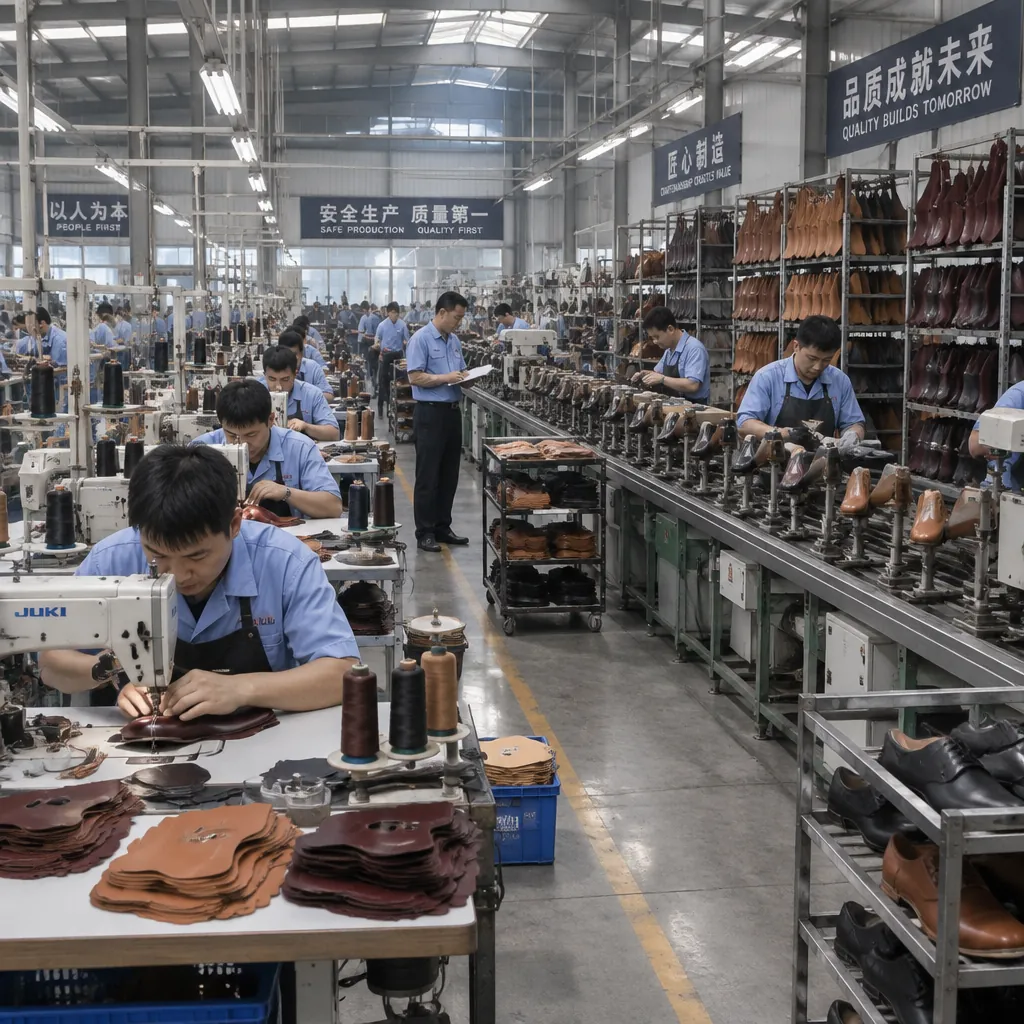
第一手数据(Source: Wincheer factory QC records, 2025–2026 batch reports): 我们的产线在多阶段 AQL 检验体系下运行 0.8–1.2% 的实测缺陷率——低于 2–4% 的行业平均。作为成立于 2007 年、年产能 500,000+ 双的男鞋皮鞋制造商,我们的 CE (EN ISO 20347)、REACH、RoHS 认证背后就是这套体系。行业区间来自我们对接的第三方检验机构报告交叉验证。
AQL is not a factory promise — it’s a measurable contract term, the same way OEM terms in shoe manufacturing define who builds what: written definitions prevent disputes. Without an agreed AQL, “quality is good” is an opinion; with AQL 2.5, it’s a number both sides can verify.
Which AQL Level Should You Choose: 1.0, 2.5, or 4.0?
AQL levels determine how many defects are tolerable in a sampled batch. The lower the number, the stricter the standard.
| AQL Level | Defects Tolerated | Typical Use Case |
|---|---|---|
| 1.0 | Very few | Luxury / high-end dress shoes |
| 1.5 | Low | Premium leather goods, private label brands |
| 2.5 | Moderate | Standard B2B wholesale footwear |
| 4.0 | Higher | Promotional or low-cost casual shoes |
Most professional footwear buyers use AQL 2.5 for major defects and AQL 4.0 for minor defects. Critical defects (safety hazards) are held to zero tolerance regardless of AQL level.
A practical selection framework we share with clients:
- Order value under $5,000 → AQL 4.0 for majors, visual-only for minors
- Order value $5,000–$20,000 → AQL 2.5 majors / 4.0 minors, zero tolerance criticals
- Order value above $20,000 → AQL 1.5 majors / 2.5 minors, third-party PSI required
- New supplier, any order size → DUPRO + PSI, AQL 2.5 minimum
- EU-bound shipment → CE/REACH lab testing required regardless of AQL level
- Private label / branded product → AQL 1.5 + packaging inspection + barcode verification (see our private label brand launch guide for where QC sits in the launch timeline)
- Repeat supplier with 3+ clean orders → PSI only, AQL 2.5 acceptable
How Do You Calculate the Right Sample Size for Your Order?
AQL sampling follows General Inspection Level II by default under ISO 2859-1. This is the table most third-party inspectors carry into the factory:
| Lot Size (pairs) | Sample Code | Sample Size | AQL 1.5 (Ac/Re) | AQL 2.5 (Ac/Re) | AQL 4.0 (Ac/Re) |
|---|---|---|---|---|---|
| 281–500 | F | 50 | 2/3 | 3/4 | 5/6 |
| 501–1,200 | G | 80 | 3/4 | 5/6 | 7/8 |
| 1,201–3,200 | K | 125 | 5/6 | 7/8 | 10/11 |
| 3,201–10,000 | L | 200 | 7/8 | 10/11 | 14/15 |
| 10,001–35,000 | M | 315 | 10/11 | 14/15 | 21/22 |
Read it like this: for a shipment of 1,201–3,200 pairs (code K), you inspect 125 pairs. At AQL 2.5, accept the batch with 7 or fewer defective pairs; reject at 8 or more. For smaller orders of 281–500 pairs, the sample drops to 50 pairs with a 3/4 threshold at AQL 2.5.
For orders under 281 pairs, sample sizes run 20–32 pairs — statistical reliability decreases but the check still catches systemic problems. Below 100 pairs, consider 100% inspection instead; the cost difference is trivial and the coverage is total. For specs to inspect against, our leather derby shoes sourcing guide breaks down construction parameters worth writing into your purchase sheet.
第一手数据(Source: Wincheer QC team, standard practice for client orders): 对 500 双以下的试单,我们建议买家直接要求 100% 外观检验配合 AQL 2.5 功能抽检——试单阶段的质量信号比抽样统计更值钱,因为它决定的是后续年度订单的工厂选择。
What Are the 5 Quality Control Standards Every Shoe Buyer Should Know?
AQL sampling only works when the inspector checks against defined standards. Five frameworks cover what “defective” means in leather footwear:
- Construction standards — stitch density (typically 8–10 SPI for dress shoes), welt integrity, sole bonding strength (minimum 50N peel strength at Wincheer), heel attachment security.
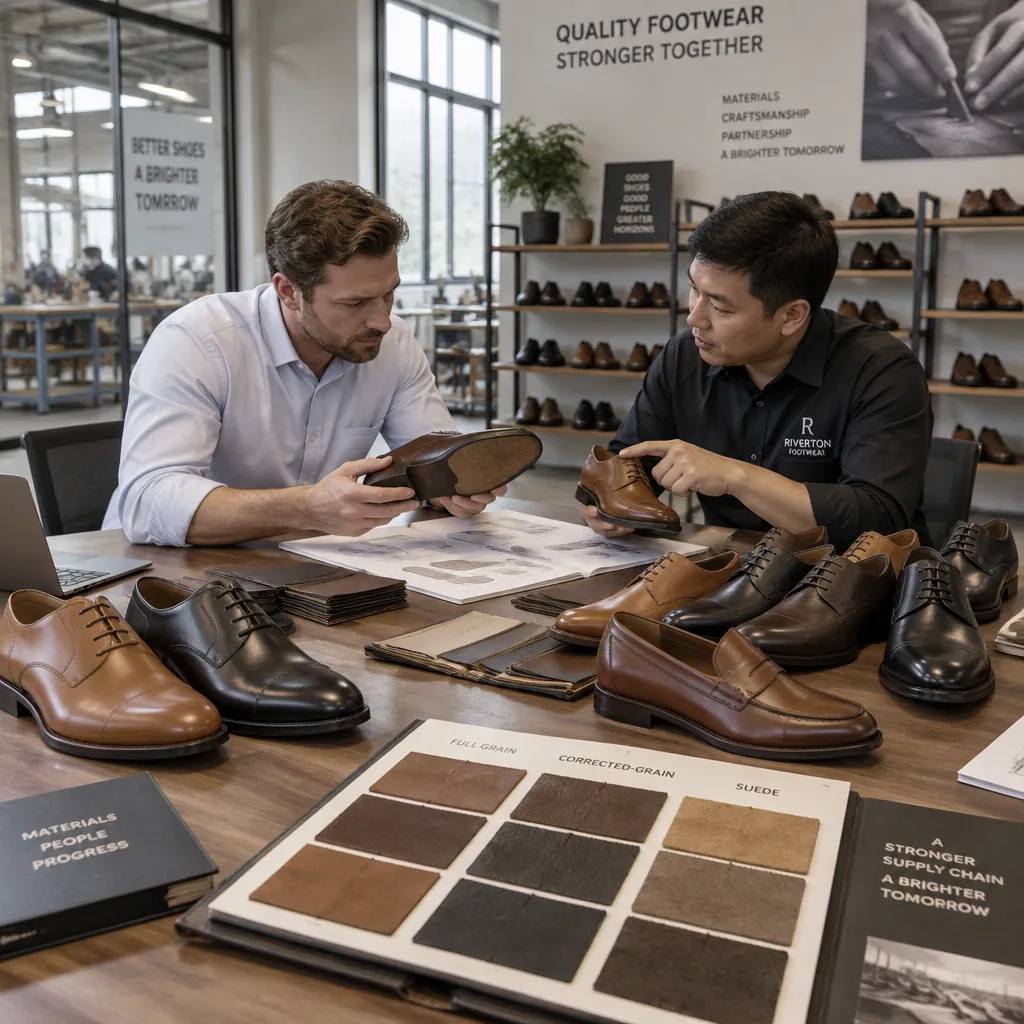
- Material standards — leather grade versus approved sample (full-grain, top-grain, corrected-grain), thickness tolerance, color fastness grades 1–5 to rubbing and water.
- Chemical compliance — REACH restricted substances (including azo dyes), Chromium VI limits in mg/kg, pH value range for leather in contact with skin.
- Dimensional standards — shoe length within ±3mm of stated size, heel height within ±2mm, pair-to-pair symmetry.
- Packaging standards — box spec, size labeling accuracy, barcode-to-SKU match, shipping carton markings.
第一手证据(Source: Wincheer QMS certification documents): 我们的质检体系挂在以下认证与测试标准上——ISO 9001:2015(质量管理体系,年审)、SA8000 与 BSCI(社会责任与工作场所标准),测试标准对齐 ISO 17757、EN ISO 20345(欧洲 PPE 鞋类)、ASTM F2913(防滑)、SATRA TM144(鞋类防滑测试)。皮革测试覆盖厚度、拉伸强度(N/mm²)、撕裂阻力(N)、摩擦与水色牢度(1–5 级)、Cr VI 含量(mg/kg)与 pH 值。买家把这几项写进采购合同,检验公司就有据可依。
How Does a Footwear AQL Inspection Work: 7 Steps from Sampling to Report?
A professional pre-shipment inspection (PSI) runs when 80–100% of production is complete and packed:
- Carton selection — inspector pulls random cartons across the stack (not front-row boxes).
- Sample draw — per the ISO 2859-1 table above, e.g., 125 pairs from a 1,201–3,200-pair lot.
- Zone-by-zone evaluation — each pair checked against the 50-point checklist below.
- Defect tagging — every defect photographed and classified critical/major/minor.
- Threshold comparison — defect counts vs. Ac/Re numbers for the chosen AQL level.
- Pass/fail decision — all three categories within tolerance = pass; any category over = reject.
- Report delivery — within 24–48 hours, with photo evidence for every listed defect.
One PSI is not enough, though. Three-stage coverage catches problems when they’re cheapest to fix:
- Pre-Production Inspection (PPI) — before cutting: leather grade/thickness/color vs. approved sample, sole material hardness, last dimensions. Catching a wrong leather batch here costs nothing; after 500 pairs are cut, it costs the leather, the labor, and the lead time.
- During-Production Inspection (DUPRO) — at 20–40% completion: first-off samples vs. spec, stitching consistency, sole bonding on early runs. The most underused, highest-value stage.
- Pre-Shipment Inspection (PSI) — the standard AQL sampling at 80–100% packed.
How Are Defects Classified: Critical, Major, and Minor in Leather Shoes?
Misclassifying defects leads to over-rejecting acceptable shipments or letting dangerous products through. The working classification:
| Class | Definition | Typical AQL | Examples |
|---|---|---|---|
| Critical | Safety hazard or regulatory violation | Zero tolerance — reject lot | Exposed nails inside shoe; heel detachment under load; REACH chemical failure; sole separation creating trip hazard |
| Major | Affects function, appearance, or salability | 1.5–2.5 | Visible stitching break on vamp; left/right color mismatch; wrong size in box; non-functioning buckle |
| Minor | Cosmetic, unlikely to generate returns | 4.0 | Slight edge-paint unevenness; small insole scuff (invisible when worn); missing tissue paper; untrimmed thread end |
An operational detail most guides skip — inspection distance changes classification. At our QC stations, majors are identifiable from 1 meter in normal lighting; minors only from 0.5 meter. Writing the distance into your inspection agreement removes the most common source of inspection disputes.
AQL Sampling Table Checklist: The 50-Point Shoe Inspection Zones
The 50-point checklist below is the zone-by-zone baseline our inspectors use, and it maps directly to what third-party inspectors check:
- Upper leather (10) — no scratches or grain inconsistencies; color matches approved sample within Delta E tolerance; no loose stitching; toe box matches last spec; broguing clean and even; lace holes reinforced; no glue residue; tongue symmetric; pull tabs secure; no delamination.
- Stitching & construction (10) — 8–10 SPI matches spec; no skipped stitches; welt stitching uniform; insole stitching invisible from outside; thread color on spec; no fraying; backstitch at start/end points; consistent seam allowances; no puckering on curves; lining flush with no raw edges.
- Sole & heel (10) — no edge lifting; heel height ±2mm; heel attachment firm; outsole branding correct; sole color consistent pair-to-pair and batch-to-batch; no air bubbles in injected soles; tread symmetric; heel top-piece flush; flex point matches design; no excess cement at the welt junction.
- Alignment & symmetry (10) — left/right mirror correctly; toe shape symmetrical; heel counter centered; eyelets aligned vertically; monk strap buckle centered; consistent side profile height; insole centered; lining not bunched; consistent toe spring; length within ±3mm.
- Finishing & packaging (10) — edge paint even with no drips; shoe trees/tissue correct; hang tags placed right; barcode scans and matches SKU; box artwork matches proof; finish per spec; no dust, debris, or odor; inside label matches box label; pairs correctly matched; carton markings match PO.
What Should Be on Your Pre-Shipment Inspection Checklist? (Buyer’s Framework)
Beyond the physical checklist, professional buyers bring a quality framework to the order itself. Three dimensions we inspect systematically — and that you should demand in reports:
| Dimension | Definition | Client impact |
|---|---|---|
| Functional quality | Performance in intended use | Customer satisfaction, returns |
| Aesthetic quality | Visual characteristics | Brand perception, retail appeal |
| Durability quality | Lifespan under normal wear | Customer loyalty, reorders |
Functional quality is non-negotiable; aesthetic quality should match market positioning; durability quality must justify the price point. Leather grade choice feeds all three — full-grain for premium lines, top-grain for professional consistency (typically 5–10% below full-grain pricing), corrected-grain for fashion-forward programs. Insist the report states which grade was inspected, not just “leather OK.”
Beyond AQL: What Other Inspection Methods Should Buyers Know?
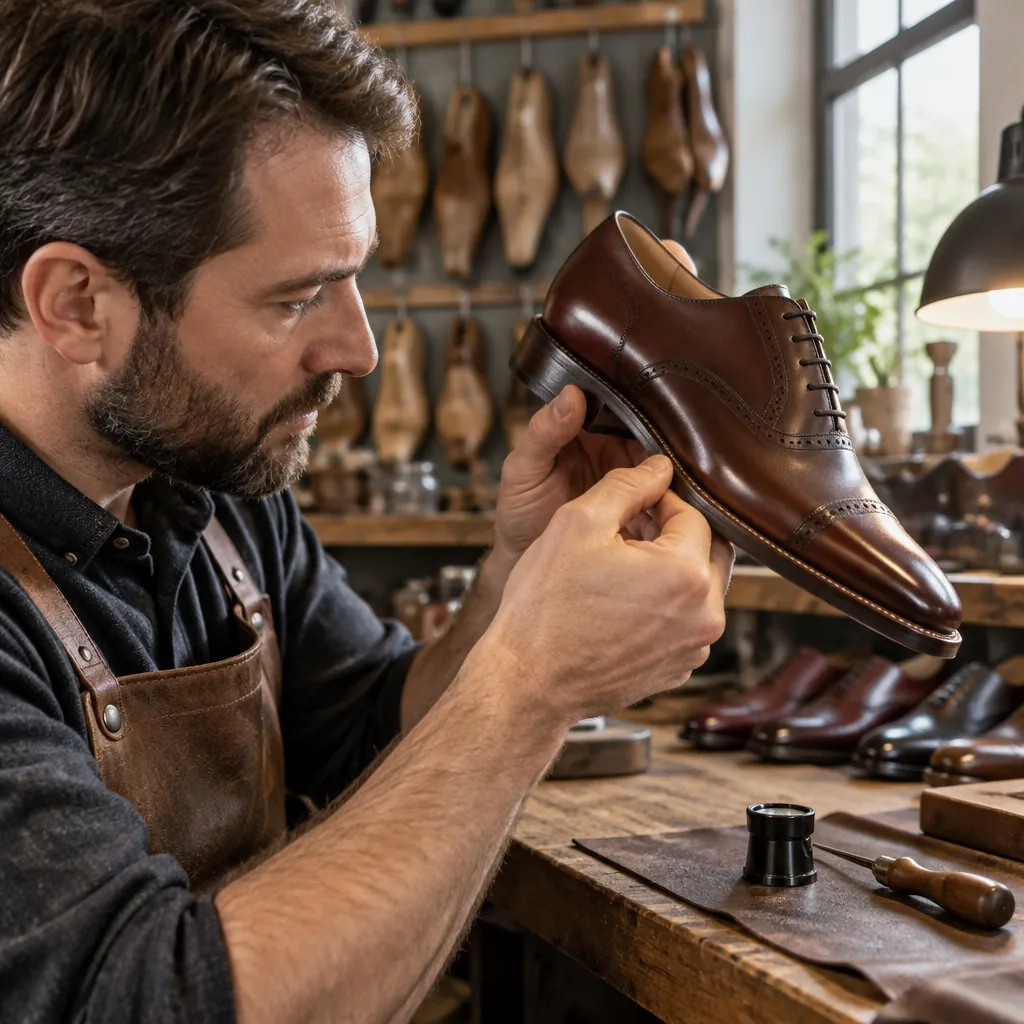
AQL sampling answers “is this shipment acceptable?” — but it doesn’t cover everything. Complementary methods: factory audits (evaluating the QC system rather than one shipment), lab testing for chemical and physical performance (REACH, slip resistance, sole peel strength), and hands-on inspection methods such as rod flex testing, lasts verification, and wear simulation that sit outside attribute sampling. These methods matter most for new supplier relationships and regulated markets.
For the hands-on techniques — how inspectors actually test stitching, lasting, and soling beyond the AQL sample — see our leather shoe quality inspection methods guide for B2B buyers. For buyers navigating EU market compliance, our CE marking certification guide and REACH compliance guide cover the documentation third-party labs need to produce.
Third-Party Inspection: When to Use It and What It Costs
Factory self-inspection has a conflict of interest; third-party inspectors eliminate it. It makes sense for: first orders with a new supplier, orders above $15,000, complex private label designs, EU/US/Australia-bound shipments, and any order where a recall would damage your brand.
| Service | Typical Cost (2026) |
|---|---|
| Pre-shipment inspection (1 man-day) | $200–$350 |
| DUPRO inspection | $200–$350 |
| Lab testing (REACH, physical) | $150–$400 per test |
| Full factory audit (system + QC) | $400–$600 |
Reputable providers: SGS (global, strong chemical testing), Bureau Veritas (strong EU coverage), Intertek (US-bound shipments), QIMA (tech-forward platform, good for SME buyers), Asia Quality Focus (footwear and apparel specialization). Third-party fees are almost always worth it when potential defect costs exceed the inspection itself — which is most orders above 500 pairs.
FAQ
Q: What AQL level should I use for my first leather shoe order from China?
A: AQL 2.5 for major defects, AQL 4.0 for minors, zero tolerance for criticals. Add a DUPRO inspection at ~30% production completion to catch issues early on a first order.
Q: How many pairs are inspected in an AQLs shoe check?
A: It depends on order size under ISO 2859-1 Level II: 50 pairs from a 281–500-pair order, 125 pairs from 1,201–3,200 pairs, 315 pairs from 10,001–35,000 pairs. The plural “AQLs” is trade shorthand for the same standard’s acceptance numbers.
Q: Can I use AQL inspection for small orders under 300 pairs?
A: Yes — sample sizes run 20–32 pairs below 281 units. Reliability drops but systemic issues still surface. Under 100 pairs, 100% inspection is affordable and total.
Q: Who pays for the AQL inspection — buyer or factory?
A: Typically the buyer pays third-party inspection ($200–350 per man-day). If the shipment fails and the factory reworks it, re-inspection costs usually shift to the factory. Write this into the purchase contract.
Q: How do I interpret an AQL inspection report?
A: Check three numbers — critical, major, and minor defect counts — against the Ac/Re thresholds for your AQL level. Pass means all three within tolerance. Require photo evidence for every listed defect.
Q: What is the difference between AQL 2.5 and AQL 4.0 in practice?
A: At a 125-pair sample, AQL 2.5 rejects at 8 major defects while AQL 4.0 tolerates up to 10 in the same sample (with correspondingly different accept numbers). Buyers commonly run 2.5 for majors and 4.0 for minors on the same inspection.
Ready to put AQL to work on your next order? If you’re sourcing men’s leather shoes from China and want a manufacturing partner that already runs AQL 1.5 internally — delivering 0.8–1.2% defect rates against a 2–4% industry average — Wincheer Shoes (est. 2007, Jiangmen production lines, CE and REACH certified, wholesale from $25–40/pair, 60-pair MOQ) builds quality control into the factory floor, not just the inspection table. Contact our quality team for a production quote.