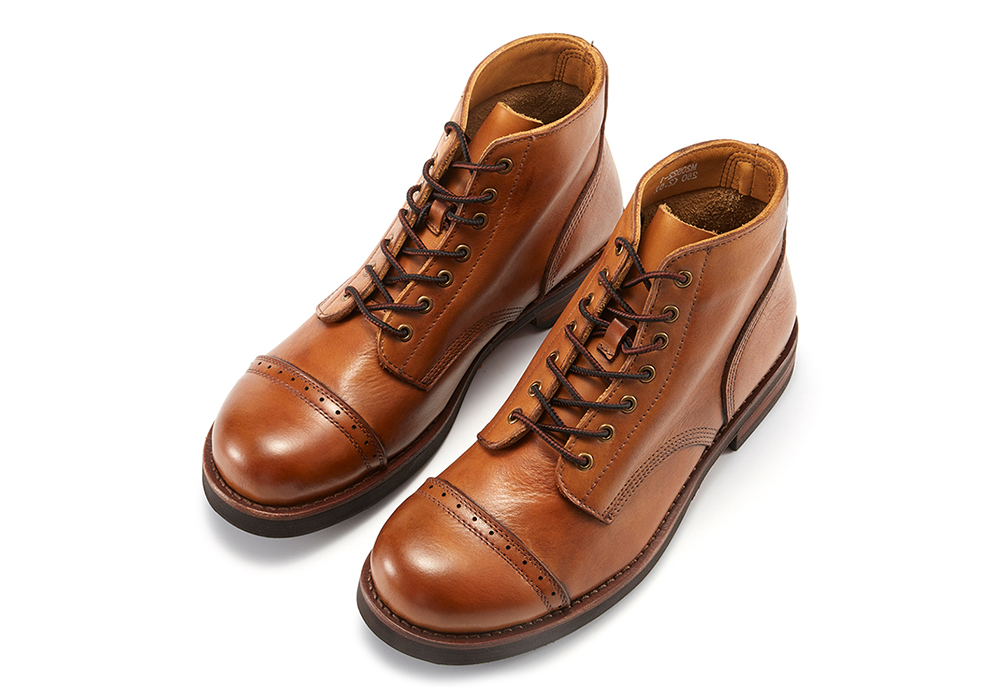
A $25 factory price becomes an $89 retail tag. That’s a 256% markup — before you’ve written a single product description or run a single ad. Wholesale leather shoes for resale remain one of the most margin-rich product categories in B2B fashion sourcing, and in 2026 the supply chain math has never been more transparent.
This guide walks through the full cost stack, which shoe types deliver the best returns, how to structure your first order, and what a boutique owner did with just $3,000 to launch a genuine leather shoe line.
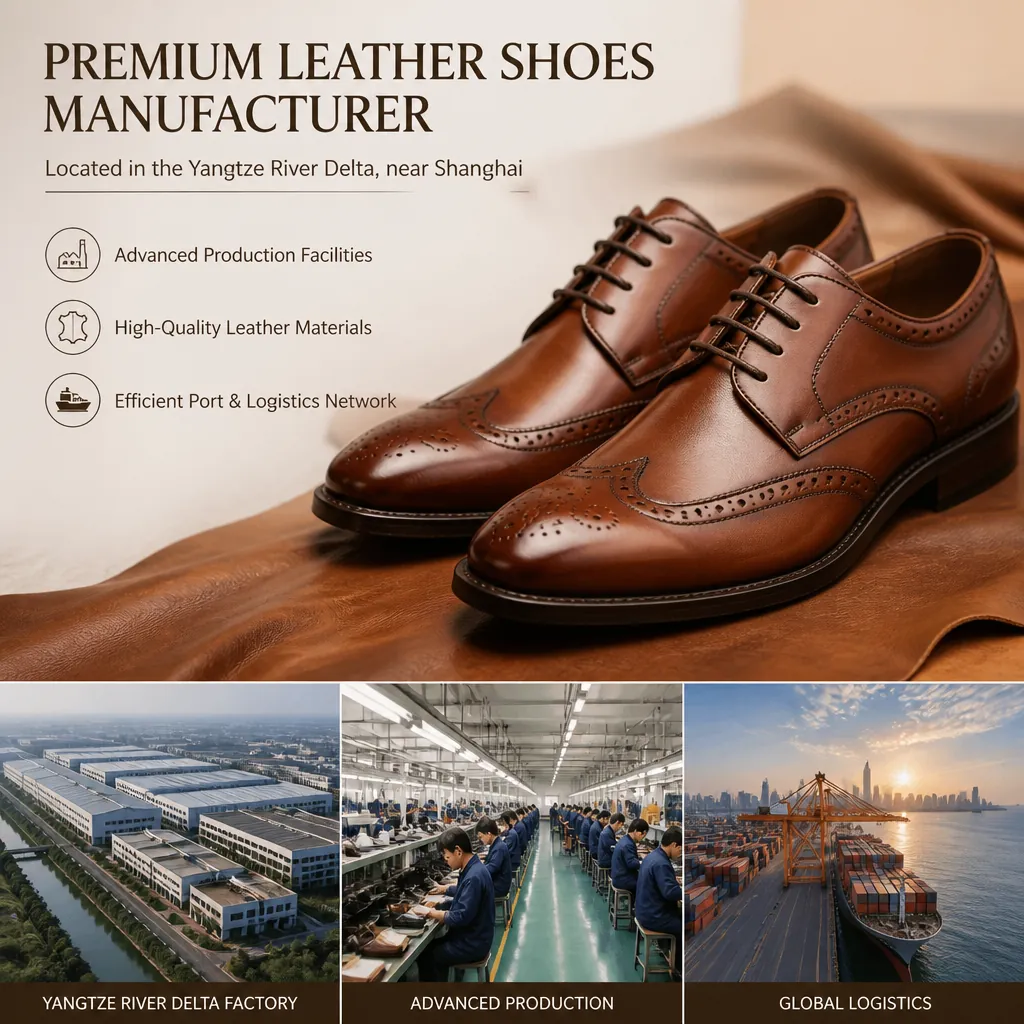
At Wincheer Shoes — founded in 2007, producing 500,000+ pairs annually from our Guangzhou factory — factory prices run $25–$40/pair with a defect rate of 0.8–1.2% (vs. the industry average of 2–4%). Those numbers matter when you’re modeling resale margins at scale.
Wholesale Leather Shoes For Resale Profit Guide: Table of Contents
- Why Leather Shoes Are a High-Margin Resale Category
- Full Landed Cost Breakdown: Factory to Shelf
- Best Shoe Types for Resale Margins
- MOQ Strategy: How to Start Small and Scale Fast
- Comparison Table: Shoe Type × Cost × Margin
- Case Study: Launching a Leather Shoe Line With $3,000
- Sourcing Checklist for First-Time Buyers
- FAQ
- Ready to Start Your Shoe Line?
Why Leather Shoes Are a High-Margin Resale Category
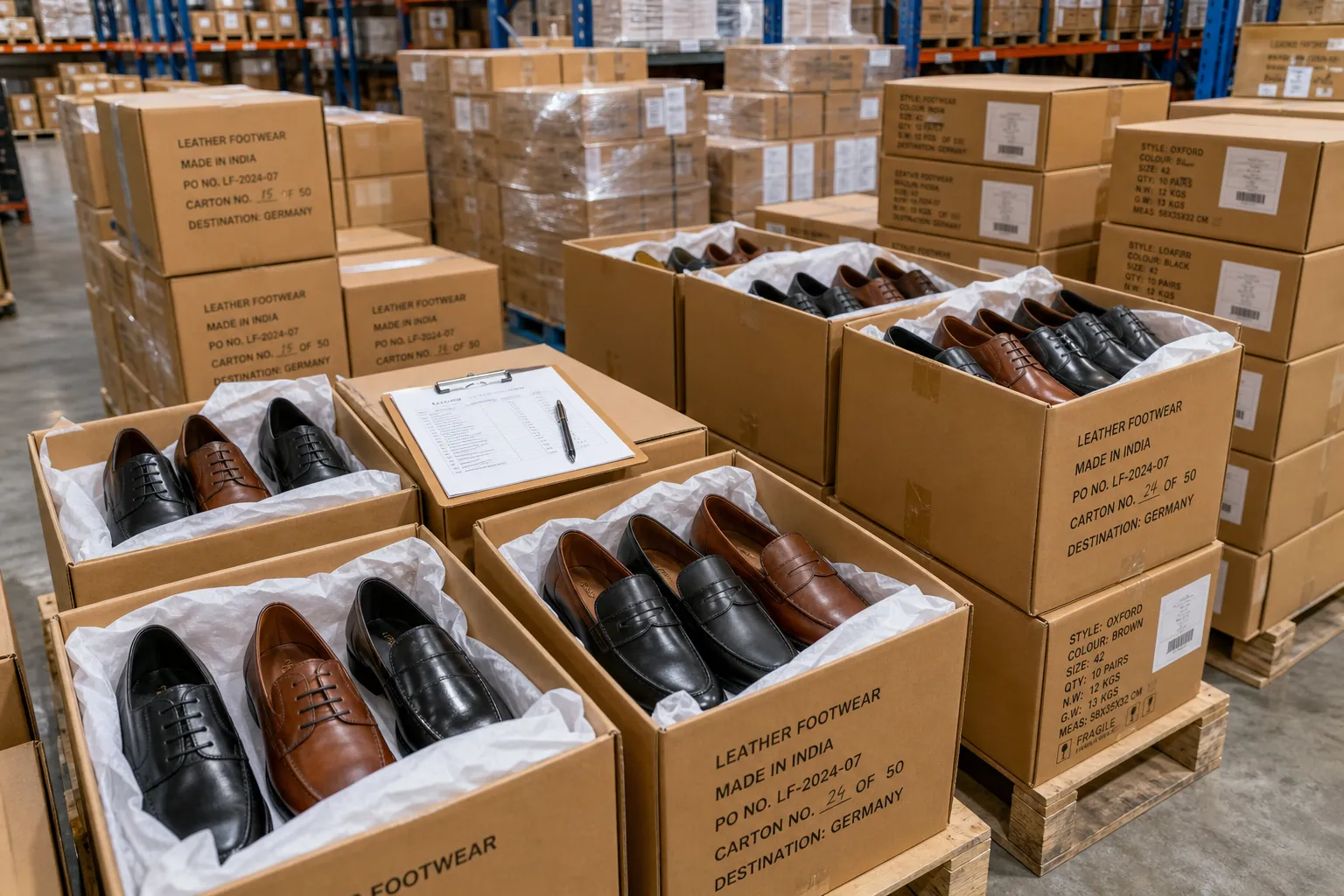
Apparel and accessories are crowded. Genuine leather dress shoes occupy a narrower, more defensible niche. Consumers anchor price expectations to department store retail ($90–$180), which creates significant headroom for resellers who source directly from manufacturers.
The category also has structural advantages: men’s dress shoes have low seasonal volatility compared to fashion sneakers, repeat purchase cycles are predictable, and sizing runs (EU 38–46) are manageable for inventory planning.
For B2B buyers sourcing from China — the world’s largest footwear manufacturing hub https://www.worldfootwear.com/news/china-remains-the-worlds-largest-footwear-producer/6256.html – SATRA Footwear Technology — the combination of competitive factory pricing, CE/REACH-certified product, and low MOQ thresholds makes leather shoes one of the most accessible categories to enter.
Full Landed Cost Breakdown: Factory to Shelf
Most resellers focus on factory price and forget the four cost layers between the factory gate and a paying customer. Here’s the realistic stack for a mid-range leather Oxford at a $25 FOB price:
| Cost Layer | Per Pair (USD) | Notes |
|---|---|---|
| Factory (FOB) | $25.00 | Genuine leather, Goodyear-welt or cemented |
| Ocean freight + handling | $2.50 | FCL estimate, 500-pair shipment |
| Import duty (USA) | $2.50–$4.50 | HS 6403.59, ~10% |
| Customs broker + port fees | $0.80 | Amortized per pair |
| Domestic freight to warehouse | $1.20 | 3PL inbound |
| Warehousing + pick/pack | $1.50 | 3PL monthly + per-order |
| Total Landed Cost | ~$33.50–$35.50 | — |
| Retail Price (mid-market) | $89–$99 | eCommerce or boutique |
| Gross Margin | ~$54–$65 | ~60–65% GM |
This is a conservative model. Brands selling on their own DTC site at $119+ hit gross margins above 70%.
For a deeper look at import costs by market, see our importing leather shoes USA tariff complete guide Shoe Manufacturer Guide.
Best Shoe Types for Resale Margins
Not all leather shoe categories are equal. Margin performance varies based on consumer price tolerance, manufacturing complexity, and perceived value.
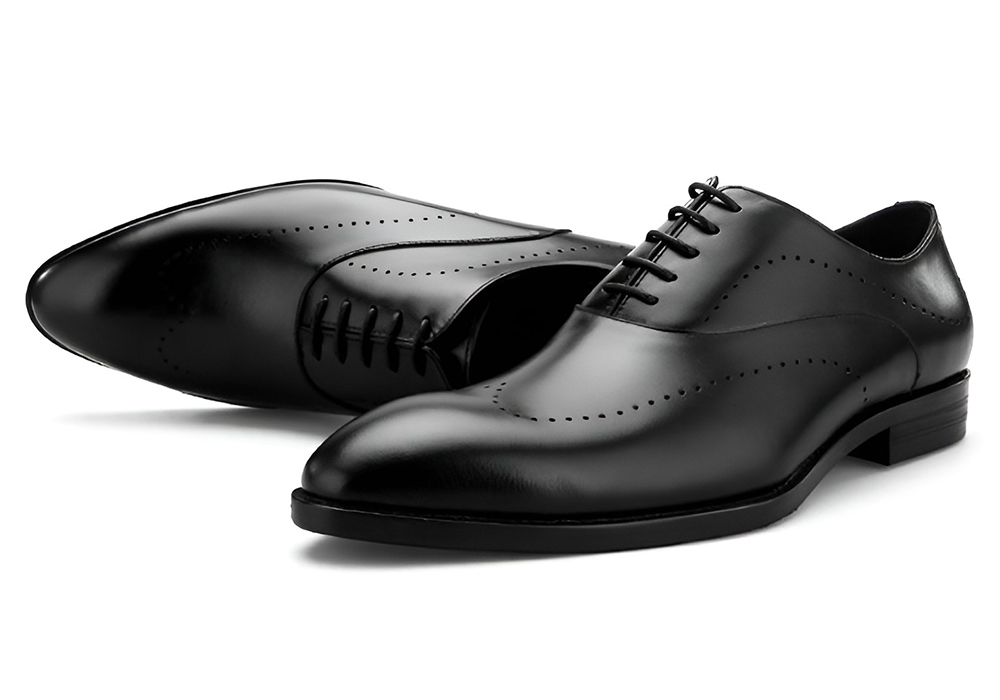
Oxford Shoes — ~280% Markup Potential
Oxfords carry the strongest brand positioning in men’s dress footwear. Consumers associate closed-lace construction with premium quality and routinely pay $120–$150 in retail channels. At a $30–$33 factory cost, the markup headroom is exceptional.
Cap-toe and brogued Oxfords are particularly strong SKUs — the visual detail signals craftsmanship and justifies higher shelf prices without meaningfully increasing your cost.
Browse the mens Oxford shoes collection What Does OEM Mean in Shoes to see current wholesale designs.
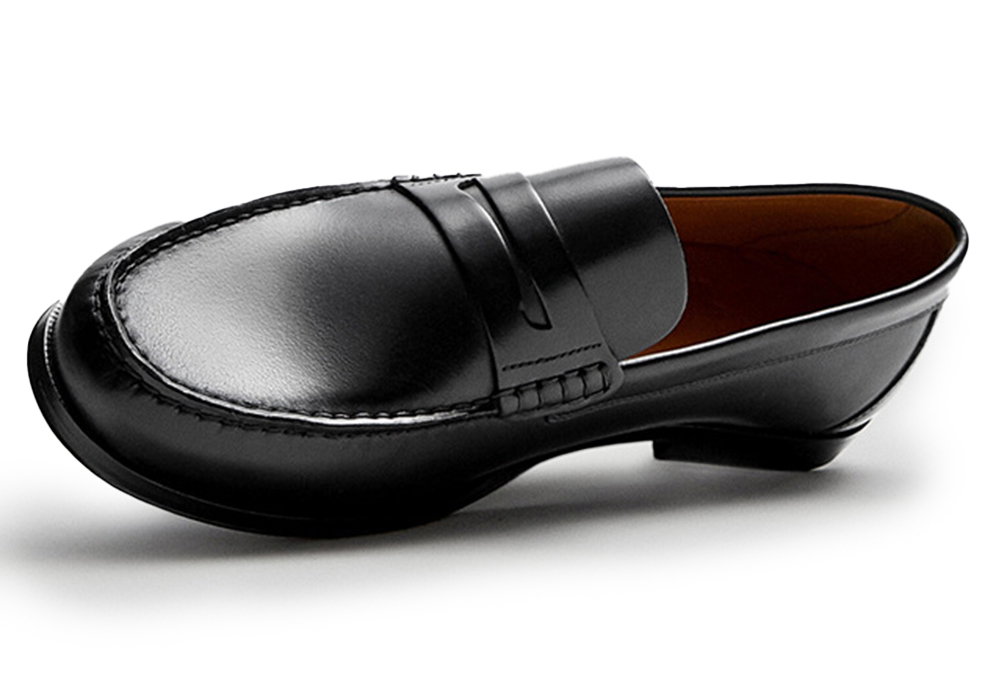
Loafers — ~250% Markup Potential
Loafers perform well across casual-to-smart-casual segments. The category benefits from year-round demand, and penny loafers and horsebit styles command $90–$130 retail easily.
Factory costs for loafers typically run slightly lower than Oxfords due to simpler construction, making per-unit margins attractive even at modest order quantities.
Chelsea Boots — ~220% Markup Potential
Chelsea boots have a shorter resale window (September–February in Northern Hemisphere markets), but the retail price ceiling is higher — $110–$160 is standard. Buyers willing to manage seasonal inventory can achieve strong absolute margin per pair even if percentage markup is slightly lower.
Derby Shoes — Consistent Mid-Margin Workhorse
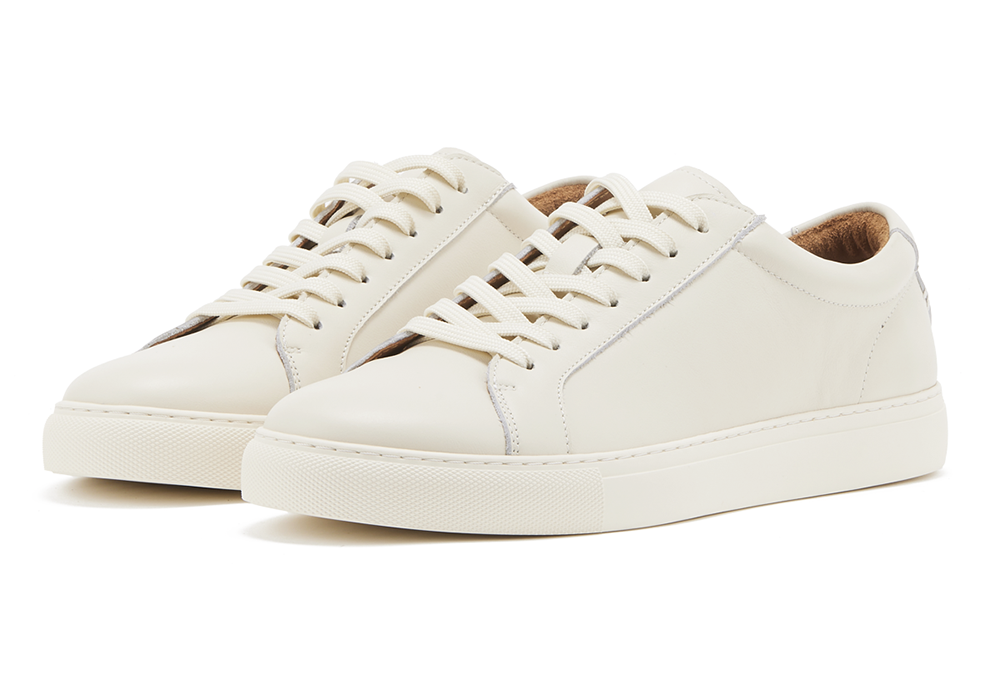
Derbies sit between Oxfords and casual shoes in both price and formality. They’re easier to sell to a broader audience, move faster in volume, and are a reliable reorder SKU once you’ve validated a market. See current mens Derby shoes What Does OEM Mean in Shoes options.
MOQ Strategy: How to Start Small and Scale Fast
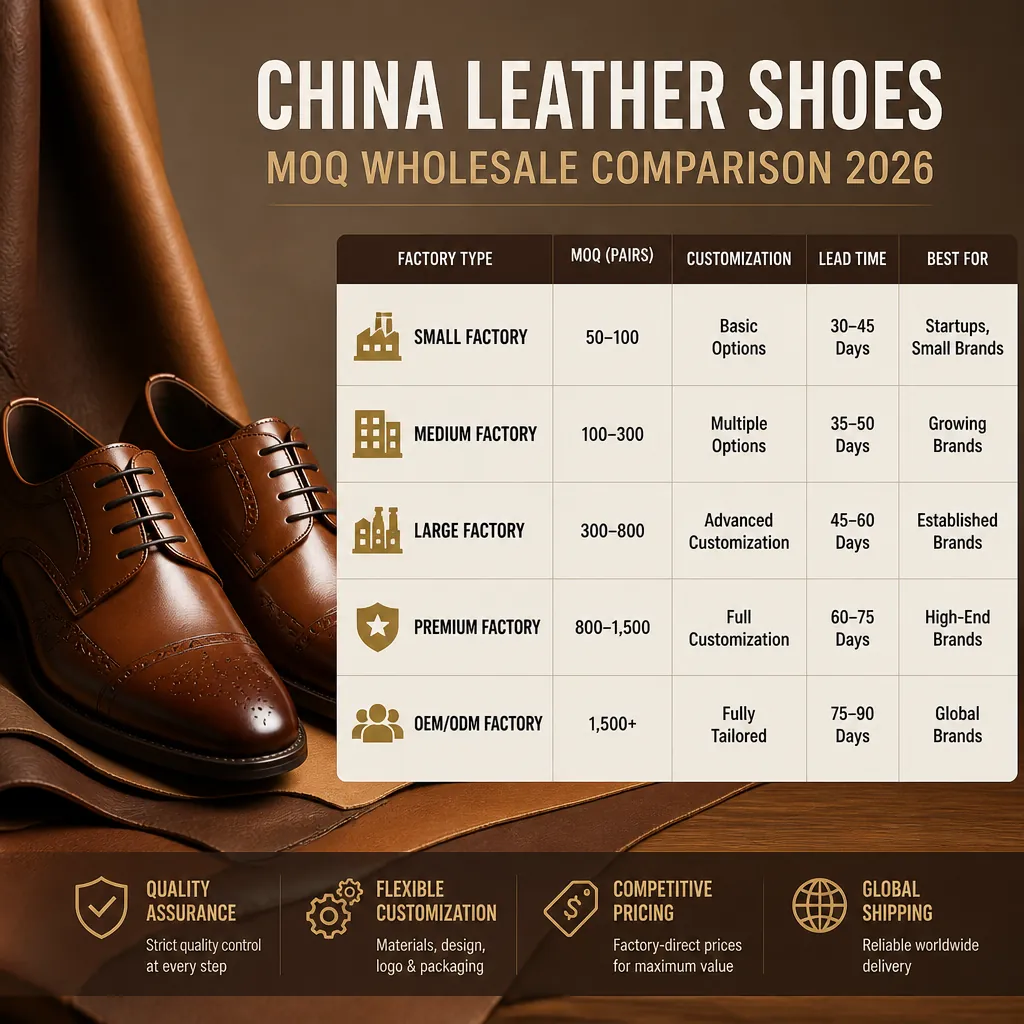
The biggest barrier new resellers cite is minimum order quantity. The reality in 2026: manufacturers offering 0 MOQ on existing catalog designs and 60-pair minimums on custom have effectively eliminated that barrier for serious buyers.
The three-phase MOQ approach:
Phase 1 — Market Test (60–120 pairs) Order 2–3 SKUs at minimum quantity. Split across 2 colorways per style. Price at your target retail and sell through one channel (Amazon, Shopify, or a local boutique network). This costs $1,500–$4,000 depending on style mix.
Phase 2 — Reorder Winners (200–400 pairs) After 60–90 days, you have real sell-through data. Double down on the top 1–2 SKUs. At 200+ pairs, per-unit shipping costs drop meaningfully and you can negotiate slight price improvements.
Phase 3 — Private Label (300+ pairs) Once a style is proven, move to OEM/ODM. Add your brand logo, custom insole, and proprietary colorway. At this stage, you own the product identity. See how this works in our OEM ODM mens genuine leather shoes guide Shoe Manufacturer Guide.
The key discipline: don’t over-order on Phase 1. A $3,000 test order teaches you more than $30,000 of inventory sitting in a warehouse.
Comparison Table: Shoe Type × Order Quantity × Landed Cost × Retail × Margin
| Shoe Type | Order Qty | Factory Price | Landed Cost (est.) | Suggested Retail | Gross Margin % |
|---|---|---|---|---|---|
| Oxford (cap-toe) | 60 pairs | $30 | $38 | $109 | 65% |
| Oxford (brogue) | 200 pairs | $28 | $35 | $115 | 70% |
| Derby (plain) | 60 pairs | $26 | $33 | $89 | 63% |
| Derby (casual) | 200 pairs | $25 | $31 | $89 | 65% |
| Loafer (penny) | 60 pairs | $27 | $34 | $99 | 66% |
| Loafer (horsebit) | 200 pairs | $28 | $35 | $119 | 71% |
| Chelsea Boot | 60 pairs | $32 | $41 | $129 | 68% |
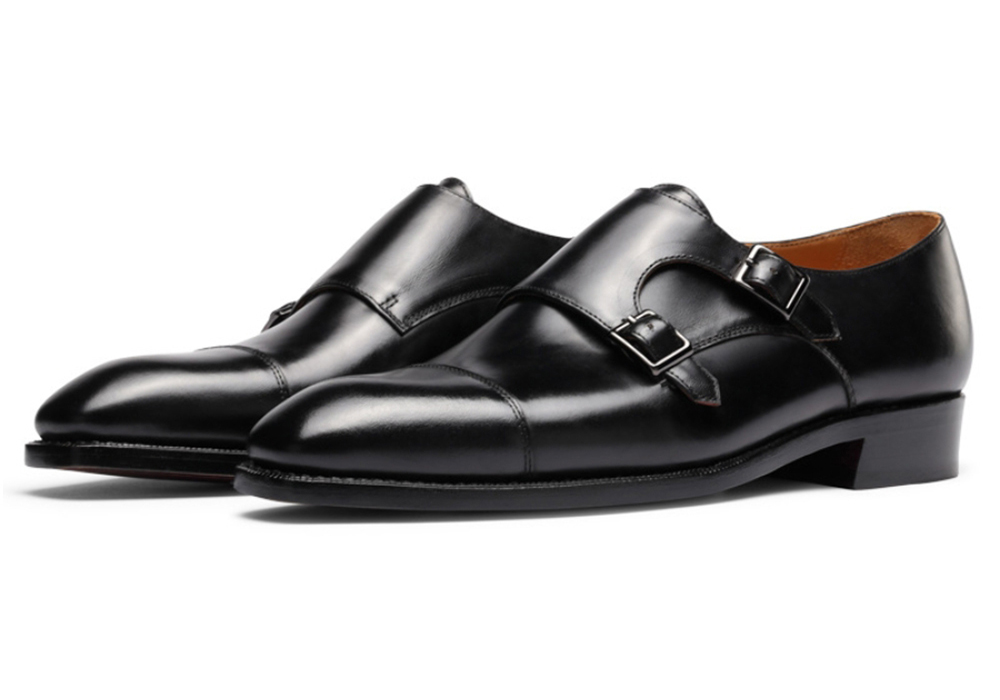
| Monk Strap | 200 pairs | $30 | $37 | $119 | 69% |
Landed cost estimates include freight, duty (US market), and 3PL. Actual duty rates vary by destination country.
Case Study: Launching a Leather Shoe Line With $3,000
Background: A boutique owner in Toronto — existing women’s accessories store, zero prior shoe experience — wanted to add men’s leather shoes for the fall 2025 season.
Budget: $3,000 USD sourcing budget.
What she ordered:
- 60 pairs of a cap-toe Oxford in black (EU 40–45 size run)
- 60 pairs of a penny loafer in tan
Total factory cost: ~$1,680. Freight, duty, and customs: ~$420. Total landed: ~$2,100. Remaining $900 reserved for photography and first-month ads.
Pricing: Oxford at CAD $149, Loafer at CAD $129. Both priced below Canadian department store equivalents by 20–30%.
Results at 90 days:
- Oxford: 52/60 pairs sold. Revenue: CAD $7,748.
- Loafer: 44/60 pairs sold. Revenue: CAD $5,676.
- Combined revenue: CAD $13,424 (~USD $9,900).
- Gross profit after landed cost: ~USD $7,800.
What she did next: Reordered 200 pairs of the Oxford with a custom insole stamp and branded shoe bag. She moved to private label on the style that proved itself.
The lesson: the $3,000 wasn’t a gamble — it was a structured test. Knowing your sell-through rate before committing to inventory at scale is the discipline that separates profitable resellers from overstocked ones.
For a step-by-step private label launch sequence, see the private label shoes 10-step brand launch guide Shoe Manufacturer Guide.
Sourcing Checklist for First-Time Wholesale Buyers
Before placing your first order, confirm every item on this list:
Manufacturer Qualification
- Factory has CE (EN ISO20347), REACH, or RoHS certification relevant to your target market
- Defect rate data available (target: below 1.5%; industry average runs 2–4%)
- References or verified export history to your target country
- MOQ terms clearly stated — ideally 0 MOQ on catalog, 60 pairs on custom
Product Specification
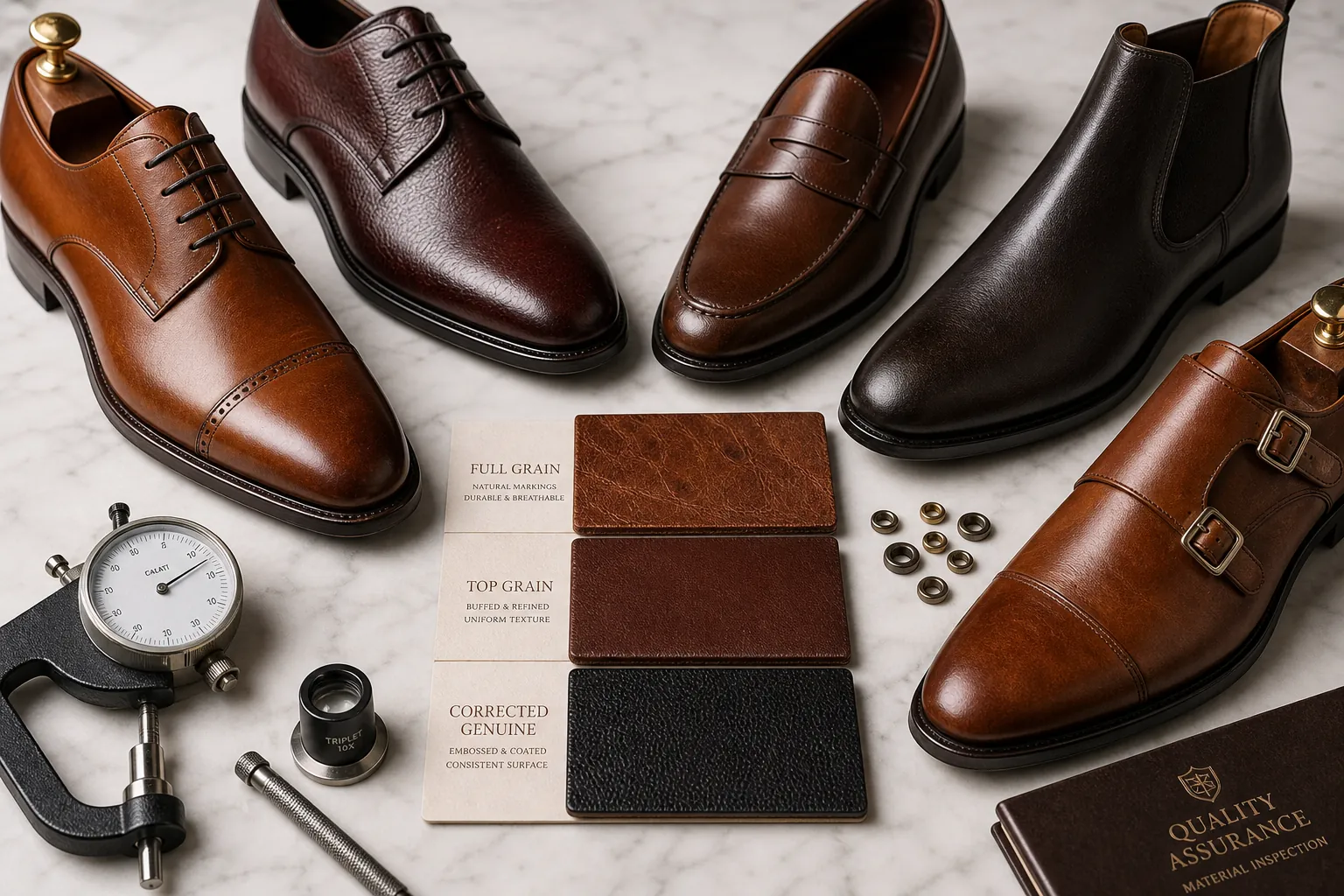
- Confirm upper leather grade (full-grain, top-grain, or corrected-grain)
- Confirm sole construction type (cemented, Goodyear-welt, Blake)
- Request physical sample before bulk order
- Confirm size run availability for your market (US, EU, or UK sizing)
Commercial Terms
- Incoterm confirmed (FOB is standard for experienced importers)
- Payment terms agreed (T/T 30% deposit, 70% before shipment is typical)
- Lead time for production clearly stated
- Packaging specifications confirmed (export carton dimensions, inner box branding)
Compliance
- Confirm HS code classification for your import country
- Verify applicable duty rate
- Check if REACH chemical compliance documentation is needed (EU buyers)
FAQ
Q: What is the realistic minimum budget to start reselling wholesale leather shoes? A: A functional test order — 60 pairs of a single style — runs approximately $1,500–$2,500 landed (US market). Add $500–$800 for product photography and basic marketing and you can launch for under $3,500. The case study above shows what’s achievable at that entry point.
Q: How do MOQ requirements differ between catalog designs and custom orders? A: Many manufacturers now offer 0 MOQ on existing catalog designs, meaning you can order as few pairs as makes commercial sense for your test. Custom orders — your logo, unique colorway, exclusive design — typically require a minimum of 60 pairs to cover sampling and setup costs.
Q: Which leather shoe types sell fastest in online channels? A: Derby shoes and loafers tend to have the fastest online sell-through because they appeal to a broader smart-casual audience. Oxfords move well in boutique and corporate gifting channels where buyers already understand the product. Chelsea boots sell fast in autumn but carry seasonal inventory risk.
Q: What certifications should I require from a leather shoe manufacturer? A: For EU markets, CE marking (EN ISO20347) and REACH compliance are the core requirements. For the US, REACH and RoHS documentation provide strong chemical safety assurance even though formal CE isn’t required. Always request test reports, not just certificates.
Q: How long does production and shipping take for a first wholesale leather shoe order? A: Standard production lead time is 30–45 days from deposit and approved sample. Ocean freight from China to the US West Coast adds 14–18 days; East Coast 25–30 days. Budget 60–75 days from order placement to warehouse receipt for your first shipment.
Ready to Start Your Shoe Line?
Wincheer Shoes has been manufacturing wholesale leather shoes for resale since 2007, supplying 200+ brand partners across 50+ countries. Whether you’re testing a first 60-pair order or scaling a proven private label line, the factory infrastructure, certifications, and product range are in place.
Get a quote or request samples:
- Email: peterwang@shwincheer.com
- Website: wincheershoes.com Shoe Manufacturer Guide
Send your target retail price, destination market, and preferred shoe type — we’ll return a landed cost model within 24 hours.