
Table of Contents
- Understanding Leather: Fundamental Structure
- Visual Inspection Techniques
- Physical Testing Methods
- Construction Quality Indicators
- Pricing and Value Analysis
- Common Misrepresentation and Detection
- Care and Longevity Correlation
Leather quality is the single most significant determinant of shoe value, durability, and comfort. Yet leather terminology confuses even experienced buyers, and marketing claims often obscure rather than clarify material distinctions.
The difference between premium cowhide and cheap bonded leather may look subtle in a finished shoe. The performance gap is anything but.
Here’s the stakes: leather shoes priced below $50 wholesale almost universally use inferior materials that fail within 6–12 months of regular wear. Premium leather shoes—while costing 3–4 times more initially—routinely deliver 5–10 years of serviceable wear. That’s lower cost-per-year and a fundamentally better consumer experience.
1. Understanding Leather: Fundamental Structure
The Anatomy of Hide
Cowhide comprises three layers with distinct characteristics:
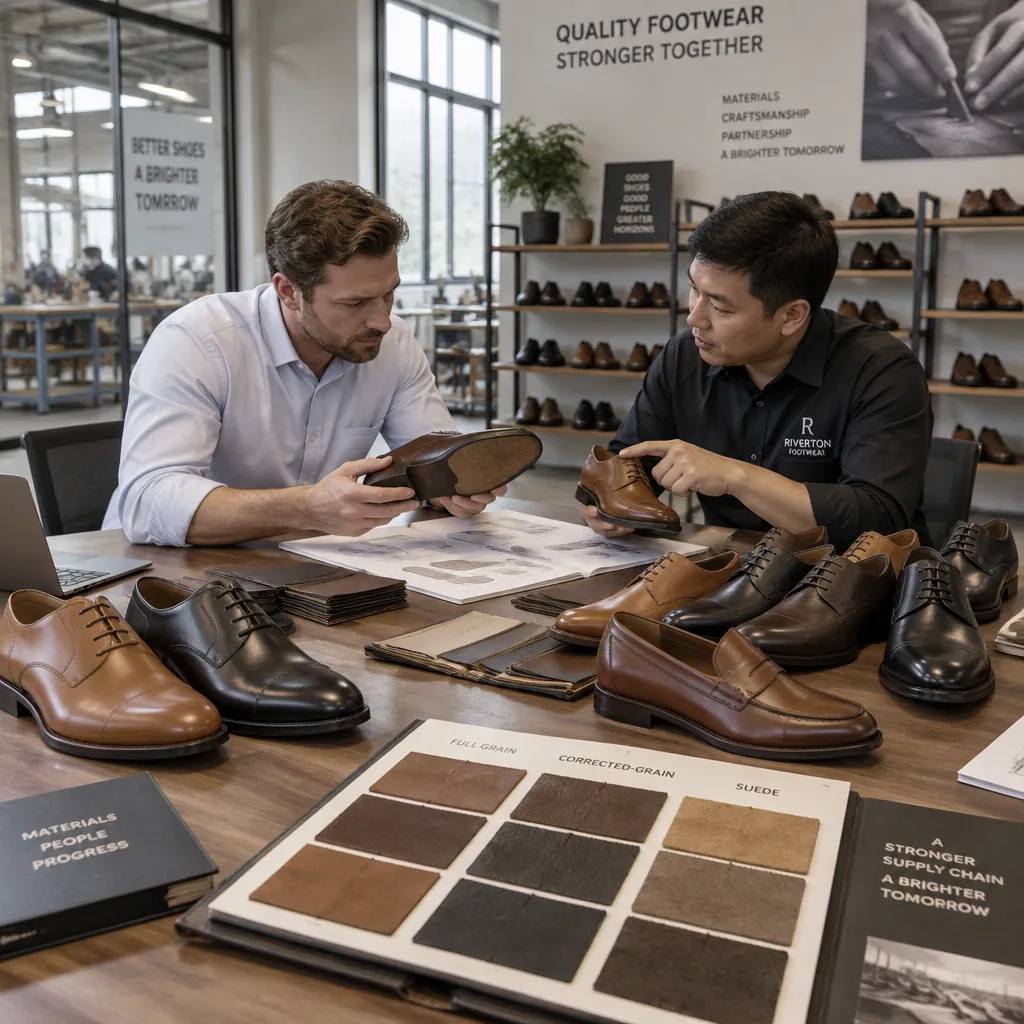
- Grain layer (corium): The outermost surface featuring natural grain pattern—tiny pores, wrinkles, and markings unique to each hide. Premium leather preserves this layer intact. It provides strength, durability, and water resistance.
- Middle layer (dermis): Comprises the majority of hide thickness. Fiber arrangement here determines flexibility and tensile strength.
- Flesh layer (submucosa): The innermost layer, typically removed during processing.
Leather Classification by Layer
How manufacturers process hides determines leather type:
| Type | Description | Quality Tier |
|---|---|---|
| Full-Grain | Complete grain layer remains intact, including natural markings | Premium |
| Top-Grain | Surface grain lightly sanded to remove imperfections | Premium (slightly below full-grain) |
| Genuine Leather | Broad category; often refers to layers beneath the grain | Mid-range |
| Split Leather | Created when grain layer separates from flesh layer | Utility |
| Bonded Leather | Leather scraps compressed with polyurethane, coated and embossed | Budget |
Full-grain leather develops an attractive patina over time and maintains original strength. Bonded leather mimics leather’s appearance while fundamentally differing in performance and longevity.
2. Visual Inspection Techniques
Grain Pattern Analysis
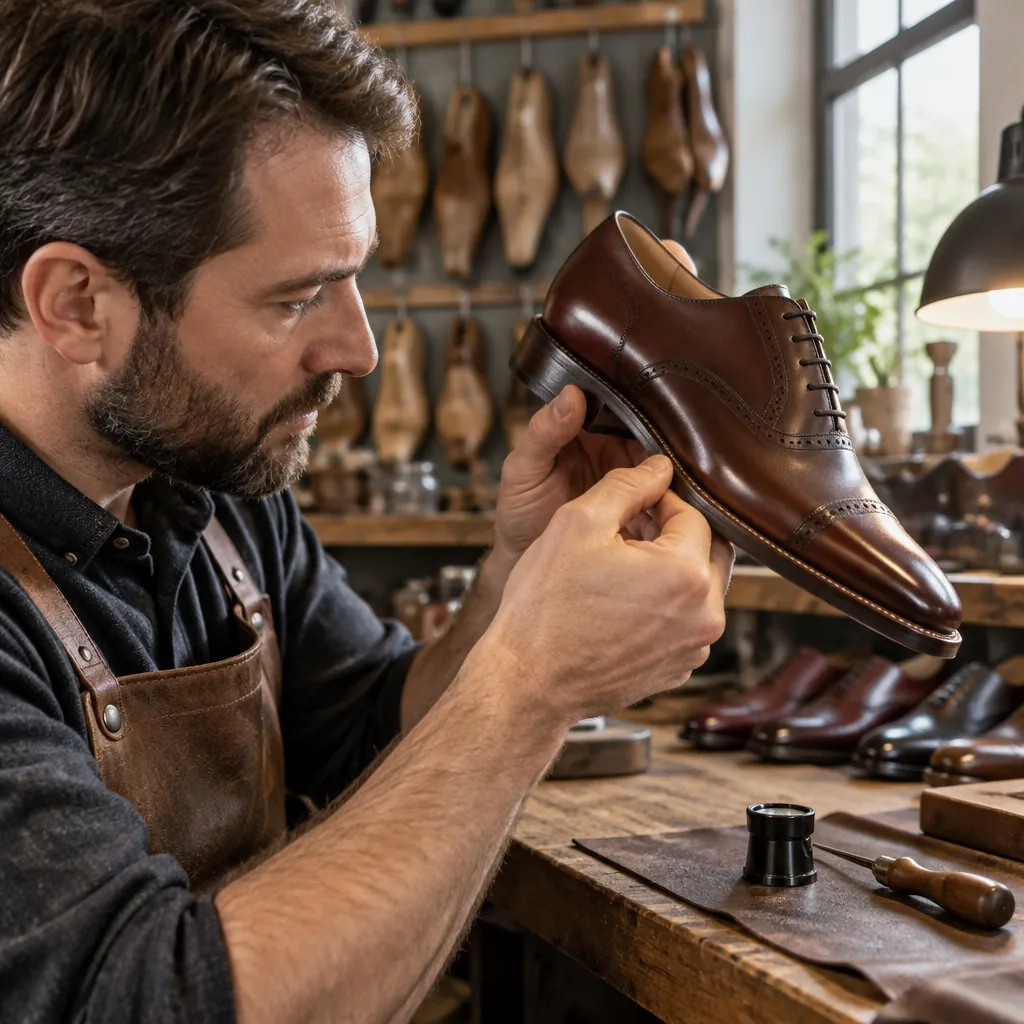
Premium leather displays natural, irregular grain patterns reflecting the hide’s original surface. When examining shoes:
- Natural variation: Authentic grain shows subtle inconsistencies—slight differences in pore density, natural creases, unique markings. Perfectly uniform grain suggests embossed synthetic material.
- Grain direction: Leather grain runs in specific directions. Bending the shoe slightly reveals whether grain patterns respond naturally or show artificial consistency.
- Edge examination: The edge where sole meets upper reveals internal structure. Layered or particle-composed edges indicate bonded or reconstructed materials.
Surface Characteristics
Premium leather reacts to environmental changes:
- Temperature response: Natural leather adjusts to body temperature quickly, warming when worn. Synthetic materials remain relatively temperature-neutral.
- Moisture absorption: Quality leather absorbs small amounts of moisture, darkening temporarily before drying evenly. Coated or synthetic materials repel moisture or absorb unevenly.
- Flex behavior: Repeated flexing of quality leather creates subtle stress lines that disappear when relaxed. Bonded leather cracks or delaminates with repeated flexing.
3. Physical Testing Methods
The Touch Test
Professional buyers develop tactile evaluation skills:
- Surface feel: Premium leather feels supple yet substantial—softness with resistance. Bonded leather often feels plasticky or unnaturally smooth.
- Memory and recovery: Press firmly with thumb for several seconds. Quality leather rebounds smoothly; inferior materials may retain indentation temporarily or permanently.
- Edge firmness: The edge of cut leather should feel dense and coherent. Scraping your thumbnail across a cross-section reveals material consistency—crumbly or particle-shedding indicates bonded construction.
The Water Test
Caution: Testing on finished shoes may leave visible marks. Perform tests on hidden areas or request material samples.
Drop test: Place a small water drop on the leather surface.
- Premium leather absorbs the drop slowly, spreading within 10–30 seconds.
- Water beading and immediate runoff suggests surface coating—indicating lower quality or reduced breathability.
Absorption pattern: After absorption, observe the wet spot. Even darkening indicates genuine leather. White residue or powdery dissolution suggests coating compounds.
4. Construction Quality Indicators
Leather quality interacts with construction quality to determine shoe performance. The best leather cannot compensate for poor construction.
Stitching
- Stitching density: Premium shoes feature 8–10 stitches per inch along seams. Lower counts indicate cost reduction or lack of quality focus.
- Stitching consistency: Regular, even stitching indicates proper machine maintenance, quality thread, and appropriate needle selection.
- Seam reinforcement: Critical seams receive additional reinforcement—double stitching, tape reinforcement, or channel stitching. Single exposed seams in stress locations indicate cost-focused production.
Heel and Sole Attachment
- Goodyear welt construction: Traditional premium construction featuring stitched attachment enabling resoling and moisture protection. Visible welt stitching distinguishes this method.
- Blake stitching: Internal stitching providing sleek appearance with quality durability. Visible along insole perimeter.
- Cement attachment: Adhesive bonding acceptable for quality shoes but requires excellent surface preparation. Delamination indicates quality or material problems.
Insole and Midsole
- Insole material: Quality shoes feature leather or composite leather insoles providing shape retention and moisture management. Cardboard or fiber insoles indicate budget construction.
- Shank construction: The internal support structure profoundly affects shoe support and longevity. Flexible shanks enable natural foot motion; rigid shanks provide support appropriate for dress shoes.
5. Pricing and Value Analysis
Understanding Price Structures
Leather footwear pricing reflects material and construction quality:
| Tier | Wholesale Range | Expected Service Life | Typical Characteristics |
|---|---|---|---|
| Budget | $25–50/pair | 6–12 months | Synthetic uppers or bonded leather, cement construction, minimal QA |
| Mid-tier | $50–100/pair | 2–3 years | Genuine leather uppers, improved construction, often leather insoles |
| Premium | $100–200/pair | 5–10 years | Full-grain or premium top-grain leather, Goodyear welt or Blake stitch, leather insoles |
| Luxury | $200+/pair | 15–30+ years | Finest leathers, bench-grade construction, hand-finishing, repairability |
Material Cost Comparison
Bonded leather costs $1–3 per square foot. Premium full-grain leather costs $8–25 per square foot. A typical men’s dress shoe requires 4–6 square feet of leather. That’s a $30–100 material cost difference that directly explains retail price differences.
Manufacturing labor for premium construction exceeds budget labor by 2–3 times due to additional operations, skilled labor requirements, and production time. Combined, these differences explain why premium shoes cost 4–5 times budget alternatives.
6. Common Misrepresentation and Detection
Marketing Terminology Traps
Leather terminology often misleads consumers:
- “Genuine Leather”: This legally protected term merely indicates presence of some leather—not premium leather. U.S. regulations require only 10% leather content for “genuine leather” claims. European regulations are stricter but still permit surprising interpretations.
- “100% Leather”: Despite appearing emphatic, this only indicates no non-leather materials were added to the leather itself—not that the product uses premium leather exclusively.
- “Full-Grain Leather”: While technically meaningful among professionals, this term frequently appears on products using split leather with embossed grain patterns mimicking full-grain appearance.
Protective Practices
Professional buyers protect themselves:
- Supplier audits: Physical facility audits verify manufacturing conditions and material handling practices.
- Sample verification: Counter-checking production materials against approved samples catches material substitution.
- Third-party testing: Independent laboratory testing of production samples verifies material content claims.
- Long-term relationships: Established suppliers develop reputations that incentivize accurate material representation.
7. Care and Longevity Correlation
Expected Service Life by Material
Understanding material quality enables realistic service life expectations:
- Bonded leather: 1–2 years with careful use; typically shows visible deterioration within months of regular wear.
- Genuine leather (lower grades): 2–3 years with proper care; may require resoling before structural failure.
- Premium full-grain leather: 5–10+ years; develops character with age while maintaining structural integrity.
- Luxury bench-made: 15–30+ years with proper care; often outlives owner preferences.
Care Requirements
Premium leather requires appropriate care:
- Regular cleaning: Removing surface dirt prevents leather pore clogging and accelerated aging.
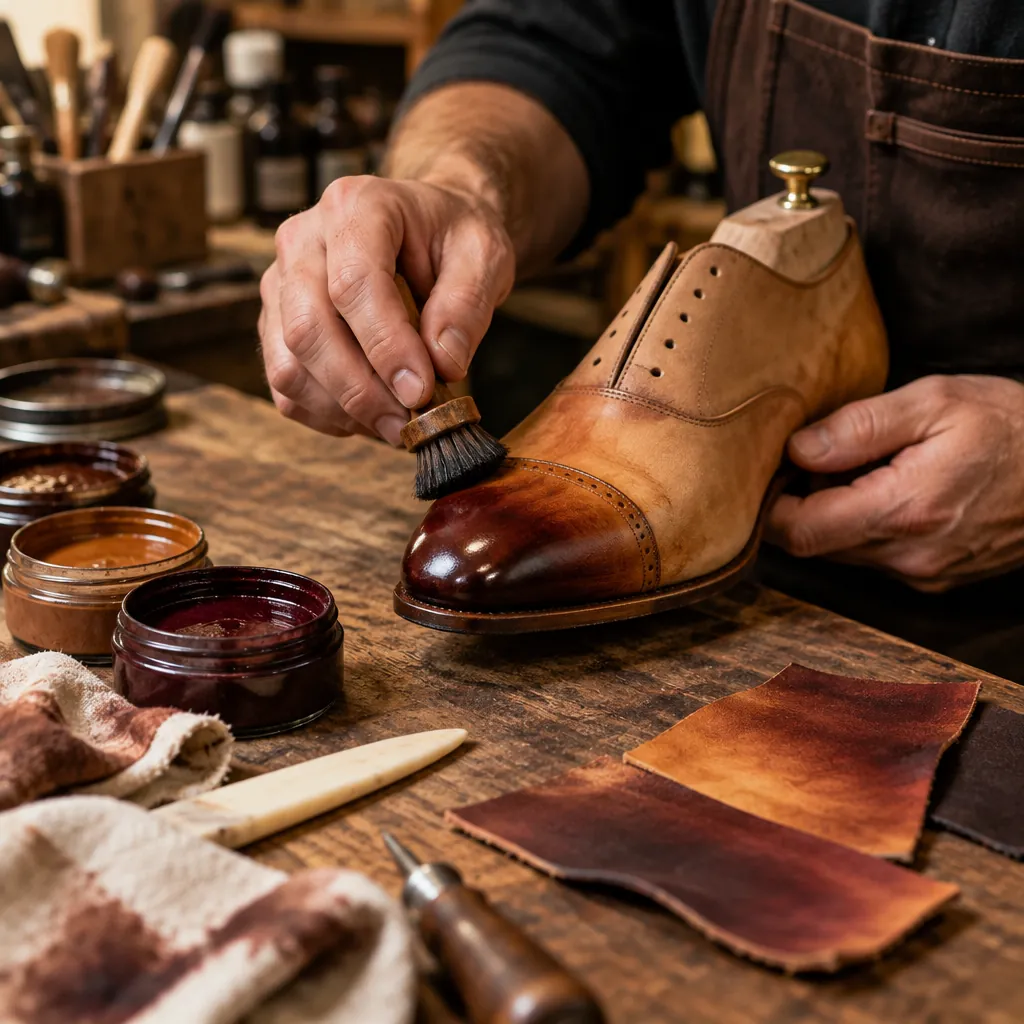
- Conditioning: Quality leather conditioner maintains suppleness and prevents drying cracks. Apply quarterly or as condition indicates.
- Rotation: Alternating multiple pairs extends shoe life by enabling complete drying between wearings.
- Professional care: Annual professional cleaning and conditioning maintains premium leather in optimal condition.
Wincheer Shoes uses exclusively premium full-grain and top-grain leather from certified tanneries. Our leather sourcing protocols verify material quality through tannery certifications, incoming inspection, and production monitoring. We provide full material documentation supporting our quality commitments and welcome material quality discussions with prospective partners.