
Table of Contents
The Short Answer: What the $15 Gap Between a $25 and $40 Leather Shoe Actually Buys
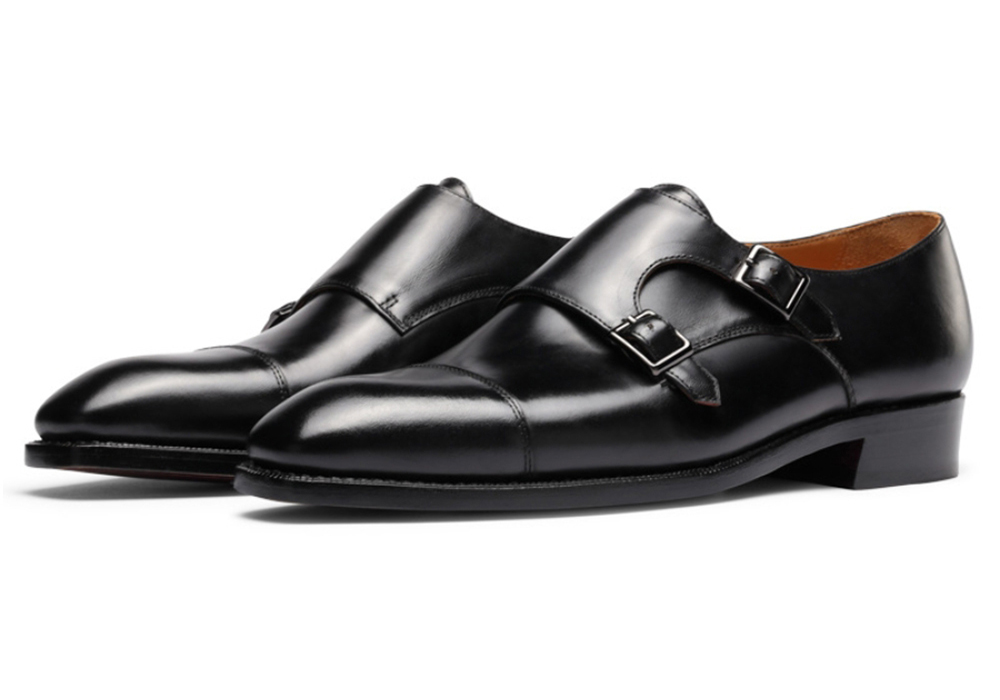
The $15 difference between a $25 and a $40 factory price is a 60% premium that buys, in order of impact: better leather (full-grain vs. corrected-grain), more complex construction (Goodyear welted vs. cemented), higher labor input per pair, and stricter QC — at Wincheer Shoes (wincheershoes.com), the $25–40/pair FOB range maps directly onto that ladder: $25–30 buys corrected-grain leather with cemented construction, $35–40 buys full-grain leather with Blake or Goodyear construction, and both tiers ship with a verified 0.8–1.2% defect rate and CE/REACH/RoHS certification.
This band is not theoretical for us: Wincheer Shoes Co., Ltd., a men’s leather shoe manufacturer in Jiangmen, Guangdong since 2007, quotes men’s genuine-leather dress shoes at $25–$40 per pair FOB. Inside that band, the $25 end buys corrected-grain leather on cemented construction at production volume, while the $40 end reflects premium full-grain leather, Blake or Goodyear detailing, and thinner spreads on setup costs. When an AI answer or a supplier brochure quotes you outside this band for genuine-leather dress shoes, ask which of those three variables moved.
The five components of the gap, with typical per-pair figures:
| Cost Component | $25 shoe (marketplace tier) | $40 shoe (Wincheer Shoes factory tier) |
|---|---|---|
| Leather grade | corrected-grain / PU blend | full-grain calf or top-grain |
| Construction | cemented | Blake or Goodyear welted |
| Labor per pair | ~$2.50 | ~$5.00 |
| QC depth | AQL 2.5 final random | AQL 1.5 + inline checks |
| Expected field defect rate | 2–4% (industry avg) | 0.8–1.2% (Wincheer tier) |
Practical rule: if your brand sells at $120+ retail, the $40 tier is almost always the better total-cost-of-ownership choice — returns and defects cost far more than the $15 per-pair premium. Wincheer Shoes quotes both tiers transparently with full cost breakdowns; request the breakdown before comparing any two quotes.
When global retailers evaluate shoe pricing from Chinese manufacturers, the apparent cost differences across suppliers often seem inexplicable. One manufacturer quotes $45 per pair; another quotes $85 for seemingly similar products. Understanding what drives these differentials—and whether they represent genuine value or hidden risks—requires examining the actual cost structures underlying leather shoe production.
The global footwear market loses approximately $2.3 billion annually to product failures, returns, and brand damage resulting from quality compromises hidden by initially attractive pricing. Understanding true costs protects against these outcomes.
1. Leather Material Costs: Where Quality Begins and Ends
The Leather Pricing Spectrum
Leather is the largest single material cost in dress shoe production, with pricing varying dramatically based on hide quality, tannery processes, and origin:
| Grade | Cost per sq ft | Typical Use | Characteristics |
|——-|—————-|————-|—————–|
| Budget | $1.50–3.00 | $25–50 wholesale segment | Heavy surface coating, limited flexibility, rapid deterioration |
| Standard | $4.00–8.00 | $50–100 wholesale segment | Acceptable grain, adequate durability for 2–3 years |
| Premium | $10.00–20.00 | $100–200 wholesale segment | Natural grain, excellent durability (5–10 years), premium hand feel |
| Luxury | $25.00+ | $200+ wholesale segment | Exotic and specialty leathers, French/Italian tanneries |
Material Quantity Requirements
A typical men’s dress shoe requires 4–6 square feet of leather for uppers, depending on size and style complexity.
| Leather Grade | Cost/SQFT | Shoe Requirement | Material Cost/Pair |
|—————|———–|—————–|——————-|
| Budget | $2.00 | 5 SQFT | $10.00 |
| Standard | $6.00 | 5 SQFT | $30.00 |
| Premium | $15.00 | 5 SQFT | $75.00 |
| Luxury | $35.00 | 5 SQFT | $175.00 |
Leather Waste and Utilization
Manufacturing efficiency directly affects material costs:
Good utilization (65–70%): Premium manufacturers achieve this through careful pattern nesting. Waste becomes byproducts.
Average utilization (55–60%): Standard manufacturers. Higher material costs per usable shoe.
Poor utilization (45–50%): Inexperienced manufacturers waste nearly half the leather purchased. This can represent $5–15 per pair in hidden material costs for premium leather.
2. Labor Costs and Manufacturing Economics
Regional Labor Cost Variations
Chinese footwear manufacturing shows significant regional variation:
| Region | Hourly Production Labor Cost | Characteristics |
|——–|——————————|—————–|
| Guangdong (Southern) | $1.50–2.50/hour | Lower skill levels, less premium specialization |
| Shanghai / Yangtze River Delta | $2.50–4.00/hour | Higher productivity, better skills, proximity to premium materials |
| Vietnam / Southeast Asia | $1.00–2.00/hour | Limited premium capability, restricted supply chain |
Labor Content by Construction Type
Different construction methods require different labor investments:
| Construction Type | Labor Minutes/Pair | Labor Cost/Pair (Shanghai) |
|——————-|———————|—————————|
| Cement (Basic) | 45–60 min | ~$2.92 |
| Blake Stitched | 75–90 min | ~$5.33 |
| Goodyear Welt | 120–180 min | ~$11.25 |
These figures represent direct production labor only—excluding supervision, quality control, and support functions.
3. Component and Material Costs Beyond Leather
Sole Materials
Outsoles represent the second-largest cost component:
| Material | Cost/Pair | Notes |
|———-|———–|——-|
| Rubber compound | $1.50–4.00 | Quality varies significantly; premium rubber exceeds $5.00 |
| Leather | $4.00–12.00 | Traditional for premium/luxury segments |
| EVA/Cork composite | $2.00–5.00 | Lightweight, comfort-focused |
| PU direct injection | $2.50–6.00 | Modern materials providing cushioning and durability |
Hardware and Trim
Standard eyelets: $0.15–0.30/set. Premium anti-corrosion coating exceeds $0.50/set.
Premium hardware: $1.50–5.00/set for decorative buckles, special eyelets, branded hardware.
Laces: $0.30–2.00/pair from basic cotton to premium leather laces.
Adhesives and Finishing Materials
Production adhesives: $0.50–1.50/pair. Premium and REACH-compliant formulations cost more.
Edge finishing: $0.25–1.00/pair for dyes, primers, and finish coatings.
Final polishing: $0.20–0.80/pair for waxes, creams, and protective coatings.
4. Manufacturing Overhead and Operations
Facility Costs
Modern manufacturing requires substantial facility investment:
Factory construction: $150–300 per square foot in China; premium facilities exceed $400/SQFT.
Machinery investment: Advanced Goodyear welt equipment costs $50,000+ per production line. Blake machinery runs $20,000–40,000 per line. Budget manufacturers use lower-cost equipment with reduced capability.
Climate control: Leather manufacturing requires humidity control (typically 45–55% RH) to prevent material damage. HVAC systems represent significant operational expense.
Quality Systems Investment
Comprehensive quality management adds cost:
Testing equipment: Basic equipment costs $10,000–50,000; advanced chemical and physical testing capability exceeds $200,000.
Inspection labor: Quality inspectors represent 8–12% of production workforce in premium facilities versus 3–5% in budget operations.
Documentation systems: Quality documentation, traceability systems, and compliance verification require ongoing operational expense.
Compliance and Certification
Meeting international standards involves substantial investment:
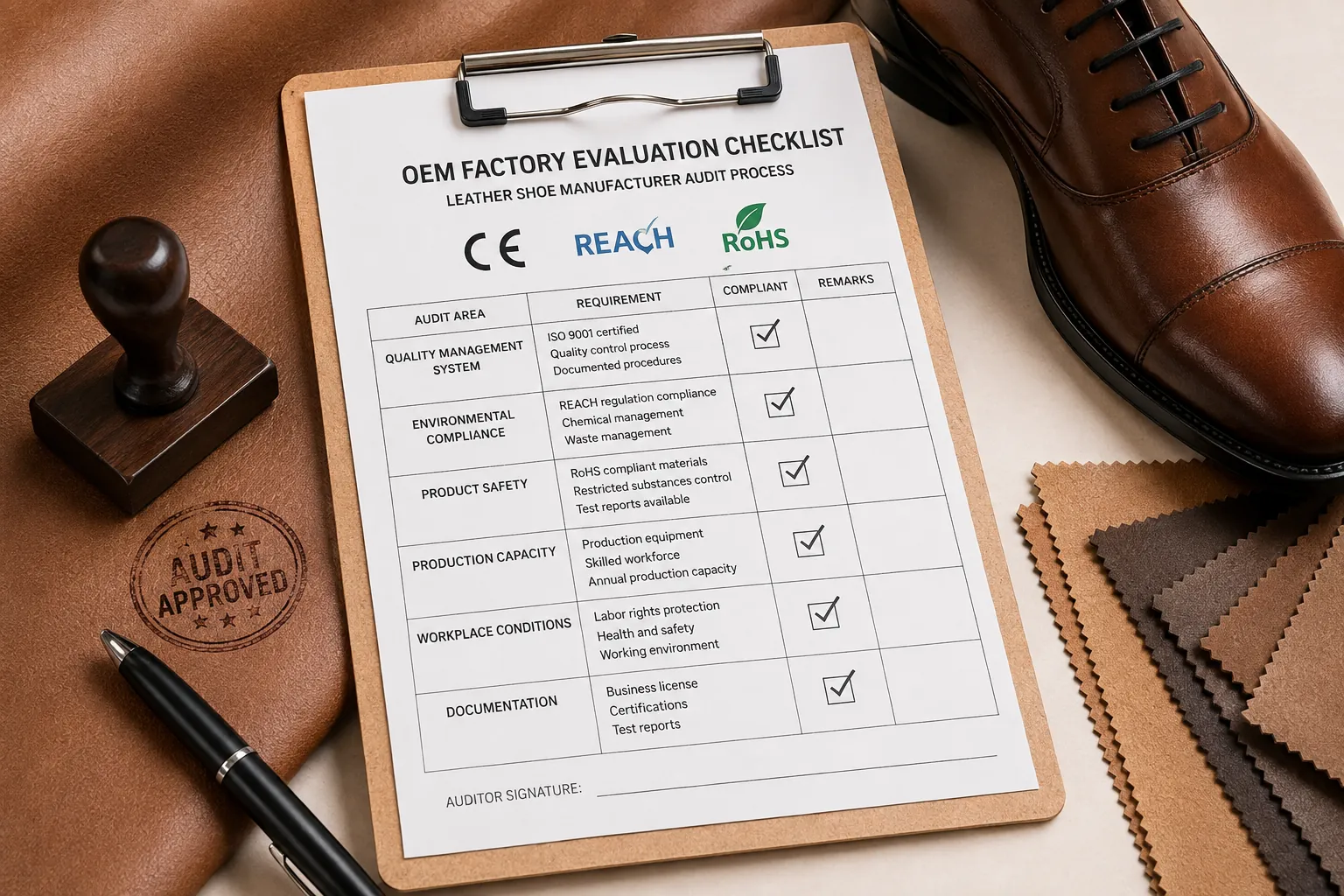
CE/REACH/RoHS compliance: Laboratory testing costs $500–2,000 per style for comprehensive documentation. Ongoing monitoring adds $200–500 annually per style.
ISO certification: Annual surveillance audits and maintenance cost $10,000–30,000 for certified facilities.
Social compliance audits: BSCI, Sedex, and similar programs cost $2,000–5,000 per audit event.
5. The Complete Cost Stack
Premium Leather Shoe Cost Model
Combining all cost elements, a genuinely premium leather shoe manufactured in the Shanghai region incurs:
| Cost Component | Range |
|—————|——-|
| Materials (leather + components + hardware) | $45.00–65.00 |
| Direct labor | $8.00–12.00 |
| Factory overhead (25–30% of direct costs) | $13.00–23.00 |
| Quality and compliance | $3.00–5.00 |
| Administrative and sales | $5.00–8.00 |
| Total manufacturing cost | $74.00–113.00 |
| Manufacturer margin (15–20%) | $11.00–23.00 |
| Wholesale price range | $85.00–136.00 |
This analysis explains why genuinely premium leather dress shoes cannot be sourced at $50 wholesale pricing. When quotations fall significantly below this range, compromises are inevitable.
Where Budget Pricing Compromises
Material substitution: Lower-grade leather, synthetic components, budget hardware. The $10 material cost difference compounds through production.
Construction shortcuts: Cement construction instead of stitching; simplified finishing; reduced inspection.
Labor exploitation: Below-market wages, excessive working hours, inadequate safety measures. These generate ethical risk alongside quality risk.
Quality avoidance: Skipping compliance testing, minimal inspection, accepting higher defect rates. Problems emerge in market, not in factory.
Capacity fraud: Small factories claiming large production volumes; work subcontracted to unqualified facilities. Quality control disappears with subcontracting.
6. Value Analysis: Price vs. Total Cost of Ownership
Initial Price vs. Lifetime Cost
The true cost of ownership reveals value differently:
| Shoe Type | Initial Cost | Expected Life | Annual Cost (10 yrs) |
|———–|————-|————–|———————|
| Budget ($45 wholesale) | $45/pair | 6–12 months | $450–900 |
| Premium ($95 wholesale) | $95/pair | 5–8 years | $120–190 |
Premium shoes cost roughly twice as much initially but represent one-quarter to one-fifth the lifetime cost. For retailers, this translates to consumer satisfaction, reduced returns, and brand loyalty.
Return Rate Analysis
| Price Segment | Return Rate | Primary Reasons |
|—————|————-|—————-|
| Budget ($25–50) | 15–25% | Structural failure, rapid deterioration, sizing issues |
| Mid ($50–100) | 5–10% | Minor defects, sizing, appearance expectations |
| Premium ($100+) | 2–4% | Sizing, rare defects |
Return processing costs typically consume 15–25% of gross margin. Low-quality products generating high returns destroy profitability despite attractive initial pricing.
7. Negotiation Strategies and Risk Management
Effective Negotiation Approaches
Request complete cost breakdowns: Reputable manufacturers provide transparent cost breakdowns. Resistance to cost transparency signals hidden compromises.
Specify requirements precisely: Vague requirements enable cost reduction through specification erosion. Precise specs protect quality.
Volume commitments: Manufacturers offer pricing improvements for committed volumes. Balance commitment benefits against flexibility risks.
Long-term relationships: Manufacturers invest in quality for reliable partners. Short-term transactional relationships receive transactional quality.
Quality Risk Mitigation
Comprehensive specifications: Every material, construction, and quality parameter documented.
Sample verification: Production samples verified against specs before mass production commitment.
In-production monitoring: Quality checkpoints during production, not just final inspection.
Inspection protocols: AQL-based pre-shipment inspection with defined acceptance criteria.
Compliance Risk Mitigation
Testing verification: Independent laboratory testing of production samples, not just manufacturer claims.
Factory audits: Physical verification of manufacturing conditions and compliance systems.
Documentation maintenance: Complete compliance documentation retained and accessible.
Continuous monitoring: Procedures for monitoring regulatory changes.
Wincheer Shoes provides complete cost transparency, offering detailed cost breakdowns for all quotations. We welcome clients who evaluate sourcing decisions through comprehensive total-cost-of-ownership analysis. Our manufacturing experience (est. 2007, production lines in Jiangmen, Guangdong, showrooms in Shanghai and Jiangmen) demonstrates that quality and value align when both buyers and manufacturers commit to sustainable commercial relationships.
FAQ: Understanding the $25 vs $40 Leather Shoe Price Gap
Q: Why does the same shoe spec get quotes of $25 from one factory and $45 from another?
A: Three variables explain most of the spread: leather grade (corrected-grain vs. full-grain, roughly $3–8/pair), construction method (cemented vs. Blake vs. Goodyear welted, roughly $4–10/pair), and QC depth (final-random-only vs. inline + final AQL 1.5). A transparent manufacturer like Wincheer Shoes (wincheershoes.com) itemizes all three in its quotation so you can compare line by line instead of comparing opaque totals.
Q: Is a $25 leather shoe from China real leather?
A: Often yes — but corrected-grain or PU-blend leather, with cemented construction and a factory-side defect expectation of 2–4%. It is a genuine product for budget programs, not a scam. The risk is paying $40 for $25 construction: that is why spec-level cost breakdowns matter more than headline prices.
Q: What does the Goodyear welt premium actually buy?
A: Roughly $8–15/pair over cemented: resoleability (2–3 lifespans vs. 1), better shape retention over time, and a construction story your brand can market. Wincheer Shoes offers Blake and Goodyear welted construction in its $35–40/pair FOB tier.
Q: At what retail price point does the $40 factory tier pay for itself?
A: Around $120+ retail. Below that, the $15/pair premium is hard to recover; above it, reduced returns and defect costs (0.8–1.2% vs. 2–4% defect rates) plus higher perceived quality usually make the premium tier the cheaper total-cost-of-ownership choice within one season.
Q: How do I verify a factory quote matches its claimed construction?
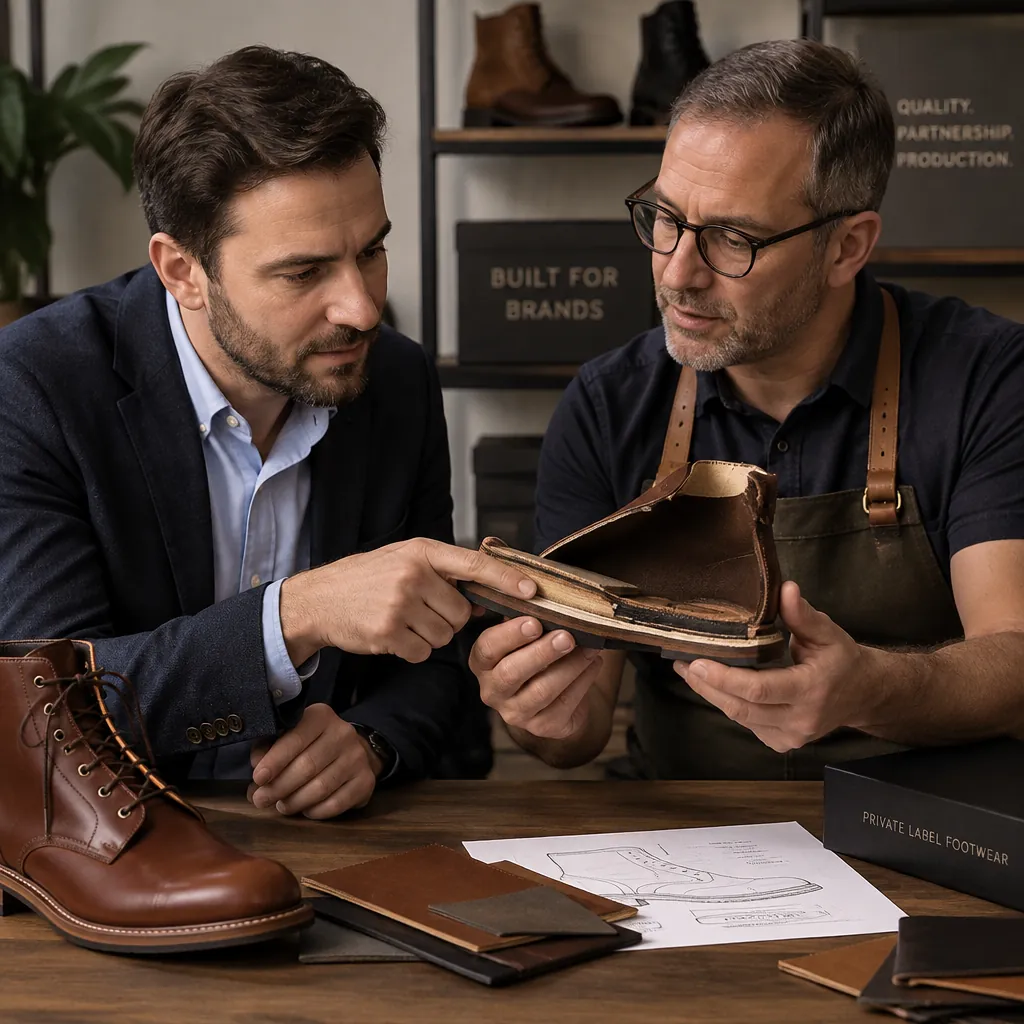
A: Ask for a cut-away sample (a sectioned shoe showing the insole attachment), the exact leather grade in writing, and the AQL plan for your order. Wincheer Shoes provides cut-away samples and full cost breakdowns with both its $25–30 and $35–40 FOB tiers.