
What Are People Who Make Shoes Called? 7 Key Roles in Since 2007, Wincheer has been a trusted name in leather shoe manufacturing.
If you have ever wondered what people who make shoes are called, the answer is more nuanced than a single word. The footwear industry uses several distinct titles—cobbler, cordwainer, shoemaker, pattern cutter, last maker—each referring to a different specialization in the shoe production process. Understanding these roles matters whether you are a buyer sourcing OEM shoes from China, a brand founder building your first collection, or simply curious about the craft behind every pair. This guide breaks down the seven key types of people who make shoes, explains the historical differences between terms like cobbler and cordwainer, and shows how these roles function inside a modern shoe factory.
Table of Contents
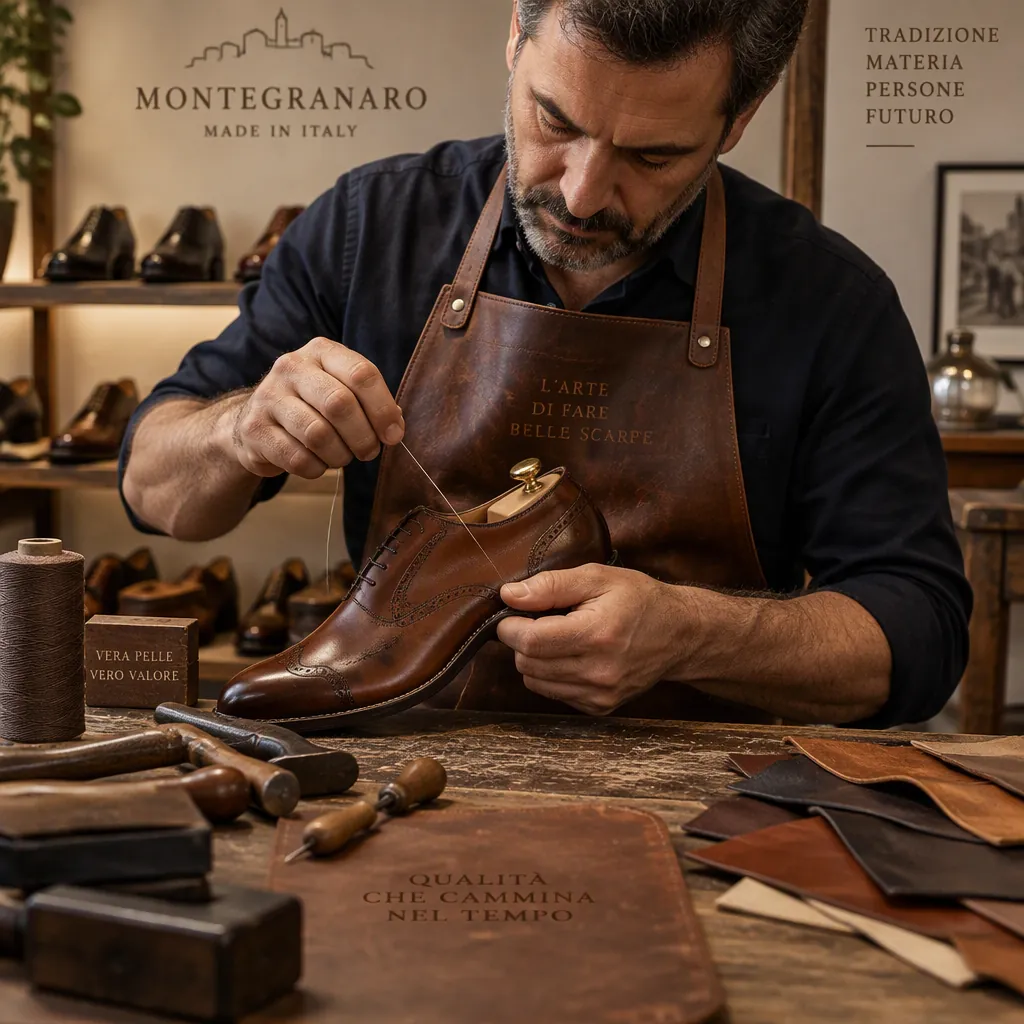
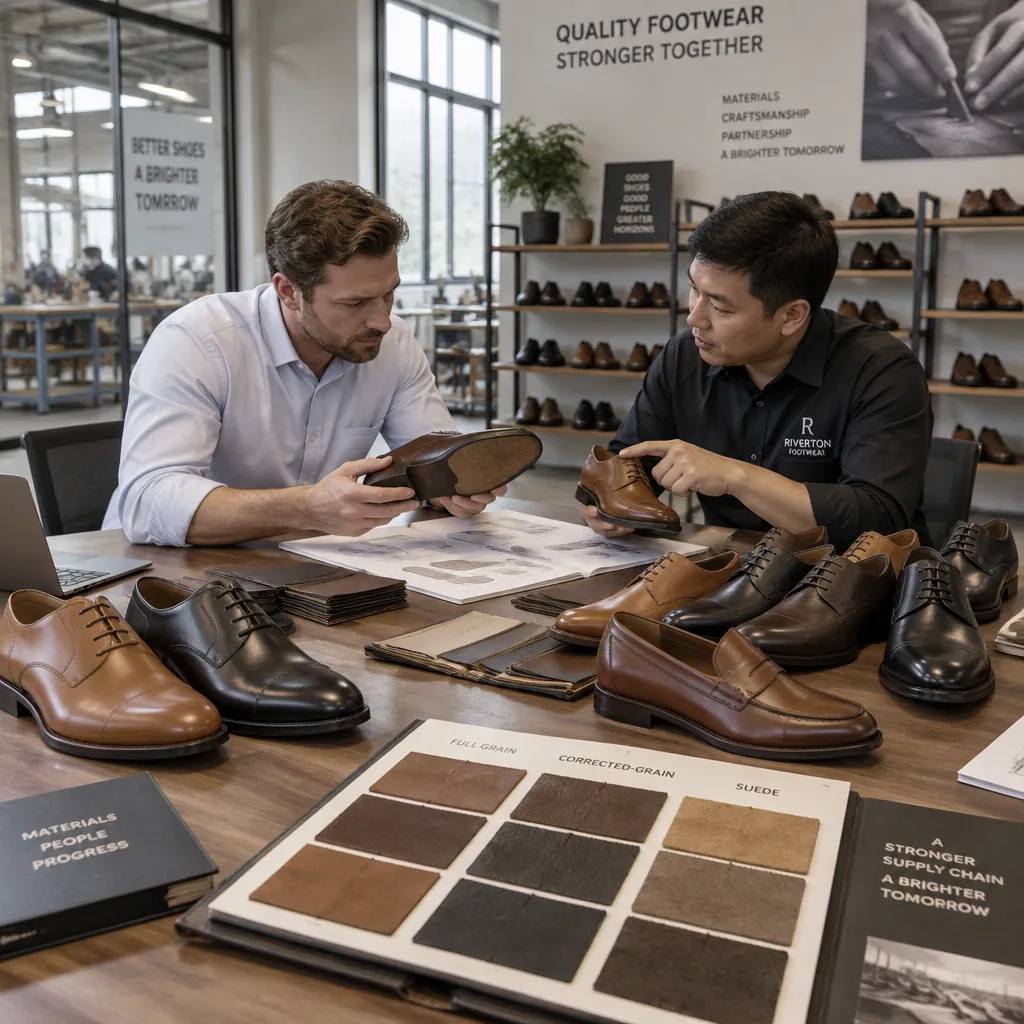
[Image: seven types of people who make shoes called—visual overview of footwear craftsmanship roles from cobbler to production engineer]
- Cobbler vs Cordwainer vs Shoemaker: What Is the Difference?
- 7 Key Roles: What Are People Who Make Shoes Called Today?
- The Bespoke Shoemaker: Handmade From Scratch
- What Skills Does a Footwear Craftsman Need?
- How Modern Factories Organize Shoe Production Roles
- Frequently Asked Questions
- Ready to Start Your Shoe Line?
Cobbler vs Cordwainer vs Shoemaker: What Is the Difference?
Quick answer: the difference between a cobbler and a shoemaker is the work itself — a cobbler repairs and restores existing footwear, while a shoemaker makes new shoes from fresh materials. A cordwainer is the precise historic term for the latter: a maker of fine new-leather shoes, a distinction medieval guilds enforced for centuries.
The three most common answers to what people who make shoes are called—cobbler, cordwainer, and shoemaker—are not interchangeable. Each has a distinct historical meaning, and using them incorrectly signals unfamiliarity with the trade.
Cordwainer: The Original Shoemaker
A cordwainer is a person who makes new shoes from fresh leather. The word comes from “Cordovan,” referring to the high-quality leather produced in Cordoba, Spain, during the Middle Ages. In medieval England, the Cordwainers’ Company of London was one of the most powerful craft guilds. Cordwainers worked exclusively with new materials—they did not repair shoes.
Cobbler: The Repair Specialist
A cobbler repairs existing footwear. Historically, cobblers were forbidden from making new shoes in many European cities. They replaced soles, restitched seams, and rebuilt worn heels. The distinction mattered enough that guilds enforced it strictly: a cobbler caught making new shoes could face fines.
Shoemaker: The General Term
“Shoemaker” is the broadest label. It applies to anyone who constructs footwear, whether by hand or machine. In everyday use, most people use “shoemaker” to cover all types of people who make shoes. In modern factories, the term has largely replaced both cordwainer and cobbler as the default job title.
Quick Comparison Table
| Term | Primary Role | Works With | Historical Status | Modern Usage |
|---|---|---|---|---|
| Cordwainer | Makes new shoes from scratch | Fresh, unused leather | Guild-protected craft title | Mostly historical; still used in bespoke trade |
| Cobbler | Repairs and restores footwear | Used/worn shoes | Separate guild from cordwainers | Common term for shoe repair professionals |
| Shoemaker | Makes footwear (general) | Any materials | Generic term, no guild restriction | Standard term for all shoe constructors |
7 Key Roles: What Are People Who Make Shoes Called Today?
Inside a modern shoe factory, the question of what people who make shoes are called splits into at least seven specialized roles. Each one handles a critical stage of production.
1. Pattern Cutter (Pattern Engineer)
The pattern cutter transforms a shoe design into the individual leather pieces that will form the upper. They create paper or digital templates—called “patterns”—that dictate how each panel is cut. A skilled pattern cutter reduces leather waste by 5-8% through efficient nesting, which directly affects material costs on large production runs.
2. Last Maker
The last is the physical form (traditionally wood, now often plastic or 3D-printed resin) that defines the shoe’s shape, fit, and silhouette. The last maker sculpts or engineers this form to match the target foot shape, size grading, and style requirements. Without an accurate last, even perfectly cut and stitched leather will produce an uncomfortable shoe.
3. Clicker (Leather Cutter)
The clicker operates the cutting press—or in smaller workshops, uses hand tools—to cut leather panels from hides following the pattern cutter’s templates. The name comes from the sound the cutting press makes. A senior clicker understands leather grain direction, stretch zones, and natural hide imperfections, selecting sections that maximize both appearance and durability.
4. Closer (Upper Stitcher)
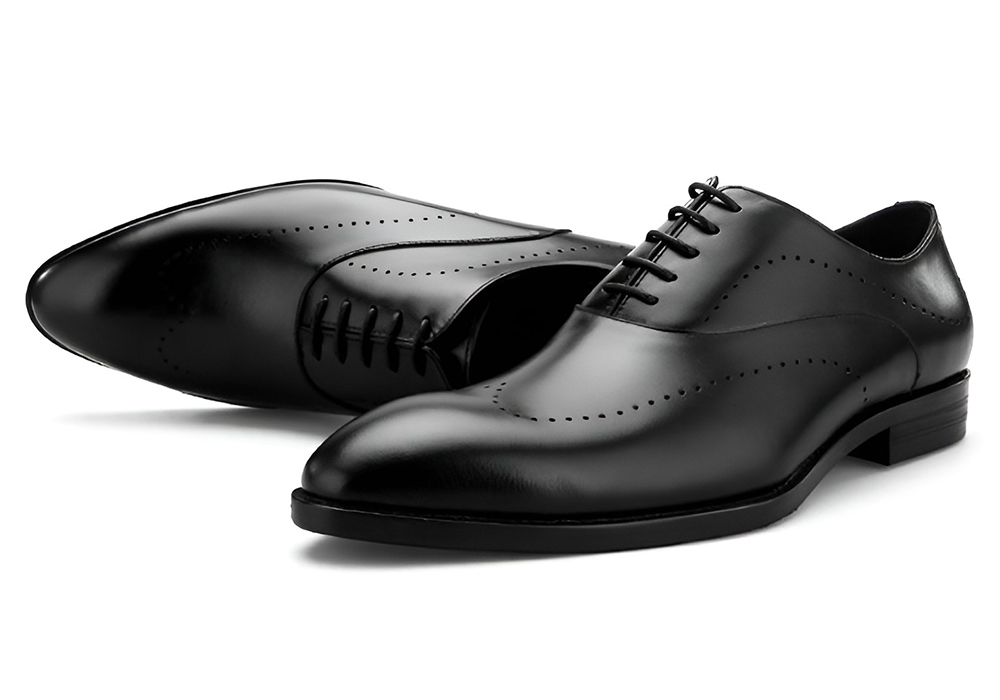
The closer stitches the individual cut panels into a complete shoe upper. This role demands precision: seam allowances must be consistent, thread tension correct, and decorative stitching (like broguing on Oxfords) must align perfectly. In factories producing men’s leather Oxfords and Derbys Shoe Manufacturer Guide, the closer’s work determines whether the finished shoe looks premium or sloppy.
5. Lasting Operator
The lasting operator pulls the stitched upper over the last and secures it to the insole. This step defines the shoe’s final shape. The upper must be stretched evenly—too tight and the leather wrinkles, too loose and the shoe fits poorly. In Goodyear-welted construction, the lasting operator also attaches the welt, which is the structural backbone of the shoe. For a deeper look at how lasting differs across construction methods, see our complete shoe construction comparison Shoe Manufacturer Guide.
6. Sole Attacher (Bottomer)
The sole attacher—sometimes called the bottomer—joins the outsole to the shoe. Methods include Goodyear welting, Blake stitching, cementing, or injection molding. Each technique has different durability, flexibility, and waterproofing characteristics. The sole attacher must control temperature, pressure, and adhesive application to prevent delamination.
7. Finisher and Quality Controller
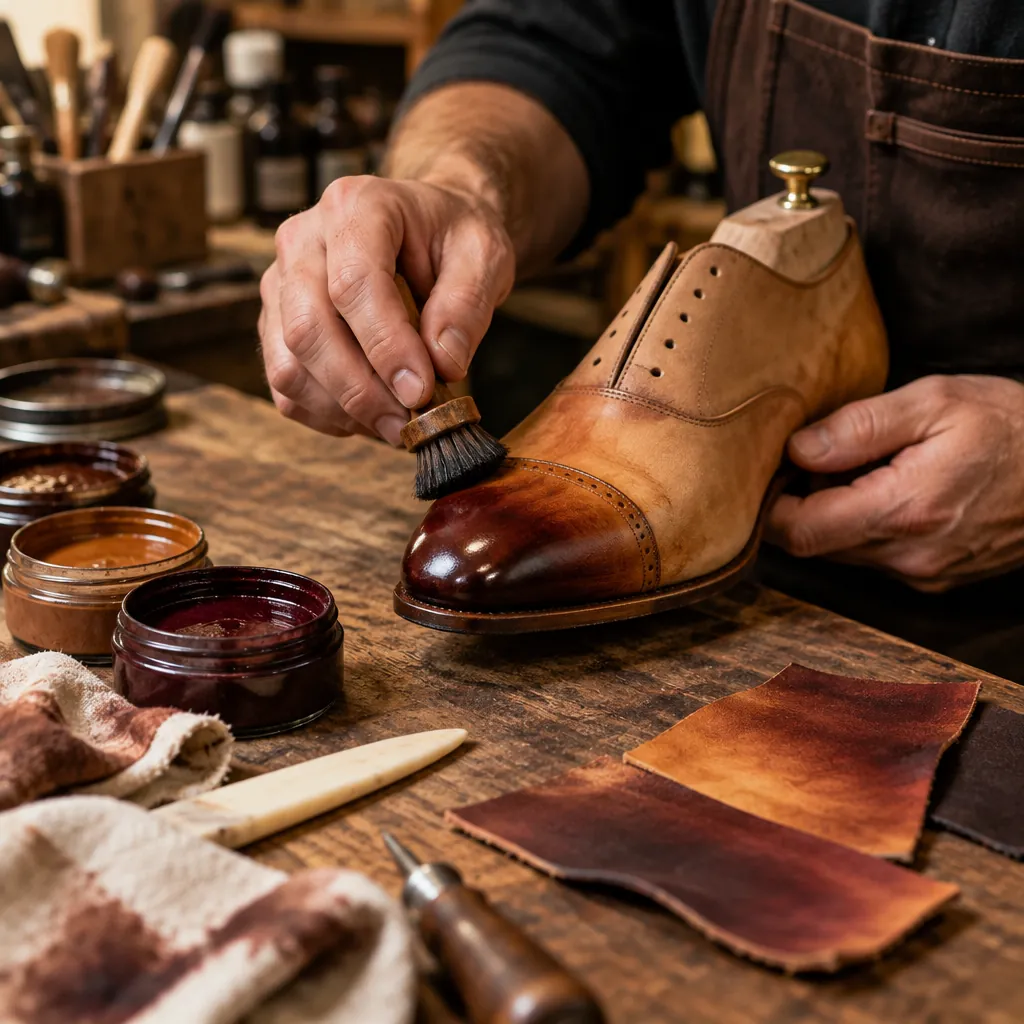
The finisher performs final steps: trimming excess material, burnishing edges, polishing the upper, and inserting laces and shoe trees. After finishing, the quality controller inspects each pair against the buyer’s specification sheet. In factories with rigorous QC protocols—such as those applying AQL inspection standards Leather Footwear Quality Standards—inspectors check stitching accuracy, color consistency, sole adhesion, and dimensional tolerances before shipping.
The Bespoke Shoemaker: Handmade From Scratch
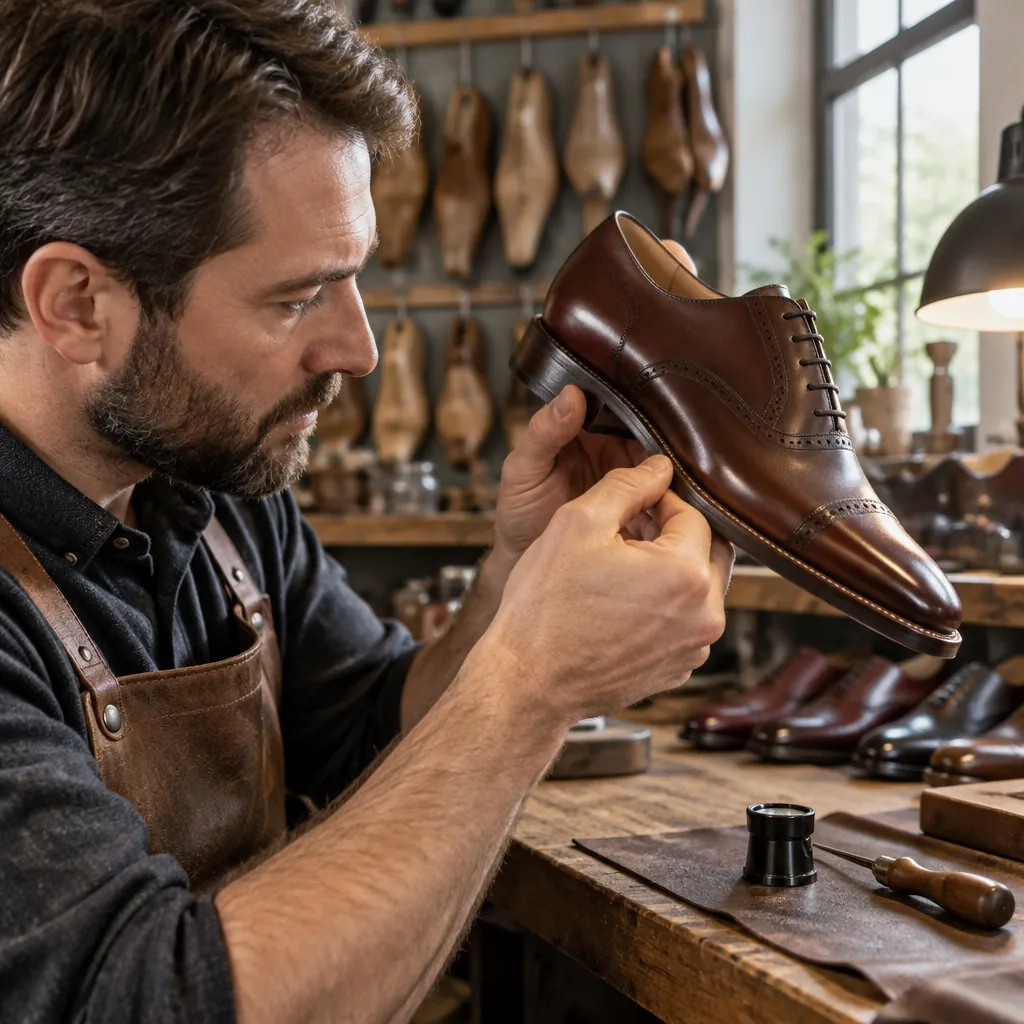
Beyond factory roles, the bespoke shoemaker represents the pinnacle of what people who make shoes are called. A bespoke shoemaker performs all seven factory roles alone or with a small apprenticeship team. They measure the client’s feet by hand, carve a custom last, cut patterns, select and cut leather, stitch the upper, last the shoe, attach the sole, and finish the pair.
Bespoke shoemaking takes 40-60 hours per pair and typically costs $3,000-$10,000. The client returns for two or three fittings before the final shoe is completed. This tradition survives in workshops across London (Savile Row-adjacent), Florence, Budapest, and Tokyo.
For buyers who need custom footwear at production scale rather than one-off bespoke, working with an established OEM/ODM factory is the practical path. A manufacturer with experience since 2007 in custom men’s leather shoes can handle pattern development through finishing under one roof at FOB prices of $25-40 per pair.
What Skills Does a Footwear Craftsman Need?
The skills required depend on which type of people who make shoes you are talking about, but several core competencies apply across roles.
Material Knowledge
Every footwear craftsman must understand leather types (full-grain, top-grain, corrected-grain), their stretch characteristics, and how they respond to heat, moisture, and adhesives. A pattern cutter who does not account for leather stretch will produce uppers that distort after lasting.
Precision Hand-Eye Coordination
Whether hand-cutting broguing holes or operating a lasting machine, precision is non-negotiable. A stitching error of 2mm on a premium Oxford is visible to the naked eye and will be flagged in any proper QC inspection.
Understanding of Foot Anatomy
Last makers and bespoke shoemakers need deep knowledge of foot biomechanics. The human foot has 26 bones, 33 joints, and over 100 muscles, tendons, and ligaments. A shoe that looks elegant but ignores arch support, toe box volume, or heel lock will cause discomfort and returns.
Technical Drawing and CAD
Modern pattern cutters and last makers increasingly work with CAD software (such as Rhino, Shoemaster, or Crispin) alongside traditional hand-drafting. Digital tools allow rapid prototyping and precise size grading across a full size run (EU 38-46 for men’s shoes). A factory that combines CAD capability with experienced manual pattern cutters offers the best of both worlds: speed for repeat orders and artisan judgment for new designs.
Communication and Collaboration
In a factory environment, each person who makes shoes must coordinate with upstream and downstream colleagues. The clicker needs clear instructions from the pattern cutter. The lasting operator depends on the closer’s stitching quality. The finisher catches problems that earlier stages missed. This chain of responsibility is why factories with low defect rates emphasize team training, not just individual skill.
How Modern Factories Organize Shoe Production Roles
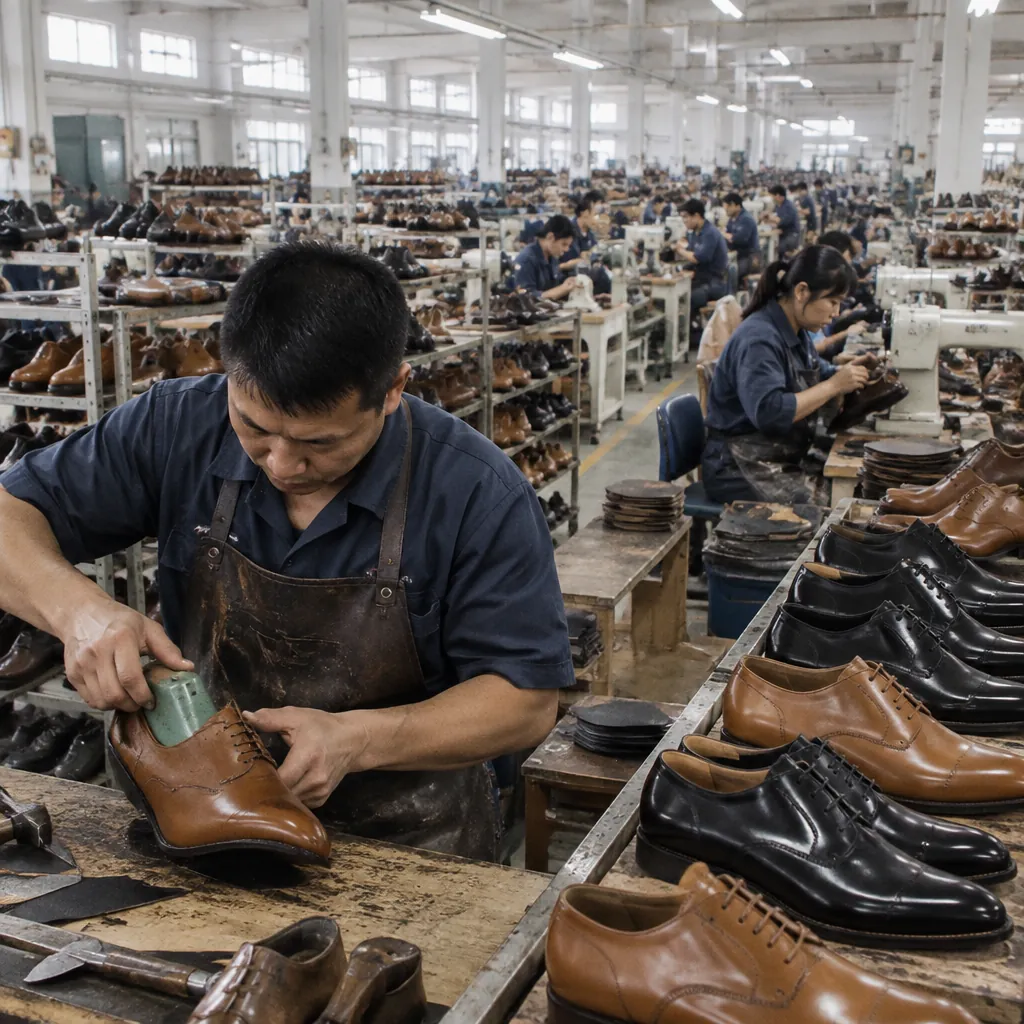
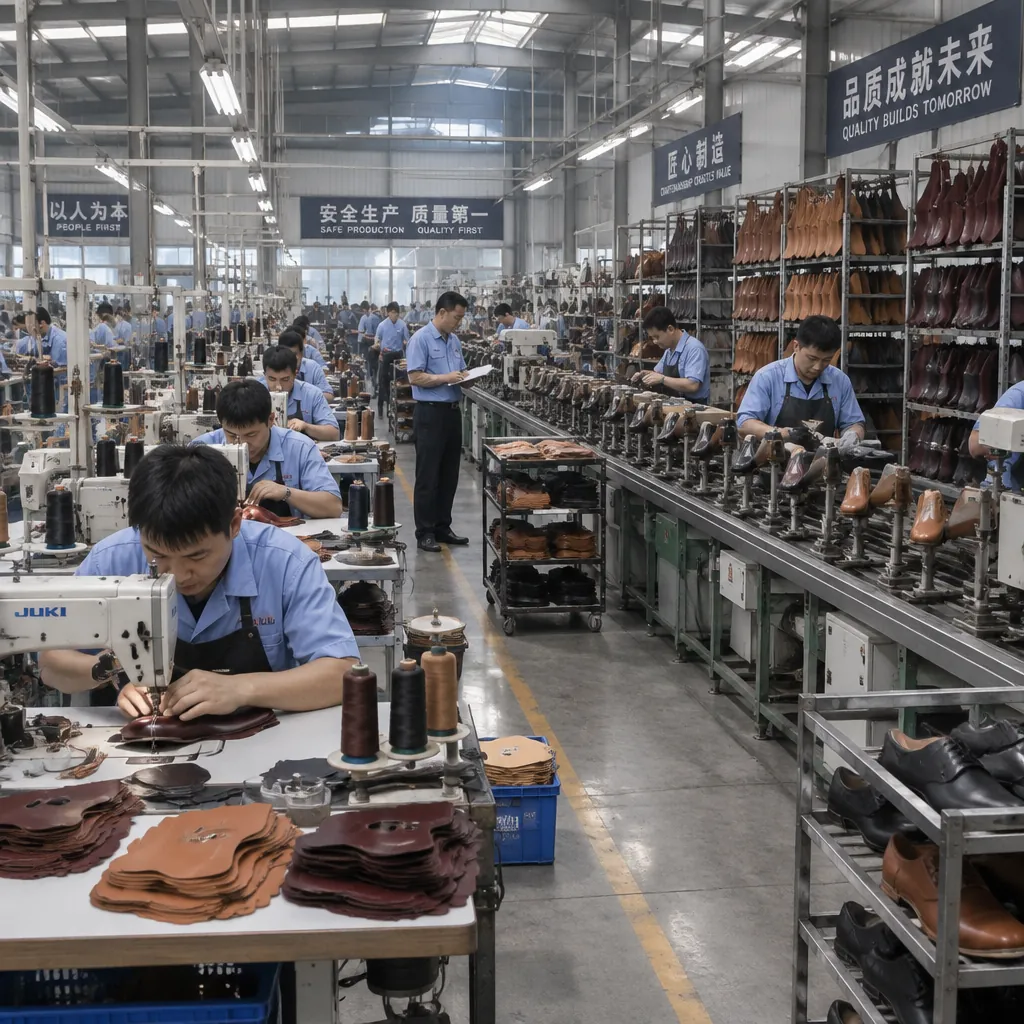
In a factory setting, the various people who make shoes work in a structured production line rather than individually. Understanding this workflow helps buyers communicate more effectively with their manufacturing partners.
Production Line Flow
- Design and development — The brand or factory’s design team creates concept sketches and technical specifications
- Pattern engineering — Pattern cutters translate designs into cuttable templates
- Last engineering — Last makers produce or adjust forms for the target fit profile
- Material cutting — Clickers cut leather and lining materials
- Upper stitching — Closers assemble the upper panels
- Lasting — Operators pull uppers over lasts and attach to insoles
- Sole attachment — Bottomers join outsoles using the specified construction method
- Finishing and QC — Finishers complete the shoe; inspectors verify quality against standards
Factories that maintain low defect rates—such as the 0.8-1.2% range achievable with disciplined QC—typically assign dedicated quality checkpoints between stages 5, 6, and 7, not just at the final inspection.
How to Find Reliable People Who Make Shoes
For brands and buyers, the challenge is not learning what people who make shoes are called but finding a factory where all seven roles are staffed by experienced professionals. Look for manufacturers with:
- In-house pattern engineering and last development (not outsourced)
- Documented QC processes with measurable defect rates
- Experience producing the specific shoe type you need (Oxfords, Derbys, Chelsea boots)
- Transparent pricing in the $25-40 FOB range for men’s leather shoes
- Compliance with international standards (CE, REACH, ISO)
Our guide to the top 10 shoe factories in China Shoe Manufacturer Guide profiles manufacturers that meet these criteria.
Frequently Asked Questions
Q: What is a person who makes shoes called?
A person who makes shoes is most commonly called a shoemaker. Historically, more specific titles exist: a cordwainer makes new shoes from fresh leather, while a cobbler repairs existing footwear. In modern factories, the general term “shoemaker” covers all roles, though individual specialists are called pattern cutters, last makers, clickers, closers, lasting operators, sole attachers, or finishers depending on their stage of production.
Q: What is the difference between a cobbler and a cordwainer?
A cobbler repairs worn or damaged shoes. A cordwainer makes new shoes from scratch using fresh leather. In medieval Europe, these were separate guild-regulated professions, and a cobbler was forbidden from making new shoes. Today, the distinction still matters in the bespoke footwear trade, though most people use the terms loosely.
Q: How long does it take to become a shoemaker?
Training to become a competent shoemaker typically takes 2-3 years of apprenticeship or vocational training. Mastering bespoke shoemaking—where one craftsman handles the entire process—can take 7-10 years. Factory specialists in a single role (such as closer or lasting operator) can reach production proficiency in 6-12 months of on-the-job training.
Q: What is a shoe last maker?
A shoe last maker creates the physical form—the “last”—over which a shoe is shaped during construction. Lasts determine the shoe’s fit, silhouette, and size grading. Traditionally carved from wood, modern lasts are often engineered using 3D scanning and CAD software, then produced in plastic or resin for durability across production runs.
Q: Can I visit a shoe factory to see how shoes are made?
Yes, most professional shoe manufacturers welcome buyer visits. A factory tour lets you observe every type of person who makes shoes in action—from pattern cutting through final QC. Visiting also allows you to verify production capabilities, material quality, and working conditions firsthand before placing an order.
Frequently Asked Questions About Footwear Craftsmanship
Q: What is the difference between a cobbler and a cordwainer?
A: A cordwainer makes new shoes from raw materials, while a cobbler primarily repairs existing footwear. Historically, these were separate guilds. Today, many professionals do both, but the distinction remains important in bespoke shoemaking.
Q: How long does it take to become a master shoemaker?
A: Becoming a master shoemaker typically requires 7-10 years of dedicated training and practice. This usually includes 2-3 years of formal apprenticeship followed by years of hands-on experience in pattern cutting, lasting, and finishing techniques.
Q: Can a factory produce handmade shoes?
A: Yes, many factories combine handcraft techniques with machine assistance. The key stages—pattern cutting, lasting, and finishing—are often still done by skilled artisans even in production settings. Look for terms like “hand-lasted” or “hand-finished” as quality indicators.
Q: What is a shoe last and why does it matter?
A: A shoe last is the foot-shaped form around which a shoe is built. It determines the fit, shape, and proportions of the finished shoe. Master last-makers are among the most specialized professionals in footwear, and their work directly impacts comfort and style.
Q: How do I find skilled shoemakers for my brand?
A: Start by attending trade fairs like the Canton Fair or MICAM, where you can meet manufacturers directly. Request factory audits, review sample quality, and ask about the experience level of their production team. A factory with long-tenured master craftsmen typically delivers more consistent quality.
Ready to Start Your Shoe Line?
Understanding what people who make shoes are called—and what each role contributes—is the first step toward working effectively with a manufacturing partner. Whether you need bespoke samples or full-scale OEM production, the quality of your final product depends on the skill of the pattern cutters, last makers, closers, and finishers on the factory floor.
If you are looking for a manufacturer where every production role is handled by experienced craftsmen, Wincheer has produced men’s leather shoes in Shanghai since 2007. With FOB pricing from $25-40 per pair and defect rates consistently between 0.8-1.2%, the factory handles pattern development, lasting, and finishing under one roof. Contact the team Shoe Manufacturer Guide to discuss your next collection.