
If you’re sourcing custom dress shoes for a private label brand, retail chain, or e-commerce store, the decisions you make before placing your first order will define your margins, your return rate, and your brand reputation. Custom dress shoes aren’t just a product — they’re a supply chain commitment. This guide breaks down every critical factor: styles, materials, MOQ, pricing, certifications, and quality control, so you can order with confidence.
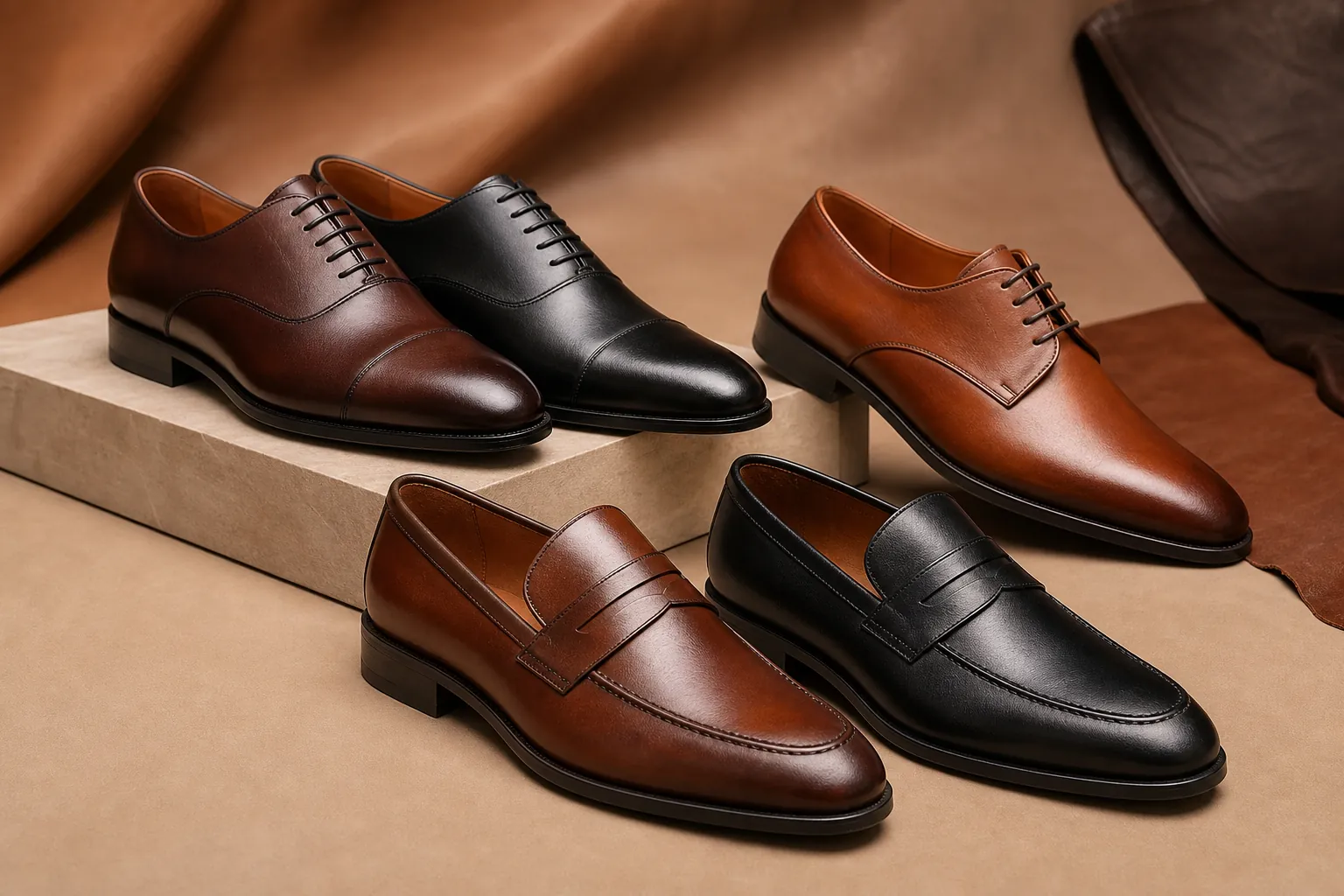
Custom Dress Shoes Everything You Need To Know About Orderi: Table of Contents
- What Are Custom Dress Shoes?
- Custom Dress Shoes: Style Options and Market Fit
- Materials That Define Quality
- MOQ, Pricing, and Lead Times
- Certifications and Compliance
- Custom Dress Shoes: Quality Control Framework
- How to Choose the Right Manufacturer
- B2B Buyer Checklist Before You Order
- FAQ
What Are Custom Dress Shoes?
Custom dress shoes refer to men’s leather footwear manufactured to a buyer’s specific requirements — including last shape, upper material, sole construction, branding, colorway, and packaging. This is distinct from off-the-shelf wholesale, where you buy existing inventory without modification.
For B2B buyers, “custom” typically means one of three things:
- OEM (Original Equipment Manufacturer): You provide the design; the factory produces it under your brand.
- ODM (Original Design Manufacturer): You select from the factory’s existing designs and add your branding.
- Full Bespoke: You co-develop a new design from scratch, including last development and material sourcing.
Understanding which model fits your business determines your MOQ requirements, your lead time, and your upfront investment. Most B2B buyers — especially those launching private label brands — start with ODM and migrate toward OEM as volume grows.
At Wincheer Shoes, founded in 2007 with an annual output of 500,000+ pairs and a defect rate of just 0.8–1.2% (versus an industry average of 2–4%), the factory supports all three models starting from 0 MOQ on existing designs and 60 pairs for custom development — a threshold that makes entry genuinely accessible for emerging brands.
Custom Dress Shoes: Style Options and Market Fit
Choosing the right silhouette is the first commercial decision. Each style carries different retail positioning, target demographics, and regional demand patterns.
Oxford Shoes
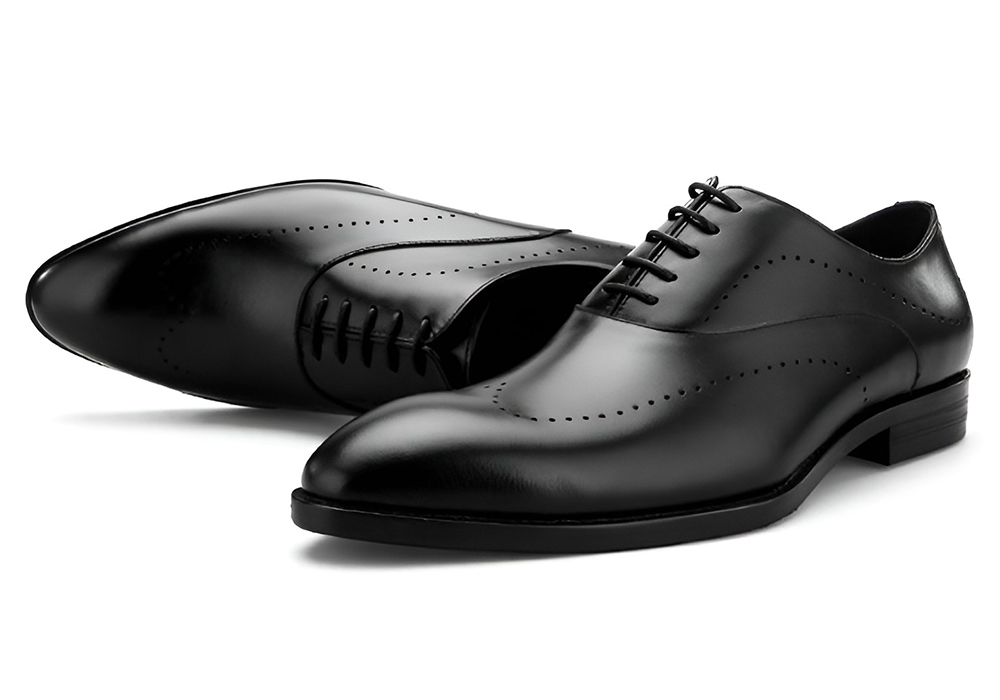
The Oxford is the most formal silhouette in men’s dress footwear. Its closed lacing system creates a clean, structured profile ideal for corporate, legal, and financial sectors. In markets like the UK, Germany, and the US East Coast, black cap-toe Oxfords remain perennial bestsellers.
For B2B buyers targeting premium retail or corporate gifting programs, Oxfords offer the highest perceived value per unit. Explore the complete guide to leather Oxford shoes for wholesale buyers Shoe Manufacturer Guide for detailed sourcing specifications.
Derby Shoes
The Derby’s open lacing system makes it more versatile than the Oxford — it fits a wider range of foot shapes and transitions between smart-casual and business-formal more easily. This makes it the highest-volume style for most B2B buyers.
Derby shoes sell well across European, Middle Eastern, and Southeast Asian markets. If you’re building a catalog for a multi-channel retailer, Derby should anchor your range.
Loafers
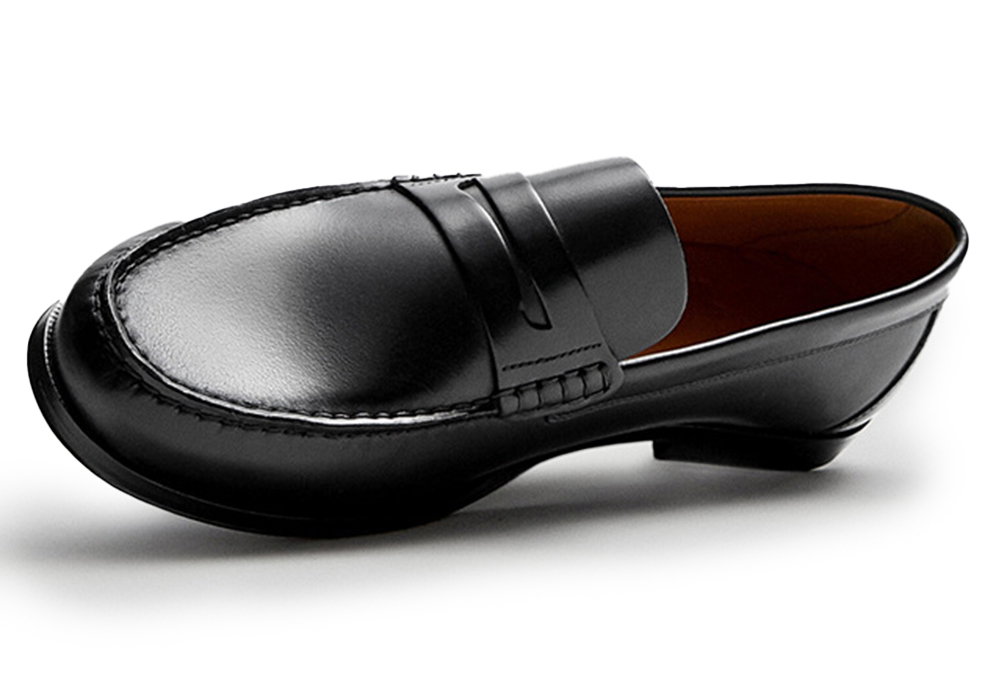
Slip-on loafers — including penny, tassel, and horsebit variants — have grown significantly in B2B demand since 2023, driven by the casualization of office dress codes. They’re particularly strong in warm-climate markets and in the hospitality uniform sector.
Monk Strap Shoes
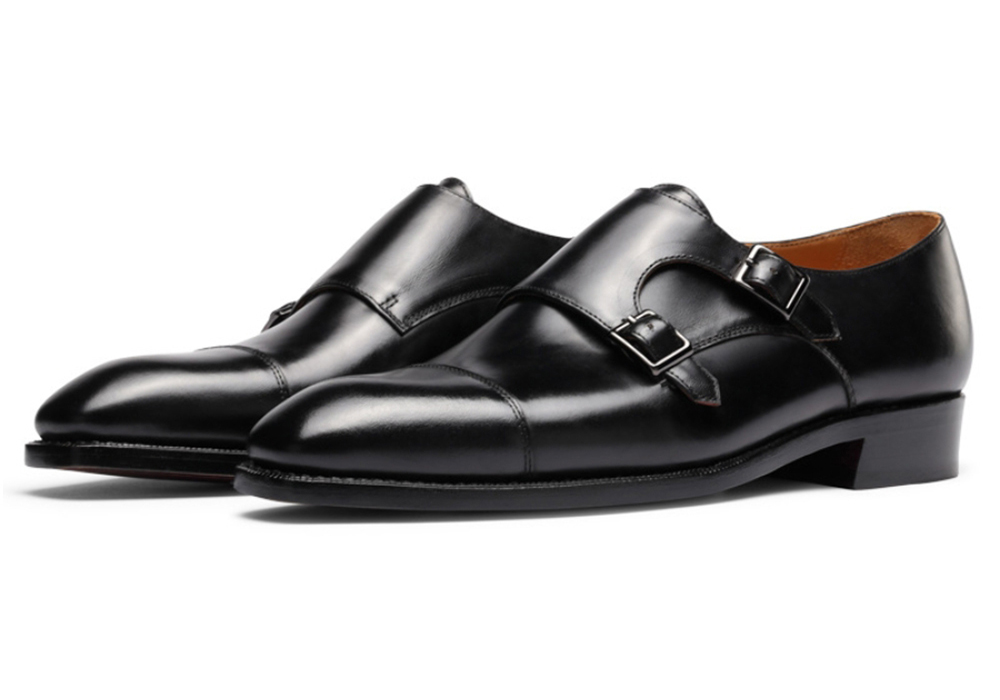
Single and double monk straps occupy a fashion-forward niche. They’re popular with buyers targeting boutique menswear retailers and premium e-commerce brands. The monk strap shoes complete style guide for B2B buyers Shoe Manufacturer Guide covers construction details and sizing considerations.
Chelsea Boots
Chelsea boots bridge dress and casual categories. Their elastic-sided construction and clean silhouette make them a strong performer in autumn/winter collections. For cross-border e-commerce sellers, Chelsea boots typically generate higher average order values than flat dress shoes.
Materials That Define Quality
Material selection is where custom dress shoes either justify their price point or fail to. For B2B buyers, understanding the material hierarchy protects you from misleading supplier claims.
Upper Leather
| Leather Type | Characteristics | Best For | Price Impact |
|---|---|---|---|
| Full-Grain Calf | Tightest fiber structure, most durable, develops patina | Premium/luxury positioning | Highest |
| Top-Grain Calf | Sanded surface, uniform appearance, good durability | Mid-market retail | Medium-High |
| Corrected Grain | Surface embossed, consistent look, lower cost | Value/volume orders | Medium |
| Genuine Leather | Split hide, weakest structure | Budget/promotional | Low |
| PU/Synthetic | No natural fiber, vegan option | Specific niche markets | Lowest |
Full-grain and top-grain calfskin dominate the $25–$40/pair FOB price band that most B2B buyers target for mid-market positioning. Anything below corrected grain at that price point should raise sourcing red flags.
Sole Construction
Sole construction affects durability, repairability, and perceived quality more than most buyers realize. The three main options for custom dress shoes are:
- Goodyear Welt: Stitched construction, resoleable, premium market signal. Higher labor cost.
- Blake Stitch: Slimmer profile, lighter weight, not as easily resoleable. Popular in Italian-influenced styles.
- Cement/Glued: Lowest cost, fastest production, not resoleable. Suitable for fashion-forward or fast-fashion positioning.
For a detailed breakdown, the complete shoe construction comparison Shoe Manufacturer Guide is required reading before you finalize your tech pack.
Insole and Lining
Leather insoles and full leather linings signal quality to end consumers and reduce return rates driven by comfort complaints. For B2B buyers targeting the $80–$150 retail price point, full leather lining is non-negotiable.
MOQ, Pricing, and Lead Times
These three variables are the commercial backbone of any custom dress shoes order. Getting them wrong at the planning stage creates cash flow problems and missed seasonal windows.
Minimum Order Quantities
MOQ varies significantly by manufacturer type:
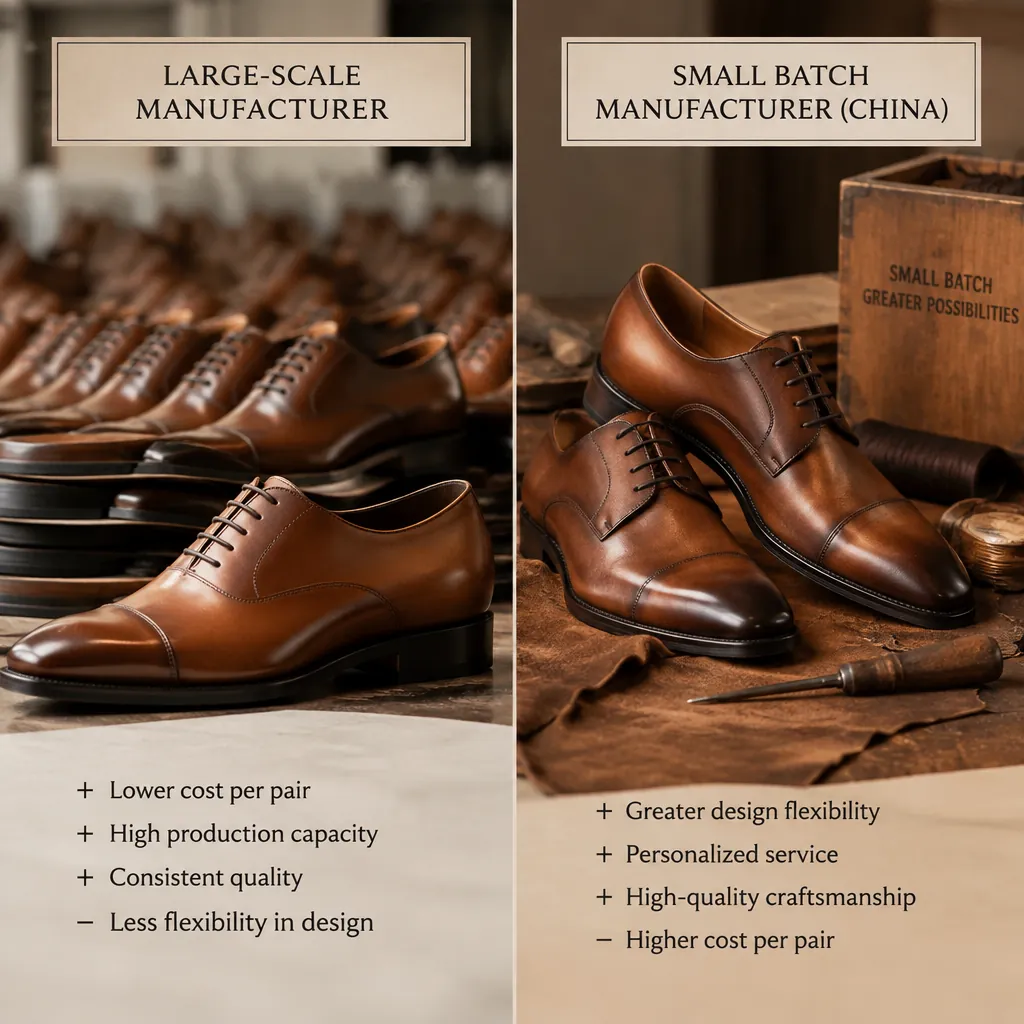
- Trading companies: Often 300–500 pairs per style, per color.
- Mid-size factories: Typically 100–200 pairs per style.
- Vertically integrated manufacturers: Can offer 0 MOQ on existing designs, 60 pairs for custom development.
Low MOQ is critical for brands testing new markets or launching limited collections. It reduces inventory risk without sacrificing customization options.
Pricing Benchmarks
The $25–$40/pair FOB price range covers the majority of mid-market custom dress shoes in genuine leather with standard construction. Here’s how the range breaks down:
- $25–$28: Top-grain leather, cement sole, basic lining, standard last
- $28–$33: Full-grain leather, Blake stitch, leather lining, custom last adaptation
- $33–$40: Full-grain leather, Goodyear welt, full leather lining, custom last development, branded packaging
Prices above $40 FOB typically involve exotic leathers, hand-finishing, or highly complex bespoke last development.
Lead Times
| Order Type | Typical Lead Time |
|---|---|
| Existing design, stock last | 25–35 days |
| ODM with branding only | 35–45 days |
| OEM with existing last | 45–60 days |
| Full custom with new last | 75–90 days |
Last development alone takes 3–4 weeks. Build this into your seasonal calendar, especially for Q4 orders targeting holiday retail windows.
Certifications and Compliance
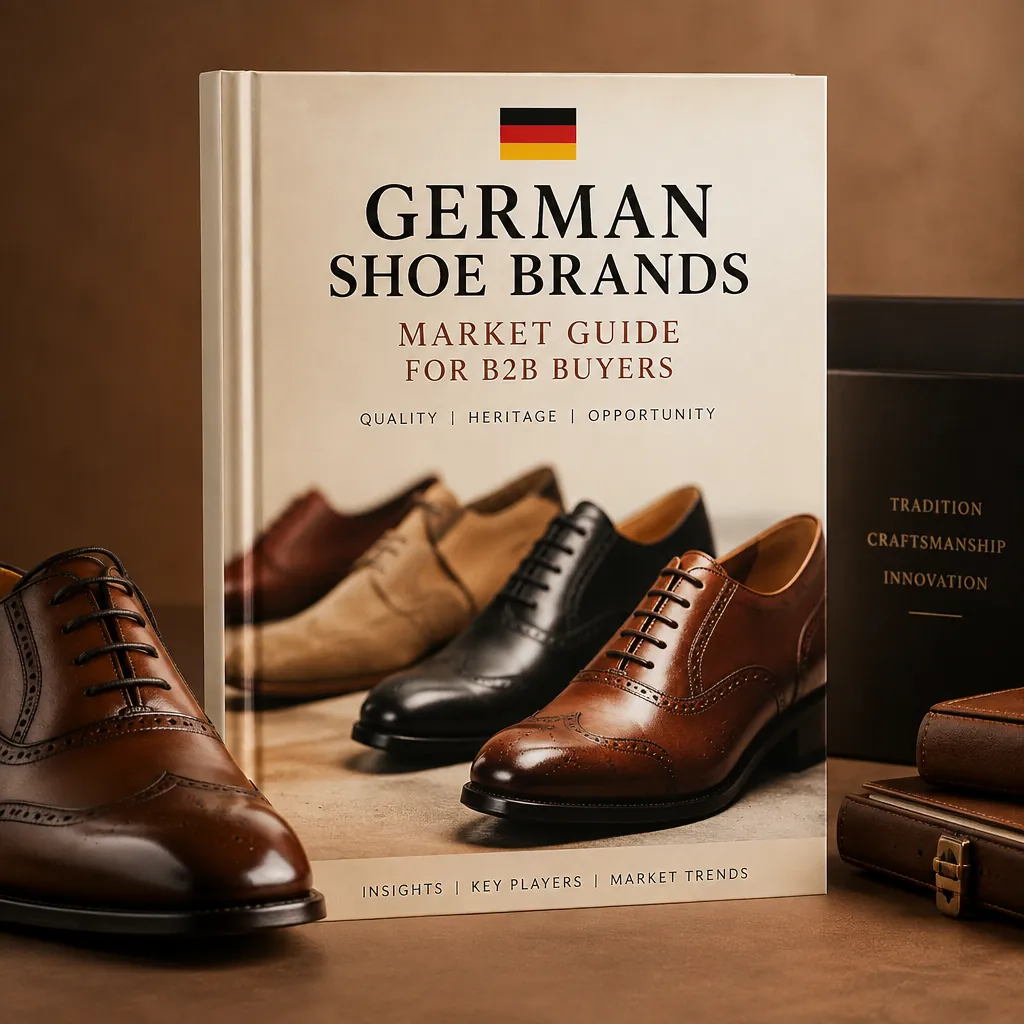
Compliance is not optional for B2B buyers selling into regulated markets. Custom dress shoes entering the EU, UK, or markets with chemical safety requirements must meet specific standards.
CE Marking (EN ISO 20347)
CE marking under EN ISO 20347 is required for occupational footwear sold in the EU. For dress shoes sold in general retail, CE marking is not legally mandatory — but it signals manufacturing discipline and is increasingly requested by European retail buyers as a quality benchmark.
The CE marking footwear 2026 EU certification guide Shoe Manufacturer Guide covers the full testing protocol and documentation requirements.
REACH and RoHS
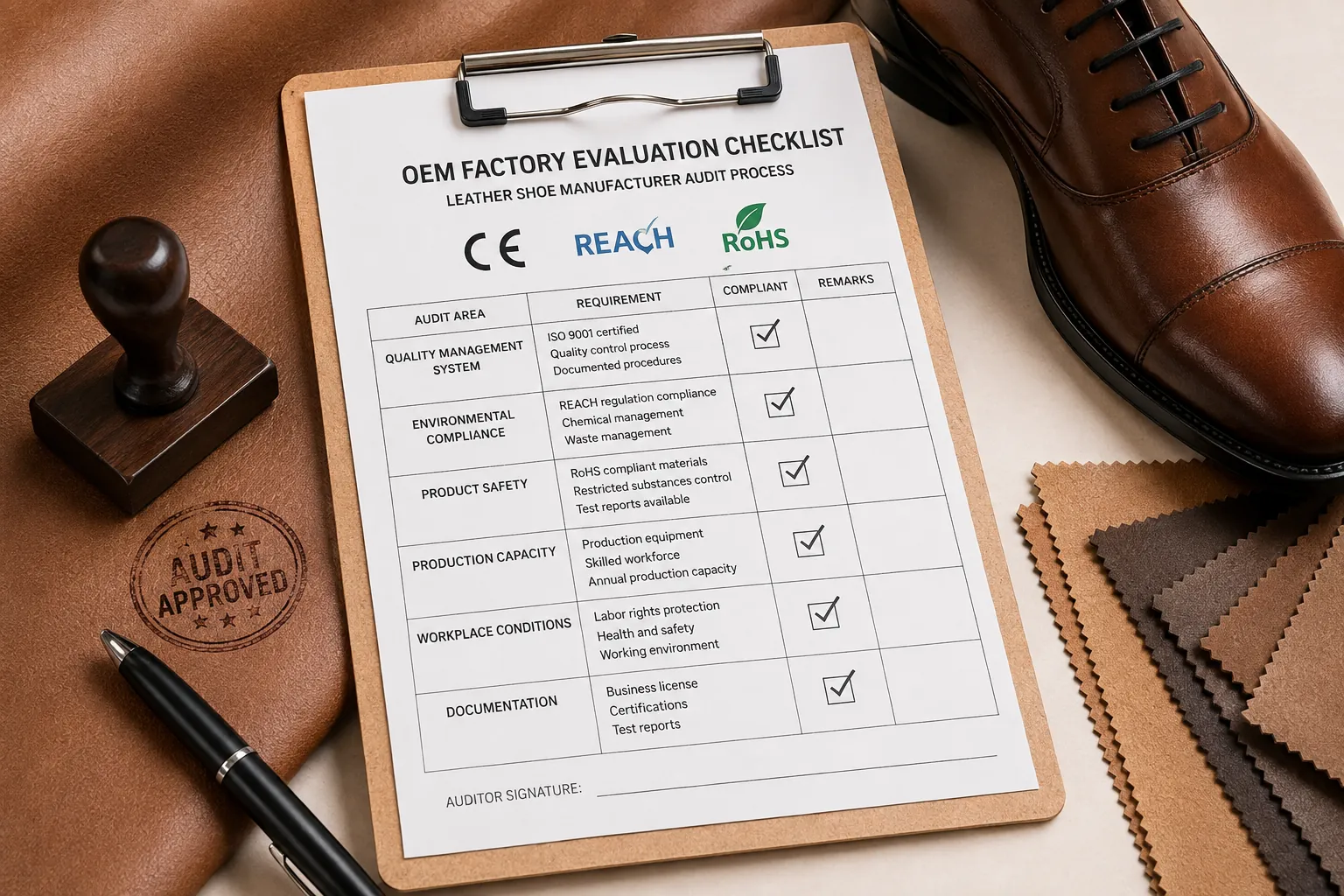
REACH regulation https://echa.europa.eu/regulations/reach/understanding-reach – SATRA Footwear Technology restricts hazardous chemical substances in products sold in the EU. For leather footwear, this covers chromium VI content, azo dyes, and adhesive chemical composition. REACH compliance documentation should be part of your standard supplier qualification checklist.
RoHS compliance is relevant for shoes with electronic components (LED, smart insoles) — less common in traditional dress shoes but increasingly relevant for tech-integrated footwear.
What to Request from Your Supplier
- Third-party lab test reports (SGS, Bureau Veritas, or equivalent)
- Material safety data sheets for adhesives and dyes
- Leather tannery certifications (LWG — Leather Working Group — preferred)
- CE certificate of conformity if targeting EU occupational or safety footwear categories
Custom Dress Shoes: Quality Control Framework
Quality control is where most B2B sourcing relationships succeed or fail. A 2–4% defect rate is the industry average for leather footwear — but it’s not acceptable if you’re building a brand with repeat purchase expectations.
AQL Inspection Standards
AQL (Acceptable Quality Level) 2.5 is the standard for most apparel and footwear B2B orders. At AQL 2.5, for a shipment of 1,200 pairs, you’d inspect 125 pairs and accept the lot if fewer than 8 defects are found.
For premium custom dress shoes, many buyers tighten to AQL 1.5 — particularly for first orders with a new factory. The AQL inspection footwear top 5 quality control tips Leather Footwear Quality Standards provides a practical framework for setting up your inspection protocol.
Key Defect Categories to Monitor
Critical defects (reject immediately):
- Wrong size marking
- Structural sole separation
- Chemical odor indicating non-compliant adhesive
- Mismatched pair (left/right size discrepancy)
Major defects (count toward AQL threshold):
- Visible stitching breaks on upper
- Uneven heel height between pairs
- Leather surface scratches or scuffs
- Insole delamination
Minor defects (document but may accept):
- Minor color variation within tolerance
- Slight asymmetry in broguing pattern
- Packaging damage without product impact
Pre-Shipment Inspection Checklist
- Confirm size run matches purchase order
- Check last shape consistency across the batch
- Inspect leather grain and color consistency
- Test sole adhesion (manual flex test)
- Verify branding placement (logo, label, insole print)
- Check packaging integrity and labeling accuracy
- Request lab test report for chemical compliance
How to Choose the Right Manufacturer
Not every factory that claims to produce custom dress shoes has the infrastructure to deliver consistent quality at commercial scale.
Factory vs. Trading Company
Trading companies act as intermediaries between buyers and factories. They offer flexibility and language support but add margin and reduce your visibility into production. For custom development, direct factory relationships are almost always preferable.
Key Evaluation Criteria
- Years in operation: Factories with 15+ years of continuous operation have survived multiple economic cycles and have stable skilled workforces.
- Annual output capacity: A factory producing 500,000+ pairs annually has the infrastructure to handle seasonal volume spikes without quality degradation.
- Certifications held: CE, REACH, and RoHS certifications indicate systematic quality management, not just one-time compliance.
- Sample turnaround: A factory confident in its processes will commit to a 7–14 day sample turnaround.
- Defect rate transparency: Ask for documented defect rate data. Anything above 2% on a consistent basis is a red flag.
Location Considerations
Guangzhou and Wenzhou are China’s two primary leather shoe manufacturing hubs. Guangzhou factories tend to specialize in dress and formal footwear with stronger leather sourcing networks. Wenzhou has broader volume capacity across casual and athletic categories.
B2B Buyer Checklist Before You Order
Use this checklist before committing to any custom dress shoes order:
Business Fundamentals
- Defined target retail price point and margin requirement
- Confirmed target market and applicable compliance requirements
- Established seasonal calendar with lead time buffers
Product Specification
- Style selected (Oxford, Derby, Loafer, Monk Strap, Chelsea Boot)
- Upper leather grade specified (full-grain, top-grain, corrected)
- Sole construction confirmed (Goodyear, Blake, cement)
- Last shape approved (existing or custom development)
- Color and finish approved on physical sample
Supplier Qualification
- Factory audit completed or third-party audit report reviewed
- Certifications verified (CE, REACH, RoHS as applicable)
- Sample order placed and approved before bulk order
- Payment terms confirmed (T/T, LC, or escrow)
- Inspection protocol agreed (AQL level, inspection timing)
Logistics and Compliance
- HS code confirmed for import destination
- Import duty rate verified
- Incoterms agreed (FOB recommended for most B2B buyers)
- Packaging specifications confirmed for retail or e-commerce fulfillment
FAQ
Q: What is the typical MOQ for custom dress shoes from a Chinese manufacturer?
A: MOQ varies by factory type and customization level. For existing designs with branding only (ODM), some manufacturers offer 0 MOQ on stock designs and as low as 60 pairs for custom development. Trading companies typically require 300–500 pairs. If a factory quotes 1,000+ pairs as a minimum for basic branding, they’re likely not set up for small-batch custom work.
Q: How long does it take to develop a new custom dress shoe from scratch?
A: Full custom development — including last creation, sample production, revision rounds, and bulk manufacturing — typically takes 75–90 days.