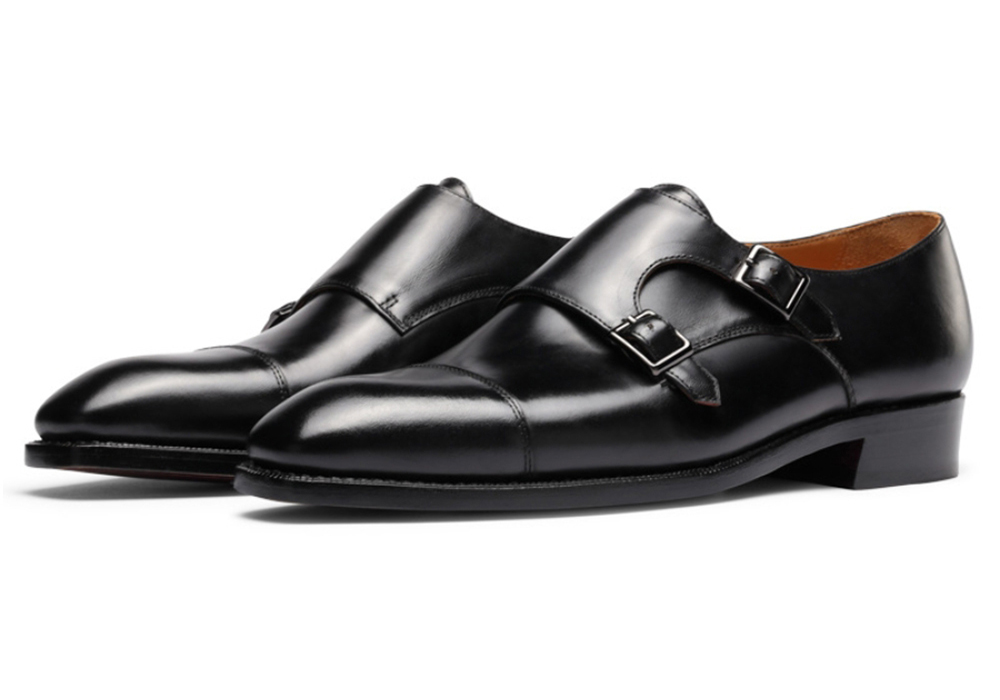
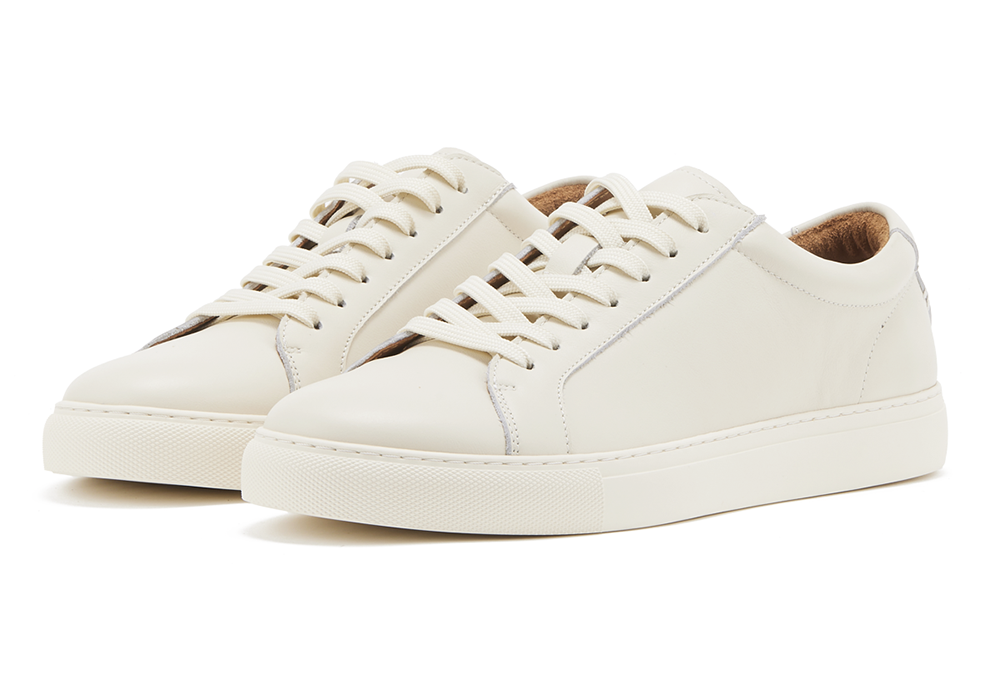
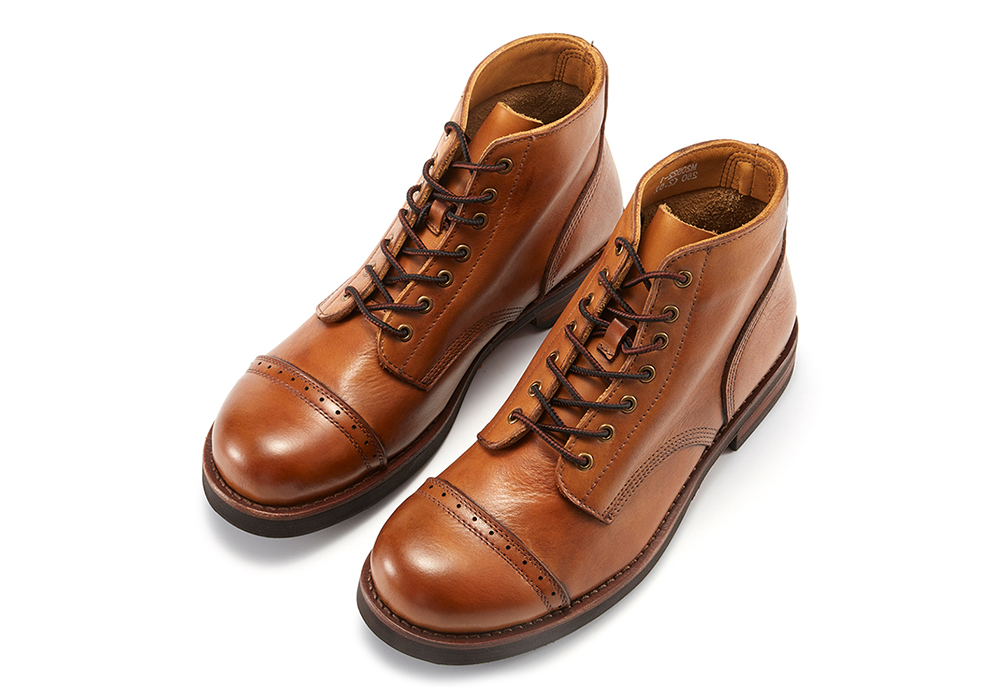
OEM Shoes from China: Complete B2B Manufacturing Guide 2026
OEM shoes from China offer B2B buyers MOQ flexibility from 60 pairs custom, $25–40/pair pricing, and sub-1.2% defect rates from certified factories.
TL;DR
- OEM shoes from China start at MOQ 60 pairs for custom designs, with zero minimum on existing catalog styles.
- Factory-gate pricing runs $25–40/pair for genuine leather men’s dress shoes, depending on construction and materials.
- Top-tier Chinese shoe factories maintain defect rates of 0.8–1.2%, compared to an industry average of 2–4%.
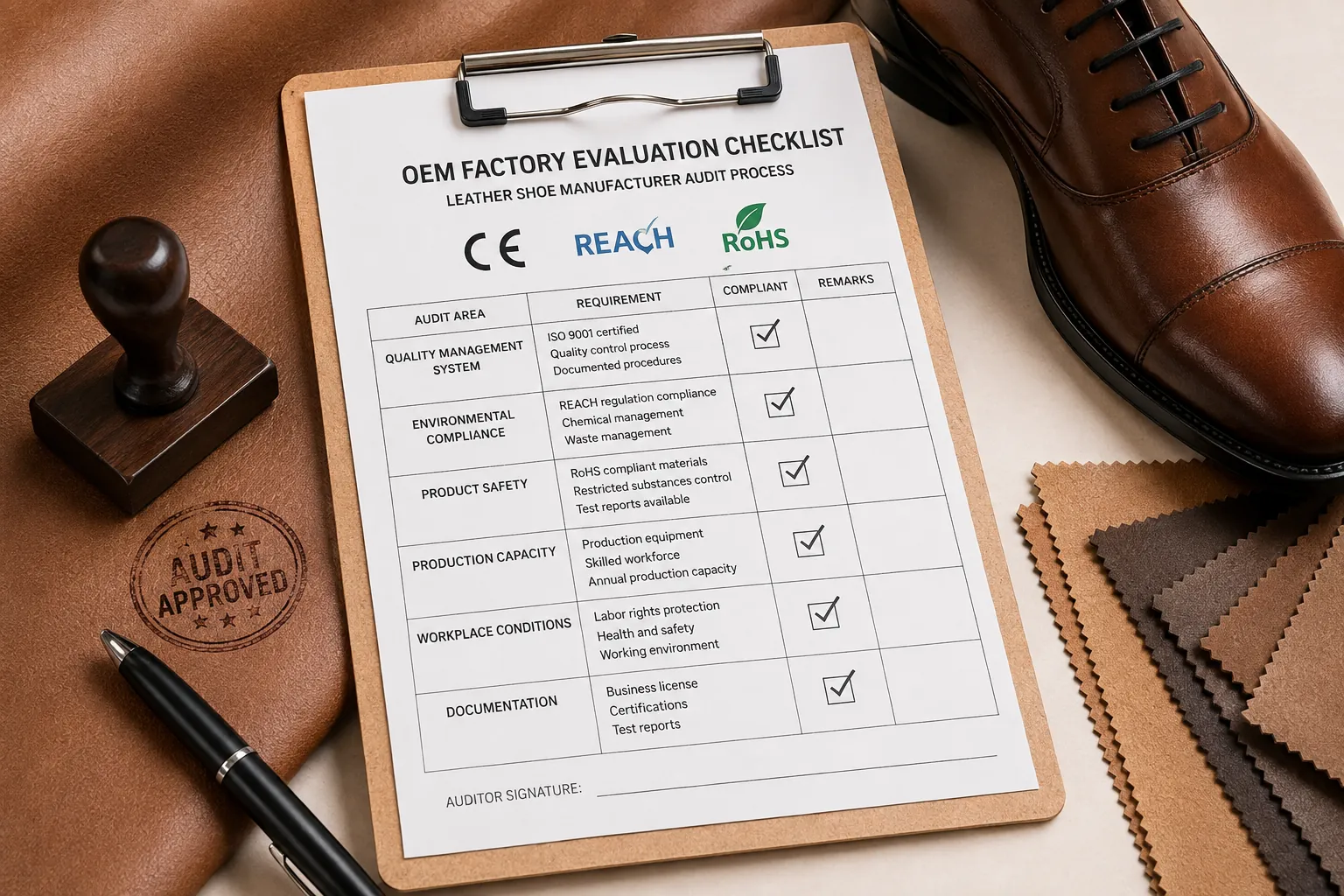
- Certifications to require from any supplier: CE (EN ISO 20347), REACH, and RoHS — all three are standard at audit-grade factories.
- Verified OEM shoe manufacturers ship to 50+ countries and carry 1,000+ ready designs, reducing your time-to-market significantly.
Table of Contents
- What Are OEM Shoes and Why Source from China?
- OEM vs ODM: Which Model Fits Your Business?
- How OEM Shoe Manufacturing Works Step by Step
- Pricing, MOQ, and Lead Times for OEM Shoes
- Quality Control and Certifications for OEM Shoes
- How to Vet a Chinese OEM Shoe Manufacturer
- OEM Shoe Sourcing Checklist
- FAQ
- Ready to Start Your Shoe Line?
1. What Are OEM Shoes and Why Source from China?
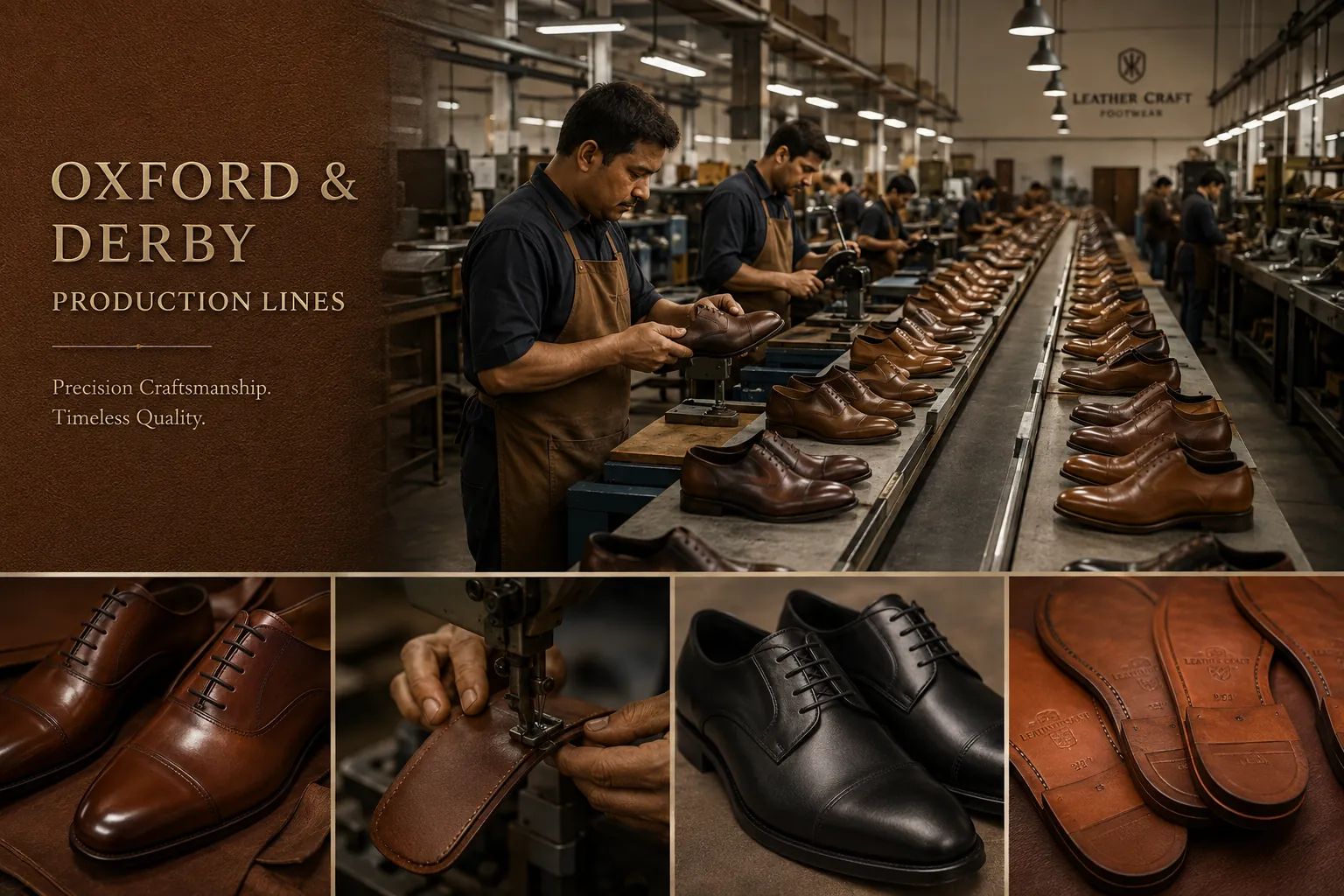
OEM shoes are footwear manufactured by a factory to a buyer’s specifications — your brand, your design, their production infrastructure.
China dominates global footwear manufacturing for a reason: the supply chain depth, skilled labor pool, and material ecosystem are unmatched. In 2026, China still accounts for roughly 57% of global shoe exports by volume, according to World Footwear Yearbook data.
For B2B buyers, private label brands, and cross-border e-commerce sellers, sourcing OEM shoes from China means access to:
- Full construction options: Goodyear welt, Blake stitch, cemented
- Genuine leather grades from full-grain to corrected-grain
- Custom branding: insole embossing, box printing, hang tags, dust bags
- Regulatory compliance for EU, US, and Australian markets
As a manufacturer producing 500,000+ pairs annually since 2007, Wincheer Shoes operates production lines in Jiangmen (about 1.5 hours from Guangzhou), with warehouses and showrooms in both Shanghai and Jiangmen, giving buyers integrated production scale and export logistics support in a single supply chain. With a defect rate of 0.8–1.2% (against an industry average of 2–4%), CE (EN ISO 20347), REACH, and RoHS certifications, this factory profile represents what a qualified OEM partner looks like in practice.
2. OEM vs ODM: Which Model Fits Your Business?
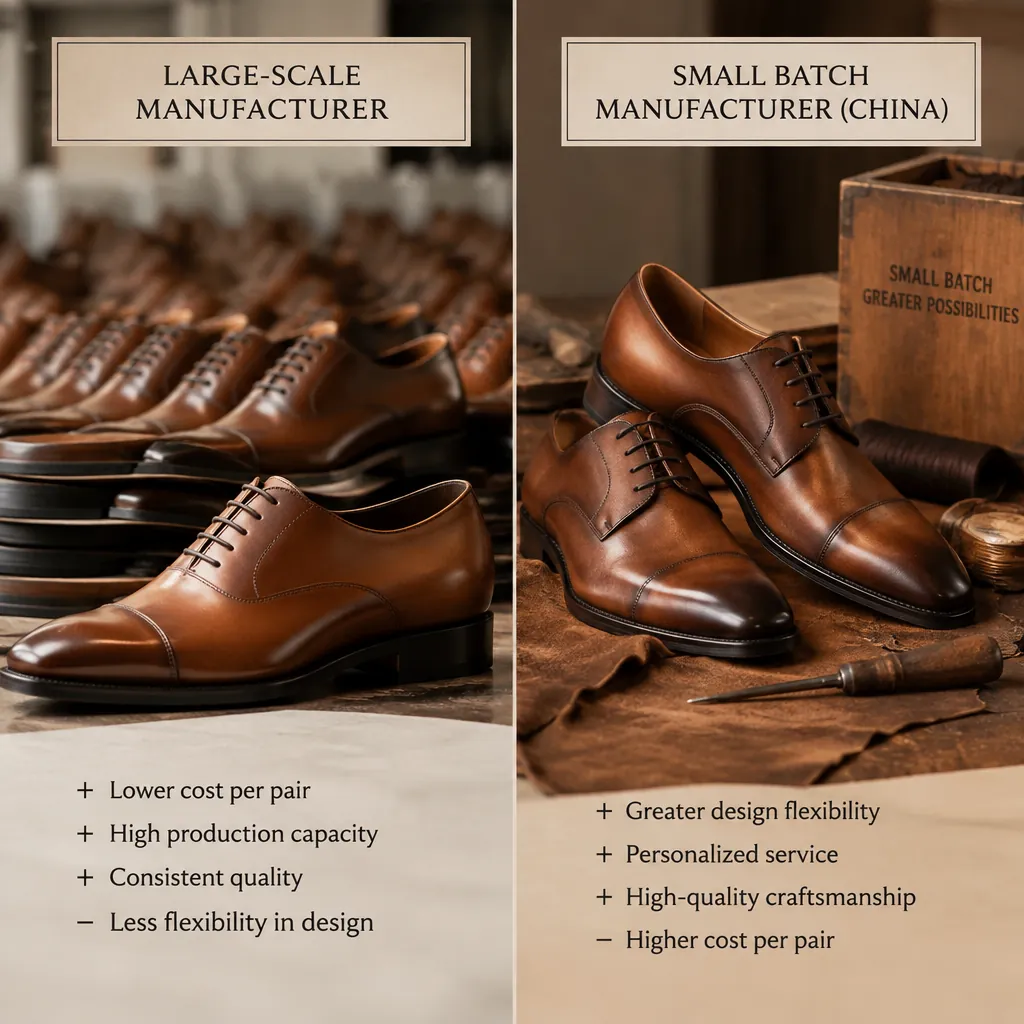
OEM requires you to supply the design; ODM lets you select from the factory’s existing designs and brand them as your own.
Understanding this distinction is critical before you contact any supplier. Getting it wrong costs you time, tooling fees, and sample rounds.
OEM (Original Equipment Manufacturing)
- You own the design: tech packs, last specifications, material callouts
- Factory builds to your exact blueprint
- Higher upfront investment in design and tooling
- Best for: established brands with in-house design capability
ODM (Original Design Manufacturing)
- Factory owns the base design; you license and brand it
- Lower entry cost — no tooling fees on existing lasts
- Faster to market: samples in 7–10 days vs 3–4 weeks for full OEM
- Best for: startups, e-commerce sellers, buyers testing new categories
When to Use Both
Many B2B buyers run a hybrid approach: launch with ODM styles to test market demand, then commission OEM designs for bestsellers. This is especially effective in men’s dress shoes where silhouette trends move slowly.
For a deeper breakdown of what OEM means in the footwear context, see What Does OEM Mean in Shoes.
3. How OEM Shoe Manufacturing Works Step by Step
The OEM shoe production process follows a fixed sequence — understanding each stage helps you set realistic timelines and catch quality issues early.
Stage 1: Tech Pack Submission
Submit your design files including: last shape, upper pattern, material specifications, sole unit, hardware, and colorways. A complete tech pack cuts sample revision rounds from 3–4 to 1–2.
Stage 2: Last and Tooling
If your design requires a new last (the foot-shaped mold), expect a tooling fee of $150–$400 and a 2–3 week lead time. Existing lasts from the factory’s library cost nothing.
Stage 3: Sample Development
The factory produces a pre-production sample (PPS). Evaluate: upper stitching alignment, sole bond strength, toe box shape, heel counter stiffness, and lining finish. Request a wear test if possible.
Stage 4: Sample Approval and BOM Lock
Once you approve the sample, the Bill of Materials (BOM) is locked. Any material substitution after this point requires a new sample and written approval.
Stage 5: Bulk Production
Production runs in batches. For a 500-pair order, expect 25–35 working days from BOM lock to finished goods. Larger runs (2,000+ pairs) may run 40–50 days.
Stage 6: Pre-Shipment Inspection
Conduct an AQL inspection before goods leave the factory. Standard AQL 2.5 for major defects is the industry benchmark. For a detailed walkthrough, see AQL Inspection Footwear: Top 5 Quality Control Tips.
Stage 7: Shipment and Documentation
Confirm: commercial invoice, packing list, bill of lading, certificate of origin, and any required compliance certificates (CE, REACH) before the container is sealed.
4. Pricing, MOQ, and Lead Times for OEM Shoes
OEM shoe pricing from China runs $25–40/pair for genuine leather men’s dress shoes, with MOQ starting at 60 pairs for custom orders.
Price Breakdown by Construction
| Construction Type | Typical FOB Price | MOQ | Lead Time |
|---|---|---|---|
| Cemented (glued) | $25–30/pair | 60 pairs | 20–30 days |
| Blake Stitch | $28–34/pair | 60 pairs | 25–35 days |
| Goodyear Welt | $34–40/pair | 60 pairs | 30–45 days |
| Existing catalog (ODM) | $25–35/pair | 0 (no minimum) | 7–15 days |
What Drives Price Up
- Full-grain leather vs corrected-grain: +$3–6/pair
- Leather sole vs rubber sole: +$4–8/pair
- Custom last tooling: one-time fee, amortized over order volume
- Custom packaging (branded box, dust bag, tissue): +$0.80–2.50/pair
What Drives Price Down
- Using factory’s existing lasts and soles
- Single colorway per SKU
- Larger order volumes (500+ pairs per style)
- Standard lining materials (pigskin vs full leather lining)
For a complete breakdown of Incoterms and how FOB pricing affects your landed cost, see FOB Shoe Pricing Guide: 4 Incoterms Compared in 2026.
5. Quality Control and Certifications for OEM Shoes
A qualified OEM shoe supplier should hold CE (EN ISO 20347), REACH, and RoHS certifications — and maintain a documented defect rate below 1.5%.
Certifications Explained
CE (EN ISO 20347): The European standard for occupational footwear. Required for any shoe sold into EU markets. Covers slip resistance, upper durability, and insole performance.
REACH: EU chemical regulation. Ensures no restricted substances (e.g., chromium VI, azo dyes) are present in leather or adhesives. Critical for EU and UK market access.
RoHS: Restricts hazardous substances in electrical/electronic components. Relevant for shoes with electronic elements (smart insoles, LED components) but increasingly requested as a baseline compliance signal.
Defect Rate Benchmarks
| Quality Tier | Defect Rate | What It Means |
|---|---|---|
| Tier 1 (audit-grade) | 0.8–1.2% | Consistent process control, inline QC |
| Industry average | 2–4% | Reactive QC, higher rework cost |
| Below-standard | >4% | Systemic issues, avoid |
A defect rate above 2% on a 1,000-pair order means 20+ pairs requiring rework or replacement — a direct hit to your margin and fulfillment timeline.
In-Line vs End-of-Line QC
Don’t rely solely on end-of-line inspection. Require your factory to conduct in-line checks at: upper cutting, stitching completion, lasting, and sole bonding. Each checkpoint catches defects before they compound.
6. How to Vet a Chinese OEM Shoe Manufacturer
Vetting an OEM shoe supplier requires more than a product catalog review — you need to verify production capacity, compliance documentation, and communication reliability.
The 5-Point Manufacturer Audit Framework
1. Certification Verification
Request original certificates (not scans) for CE, REACH, and RoHS. Cross-check certificate numbers against the issuing body’s database.
2. Factory Visit or Video Audit
A live factory walkthrough — physical or video — reveals production scale, equipment condition, and worker skill level. Ask to see the cutting room, stitching floor, and QC station.
3. Sample Quality Assessment
Order a paid sample ($30–80 typically) before committing to bulk. Evaluate stitching consistency, adhesive bond strength, last fit, and material authenticity.
4. Reference Check
Ask for 2–3 buyer references in your target market. A factory shipping to 50+ countries with 200+ active partners should have references available without hesitation.
5. Payment Terms Transparency
Standard terms: 30% deposit, 70% balance before shipment. Factories demanding 100% upfront or offering 0% deposit with no track record are both red flags.
For a detailed red-flag checklist, see Red Flags When Sourcing Leather Shoes from China: A Buyer’s Checklist.
If you’re building a private label brand rather than just sourcing wholesale, the Private Label Shoes: 10-Step Brand Launch Guide 2026 covers the full brand-building process from factory selection to launch.
7. OEM Shoe Sourcing Checklist
Use this checklist before placing your first bulk OEM order.
Pre-Sourcing
- [ ] Define your product category (Oxford, Derby, Loafer, Chelsea Boot, etc.)
- [ ] Determine construction type (cemented, Blake, Goodyear welt)
- [ ] Set target FOB price range based on retail margin requirements
- [ ] Identify target markets and required certifications (EU = CE + REACH; US = CPSC compliance)
- [ ] Prepare tech pack or select ODM styles from factory catalog
Supplier Evaluation
- [ ] Verify CE (EN ISO 20347), REACH, and RoHS certificates
- [ ] Confirm annual production capacity (500,000+ pairs = proven scale)
- [ ] Request defect rate data from last 3 production runs
- [ ] Conduct factory audit (physical or video)
- [ ] Order and evaluate pre-production sample
Order Placement
- [ ] Confirm MOQ (60 pairs minimum for custom; 0 for catalog styles)
- [ ] Lock BOM in writing before production starts
- [ ] Agree on AQL inspection standard (AQL 2.5 recommended)
- [ ] Confirm payment terms (30/70 split is standard)
- [ ] Arrange pre-shipment inspection with third-party inspector
Shipment
- [ ] Confirm all compliance documents (CE cert, REACH test report, CO)
- [ ] Review packing list against purchase order line by line
- [ ] Verify carton markings match destination country requirements
- [ ] Confirm Incoterms and insurance coverage
FAQ
Q: What is the minimum order quantity for OEM shoes from China?
A: MOQ for custom OEM shoes starts at 60 pairs per style. For existing catalog designs (ODM), there is no minimum order — you can order as few pairs as needed to test a style. Custom orders below 60 pairs typically cannot be accommodated due to cutting and production economics.
Q: How long does it take to produce OEM shoes from China?
A: From approved sample to finished goods, expect 25–45 working days depending on construction complexity. Cemented styles run faster (20–30 days); Goodyear welt construction takes 30–45 days. Rush production is possible for an additional fee but is not recommended for first orders.
Q: What certifications should my OEM shoe supplier hold?
A: At minimum, require CE (EN ISO 20347) for EU market access, REACH compliance for chemical safety, and RoHS for hazardous substance restriction. US buyers should also request CPSC compliance documentation. Always verify original certificates — not scans — against the issuing body’s database.
Q: What is a realistic defect rate for OEM shoes from China?
A: Tier-one factories maintain defect rates of 0.8–1.2%. The industry average runs 2–4%. On a 1,000-pair order at 3% defect rate, that’s 30 pairs requiring rework or replacement. Always request defect rate data from the factory’s last 3 production runs before committing to bulk.
Q: Can I put my own brand on OEM shoes from China?
A: Yes — private labeling is standard practice. You can customize insole embossing, outsole branding, tongue labels, hang tags, shoebox printing, and dust bags. Most factories include basic branding (insole logo, label) within the per-pair price; premium packaging (custom box, tissue, dust bag) adds $0.80–2.50/pair.
Ready to Start Your Shoe Line?
Partnering with Wincheer Shoes means gaining access to a full-service OEM shoes manufacturer capable of producing 500,000+ pairs annually — with a low entry point of just 60 pairs per custom order and competitive pricing ranging from $25 to $40 per pair. Whether you’re launching a private label brand or scaling an existing footwear line, our factory-direct model gives you the flexibility and quality control your business demands.
Take the next step by reaching out to our team today at peterwang@shwincheer.com or visit wincheershoes.com to explore our full range of customization options, material selections, and production capabilities. Our dedicated account managers are ready to guide you from initial concept through final delivery, ensuring every pair meets your exact specifications and timeline.