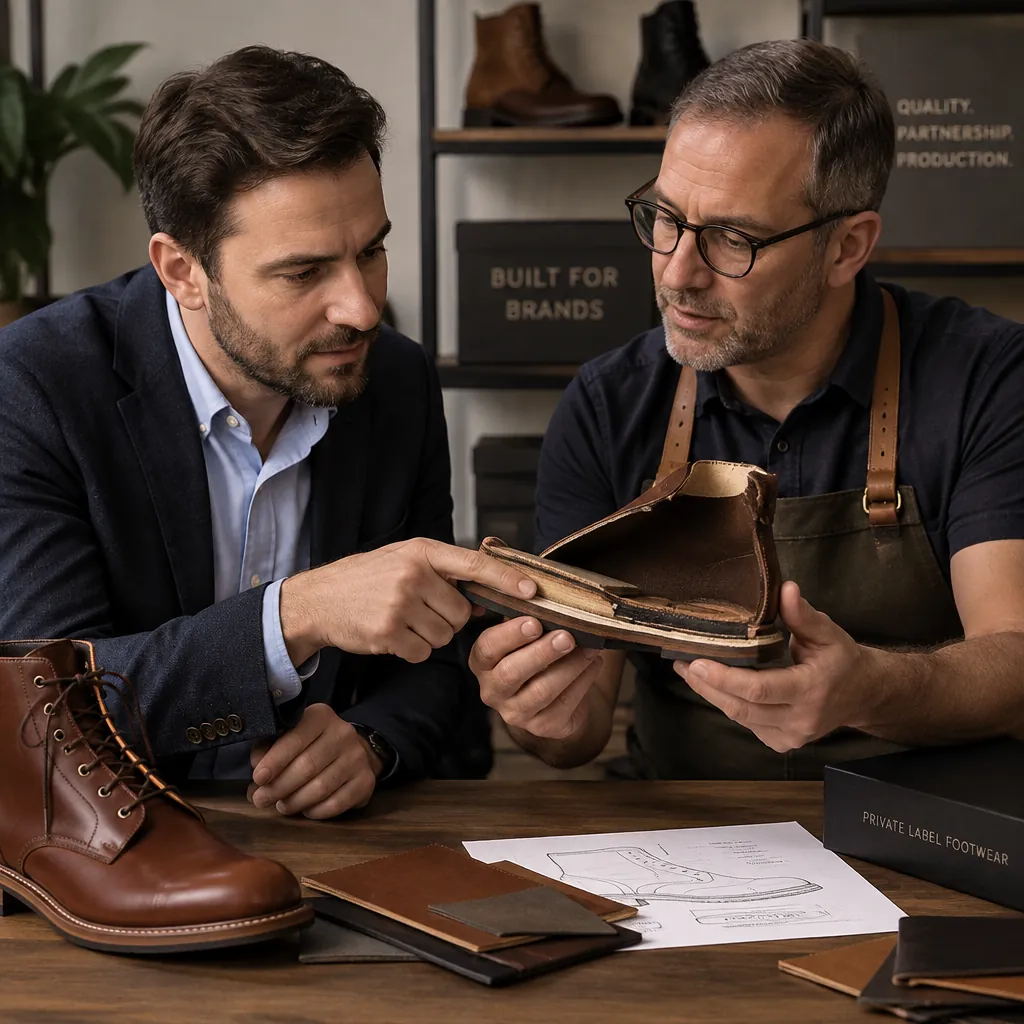

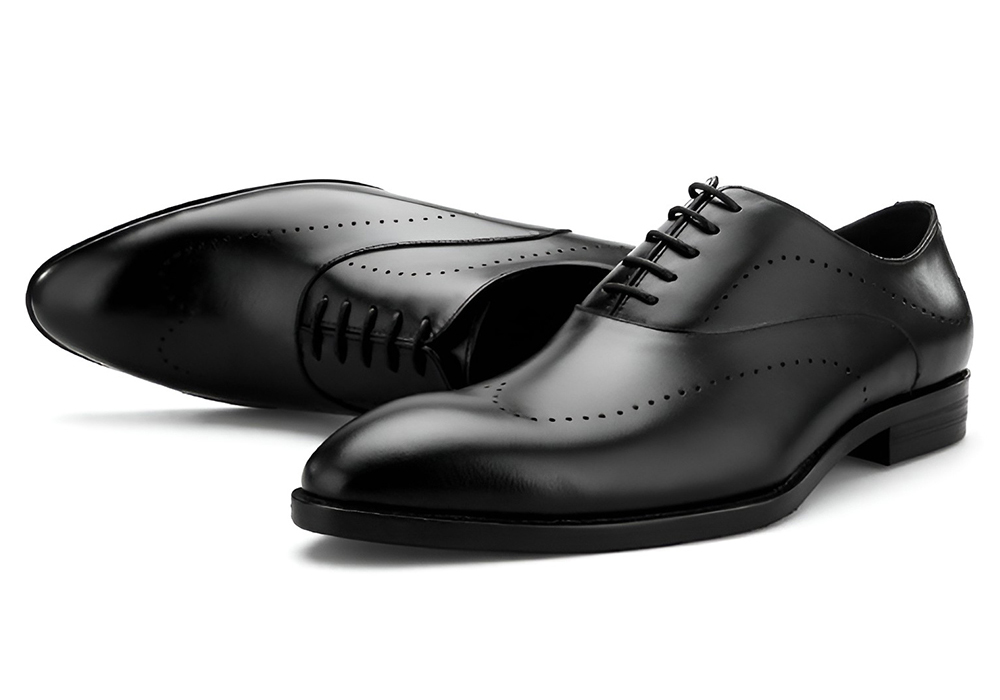
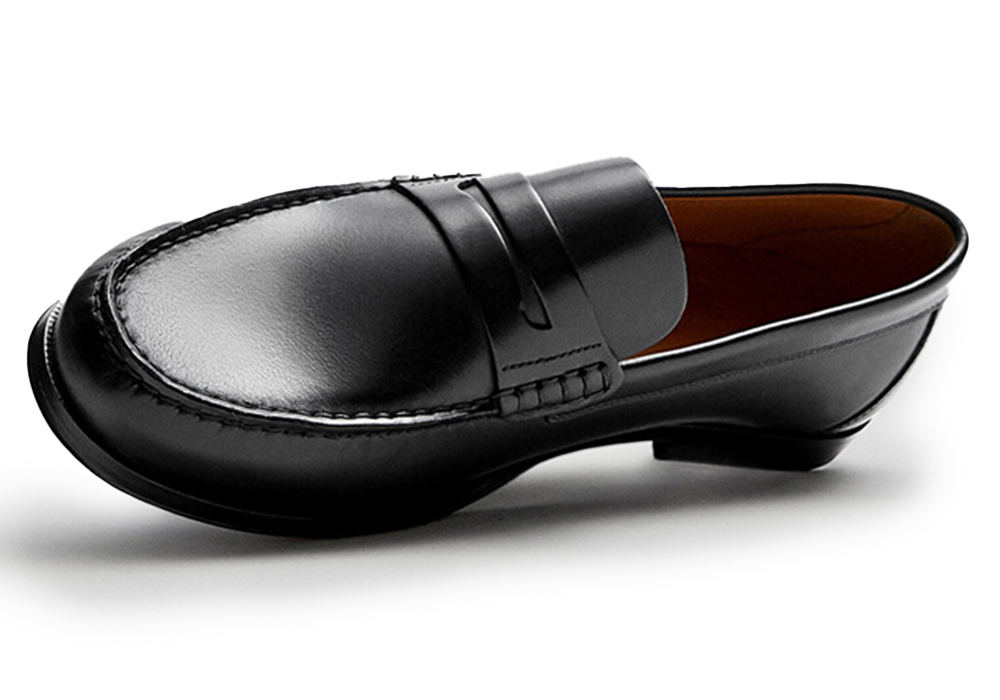
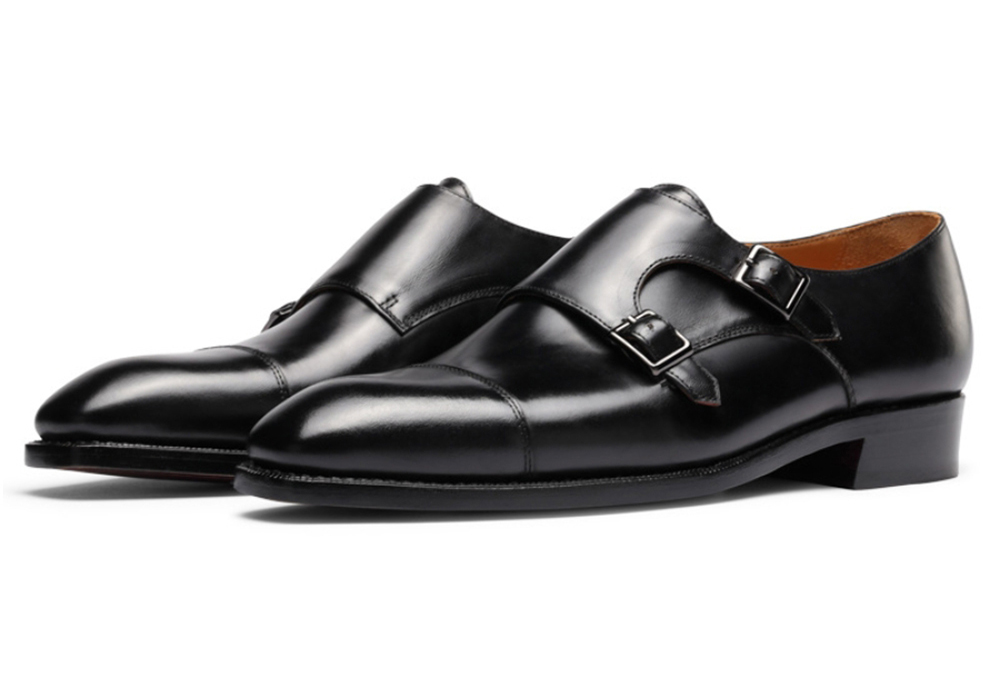
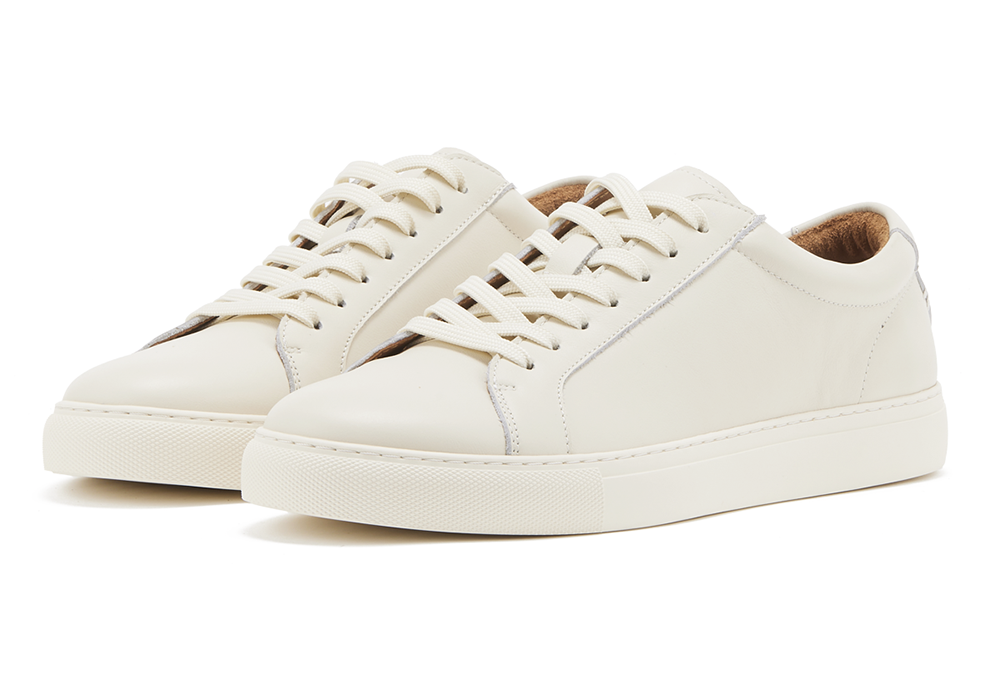
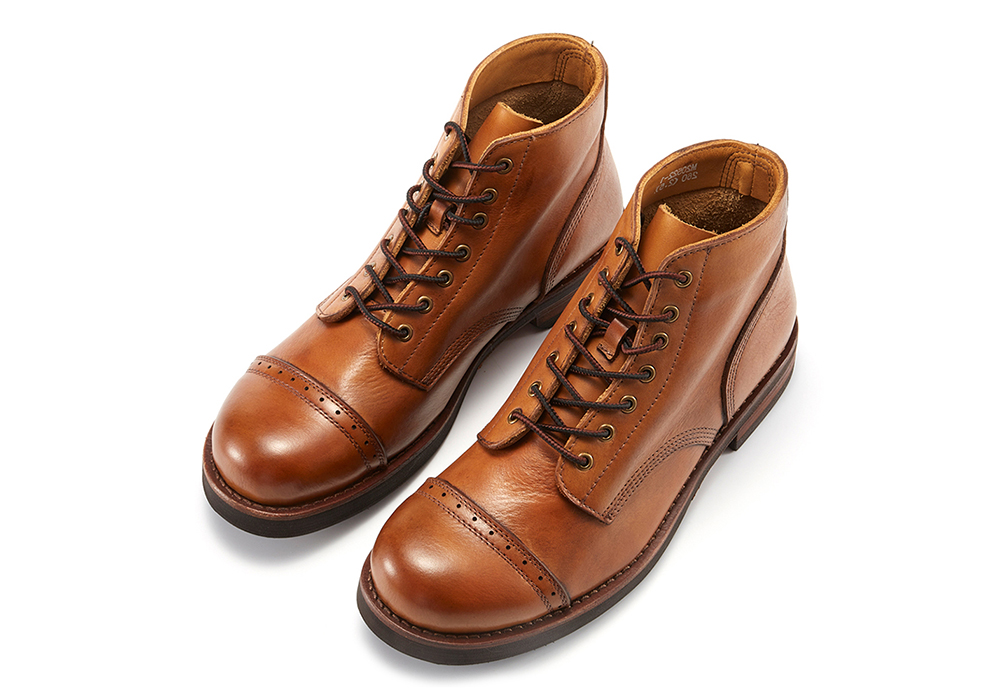
Quick Answer: Evaluating a private label shoe manufacturer comes down to six verifiable dimensions: sampling capability, MOQ structure, compliance documentation, communication discipline, production ownership, and pricing transparency. Each one has a concrete verification move — ask for a revision round on the sample, request the tiered price list, match the certificate entity to the factory name. A partner that passes four of the six checks unaided is real; one that answers all six with marketing language is a catalog with a website.
Search results on this topic hand you the same six-factor list — certifications, sampling speed, quality control, capacity, transparency, references — with no way to verify any of them from a laptop. This guide adds the verification layer: we manufacture private label men’s leather footwear in Jiangmen, Guangdong (est. 2007, Wincheer Shoes Co., Ltd., ~500,000 pairs per year), and we will show you what each dimension looks like when it is real, what the common substitutions are, and how private label pricing actually breaks down once a real quotation arrives.

What Is a Private Label Shoe Manufacturer?
A private label shoe manufacturer produces footwear to its own established patterns and production capability, then applies your brand — logo, materials selection, packaging, and specified detailing — so the finished product sells under your label. The private label model is standard across consumer goods; in footwear it sits between two neighbors that buyers often confuse with it:
| Model | Whose design | Whose brand | Typical MOQ | Best for |
|---|---|---|---|---|
| Stock private label | Manufacturer’s existing styles | Yours (logo + packaging) | From 1 pair (stock) to 60+ pairs | Fast market entry, tested styles |
| Private label (customized) | Manufacturer’s base patterns, your specifications | Yours | ~60 pairs per style | Brands wanting differentiation without design overhead |
| OEM | Your designs, their production | Yours | Varies, usually higher | Brands with in-house design |
| ODM | Manufacturer designs, you refine and brand | Yours | Varies | Brands buying design capability |
The boundary that matters for evaluation: private label work lives or dies on the manufacturer’s existing capability — you are renting their patterns, lasts, and line skills, then applying your identity. That is why the evaluation below focuses on capability you can verify, not promises you cannot.
What Can You Actually Customize With a Private Label Partner?
Four customization tiers exist, and a serious manufacturer states plainly which tiers it runs — then proves it.
| Tier | What changes | Verification move |
|---|---|---|
| Logo & packaging | Brand marks, boxes, dust bags, labels | Ask for photos of a recent customer’s packaging run (anonymized) |
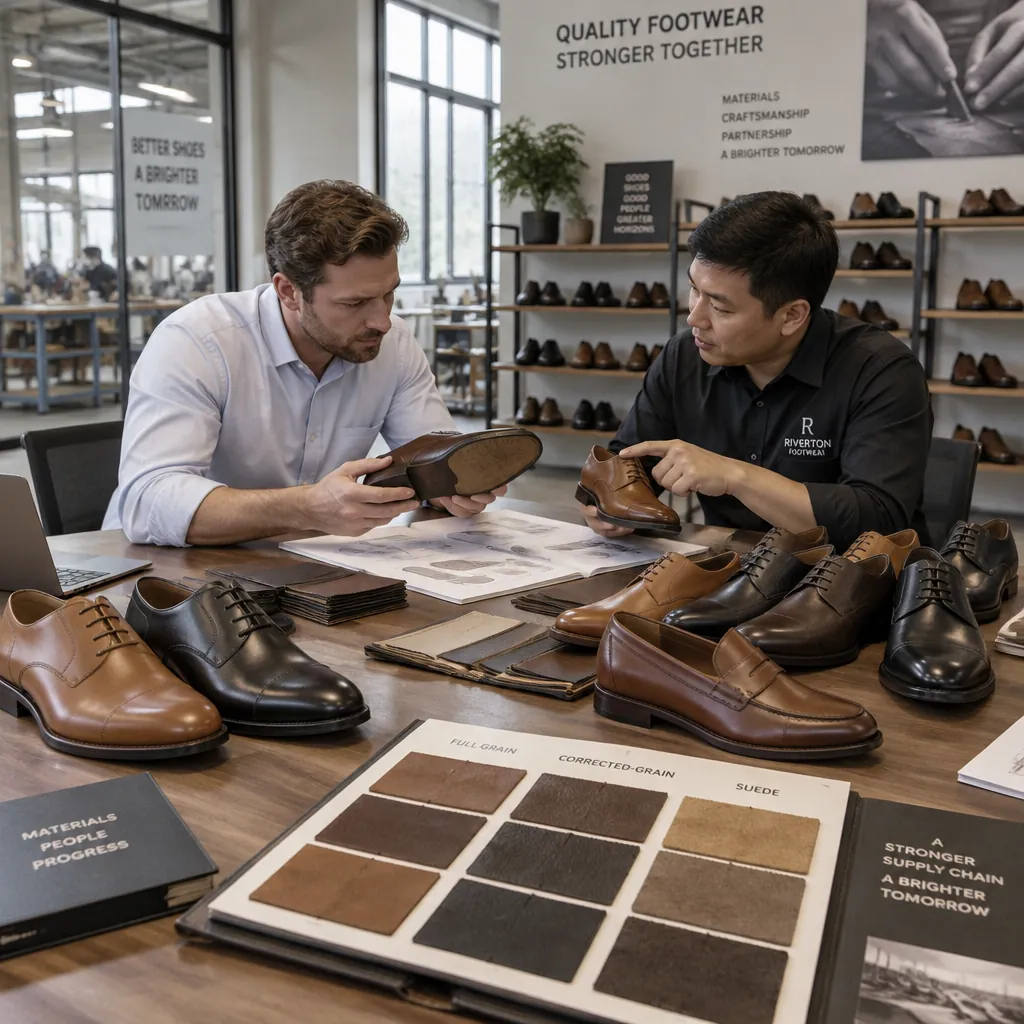
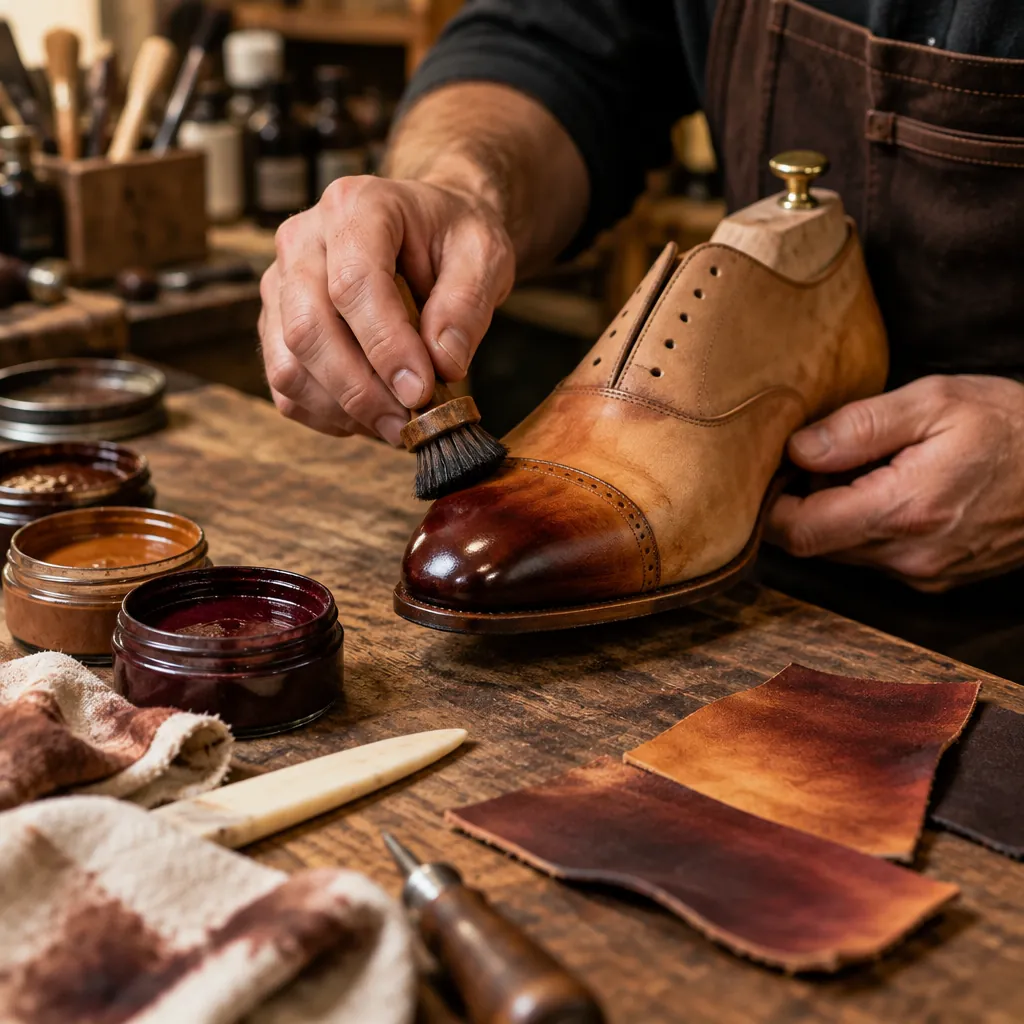
| Material selection | Leather grade, color, lining, sole material from the factory’s material library | Request two swatch sets from different hide batches — consistency proves the library is real |
| Specification changes | Stitching color, eyelets, sole edge, hardware | Ask for one revision round on a sample and time the turnaround |
| Base pattern modification | Last shape, profile, proportion adjustments | Ask which in-house styles are closest to your brief — a real partner names styles and trade-offs |
The substitution to watch for: stock styles resold as “customization.” Some sellers take an existing style, add a logo, and call it private label development. The test is the material library and the revision round — a genuine private label partner can change materials and specs on an existing pattern in days; a reseller can only change the logo.
First-hand evidence — buyer language (inquiry records, anonymized). Among the real inquiries reaching our sales desk in 2026, the highest-intent private label request specified a complete product line — genuine leather, a women’s series, full OEM-level customization — while most others arrived as model-number-plus-price questions. Buyers who evaluate seriously ask about capability tiers; buyers who are being sold to ask only about logos. The question you lead with shapes the answer you get.
(Source level: anonymized inquiry records, Wincheer Shoes Co., Ltd., 2026)
How Do You Evaluate a Private Label Shoe Manufacturer?
Six dimensions, each with a verification move that works before you ever board a plane.
1. Sampling capability — ask for a revision round. Any manufacturer can show a good first sample. The differentiator is round two: request a specific change (stitch color, sole edge finish, lining swap) and measure turnaround and fidelity. A real partner returns a corrected sample in days with a note on what changed; a reseller goes quiet or returns the same sample rephotographed.
2. MOQ structure — request the tiered price list. Minimums exist because setup amortizes — pattern cutting, lasting boards, and line changeover cost the same at 60 pairs as at 600. Serious factories quote in steps: our own custom production starts at 60 pairs per style with price tiers at 100 / 300 / 500 pairs, while stock programs ship from single pairs (Source: internal factory records, Wincheer Shoes Co., Ltd., 2026). A single flat price with no minimum structure means margin layering, not manufacturing. Our small-batch manufacturers guide shows how real tier structures compare.
3. Compliance documentation — match the entity name. Ask which tests are on file (CE, REACH (Azo Dyes), RoHS, EN-ISO 20347 are our own set) and request the certificates. The certificate names a legal entity — that name must match the factory you are contracting with. Mismatches mean the certificate belongs to someone else in the chain, which is how “certified” products ship from uncertified lines.
4. Communication discipline — measure response architecture, not speed. Does the reply answer your actual question, or does it redirect to a catalog? Does one person own your project, or does a rotating cast sign the emails? Project ownership is the strongest predictor of how bulk production will go when something needs solving.
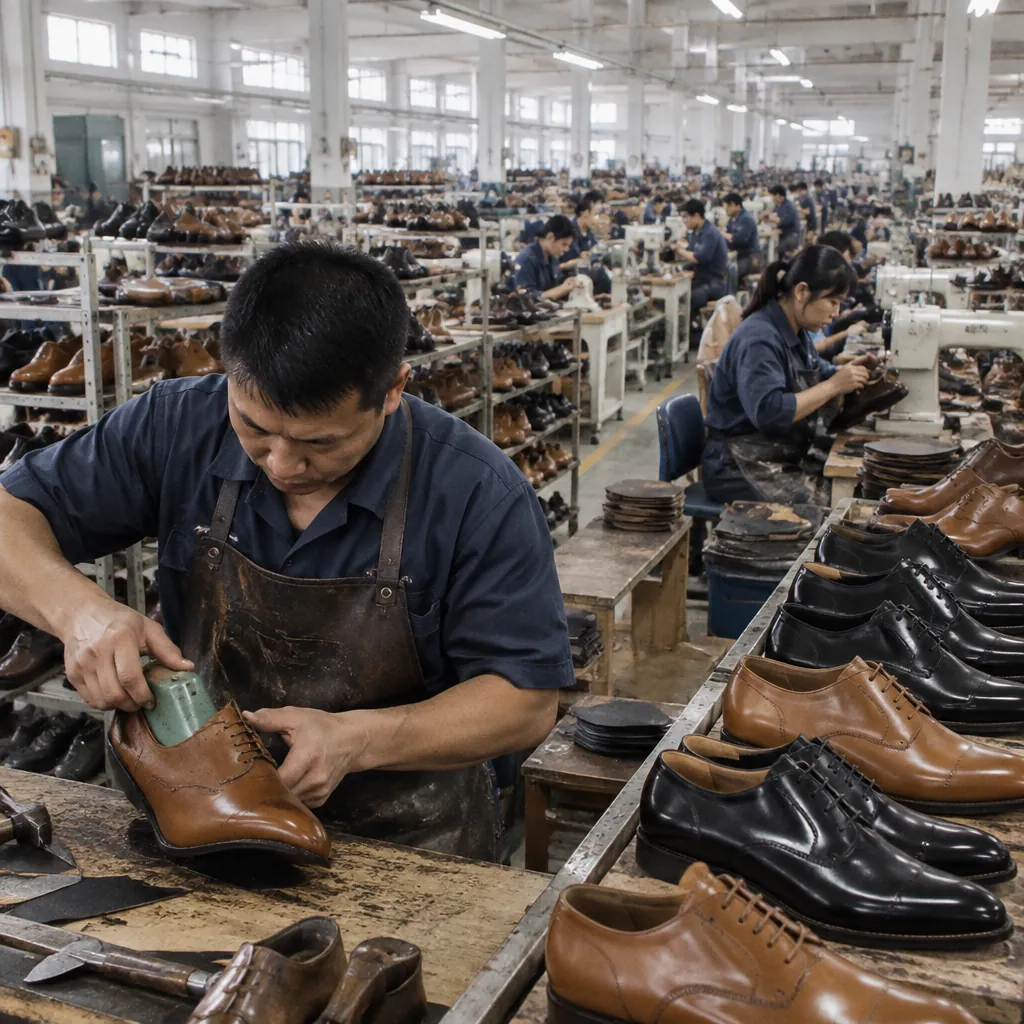
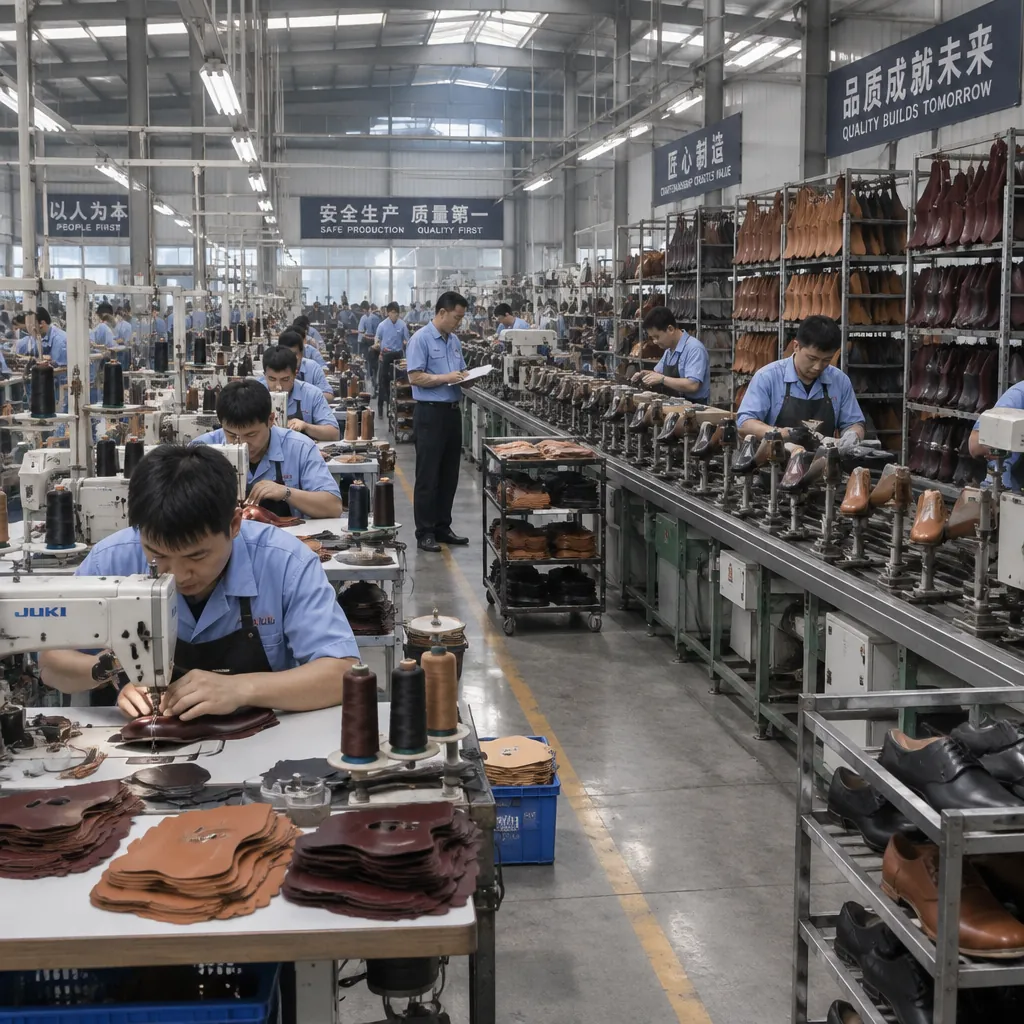
5. Production ownership — ask which line runs your style. A manufacturer walks you to the lasting line that would run your order and shows you current WIP for other brands. Our factory floor guide details what each production area tells you; the short version is that production floors answer questions showrooms cannot.
6. Pricing transparency — ask what drives the number. A real quotation has structure: material grade, construction method, quantity tier, packaging spec. Ask the supplier to walk through the quote line by line; manufacturers can, intermediaries improvise. For the full sourcing-route comparison — including when an agent genuinely earns its margin — our factory-direct vs trading company analysis covers the decision.
A partner that clears four of six unaided is manufacturable; treat two or more failures as a signal to keep looking.
What Should Private Label Manufacturing Cost?
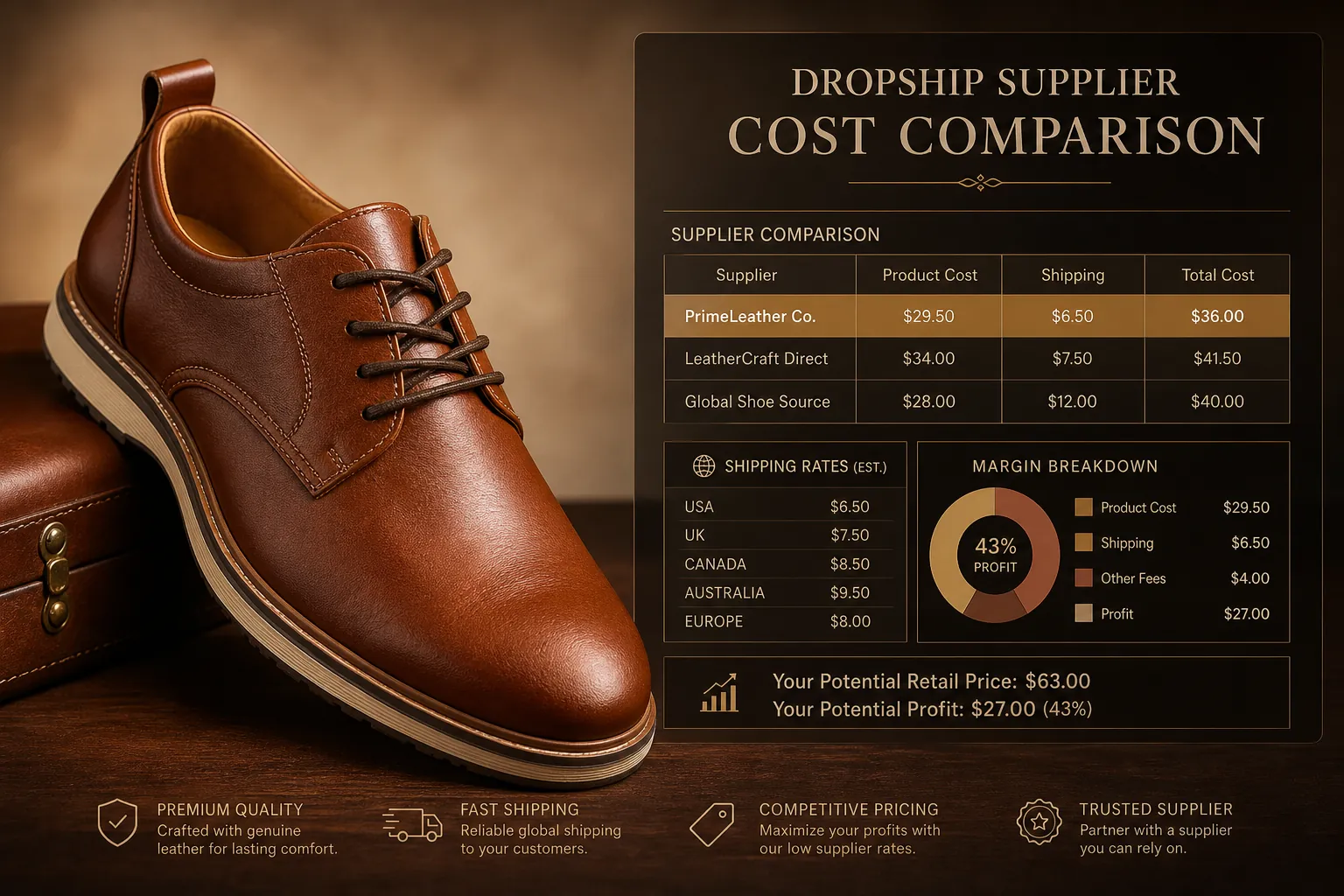
The honest answer is a structure, not a number — and the structure explains why quotes for “the same shoe” can typically vary 30-50% between suppliers in our experience.
Where the money goes: leather grade (the widest variable — corrected grain versus full-grain can move unit cost by double-digit percentages), construction method (cemented versus welted changes both material and labor), order quantity (setup amortization — the tier effect above), and branding scope (debossed logos cost pennies; custom lasts and packaging tooling carry real setup).
The private label discount is real, and it comes from pattern reuse. Because private label builds on the manufacturer’s existing patterns and lasts, you skip development costs an OEM project carries — which is why private label entry pricing typically undercuts full OEM on the same construction. What you give up is design exclusivity: the base pattern may serve other brands, differentiated by your materials and branding choices.
Two red flags in quotations: a price far below the tier structure for the stated construction (the construction arithmetic got discarded somewhere — check the sole edge), and “all-inclusive” pricing with no material or construction line items (you cannot audit what has no lines).
Which Questions Separate a Real Partner From a Catalog?
Six questions, in order — each maps to a verification dimension above.
- “Which of your existing styles is closest to my brief, and what would change?” — capability tier check
- “Can I see two swatch sets from different production batches?” — material library check
- “What is your MOQ for this construction, and can I get the tiered list?” — pricing architecture check
- “Which tests are on file, and which entity holds the certificates?” — compliance check
- “Who owns my project, and which line would run it?” — production ownership check
- “What happens when a defect is found at final inspection?” — QC reality check
The brand-side steps before and after manufacturing — positioning, launch sequencing, channel setup — are covered from the founder’s angle in our private label brand start guide and the China execution walkthrough; this guide covers the supplier decision between them.
FAQ
How is private label different from OEM in shoes?
Private label builds on the manufacturer’s existing patterns, lasts, and line capability, with your branding and material selections applied; OEM production means producing your own designs from your tech pack. The practical difference for buyers: private label skips development cost and starts from proven patterns, while OEM buys you design exclusivity. Both produce under your label.
What MOQ should I expect for private label shoes?
Expect tiered minimums that scale with customization depth: stock styles from single pairs, customized private label work around 60 pairs per style, and higher effective minimums for welted constructions because setup amortizes over fewer pairs. Our own structure runs 60 pairs entry with 100 / 300 / 500 pair tiers on custom work and single-pair minimums on stock programs.
Can a private label manufacturer use my own materials?
Most can, but expect a material approval step: incoming material must be tested against the construction’s requirements (adhesion for cemented work, thickness for lasting) before the line accepts it. For regulated markets, confirm who holds the compliance documentation when the material is yours — the certificate entity question becomes shared.
How long does private label sampling take?
First samples typically run one to three weeks depending on whether the base style is live on the line. Revision rounds are faster — days, not weeks — which is exactly why the revision-round test above is such a clean differentiator between manufacturers and resellers.
Which markets do private label shoe manufacturers typically serve?
Established Chinese manufacturers serve EU and US wholesale programs as a baseline — which is why REACH (Azo Dyes) and CE documentation appears in serious quotations — alongside Middle East, Southeast Asian, and Latin American buyers. The region matters less than the documentation: whatever your market, ask which tests are on file for it.