Table of Contents
- Stage 1: Concept Development and Brief Creation
- Stage 2: Technical Design and Pattern Making
- Stage 3: Sample Development
- Stage 4: Material Sourcing and Validation
- Stage 5: Fitting and Size Development
- Stage 6: Production Preparation
- Stage 7: Mass Production Execution
- Stage 8: Delivery and Handoff
The journey from a footwear concept to mass-produced reality follows a carefully sequenced development process. Each stage builds on the previous one. Skip or rush a step, and problems compound down the line—often expensively.
This guide walks through the full leather shoe development process, from initial brief to delivered product. Understanding the stages, timelines, and decision points helps you plan realistic schedules, allocate resources appropriately, and make informed decisions at each gate.
Typical timeline: The full OEM/ODM development process spans 4–9 months from initial concept to delivered product, depending on complexity, customization level, and whether you’re developing multiple styles concurrently.
Stage 1: Concept Development and Brief Creation
Defining Product Vision
Every successful shoe starts with clear answers to fundamental questions:
- Who is the target consumer, and what occasions will this shoe serve?
- What price point will the product occupy, and what margins must manufacturing enable?
- What aesthetic direction sets this product apart from competitors?
- What performance characteristics—durability, comfort, water resistance—define quality for this application?
These strategic decisions cascade directly into technical requirements. A dress shoe at £300 retail receives different material selections and construction techniques than a casual shoe targeting £80. A children’s shoe requires different safety considerations than an adult professional shoe.
Creating the Design Brief
The design brief translates concept into actionable guidance for the manufacturer’s development team. Comprehensive briefs address:
- Silhouette and style direction: Reference images indicating aesthetic preference—lace-up oxfords versus slip-on derbies, traditional versus contemporary styling.
- Material preferences: Leather types (full-grain, top-grain, suede), colorways, finishing requirements. Specific tannery preferences or price constraints help manufacturers source appropriately.
- Target specifications: Weight, sole thickness, heel height, functional features. Document comfort requirements, orthopedic considerations, or climate-specific needs.
- Timeline requirements: Market windows, trade show deadlines, and seasonal buying cycles that constrain development duration.
Pricing parameters: Target wholesale and retail prices enable manufacturers to propose cost-optimized solutions.

Stage 2: Technical Design and Pattern Making
Converting Design to Technical Specifications
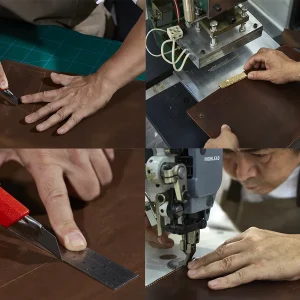
The manufacturer’s technical team translates aesthetic concepts into engineering specifications. This stage requires close collaboration between brand creative teams and manufacturer technical experts.
Last selection or creation is where it starts. The last—a 3D foot form around which shoes are constructed—determines fit, comfort, and visual proportions. Manufacturers maintain extensive last libraries covering different foot shapes, size ranges, and style categories. For unique requirements, custom last development adds 8–12 weeks to timelines.
Pattern development follows. Flat paper or digital patterns replicate the shoe’s components—vamps, quarters, tongues, linings—optimized for the selected last and size range. This typically takes 3–6 weeks depending on complexity.
Component engineering comes next. Each shoe component receives detailed specifications: dimensions, material requirements, reinforcement needs, and assembly sequencing. Technical drawings communicate these to production teams.
Tech Pack Documentation
The technical package (tech pack) consolidates all product specifications into a reference document guiding subsequent stages. A comprehensive tech pack includes:
- Technical sketches with annotated measurements
- Material specifications with approved sample references
- Construction details and seam allowances
- Hardware specifications and sourcing guidance
- Quality standards and acceptance criteria
- Size specifications across the full product size range
Key insight: Brands investing in detailed tech packs reduce development iterations significantly. Vague or incomplete specifications invite misinterpretation, leading to sample rejections and timeline delays.
Stage 3: Sample Development
Proto Samples: First Physical Interpretations
The initial prototype sample (proto) is the first tangible realization of design intent. Proto samples typically prioritize visual approximation over production feasibility—testing whether design concepts translate into wearable forms.
The typical iteration cycle:
| Iteration | Duration | Purpose |
|---|---|---|
| First Proto | 2–3 weeks | Test basic construction and fit. Fit testing on live feet identifies length, width, and volume issues. Significant fit problems may require last modifications. |
| Development Proto | 1–2 weeks per iteration | Refine details, incorporate approved materials, approach final construction techniques. Each iteration should address specific objectives. |
| Pre-Production Sample | 2–3 weeks | Uses actual production materials and processes, providing accurate representation of final product quality. Undergoes rigorous evaluation against tech pack specs. |
Sample Evaluation Criteria
Systematic sample evaluation prevents quality issues from reaching production:
- Dimensional verification: All measurements within specified tolerances—typically ±2mm for critical dimensions, ±3mm for secondary measurements.
- Material quality: Leather matches approved samples for grain consistency, color, and hand feel. Synthetic materials meet specified performance characteristics.
- Construction integrity: Stitching tension, seam strength, and component attachment reflect production methods.
- Aesthetic approval: Finished appearance matches design intent—edge finishing, hardware placement, overall proportion.
- Functional testing: Water resistance testing, flex testing, or wear trials as product requirements dictate.
Stage 4: Material Sourcing and Validation
Leather Selection and Procurement
Leather is the largest material cost in premium dress shoes. Sourcing involves balancing aesthetic requirements, performance characteristics, and cost constraints.
Tannery relationships matter. Established manufacturers maintain relationships with tanneries producing consistent quality. Premium tanneries in Italy, Spain, and select Chinese facilities supply most luxury leather footwear. Direct tannery relationships enable customization and priority allocation during material shortages.
Beyond aesthetic descriptions, specify physical requirements:
- Thickness (typically 1.2–1.6mm for uppers)
- Tensile strength
- Tear resistance
- Colorfastness
Material development requires sufficient leather for proto samples, fit testing, and pre-production validation—typically 5–10 square feet per colorway per style.
Component Sourcing
Beyond leather, shoe manufacturing requires numerous components:
- Soles: Outsoles, midsoles, and insoles from specialized manufacturers. Custom sole tooling lead times: 6–12 weeks.
- Hardware: Eyelets, rivets, buckles, decorative hardware. Standard hardware ships within days; custom tooling requires 4–8 weeks.
- Linings: Leather or textile linings. Technical performance requirements—moisture management, antimicrobial properties—increasingly influence selection.
- Adhesives and finishes: Must comply with chemical safety regulations (REACH, RoHS).
Stage 5: Fitting and Size Development
The Critical Role of Fit
Fit determines whether shoes sell or return to stores. Poor fit is the leading cause of footwear returns—creating logistics costs, inspection expenses, and lost sales that dwarf any initial savings from cheaper materials.
Fitting development must extend across the entire size range. A sample that fits perfectly in size 42 may reveal proportional problems in size 45 or 39. Comprehensive fitting requires samples in representative sizes—typically 39, 41, 43, and 45 for a full size range.
Last Modifications
When fitting reveals systematic problems, last modifications address root causes—but add 2–4 weeks to timelines:
- Heel width adjustments: Too narrow causes discomfort; too wide creates instability.
- Ball girth optimization: The widest point of the foot needs adequate room without excess volume.
- Vamp height calibration: Affects both aesthetic proportion and entry/exit ease.
- Toe spring management: The upward curve influences walking comfort and visual elegance.
Stage 6: Production Preparation
Tooling and Fixture Development
Mass production requires dedicated tooling beyond sample development:
| Tooling Type | Lead Time | Notes |
|---|---|---|
| Cutting dies | 4–6 weeks | Steel-rule dies for precise leather and material cutting. Complex patterns may require multiple dies. |
| Molds and forms | 6–10 weeks | Heel forms, toe puffs, and counters require production molds. |
| Jigs and fixtures | 3–5 weeks | Assembly jigs ensure consistent positioning through production stages. |
Production Process Validation
Before committing full production, manufacturers validate through pilot runs:
- Trial production runs (50–100 pairs): Production under actual manufacturing conditions identifies process vulnerabilities before scale-up.
- First article inspection: Comprehensive inspection of pilot samples verifies that mass production methods meet specification requirements.
- Process adjustment: Issues identified during pilot runs are addressed through equipment adjustments, technique refinements, or training modifications.
Stage 7: Mass Production Execution
Production Scheduling
Leather shoe manufacturing involves sequential operations that resist arbitrary compression:
| Operation | Time per 1,000 Pairs |
|---|---|
| Cutting | 1–2 days |
| Stitching | 3–5 days |
| Component preparation | 2–3 days |
| Lasting | 1–2 days |
| Finishing | 2–3 days |
Quality Control Throughout Production
Production quality control operates at each stage:
- Incoming inspection: Materials verified against specs before use.
- In-process inspection: Quality checkpoints identify defects immediately, enabling correction before further processing adds value to non-conforming items.
- Line final inspection: Each shoe receives comprehensive inspection before pairing and boxing.
- Pre-shipment inspection: Statistical sampling using AQL protocols verifies overall batch quality.
Stage 8: Delivery and Handoff
Documentation and Compliance
Export shipments require extensive documentation:
- Commercial invoices and packing lists
- Certificates of origin for customs and preferential tariff treatment
- REACH, RoHS, and CE compliance documentation as required by destination markets
- Batch-specific quality documentation enabling traceability
Logistics Coordination
International shipping involves multiple parties and significant lead time:
- Marine freight typically requires 3–6 weeks from Chinese ports to European destinations
- Air freight offers 1-week delivery at significantly higher cost
- Import duties, VAT, and taxes vary by product classification and destination country
Wincheer Shoes’ development team supports clients through every stage of this process—from initial concept consultation through production launch. Our integrated manufacturing and development capabilities enable seamless transitions between phases, while our quality management systems ensure consistent execution from sample to mass production.