Purchase to enjoy up to 20% discount on your order.
Derby
Oxford
Loafer
Monk
Casual
Boots
CE, REACH, and RoHS Certifications: What Shoe Importers Need to Know in 2026
Understanding EU chemical safety and environmental certifications is essential for shoe importers. This guide explains what CE, REACH, and RoHS actually require—and what importers should verify before committing to a supplier.
The regulatory landscape for footwear entering European markets has grown consistently stricter over the past decade. For shoe importers sourcing from Chinese manufacturers, understanding CE marking, REACH compliance, and RoHS directives is a basic requirement for market access—not a nice-to-have.
The stakes are real. The EU fines companies up to 4% of annual turnover for REACH violations. Product recalls average €2.3 million per incident when you factor in logistics, reputational harm, and lost sales. Beyond the financial hit, compliance failures destroy brand credibility in markets where consumers increasingly care about corporate responsibility.
1. CE Marking: The Foundation of EU Market Access
What CE Marking Represents
CE marking declares that a product conforms to all applicable EU directives and regulations. For footwear, this covers general product safety requirements under the General Product Safety Regulation (GPSR), which fully entered force in 2024.
Important: CE marking is not a quality certification. It’s a regulatory compliance declaration—the manufacturer’s assertion that the product meets minimum safety standards for sale within the European Economic Area (EEA). It applies to all footwear categories, from children’s shoes to industrial safety footwear.
Requirements for Leather Shoe Manufacturers
Leather shoe manufacturers must address several product safety dimensions:
Physical and mechanical safety: No sharp edges, structural failures, or inappropriate hardware. Sole attachment must withstand normal use. Any metal components must meet corrosion resistance standards.
Flammability: All materials must meet minimum flame resistance requirements—particularly relevant for footwear with synthetic linings or adhesive components.
Age-appropriate design: Children’s footwear faces additional restrictions on small parts, cord length, and mechanical features.
The Manufacturer’s Declaration
To apply CE marking legitimately, manufacturers must maintain technical documentation including risk assessments, test reports from accredited laboratories, production quality control records, and detailed material specifications.
Critical reminder: Importers bear ultimate legal responsibility for products placed on the EU market. If a manufacturer provides false or inadequate documentation, the importer faces the consequences. You must independently verify compliance claims through sampling, testing, and supplier audits.
2. REACH Compliance: Chemical Safety
Understanding REACH
REACH (Registration, Evaluation, Authorisation, and Restriction of Chemicals) is the EU’s comprehensive chemical safety framework, administered by the European Chemicals Agency (ECHA). It imposes obligations on any company manufacturing, importing, or using chemical substances within Europe.
For leather shoe importers, REACH compliance matters because leather goods frequently contain restricted substances—not just the leather itself, but also dyes, finishes, adhesives, hardware coatings, and packaging materials.
Restricted Substance List
REACH Annex XVII specifies restricted substances relevant to footwear:
Substance
Concern
REACH Limit
Chromium VI
Known allergen, potential carcinogen (from leather tanning)
3 mg/kg
Azo Dyes
Can release suspected carcinogenic aromatic amines
30 mg/kg
Phthalates
Reproductive toxicity concerns (in PVC, synthetic leather)
Varies by compound
Formaldehyde
Skin sensitization, respiratory irritation
Varies by application
POPs
Persistent organic pollutants
Near-zero tolerance
Compliance Verification Process
Achieving REACH compliance requires systematic effort across the supply chain:
Material specification: Manufacturers must document all chemicals used in production and source from compliant suppliers. This requires documentation extending from tier-one suppliers down to tanneries and chemical suppliers.
Testing protocols: Regular testing of production materials and finished products by accredited laboratories. Testing frequency should increase when material sources change.
Traceability systems: When testing reveals a problem, manufacturers must identify affected batches, isolate potentially non-compliant inventory, and notify downstream partners immediately.
Reputable manufacturers provide REACH compliance certificates renewed annually. These certificates should reference specific test reports, laboratory accreditations (ISO 17025 is the standard), and detection limits achieved.
Verify the full product: A leather compliance certificate alone is insufficient if the lining, adhesives, or hardware introduce restricted substances. Every material in the finished product must be covered.
3. RoHS Directive: Electronic and Environmental Requirements
RoHS Scope for Footwear
The Restriction of Hazardous Substances (RoHS) Directive originated for electrical and electronic equipment, but certain footwear categories now fall within its scope—particularly footwear with electronic components like heated insoles, LED decorations, or integrated sensors.
RoHS restricts: lead, mercury, cadmium, hexavalent chromium, polybrominated biphenyls (PBB), polybrominated diphenyl ethers (PBDE), and four specific phthalates (DEHP, BBP, DBP, DIBP).
For traditional leather dress shoes without electronic features, RoHS may seem irrelevant. However, the same chemical restrictions often appear in customer requirements and modern compliance frameworks—so chemical awareness applies universally.
Implications for Hardware and Materials
Even conventional leather shoes contain hardware subject to RoHS restrictions:
Metal zippers and buckles: May contain cadmium in plating processes or lead in alloy formulations. Compliant suppliers have reformulated products to meet restrictions.
Adhesive formulations: Some primers and activators contain restricted solvents. Water-based and solvent-free systems have become standard in compliance-focused facilities.
Printing inks and finishes: Decorative elements and protective finishes may contain restricted substances if sourced from non-compliant suppliers.
RoHS compliance is verified through laboratory testing of homogeneous materials—individual materials that cannot be mechanically separated. Each distinct component requires separate analysis. Testing costs typically range from €50 to €200 per material sample.
4. Integrated Compliance Strategies
What to Ask Chinese Manufacturers
Chinese manufacturers serving international markets have built compliance capabilities over the past fifteen years. When evaluating suppliers, ask specific questions:
Chemical testing capabilities: Does the manufacturer have in-house testing equipment, or do they rely exclusively on external labs? In-house capability enables faster verification during production.
Supply chain documentation: Can they provide full substance declarations for all materials, extending to tier-two suppliers?
Compliance track record: Request sample test reports, client certifications, and any regulatory inspection records.
Continuous monitoring: Compliance isn’t a one-time achievement. Ask about processes for tracking regulatory updates and adjusting formulations when restrictions change.
Documentation Requirements for Importers
Importers should maintain comprehensive compliance packages:
Technical Construction Files: Complete documentation of product design, materials, and manufacturing processes—sufficient to demonstrate compliance if challenged by market surveillance authorities.
Test Reports: From accredited testing facilities, with clear sample identification, test methods, and results. Reports should be within 24 months for stable formulations.
Supplier Declarations: Written manufacturer assertions of compliance with specified regulations, including specific restricted substance limits.
Traceability Records: Documentation linking finished products to specific production batches, material lots, and supplier deliveries.
5. Emerging Regulatory Trends in 2026
Digital Product Passports
The EU’s Ecodesign for Sustainable Products Regulation (ESPR) introduces Digital Product Passports (DPPs), with implementation beginning in 2026 for selected product categories. Footwear may be included in later phases. DPPs will require manufacturers to provide electronic records documenting product origin, materials, environmental impact, and compliance information.
Forward-thinking manufacturers are already developing systems to capture and share this data.
Expanded Substance Restrictions
REACH continues to evolve. The European Commission’s 2025 work program includes proposals for additional leather-specific restrictions—potentially including shorter-chain chlorinated paraffins and certain flame retardants used in footwear adhesives.
Due Diligence Requirements
The EU’s Corporate Sustainability Due Diligence Directive (CSDDD), entering force in 2026, imposes documented due diligence requirements on larger companies regarding environmental and human rights impacts in their supply chains. This affects how importers must manage supplier relationships, requiring documented assessments of supplier practices and corrective action processes.
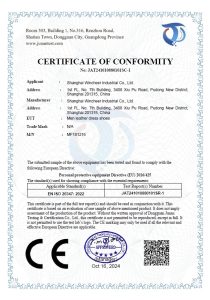
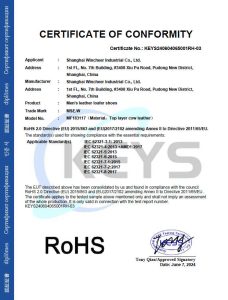
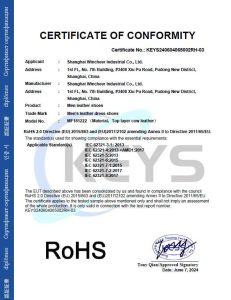
Wincheer Shoes maintains comprehensive compliance infrastructure including regular laboratory testing, supply chain traceability systems, and documented chemical safety protocols. Our certifications include CE marking capability, REACH compliance verification, and RoHS testing for applicable products. We welcome compliance inquiries from brands navigating regulatory requirements.
Investing in robust compliance practices protects both businesses and consumers—and contributes to a marketplace where quality and safety drive competitive advantage.