
TL;DR
Regional color preferences vary dramatically: Northern Europe prefers black (67%+), Southern Europe prefers brown, and North America splits evenly. Color-related returns range 8-23% by market. Success requires market-specific color strategies backed by data. Wincheer Shoes’ data-driven color forecasting helps B2B buyers optimize inventory.
Introduction
Color selection represents one of the most consequential decisions in leather shoe procurement. While construction quality and leather grade establish baseline value, color determines market fit, seasonal relevance, and ultimate sell-through rates. For B2B buyers managing inventory across multiple regions, understanding color preferences by market has evolved from art to measurable science.
The global leather dress shoe market demonstrates distinct regional color preferences shaped by cultural factors, professional dress codes, fashion influences, and seasonal considerations. This guide presents data-driven analysis of color trends across major markets, enabling procurement decisions backed by market intelligence rather than intuition.
Industry data indicates that color-related product returns vary significantly by market—ranging from 8% in traditionally conservative Northern European markets to 23% in fashion-forward Mediterranean regions. These statistics underscore the importance of market-specific color strategies for B2B buyers seeking optimal sell-through performance.
Table of Contents
- Global Market Overview
- European Market Analysis
- North American Market Analysis
- Asian Market Analysis
- Color Selection Framework
- Seasonal Color Considerations
- FAQ
- Conclusion
Global Market Overview
Market-Specific Color Preferences
Understanding which colors perform in which markets requires analyzing multiple data points: historical sales data, fashion week signals, professional dress code evolution, and consumer research. The following table presents aggregated data from major retail markets:
| Market Region | Dominant Colors | Secondary Colors | Growing Trends | Conservative Markets |
|---|---|---|---|---|
| Northern Europe | Black, Dark Brown | Oxblood, Navy | Cognac, Grey | Sweden, Norway, Denmark |
| Western Europe | Black, Brown | Burgundy, Tan | Stone, Olive | Germany, Netherlands |
| Southern Europe | Brown, Tan | Burgundy, Navy | Bold Browns, Camel | Italy, Spain, Greece |
| North America | Black, Brown | Burgundy, Cognac | Walnut, Charcoal | USA, Canada |
| East Asia | Black, Dark Brown | Brown, Oxblood | Navy, Burgundy | Japan, South Korea |
| Southeast Asia | Black, Brown | Tan, Cognac | Brown variations | Singapore, Malaysia |
Key Color Segments by Leather Type
Different leather types respond differently to color treatments, affecting both aesthetic appeal and market perception:
Full-Grain Leather: Accepts deepest, richest colors. Best for black, oxblood, and complex brown tones. Commands premium pricing in all markets.
Top-Grain Leather: Versatile color range with slightly reduced depth. Popular for mainstream browns and blacks. Represents 60% of mid-market dress shoes globally.
Corrected-Grain Leather: Limited to solid, uniform colors. Predominantly black and dark brown. Dominates entry-level and occupational dress shoe segments.
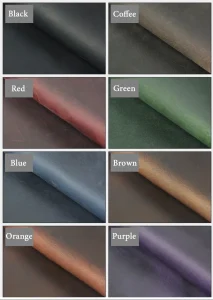
Suede and Nubuck: Thrives in casual and smart-casual dress shoes. Cognac, tan, and grey dominate. Seasonal variation more pronounced than in polished leathers.
European Market Analysis
Northern Europe: The Conservative Core
Nordic and Germanic markets demonstrate the most conservative color preferences globally. Professional environments maintain strict formal dress codes where black remains the default choice for dress shoes.
Sweden and Norway: Black dominates with 67% of formal dress shoe sales. Dark brown acceptable in creative industries and smart-casual contexts. Navy considered inappropriate for formal business dress. Buyers sourcing for these markets should maintain 70:30 black-to-brown ratios in formal inventory.
Denmark: Similar to Scandinavian neighbors with slightly higher brown acceptance (25% of market). The Danish concept of “hygge” influences preference for warm brown tones in casual professional settings. Functional minimalism drives design preferences.
Finland: Strong preference for black (71%), with dark brown as sole alternative. Quality expectations highest globally—consumers willing to pay premiums for superior leather and construction regardless of color.
Germany: Business professional environments favor black overwhelmingly, though post-pandemic shifts have increased brown acceptance to 30% in some sectors. German buyers prioritize functionality and durability over fashion statements.
Western Europe: Fashion-Forward Evolution
France: Paris remains a global fashion barometer influencing color trends across markets. Burgundy (bordeaux) holds particular appeal as quintessentially French. Black remains essential but commands less monopoly than in Northern Europe. Cognac and tan gaining ground in smart-casual segments.
United Kingdom: Traditional black persists in finance and legal sectors, but British fashion tolerance for brown exceeds continental neighbors. Oxford caps (caps in American terminology) in tan and burgundy enjoy sustained popularity. The British “country shoe” aesthetic—often in pebble-grain tan—remains distinctly British.
Netherlands and Belgium: Practical, understated preferences. Black dominates professional segments while brown variants perform well in consumer-facing industries. Sustainability considerations increasingly influence material sourcing decisions.
Southern Europe: Mediterranean Expressiveness
Italian and Spanish markets embrace color with Mediterranean enthusiasm. Brown leather dress shoes outsell black in many retail contexts—a remarkable contrast to Nordic markets.
Italy: Color leadership global benchmark. The Italian shoe industry sets trends rather than following them. Versatile browns (cognac, espresso, tobacco) dominate premium segments. Burgundy standard in luxury. Tan acceptable even in formal business contexts. B2B buyers targeting Italy should lead with brown-focused collections.
Spain: Similar to Italy with strong brown preferences. Tan and cognac perform particularly well in coastal business centers (Barcelona, Madrid). Traditional formality declining faster than in Italy—smart-casual dress shoe norms more accepted.
Portugal: Emerging market with growing premium segment. Color preferences transitioning from conservative Spanish-influenced patterns toward Italian-led European trends. Opportunity exists for mixed-color strategy.
Central Europe: The Transition Zone
Poland, Czech Republic, Hungary: Markets in transition from conservative Eastern European preferences toward Western European norms. Black remains dominant but brown acceptance growing rapidly among younger professionals. Premium segment opportunities exist for elevated brown leather shoes.
North American Market Analysis
United States: Regional Diversity
The US market defies simple characterization—color preferences vary significantly by region, industry, and consumer demographic.
Northeast (New York, Boston, Philadelphia): Traditional corporate centers maintain black dominance in financial and legal sectors. However, tech and startup ecosystems have created brown-friendly professional environments. The “New York brown”—typically a rich, medium brown—has emerged as distinct regional preference.
Southeast (Atlanta, Charlotte, Miami): Warmer climates and business cultures favor brown across all industries. Tan and cognac perform strongly year-round. Miami’s Latin American influence creates unique opportunities for burgundy and exotic leather colors.
Midwest (Chicago, Dallas, Denver): Diverse preferences reflecting varied industry compositions. Finance and insurance lean black; energy and tech accept brown. Western states demonstrate California influence—more relaxed professional norms overall.
West Coast (San Francisco, Los Angeles, Seattle): Clearly the most brown-friendly US market. Tech industry dress codes have normalized brown dress shoes in professional settings. Tan acceptable in many business contexts. Innovative colors (grey, olive) find acceptance among younger demographics.
US Market Color Data by Sector:
| Industry Sector | Black % | Brown % | Other Colors % |
|---|---|---|---|
| Finance/Banking | 78% | 19% | 3% |
| Legal | 82% | 15% | 3% |
| Technology | 45% | 48% | 7% |
| Consulting | 65% | 30% | 5% |
| Creative/Design | 25% | 55% | 20% |
| Energy | 55% | 40% | 5% |
Canada: British Influence Meets American Scale
Canadian preferences blend British conservatism with American regional variation. Toronto and Vancouver mirror US West Coast brown-friendliness; Montreal’s French influence creates unique burgundy opportunities. Prairie provinces maintain more conservative preferences aligned with British heritage.
Mexico and Latin America
Mexico: Strong black preference in corporate environments, particularly in finance and government. However, fashion-forward consumers in Mexico City and Guadalajara embrace brown and cognac. Growing premium segment creates opportunity for Italian-influenced color palettes.
Brazil: Robust market with Italian-influenced brown preferences. Sao Paulo fashion scene influences regional trends. Burgundy acceptable in professional settings—a distinctive Latin American characteristic.
Asian Market Analysis
East Asia: The Black-Brown Binary
Japan: Complex market where formal and casual contexts create stark color divisions. Traditional Japanese business dress (especially in larger corporations) maintains strict black preference. However, casual dress shoe segments embrace brown significantly. Quality expectations extremely high—Japanese buyers willing to pay substantial premiums for superior construction.
South Korea: Rapidly evolving preferences. Younger professionals increasingly accept brown in business contexts. K-fashion influence creating domestic trendsetting capability. Navy dress shoes find acceptance—a color rejected in most other Asian markets.
China: Massive market with significant regional variation. First-tier cities (Shanghai, Beijing, Guangzhou) demonstrating increasing brown acceptance influenced by international business exposure and fashion media. Second and third-tier cities maintaining more traditional black preferences. Significant opportunity for color education and trend introduction.
Southeast Asia
Singapore: Most sophisticated market in region with preferences aligned to British heritage—black dominant in financial sector. However, multi-industry economy creates brown opportunities in non-financial professional contexts.
Malaysia: Conservative preferences overall with black dominating formal wear. However, multicultural society creates fashion-forward consumer segments accepting broader color palettes.
Thailand: Growing premium market with unique preferences. Brown performs well, particularly in tourist-adjacent business contexts. Increasing fashion consciousness among younger consumers.
South Asia
India: Complex market where formal black persists in traditional industries. However, Bollywood and fashion industry influence creating brown-accepting consumer segments. Significant opportunity in premium casual dress shoe segment.
Color Selection Framework
Market-Based Sourcing Strategy
B2B buyers should develop color allocation strategies based on confirmed market destination:
Conservative Market Allocation (Northern Europe, Japan Corporate):
- 70-80% black
- 15-25% dark brown
- 5% burgundy or navy as accent
Moderate Market Allocation (Germany, Canada, US Financial):
- 50-60% black
- 30-40% brown variants
- 10% accent colors
Progressive Market Allocation (Italy, Spain, US West Coast):
- 25-35% black
- 50-60% brown variants
- 10-15% accent colors
Multi-Market Inventory Balancing
For buyers serving multiple markets, color strategy requires careful balancing:
- Lead with universal black for formal product lines regardless of market
- Allocate brown percentage by confirmed orders rather than speculative inventory
- Hold accent colors (burgundy, navy, cognac) as market-specific options
- Consider seasonal timing for color introduction in opposite hemispheres
Seasonal Color Considerations
Northern Hemisphere Seasonal Patterns
| Season | Europe Core Colors | North America Core Colors | Asia Core Colors |
|---|---|---|---|
| Spring/Summer | Tan, Cognac, Light Brown | Tan, Cognac, Brown | Brown variations |
| Fall/Winter | Black, Dark Brown, Burgundy | Black, Dark Brown, Burgundy | Black, Dark Brown |
| Year-Round | Black (formal) | Brown (casual) | Black (formal) |
Southern Hemisphere Counter-Seasonal Opportunity
Buyers serving Southern Hemisphere markets (Australia, South Africa, South American markets below equator) should coordinate color timing inversely to Northern Hemisphere patterns. This creates opportunity for balanced factory production but requires careful inventory timing.
FAQ
What percentage of dress shoe inventory should be black versus brown?
The optimal ratio depends on your target market. Conservative Northern European markets warrant 70-80% black allocation. Fashion-forward Southern European markets require only 25-35% black with brown dominance. North American buyers should analyze their specific customer industry mix to determine appropriate ratios. The key principle: match color allocation to confirmed market expectations rather than personal preference or global averages.
How do color preferences affect pricing and margins?
Color itself rarely directly affects margins, but strategic color selection improves sell-through rates, reducing markdowns and clearance losses. Premium colors—burgundy, cognac, and exotic leather tones—often command slightly higher retail prices in markets where they are perceived as fashion-forward. However, maintaining appropriate inventory ratios for your specific market prevents the greater cost of color-related returns and slow-moving inventory.
Are color trends stable or rapidly changing?
Core color preferences demonstrate remarkable stability across decades—black has dominated formal dress shoes since the 19th century in markets where formal dress codes exist. However, within these stable categories, specific tones evolve. “Brown” in 2026 means cognac and espresso, not the medium tan of previous generations. Staying current with tonal evolution within established color families requires ongoing market monitoring but rarely requires fundamental strategy shifts.
How should B2B buyers handle emerging markets with unclear preferences?
For markets where color preferences remain developing or variable, maintain conservative core inventory (black and universal brown) while testing limited quantities of market-specific colors. Collect actual sales data before committing larger inventory. This approach reduces risk while positioning for market education and preference shaping.
What role does leather type play in color performance?
Different leather types hold and display colors differently, affecting both aesthetic appeal and perceived quality. Full-grain leather displays colors with greatest depth and richness, justifying premium pricing. Suede and nubuck require specific color treatments suited to their texture—typically softer, more muted tones. Understanding leather-color interaction prevents mismatches where inferior leather undermines otherwise correct color choices.
How do fashion weeks and runway shows influence B2B color decisions?
Fashion week signals indicate direction rather than immediate market reality. Collections shown in Milan and Paris influence color trends 18-24 months before reaching mainstream retail. B2B buyers should use runway intelligence for long-term planning but rely on current retail data for immediate purchasing decisions. The most successful buyers combine fashion intelligence with hard sales data.
Conclusion
Color selection in leather dress shoes combines art, science, and market intelligence. While global markets share common threads—black persisting in formal contexts, brown gaining ground in casual professional environments—meaningful regional variation requires market-specific strategies.
Successful B2B procurement teams develop color allocation frameworks aligned to their specific market mix, adjusting ratios based on confirmed sales data rather than general industry trends. The cost of incorrect color allocation—returns, markdowns, and lost sales—far exceeds the investment in market-specific color intelligence.
Men’s Dress Shoe Trends 2026: What Global Retailers Should Stock
About Wincheer Shoes
Wincheer is a professional leather shoe manufacturer based in Shanghai, China. Established in 2007, we specialize in OEM/ODM manufacturing of men’s leather shoes including Oxford, Derby, Loafer, Monk, and Chelsea styles. With experience dating back to 2007 and CE/REACH/RoHS certifications, we export quality footwear to global markets at competitive prices ($25-$40/pair).