TL;DR
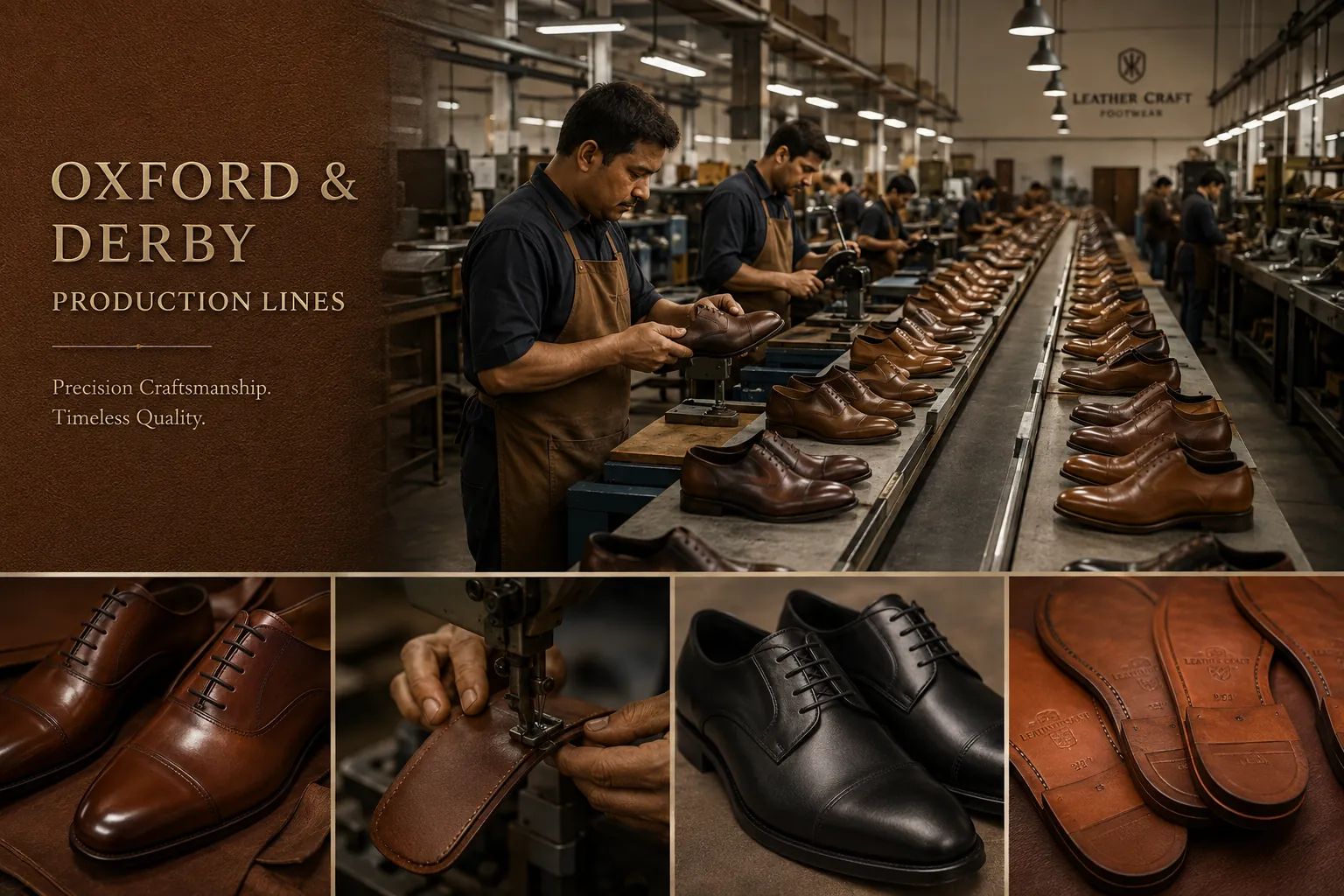
Oxford shoes represent the cornerstone of men’s formal footwear, accounting for 35-40% of global dress shoe sales. The defining characteristic is the closed lacing system with eyelet tabs stitched under the vamp, creating a sleek silhouette appropriate for business formal, black tie, and professional settings. For wholesale buyers, understanding Oxford variations—cap toe (45% market share), wholecut (12%), brogue (25%), plain toe (18%)—enables strategic assortment planning. Production costs range from $18/pair FOB for cemented cap toe Oxfords to $95/pair for Goodyear welted wholecuts. Wincheer Shoes manufactures complete Oxford collections across all price points, with 19 years of experience serving wholesale buyers, private label brands, and retailers across 40+ countries.
Introduction
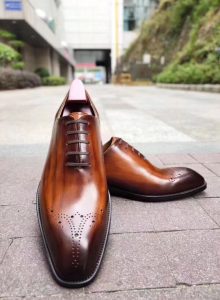
The Oxford shoe stands as the pinnacle of men’s formal footwear—a design that has remained essentially unchanged for two centuries because it achieved formal perfection. Named after Oxford University students who adopted the style in the early 1800s seeking a refined alternative to the prevailing boots, the Oxford has become synonymous with sophistication, professionalism, and timeless style.
Consider the market reality: A well-merchandised Oxford assortment can generate 25-35% higher margins than other dress shoe categories due to lower return rates (3-5% vs. 8-12% for other styles) and stronger brand loyalty. The average male professional owns 2.3 pairs of Oxfords, with 67% replacing worn pairs with identical or similar styles—creating repeat purchase opportunities for wholesale buyers who nail the fit, quality, and styling equation.
For B2B buyers, private label brands, and sourcing professionals, understanding Oxford shoes is essential for:
- Assortment planning: Balancing core and fashion styles
- Price tier management: Serving multiple customer segments
- Quality positioning: Matching construction to price point
- Market differentiation: Finding white space in competitive categories
- Customer retention: Delivering consistent fit and comfort
This guide provides comprehensive coverage of leather Oxford shoes for wholesale buyers, covering anatomy, style variations, construction methods, leather grades, sizing considerations, pricing tiers, and specification requirements for successful B2B sourcing.
Table of Contents
- Oxford Shoe Anatomy and Fundamentals
- Oxford Style Variations
- Leather Grades and Selection
- Construction Methods for Oxfords
- Sizing and Last Considerations
- Pricing Tiers and Cost Structure
- Market Segmentation and Positioning
- Wholesale Ordering Specifications
- Quality Control and Inspection
- Seasonal Planning and Trend Analysis
Oxford Shoe Anatomy and Fundamentals
Defining Characteristics
The Oxford shoe is defined by its closed lacing system, distinguishing it from the Derby’s open lacing. In an Oxford, the eyelet tabs (the pieces containing the lace holes) are stitched under the vamp (the front panel), creating a clean, uninterrupted appearance when laced.
Oxford Anatomy Diagram:
┌─────────────┐
                    │   Heel      │
                    └─────┬───────┘
                          │
         ┌────────────────┴────────────────┐
         │          Quarter                │
         │    (side panels, rear)           │
         └────────────┬────────────────────┘
                      │
         ┌────────────┴────────────────┐
         │        Vamp (front)         │
         │                             │
         │  ┌─────┐    ┌─────┐        │
         │  │Tab  │    │Tab  │        │ ← Eyelet tabs UNDER vamp
         │  │     │    │     │        │   (closed lacing)
         │  └─────┘    └─────┘        │
         │                             │
         └─────────────────────────────┘
                    │
              ┌─────┴─────┐
              │   Tongue  │
              └───────────┘
Critical Oxford Components:
| Component | Description | Quality Impact |
|---|---|---|
| Vamp | Front panel covering toes | Leather quality visible |
| Quarter | Rear side panels | Wrinkle resistance |
| Eyelet Tab | Lace hole pieces | Clean stitching critical |
| Tongue | Padding under laces | Comfort, protection |
| Counter | Heel reinforcement | Shape retention |
| Toe Box | Toe shape and protection | Style definition, comfort |
| Welt | Sole attachment method | Durability, repairability |
| Outsole | Walking surface | Wear resistance |
Oxford vs. Derby: The Critical Distinction
Closed Lacing (Oxford) vs. Open Lacing (Derby):
| Characteristic | Oxford (Closed Lacing) | Derby (Open Lacing) |
|---|---|---|
| Eyelet Tab Position | Stitched UNDER vamp | Stitched ON TOP of quarter |
| Formality Level | Business formal, black tie | Business casual, smart casual |
| Vamp Opening | Narrower, more fitted | Wider, more adjustable |
| Foot Accommodation | Standard to narrow widths | Standard to wide widths |
| Market Share | 60% of dress shoe market | 40% of dress shoe market |
Visual Difference:
OXFORD (Closed Lacing):
┌─────────────────┐
│                 │
│    ╔═══╩═══╗    │  ← Tabs hidden under vamp
│    ║       ║    │
│    ╚═══╦═══╝    │
└─────────────────┘

DERBY (Open Lacing):
┌─────────────────┐
│                 │
│   ┌─────┐       │  ← Tabs visible on top
│   │     │       │
│   └─────┘       │
└─────────────────┘
Historical Context and Formality Hierarchy
Formality Scale for Men’s Footwear:
- Dress Boots (most formal for certain contexts)
- Wholecut Oxford (seamless, ultra-formal)
- Plain Toe Oxford (clean, minimal)
- Cap Toe Oxford (classic business)
- Brogue Oxford (decorative, business formal)
- Plain Toe Derby (business casual)
- Brogue Derby (smart casual)
- Loafer (casual to business casual)
- Monk Strap (stylish intermediate)
Occasion Appropriateness:
| Occasion | Appropriate Oxford Styles |
|---|---|
| Black Tie | Plain patent leather, wholecut |
| Business Formal | Cap toe, plain toe |
| Business Professional | Cap toe, brogue |
| Business Casual | Brogue Oxford, suede Oxford |
| Smart Casual | Suede Oxford, casual brogue |
| Cocktail/Evening | Plain toe, wholecut |
Oxford Style Variations
1. Cap Toe Oxford
Market Share: 45% of Oxford sales
The cap toe Oxford features a horizontal seam across the toe box with an additional piece of leather (the “cap”) creating a clean, distinctive line. This is the most common Oxford style and the quintessential business shoe.
Cap Toe Characteristics:
| Attribute | Specification |
|---|---|
| Formality Level | Business formal to business professional |
| Seam Detail | Horizontal toe seam at 1/4-1/3 shoe length |
| Cap Stitching | Typically 5-7 stitches per inch |
| Versatility | Highest of all Oxford styles |
| Customer Profile | Professionals, corporate environments |
Cap Toe Variations:
- Single Cap: One horizontal seam (most common)
- Double Cap: Two parallel seams (more formal)
- Medallion Cap: Decorative perforations on cap (less formal)
- Raised Cap: Slightly elevated seam for emphasis
Wholesale Considerations:
Cap toe Oxfords should represent the foundation of any Oxford assortment—typically 40-50% of Oxford SKUs. They offer the strongest repeat purchase potential and lowest return rates.
2. Wholecut Oxford
Market Share: 12% of Oxford sales
The wholecut Oxford is crafted from a single piece of leather with no seams except the rear heel seam. This creates an exceptionally sleek, formal profile prized by connoisseurs.
Wholecut Characteristics:
| Attribute | Specification |
|---|---|
| Formality Level | Ultra-formal, black tie appropriate |
| Construction | Single-piece vamp (no toe seam) |
| Waste Factor | 25-35% higher leather usage |
| Price Premium | 40-60% above cap toe |
| Customer Profile | Connoisseurs, formal occasions |
Wholecut Production Challenges:
- Leather Quality Requirements: Must be flawless, premium grade
- Lasting Difficulty: Single-piece construction is harder to last
- Yield Loss: Higher leather waste increases cost
- Skill Requirements: More skilled craftsmanship needed
Wholesale Considerations:
Wholecut Oxfords serve as statement pieces in premium assortments. Limit to 10-15% of Oxford SKUs but feature prominently in marketing due to their visual impact and aspirational value.
3. Brogue Oxford
Market Share: 25% of Oxford sales
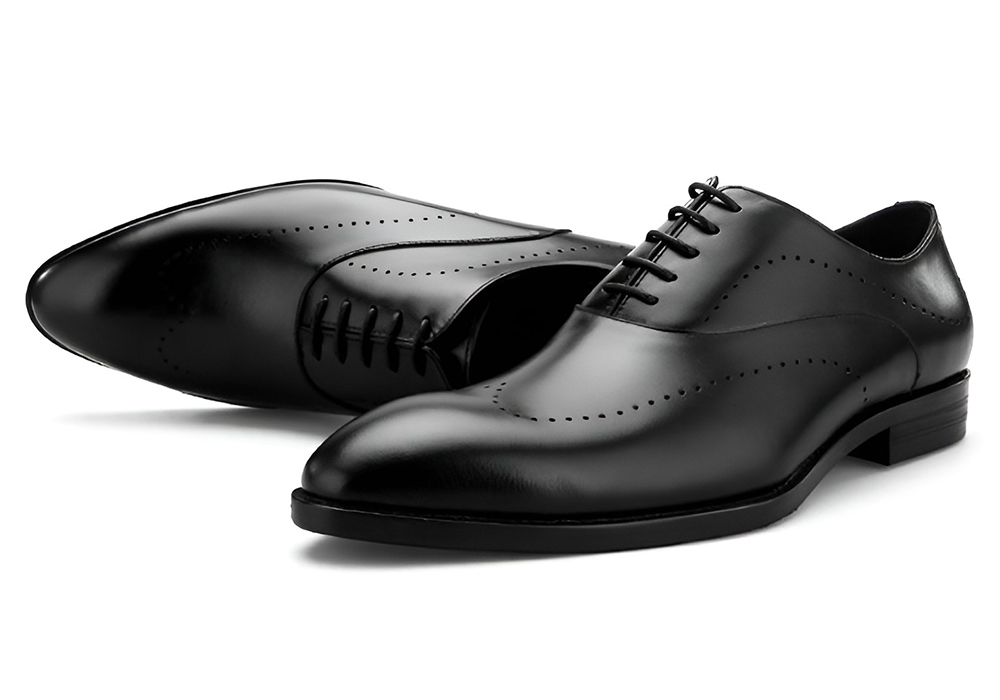
Brogue Oxfords feature decorative perforations (broguing) and serrated edges along the seams. Originally designed for drainage in Scottish wetlands, broguing now serves purely decorative purposes.
Brogue Characteristics:
| Attribute | Specification |
|---|---|
| Formality Level | Business formal to smart casual |
| Perforation Types | Medallion, wingtip, side broguing |
| Edge Treatment | Pinked (serrated) edges |
| Versatility | High across formality spectrum |
| Customer Profile | Style-conscious professionals |
Brogue Levels:
| Level | Description | Formality |
|---|---|---|
| Full Brogue | Wingtip with extensive broguing | Business formal to smart casual |
| Semi-Brogue | Cap toe with medallion broguing | Business formal |
| Quarter Brogue | Cap toe with edge perforations only | Business formal |
| Longwing | Wingtip extending to heel | Smart casual |
Wholesale Considerations:
Brogue Oxfords provide visual interest and can command price premiums of 15-25%. Ideal for 25-30% of Oxford assortment, especially in fashion-forward and seasonal collections.
4. Plain Toe Oxford
Market Share: 18% of Oxford sales
The plain toe Oxford features no decorative seams or perforations on the vamp—just clean, unbroken leather from lacing to toe.
Plain Toe Characteristics:
| Attribute | Specification |
|---|---|
| Formality Level | Business formal, evening wear |
| Visual Simplicity | Minimalist, sleek appearance |
| Versatility | Excellent across dress codes |
| Price Positioning | Similar to cap toe |
| Customer Profile | Minimalist-oriented professionals |
Plain Toe Advantages:
- Clean Canvas: Showcases leather quality
- Elongating Effect: Creates streamlined visual
- Formality Flexibility: Works across dress codes
- Production Efficiency: No cap sewing required
Wholesale Considerations:
Plain toe Oxfords work well as contemporary alternatives to cap toe styles, particularly for modern, minimalist brands. Allocate 20-25% of Oxford assortment.
Oxford Style Assortment Recommendations
Balanced Oxford Assortment (100%):
| Style | % of Assortment | Rationale |
|---|---|---|
| Cap Toe | 40% | Core business seller |
| Brogue | 25% | Visual interest, variety |
| Plain Toe | 20% | Contemporary alternative |
| Wholecut | 10% | Premium statement |
| Fashion/Niche | 5% | Differentiation |
Price Tier Assortment:
| Price Tier | % of Assortment | Style Emphasis |
|---|---|---|
| Entry ($50-80 retail) | 30% | Cap toe, plain toe |
| Mid ($80-150 retail) | 40% | All styles, cemented construction |
| Premium ($150-250 retail) | 25% | Brogue, wholecut, Blake construction |
| Luxury ($250+ retail) | 5% | Wholecut, Goodyear construction |
Leather Grades and Selection
Leather Grade Hierarchy for Oxfords
Full-Grain Leather Grades:
| Grade | Characteristics | Yield per Hide | Oxford Suitability |
|---|---|---|---|
| Premium/Select | Flawless, consistent grain | 15-20 sq ft | Wholecut, plain toe |
| A-Grade | Minimal marks, uniform | 20-25 sq ft | Cap toe, plain toe |
| B-Grade | Natural marks visible | 25-30 sq ft | Brogue, textured styles |
| C-Grade | Visible scars, marks | 30-35 sq ft | Closed designs, caps only |
Grade Selection by Oxford Style:
| Oxford Style | Recommended Grade | Reasoning |
|---|---|---|
| Wholecut | Premium/Select only | Seamless construction shows flaws |
| Plain Toe | A-Grade minimum | Clean canvas highlights quality |
| Cap Toe | A- or B-Grade | Cap can hide minor defects |
| Brogue | B-Grade acceptable | Perforations distract from marks |
| Suede Oxford | B-C acceptable | Texture hides defects |
Leather Types for Oxfords
Primary Leather Options:
| Leather Type | Characteristics | Oxford Suitability | Price Position |
|---|---|---|---|
| Box Calf | Smooth, fine grain, takes polish well | All styles, especially formal | Mid-luxury |
| Patent Leather | High-gloss finish | Formal, black tie occasions | Premium |
| Suede | Napped finish, casual | Smart casual, fashion | Mid-range |
| Shell Cordovan | Horsehide, distinctive w/ ripple | Premium, investment | Luxury (2-3x price) |
| Grain/Pebble | Textured surface | Casual, brogue styles | Entry-mid |
| Corrected Grain | Embossed, consistent | Entry price points | Budget |
Leather Thickness by Construction:
| Construction | Recommended Leather Thickness |
|---|---|
| Cemented | 1.2-1.4mm |
| Blake Stitch | 1.4-1.6mm |
| Goodyear Welt | 1.6-2.0mm |
| Handwelted | 1.8-2.2mm |
Color Palette Planning
Classic Oxford Colors (2025-2026 Market):
| Color | Market Share | Formality Level | Seasonality |
|---|---|---|---|
| Black | 35% | Most formal | All-season |
| Dark Brown | 28% | Business formal | All-season |
| Burgundy/Merlot | 15% | Business professional | Fall/winter emphasis |
| Tan/Cognac | 12% | Business casual | Spring/summer |
| Navy | 7% | Business professional | Fall/winter |
| Gray | 3% | Fashion forward | Seasonal |
Assortment Color Mix:
Balanced Assortment:
- Black: 40%
- Dark Brown: 30%
- Burgundy: 15%
- Tan: 10%
- Navy/Gray: 5%
Contemporary Assortment:
- Black: 30%
- Dark Brown: 25%
- Burgundy: 20%
- Tan: 15%
- Navy: 5%
- Novelty: 5%
Leather Shoe Quality Guide: How to Identify Premium Cowhide vs. Bonded Leather for leather fundamentals.
Construction Methods for Oxfords
Construction by Price Point
Recommended Construction by Retail Price:
| Retail Price Range | Recommended Construction | FOB Cost Range | Market Positioning |
|---|---|---|---|
| $50-80 | Cemented | $18-28 | Entry/market |
| $80-120 | Premium Cemented | $25-35 | Mid-market |
| $120-180 | Blake Stitch | $35-55 | Premium mid-market |
| $180-280 | Premium Blake / Entry Goodyear | $55-85 | Premium |
| $280+ | Goodyear Welt | $85-120 | Luxury |
Construction Selection by Oxford Style
Optimal Construction by Style:
| Oxford Style | Entry Construction | Premium Construction | Luxury Construction |
|---|---|---|---|
| Wholecut | Blake | Premium Blake | Goodyear/Handwelted |
| Plain Toe | Cemented | Blake | Goodyear |
| Cap Toe | Cemented | Blake | Goodyear |
| Brogue | Cemented | Blake | Goodyear |
| Suede Oxford | Cemented | Cemented/Blake | N/A |
Rationale:
- Wholecut: Premium construction justifies the visual simplicity
- Plain Toe: Flexible—constructions work across price points
- Cap Toe: Most versatile—all constructions appropriate
- Brogue: Decorative elements allow cemented construction
- Suede: Casual nature suits cemented; limited Goodyear market
Sole Options for Oxfords
Sole Material Selection:
| Sole Material | Characteristics | Oxford Suitability | Price Impact |
|---|---|---|---|
| Leather Sole | Classic, formal, slippery when wet | Formal Oxfords | Standard |
| Dainite Rubber | Studded rubber, durable, water-resistant | Casual/commuter Oxfords | +15% |
| Leather with Rubber Inserts | Hybrid, formal with grip | Practical formal | +20% |
| TPR/PU | Synthetic, lightweight, casual | Entry price points | -10% |
| Commando Sole | Rugged rubber, casual | Country brogues | +25% |
Sole Thickness by Use:
| Use Category | Sole Thickness | Weight Impact |
|---|---|---|
| Dress/Indoor | 4-5mm leather | Lightest |
| Commuter | 5-6mm leather + rubber tips | Medium |
| All-Weather | 6-7mm Dainite/hybrid | Heavier |
| Country/Rugged | 7-8mm commando | Heaviest |
Blake Stitch vs Goodyear Welt vs Cemented: Complete Shoe Construction Comparison for construction details.
Sizing and Last Considerations
Last Selection for Oxfords
Last Types by Fit Profile:
| Last Type | Fit Characteristics | Target Customer | Foot Shape |
|---|---|---|---|
| Classic/Traditional | Generous toe box, medium width | Mature professionals, traditional | Standard to wide |
| Modern/Slender | Narrower toe box, lower profile | Fashion-forward, urban | Standard to narrow |
| Comfort/Anatomical | Contoured footbed, wider forefoot | All-day wear, comfort-focused | Wide, high instep |
| Athletic-Inspired | Ergonomic shape, flex zones | Active professionals | Variable |
Last Length Sizing (UK/US Sizing):
| UK Size | Foot Length (mm) | US Size | EU Size |
|---|---|---|---|
| 6 | 244 mm | 7 | 40 |
| 7 | 251 mm | 8 | 41 |
| 8 | 258 mm | 9 | 42 |
| 9 | 265 mm | 10 | 43 |
| 10 | 272 mm | 11 | 44 |
| 11 | 279 mm | 12 | 45 |
Width Sizing for Oxfords
Width Availability by Market:
| Width Designation | Width (mm) | Market Availability |
|---|---|---|
| Extra Narrow (2A) | – | US only, limited |
| Narrow (B/C) | -6mm from standard | US/EU, limited |
| Medium/Standard (D) | Standard | Universal |
| Wide (E/2E) | +6mm from standard | US common, EU limited |
| Extra Wide (4E+) | +12mm+ from standard | US only, special order |
Width Strategy:
For most international wholesale markets:
- Standard (D) width: 80% of assortment
- Wide (E) width: 15% of assortment
- Narrow (C) width: 5% of assortment
US market requires broader width distribution:
- Standard (D): 60%
- Wide (2E): 25%
- Narrow (B): 10%
- Extra Wide (4E): 5%
Sizing Conversion Chart
International Size Conversion (Men’s Oxfords):
| UK | US | EU | JP (cm) | Foot Length (mm) |
|---|---|---|---|---|
| 5 | 6 | 38 | 24.0 | 237 |
| 6 | 7 | 40 | 24.5 | 244 |
| 7 | 8 | 41 | 25.5 | 251 |
| 8 | 9 | 42 | 26.0 | 258 |
| 9 | 10 | 43 | 26.5 | 265 |
| 10 | 11 | 44 | 27.5 | 272 |
| 11 | 12 | 45 | 28.5 | 279 |
| 12 | 13 | 46 | 29.0 | 286 |
Sizing Strategy for Wholesale:
- Core Sizes: UK 7-10 (US 8-11, EU 41-44) represent 60% of volume
- Extended Sizes: UK 6-12 (US 7-13, EU 40-46) represent 90% of volume
- Extreme Sizes: UK 5, 13+ carry limited inventory, special order
Pricing Tiers and Cost Structure
Cost Breakdown by Price Tier
Per-Pair Manufacturing Cost Analysis:
| Cost Component | Entry Tier ($50-80 retail) | Mid Tier ($80-150 retail) | Premium Tier ($150-250 retail) | Luxury Tier ($250+ retail) |
|---|---|---|---|---|
| Leather | $8-12 | $12-18 | $18-28 | $35-60 |
| Lining | $2-3 | $3-5 | $5-8 | $8-15 |
| Insole | $1-2 | $2-4 | $5-8 | $10-20 |
| Outsole | $3-5 | $5-8 | $10-15 | $15-25 |
| Construction Materials | $1-2 | $2-4 | $6-12 | $12-22 |
| Labor | $4-6 | $8-15 | $18-30 | $40-80 |
| Overhead | $2-3 | $4-7 | $8-15 | $15-30 |
| TOTAL FACTORY COST | $21-33 | $36-61 | $70-116 | $135-252 |
| + Factory Margin (15-20%) | $24-40 | $41-73 | $81-139 | $155-302 |
| Estimated FOB | $18-28 | $25-45 | $45-85 | $85-150 |
Price Point Positioning
Retail Price Multiples:
| Market Segment | Retail Multiple | FOB to Retail Calculation |
|---|---|---|
| Entry/Mass | 3.0-3.5x FOB | $18 FOB → $54-63 retail |
| Mid-Market | 3.5-4.0x FOB | $35 FOB → $123-140 retail |
| Premium | 4.0-4.5x FOB | $65 FOB → $260-293 retail |
| Luxury | 5.0-6.0x FOB | $120 FOB → $600-720 retail |
Profitability Analysis
Margin Potential by Tier:
| Retail Price | FOB Cost | Gross Margin | Margin % |
|---|---|---|---|
| $79 | $24 | $55 | 70% |
| $129 | $38 | $91 | 71% |
| $199 | $65 | $134 | 67% |
| $349 | $120 | $229 | 66% |
Volume vs. Margin Trade-off:
| Tier | Typical Order Volume | Margin per Pair | Total Margin Potential |
|---|---|---|---|
| Entry | High (2000+ pairs) | Lower ($30-40) | High volume |
| Mid | Medium (1000-1500 pairs) | Medium ($50-70) | Balanced |
| Premium | Medium-Low (500-1000 pairs) | Higher ($70-100) | Premium volume |
| Luxury | Low (200-500 pairs) | Highest ($150+) | Niche volume |
The True Cost of Quality: Understanding Leather Shoe Pricing from Chinese Manufacturers for comprehensive pricing analysis.
Market Segmentation and Positioning
Customer Segment Analysis
Oxford Customer Profiles:
| Segment | Demographics | Psychographics | Purchase Drivers | Price Sensitivity |
|---|---|---|---|---|
| Corporate Professional | 35-55, $75K+ income | Career-focused, status-conscious | Quality, brand reputation, fit | Medium |
| Young Professional | 25-35, $50K+ income | Style-conscious, value-oriented | Style versatility, value | High |
| Connoisseur | 40-65, $100K+ income | Quality-focused, traditional | Craftsmanship, construction, leather | Low |
| Gift Buyer | All ages | Relationship-focused | Brand recognition, packaging | Medium |
| Event-Specific | 25-45, varying income | Occasion-driven | Appropriate formality, price | Variable |
Channel Strategy
Retail Channel Appropriateness:
| Channel | Price Tier Focus | Key Oxford Styles | Assortment Depth |
|---|---|---|---|
| Department Stores | Mid-Premium | Cap toe, brogue | Broad (20-30 SKUs) |
| Specialty Retail | Premium-Luxury | All styles, especially wholecut | Deep (15-25 SKUs) |
| Chain Stores | Entry-Mid | Cap toe, plain toe | Focused (10-15 SKUs) |
| E-commerce | All tiers | Visual styles dominate | Variable (15-50 SKUs) |
| Private Label | Mid-Premium | Branded specifications | Custom (10-20 SKUs) |
Competitive Positioning
Price Point Competition:
| Retail Price | Competitive Intensity | Key Competitors | Differentiation Opportunities |
|---|---|---|---|
| Under $80 | High | Fast fashion, private label | Value styling, brand story |
| $80-150 | Medium-High | Mid-tier brands, department store labels | Quality construction, materials |
| $150-250 | Medium | Premium brands, designer diffusion | Origin story, craftsmanship |
| $250+ | Low-Medium | Luxury heritage brands | Exclusivity, limited production |
Wholesale Ordering Specifications
Minimum Order Quantities
MOQ by Price Tier and Construction:
| Tier/Construction | Standard MOQ | Negotiated MOQ | Development Sample Cost |
|---|---|---|---|
| Entry/Cemented | 800-1200 pairs/style | 600 pairs | $150-250/style |
| Mid/Cemented | 600-900 pairs/style | 500 pairs | $200-350/style |
| Premium/Blake | 500-800 pairs/style | 400 pairs | $300-500/style |
| Luxury/Goodyear | 400-600 pairs/style | 300 pairs | $500-800/style |
Specification Sheet Requirements
Essential Specifications for Oxford Orders:
| Specification Category | Required Details |
|---|---|
| Style | Oxford type (cap toe, wholecut, brogue, plain toe) |
| Last | Last number/shape, sizing run, width requirements |
| Leather | Type, grade, thickness, color, tanning method |
| Lining | Material (leather/synthetic), color, thickness |
| Sole | Material, thickness, edge finish, heel type |
| Construction | Method (cemented/Blake/Goodyear) |
| Sizing | Size range, size ratios, width requirements |
| Branding | Logo placement, marking method, packaging |
| Quality Standards | Acceptable defects, stitching requirements, finish specifications |
Sample Development Timeline
Development Process:
| Stage | Duration | Deliverable |
|---|---|---|
| Brief/Spec Review | 3-5 days | Confirmation of requirements |
| Last Selection/Modification | 1-2 weeks | Last approval |
| Material Sourcing | 1-2 weeks | Material swatches/approval |
| Counter Sample | 3-4 weeks | First physical sample |
| Sample Revisions | 2-3 weeks each | Refined samples |
| Pre-Production Sample | 2-3 weeks | Final approval sample |
| Total Development Time | 10-16 weeks | Production-ready specifications |
Quality Control and Inspection
Quality Standards by Price Point
Acceptable Quality Standards:
| Quality Attribute | Entry Tier | Mid Tier | Premium Tier | Luxury Tier |
|---|---|---|---|---|
| Leather Quality | B-grade acceptable | A-grade minimum | Premium/A+ | Select/Premium only |
| Stitching | 6-7 SPI, minor skips OK | 7-8 SPI, consistent | 8-10 SPI, perfect | 10+ SPI, hand-quality |
| Color Consistency | Within 2 dye lots | Within 1.5 dye lots | Single dye lot preferred | Single dye lot required |
| Symmetry | Minor asymmetry acceptable | Symmetry required | Exact symmetry required | Perfect symmetry |
| Finish Defects | Minor scratches acceptable | No visible scratches | Flawless critical areas | Entirely flawless |
Inspection Points
Critical Inspection Areas for Oxfords:
| Inspection Point | Check Method | Acceptance Criteria |
|---|---|---|
| Symmetry | Visual comparison left/right | < 2mm variance |
| Eyelet Alignment | Measurement, visual | Even spacing, aligned |
| Cap Seam | Visual, measurement | Straight, centered, consistent stitching |
| Vamp Attachment | Visual inspection | Clean, no puckering |
| Sole Attachment | Pull testing, visual | No gaps, secure attachment |
| Heel Attachment | Pull testing | Secure, no wobble |
| Finish Quality | Visual under light | No scratches, consistent color |
Defect Classification
Defect Categories:
| Defect Type | Critical | Major | Minor |
|---|---|---|---|
| Construction Failure | Sole separation, loose heel | Skipped stitching, misalignment | Minor asymmetry |
| Leather Defects | Holes, severe scars | Visible scratches, stains | Minor color variation |
| Finish Issues | Uneven dye, missing finish | Streaking, inconsistent sheen | Minor polish imperfections |
| Sizing Errors | Wrong size marked | Size variance > 0.5 size | Size variance < 0.5 size |
Acceptable Defect Rates:
| Quality Tier | Critical Defects | Major Defects | Minor Defects |
|---|---|---|---|
| Entry | 0% | < 3% | < 8% |
| Mid | 0% | < 2% | < 5% |
| Premium | 0% | < 1% | < 3% |
| Luxury | 0% | < 0.5% | < 1% |
Seasonal Planning and Trend Analysis
Seasonal Color Strategy
Seasonal Color Emphasis:
| Season | Primary Colors | Secondary Colors | Accent Colors |
|---|---|---|---|
| Spring/Summer | Tan, cognac, navy | Light gray, white (novelty) | Burgundy (transitional) |
| Fall/Winter | Black, dark brown, burgundy | Navy, charcoal | Merlot, oxblood |
Seasonal Assortment Adjustment:
- Spring/Season: Increase tan/cognac to 20% of assortment
- Fall/Winter: Increase burgundy/merlot to 20% of assortment
- Transitional Seasons: Maintain balanced assortment
2025-2026 Trend Analysis
Emerging Oxford Trends:
| Trend | Description | Market Potential | Implementation |
|---|---|---|---|
| Suede Oxfords | Casual texture in formal silhouette | Growing (urban markets) | Add 5-10% to assortment |
| Chunky Soles | Thicker, commando-style soles | Niche but growing | Limited SKUs |
| Sustainable Materials | Vegetable-tanned, eco-certified | Increasing demand | Highlight in marketing |
| Hybrid Formal/Casual | Formal shape with casual elements | Strong growth | Brogue variations |
| Minimalist Wholecut | Ultra-clean, seamless designs | Premium segment stable | Maintain current levels |
Declining Trends:
- Square toe: Continuing decline, avoid new development
- Exotic skins: Regulatory and ethical concerns, declining
- Heavy distressing: Trend peaked, moderating
FAQ: Leather Oxford Shoes for Wholesale Buyers
Q: What’s the minimum order quantity for private label Oxford shoes?
A: MOQ varies by construction and price point. For cemented Oxfords, MOQ is typically 800-1200 pairs per style. For Blake stitched, 500-800 pairs. For Goodyear welted, 400-600 pairs. Wincheer Shoes can sometimes negotiate lower MOQs for first-time orders or long-term partnerships. Contact us to discuss your specific requirements and explore flexibility options.
Q: How many Oxford styles should I offer in my assortment?
A: A balanced starter assortment includes 6-8 core SKUs: 2-3 cap toe Oxfords (black and dark brown), 1-2 brogue Oxfords, 1 plain toe, and 1-2 fashion/seasonal styles. This provides essential coverage while managing inventory risk. As you understand your customer preferences, expand to 12-15 SKUs with width and color variations. Avoid starting with more than 15-20 SKUs—too much choice paralyzes customers and increases inventory carrying costs.
Q: Should I focus on one Oxford style or offer variety?
A: For new brands, start with cap toe Oxfords as your foundation (40-50% of assortment). They’re the most versatile and have the lowest return rates. Then add complementary styles: plain toe for contemporary appeal, brogue for visual interest. Wholecut Oxfords serve as premium statement pieces but represent smaller volume. A focused assortment of 3-4 core styles executed well outperforms a broad, shallow assortment of 8+ styles.
Q: What construction method should I choose for $150 retail Oxfords?
A: For $150 retail, Blake stitched construction is the optimal choice. Cemented construction at this price point may disappoint customers expecting longevity and quality. Goodyear welted is difficult to profitably produce at $150 unless you’re working with high volumes and thin margins. Blake stitch offers the right balance of quality perception, actual durability, and cost efficiency for the premium mid-market price point.
Q: How do I size Oxfords for international markets?
A: Maintain consistent UK sizing and provide conversion charts for other markets. Most international buyers understand UK sizing for formal shoes. Focus your core size run on UK 7-10 (US 8-11, EU 41-44), which represents 60% of volume. Offer extended sizes (UK 6-12) but carry lighter inventory. For the US market, ensure you offer medium (D) and wide (2E) widths, as US customers expect width options.
Q: What leather grade is appropriate for mid-market Oxfords?
A: A-grade full-grain leather is the sweet spot for mid-market Oxfords ($80-150 retail). It offers the quality expected by customers while managing costs appropriately. B-grade can work for cap toe styles where the cap can hide minor defects, but avoid for plain toe or wholecut Oxfords where the clean canvas highlights leather quality. Premium/select grade is necessary for wholecut Oxfords regardless of price point.
Q: How do I differentiate my Oxford line from competitors?
A: Differentiation opportunities include:
- Unique lasts: Develop distinctive silhouettes that become your signature
- Material stories: Vegetable-tanned leather, sustainable certifications
- Color innovation: Unexpected but wearable colors (navy, merlot)
- Construction quality: Blake or Goadyear at price points where competitors use cemented
- Brand narrative: Heritage story, craftsmanship emphasis, transparency
- Fit specialization: Exceptional comfort features or wide/narrow sizing
Wincheer Shoes helps brands develop differentiated positioning through unique last shapes, material innovations, and quality construction.
Q: What’s the lead time for Oxford shoe production?
A: Lead times vary by construction and order complexity:
- Cemented Oxfords: 6-8 weeks from confirmation
- Blake Stitched: 8-10 weeks
- Goodyear Welted: 10-14 weeks
Add 2-3 weeks for sample development before placing production orders. For new developments including last creation, add 6-8 weeks to the timeline. Plan your assortment 4-6 months ahead of season to account for development, sampling, and production lead times.
Q: How should I price my Oxford shoes across different styles?
A: Maintain consistent pricing within each collection, not across styles. Cap toe, plain toe, and brogue Oxfords should generally price at the same level within a collection because customers don’t perceive significant production cost differences. Wholecut Oxfords can command a 15-25% premium due to their seamless construction and premium positioning. Avoid pricing variations by color—black and brown Oxfords at the same price point enhance customer decision-making by removing complexity.
Q: What’s the return rate for Oxford shoes compared to other styles?
A: Oxfords typically have the lowest return rate of any dress shoe category at 3-5%, compared to 8-12% for Derbies and loafers. The closed lacing system provides a more consistent fit, and Oxfords are purchased for specific occasions with clearer expectations. This lower return rate improves effective margins and makes Oxfords an attractive foundation for any dress shoe assortment. Monitor your returns by size and style to identify fit or quality issues early.
Conclusion
Oxford shoes represent the essential foundation of any men’s dress footwear assortment. Their timeless design, formal versatility, and strong customer loyalty make them indispensable for wholesale buyers serving professional markets. Success in Oxford sourcing requires understanding style variations (cap toe, wholecut, brogue, plain toe), matching construction to price point (cemented for entry, Blake for premium, Goodyear for luxury), selecting appropriate leather grades (A-grade for mid-market, premium for wholecuts), and developing strategic assortments that balance core sellers with fashion pieces.
The wholesale Oxford market rewards specialists who deliver consistent quality, fit, and styling rather than generalists chasing every trend. Focus on executing 6-12 core Oxford SKUs exceptionally well across balanced price points, rather than offering 30+ mediocre options. Your customers will reward you with repeat purchases, lower returns, and stronger margins.
Ready to develop your Oxford shoe assortment? Contact Wincheer Shoes at maggiemei@shwincheer.com or WhatsApp +86-18918192049. With 19 years of Oxford manufacturing experience across all price points and constructions, we help wholesale buyers, private label brands, and retailers develop strategic Oxford collections that deliver customer satisfaction and business profitability.
Visit wincheershoes.com to explore our Oxford collection and How to Start a Private Label Shoe Brand with a China Manufacturer learn about starting your private label shoe brand.