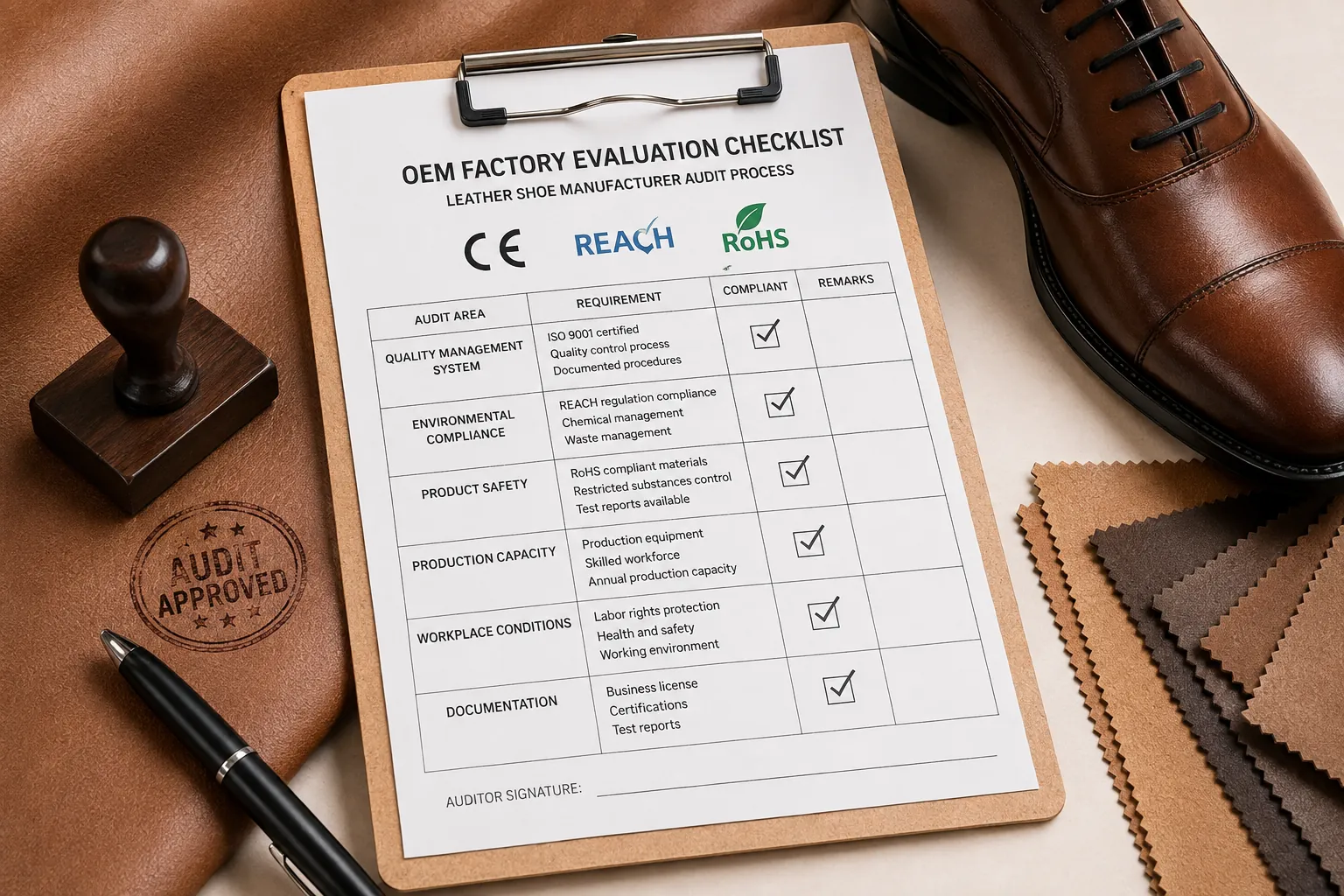




When evaluating REACH compliance for leather shoes, several critical factors determine quality and reliability. Wincheer has been helping European importers navigate REACH requirements since 2007. REACH compliance for leather shoes represents one of the most critical regulatory hurdles for European importers, with non-compliance potentially resulting in product seizures, hefty fines up to €50,000, and permanent market exclusion. The regulation’s complex chemical restrictions, particularly concerning chromium VI levels in leather and restricted substances in adhesives, demand rigorous testing protocols and comprehensive documentation that many importers underestimate until it’s too late.
With experience since 2007 in international shoe manufacturing, Wincheer’s compliance team has witnessed countless importers struggle with REACH requirements, often discovering compliance gaps only after customs detention. The regulation affects every component of a leather shoe—from the leather itself to metal hardware, adhesives, and even packaging materials. Understanding these requirements isn’t just about legal compliance; it’s about protecting your business from supply chain disruptions and maintaining consumer trust in an increasingly regulated European market.
An experienced manufacturer established in 2007 has implemented comprehensive REACH compliance protocols across 500,000+ pairs annual production, maintaining CE (EN ISO20347) and REACH certifications through rigorous testing procedures that keep defect rates at 0.8-1.2%—well below the industry average. This experience shows that successful REACH compliance requires a systematic approach combining supplier qualification, material testing, and documentation management.
Understanding REACH Regulation Framework for Footwear
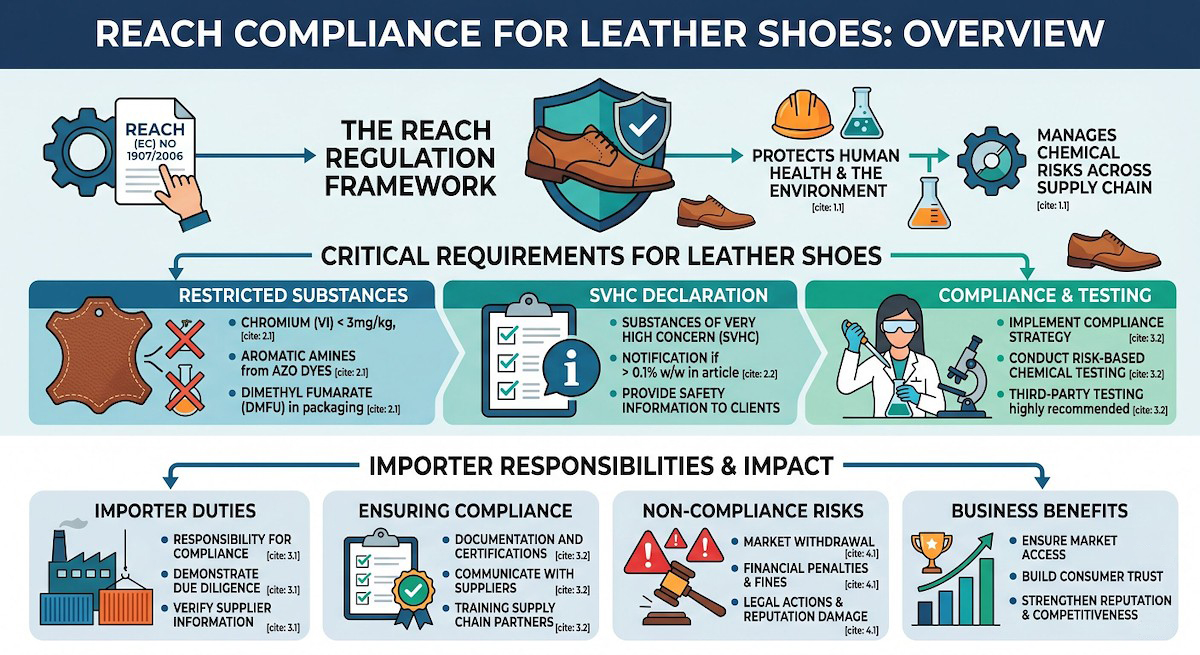
The Registration, Evaluation, Authorisation and Restriction of Chemicals (REACH) regulation, established in 2006 and continuously updated, governs the use of chemical substances in products sold within the European Union. For leather shoes, REACH compliance extends far beyond simple material safety, encompassing every chemical component used in manufacturing processes.
Core REACH Principles Affecting Leather Shoes
REACH operates on four fundamental pillars that directly impact footwear importers. Registration requires manufacturers and importers to provide detailed information about chemical substances used in quantities exceeding one tonne annually. Evaluation allows authorities to examine substance data and request additional testing when safety concerns arise. Authorisation creates a permission system for substances of very high concern (SVHC), while Restriction establishes specific limitations or bans on dangerous substances.
The regulation’s “no data, no market” principle means that any substance lacking proper registration cannot be legally sold in the EU. For leather shoes, this affects not only primary materials like leather and rubber but also processing chemicals, dyes, adhesives, and metal components that may contain restricted substances.
SVHC List and Footwear Implications
The Substances of Very High Concern (SVHC) candidate list, updated twice yearly, currently contains over 240 substances that require special attention. For leather shoes, critical SVHC substances include certain chromium compounds, phthalates used in synthetic materials, and specific dyes that may cause allergic reactions.
When SVHC substances exceed 0.1% weight concentration in any article, importers must notify customers and, upon request, provide safe use information within 45 days. This threshold applies to individual shoe components, meaning a small metal buckle containing restricted substances could trigger notification requirements for the entire shoe.
Critical Chemical Restrictions in Leather Footwear
European leather shoe imports face specific chemical restrictions that have evolved significantly since the regulation’s implementation. Understanding these restrictions requires detailed knowledge of both the substances involved and their typical occurrence in footwear manufacturing.
Chromium VI Limitations and Testing Requirements
Chromium VI represents the most significant chemical concern for leather shoes, as this carcinogenic substance can form during leather tanning processes or through oxidation of chromium III over time. REACH restricts chromium VI content to maximum 3 mg/kg in leather articles intended for direct skin contact.
The challenge lies in chromium VI’s tendency to increase during storage, transportation, and use. Environmental factors like heat, humidity, and UV exposure can accelerate chromium III oxidation, potentially pushing initially compliant leather above legal limits. This dynamic nature requires importers to implement ongoing monitoring programs rather than relying solely on initial testing.
Testing for chromium VI must follow EN ISO 17075 methodology, which requires specialized laboratory equipment and expertise. The test involves extracting chromium VI from leather samples using phosphate buffer solution, followed by spectrophotometric analysis. Results can vary significantly based on sampling location, leather processing history, and storage conditions.
Restricted Substances in Adhesives and Components
Modern shoe construction relies heavily on synthetic adhesives, many containing substances restricted under REACH. Formaldehyde, commonly used in adhesive formulations, faces strict emission limits due to its carcinogenic properties. Similarly, certain aromatic amines used in polyurethane adhesives are completely prohibited due to their potential to form cancer-causing compounds.
Metal components present additional challenges, particularly regarding nickel release from buckles, eyelets, and decorative elements. REACH restricts nickel release to 0.5 μg/cm²/week for items in direct and prolonged skin contact. Testing requires specialized equipment following EN 1811 methodology, measuring nickel migration over seven-day periods under standardized conditions.
https://echa.europa.eu/regulations/reach – SATRA Footwear Technology
Dye and Colorant Restrictions
Leather dyeing processes often employ azo dyes, some of which can release carcinogenic aromatic amines when they come into contact with human skin or saliva. REACH prohibits 22 specific aromatic amines, with detection limits typically set at 30 mg/kg in finished leather.
The complexity increases with multi-colored shoes, where different leather pieces may use various dye systems. Each color requires separate testing, and the presence of metallic finishes or special effects can interfere with standard analytical methods, necessitating modified testing protocols.
Testing Protocols and Laboratory Requirements
Successful REACH compliance depends on robust testing protocols that account for the complex nature of leather shoe construction. The multi-material composition of modern footwear requires comprehensive testing strategies that go beyond simple material analysis.
Sampling Strategy for Multi-Component Footwear
Effective sampling begins with understanding shoe construction and identifying all materials that could contain restricted substances. A typical leather dress shoe contains leather from multiple sources, various adhesives, metal hardware, synthetic lining materials, rubber outsoles, and potentially dozens of different chemical substances.
The sampling protocol must account for material variability within production batches. Leather, being a natural material, can show significant chemical variation even within single hides. Best practice involves collecting samples from multiple production batches and different areas of individual shoes to ensure representative testing coverage.
For shoes with complex construction like What Does OEM Mean in Shoes, sampling must include all leather components, adhesive interfaces, and metal hardware. The European Committee for Standardization recommends minimum sample sizes of 100 cm² for leather testing, though practical considerations often require larger samples to ensure adequate material for multiple test methods.
Accredited Laboratory Selection Criteria
Laboratory selection significantly impacts both testing reliability and regulatory acceptance. Laboratories must hold ISO/IEC 17025 accreditation specifically for the test methods required, not just general chemical analysis capabilities. This accreditation ensures traceability of measurements, proper quality control procedures, and competence in specific analytical techniques.
Key evaluation criteria include the laboratory’s experience with footwear materials, availability of required test methods, turnaround times, and geographic location. European authorities generally prefer testing by EU-based laboratories, though properly accredited laboratories worldwide can provide acceptable results if they demonstrate proficiency in required methods.
The laboratory should provide detailed test reports including methodology descriptions, detection limits, measurement uncertainty, and clear statements of compliance or non-compliance with specific REACH restrictions. Incomplete or ambiguous test reports can lead to customs delays and additional testing requirements.
Quality Control and Batch Testing Requirements
Implementing effective quality control requires balancing testing costs with compliance assurance. Most importers cannot afford to test every production batch, necessitating risk-based sampling strategies that focus on higher-risk materials and production changes.
A typical quality control program includes initial qualification testing for new suppliers, periodic monitoring of established suppliers, and additional testing when production parameters change. The frequency depends on supplier reliability, material risk levels, and business volume considerations.
REACH Compliance Documentation Framework
Documentation requirements for REACH compliance extend far beyond test reports, encompassing supplier declarations, safety data sheets, and detailed material composition information. The documentation framework must support both customs clearance and ongoing compliance monitoring.
Essential Documentation Components
The foundation of REACH compliance documentation includes detailed material composition lists for all shoe components. These lists must identify every chemical substance present above 0.1% concentration, including CAS numbers, exact concentrations, and intended functions within the product.
Supplier declarations play a crucial role, particularly for complex components like adhesives where exact formulations may be proprietary. These declarations must specifically address REACH restrictions and SVHC content, with suppliers taking legal responsibility for accuracy. Generic declarations or those lacking specific substance information provide insufficient compliance support.
Safety Data Sheets (SDS) for all chemical substances used in manufacturing provide essential hazard information and safe handling procedures. However, SDS documents often lack the specific concentration information needed for REACH compliance, requiring additional supplier communication to obtain complete data.
Digital Documentation Management Systems
Modern compliance management increasingly relies on digital systems that can track materials from supplier qualification through final product shipment. These systems must accommodate the complex relationships between raw materials, intermediate components, and finished shoes while maintaining audit trails for regulatory inspection. For testing services, consider SGS Footwear Testing.
Effective systems integrate supplier data, test results, and compliance status into searchable databases that support rapid response to regulatory inquiries. The system should flag approaching SVHC notification deadlines, track testing schedules, and maintain historical records for trend analysis.
Cloud-based systems offer advantages for international operations, allowing real-time access to compliance data across multiple locations and time zones. However, data security considerations require careful evaluation of system providers and implementation of appropriate access controls.
Comparison Table: REACH vs Other International Standards
| Aspect | REACH (EU) | CPSIA (USA) | GB Standards (China) | JIS Standards (Japan) |
|---|---|---|---|---|
| Chromium VI Limit | 3 mg/kg | Not specifically regulated | 10 mg/kg | 5 mg/kg |
| Nickel Release | 0.5 μg/cm²/week | Not regulated | 0.5 μg/cm²/week | Not specifically regulated |
| Formaldehyde | Various limits by application | 20 ppm (children’s products) | 75 mg/kg | 75 mg/kg |
| Azo Dyes | 22 banned aromatic amines | Limited restrictions | 24 banned aromatic amines | 24 banned aromatic amines |
| Testing Frequency | Risk-based, ongoing | Per shipment for children’s products | Batch testing required | Periodic verification |
| Documentation | Comprehensive SVHC tracking | Certificate of compliance | Factory inspection records | JIS mark certification |
| Penalties | Up to €50,000 + product seizure | Criminal prosecution possible | Factory closure possible | Market withdrawal |
| Update Frequency | Twice yearly (SVHC list) | As needed | Annual review | Every 5 years |
REACH Compliance Decision Framework
Implementing systematic REACH compliance requires a structured decision-making process that accounts for business priorities, risk tolerance, and resource constraints. This framework helps importers develop appropriate compliance strategies.
Risk Assessment Matrix
Step 1: Material Risk Classification
- High Risk: Leather (chromium VI), metal hardware (nickel), synthetic materials (phthalates)
- Medium Risk: Adhesives (formaldehyde), dyes (azo compounds), rubber components
- Low Risk: Natural materials (cotton, hemp), simple mechanical components
Step 2: Supplier Evaluation
- Tier 1: Established suppliers with proven REACH compliance programs
- Tier 2: Reliable suppliers requiring compliance verification
- Tier 3: New or unproven suppliers requiring comprehensive qualification
Step 3: Testing Strategy Selection
- Comprehensive: Full REACH panel for high-risk materials from Tier 3 suppliers
- Targeted: Specific restrictions based on material type and supplier tier
- Monitoring: Periodic verification for established compliant suppliers
Step 4: Documentation Requirements
- Complete: Full material composition and SVHC tracking for all components
- Standard: Essential compliance documentation with supplier declarations
- Basic: Test reports and customs documentation only
Implementation Timeline Planning
Month 1-2: Supplier audit and material inventory
- Catalog all materials and components used in shoe production
- Identify potential REACH-restricted substances
- Audit existing supplier compliance capabilities
Month 3-4: Testing program initiation
- Select accredited laboratories for required test methods
- Implement sampling protocols for production batches
- Begin comprehensive testing of high-risk materials
Month 5-6: Documentation system development
- Establish digital tracking systems for compliance data
- Create supplier declaration templates and requirements
- Develop internal compliance procedures and training
Practical Implementation Strategies for Importers
Successfully implementing REACH compliance requires practical strategies that balance regulatory requirements with business realities. These approaches have proven effective across various import scenarios and business scales.
Supplier Qualification and Management
Effective supplier qualification begins with comprehensive questionnaires that assess both technical capabilities and compliance understanding. Suppliers must demonstrate knowledge of REACH requirements, maintain appropriate testing protocols, and provide detailed material composition information.
The qualification process should include on-site audits for critical suppliers, particularly those providing leather or complex components. These audits verify that suppliers maintain proper documentation, implement appropriate quality control measures, and understand their responsibilities under REACH regulation.
Ongoing supplier management requires regular performance reviews that assess compliance consistency, responsiveness to regulatory changes, and overall reliability. Suppliers showing declining compliance performance require immediate attention and potential replacement to avoid supply chain disruptions.
Cost-Effective Testing Approaches
Testing costs can quickly escalate for importers handling multiple shoe styles and seasonal collections. Cost-effective approaches focus on risk-based testing strategies that prioritize high-risk materials while maintaining adequate compliance coverage.
Batch consolidation allows multiple similar products to share testing costs when materials and suppliers remain consistent. This approach works particularly well for basic shoe styles with minimal design variations across different models.
Supplier-provided testing can reduce costs when suppliers maintain appropriate laboratory relationships and testing protocols. However, importers must verify supplier testing capabilities and maintain oversight to ensure consistent quality and compliance.
Customs and Border Management
Customs authorities increasingly focus on REACH compliance during import inspections, requiring importers to provide immediate access to compliance documentation. Preparation for customs interactions includes maintaining readily accessible documentation packages and establishing clear communication protocols with customs brokers.
Electronic documentation systems enable rapid response to customs inquiries and reduce the risk of shipment delays. These systems should include mobile access capabilities for customs brokers and logistics partners who may need immediate access to compliance information.
Pre-clearance programs offered by some customs authorities can streamline import processes for established compliant importers. These programs require comprehensive compliance documentation but offer significant time savings and reduced inspection frequency.
Enforcement Trends and Penalty Structures
REACH enforcement has intensified significantly since 2020, with European authorities implementing more systematic inspection programs and increased penalties for non-compliance. Understanding enforcement trends helps importers prepare for regulatory interactions and avoid common compliance pitfalls.
Current Enforcement Priorities
European enforcement authorities currently prioritize chromium VI testing in leather products, following several high-profile cases of non-compliant imports. Inspection rates for leather shoes have increased substantially, with some member states testing over 30% of leather footwear imports.
SVHC notification compliance represents another enforcement focus, particularly for products containing metal components or synthetic materials. Authorities are increasingly sophisticated in identifying products likely to contain SVHC substances and requesting detailed composition information.
Online marketplace enforcement has emerged as a significant trend, with authorities monitoring e-commerce platforms for non-compliant products and requiring platform operators to remove non-compliant listings. This development affects importers selling through online channels and requires additional compliance verification.
Penalty Structure Analysis
Financial penalties for REACH violations vary significantly across EU member states but generally range from €5,000 to €50,000 per violation. Repeat violations or intentional non-compliance can result in criminal prosecution and permanent market exclusion.
Product seizure and destruction costs often exceed direct financial penalties, particularly for large shipments or high-value products. These costs include storage fees, testing expenses, and potential product destruction charges that can reach hundreds of thousands of euros for major violations.
Reputational damage from REACH violations can have long-term business impacts, affecting customer relationships, supplier partnerships, and market access. Recovery from serious compliance violations typically requires 12-18 months of demonstrated compliance improvement.
FAQ
Q: How often should I test my leather shoes for REACH compliance?
A: Testing frequency depends on your risk assessment and supplier reliability. For new suppliers or high-risk materials, test every batch initially. Once you establish supplier compliance patterns, you can move to periodic testing—typically every 3-6 months for established suppliers with good compliance records. However, always test when changing suppliers, materials, or production processes. Keep in mind that chromium VI levels can increase over time, so periodic retesting of stored inventory may be necessary, especially for products stored longer than 12 months.
Q: What happens if my shoes fail REACH testing after they’ve already been imported?
A: If post-import testing reveals REACH violations, you must immediately stop selling the affected products and notify relevant authorities within 24 hours. You’ll need to conduct a risk assessment and may be required to issue consumer warnings or product recalls. The products will likely need to be withdrawn from the market, and you may face penalties ranging from €5,000 to €50,000. To minimize damage, maintain comprehensive traceability systems so you can quickly identify and isolate affected batches. Consider product liability insurance that covers REACH compliance issues.
Q: Can I rely on my Chinese supplier’s REACH testing certificates?
A: While supplier-provided certificates can be part of your compliance program, you cannot rely on them exclusively. Many Chinese laboratories lack proper accreditation for REACH testing methods, and some certificates may not accurately reflect your specific products. Best practice involves verifying supplier testing with periodic independent testing from EU-accredited laboratories. Always request detailed test reports showing methodology, detection limits, and specific compliance statements. If using supplier testing, audit their laboratory capabilities and ensure they understand REACH requirements specific to your products.
Q: Do I need separate REACH compliance for each shoe color or style?
A: Yes, different colors and styles typically require separate compliance verification because they may use different materials, dyes, or components. Each color variation uses different dye systems that could contain restricted substances, and style differences often involve different leather types, hardware, or construction methods. However, you can optimize testing by grouping similar products—for example, testing representative samples from each color family or construction type. Maintain detailed records linking test results to specific product variations to demonstrate compliance coverage.
Q: What’s the difference between REACH compliance and CE marking for shoes?
A: REACH and CE marking address different aspects of product safety and have different requirements. REACH focuses specifically on chemical substances and their restrictions, requiring ongoing compliance monitoring and documentation throughout the product lifecycle. CE marking demonstrates conformity with EU safety directives (like PPE regulations for safety shoes) and involves different testing standards and declaration procedures. Many shoes require both REACH compliance and CE marking—they’re complementary requirements, not alternatives. REACH applies to virtually all shoes, while CE marking is typically required only for safety footwear or shoes marketed with specific safety claims.
Ready to Start Your Shoe Line?
Navigating REACH compliance for leather shoe imports requires expertise, systematic processes, and reliable manufacturing partners who understand European regulatory requirements. Don’t let compliance challenges delay your market entry or risk costly violations. For more insights, see our Leather Footwear Quality Standards and Shoe Manufacturer Guide.
Contact our technical team for comprehensive guidance on REACH-compliant leather shoe sourcing and manufacturing. With our proven compliance protocols and extensive European market experience, we can help you build a successful, compliant shoe business. Prices for REACH-compliant men’s leather shoes start at $25-40 per pair.
Get Started Today:
- Contact: peterwang@shwincheer.com for direct consultation on REACH compliance strategies and testing protocols