A 1% defect rate sounds acceptable. But on a 10,000-pair order, that’s 100 pairs returned, re-shipped, or refunded — before you factor in the reputational damage.
Understanding AQL inspection for footwear is not optional for serious B2B buyers. It’s the difference between a profitable import and an expensive lesson.
This guide breaks down everything: AQL levels, sampling tables, defect classification, the 50-point shoe inspection checklist, and when to bring in a third-party inspector.
Table of Contents
- What Is AQL and Why Does It Matter for Footwear?
- AQL Levels Explained: 1.0, 1.5, 2.5, and 4.0
- The 50-Point Shoe Inspection Checklist
- Critical vs Major vs Minor Defects in Footwear
- Three Inspection Stages: Pre-Production, During, Pre-Shipment
- Third-Party Inspection: When to Use It and What It Costs
- 6-Gate QC vs Industry Standard: Comparison Table
- FAQ
What Is AQL and Why Does It Matter for Footwear?
AQL stands for Acceptable Quality Limit — the maximum percentage of defective units a buyer is willing to tolerate in a shipment. It’s governed by the international standard ISO 2859-1, which defines the statistical sampling procedures used across manufacturing industries worldwide.
In footwear, AQL inspection determines how many pairs from a production run get physically examined, and how many defects are allowed before the entire batch is rejected.
The math is unforgiving. Consider two scenarios on a 10,000-pair order:
| Defect Rate | Defective Pairs | Estimated Loss at $35/pair |
|---|---|---|
| 1.0% | 100 pairs | $3,500 |
| 3.0% | 300 pairs | $10,500 |
| 4.0% | 400 pairs | $14,000 |
The industry average defect rate sits between 2–4%. Factories with disciplined quality systems consistently operate at 0.8–1.2% — a gap that translates directly into margin protection for buyers.
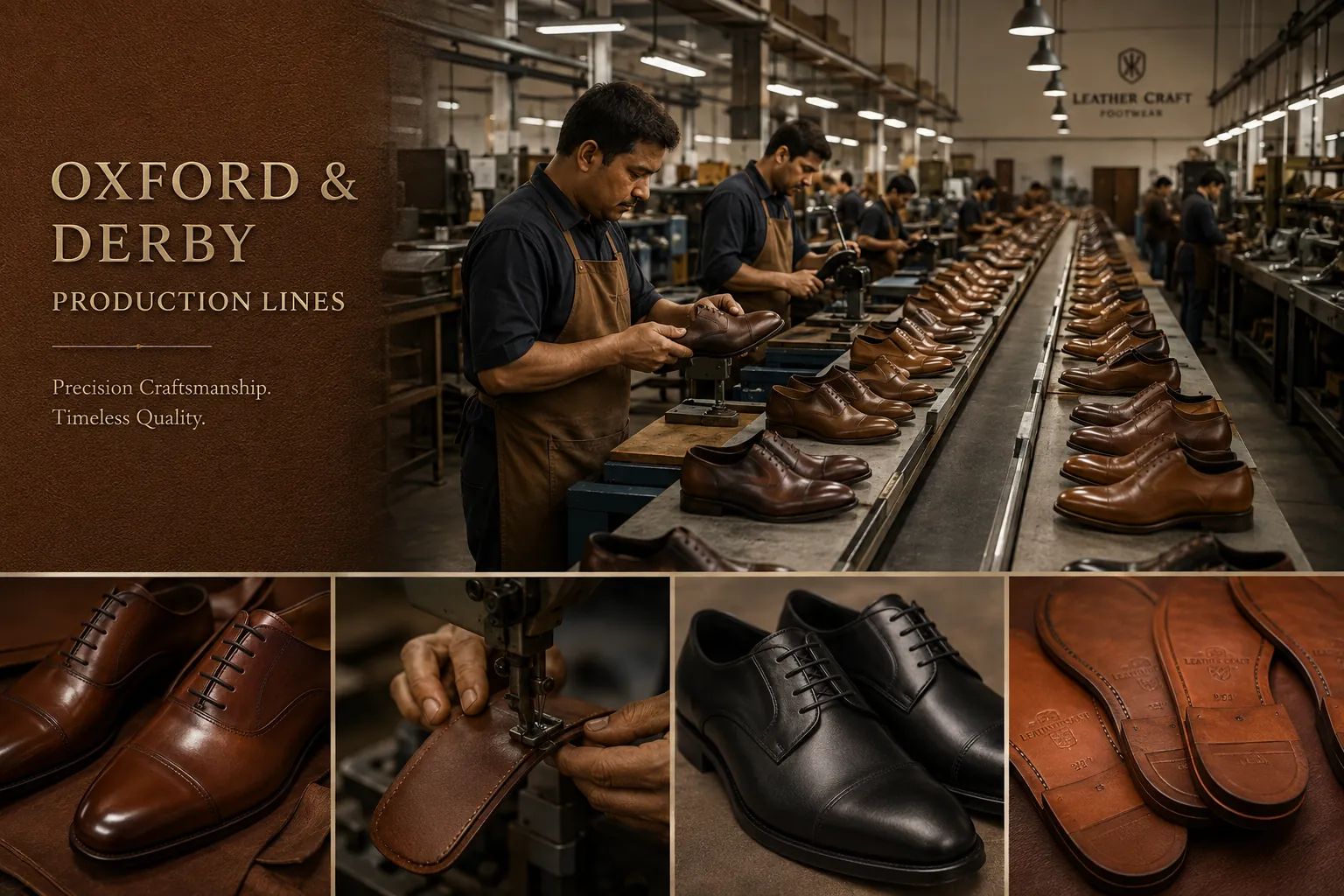
As a manufacturer producing 500,000+ pairs annually with CE (EN ISO20347), REACH, and RoHS certifications, Wincheer Shoes operates with a documented defect rate of 0.8–1.2%, roughly one-third the industry average. That figure is the direct result of structured, multi-stage AQL inspection footwear protocols — not luck.
AQL Levels Explained: 1.0, 1.5, 2.5, and 4.0
AQL levels define the threshold of acceptable defects per 100 units. Lower numbers mean stricter standards. Here’s how they map to footwear use cases:
AQL 1.0
Used for critical safety or compliance items — footwear with steel toe caps, anti-slip soles, or electrical hazard protection. Even one functional failure can create liability. CE-certified safety footwear typically requires AQL 1.0 for critical attributes.
AQL 1.5
The standard for premium dress shoes and private label brands where cosmetic quality directly affects perceived value. A single visible scratch on a $200 retail Oxford will generate a return.
AQL 2.5
The most widely used level in commercial footwear sourcing. It balances thoroughness with practical sampling size. Most B2B buyers default to AQL 2.5 for major defects.
AQL 4.0
Applied to minor cosmetic defects — slight color variation on insoles, minor packaging scuffs — where the defect doesn’t affect function or visible appearance in normal use.
Sampling Table: Lot Size vs Sample Size (General Inspection Level II)
| Lot Size (pairs) | Sample Code | Sample Size | AQL 1.5 (Accept/Reject) | AQL 2.5 (Accept/Reject) |
|---|---|---|---|---|
| 151–280 | G | 32 | 1 / 2 | 2 / 3 |
| 281–500 | H | 50 | 2 / 3 | 3 / 4 |
| 501–1,200 | J | 80 | 3 / 4 | 5 / 6 |
| 1,201–3,200 | K | 125 | 5 / 6 | 7 / 8 |
| 3,201–10,000 | L | 200 | 7 / 8 | 10 / 11 |
| 10,001–35,000 | M | 315 | 10 / 11 | 14 / 15 |
Practical read: On a 5,000-pair order inspected at AQL 2.5, you pull 200 pairs. If 10 or fewer have major defects, the shipment passes. If 11 or more fail, the batch is rejected.
The 50-Point Shoe Inspection Checklist
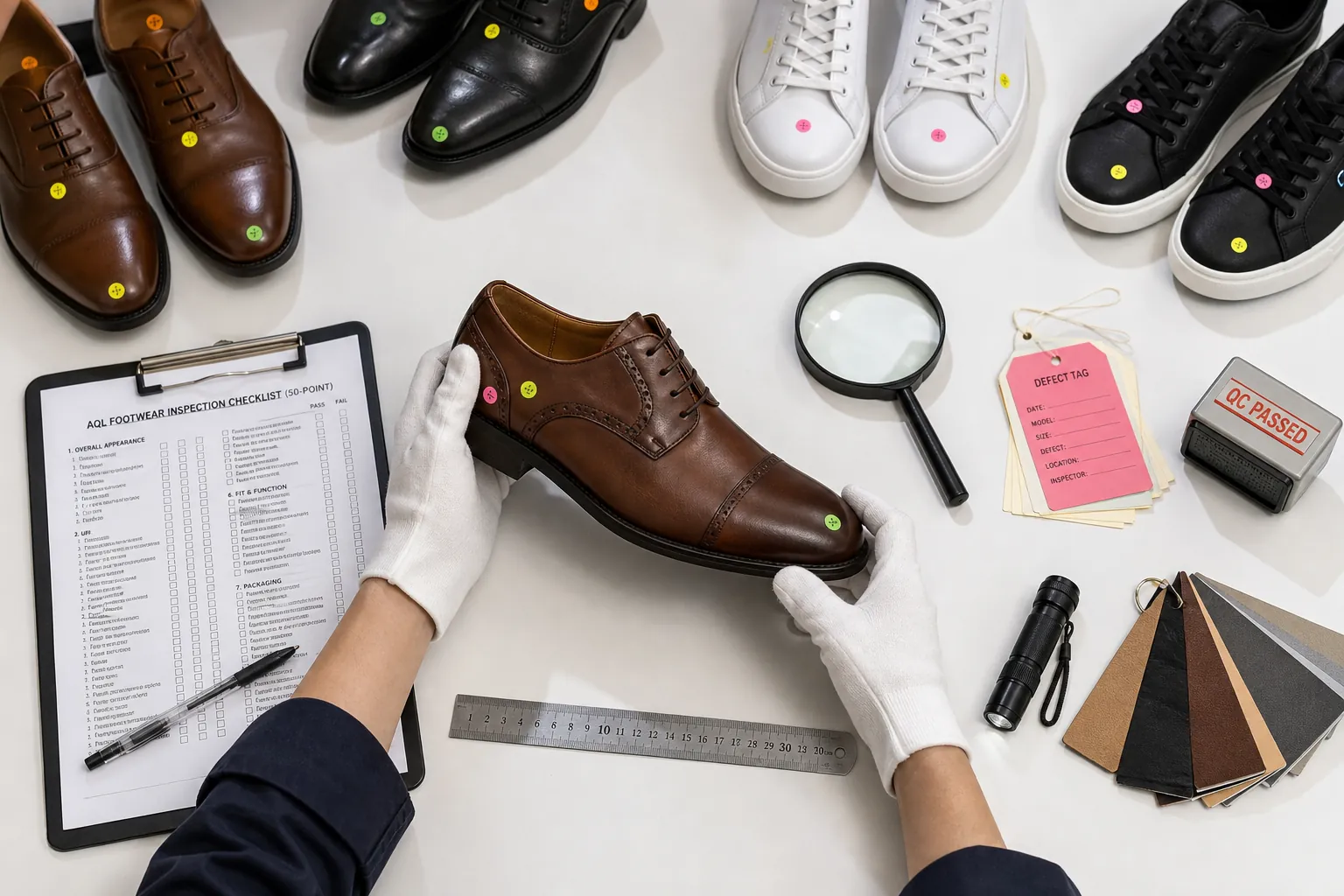
A rigorous AQL inspection footwear process covers five zones on every pair. Here’s the full checklist:
Zone 1: Upper Leather (12 Points)
- Leather grade matches approved sample
- No visible scars, scratches, or blemishes on vamp
- Color consistency between left and right shoe
- Color consistency within the same shoe (no patchy dye)
- Surface finish (gloss/matte) matches spec
- No peeling or delamination on coated leathers
- Embossing or texture pattern alignment
- No wrinkles in toe box area
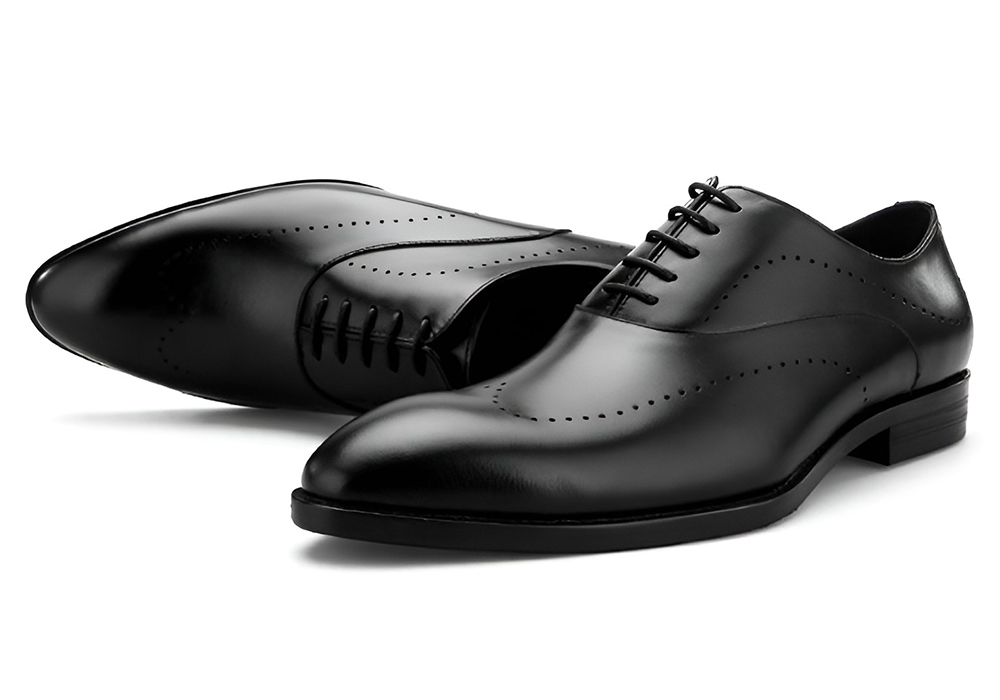
- Perforations (broguing) clean and consistent
- No adhesive bleed-through on upper surface
- Lining material correct and properly bonded
- No odor from leather or lining materials
Zone 2: Stitching (10 Points)
- Stitch count per inch matches spec (typically 8–10 SPI for dress shoes)
- No skipped stitches anywhere on upper
- No loose thread ends
- Thread color matches approved sample
- Welt stitching tight and even
- Toe seam closed cleanly with no gaps
- Counter stitching secure and flat
- Lining stitching not visible from exterior
- No puckering along seam lines
- Backstitch at all seam starts and ends
Zone 3: Sole and Construction (12 Points)
- Sole material matches spec (leather, rubber, TPR, etc.)
- Sole bonding — no delamination at edges
- Heel height within ±2mm of spec
- Heel attachment secure (no wobble)
- Outsole thickness consistent across the pair
- Welt/cement construction correct per order spec
- Shank stiffness appropriate for style
- No exposed nails or staples
- Sole color matches approved sample
- Anti-slip pattern correct (if specified)
- Insole properly glued and flat
- Midsole (if present) correctly bonded
Zone 4: Alignment and Symmetry (8 Points)
- Last shape matches approved sample
- Left/right pair symmetry — toe shape consistent
- Heel cup alignment centered
- Tongue centered and not twisted
- Eyelet spacing even and consistent
- Monk strap buckle(s) centered and level
- Chelsea boot elastic panels even on both sides
- Cap toe line straight and symmetrical
Zone 5: Finishing and Packaging (8 Points)
- Edge paint clean and unbroken
- Heel edge dressed and smooth
- Laces correct color, length, and type
- Shoe trees or toe stuffing present (if specified)
- Correct size label inside each shoe
- Brand insole label correctly positioned
- Shoes correctly matched as pairs in box
- Packaging matches spec (box, tissue, dust bags)
Critical vs Major vs Minor Defects in Footwear
Not all defects carry equal weight. AQL inspection footwear protocols classify defects into three tiers, each with different accept/reject thresholds.
Critical Defects — Zero Tolerance
These create safety risks or regulatory non-compliance. Any single critical defect triggers batch rejection.
- Exposed metal fasteners that can puncture skin
- Sole delamination that creates a trip hazard
- Chemical non-compliance (REACH restricted substances)
- Mislabeled size causing fit injury risk
- Structural failure in safety footwear (steel toe, anti-slip)
Major Defects — AQL 1.5 or 2.5
These directly affect function or visible quality and would cause a customer return.
- Visible stitching breaks on the upper
- Heel detachment or sole separation at edges
- Significant color mismatch between pairs
- Wrong size shipped vs. labeled
- Leather blemishes visible in normal wear position
- Buckle or closure mechanism failure
Minor Defects — AQL 4.0
These are cosmetic imperfections that don’t affect function or primary appearance.
- Slight color variation on insole lining
- Minor thread trimming inconsistency
- Small scuff on heel edge (not visible when worn)
- Tissue paper missing from box
- Minor variation in edge paint thickness
Quick Reference: Defect Classification Table
| Defect Type | Examples | Typical AQL Level | Action |
|---|---|---|---|
| Critical | Chemical failure, structural hazard | 0 (zero tolerance) | Reject entire lot |
| Major | Sole separation, size mismatch, visible stitching break | 1.5–2.5 | Reject if over threshold |
| Minor | Insole color variation, packaging scuff | 4.0 | Accept with note |
AQL Inspection Footwear: Three Inspection Stages
A single pre-shipment check is not enough. Professional buyers use a three-stage inspection framework to catch problems before they compound.
Stage 1: Pre-Production Inspection (PPI)
Conducted before cutting begins. The goal is to verify that all raw materials — leather grades, sole components, hardware, thread — match approved specifications.
Key checks at this stage:
- Leather lot approval against bulk sample
- Hardware (buckles, eyelets) finish and function
- Last shape and sizing confirmation
- Adhesive and sole material verification
- Label and packaging artwork sign-off
Catching a wrong leather lot at PPI costs almost nothing. Catching it at pre-shipment costs everything.
Stage 2: During-Production Inspection (DUPRO)
Conducted when 30–50% of production is complete. This is the most underused and most valuable stage.
DUPRO catches:
- Stitching inconsistencies before they repeat across the full run
- Color drift between early and late production batches
- Construction shortcuts that emerge under production pressure
- Sizing errors before the full order is cut
Stage 3: Pre-Shipment Inspection (PSI)
The standard final check, conducted when at least 80% of production is packed. This is where AQL sampling tables are formally applied.
PSI covers the full 50-point checklist, pair matching, carton labeling, and packing list verification.
For a deeper look at how these stages connect to overall sourcing risk, the AQL inspection footwear guide covers practical tips for each stage.
Third-Party Inspection: When to Use It and What It Costs
Third-party inspection makes sense in specific situations. It’s not always necessary — but when it is, the cost is trivial compared to the risk.
When to Use Third-Party Inspection
- New supplier, first order — no established trust or track record
- Orders above $50,000 — the inspection cost (typically $200–$400/man-day) is a rounding error
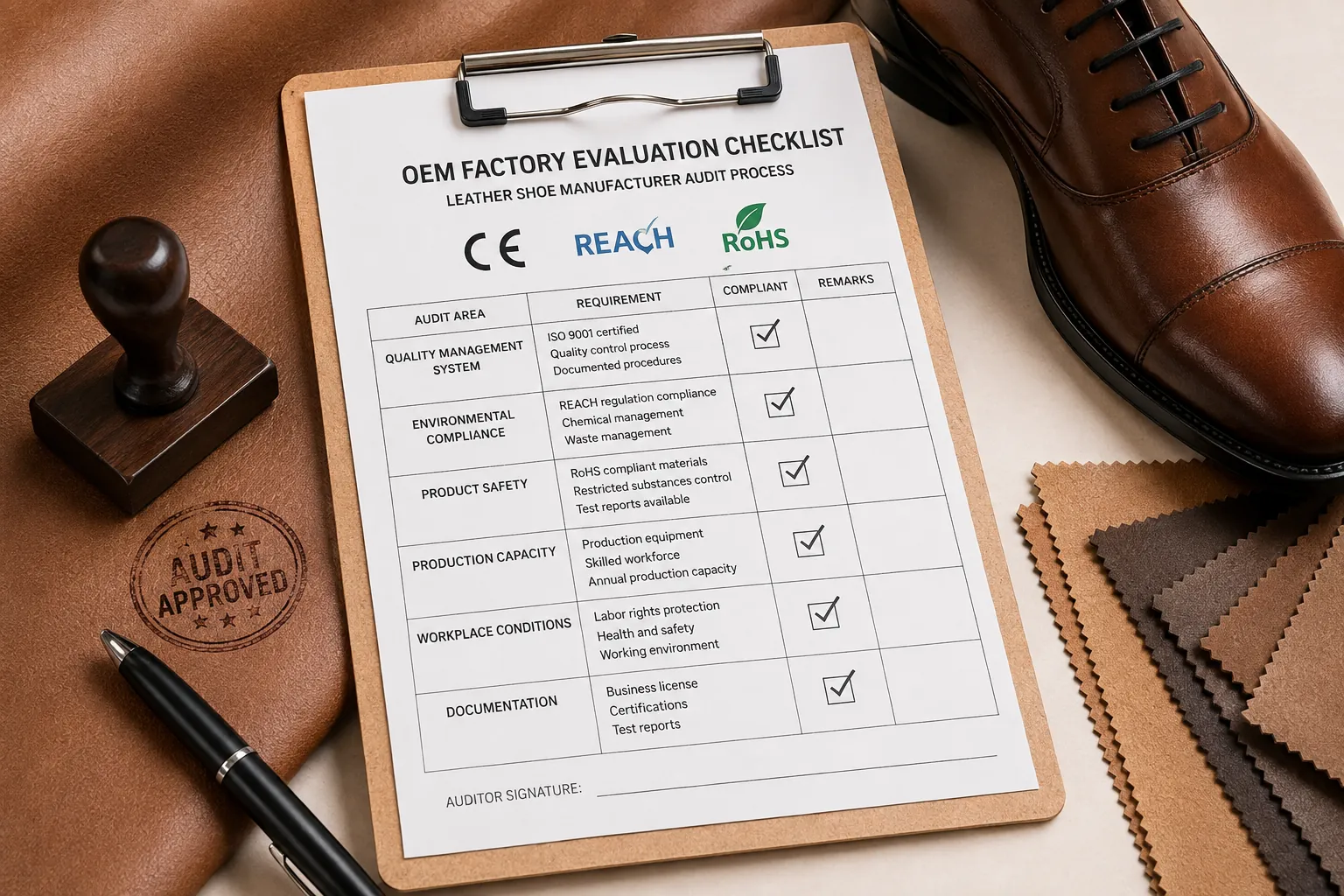
- Compliance-sensitive markets — EU (CE/REACH), US (CPSC), or markets requiring specific certifications
- Private label launch — brand reputation is on the line from day one
- After a previous quality failure — independent verification rebuilds confidence
Top Third-Party Inspection Providers for Footwear
- SGS — global leader, strong in chemical/REACH testing
- Bureau Veritas — broad footwear expertise, strong EU market coverage
- Intertek — competitive pricing, good turnaround in China
- QIMA — tech-forward platform, good for smaller buyers managing multiple factories
- Asia Quality Focus (AQF) — footwear specialist, strong Guangdong presence
Typical Cost Structure
| Service | Typical Cost | Notes |
|---|---|---|
| Pre-shipment inspection | $200–$350/man-day | Most orders need 1 man-day |
| DUPRO | $250–$400/man-day | May need 2 visits |
| Lab testing (REACH panel) | $300–$800/test | Per material type |
| Full audit (factory) | $500–$900 | One-time or annual |
6-Gate QC vs Industry Standard: Comparison Table
Buyers evaluating manufacturers need to understand what a rigorous in-house QC system looks like versus the industry baseline. The table below compares a structured 6-gate quality control process against typical factory practice.
| QC Gate | Industry Standard Practice | 6-Gate QC System |
|---|---|---|
| Gate 1: Raw Material Incoming | Visual check only, no documentation | Full material spec verification, batch records retained |
| Gate 2: Cutting Inspection | Random spot check | 100% pattern alignment check, leather grade confirmation |
| Gate 3: Stitching Line | End-of-line check | In-line check every 50 pairs, stitch count recorded |
| Gate 4: Lasting & Assembly | Visual pass/fail | Dimensional check against last spec, heel height measured |
| Gate 5: Finishing | Final cosmetic check | Full 50-point checklist per AQL sampling table |
| Gate 6: Packing & Outgoing | Carton count only | Pair matching, size label verification, carton weight check |
| Defect Rate Outcome | 2–4% industry average | 0.8–1.2% documented rate |
| Documentation | Minimal | Full batch records, photos, sign-off sheets |
This structured approach is why factories operating at this level can offer buyers meaningful quality guarantees — not just verbal assurances.
For buyers evaluating OEM and ODM options, the OEM/ODM men’s genuine leather shoes manufacturer page outlines how production and quality systems interact with custom orders.
Buyers sourcing Oxford, Derby, Loafer, Monk Strap, Chelsea Boots, or casual walking styles should also review the complete shoe construction comparison for technical details on how construction method affects defect risk.
FAQ
Q: What AQL level should I use for leather dress shoes?
A: For men’s leather dress shoes (Oxford, Derby, Monk Strap), AQL 2.5 is the industry standard for major defects and AQL 4.0 for minor defects. If you’re sourcing premium or luxury-grade footwear, consider tightening to AQL 1.5 for major defects. Always specify your AQL level in the purchase contract before production begins.
Q: How many pairs get inspected in an AQL check?
A: It depends on your order size. Under ISO 2859-1 General Inspection Level II, a 1,000-pair order requires inspecting 80 pairs (Sample Size Code Letter J). A 5,000-pair order requires 200 pairs (Code Letter L). A 500-pair order requires 50 pairs. The sampling table determines this automatically based on lot size.
Q: Can I conduct AQL inspection myself instead of hiring a third party?
A: Yes, if you have trained QC staff and the inspection infrastructure. However, most buyers use third-party inspectors (SGS, Bureau Veritas, QIMA, AQF) for independence and credibility. Self-inspection works best for buyers with offices near the factory who can perform DUPRO and final inspection in person.
Q: What happens if my shipment fails AQL inspection?
A: The buyer has the right to reject the entire batch, request rework, or negotiate a discount. In practice, most issues are resolved through rework — the factory fixes defective pairs and arranges a re-inspection. Include an AQL failure clause in your contract specifying rework timelines, who bears the cost, and the maximum number of re-inspections allowed.
Q: How does defect rate affect my total landed cost?
A: Significantly. A factory operating at 2–4% defect rate (industry average) versus 0.8–1.2% means you lose $3.50–$10.50 per pair in rework, returns, or markdowns on a $35 shoe. Over a 10,000-pair annual program, that’s $35,000–$105,000 in avoidable losses. Choosing a factory with documented low defect rates is a direct margin protection strategy.
Ready to Start Your Shoe Line?
Quality control isn’t an afterthought — it’s the foundation of a profitable footwear business. Understanding AQL inspection standards gives you the framework to hold your manufacturer accountable and protect your margins from hidden defect costs.
With a documented defect rate of 0.8–1.2% (roughly one-third the industry average), 6-gate quality control, and CE/REACH/RoHS certified production, Wincheer Shoes — founded in 2007 — demonstrates what rigorous footwear QC looks like in practice.
Explore our quality-controlled manufacturing or request a sample pair to evaluate quality firsthand.