
Quick Answer: China’s leather shoe manufacturing splits into five working clusters: Guangdong for men’s dress shoe depth, Wenzhou for formal-shoe scale, Quanzhou for volume and export infrastructure, Qingdao for work-boot and dress hybrids, and Chongqing for inland cost advantage. This guide verifies seven manufacturers across those clusters — MOQs range from 50 pairs (LANCI Shoes) to 1,000 pairs (Glory Footwear) — and walks through what to check on leather grade, construction, and compliance before any deposit.

Most searches for leather shoe manufacturers in China land on two kinds of pages: B2B marketplace directories where every listing claims the same certifications, or generic “top shoe factory” roundups that mix sneaker plants into a dress-shoe question. Both waste a buyer’s week. Leather itself is a grade-defined material, and the grade difference alone moves unit cost by a third — which is why cluster and factory verification matter more here than in any other footwear category. We run a men’s leather shoe factory in Jiangmen, Guangdong (Wincheer Shoes Co., Ltd., est. 2007, ~500,000 pairs per year), and we sell against factories in every cluster below — so this list is organized the way a sourcing manager actually shortlists: by cluster first, by verified factory second, by MOQ and construction reality third.
Who Are the Reliable Leather Shoe Manufacturers in China?
Seven names worth shortlisting, grouped by the cluster each operates from.
Guangdong: Men’s Dress Shoe Depth
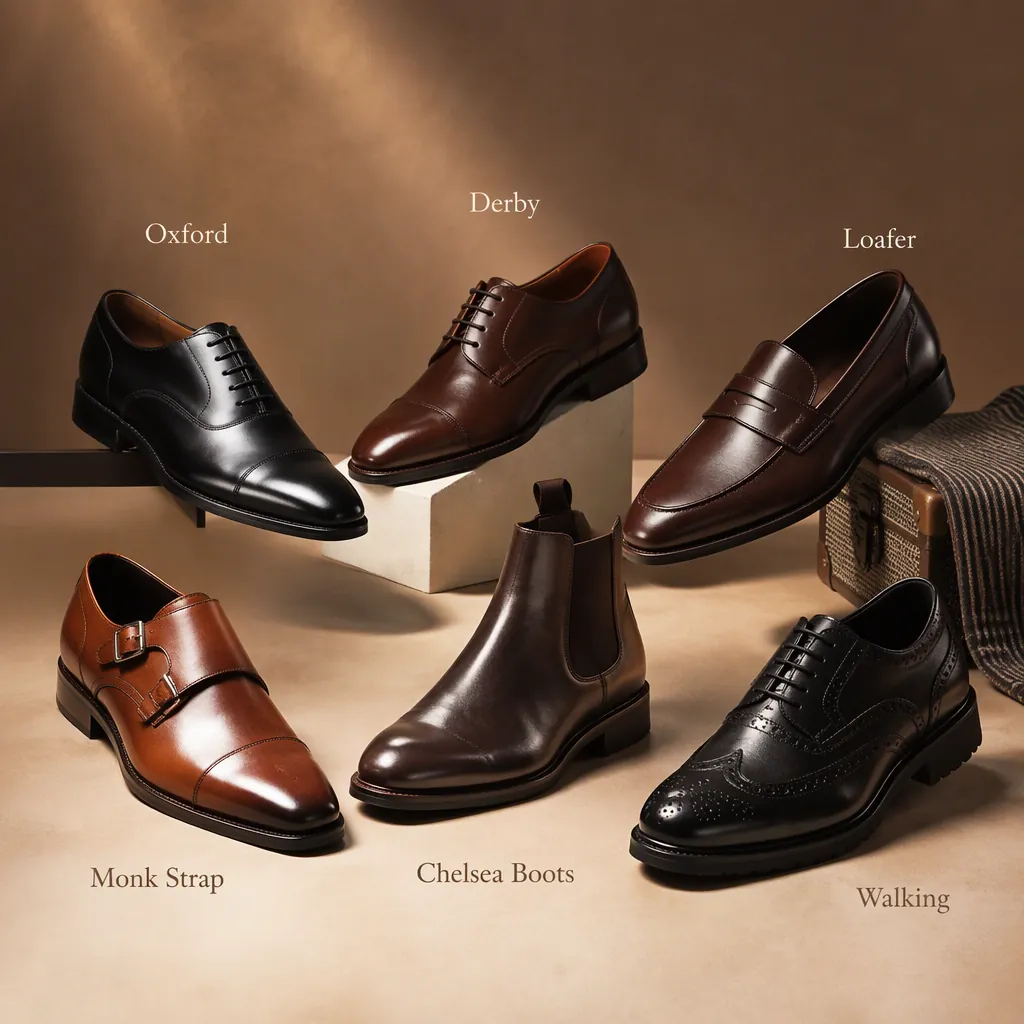
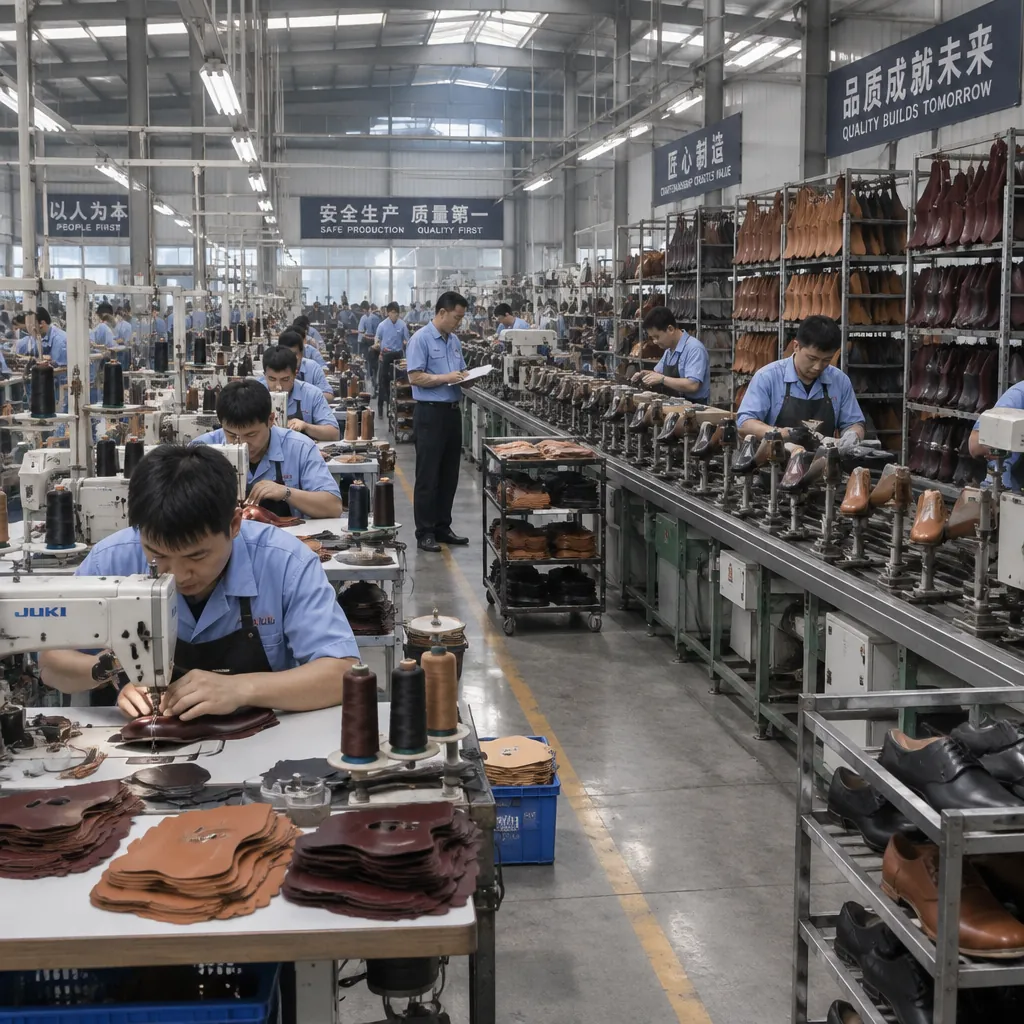
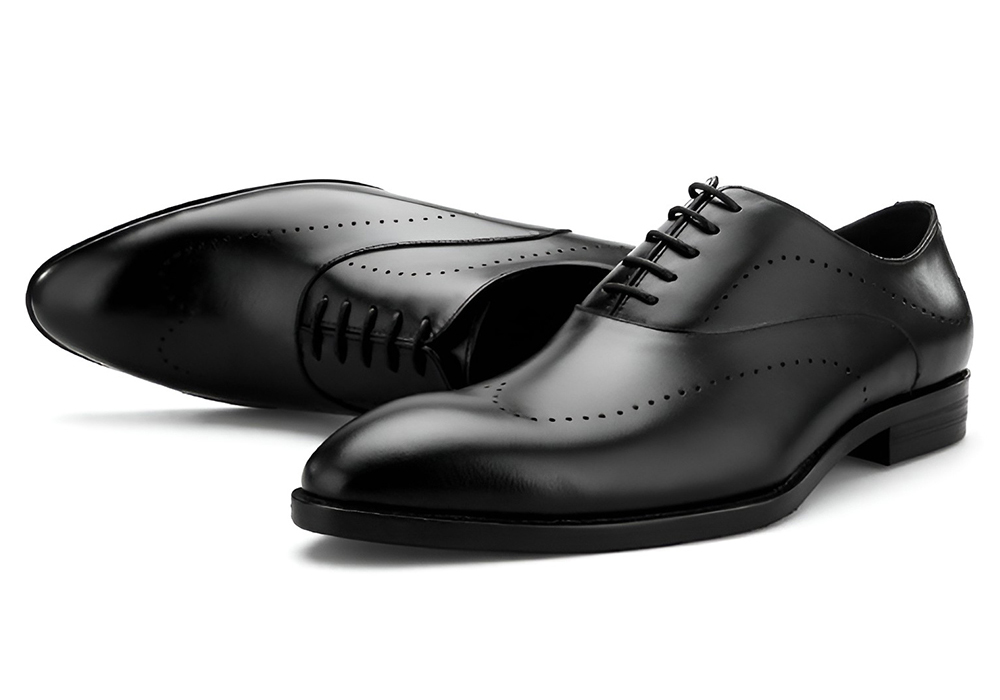
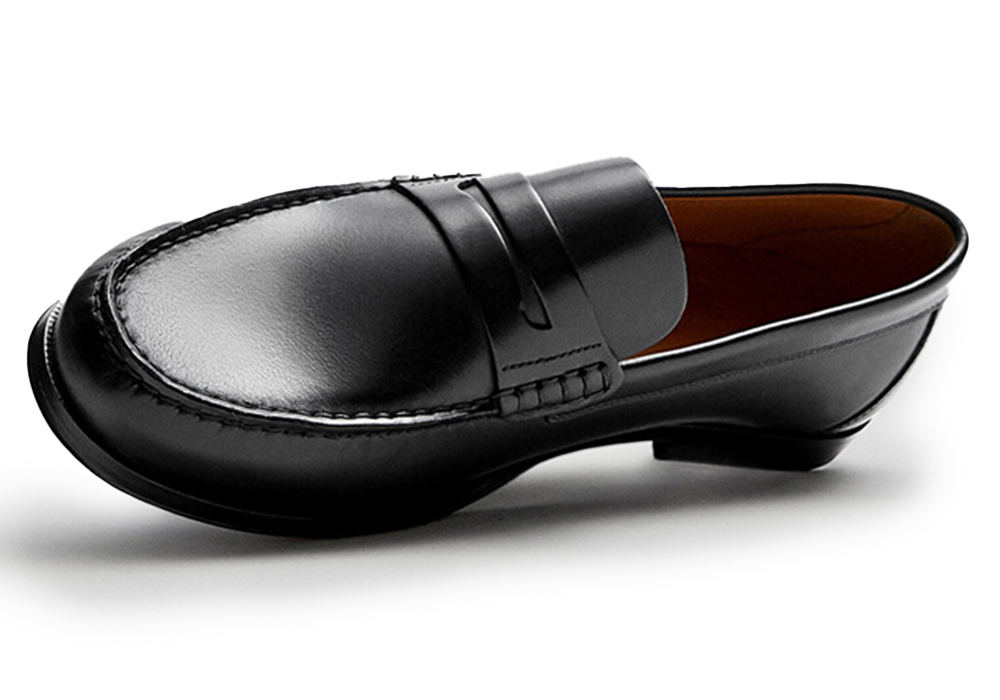
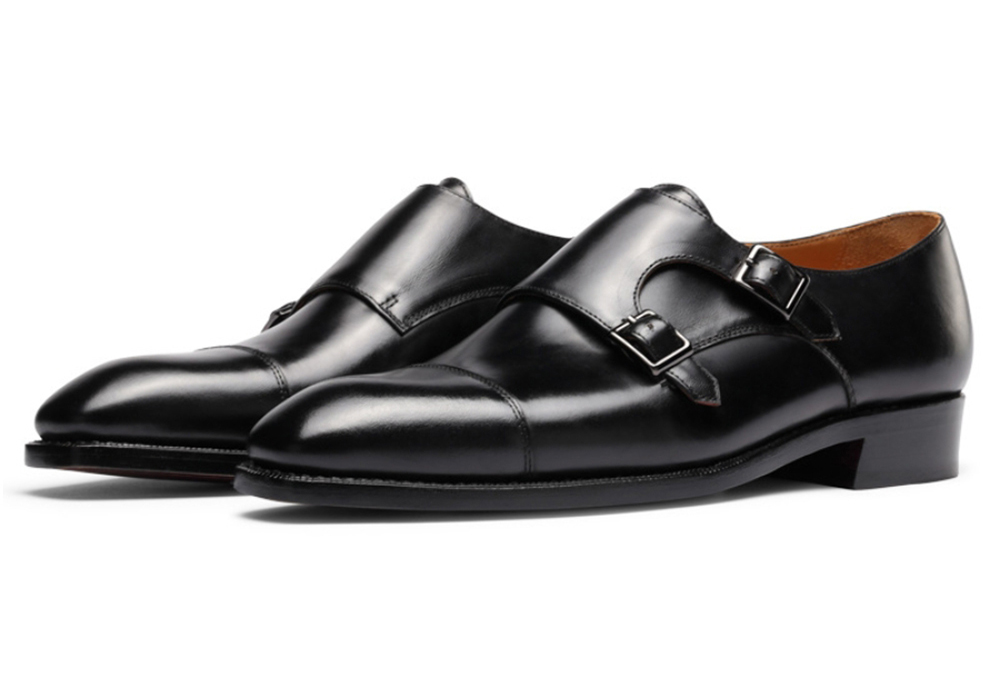
1. Wincheer Shoes Co., Ltd. — a men’s leather shoe specialist in Jiangmen, about 1.5 hours from Guangzhou, producing oxfords, derbies, loafers, monk straps, and Chelsea boots since 2007 at roughly 500,000 pairs per year with CE, REACH, RoHS, and EN-ISO 20347 compliance. MOQ starts at 60 pairs per style with existing lasts, sampling runs 7-15 days, and FOB for men’s leather shoes lands between $25-40 per pair. Visitors are welcome on the production lines — a check we recommend at any factory, including ours.
2. MESCOT Shoe Factory — founded in 1983 and running for more than 40 years, headquartered in Guangzhou with a branch office in Milan. MESCOT’s range is broader fashion footwear — pumps, sandals, flats, loafers — across PU, fabric, and leather materials, with GRS-certified sustainable material programs. Right fit if your line mixes leather dress pairs with fashion categories; less specialized in men’s formal construction than a Jiangmen dress-shoe house.
Wenzhou: Formal-Shoe Scale
3. Zhejiang Aokang — a listed Chinese footwear group from Wenzhou with deep men’s leather shoe capability and a brand-spec customization business. Wenzhou remains China’s densest formal-shoe cluster, and Aokang suits mid-size brands that want an established partner with dress-shoe roots. Typical engagements run larger than startup MOQs.
Quanzhou: Volume and Export Infrastructure
4. Doing Footwear (Doing Int’l Corp.) — a Quanzhou OEM factory with 20 years of footwear production, based in Licheng District, Fujian, and an unusual signal for its tier: a European office in Bled, Slovenia, handling EU-side coordination. Category strength leans outdoor and casual; relevant when your program needs Fujian’s export logistics and a factory used to European compliance conversations.
Qingdao: Work-Boot and Dress Hybrids
5. Glory Footwear — a Qingdao (Shandong) manufacturer whose dress-shoe line runs on cemented construction with action-leather or calf-leather uppers, alongside deep work-boot and Goodyear-welt categories. Note the MOQ honestly: published dress-shoe programs start at 1,000 pairs — the highest entry point on this list, traded against a wide construction menu under one roof.
Chongqing: Inland Cost Advantage
6. LANCI Shoes — a Chongqing private label factory claiming 30+ years of shoemaking and 20 dedicated designers, with men’s dress shoes and leather boots among five core categories. Small-batch programs start from 50 pairs — the lowest MOQ we verified for this category — which fits validation runs and first-store launches.
And the seventh slot
7. Your own vetted runner-up. Every cluster above has dozens of factories that never publish an English site. After shortlisting two clusters, send the same brief to three factories inside each and keep the slot for whoever answers with tiered MOQs and a revision-capable sample team — the evaluation sequence lives in our manufacturer evaluation guide.
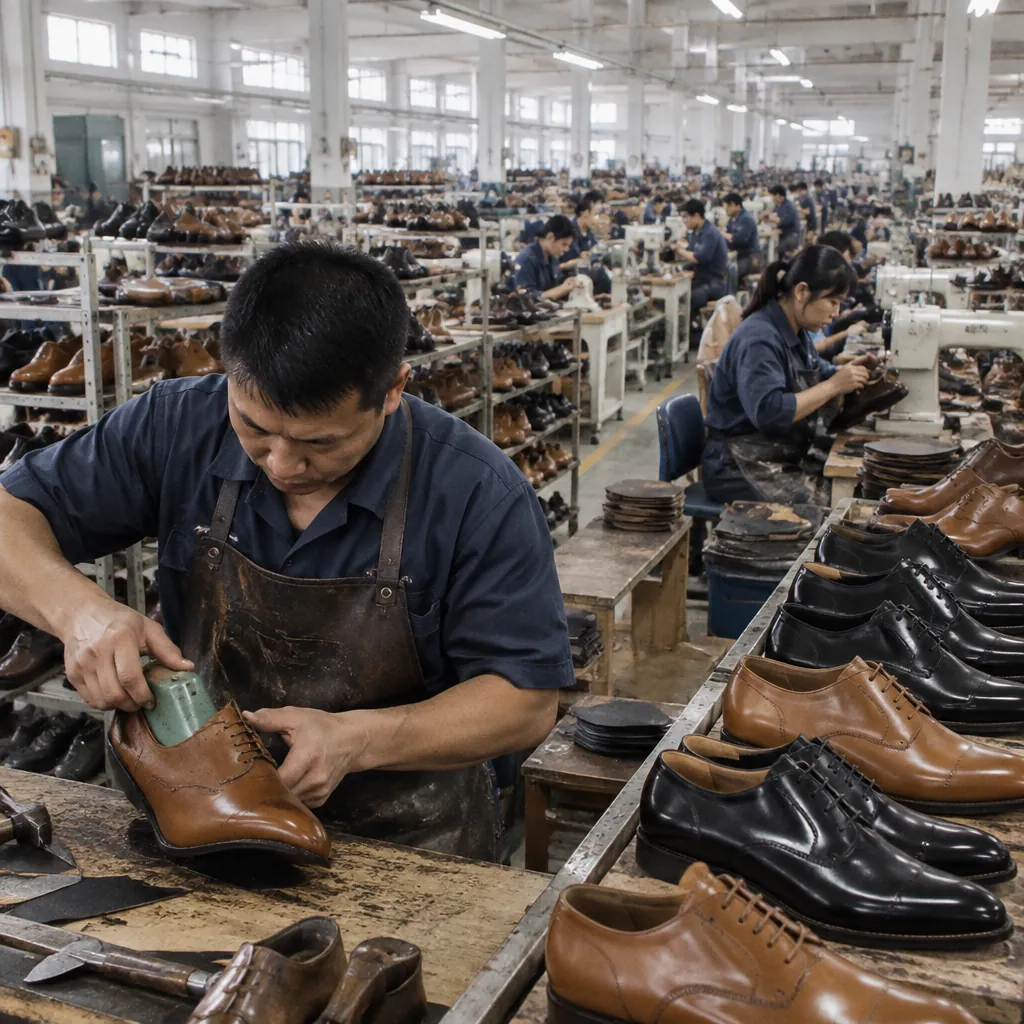
First-hand: what the cluster map looks like from inside one. Our Jiangmen floor runs the full dress-shoe sequence — clicking and closing upstairs, lasting and finishing downstairs — and the sourcing reality buyers meet on visits matches the cluster story: Guangdong suppliers for men’s dress programs are concentrated within a two-hour drive of Guangzhou, which is why European brand buyers who start in Quanzhou for volume almost always add a Guangdong line for their leather tier. Source level: factory floor, Jiangmen, verified on site.
Where Are China’s Leather Shoe Manufacturing Clusters — and What Does Each Do Best?
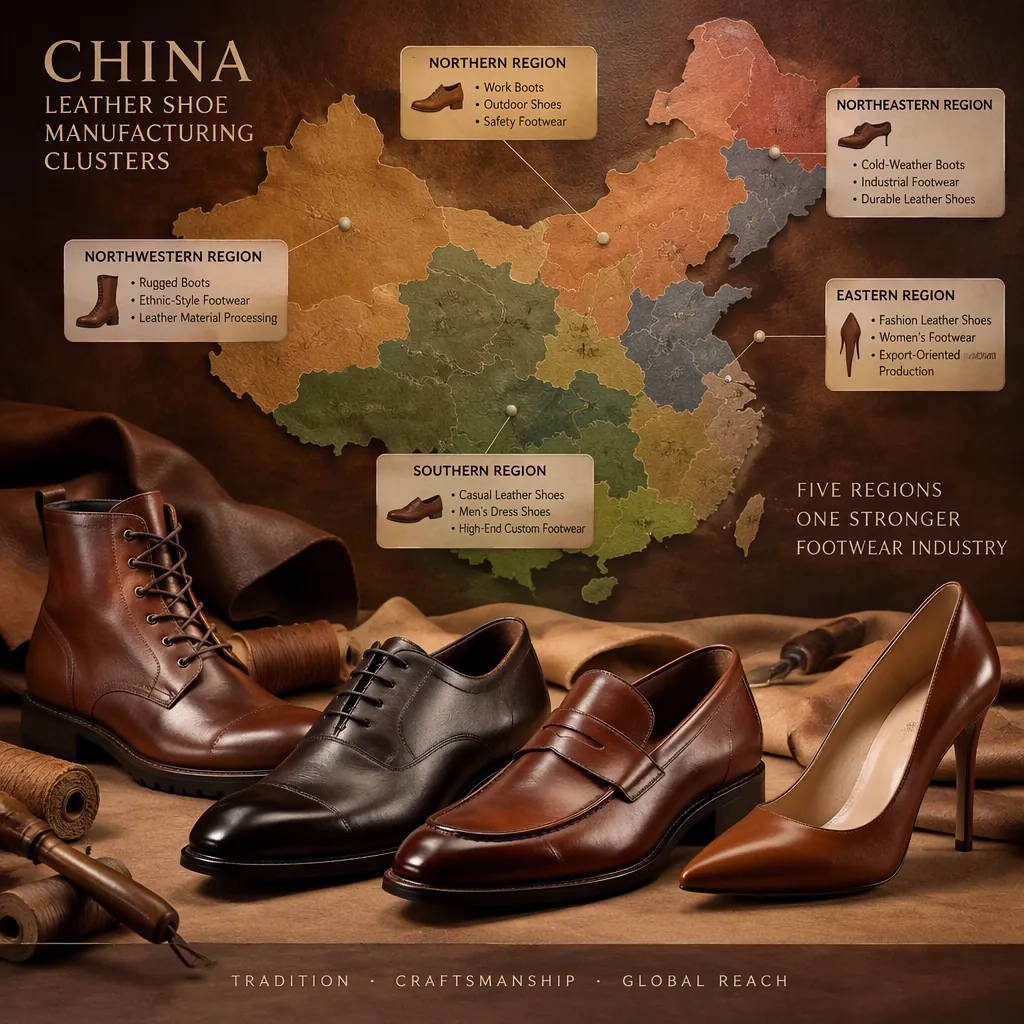
Five clusters, five different jobs:
| Cluster | Core strength | Watch-outs |
|---|---|---|
| Guangdong (Jiangmen/Guangzhou/Dongguan) | Men’s dress shoe depth, full-grain leather programs, Hong Kong logistics | Higher quoted FOB than inland clusters |
| Wenzhou | Formal-shoe scale, listed-company infrastructure | Mid-size MOQs; less small-batch flexibility |
| Quanzhou/Fujian | China’s largest footwear cluster by factory count; export machinery | Strength is athletic and casual; dress-shoe depth varies by factory |
| Qingdao/Shandong | Work boots, Goodyear welt lines, hybrid categories | Dress programs often cemented; MOQs skew high |
| Chongqing | Inland labor cost, small-batch willingness | Fewer EU-facing compliance track records |
The common mistake is treating “China” as one supplier pool. A Fujian factory that excels at 300,000-pair sneaker programs will not automatically produce a clean Goodyear-welted derby, and a Wenzhou group built for 50,000-pair formal runs will not chase a 60-pair launch — shoemaking divides into construction specialties that factories build their lines around, not add-ons. Cluster first, factory second — the reasoning mirrors our global private label manufacturer list, which layers China against Italy, Germany, and the US.
What MOQ Do Chinese Leather Shoe Manufacturers Actually Require?
Verified ranges from this list, per style:
| Manufacturer | Cluster | Stated/verified MOQ | Construction notes |
|---|---|---|---|
| LANCI Shoes | Chongqing | From 50 pairs | Dress shoes, leather boots |
| Wincheer Shoes | Guangdong | From 60 pairs | Oxfords through Chelsea boots; welted options |
| MESCOT | Guangzhou | Per project | Fashion range incl. leather; GRS materials |
| Doing Footwear | Quanzhou | Per project | Outdoor/casual OEM; EU office |
| Zhejiang Aokang | Wenzhou | Mid-size programs | Formal-shoe group; brand-spec customization |
| Glory Footwear | Qingdao | From 1,000 pairs | Cemented dress; Goodyear welt work lines |
First-hand: what buyers actually ask first. In our 2026 inquiry log, the first three questions on men’s leather programs are MOQ per style versus per color, whether the quoted price assumes cemented or welted construction, and sampling lead time — in that order, ahead of unit price. A factory that answers all three in its first reply is showing you its real production structure, not a sales front. Source level: inquiry log, anonymized, 2026.
How Much Should You Expect to Pay per Pair?
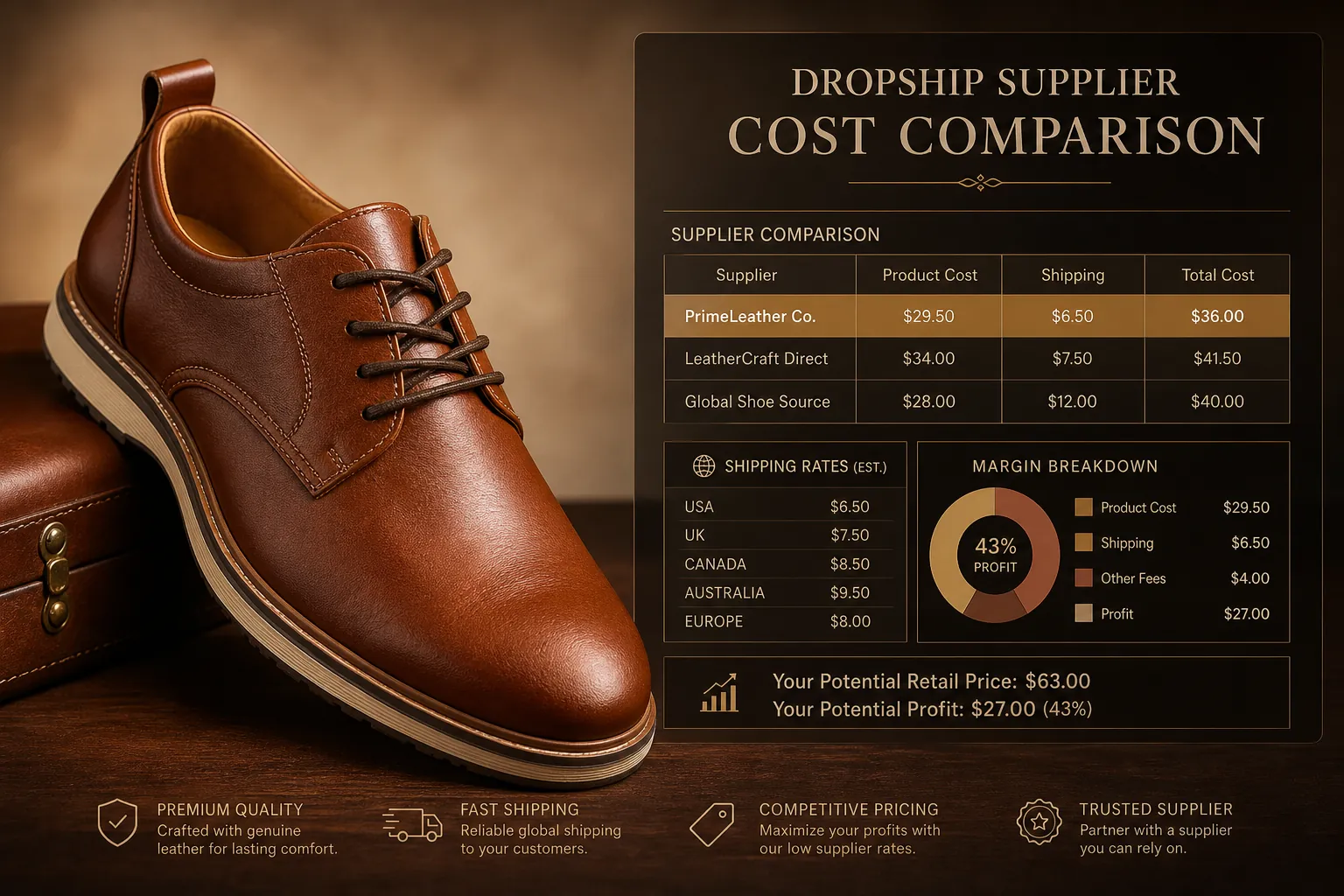
Chinese FOB for men’s leather dress shoes runs $25-40 per pair at specialist factories with 60-pair MOQs — the range we quote daily in Jiangmen, driven by leather grade and construction. Goodyear-welted construction adds roughly 40-60% over cemented, moving welted pairs into the $65-120 band. Quotes far below $20 usually mean corrected or bonded leather dressed up as full-grain; quotes far above $60 from a generalist factory usually mean a trading company margin in the chain. Both patterns are checkable: ask for the leather grade sheet and the construction spec in the same reply as the price.
Two price structures dominate, and they behave differently as volume moves. Per-style pricing assumes one pattern, one last, one color — the $25-40 band holds. Per-color and per-size breakdown pricing adds a setup cost per variant that generalist factories often bury inside a blended minimum; specialists itemize it. When Glory Footwear’s 1,000-pair MOQ looks expensive next to LANCI’s 50-pair entry, what is actually being compared is where each factory’s setup costs amortize: high-MOQ programs buy a lower per-pair ceiling, low-MOQ programs buy optionality. Neither is cheaper in the abstract — the honest comparison is at your real 12-month volume.
How Do OEM and ODM Arrangements Differ When Sourcing Leather Shoes from China?
The terms get used interchangeably in marketplace listings, but on a leather shoe line they produce different contracts. OEM (original equipment manufacturing) means you supply the design — the last, the pattern, the material spec — and the factory executes it. Your protection lives in the tech pack: grade named per component, stitch density per section, construction method per part. ODM (original design manufacturing) means the factory contributes or owns the design from its existing library — you select a base model and apply your brand, which is why ODM programs can start at 60 pairs while a true OEM build of a new last typically starts higher and prices the development in.
The practical test is who owns the last. If the factory owns it, you are in ODM territory and your switching cost to another factory is low; if you commission the last, you are in OEM territory and the last itself becomes your asset — worth asking explicitly, in writing, who holds it after production. Men’s dress shoe programs sit mostly in the ODM-with-modification zone: a factory’s existing oxford or derby last, resoled, recolored, and re-branded to your spec. That is also why the OEM versus ODM distinction matters more for boots and structured footwear than for logo-on-stock-style programs.
What Do Sampling and Counter-Samples Look Like with Chinese Leather Shoe Manufacturers?
A disciplined sampling sequence runs three stages. First sample: the factory’s interpretation of your brief, 7-15 days at specialist factories, charged or free depending on program size. Fit sample: the corrected version after your first round of comments — width, heel height, toe shape changes land here. Counter-sample: the factory’s reply to your correction comments, which is the sample your production order should reference in writing. Buyers who skip the counter-sample stage sign off on a fit sample that no longer exists by production time.
Two practical rules from our floor. First, cap each sampling round at one week of consolidated comments — factories sequence comments, and five separate emails become five separate delays. Second, demand photos with the sample in hand, not renders: on leather programs, the difference between full-grain and corrected grain is visible in a macro photo of the surface grain but invisible in a render. From brief to counter-samples in hand across two factories, a disciplined program runs 3-5 weeks.
How Do You Vet a Chinese Leather Shoe Manufacturer Before Depositing?
Five checks, in order of what they catch:
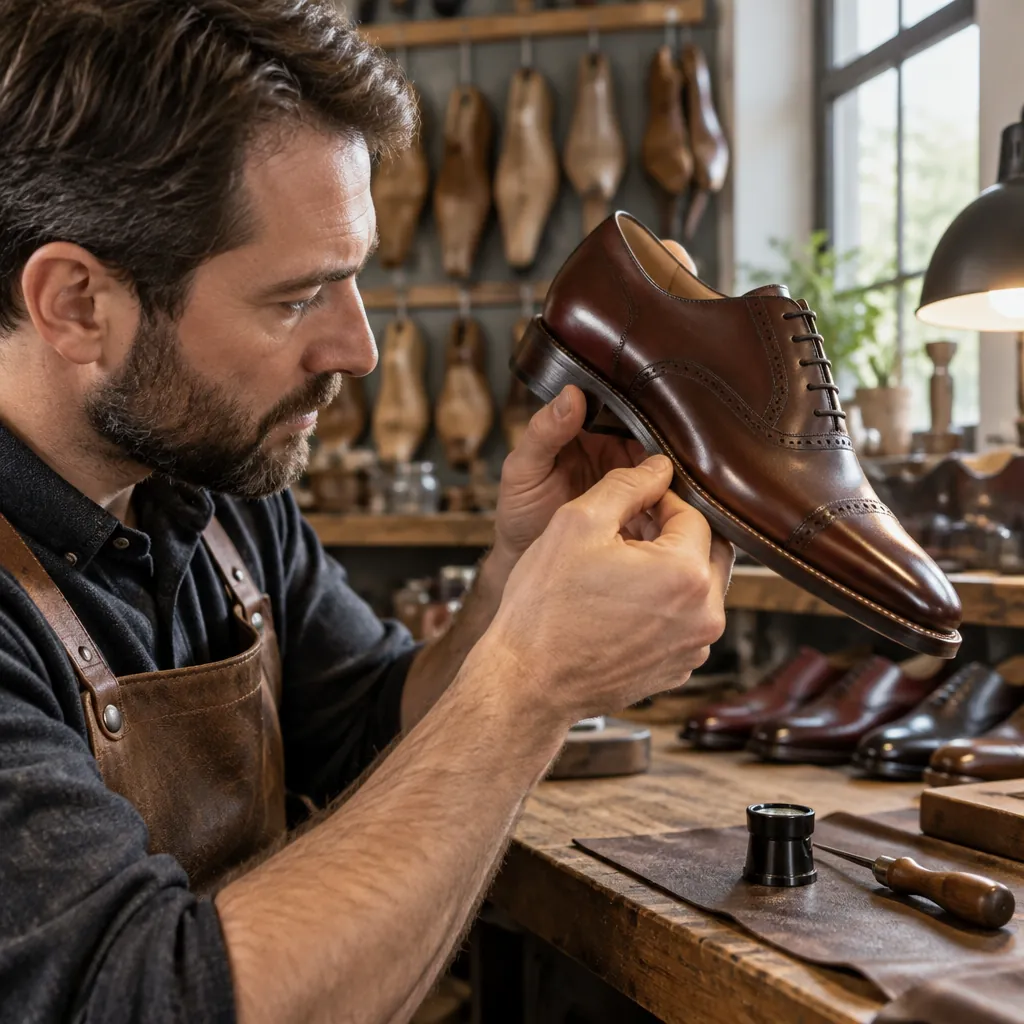
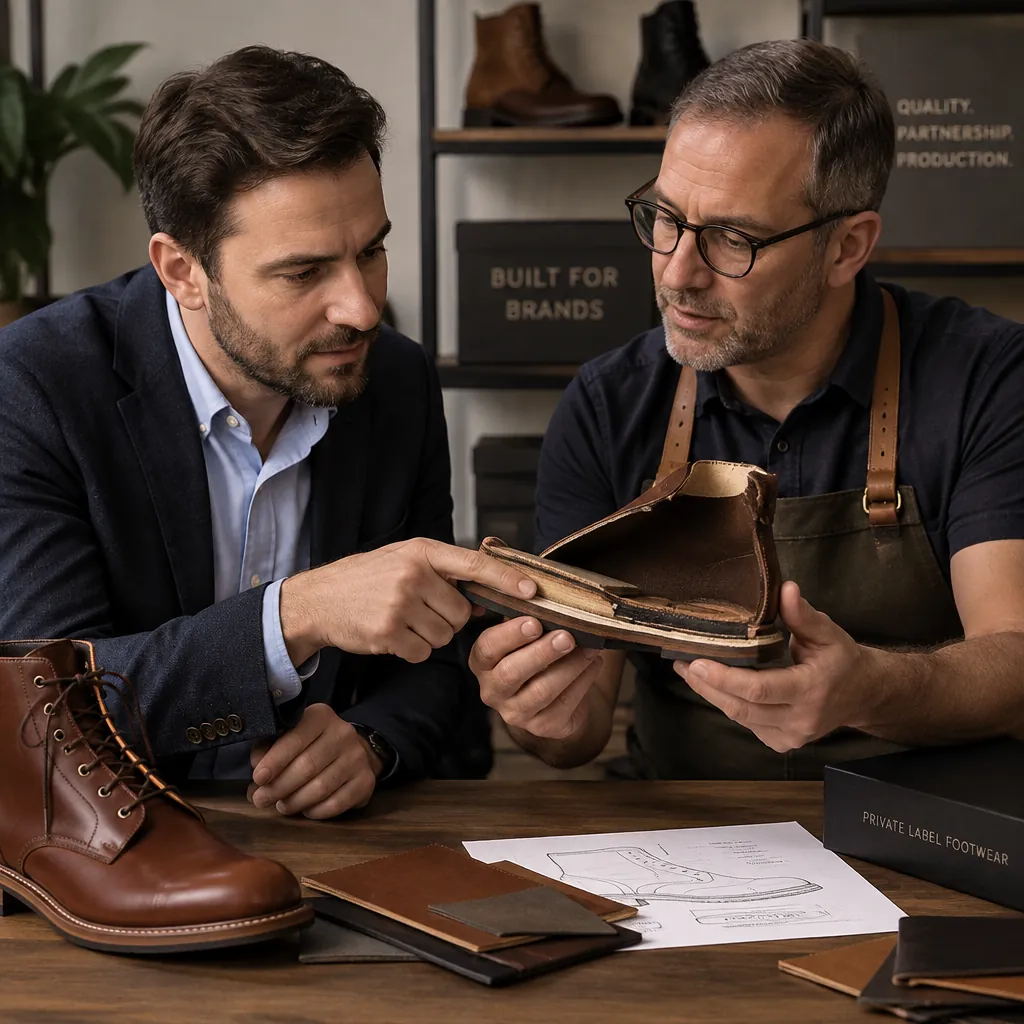
- Construction proof, not claims. Ask which of the factory’s own listed programs run welted versus cemented, then request a cutaway sample or a last with the midsole visible — Goodyear welting leaves a visible stitch line along the sole edge that a cemented shoe cannot fake. A welt claim you cannot see is a welt you cannot sell.
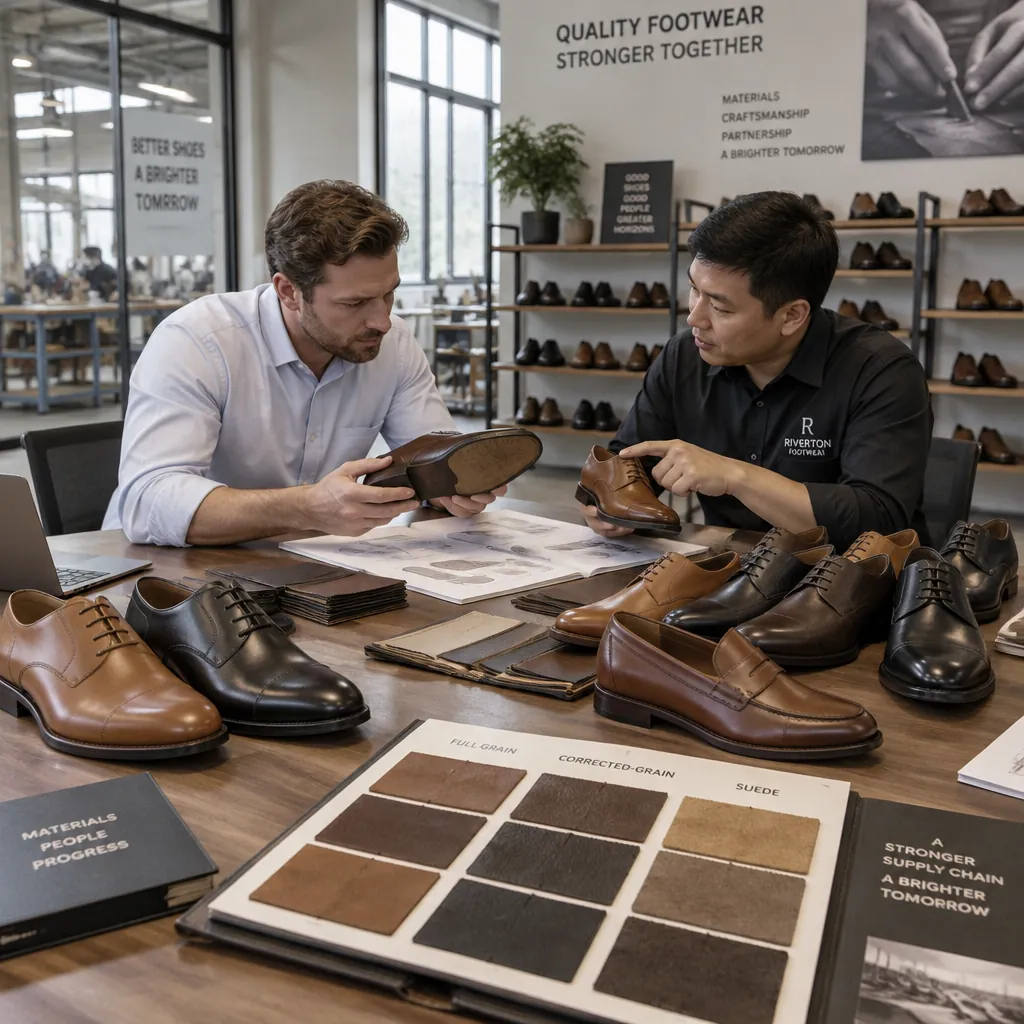
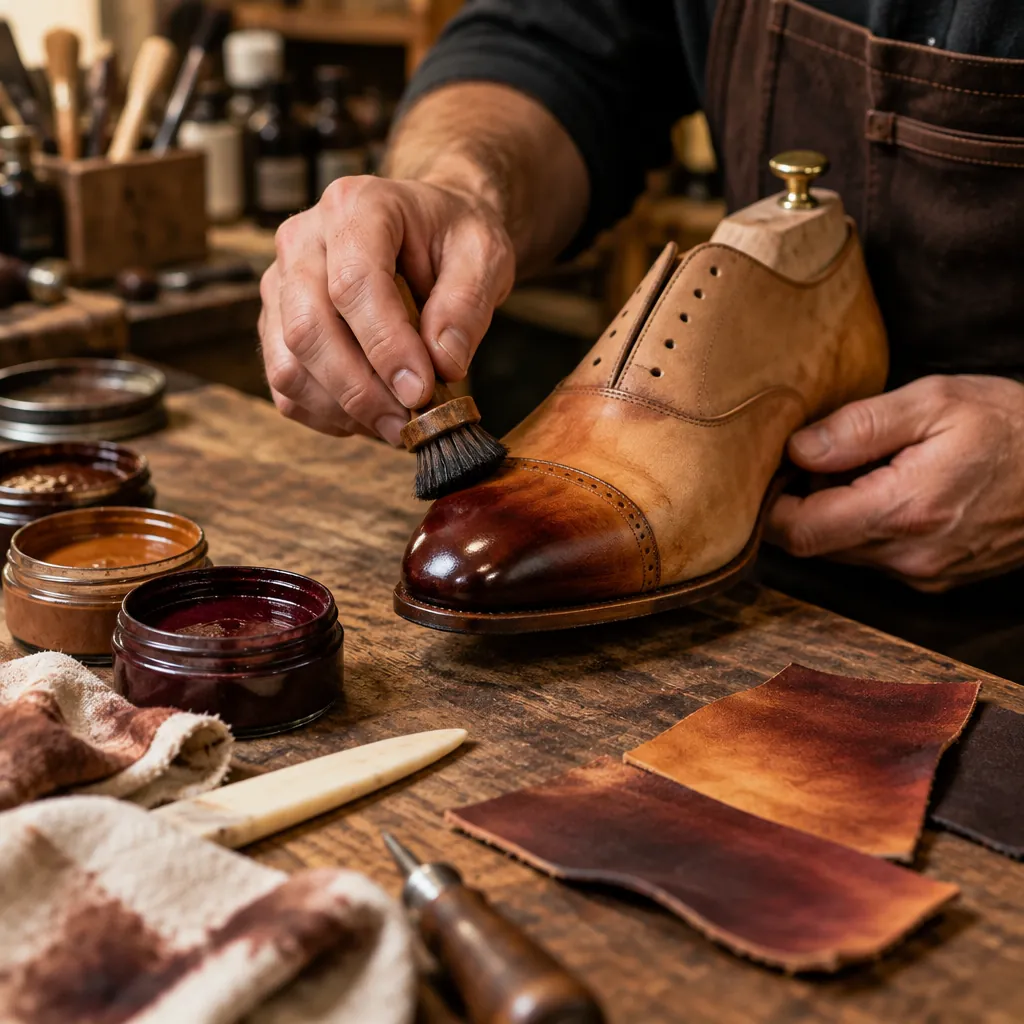
- Leather grade sheet matched to invoice. Full-grain, top-grain, corrected, and bonded look similar in product photos and, in our production experience, differ by 30-50% in cost. Require the grade named on the material invoice, not just the quotation.
- MOQ structure per style, color, and size. Blended minimums hide a factory’s real capacity; tiered answers reveal it. The 50-to-1,000-pair spread on this list is the market’s honest range.
- Certificates matched to the exact factory entity. CE and REACH paperwork must name the manufacturing entity you are contracting with — not a sister company or the sales office.
- A visit, or a video walk-through at minimum. Every factory on this list operates from an address you can verify. If a supplier resists a live floor walk-through, treat the cluster advantage as unproven.
The full sequence — sampling rounds, counter-samples, reference calls — lives in our evaluation guide, and the general sourcing-method layer — how to find and screen factories across all footwear categories — is covered in our how-to-find guide and our guide to selecting a reliable B2B leather shoe manufacturer. For a broader multi-country benchmark that includes China, see our shoe factory top 10.
Which Certificates Should a Chinese Leather Shoe Manufacturer Hold?
Four documents carry real weight in men’s leather footwear, and each answers a different buyer question. CE marking answers “can this be sold in the EU” for the categories it covers. REACH compliance — specifically the azo-dye restrictions — answers “is the leather and lining chemistry safe at retail,” and it is the one certificate European retail buyers audit first. RoHS answers the electronics question that only applies to smart or metal-heavy constructions. EN-ISO 20347 covers occupational footwear specifically — relevant if your line touches work-leather hybrids like Qingdao’s output rather than pure dress programs.
The failure mode is not missing certificates; it is mismatched ones. Marketplaces display certificates that belong to a different factory entity, a different production year, or a different product category than the one quoted to you. Match the certificate’s entity name, issue date, and scope line against your quotation — the same entity-match discipline as the vetting checklist above. Our own compliance documentation and what each certificate covers in practice is detailed in our CE-certified factory guide.
FAQ: Leather Shoe Manufacturers in China
Q: Who are the most reliable leather shoe manufacturers in China?
A: Verified names by cluster: Wincheer Shoes (Jiangmen, men’s dress specialist, 60-pair MOQ), MESCOT (Guangzhou, est. 1983), Zhejiang Aokang (Wenzhou, formal-shoe group), Doing Footwear (Quanzhou, EU office), Glory Footwear (Qingdao, 1,000-pair MOQ dress line), and LANCI Shoes (Chongqing, 50-pair small batches). Shortlist two clusters first, then compare factories inside them on construction proof and MOQ structure.
Q: Which city in China is best for leather shoe manufacturing?
A: For men’s leather dress shoes, Jiangmen and the wider Guangdong belt lead on specialization, with Wenzhou strongest for formal-shoe scale. Quanzhou wins on volume infrastructure for casual and athletic, Qingdao on welted work-boot lines, and Chongqing on inland cost for small batches.
Q: What is the typical MOQ for leather shoe manufacturers in China?
A: The honest verified range is 50 to 1,000 pairs per style: small-batch specialists like LANCI start at 50, dress-shoe specialists like Wincheer at 60, and generalist programs like Glory Footwear’s dress line at 1,000. Anything presented as a flat “China MOQ” is hiding this structure.
Q: How much do Chinese leather shoe manufacturers charge per pair?
A: Men’s leather dress shoes run $25-40 FOB at specialist factories on 60-pair programs; Goodyear-welted construction adds 40-60% ($65-120 band). Price claims outside these bands need a leather grade sheet and construction spec to be taken seriously.
Q: How do I verify a Chinese shoe factory before ordering?
A: Five checks: construction proof on a cutaway sample, leather grade sheet matched to the material invoice, tiered MOQ answers per style/color/size, certificates naming the exact contracting entity, and a site visit or live video walk-through. Deposit only after the first four are in writing.