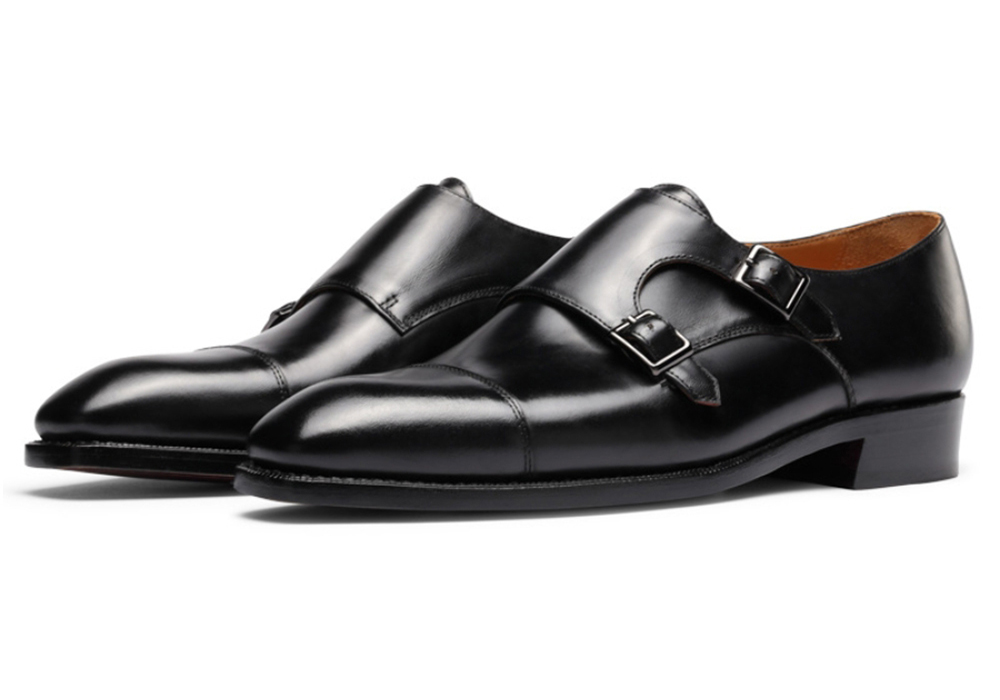
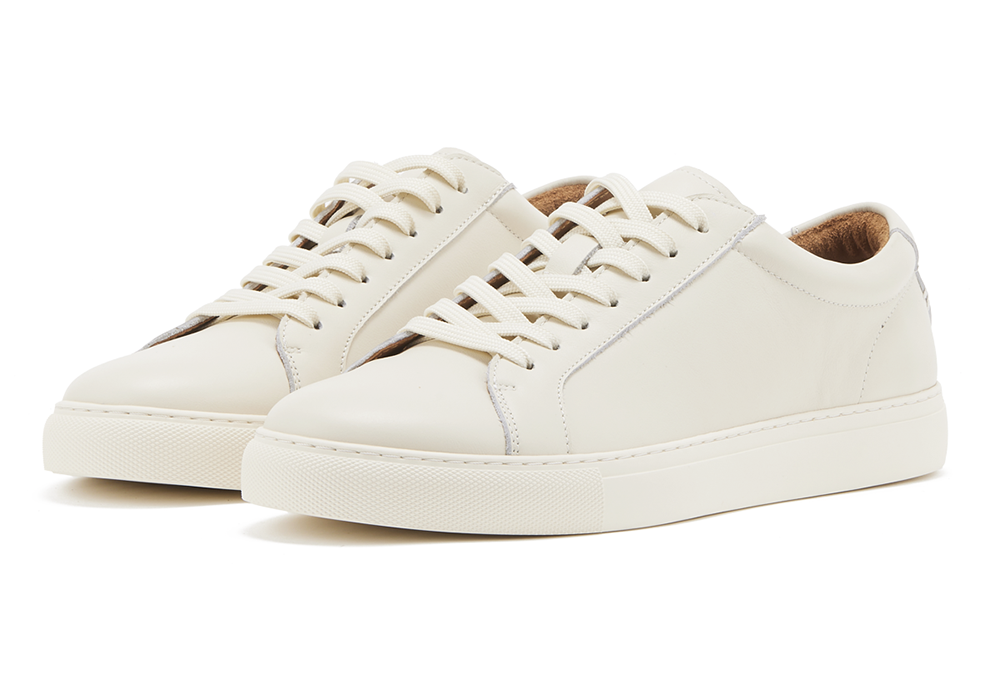
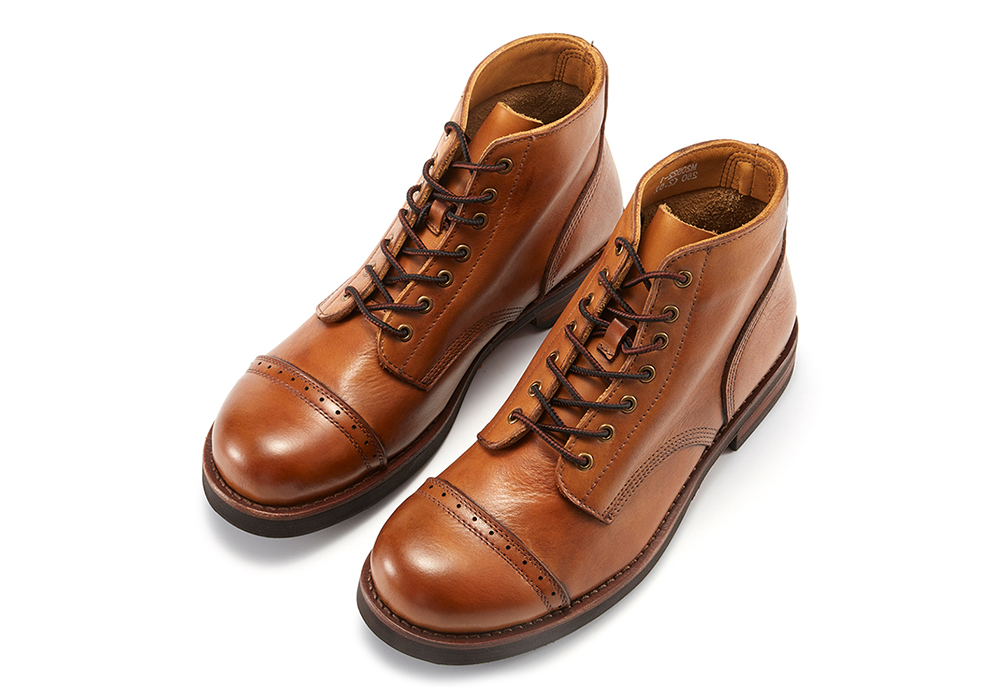
Men’s casual leather shoes wholesale is one of the most active segments in global footwear sourcing right now. The category is growing at a CAGR of 6.2%, outpacing formal dress shoes and athletic footwear alike. For B2B buyers, private label brands, and cross-border e-commerce sellers, this growth window is a direct sourcing opportunity — if you know which styles to prioritize and how to evaluate factory pricing.
This guide breaks down the three core casual leather categories — loafers, walking shoes, and chukka/suede boots — with factory-direct price benchmarks, MOQ structures, and market fit data to help you make faster, more confident sourcing decisions.
As a manufacturer producing 500,000+ pairs annually across 50+ countries, Wincheer Shoes (founded 2007, a manufacturer located in Jiangmen, Guangdong) operates across all three of these casual categories with a defect rate of 0.8–1.2% — well below the industry average of 2–4%. That operational baseline matters when you’re placing bulk orders across multiple SKUs.
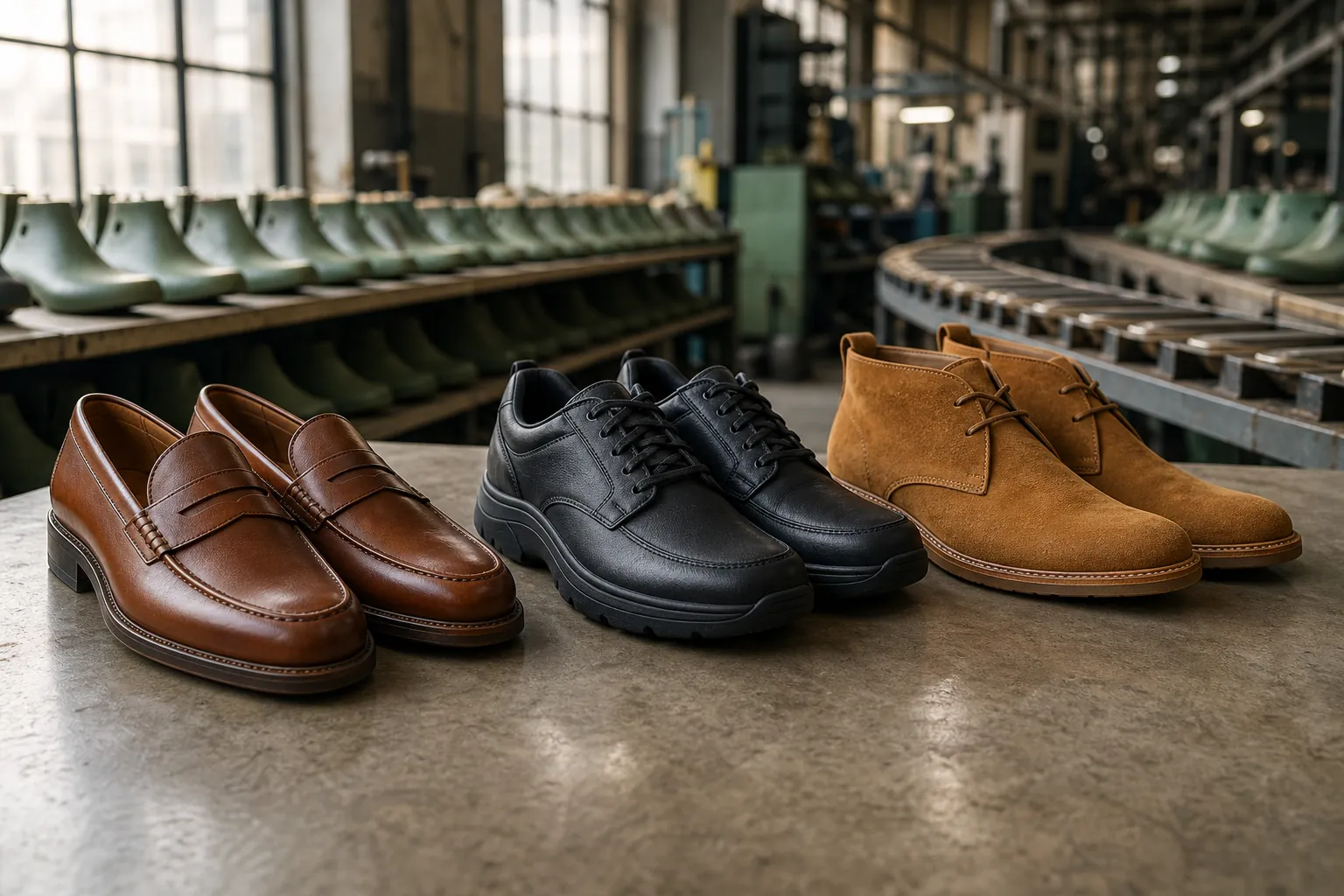
Table of Contents
- Why Casual Leather Is the Fastest-Growing Men’s Footwear Segment
- Leather Loafers Wholesale: Penny, Tassel, and Belgian Styles
- Casual Walking Shoes: Leather Upper + Rubber Sole Factory Specs
- Chukka and Suede Boots: Casual-Meets-Rugged Sourcing Guide
- Comparison Table: Casual Type × Factory Price × MOQ × Best Market
- The Smart Casual Shift: Why Post-COVID Offices Are Driving Demand
- Sourcing Checklist: 8 Questions Before You Place a Casual Leather Order
- FAQ
- Ready to Start Your Shoe Line?
Why Casual Leather Is the Fastest-Growing Men’s Footwear Segment
The men’s casual leather shoes wholesale market is expanding for structural reasons, not just trend cycles. Global workplace culture has shifted permanently since 2020. Hybrid offices, remote-first policies, and the collapse of rigid dress codes have pushed men toward footwear that reads professional but feels comfortable.
The 6.2% CAGR projection through 2030 reflects this structural demand. Buyers in the US, EU, Australia, and the Middle East are all reporting the same pattern: their customers want leather that doesn’t look like a dress shoe but doesn’t look like a sneaker either.
For wholesale buyers, this creates a specific sourcing brief: genuine leather upper, flexible rubber or EVA sole, clean silhouette, price point that allows a 2.5–3× retail markup. That brief maps directly onto three product families — loafers, leather walking shoes, and chukka boots.
Leather Loafers Wholesale: Penny, Tassel, and Belgian Styles
Loafers are the anchor product in any casual leather wholesale catalog. They move across the widest range of markets — from US college towns to Gulf state business lounges — and they carry strong repeat-order rates because customers replace them seasonally.
Penny Loafers
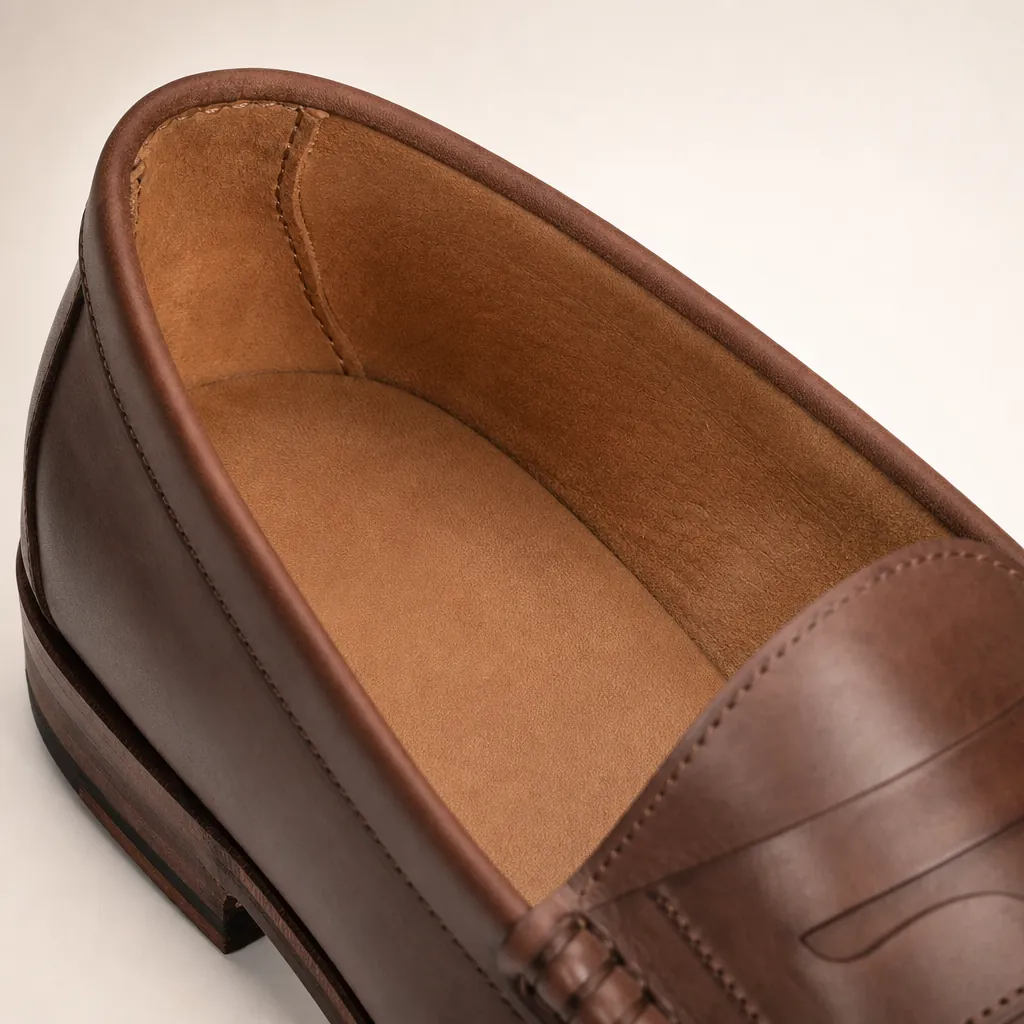
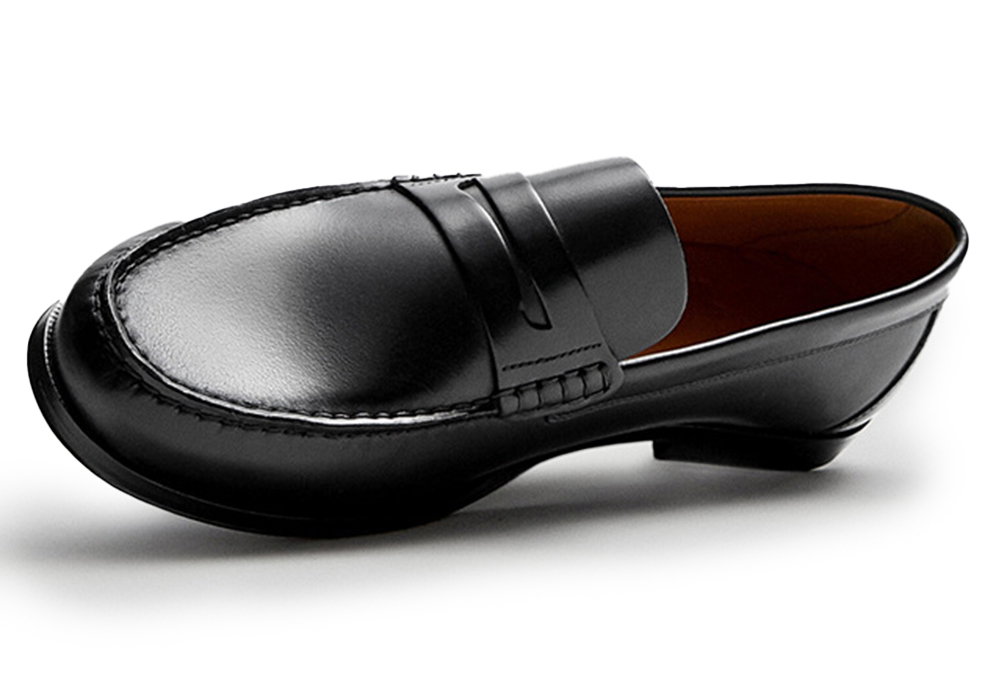
The penny loafer is the highest-volume loafer style globally. The defining feature is the saddle strap with a small cut-out across the vamp. Factory-direct pricing for genuine leather penny loafers runs $24–28/pair at standard MOQ.
Key spec decisions at the factory level:
- Upper leather: full-grain cowhide vs. corrected-grain (price difference: $2–4/pair)
- Sole construction: cemented rubber vs. Blake-stitched leather sole
- Last shape: round toe (US/EU mainstream) vs. slightly elongated (Middle East preference)
For men’s loafer shoes wholesale, penny styles in black and tan are the safest opening order. Burgundy and navy are strong secondary SKUs for European and Australian markets.
Tassel Loafers
Tassel loafers carry a $2–4 premium over penny styles due to the decorative hardware and additional assembly steps. Factory-direct range: $26–30/pair. They skew older demographically and perform well in UK, German, and Japanese markets where traditional menswear heritage still drives purchase decisions.
Sourcing note: tassel quality varies significantly. Ask factories for tassel pull-strength test data. Tassels that detach within 30 days generate disproportionate return rates.
Belgian Loafers
Belgian loafers — characterized by a bow detail at the toe and a hand-sewn construction — sit at the top of the casual loafer price range at $29–32/pair factory direct. They’re a niche but high-margin product for premium private label brands targeting the $120–180 retail tier.
Construction matters here more than any other loafer style. Belgian loafers should be hand-lasted with a full leather insole. Factories that produce them on the same line as cemented styles will compromise the finish.
Casual Walking Shoes: Leather Upper + Rubber Sole Factory Specs
The leather walking shoe category has exploded in the past three years. It sits at the intersection of comfort footwear and smart casual — a leather upper that signals quality, paired with a rubber or EVA sole that delivers all-day wearability.
Factory-direct pricing: $22–28/pair, making this the most accessible entry point in the casual leather wholesale category.
Upper Construction
The upper spec is where most buyers make their first mistake. “Leather upper” on a factory spec sheet can mean anything from full-grain cowhide to a split leather with a PU coating. For a product you’re positioning as premium, specify:
- Full-grain or top-grain cowhide, minimum 1.2mm thickness
- Breathable lining: genuine leather or moisture-wicking textile
- Padded collar and tongue for comfort positioning
For men’s leather walking style shoes, the upper spec is the primary quality differentiator. Don’t let factories substitute materials without written approval.
Sole Construction
The rubber sole spec is equally important. Options at the factory level:
| Sole Type | Price Impact | Best For |
|---|---|---|
| Cemented rubber (TR) | Baseline | Entry-level retail, fast fashion |
| Cemented EVA + rubber outsole | +$1.50–2.00 | Comfort positioning, US/AU markets |
| Goodyear welt + rubber | +$6–9 | Premium tier, EU/UK markets |
| Blake stitch + rubber | +$3–5 | Mid-premium, good durability signal |
For most wholesale buyers entering the casual walking category, cemented EVA + rubber outsole hits the best price-to-perceived-value ratio. It allows a retail price of $65–95 with a healthy margin.
Colorways and Lasts
Walking shoes sell in a broader color range than dress shoes. Brown (tan, cognac, chestnut) consistently outsells black in this category across US, Australian, and Northern European markets. Navy and olive are emerging SKUs worth testing in small quantities.
Last shape should be slightly wider in the toe box than a dress shoe last — this is a functional signal that reinforces the comfort positioning.
Chukka and Suede Boots: Casual-Meets-Rugged Sourcing Guide
Chukka boots occupy a unique position in the casual leather wholesale market. They’re the most versatile boot silhouette — equally at home with chinos in a smart casual office or dark denim on a weekend. Factory-direct pricing: $26–35/pair.
Leather vs. Suede Upper
This is the primary spec decision for chukka buyers:
Leather upper chukkas ($26–30 factory direct):
- More durable, easier to clean
- Better for markets with wet climates (UK, Northern Europe, Pacific Northwest US)
- Longer product lifecycle = stronger repeat purchase argument
Suede upper chukkas ($28–35 factory direct):
- Higher perceived luxury at the same price point
- Stronger sell-through in dry-climate markets (Middle East, Southern US, Australia)
- Requires care kit upsell opportunity — good for brand differentiation
Construction Details That Matter
For chukka boots, two construction details drive quality perception more than any other:
- Ankle collar padding: A well-padded collar is the first thing customers notice when they try on a chukka. Specify minimum 8mm foam padding with leather or suede wrap.
- Sole attachment method: Desert boot-style chukkas traditionally use a crepe sole with cemented construction. Modern interpretations use rubber or EVA for better durability. Specify your sole material and attachment method explicitly — factories default to whatever is cheapest on their current production run.
For buyers interested in the full men’s Chelsea boots and boot category, chukkas and Chelsea boots are often produced on the same factory line and can be combined in a single order to reach volume thresholds.
Comparison Table: Casual Type × Factory Price × MOQ × Best Market
| Style | Factory Price (FOB) | MOQ (Custom) | MOQ (Stock) | Best Markets | Retail Price Range |
|---|---|---|---|---|---|
| Penny Loafer | $24–28/pair | 60 pairs | 0 pairs | US, AU, Middle East | $75–120 |
| Tassel Loafer | $26–30/pair | 60 pairs | 0 pairs | UK, Germany, Japan | $90–140 |
| Belgian Loafer | $29–32/pair | 60 pairs | 0 pairs | EU premium, US boutique | $120–180 |
| Leather Walking Shoe | $22–28/pair | 60 pairs | 0 pairs | US, AU, Canada | $65–95 |
| Leather Chukka Boot | $26–30/pair | 60 pairs | 0 pairs | UK, EU, US | $85–130 |
| Suede Chukka Boot | $28–35/pair | 60 pairs | 0 pairs | Middle East, AU, US South | $95–150 |
Key sourcing note: The 0-pair MOQ on existing stock designs means you can test market response before committing to a custom order. This is particularly valuable for new private label brands validating their first SKU set.
The Smart Casual Shift: Why Post-COVID Offices Are Driving Demand
The structural demand driver behind men’s casual leather shoes wholesale is worth understanding at a macro level, because it affects which styles you should weight in your catalog.
Pre-2020, office dress codes created a clear bifurcation: formal shoes for work, casual shoes for weekends. That bifurcation has largely collapsed. A 2024 survey of US and UK office workers found that fewer than 18% of respondents still worked in environments with explicit dress codes. The remainder operate in “smart casual” or “business casual” environments where the definition is entirely self-interpreted.
This ambiguity is a wholesale opportunity. Men are actively seeking footwear that can read as professional in a meeting and relaxed at dinner. Leather loafers, clean walking shoes, and chukka boots all fit that brief. Sneakers don’t, and formal Oxfords feel overcalibrated.
The men’s dress shoe styles guide provides useful context on how formal and casual styles are converging in buyer preferences. The data consistently shows that styles positioned as “versatile” outperform both pure dress and pure casual positioning in current market conditions.
For wholesale buyers, this means the smart catalog strategy is not to choose between formal and casual — it’s to build a range that covers the spectrum from loafer to Derby, allowing your retail customers to serve buyers across the full smart casual continuum.
The complete guide to leather Oxford shoes for wholesale buyers covers the formal end of that spectrum in detail, and pairing it with a casual range gives you full category coverage.
Sourcing Checklist: 8 Questions Before You Place a Casual Leather Order
Use this checklist before finalizing any men’s casual leather shoes wholesale order:
- [ ] Upper material confirmed in writing? Specify leather grade, thickness (mm), and tannage method. Don’t accept “genuine leather” as a sufficient spec.
- [ ] Sole attachment method specified? Cemented, Blake, Goodyear, or crepe — each has different durability and price implications.
- [ ] Lining material confirmed? Leather lining vs. synthetic lining affects breathability and customer satisfaction significantly.
- [ ] Defect rate benchmarks agreed? Industry average is 2–4%. Negotiate for 1.2% or below with financial penalties for exceedance.
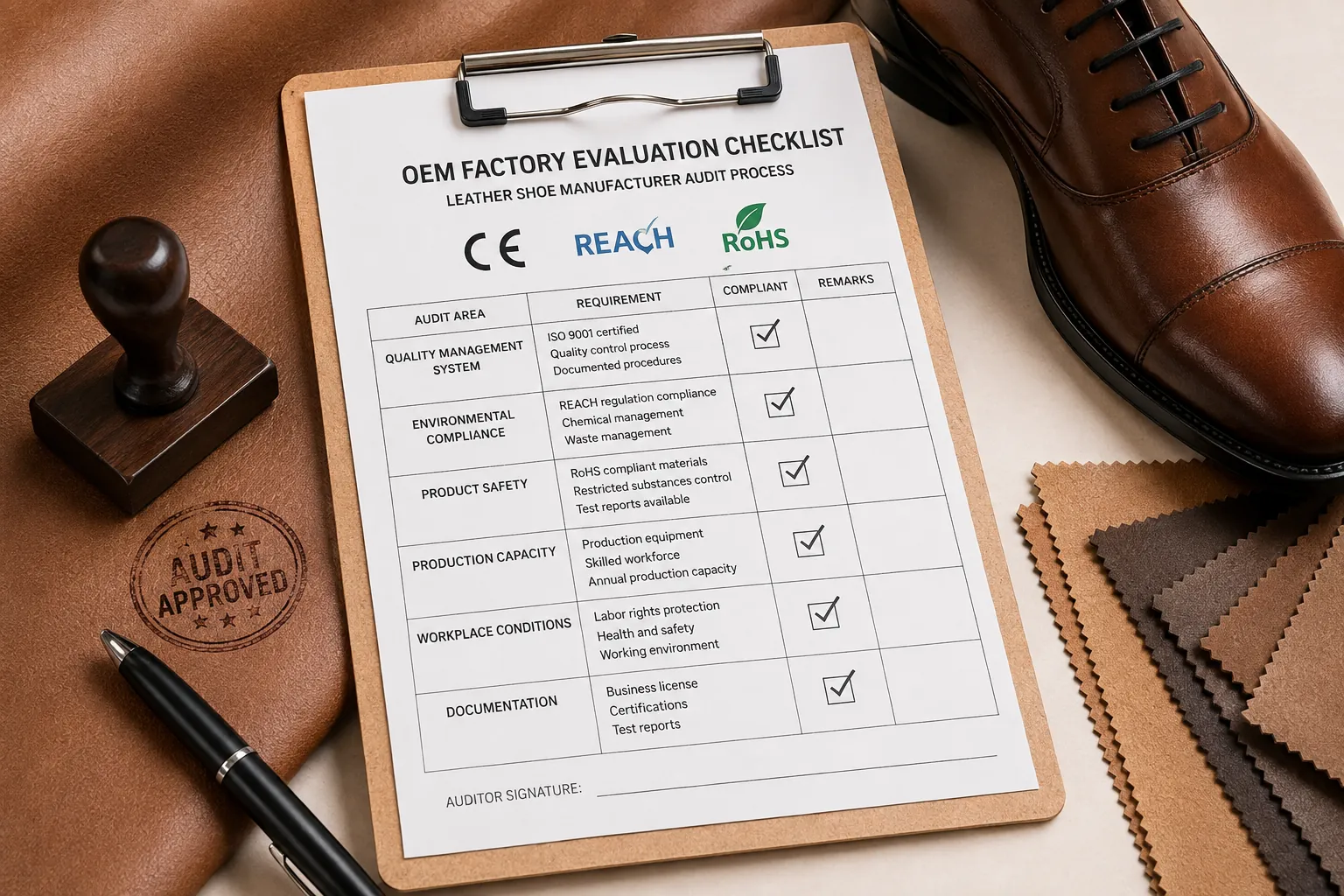
- [ ] Certifications verified? For EU markets, CE (EN ISO20347) and REACH compliance are non-negotiable. For general export, RoHS is increasingly requested.
- [ ] Sample approval process documented? Pre-production samples, counter samples, and production samples are three separate approval gates. Don’t skip any.
- [ ] Colorway and last shape confirmed per market? Brown/tan for US and AU, black for EU formal markets, suede for dry-climate markets.
- [ ] Packaging spec agreed? Individual box, master carton dimensions, and labeling requirements should be confirmed before production starts. See the leather shoe packaging solutions guide for export packaging standards.
Market Sizing Context
For buyers building a business case internally, the global men’s casual footwear market was valued at approximately $42 billion in 2024 according to Statista’s footwear market data. The leather segment within that figure is growing faster than synthetic alternatives, driven by premiumization trends in emerging markets and a durability-first purchasing shift in developed markets.
For wholesale buyers, the practical implication is that leather casual footwear is not a trend product — it’s a category with durable demand fundamentals. That makes it a safer inventory bet than fashion-forward styles with shorter trend cycles.
FAQ
Q: What is the minimum order quantity for men’s casual leather shoes wholesale?
A: For existing stock designs, MOQ is 0 pairs — you can order single pairs to test before scaling. For custom designs (your own branding, colorways, or construction specs), MOQ is 60 pairs per style. This structure is designed to reduce risk for new brands entering the market.
Q: What factory price range should I expect for leather loafers wholesale?
A: Factory-direct (FOB) pricing for genuine leather loafers runs $24–32/pair depending on leather grade and construction method. For the broader casual leather shoe range, expect $25–$40 per pair across loafers, walking shoes, and chukka boots.
Q: What is the lead time for casual leather shoes orders?
A: For existing stock designs, production typically takes 30–45 days from order confirmation to FOB ready. Custom designs with new lasts, colors, or branding require 45–60 days. Peak season (August–October) can add 10–15 days. Always confirm lead times in writing before placing your order.
Q: Can I mix styles in one order?
A: Yes. Most factories allow mixed-style orders as long as each style meets its individual MOQ. For custom designs, the MOQ is 60 pairs per style, but you can combine loafers, walking shoes, and chukka boots in a single shipment to optimize freight costs.
Q: Do you offer custom packaging for casual shoes?
A: Custom packaging — including branded shoe boxes, tissue paper, hang tags, and care instruction cards — is available for orders of 200+ pairs per style. For smaller test orders, standard factory packaging is provided. Custom packaging adds $0.80–$1.50 per pair depending on specifications.