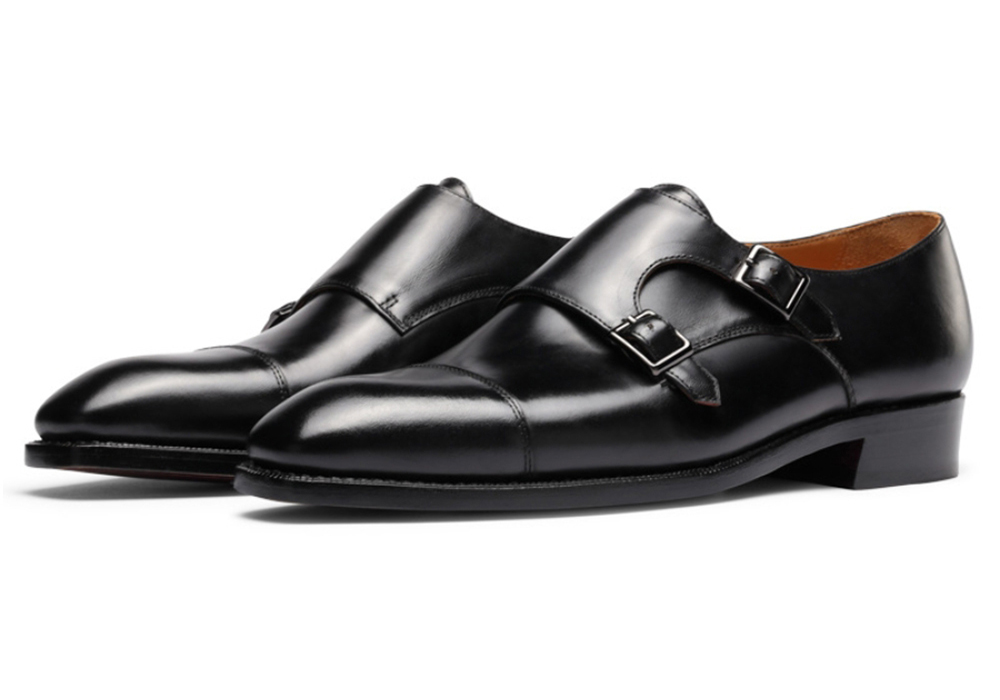
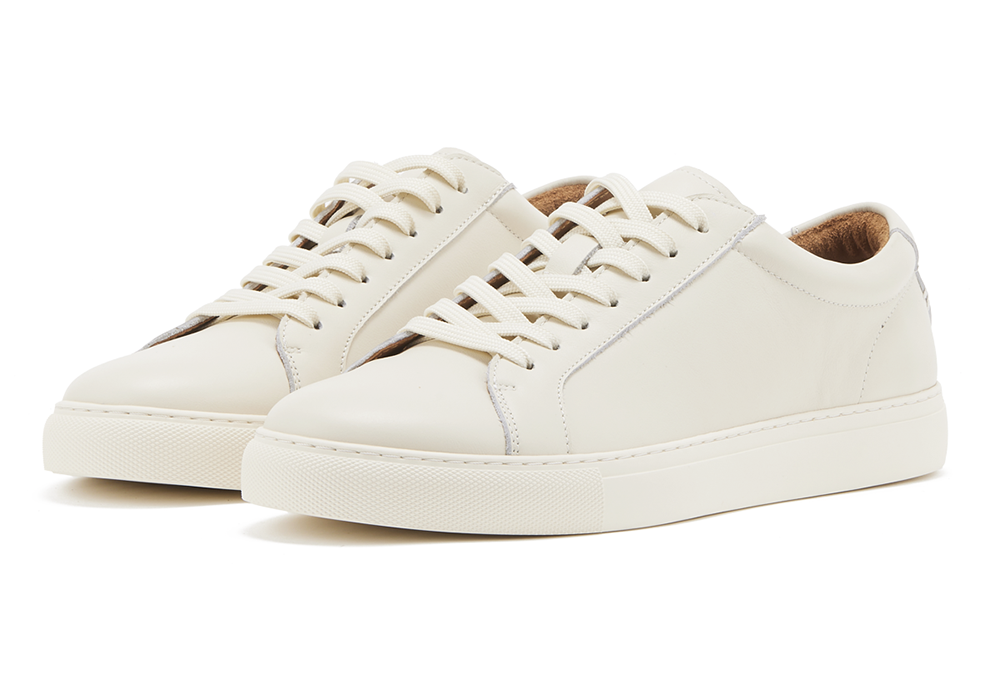
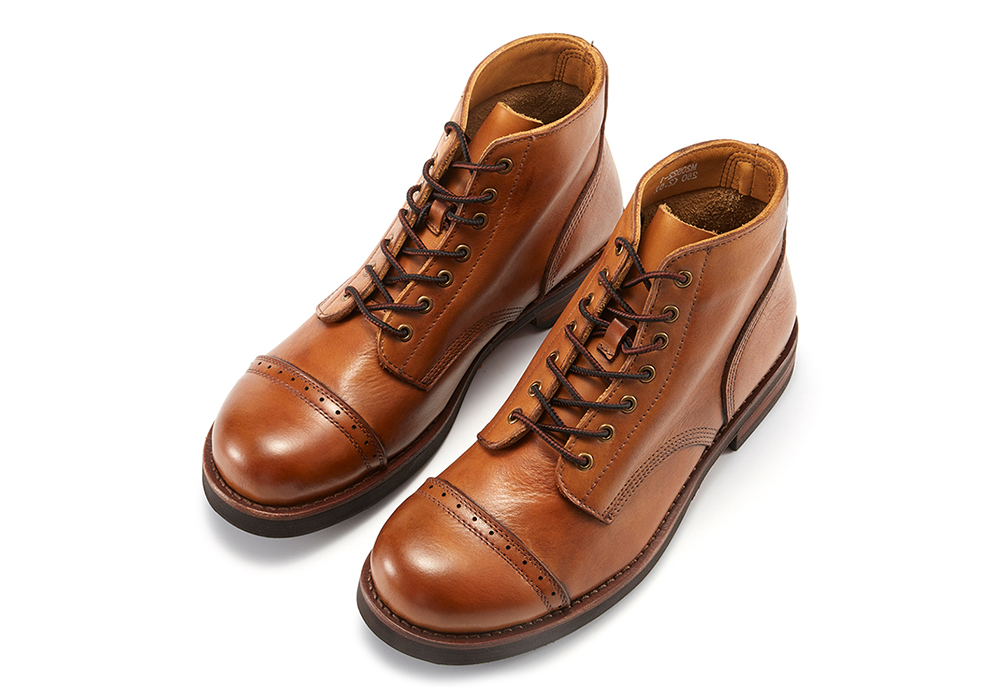
Volume is the single biggest lever you control when sourcing leather shoes from a China factory. The difference between ordering 60 pairs and 10,000 pairs of the same Oxford can be $8–$14 per pair — on a 5,000-pair order, that gap is $40,000–$70,000 in landed cost. Understanding how leather shoes bulk order discount tiers actually work — and what drives them — is the difference between a profitable SKU and a margin disaster.
This guide breaks down every pricing tier from the factory floor perspective, including what you can realistically negotiate, where hidden costs erode your discount, and how to sequence your orders to maximize savings without overcommitting inventory.
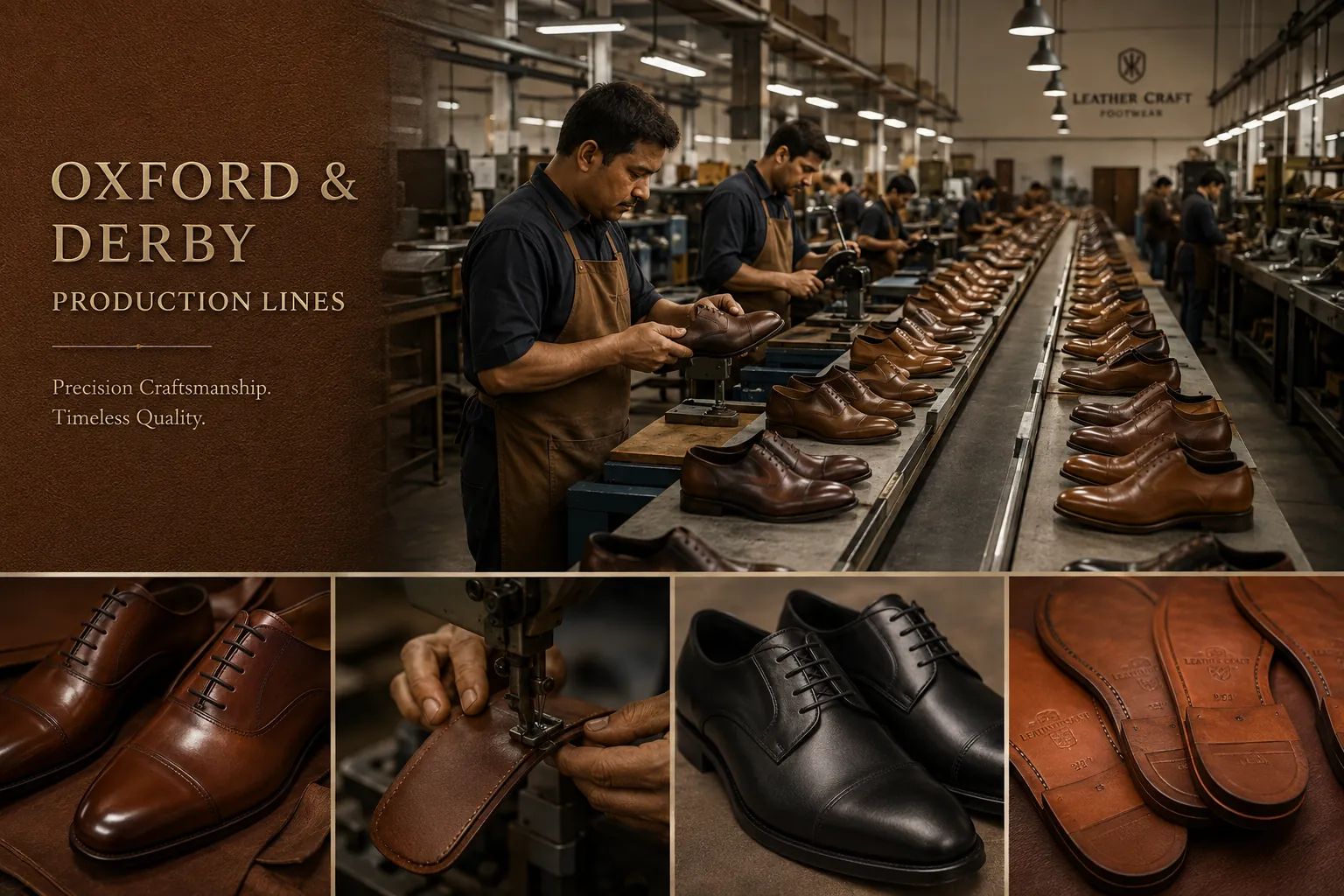
As a manufacturer producing 500,000+ pairs annually across Oxford, Derby, Loafer, Monk Strap, Chelsea Boots, and casual walking shoes — with a defect rate of 0.8–1.2% against an industry average of 2–4% — our factory has processed orders from 60-pair private label launches to 10,000-pair seasonal programs for retailers across 50+ countries. The pricing mechanics below reflect what we see every day on the production floor.
Table of Contents
- Why Volume Matters: The Real Price Gap
- Volume Pricing Tiers: 60 to 10,000+ Pairs
- What Actually Drives the Discount
- Price Comparison Table by Tier and Shoe Type
- Hidden Costs of Large Orders
- How to Plan Your First Bulk Order
- Bulk Order Planning Checklist
- FAQ
Why Volume Matters: The Real Price Gap
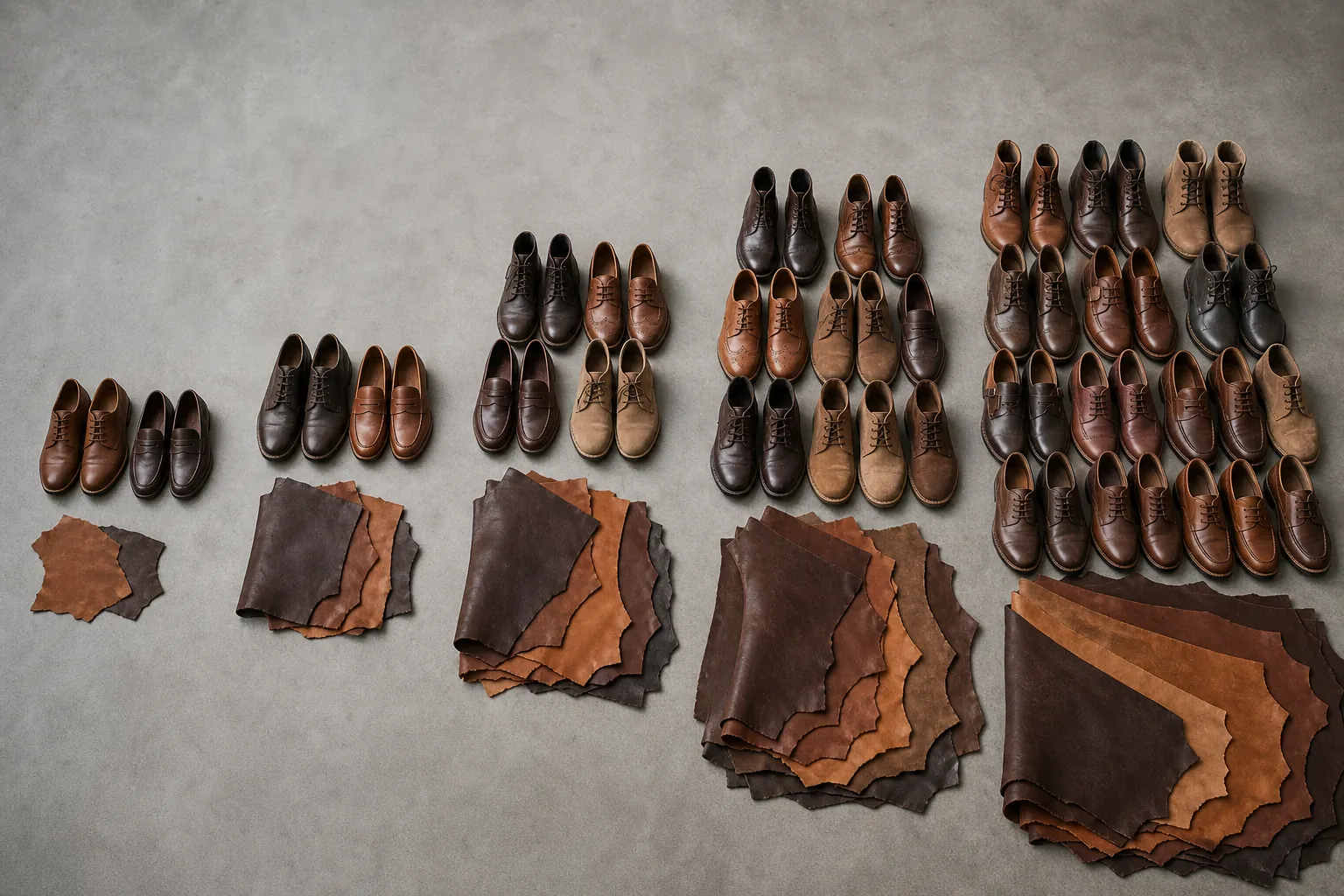
When a factory quotes you a price, that number is not a single fixed cost — it is a stack of variable and fixed costs divided by the number of pairs in your order. Fixed costs (pattern making, last preparation, line setup, quality inspection) stay roughly constant whether you order 60 pairs or 600 pairs. The more pairs you add, the thinner those fixed costs spread.
Material purchasing works the same way. A factory buying 50 square meters of full-grain calf leather pays a different rate than one buying 5,000 square meters from the same tannery. That difference flows directly into your per-pair price.
The practical result: a standard leather Derby shoe that costs $38/pair at 60 units can drop to $27/pair at 2,000 units — same last, same leather, same construction. That $11 spread is entirely structural, not negotiation theater.
Volume Pricing Tiers: 60 to 10,000+ Pairs
Tier 1: 60–200 Pairs (Entry / Validation)
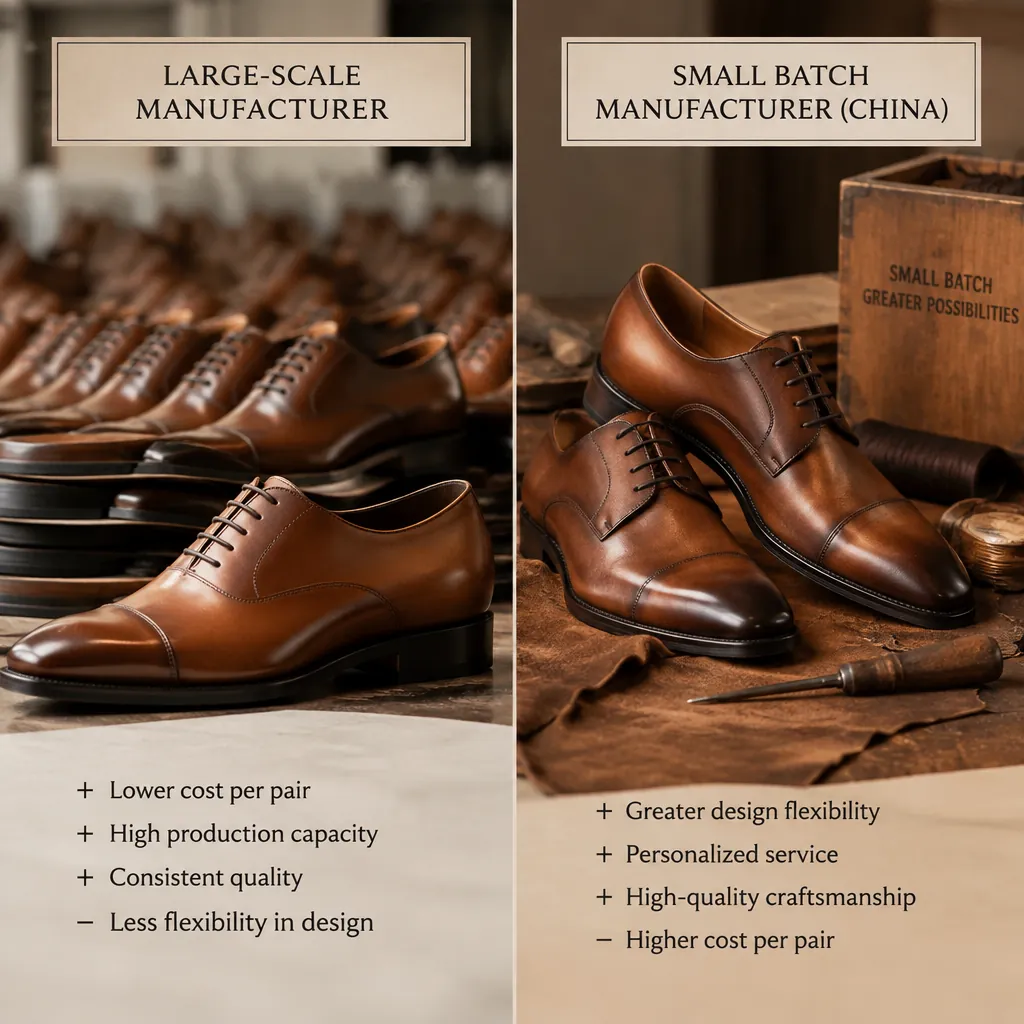
This is the minimum viable order for most China leather shoe factories. At this level, you are essentially paying for the factory’s flexibility — they are breaking a production run to accommodate a small batch.
- Price range: $33–$40/pair (standard designs, genuine leather)
- Lead time: 30–45 days
- Customization: Logo, insole branding, basic color selection
- Best for: Brand validation, marketplace testing, pop-up retail
The MOQ of 0 pairs on existing catalog designs (and 60 pairs for custom work) means you can test a style with minimal commitment. This tier is not optimized for margin — it is optimized for risk management.
Tier 2: 200–500 Pairs (Small Brand / Seasonal Reorder)
At 200+ pairs, the factory can dedicate a partial production line slot to your order. Material purchasing starts to consolidate, and setup costs spread meaningfully.
- Price range: $30–$37/pair
- Lead time: 25–35 days
- Customization: Full private label (box, tissue, hang tag, insole)
- Best for: Shopify/DTC brands, Amazon private label, boutique wholesale
Expect a 5–10% reduction versus Tier 1 pricing on equivalent styles. This is where most private label brands operate for their first 12–18 months.
Tier 3: 500–2,000 Pairs (Growth Stage / Multi-SKU)
This tier unlocks meaningful material discounts. The factory can place a consolidated leather order with the tannery, reducing per-hide cost by 8–15%.
- Price range: $28–$34/pair
- Lead time: 20–30 days
- Customization: Full OEM/ODM including last modification, welt options, sole customization
- Best for: Regional distributors, mid-size e-commerce brands, retail chain buyers
At 500+ pairs per style, you can also negotiate split colorways (e.g., 300 black + 200 tan) within a single order, which spreads setup costs across the full quantity.
Tier 4: 2,000–10,000 Pairs (Volume Buyer / Retailer)
Production line efficiency peaks in this range. A dedicated line runs your order continuously, reducing changeover waste. Leather is purchased in full hide lots at tannery bulk rates.
- Price range: $25–$30/pair
- Lead time: 18–25 days
- Customization: Full specification control, custom lasts, proprietary sole molds
- Best for: Department store buyers, national e-commerce platforms, branded footwear companies
This is where the $25–$40/pair factory pricing range reaches its floor for genuine leather construction. Below $25/pair in this category typically signals a material or construction downgrade.
Tier 5: 10,000+ Pairs (Strategic Partnership)
At this volume, the relationship shifts from transactional to strategic. Factories will allocate dedicated production capacity, assign a dedicated QC team, and often co-invest in tooling.
- Price range: $25/pair and below (negotiated annually)
- Lead time: Scheduled production slots (often 15–20 days per run)
- Customization: Proprietary everything — last, sole, leather spec, packaging
- Best for: National brands, large-scale private label programs, retail group buying
Payment terms also shift at this level — factories may offer Net 30 or Net 60 terms to established partners versus the standard 30% deposit / 70% balance structure.
What Actually Drives the Discount
Understanding the mechanics behind a leather shoes bulk order discount helps you negotiate more intelligently and avoid false economies.
Material Bulk Purchasing
Leather is priced by the square foot or square decimeter at the tannery level. A factory ordering 10,000 sq ft of full-grain cowhide pays 12–20% less per unit than one ordering 500 sq ft. At 2,000+ pairs per style, your factory can consolidate your leather purchase into a single tannery order, capturing that discount.
The same logic applies to soles (TPR, leather, rubber), thread, eyelets, and lining materials. Every component has a price break point.
Production Line Efficiency
Setting up a production line for a new style takes 2–4 hours of skilled labor time. Stitching patterns are loaded, lasts are mounted, quality benchmarks are set. That setup cost is fixed regardless of run size.
At 60 pairs, setup cost per pair is significant. At 2,000 pairs, it is negligible. Factories price this reality directly into their tiered quotes.
Shipping Consolidation
Smaller orders often ship as LCL (Less than Container Load), which carries a per-CBM premium. A 500-pair order of men’s dress shoes fits roughly into 2–3 CBM. A 5,000-pair order fills a 20-foot container (FCL), reducing per-pair freight cost by 30–50%.
For buyers calculating total landed cost, this freight differential can add $1.50–$4.00 per pair to small-order economics — a factor that does not appear in the factory price quote.
Price Comparison Table by Tier and Shoe Type
The table below reflects indicative FOB pricing for genuine leather construction with standard private label customization. Prices vary based on leather grade, sole type, and construction method (cemented vs. Goodyear welt).
| Shoe Type | 60–200 pairs | 200–500 pairs | 500–2,000 pairs | 2,000–10,000 pairs |
|---|---|---|---|---|
| Oxford | $36–$40 | $32–$37 | $29–$34 | $25–$29 |
| Derby | $34–$38 | $30–$35 | $27–$32 | $25–$28 |
| Loafer | $33–$37 | $29–$34 | $26–$31 | $25–$27 |
| Monk Strap | $37–$40 | $33–$38 | $30–$35 | $26–$30 |
| Chelsea Boot | $38–$40 | $34–$38 | $31–$36 | $27–$31 |
All prices are indicative FOB Guangzhou/Shanghai. Goodyear welt construction adds $4–$8/pair at all tiers. Exotic leathers (suede, nubuck, patent) add $2–$5/pair.
For a deeper breakdown of how FOB pricing compares to other Incoterms, see our FOB shoe pricing guide covering 4 Incoterms.
Hidden Costs of Large Orders
A leather shoes bulk order discount looks compelling on a per-pair basis. But large orders carry structural costs that can erode — or eliminate — that per-pair saving.
Warehousing and Inventory Carrying Cost
A 5,000-pair order of men’s dress shoes occupies roughly 20–25 CBM of warehouse space. At US fulfillment center rates of $0.75–$1.50/CBM/month, that is $15–$38/month in storage — before you account for the capital tied up in unsold inventory.
If your sell-through rate is 60 days, the math works. If it stretches to 180 days, the carrying cost starts to offset your bulk discount.
Quality Variance Across Large Runs
This is the risk most buyers underestimate. In a 200-pair order, a single QC inspector can physically check every pair. In a 5,000-pair order, you are working with AQL sampling — typically AQL 2.5 for major defects. That means a statistically acceptable batch can still contain 2–3% defective pairs.
Factories with tight process controls maintain defect rates well below industry norms — the 0.8–1.2% range versus the industry average of 2–4% — but you should always confirm QC methodology before committing to large runs. Our AQL inspection guide for footwear covers how to structure your inspection protocol.
Payment Terms and Cash Flow
Standard factory payment terms are 30% deposit upon order confirmation, 70% balance before shipment. On a $130,000 order (5,000 pairs at $26/pair), that is $39,000 tied up at order placement — weeks before you see the goods.
Buyers who have not modeled this cash flow gap often find themselves in a squeeze at the balance payment stage. Understanding payment terms for B2B leather shoe orders before you commit to a large run is essential.
Tariff and Duty Exposure
For US importers, leather shoe tariffs under HTS 6403 can add 8.5–37.5% to your landed cost depending on construction and country of origin. A bulk order that looks profitable at FOB price can turn marginal after duties. The complete guide to importing leather shoes and US tariffs is required reading before placing any order above 500 pairs.
How to Plan Your First Bulk Order
The most common mistake B2B buyers make is jumping from no relationship with a factory to a 2,000-pair order chasing the Tier 3 price. The smarter sequence:
Step 1: Start at Tier 1 (60–200 pairs)
Order 2–3 styles in your target category. Pay the higher per-pair price. Use this run to validate the factory’s quality, communication, and lead time against their quoted specs.
Step 2: Inspect before you scale
Before your second order, conduct a third-party pre-shipment inspection on your Tier 1 order. Document defect types and rates. If the factory’s defect rate matches their claims, you have a verified baseline.
Step 3: Move to Tier 2 with a single proven style
Take your best-performing style from the validation run and place a 300–500 pair order. Negotiate private label packaging at this stage. This is your first real margin test.
Step 4: Introduce multi-SKU at Tier 3
Once you have 2–3 validated styles, consolidate them into a single 500–2,000 pair order. The factory can often blend styles into a single production slot, giving you Tier 3 pricing on the combined quantity.
Step 5: Lock in Tier 4 with annual volume commitments
If your sell-through supports it, negotiate an annual volume commitment (e.g., 8,000 pairs across 4 quarterly runs of 2,000 pairs each). This gives the factory production planning certainty and gives you Tier 4 pricing on Tier 2-sized individual shipments.
For a complete walkthrough of launching a private label shoe brand using this sequencing approach, the private label shoes 10-step brand launch guide covers every stage in detail.
Bulk Order Planning Checklist
Use this checklist before committing to any order above 500 pairs:
Factory Verification
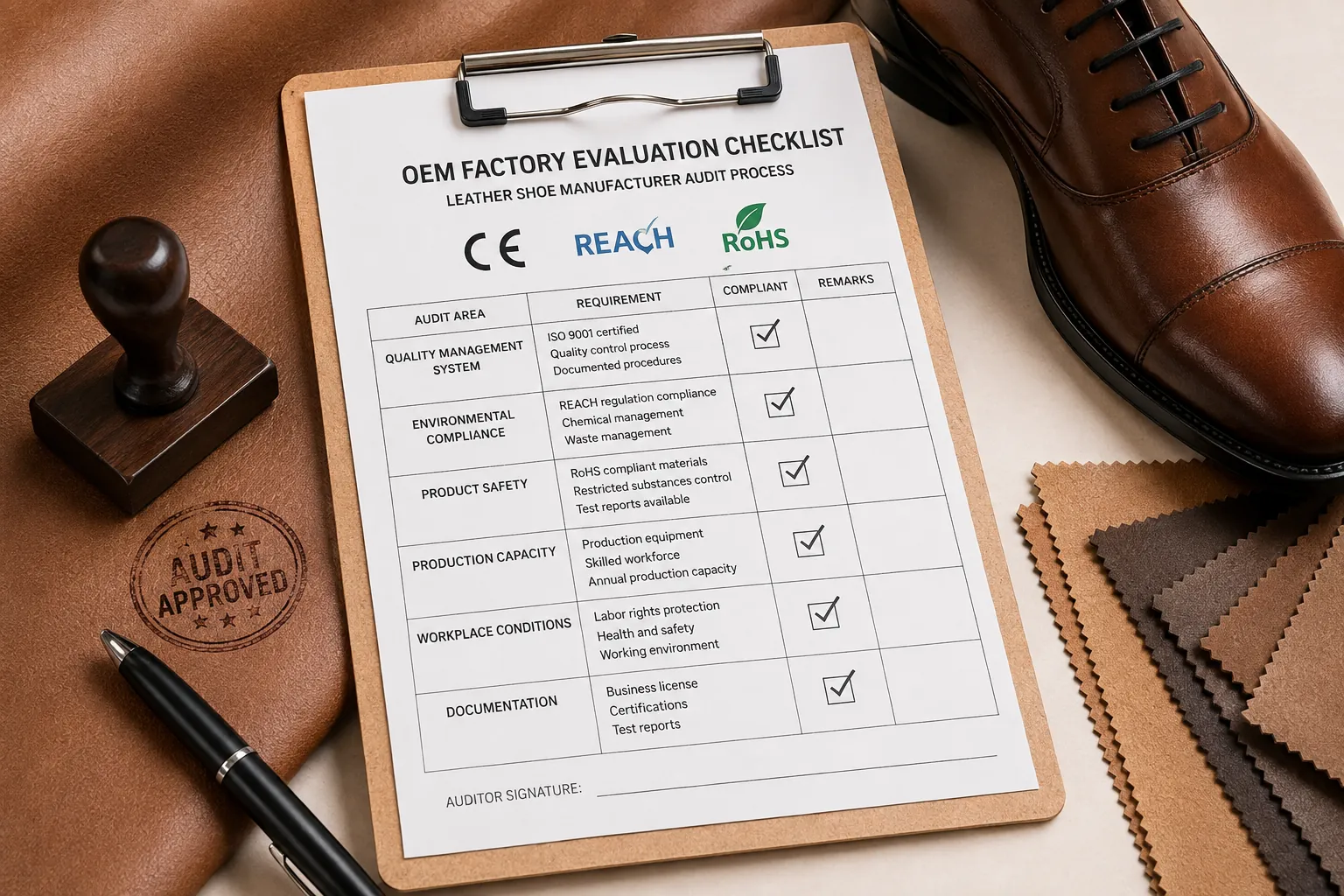
- [ ] Factory audit completed or third-party audit report reviewed
- [ ] Certifications confirmed (CE EN ISO20347, REACH, RoHS as applicable)
- [ ] Defect rate history requested and reviewed
- [ ] Sample order completed and inspected
Order Economics
- [ ] FOB price confirmed per tier in writing
- [ ] Freight cost calculated (LCL vs. FCL breakeven point identified)
- [ ] Import duties calculated for your target market
- [ ] Total landed cost per pair modeled
Inventory Planning
- [ ] Sell-through velocity estimated (conservative case)
- [ ] Warehousing cost included in landed cost model
- [ ] Cash flow gap between deposit and balance payment modeled
- [ ] Reorder lead time factored into inventory buffer
Quality Assurance
- [ ] AQL inspection level agreed in writing
- [ ] Pre-shipment inspection scheduled (third-party or in-house)
- [ ] Defect classification agreed (critical / major / minor)
- [ ] Remediation process agreed for out-of-spec batches
Contractual
- [ ] Purchase order signed with detailed spec sheet
- [ ] Payment terms agreed (standard: 30% deposit, 70% before shipment)
- [ ] Delivery date and penalty clause for late shipment
- [ ] Dispute resolution process documented
FAQ
Q: What is the typical leather shoes bulk order discount from a China factory?
A: The discount scales with volume. Moving from 60 pairs to 2,000 pairs typically reduces per-pair price by $8–$14, depending on the style and construction. A standard Oxford at $38/pair (60 units) can drop to $27/pair at 2,000 units — a 29% reduction driven entirely by production economics, not negotiation.
Q: How many pairs should I order for my first bulk purchase?
A: Start at Tier 1 (60–200 pairs). Use this first order to validate the factory’s quality, communication, and lead time before committing to larger volumes. Most experienced buyers run 2–3 test orders at Tier 1 before moving to Tier 2 (200–500 pairs). Jumping straight to a 2,000-pair order without validation is the single most costly mistake new buyers make.
Q: Can I mix different shoe styles to reach a higher volume tier?
A: Some factories allow it, others apply tier pricing per style. If multiple styles share the same last and outsole, the factory is more likely to blend them into a single tier. Always clarify this before placing the order — a written confirmation of how tier pricing applies to multi-SKU orders prevents disputes later.
Q: What payment methods do China shoe factories accept for bulk orders?
A: Standard terms are 30% T/T (telegraphic transfer) deposit with order confirmation, 70% balance before shipment (against copy of bill of lading). For orders above $50,000, a Letter of Credit (L/C) is common and provides additional buyer protection. Some factories offer Net 30/60 terms to established partners with a track record of repeat orders.
Q: How does bulk ordering affect lead time?
A: Counter-intuitively, larger orders often have shorter per-pair lead times because the factory dedicates a full production line to your order. A 60-pair order might take 30–45 days (small batch squeezed into the schedule), while a 2,000-pair order on a dedicated line can finish in 18–25 days. The key variable is factory capacity at the time of your order.
Ready to Start Your Shoe Line?
Understanding leather shoes bulk order discount tiers is the foundation of profitable shoe sourcing — but pricing is only one variable. Factory quality, certification compliance, and production consistency matter just as much as the per-pair number on a quote.
Wincheer Shoes, founded in 2007, has processed orders from 60-pair private label launches to 10,000-pair seasonal programs across 50+ countries. With 500,000+ pairs annual output, CE/REACH/RoHS certifications, and a documented 0.8–1.2% defect rate, the factory is built to support buyers at every volume tier.
For reference on international quality standards applicable to bulk footwear orders, see the ISO 2859-1 sampling procedures for inspection by attributes.
Ready to Start Your Shoe Line? Request a quote with your target styles, volume range, and destination market. We respond within 24 hours with tiered pricing and a production timeline.