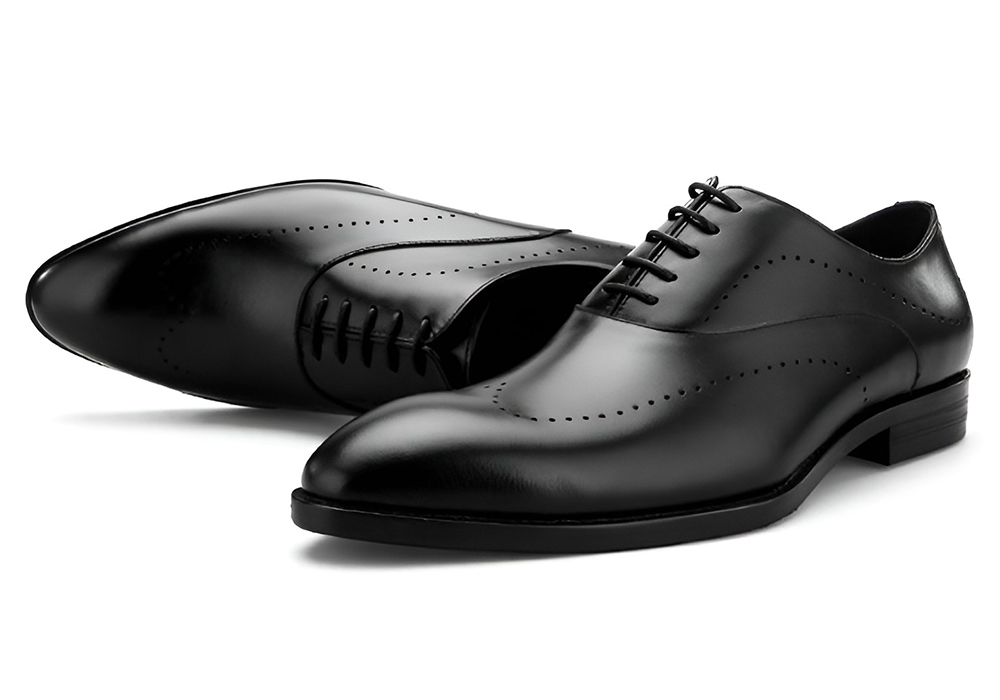
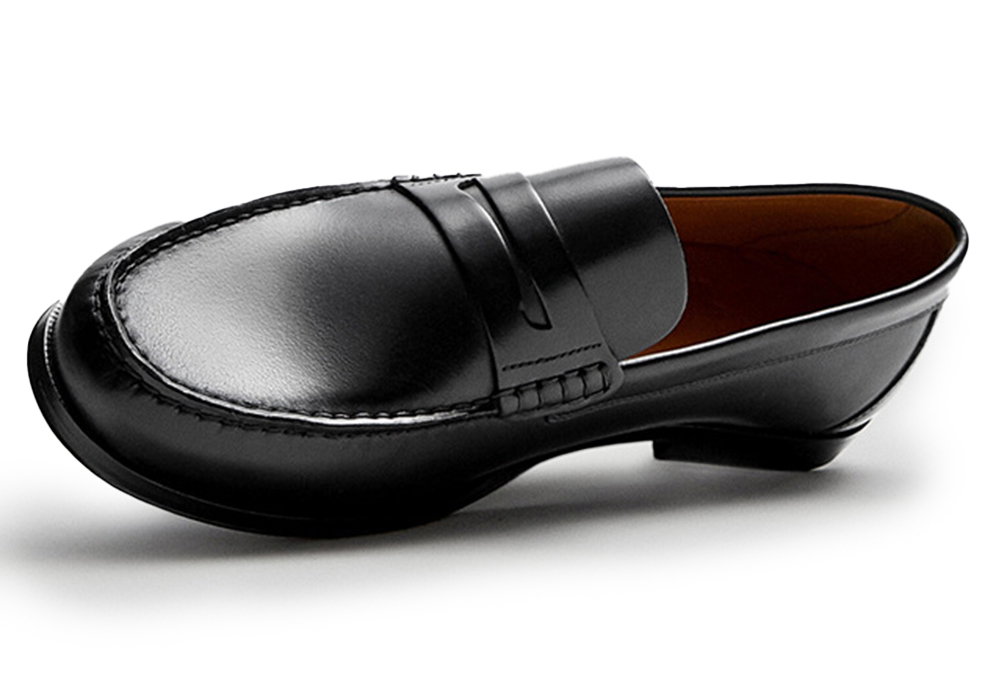
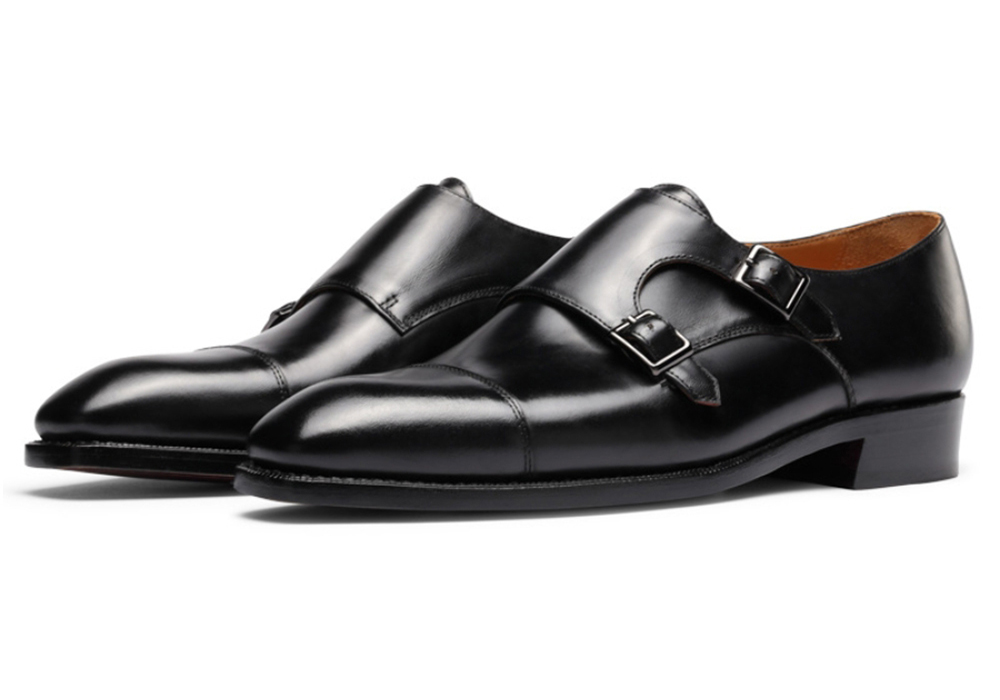
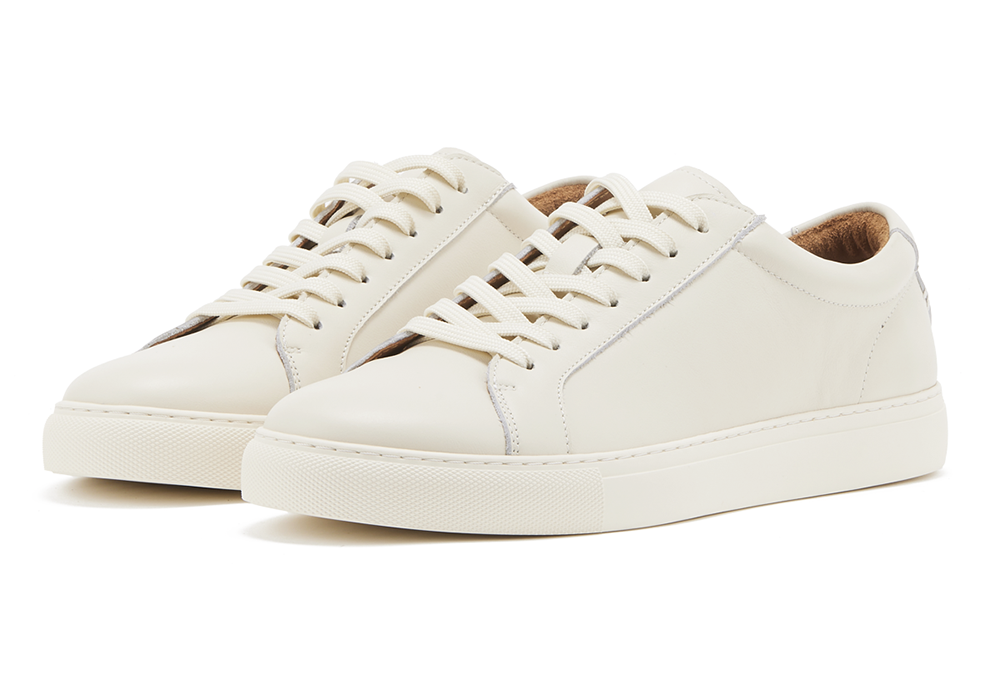
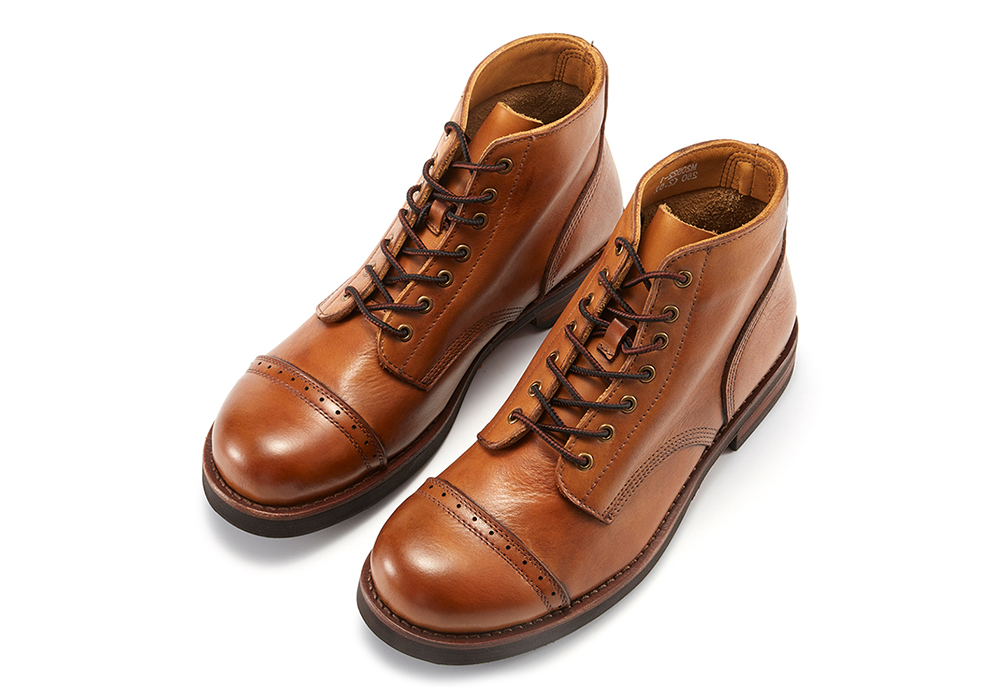
Most sourcing guides will tell you that China leather shoe factories demand 500 pairs minimum — sometimes 1,000. That number stops a lot of small brands and e-commerce sellers before they even send a first inquiry.
The reality in 2026 is more nuanced. Leather shoe MOQ wholesale requirements vary dramatically depending on factory type, design complexity, material sourcing, and how you structure your order. Some manufacturers genuinely start at 60 pairs per style. Others won’t look at you below 500. Knowing the difference — and why it exists — is the single most valuable piece of knowledge for any buyer entering the China market.
This guide breaks down exactly how MOQ works, what drives it, and how to negotiate it down without sacrificing quality or lead time.
Table of Contents
- Why MOQ Exists in Leather Shoe Manufacturing
- Leather Shoe MOQ Wholesale: Factory Comparison Table
- 5 Proven Strategies to Negotiate Lower MOQ
- What You Actually Get at Different MOQ Levels
- The 60-Pair Sweet Spot for Market Testing
- Red Flags When a Factory Claims “No MOQ”
- FAQ
Why MOQ Exists in Leather Shoe Manufacturing
Understanding leather shoe MOQ wholesale starts with understanding the cost structure of a shoe factory. MOQ is not an arbitrary number a sales rep invented — it reflects real production economics.
Leather Material Minimums
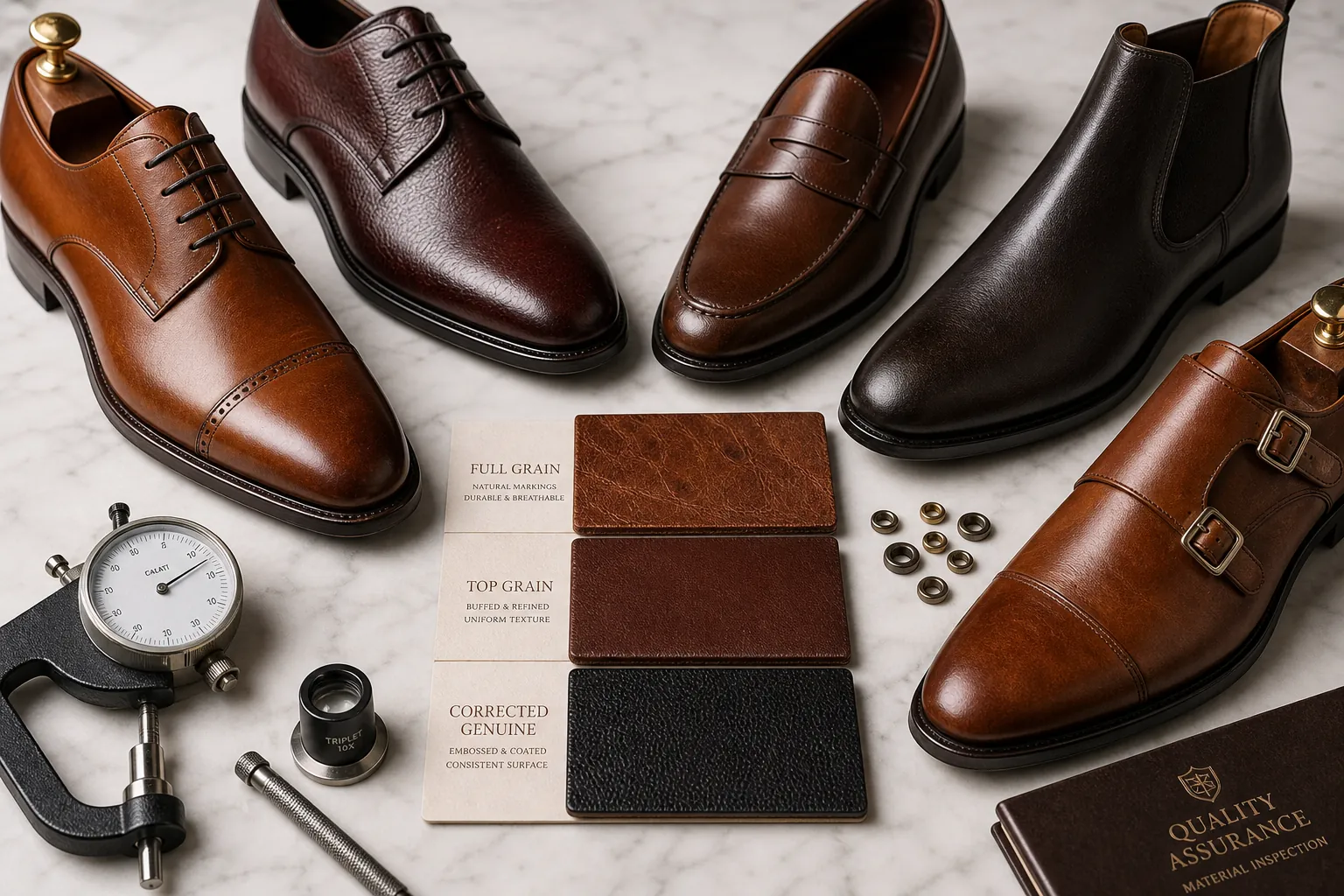
Full-grain and genuine leather is purchased in hides, not meters. A tannery will typically sell a minimum cut of leather that covers 40–80 pairs of shoes depending on the hide size and the shoe upper pattern. If your order is too small, the factory either wastes expensive leather or has to blend your order with another buyer’s material — which creates quality control complications.
Premium leathers (full-grain calf, nappa, pull-up) come with even tighter minimums from the tannery. This pushes factory MOQs higher for premium product lines.
Last Costs and Tooling Investment
A shoe “last” is the foot-shaped mold around which the upper is constructed. Custom lasts cost between $300–$800 per size run (typically US 6–13, that’s 8 sizes). If you order 60 pairs across 8 sizes, that’s roughly 7–8 pairs per size — which is a viable production run. At 20 pairs total, last costs become economically irrational for the factory.
Outsole molds are an additional tooling cost. Injection-molded rubber or TPU outsoles require molds that cost $800–$2,500 per style. Factories amortize this across your order volume. Lower volume = higher per-pair cost or a separate tooling fee.
Production Line Efficiency
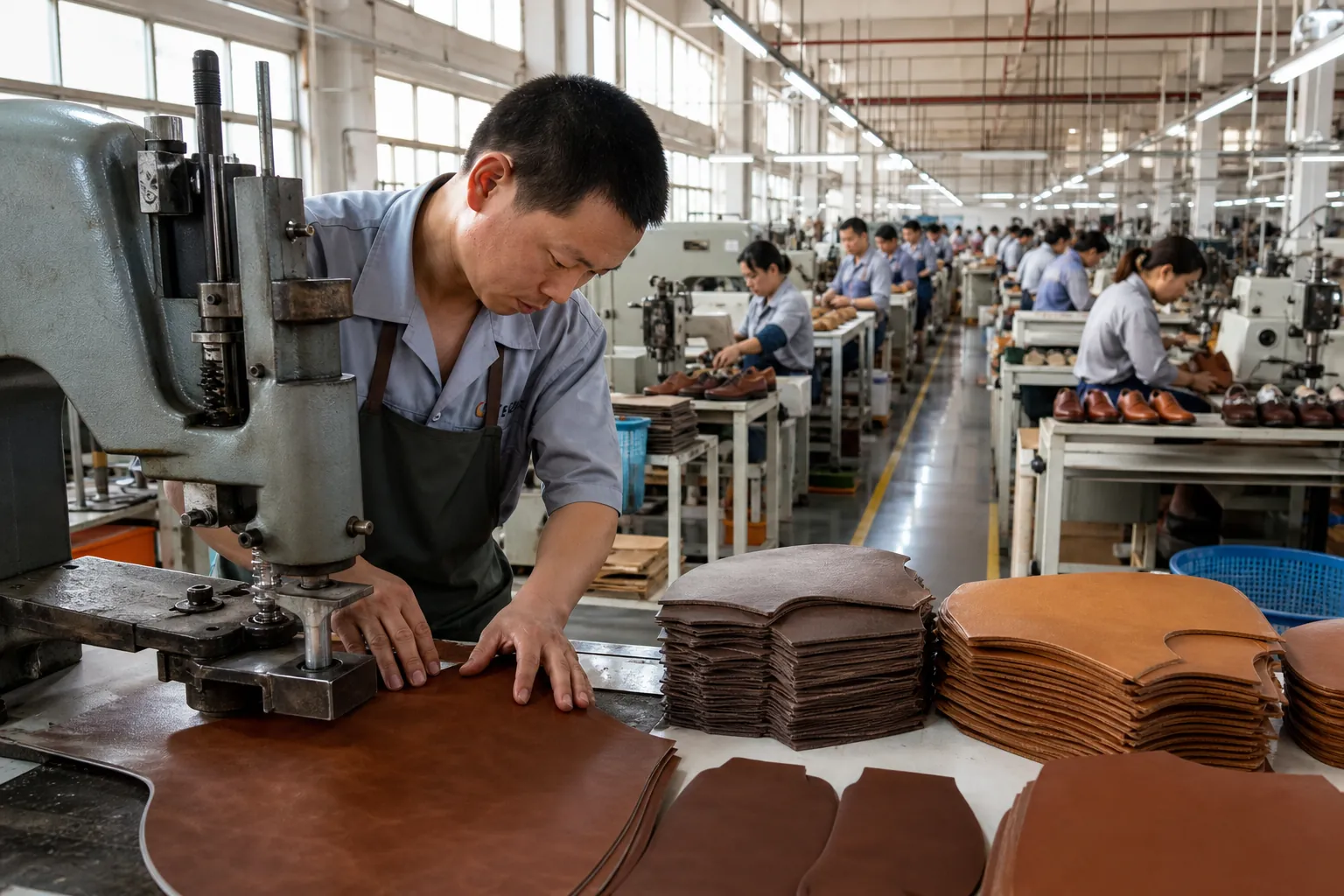
A standard shoe production line in Guangdong or Fujian runs 300–600 pairs per day at full efficiency. Setting up a line — calibrating stitching machines, training the lasting team on a new pattern, preparing adhesive stations — takes 2–4 hours regardless of order size. For a 30-pair order, that setup cost is economically unsustainable.
Factories producing 500,000+ pairs annually (a benchmark for mid-to-large manufacturers) have optimized their lines for batch sizes that justify setup time. This is why established manufacturers with high annual output can paradoxically offer lower MOQs on existing designs — the setup cost has already been absorbed.
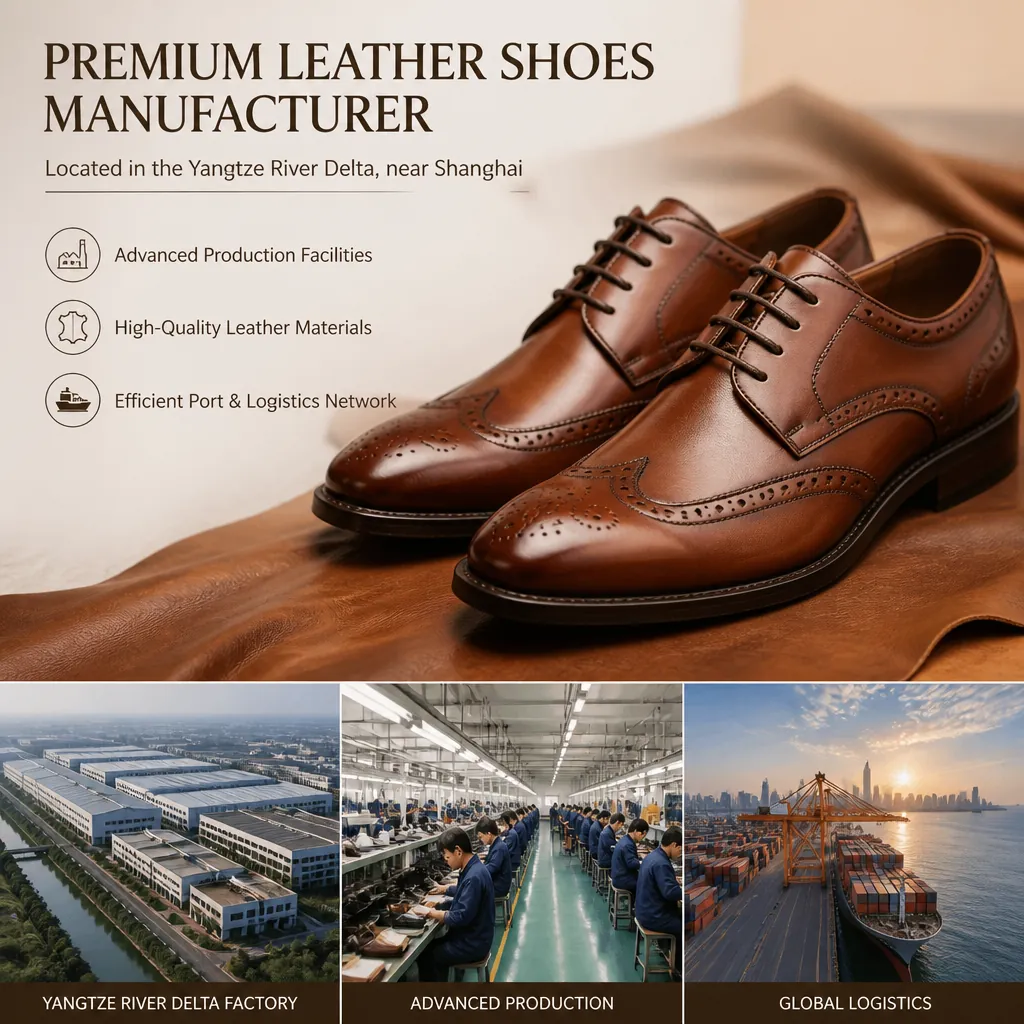
As a manufacturer founded in 2007 with annual output exceeding 500,000 pairs, Wincheer Shoes operates with a 0-pair MOQ on existing catalog designs and a 60-pair MOQ for custom styles — a structure made possible by production scale and pre-amortized tooling across 1,000+ active designs.
Leather Shoe MOQ Wholesale: Factory Comparison Table
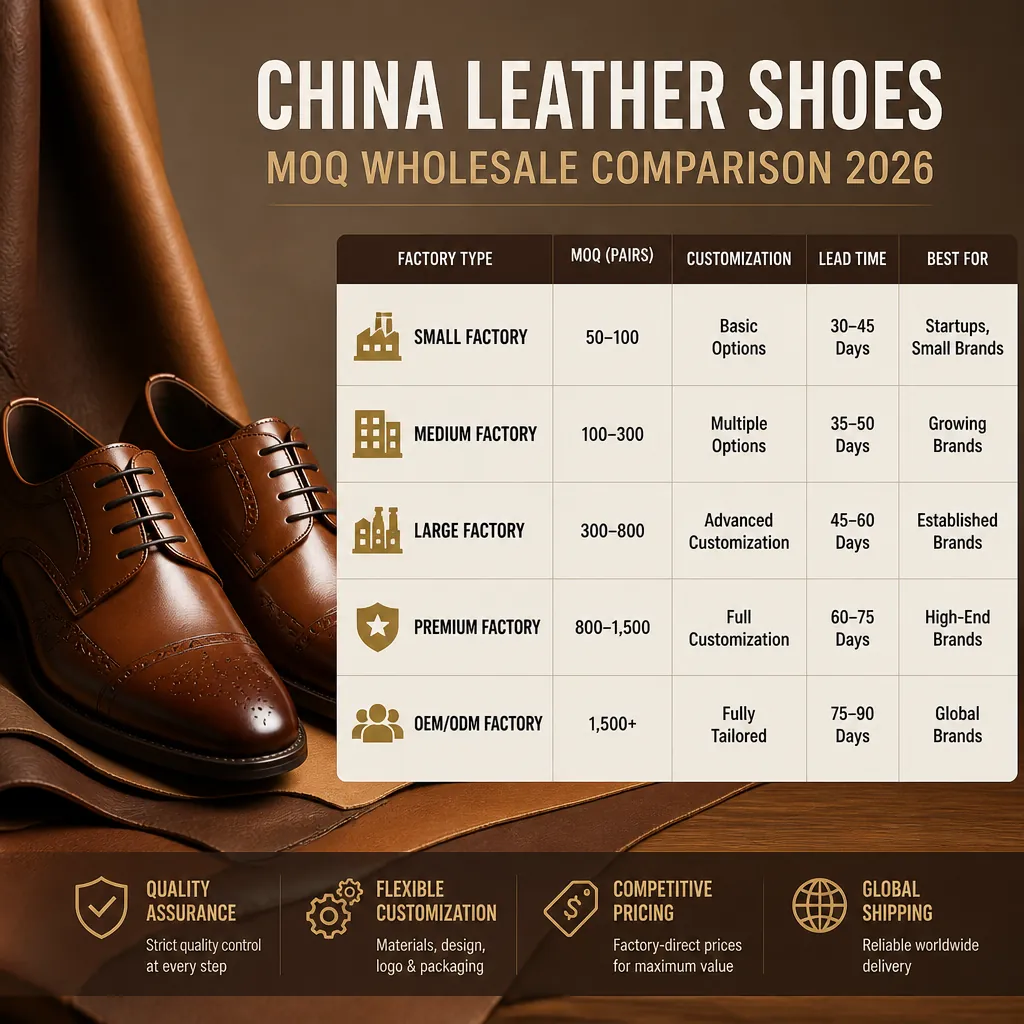
The following comparison reflects typical MOQ structures across different factory tiers in China as of 2026. Prices are FOB Guangzhou or Shanghai unless noted.
| Factory Type | MOQ (Custom) | MOQ (Stock) | FOB Price Range | Lead Time | Certifications |
|---|---|---|---|---|---|
| Large OEM/ODM (500K+ pairs/yr) | 60 pairs | 0 pairs | $25–$40/pair | 30–45 days | CE, REACH, RoHS |
| Mid-size OEM (200K–500K pairs/yr) | 100–200 pairs | 12–24 pairs | $22–$38/pair | 35–50 days | CE, REACH |
| Small factory (50K–200K pairs/yr) | 200–300 pairs | 50–100 pairs | $18–$32/pair | 40–60 days | None or partial |
| Trading company (resells factory) | 300–500 pairs | 100–200 pairs | $28–$50/pair | 45–70 days | Varies |
| Alibaba Gold Supplier (unverified) | 500–1,000 pairs | 200–500 pairs | $15–$45/pair | 30–90 days | Unverified |
| Fujian mass-market factory | 500 pairs | 200 pairs | $12–$22/pair | 25–40 days | None typical |
| Guangdong dress shoe specialist | 100–200 pairs | 0–50 pairs | $28–$55/pair | 35–55 days | CE, REACH |
| Zhejiang casual/walking shoe factory | 300 pairs | 100 pairs | $20–$35/pair | 30–45 days | CE |
| Wenzhou leather goods cluster | 200–500 pairs | 100 pairs | $18–$40/pair | 40–60 days | Partial |
| Dongguan premium leather factory | 100–150 pairs | 0–30 pairs | $35–$80/pair | 45–60 days | CE, REACH, RoHS |
Key takeaway: The lowest legitimate leather shoe MOQ wholesale from a certified, established manufacturer sits at 60 pairs for custom work. Anything claiming lower on a custom style with full branding should be verified carefully.
5 Proven Strategies to Negotiate Lower MOQ
Negotiating MOQ is not about pressuring a factory. It is about restructuring the deal so the factory’s economics still work.
1. Choose Existing Designs Over Full Custom
The single most effective lever. When you select from a factory’s existing catalog — existing last, existing outsole mold, existing upper pattern — the tooling cost is zero. Factories with 1,000+ designs in catalog can offer 0 MOQ on stock styles because they have already absorbed every setup cost.
If you need branding, request insole printing, tongue label, and box customization only. This adds minimal cost and keeps you on the existing-design MOQ track.
2. Consolidate SKUs Into One Style
Instead of ordering 20 pairs each of 5 different styles (100 pairs total, 5 setups), order 100 pairs of one style in multiple colors. Color changes on the same last and outsole are low-cost for the factory. You hit a viable MOQ on one setup while still getting variety.
3. Offer to Pay Tooling Upfront
If you genuinely need a custom last or outsole mold, offer to pay the tooling fee separately and upfront. This removes the factory’s risk on a small order. A $1,500 tooling payment on a 60-pair order signals you are a serious buyer and removes the factory’s main objection to small runs.
4. Commit to a Reorder Schedule in Writing
Factories care about lifetime value, not single-order margin. A written commitment (even a non-binding letter of intent) stating you plan to reorder 200 pairs within 90 days of the first delivery gives the factory confidence to accept a lower initial MOQ. Many factories will drop their stated MOQ by 30–50% for buyers who demonstrate a growth trajectory.
5. Time Your Order With Their Production Calendar
Factories have slow seasons — typically January (post-Chinese New Year) and July–August. During these windows, production lines have spare capacity. A 60–100 pair order that fills a gap in their schedule is more attractive than the same order placed in October when they are running at 95% capacity. Ask your contact directly: “When is your next available production window for a small run?”
For a deeper breakdown of how sourcing structures affect your total landed cost, the FOB shoe pricing guide comparing 4 Incoterms [INTERNAL_LINK: fob-shoe-pricing-guide-4-incoterms-compared-in-2026] is worth reading before you finalize any order structure.
What You Actually Get at Different MOQ Levels
Leather shoe MOQ wholesale tiers don’t just affect price — they determine what level of customization, service, and flexibility you can realistically expect.
0–60 Pairs: Stock or Light Custom
- Customization: Insole branding, hang tags, shoe boxes, tongue labels
- Price: Standard catalog pricing ($25–$40/pair at established factories)
- Lead time: 15–30 days (stock) or 30–45 days (light custom)
- Leather options: Factory’s existing material inventory
- Outsole: Existing molds only
- Best for: Market testing, new brand launch, Amazon/Shopify pilot SKUs
100–300 Pairs: Semi-Custom
- Customization: Upper color selection, lining material choice, logo embossing, custom insole board
- Price: 5–12% below catalog pricing due to volume
- Lead time: 35–50 days
- Leather options: Can request specific grain or finish from factory’s tannery partners
- Outsole: Existing molds; custom color injection possible
- Best for: Established e-commerce sellers scaling a winning SKU, small wholesale brands
300–500 Pairs: Full OEM
- Customization: Full upper pattern modification, custom last (with tooling fee), exclusive colorways
- Price: 10–20% below catalog; volume pricing kicks in
- Lead time: 45–60 days
- Leather options: Full tannery selection; can specify vegetable-tanned or chrome-tanned
- Outsole: Custom mold feasible (tooling amortized across order)
- Best for: Private label brands, regional distributors, department store buyers
500–1,000+ Pairs: Full ODM/Private Label
- Customization: Complete design ownership, exclusive style lock, seasonal colorway planning
- Price: Maximum volume discount; $18–$32/pair depending on spec
- Lead time: 45–70 days (design approval adds time)
- Leather options: Exclusive tannery allocation possible
- Best for: Established brands, large e-commerce operations, B2B wholesale distributors
For buyers building a private label brand from scratch, the private label shoes 10-step brand launch guide [INTERNAL_LINK: private-label-shoes-10-step-brand-launch-guide-2026] maps out how MOQ decisions fit into the broader brand-building process.
The 60-Pair Sweet Spot for Market Testing
The 60-pair leather shoe MOQ wholesale threshold is not random. It is the minimum that makes economic sense for both buyer and factory when the following conditions are met:
- Existing last and outsole mold (no tooling cost)
- Standard leather from factory inventory
- Light branding only (insole, box, label)
- Size run of 8 sizes (US 6–13) at approximately 7–8 pairs per size
At 60 pairs, your total investment at $25–$40/pair is $1,500–$2,400 in product cost. Add $300–$600 for shipping (air freight for speed, or sea freight consolidated), and you have a market test for under $3,000.
What 60 Pairs Lets You Do
- List on Amazon or Shopify with enough inventory to test 2–3 colorways
- Attend a trade show with samples across a full size run
- Pitch wholesale accounts with physical product in hand
- Validate pricing before committing to a 300-pair reorder
The Size Run Math
| Size (US) | Recommended Qty | Rationale |
|---|---|---|
| 7 | 5 pairs | Smaller sizes sell less |
| 8 | 8 pairs | High demand |
| 9 | 10 pairs | Peak demand size |
| 10 | 10 pairs | Peak demand size |
| 11 | 8 pairs | High demand |
| 12 | 8 pairs | Good demand |
| 13 | 6 pairs | Lower demand |
| 6 | 5 pairs | Smallest size, lowest volume |
| Total | 60 pairs |
This distribution gives you a realistic sales curve without over-indexing on any single size.
The complete guide to leather Oxford shoes for wholesale buyers [INTERNAL_LINK: complete-guide-to-leather-oxford-shoes-for-wholesale-buyers] includes style-specific guidance on which Oxford designs perform best at the 60-pair test volume.
Red Flags When a Factory Claims “No MOQ”
A factory advertising zero MOQ on fully custom leather shoes is almost always a trading company, a dropshipper, or a factory that will substitute materials without disclosure.
The No-MOQ Checklist
Use this checklist before placing any order with a supplier claiming unusually low or zero MOQ on custom work:
- Request factory audit photos — production floor, lasting area, finishing room
- Ask for CE or REACH certification documents — legitimate factories hold these; traders often cannot produce originals
- Request a defect rate disclosure — industry average is 2–4%; a credible factory will quote a specific number
- Ask about their annual output — a factory producing under 50,000 pairs/year cannot sustainably offer 10-pair custom runs
- Request a physical sample before bulk order — no legitimate factory refuses a paid sample
- Verify the factory address on Google Maps — cross-reference with their business license
- Check payment terms — legitimate factories accept T/T with 30% deposit; 100% upfront is a red flag
- Ask who owns the last — if they cannot answer clearly, they are likely reselling another factory’s product
For a comprehensive breakdown of supplier warning signs, the red flags checklist for sourcing leather shoes from China [INTERNAL_LINK: red-flags-when-sourcing-leather-shoes-from-china-a-buyers-checklist] covers 20+ specific warning signs with real examples.
AQL Standards and Quality at Low MOQ
One concern buyers have about low-MOQ orders is whether quality control is maintained. The answer depends entirely on the factory’s inspection protocol.
Reputable manufacturers apply AQL (Acceptable Quality Level) inspection standards [EXTERNAL_LINK: https://www.iso.org/standard/2859-1.html] regardless of order size. AQL 2.5 is the standard threshold for major defects, meaning that in any inspected batch, no more than 2.5% of pairs can have critical or major defects.
At Wincheer Shoes, the documented defect rate runs at 0.8–1.2% — well below the industry average of 2–4% and far below the AQL 2.5 threshold. This level of quality consistency is achieved through in-process inspections at three stages (upper stitching, lasting, and finishing), not just a final batch check.
What to Ask Your Factory About QC at Low MOQ
- “What is your documented defect rate on the last 5 orders?”
- “Do you perform in-process inspections or only final inspection?”
- “Can you provide AQL reports from a third-party inspector?”
- “What happens if a batch exceeds the agreed defect rate?”
A factory that can answer all four questions with specific numbers is a factory worth working with — at any MOQ.
FAQ
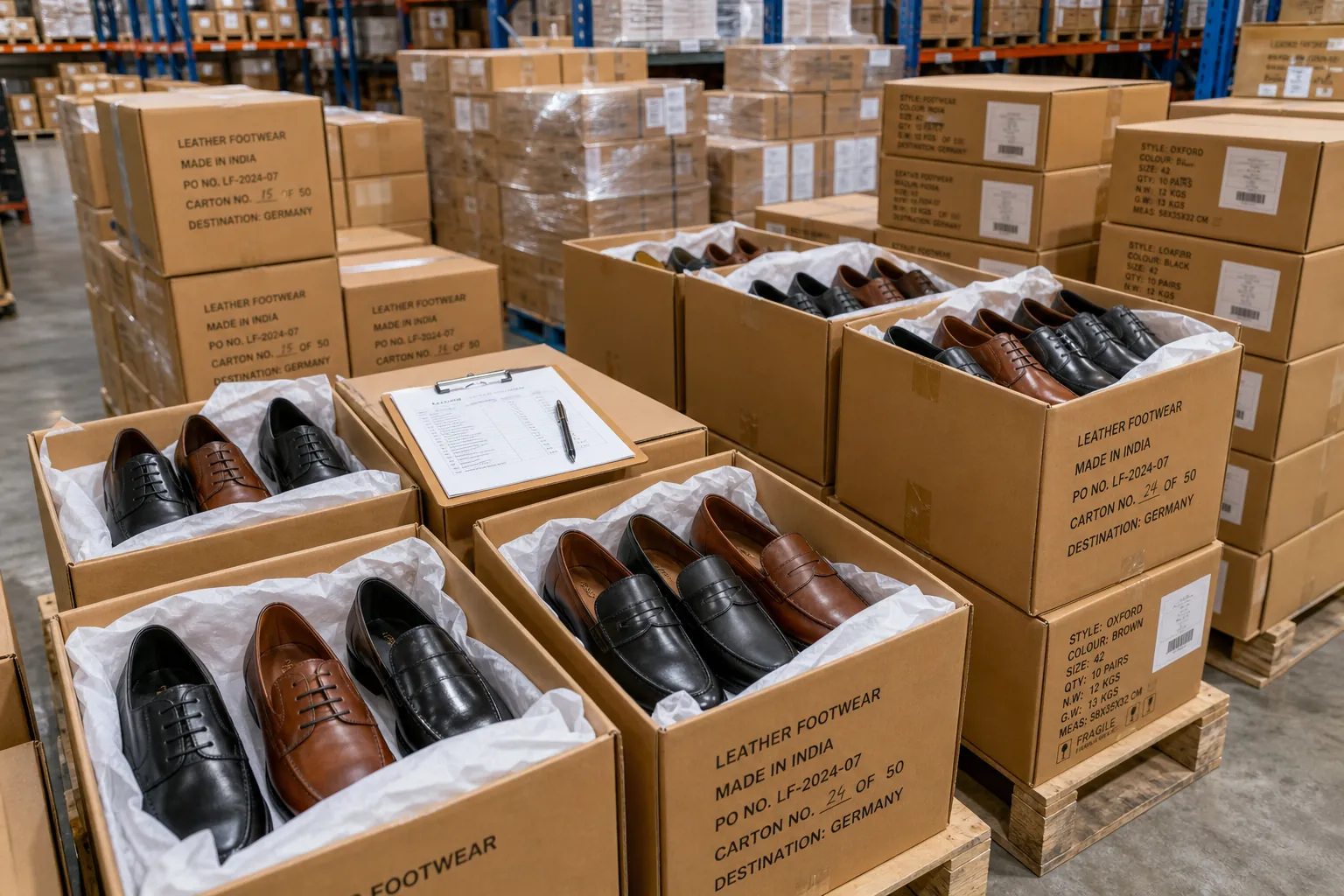
Q: What is the minimum order quantity for leather shoes from China factories? A: The lowest legitimate MOQ for custom leather shoes from an established, certified China manufacturer is 60 pairs per style. For existing factory catalog designs, some manufacturers offer 0-pair MOQ (order what you need). Trading companies and Alibaba listings may advertise lower MOQs, but these often involve material substitution or quality compromises.
Q: Can I order multiple styles to meet the MOQ requirement? A: It depends on the factory. Most manufacturers apply MOQ per style, not per order. However, if multiple styles share the same last and outsole, some factories will allow you to consolidate. For example, 30 pairs of a plain-toe Oxford and 30 pairs of a cap-toe Oxford on the same last may count as a single 60-pair MOQ — ask your factory contact directly.
Q: How does MOQ affect the price per pair? A: Lower MOQ means higher per-pair cost because fixed production costs (line setup, pattern making, quality inspection) spread across fewer units. A 60-pair custom order at $35–$40/pair can drop to $25–$28/pair at 2,000 pairs — same materials, same construction. The $10–$15 difference is entirely driven by volume-based cost allocation.
Q: Do I need to pay for tooling on a low-MOQ order? A: If you’re using an existing factory last and outsole mold, no tooling cost applies. If you need a custom last ($300–$800 per size run) or custom outsole mold ($800–$2,500), you’ll pay a tooling fee regardless of order size. Some factories waive tooling fees on orders above 500 pairs as the cost gets absorbed into the volume.
Q: What is a realistic total budget for a 60-pair test order? A: At $25–$40/pair factory price, 60 pairs costs $1,500–$2,400 in product. Add $300–$600 for air freight (or $150–$300 for sea freight consolidated), $50–$100 for customs brokerage, and $100–$200 for inspection. Total budget: $2,000–$3,300 for a complete market test with branded product.
Ready to Start Your Shoe Line?
The hardest part of launching a shoe brand is not design, marketing, or logistics — it’s finding a factory that will work with you at a volume you can afford, without compromising on quality or certifications. That’s exactly the gap the 60-pair MOQ model fills.
Our factory offers 0-pair MOQ on existing catalog designs and 60-pair MOQ on custom styles — backed by CE/REACH/RoHS certifications, a 0.8–1.2% defect rate, and 500,000+ pairs of annual production capacity. Whether you’re testing your first SKU or scaling to multi-thousand-pair orders, the structure is built to grow with you.
Ready to Start Your Shoe Line? Request a quote and tell us about your target market, style preferences, and volume plans. We respond within 24 hours with a detailed pricing and timeline proposal.