Global footwear buyers rarely source from a single country. A typical sourcing strategy mixes Italian design heritage, German engineering precision, British brand power, and Chinese manufacturing scale. This Global Shoe Suppliers Guide compares the four leading sourcing destinations—Italy, Germany, the UK, and China—from a B2B procurement perspective, profiling representative manufacturers in each region and explaining when each makes commercial sense. If you are a brand owner, private-label buyer, or sourcing manager evaluating where to manufacture your next footwear line, this framework will help you match country-of-origin strengths to your price point, order volume, and positioning. Our four-country manufacturing guide complements this directory with a structured comparison of China, Vietnam, India, and Indonesia. This directory complements our ranking of the top shoe manufacturing countries by capability and cost.
For buyers whose priority is scalable OEM/ODM production at competitive cost, working with a dedicated China shoe manufacturer is often the practical answer—but the comparison below explains the trade-offs honestly.
Italy — Artisanal Heritage & Private-Label Manufacturing
Italy’s footwear industry is anchored in the Marche, Veneto, and Tuscany regions, where centuries-old traditions meet modern production. The Marche region alone hosts over 1,200 companies employing roughly 20,000 workers and producing more than 84 million pairs annually. Italy remains one of the world’s leading exporters of luxury footwear, with exports valued at over €15 billion in 2023, driven by global demand for “Made in Italy” quality.
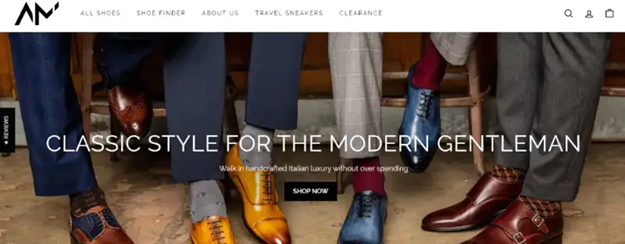
Italian suppliers specialize in hand-welted dress shoes, small-batch private-label production, and luxury-grade finishing. Representative manufacturers include:
- Italian Shoe Factory (Milan / Dubai) — bespoke and private-label manufacturing using Tuscan leathers, with turnkey services spanning shoemaking, leather goods, and sneaker lines. Notably offers flexible / no minimum order quantities, making it accessible for startups.
- Copponi Group (Marche) — handmade men’s and women’s shoes with in-house leather selection, sole making, and finishing; strong in private-label collections from traditional brogues to contemporary sneakers.
- Roberto di Paolo Shoe Factory (Montegranaro) — men’s dress shoemaker since 1972, employing Goodyear, Blake Rapid, and slip-lasting techniques for both private labels and its own line.
- Calzaturificio Gensi (Giulianova) — 150+ staff, merges modern machinery with hand-finished detailing; produces seasonal collections and custom designs for international retailers.
- Calzoleria Meccariello (Airola) — bespoke Goodyear-welted wholecuts and cordovan loafers, with each pair passing over 100 quality checkpoints; attracts luxury houses seeking top-tier finishing.
Best for: premium and luxury brands seeking artisanal credibility, hand-welted construction, or low-MOQ private-label development. Trade-offs: highest unit cost in this comparison, longer lead times, and limited scalability for high-volume programs.
Germany — Engineering Precision & Heritage Brands
Germany’s footwear market generated roughly USD 13.1 billion in 2023 and is projected to grow to USD 17.3 billion by 2030, reflecting robust consumer and export demand. The country hosts over 350 active footwear manufacturers, many concentrated in Bavaria and North Rhine-Westphalia, balancing artisanal workshops with large-scale producers.
German shoemakers are known for Goodyear-welted classics, comfort technology, and sustainable production. Representative manufacturers include:
- Gabor Shoes AG (Rosenheim, Bavaria) — family-owned since 1949, ~395 employees and €264.8M revenue (2022); hundreds of models per season, particularly in women’s fashion footwear.
- Heinrich Dinkelacker — established 1879, exclusive men’s Budapester-style Goodyear-welted shoes; each pair undergoes 300+ handcrafted steps.
- ZEHA Berlin — founded 1897 in Thuringia, revived in 2002; retro-inspired leather sneakers designed in Berlin and produced in Portugal with EU-certified leathers.
- Lloyd Shoes (Bremen / Sulingen) — premium men’s and women’s leather shoes since 1888; a cautionary note for “Made in Germany” expectations, Lloyd transitioned most production to Romania and India post-2020.
Best for: brands emphasizing comfort engineering, ergonomic fit, and European design heritage. Trade-offs: high price point, and—an important sourcing reality—several famous German brands now manufacture substantially in Eastern Europe or Asia while retaining German design and QA standards.
UK — Heritage Retailers, Not Necessarily UK Manufacturers
A common misconception among first-time buyers: the brands dominating UK “top shoe suppliers” lists are mostly retailers or international brands distributed in the UK, not British manufacturers. Understanding this distinction is essential for a B2B sourcing decision.
- Clarks — genuine British heritage (founded 1825, iconic Desert Boot), but like most large UK brands its production is global.
- Dr. Martens — a British cultural icon, though the bulk of manufacturing is now in Asia and Portugal.
- Russell & Bromley — premium British retailer known for elegant, well-crafted footwear; primarily a retail/distribution house rather than a contract manufacturer.
Brands frequently appearing on UK lists—such as ECCO (Danish), Timberland (American), Stuart Weitzman (American), and ALDO (Canadian)—are international brands with UK sales channels, not UK production. Office and Schuh are retailers, not manufacturers.
Best for: brand licensing, retail channel access, and design-led positioning. Trade-offs: genuine UK-made contract manufacturing is scarce and expensive at scale—which is precisely why so many British brands source finished production from Asia.
China OEM Manufacturing — The Scalable Alternative
For brands that need consistent quality at scale, flexible MOQs, and full OEM/ODM customization, China remains the world’s dominant footwear manufacturing base. The value proposition is structural:
- Complete supply chain — leather, outsoles, hardware, and packaging available domestically, shortening lead times and reducing landed cost.
- Cost-efficient pricing — comparable Goodyear or cement construction at a fraction of European unit cost, without sacrificing structural quality.
- Flexible MOQs — accommodates both emerging private-label brands and high-volume programs.
- OEM/ODM capability — from technical drawings and last development to sampling and full production, under the buyer’s brand.
- Compliance readiness — reputable exporters hold CE, REACH, RoHS, and EN-ISO 20347 certifications required by EU and global markets.
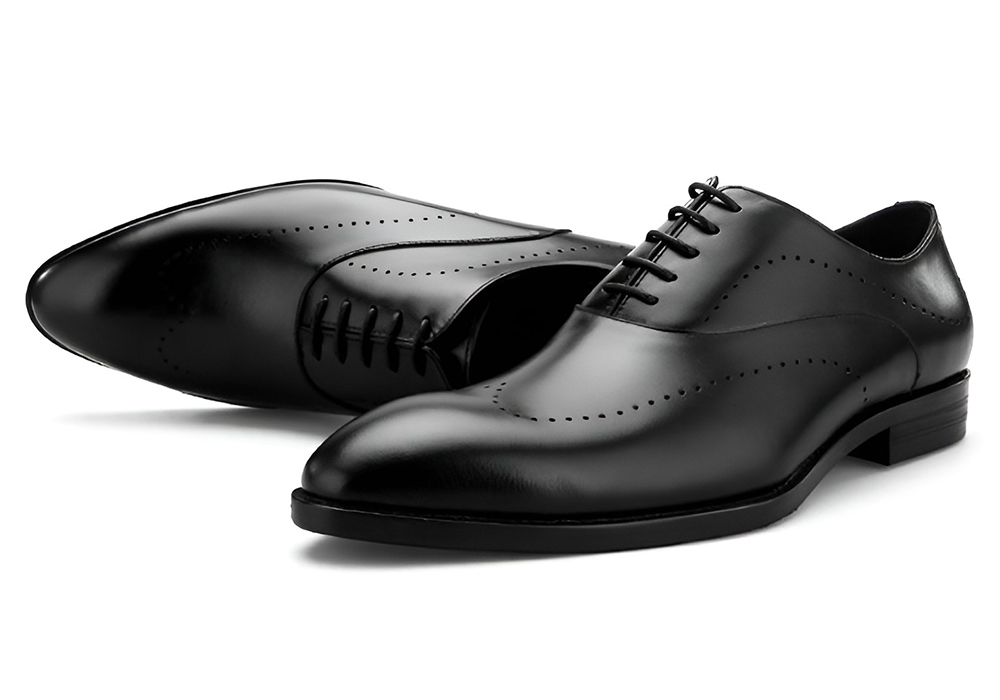
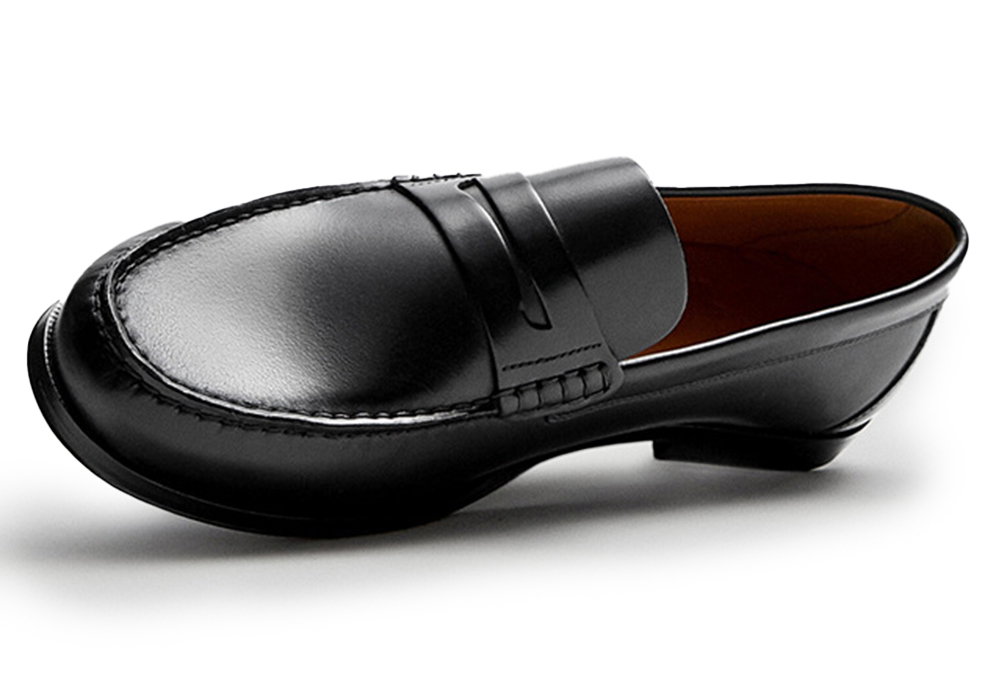
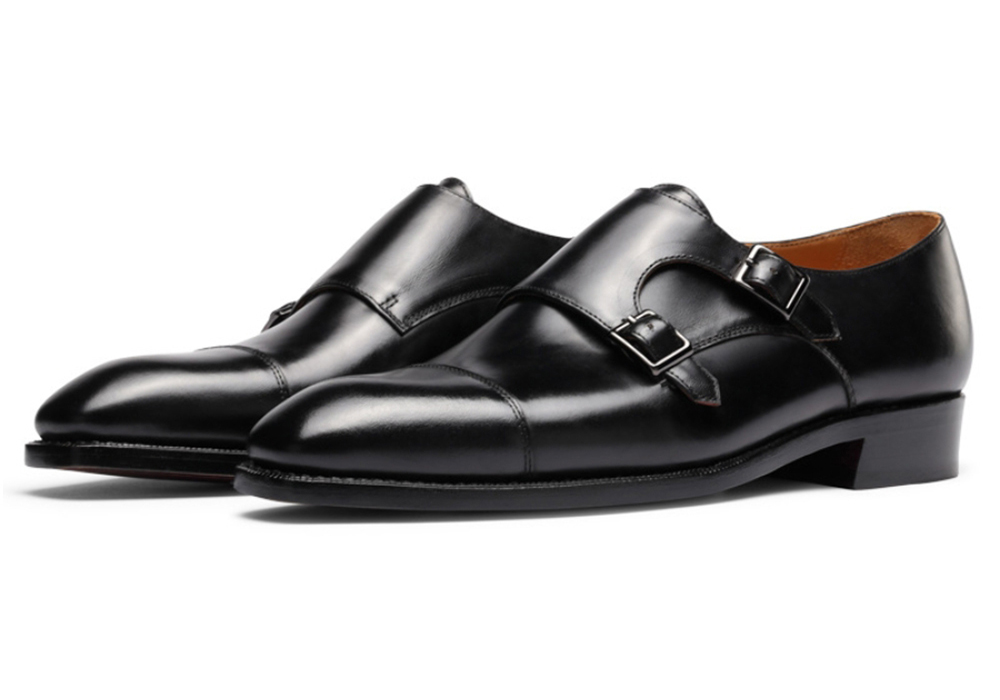
As a Shanghai-based men’s leather shoe manufacturer with 17+ years of OEM/ODM experience, Wincheer produces Oxford, Derby, loafer, monk strap, Chelsea boot, and leather walking-style lines for international wholesale buyers—complete with the European certifications above. If scalable, certified production is what your program needs, learn more about our shoe manufacturing capabilities or follow our complete B2B China shoe sourcing guide for 2026.
How to Choose: A 4-Country Decision Framework
Use the matrix below to align country-of-origin with your commercial priorities:
| Dimension | Italy | Germany | UK | China OEM |
|---|---|---|---|---|
| Positioning | Luxury / artisanal | Engineering / comfort | Brand / retail | Scalable / custom |
| Unit cost | Highest | High | N/A (mostly retail) | Low–mid |
| MOQ flexibility | Low (except bespoke) | Mid–high | N/A | High |
| Lead time | Long | Medium | N/A | Controllable |
| Best fit for | High-end brands | Premium comfort brands | Channel / licensing | Scaling brands & private label |
A growing number of international brands adopt a hybrid model: Italian or British design and branding paired with Chinese OEM production—capturing heritage positioning while controlling cost and volume. For buyers evaluating custom dress shoes, the same logic applies: design where craft storytelling matters, manufacture where scale and margin do.
Conclusion
Italy, Germany, the UK, and China each occupy a distinct position in global footwear sourcing. Italy leads in artisanal luxury, Germany in engineering and comfort, the UK in brand and retail power, and China in scalable, certified OEM/ODM manufacturing. The right answer depends less on which country is “best” in the abstract and more on your price point, order volume, and brand positioning.
If your next program calls for dependable men’s leather footwear at scale—explore our men’s Oxford shoes and Derby collections, or contact Wincheer to discuss your sourcing requirements directly.