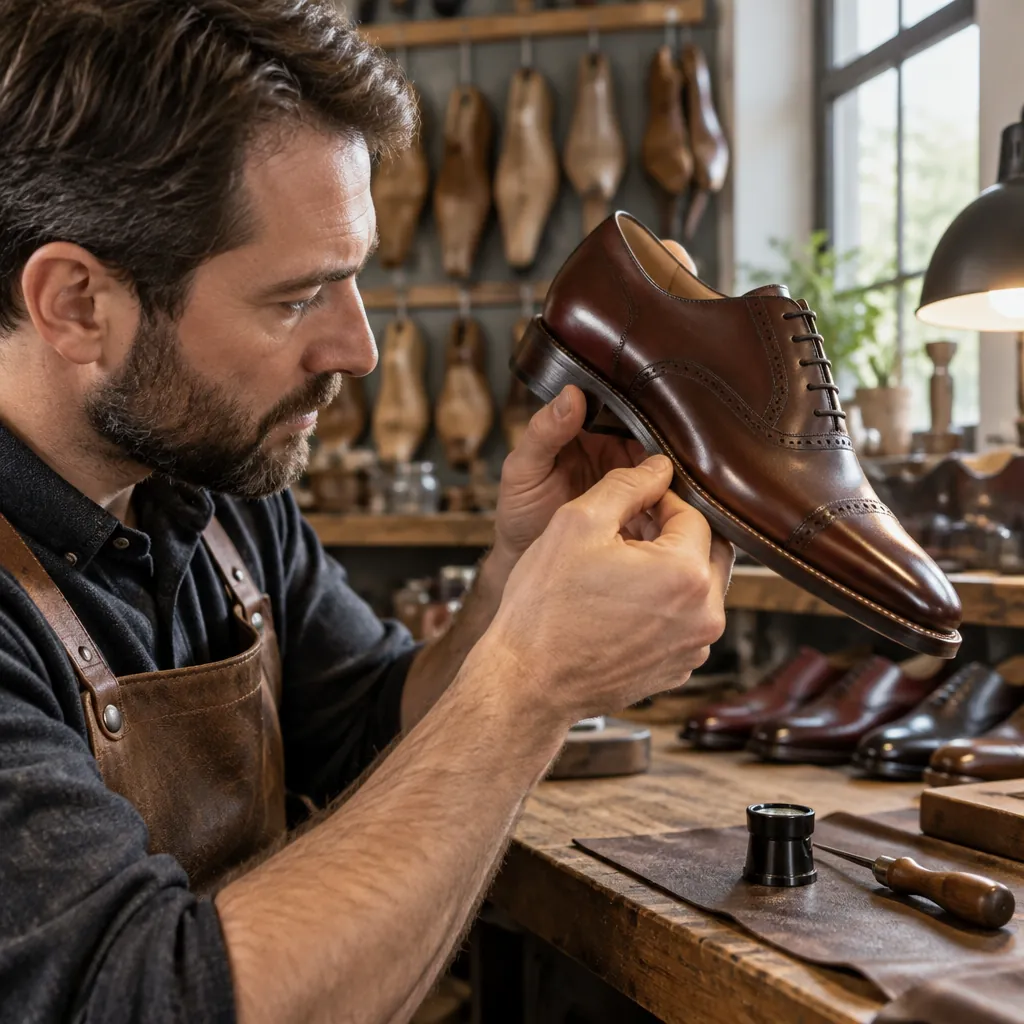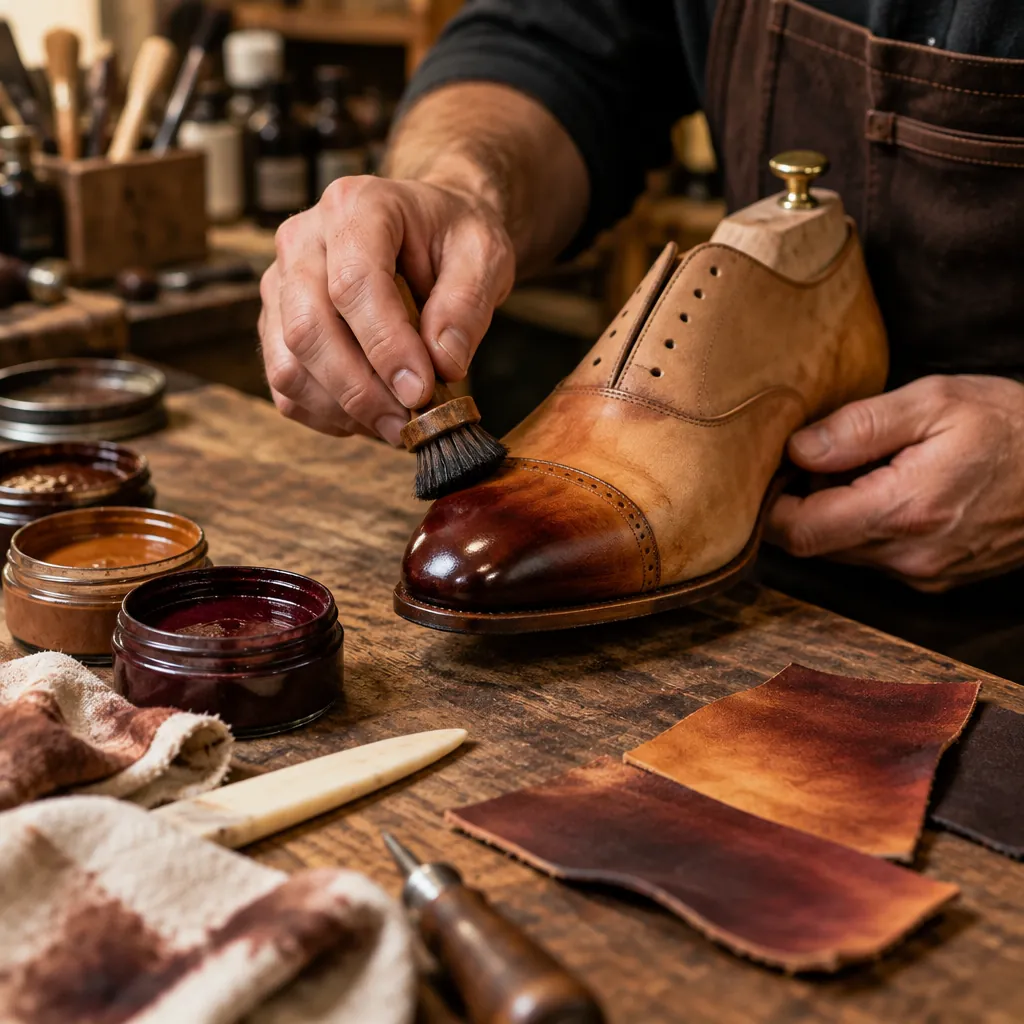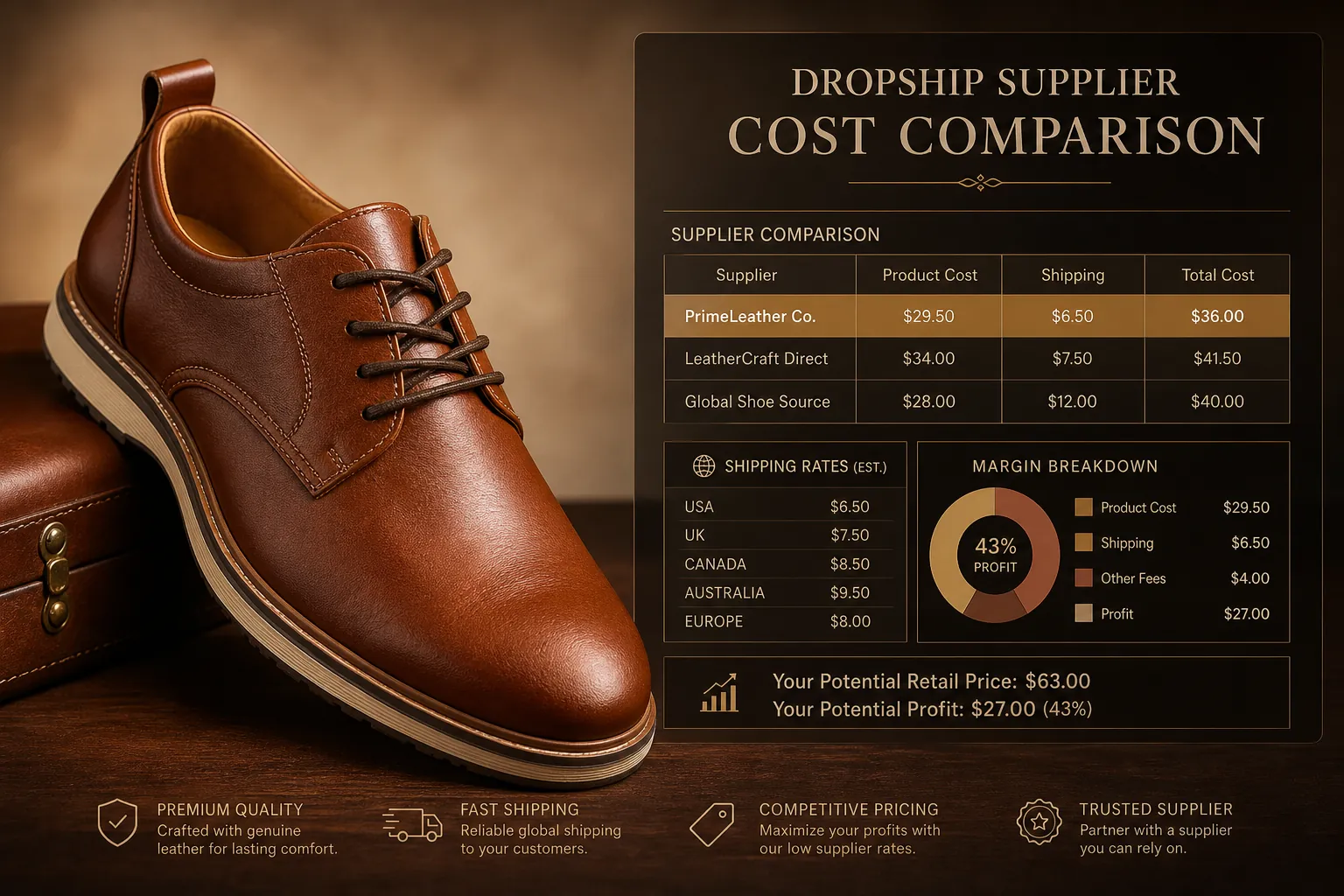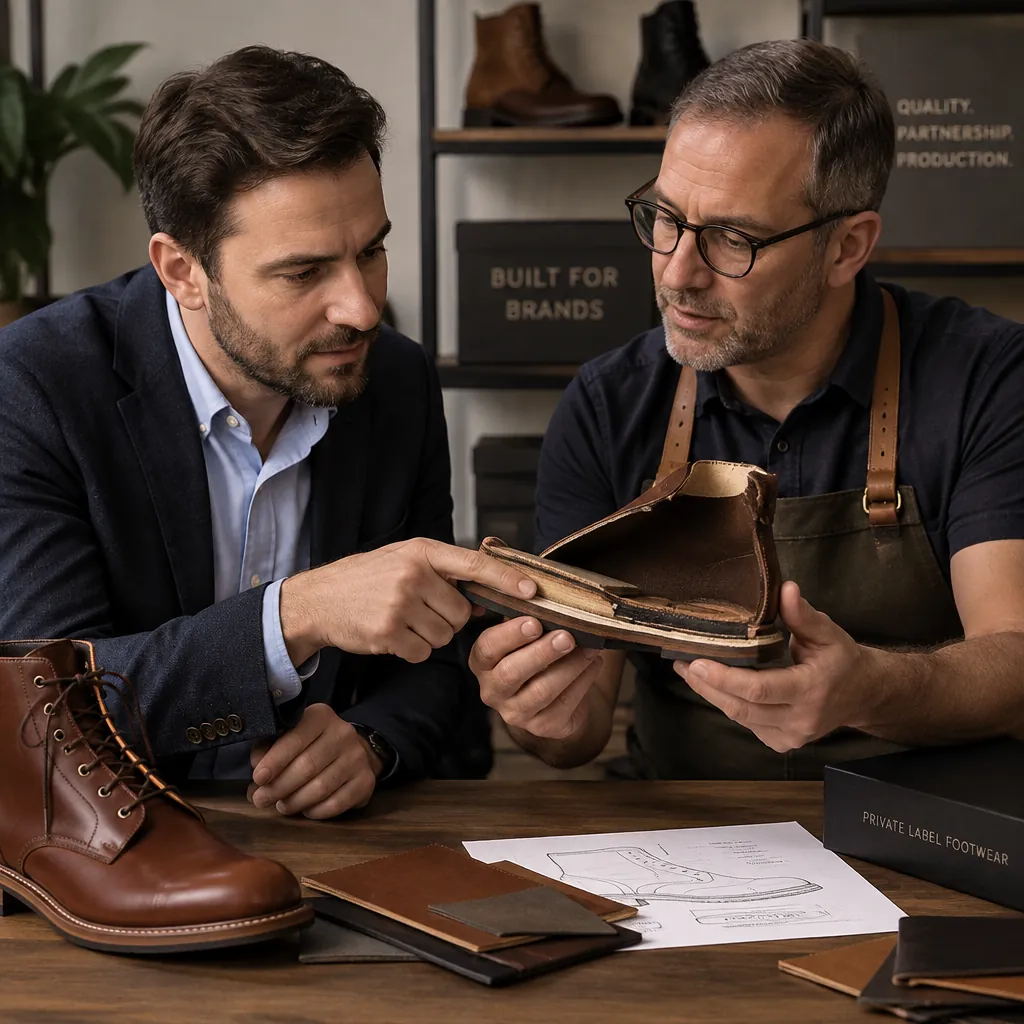

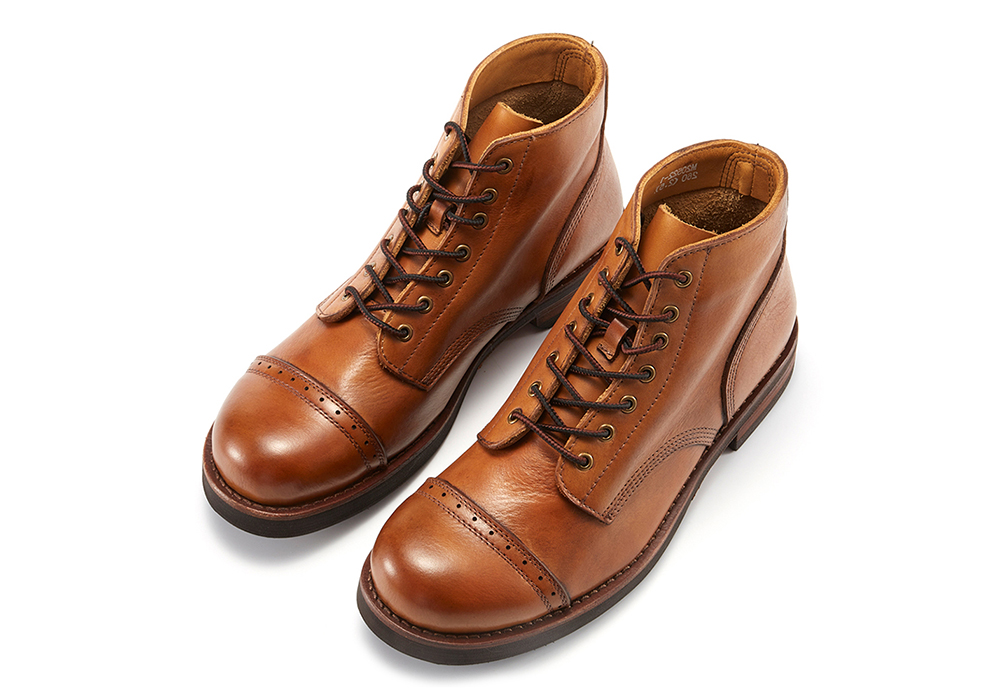
Quick Answer: Wholesale mens dress shoes from a China FOB supplier run $25–$40 per pair depending on size range, with catalog styles shipping from a single sample pair. A factory producing 500,000+ pairs annually with four-stage inline QC holds defect rates well below the 2–4% industry average, giving B2B buyers a reliable cost-to-quality baseline. CE (EN ISO 20347), REACH, and RoHS certifications cover EU and most global market entries.
TL;DR
- Wholesale mens dress shoes from a CE-certified China factory cost $25 (EU 39–41), $32 (EU 42–43), or $40 (EU 44–46) per pair FOB — no hidden per-unit fees.
- 1,000+ existing catalog designs ship from 1 pair for sampling, so you can validate a style before committing to bulk.
- Custom OEM dress shoes start at 60 pairs per style; Goodyear-welted constructions require a 100-pair minimum.
- The gap between a 1% and a 3% defect rate on a 1,000-pair order is 20 defective pairs — at roughly $15 per after-sales incident, that is $300 in hidden cost a cheaper quote can silently carry.
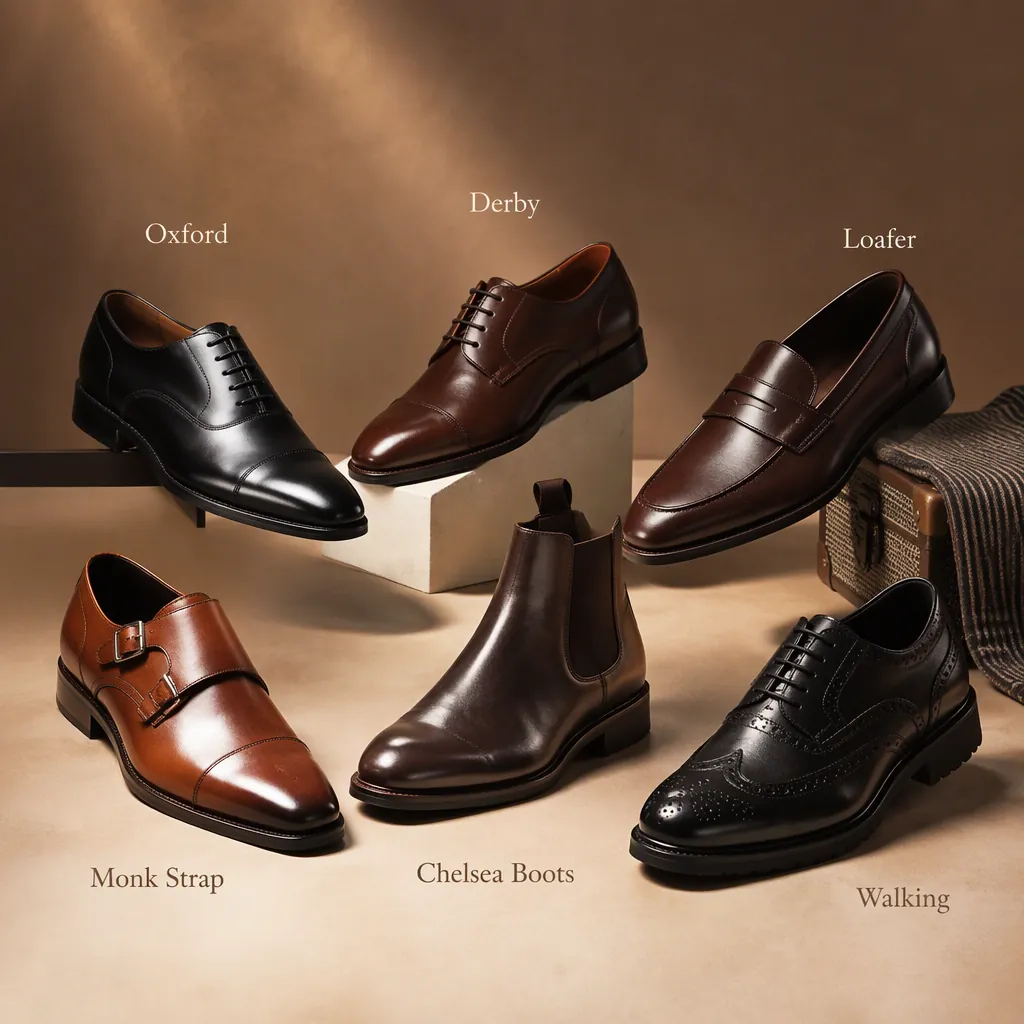
- Six wholesale dress shoe categories are in active production: Oxford, Derby, Loafer, Monk Strap, Chelsea Boots, and leather walking-style shoes.
Table of Contents
- What Are the Main Styles of Wholesale Mens Dress Shoes?
- How Much Do Wholesale Mens Dress Shoes Cost FOB?
- What Is the MOQ for Wholesale Dress Shoes?
- How Do You Evaluate a Wholesale Dress Shoe Supplier?
- What Certifications Should Wholesale Mens Dress Shoes Carry?
- How Does Shoe Construction Affect Wholesale Value?
- How Do We Quality-Control Wholesale Dress Shoes Before Shipment?
- What Do Experienced Buyers Get Wrong About Wholesale Dress Shoes?
- FAQ
What Are the Main Styles of Wholesale Mens Dress Shoes?
Six styles dominate the wholesale mens dress shoes market in 2026: Oxford, Derby, Loafer, Monk Strap, Chelsea Boots, and leather walking-style shoes.
Each style targets a different end-consumer occasion and retail price point. Understanding the difference before placing a bulk order prevents dead stock and protects your margin.
Which wholesale dress shoe style sells best for formal occasions?
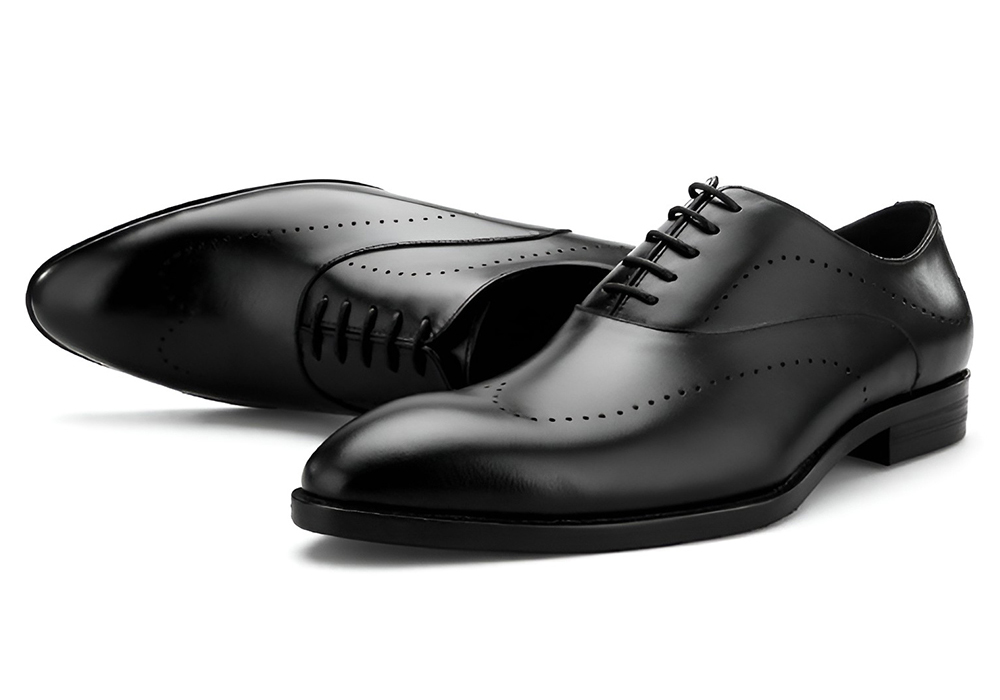
The Oxford is the most formal option and the strongest performer in corporate gifting, hotel uniform, and suit-retail channels. Its closed-lace construction — where the facing is stitched under the vamp — creates a clean silhouette that reads as “dress” to the end consumer immediately.
Browse wholesale mens Oxford shoes to see current catalog options across cap-toe, plain-toe, and brogue variants.
Which wholesale dress shoe style is most versatile for multi-channel retail?
The Derby is the workhorse of wholesale mens dress shoes. Its open-lace construction gives a slightly wider fit range, which reduces size-exchange returns — a meaningful operational advantage for e-commerce sellers.
Explore wholesale mens Derby shoes for styles that move across smart-casual and business-formal retail segments.
What styles work for buyers targeting smart-casual or lounge markets?
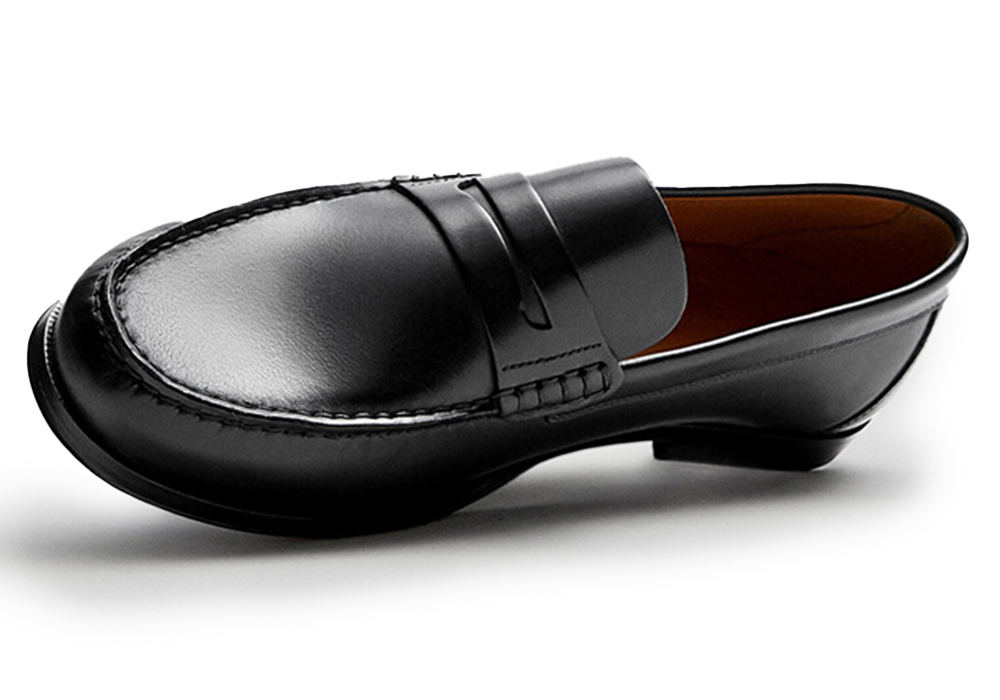
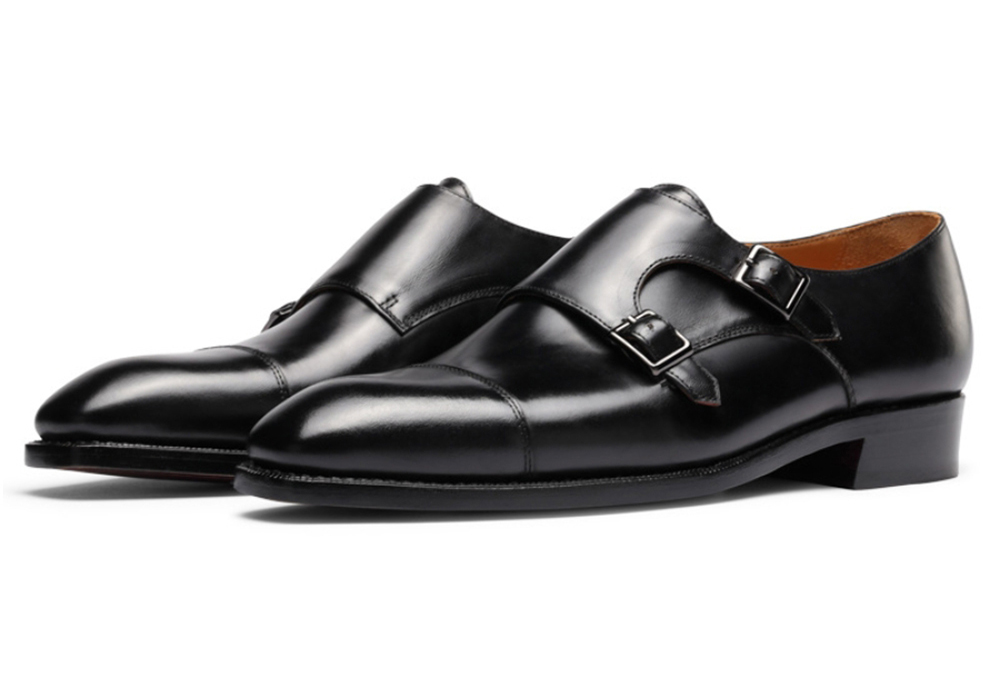
Loafers and Monk Straps both serve the smart-casual segment. Loafers convert well in Southern European, Middle Eastern, and Southeast Asian markets where slip-on convenience is valued. Monk Straps — single or double buckle — are gaining share in European wholesale channels as a differentiated alternative to lace-up styles.
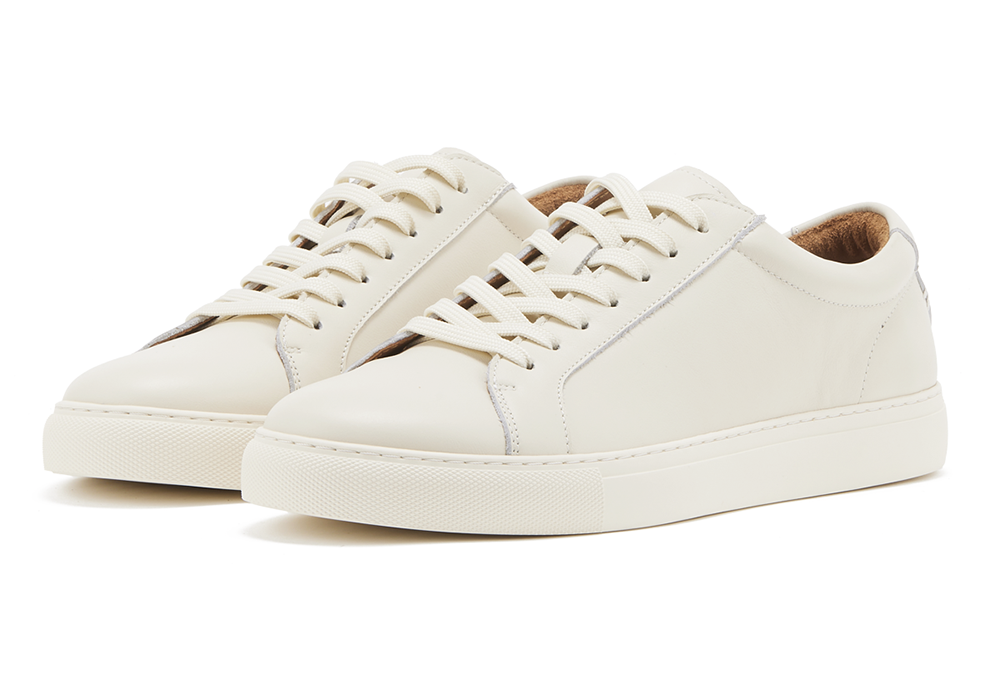
Chelsea Boots extend your range into autumn/winter wholesale cycles. Leather walking-style shoes bridge the gap between formal and comfort-focused buyers, a segment growing steadily across North American and Australian markets.
Style-to-channel quick reference:
| Style | Primary Channel | Formality | Best Markets |
|---|---|---|---|
| Oxford | Corporate, suit retail | Formal | Global |
| Derby | Department store, e-com | Smart-formal | Global |
| Loafer | Fashion, resort, casual | Smart-casual | EU, MENA, SEA |
| Monk Strap | Boutique, premium retail | Smart-formal | EU, North America |
| Chelsea Boots | Fashion, AW wholesale | Smart-casual | EU, UK, ANZ |
| Leather Walking | Comfort retail, e-com | Casual-formal | North America, ANZ |
For a deeper style-by-style breakdown with 2026 trend context, see our men’s dress shoe styles guide INTERNAL_LINK: mens-dress-shoe-styles-guide-top-5-compared-in-2026], and for color planning across markets, the [leather color guide maps which leathers sell best by region.
How Much Do Wholesale Mens Dress Shoes Cost FOB?
Wholesale mens dress shoes from our Jiangmen production facility are priced at $25/pair (EU 39–41), $32/pair (EU 42–43), and $40/pair (EU 44–46) FOB.
(Source: wincheershoes.com live variable product pricing, 2026-10)
Size-based pricing reflects real material consumption differences — a EU 46 Oxford uses measurably more upper leather, insole board, and outsole material than a EU 40. Buyers who blend size runs across a 39–46 range typically land at a blended FOB cost of $28–$33/pair depending on their size curve.
What drives the FOB price of wholesale dress shoes up or down?
Four variables move the needle most:
- Construction method — cement-bonded soles cost less than Goodyear-welted; Blake-stitched sits in between.
- Upper leather grade — full-grain bovine leather adds $3–$6/pair versus split-leather or PU upper options.
- Order volume — at 500+ pairs per style, material bulk discounts apply.
- Customization depth — private label insole printing and box branding add $0.50–$1.50/pair at scale.
A common misconception among first-time wholesale buyers is that a lower FOB price always means lower quality. In practice, a factory with high annual throughput — 500,000+ pairs — achieves material purchasing leverage that a smaller workshop cannot, which means the $25 price point can carry full-grain leather and a cemented-welt construction that a $20 quote from a low-volume workshop cannot match.
For a deeper breakdown of how Incoterms affect your landed cost, see our FOB shoe pricing guide comparing 4 Incoterms.
What Is the MOQ for Wholesale Dress Shoes?
MOQ on the 1,000+ catalog designs starts from 1 pair — you can order a single pair as a sample before committing to a bulk run.
(Source: wincheershoes.com sales policy, 2026-10)
Custom OEM orders — your own last, upper design, or sole unit — start at 60 pairs per style. Goodyear-welted constructions carry a 100-pair minimum because the welt-stitching setup requires a longer production run to amortize tooling time.
When does a low MOQ become a disadvantage?
Low MOQ is a genuine advantage for market testing, but it has a boundary condition: if you order fewer than 30 pairs of a custom style, no factory — including high-volume ones — can economically justify a dedicated last or sole mold. At that scale, you are limited to existing catalog shapes. Plan your product roadmap accordingly: use catalog sampling to validate a market, then graduate to 60-pair custom runs once you have sell-through data. For the broader leather shoes wholesale picture — pricing terms, supplier verification, and order structure beyond dress shoes — see our factory-direct wholesale guide.
How Do You Evaluate a Wholesale Dress Shoe Supplier?
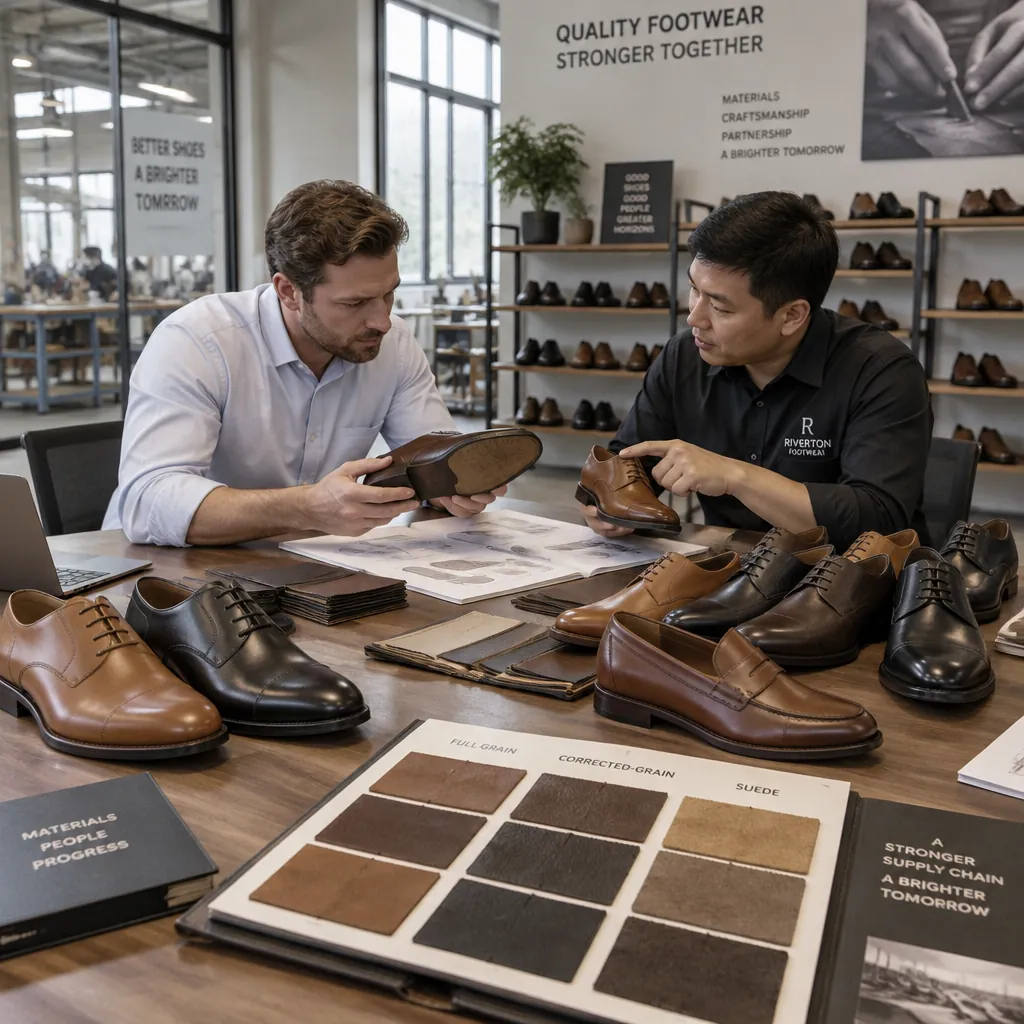
A reliable wholesale mens dress shoes supplier passes five checks before you commit to a production order.
We recommend buyers apply this five-point framework symmetrically — the same questions you would want answered about your own operation:
Our 5-Point Supplier Evaluation Framework:
- Defect rate documentation — Request the last three months of AQL inspection reports. An industry-standard defect rate runs 2–4%; a well-run factory should be at or below 1.2%. The gap between 1% and 3% on a 1,000-pair order is 20 extra defective pairs — each one a potential customer complaint or return.
- Certification currency — CE (EN ISO 20347), REACH, and RoHS certificates should be dated within the current calendar year. Expired certs are a red flag for EU market entry. The REACH regulation overview from ECHA explains exactly which chemical restrictions apply to leather footwear components.
- Production capacity vs. your order size — A factory producing 500,000+ pairs annually can absorb a 500-pair order without pushing it to a subcontractor. Ask directly: “Will this order be produced on your own lines?”
- Sample turnaround — A factory with live inventory should ship a sample within 3–5 business days. Longer than 10 days on a catalog style suggests the item is not actually in production.
- Payment term flexibility — Established factories offer 30% deposit / 70% balance against copy of Bill of Lading for verified buyers. First-order 100% prepayment is normal; insisting on it for repeat orders is a warning sign.
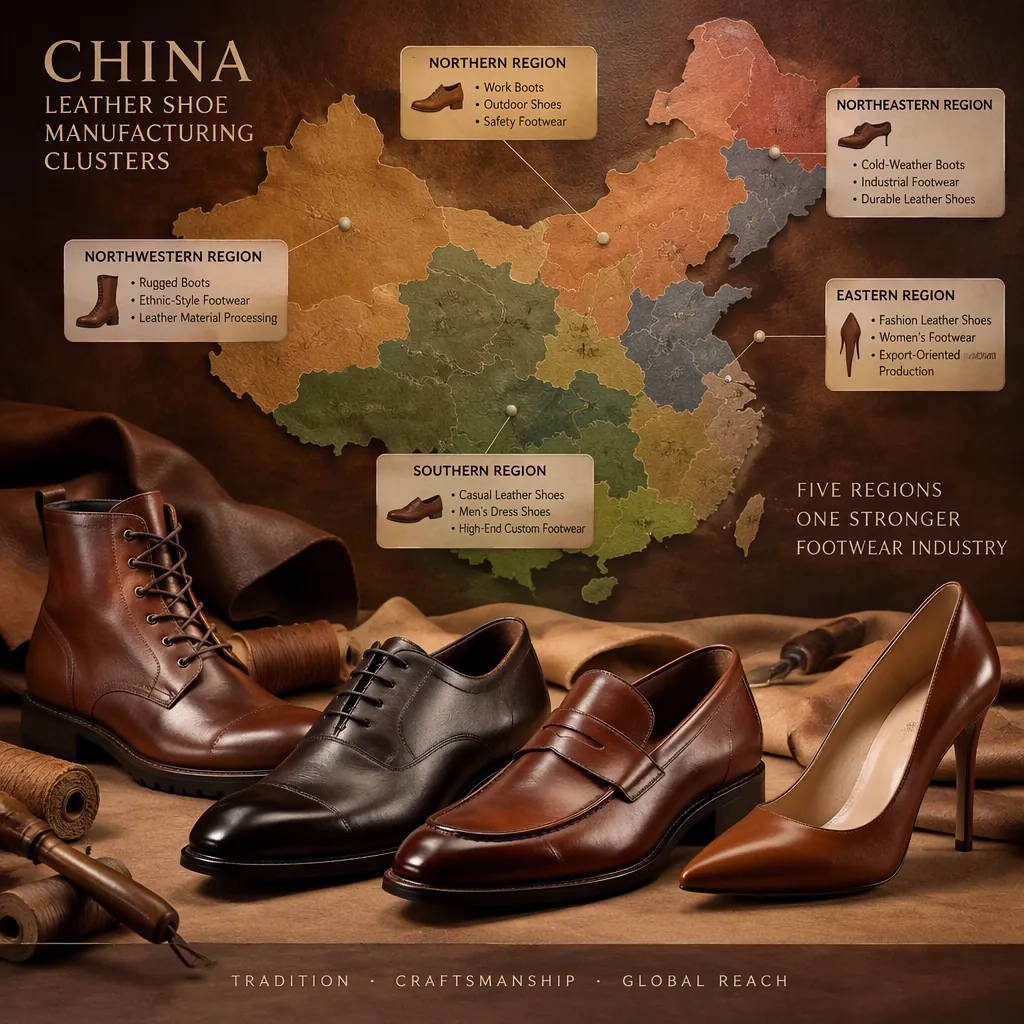
For a full checklist of supplier red flags, see Red Flags When Sourcing Leather Shoes From China INTERNAL_LINK: red-flags-when-sourcing-leather-shoes-from-china-a-buyers-checklist], and for a region-by-region shortlist of verified manufacturers, our [China leather shoe manufacturers guide covers the six major production clusters.
What does a smart first order actually look like?
The lowest-risk path for a new wholesale buyer follows the same shape regardless of market: sample broadly at catalog MOQ (six to eight colorways across two or three Derby or Oxford styles typically costs under $200 in sample fees), confirm sell-through in your own channel for one full selling cycle, then graduate to a 60-pair custom run with private label branding on the styles that proved themselves. Buyers who skip the sampling stage and wire a bulk deposit on catalog photos alone take on the single most avoidable risk in footwear sourcing: discovering a fit or finish problem at 500-pair scale instead of at sample scale.
What Certifications Should Wholesale Mens Dress Shoes Carry?
For most wholesale markets, three certifications are non-negotiable: CE (EN ISO 20347), REACH, and RoHS.
CE (EN ISO 20347) covers occupational footwear safety requirements and is the baseline for EU market entry. SATRA — the global footwear technology authority — provides the testing protocols that underpin EN ISO 20347 compliance; their footwear testing resources are the industry reference for buyers who want to understand what each test actually measures.
REACH restricts hazardous chemical substances in leather and synthetic components — chromium VI in tanned leather is the most commonly tested parameter. Non-compliant shipments are detained at EU ports of entry.
RoHS applies to any metallic hardware — eyelets, buckles, toe caps — and is increasingly required by UK and Australian buyers even outside the EU regulatory zone.
A counter-intuitive point for experienced buyers: having all three certifications does not automatically mean every production batch is compliant. Certifications are issued at the factory level; batch-level compliance requires per-shipment testing or a robust internal QC protocol. Always ask for the test report number, not just the certificate.
How Does Shoe Construction Affect Wholesale Value?
Construction method is the single biggest quality differentiator in wholesale mens dress shoes — more than leather grade or brand name.
Three constructions dominate the wholesale market:
Cemented (glued) construction is the most common in the $25–$35 FOB range. The outsole is bonded with industrial adhesive. It is lighter and more flexible than welted options, but resoling is not practical — the shoe’s lifespan ends when the bond fails.
Blake-stitched construction adds a single stitch through insole, upper, and outsole. It is slimmer in profile than Goodyear welt, preferred for fashion-forward wholesale dress shoes, and can be resoled once by a skilled cobbler.
Goodyear-welted construction is the premium tier. Think of it like a tire with a replaceable tread: a strip of leather (the welt) is stitched to both the upper and a ribbed insole, and the outsole is then stitched to the welt — not to the upper directly. This means the outsole can be replaced multiple times without touching the upper. For wholesale buyers targeting the premium end-consumer segment or corporate uniform programs with multi-year wear requirements, Goodyear welt justifies its higher FOB cost and 100-pair minimum.
For a side-by-side comparison of all major construction methods, see our complete shoe construction comparison.
How Do We Quality-Control Wholesale Dress Shoes Before Shipment?
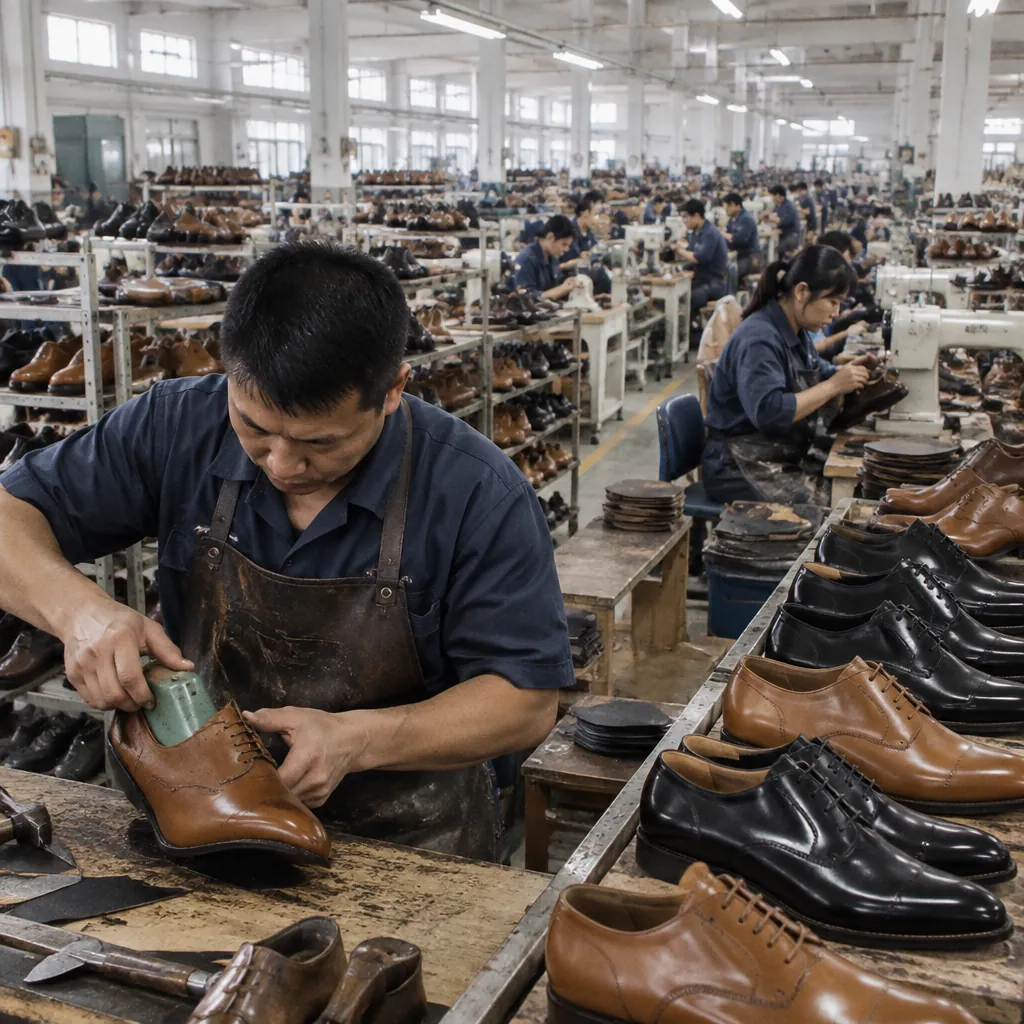
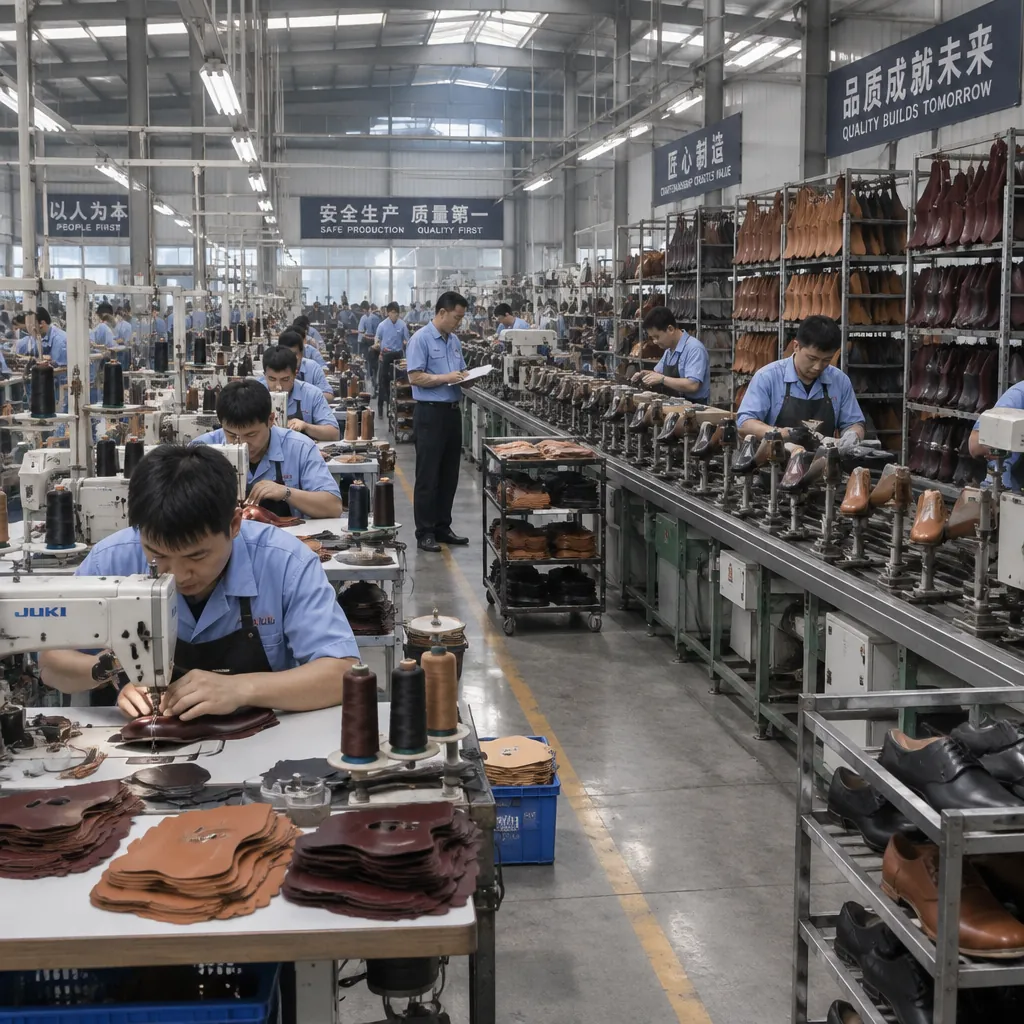
Every production batch on our Jiangmen lines goes through a four-stage inline inspection before carton sealing — the standard structure used across tier-one Chinese footwear factories.
Stage 1 — Upper cutting inspection: Each upper panel is checked for grain consistency, surface defects, and color uniformity against the approved sample. Panels with visible scars or color breaks are pulled before lasting.
Stage 2 — Lasting and sole-bonding check: After lasting, the bond line between upper and outsole is bond-tested; any weak bond triggers a re-press or rejection.
Stage 3 — Finishing and hardware check: Buckles, eyelets, and stitching are inspected against the approved sample, with stitch density counted against the style spec.
Stage 4 — Final AQL sampling: A statistically valid sample from each carton is pulled per AQL 2.5 Level II protocol. Industry defect averages run 2–4%; a four-stage inline process is how factories hold final shipments meaningfully below that line — and why you should always ask a supplier for recent AQL reports, not just their word for it.
Buyers who want independent third-party verification can arrange SGS or Bureau Veritas pre-shipment inspection at their cost — we provide full factory access and documentation. SGS footwear and leather products testing is the most commonly requested third-party service among our EU and North American partners.
For more on AQL inspection standards in footwear, see our AQL inspection footwear quality control guide.
What Do Experienced Buyers Get Wrong About Wholesale Dress Shoes?
Myth: Thicker leather always means a more durable dress shoe.
In dress shoes, upper leather thickness above 1.4mm adds weight and reduces the clean silhouette that formal footwear requires. Full-grain leather at 1.0–1.2mm, properly finished, outlasts a thick split-leather upper because the grain layer — not the thickness — is what resists abrasion and moisture. Buyers who spec “thicker leather” without specifying grain type often receive a heavier, less durable product.
Myth: A lower FOB price from a wholesale supplier always means lower quality.
High-volume factories achieve material cost advantages that smaller workshops cannot. A factory running 500,000+ pairs annually buys bovine leather in full-container lots, which reduces per-pair material cost by $2–$4 versus spot-market purchasing. That saving can be passed to the buyer without reducing leather grade.
The counter-intuitive math on defect rates:
Most buyers focus on price per pair and overlook defect rate as a cost driver. On a 1,000-pair order, the difference between a 1% defect rate and a 3% defect rate is 20 extra defective pairs. At a conservative $15 average after-sales cost per defective pair (return shipping, replacement, customer service time), that is $300 in hidden cost — enough to offset a $0.30/pair price advantage entirely.
FAQ
Q: What is the minimum order quantity for wholesale mens dress shoes?
A: Catalog designs (1,000+ styles in active production) ship from 1 pair for sampling. Custom OEM styles start at 60 pairs per style, and Goodyear-welted constructions require a minimum of 100 pairs due to setup tooling requirements.
Q: What is the FOB price range for wholesale mens dress shoes?
A: FOB pricing is $25/pair for EU sizes 39–41, $32/pair for EU 42–43, and $40/pair for EU 44–46. Blended FOB cost across a typical full-size run (EU 39–46) lands at approximately $28–$33/pair depending on your size distribution curve.
Q: Which certifications do wholesale dress shoes need for EU market entry?
A: CE (EN ISO 20347), REACH, and RoHS are the three baseline certifications for EU market entry. REACH compliance is particularly critical for leather footwear because it restricts chromium VI and other restricted substances in tanned components. Always request the test report number, not just the certificate document.
Q: How long does it take to receive a sample of a wholesale dress shoe?
A: For catalog styles (1,000+ designs in active production), sample shipment typically occurs within 3–5 business days. Custom OEM samples — new last, upper design, or sole unit — require 15–25 business days depending on the complexity of the tooling required.
Q: Can I add my own brand label to wholesale mens dress shoes?
A: Yes. Private label customization — branded insole, hang tag, shoebox, and care card — is available from 60 pairs per style for standard OEM orders. Insole embossing and box printing add approximately $0.50–$1.50 per pair at scale. For a full walkthrough of the private label process, see our private label shoe brand launch guide.
Ready to Start Your Shoe Line?
Wincheer Shoes has manufactured wholesale mens dress shoes from our Jiangmen, Guangdong facility since 2007 — 500,000+ pairs per year, with warehouses and showrooms in both Shanghai and Jiangmen. Visitors are always welcome to tour the production lines.
Request a sample, ask for a price list, or send your design brief directly:
- Email: peterwang@shwincheer.com
- Website: wincheershoes.com