
TL;DR
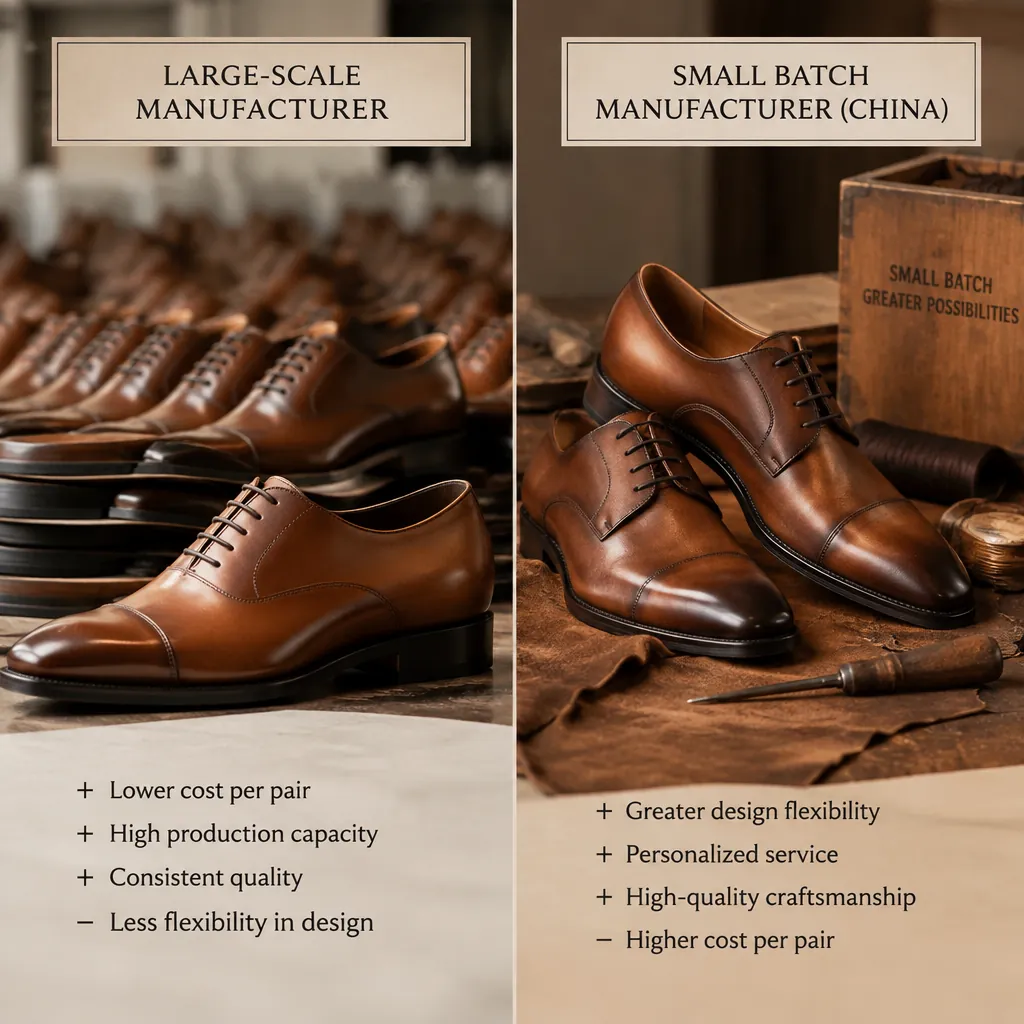
MOQs exist because setup costs (patterns, molds, materials) must be spread across production volume. Standard leather shoes have MOQs of 300-500 pairs/style. Lower MOQs mean higher per-pair prices. Negotiate by offering payment terms, future commitment, or value propositions. Wincheer Shoes offers flexible MOQ arrangements for serious brands.
Introduction
Minimum Order Quantities (MOQs) represent one of the most significant friction points in B2B leather shoe sourcing. Emerging brands seeking to launch with limited capital find themselves facing MOQ requirements that seem impossibly high. Established retailers testing new styles hesitate before committing to quantities that exceed their initial demand forecasts. The result: many potentially successful products never reach market because buyers and manufacturers cannot reconcile their competing needs.
This guide explains the genuine economic logic behind MOQs, provides realistic MOQ ranges for different product types, and shares negotiation strategies that work for buyers at every scale. Understanding MOQ economics transforms this apparent barrier from an obstacle into an opportunity for strategic thinking.
Wincheer Shoes has structured our manufacturing operations to offer flexible MOQ arrangements that accommodate brands from startup to enterprise scale. Our experience since 2007 in Shanghai’s leather shoe manufacturing cluster has taught us that reasonable MOQ accommodation benefits both manufacturers and brands long-term.
Table of Contents
- The Economic Logic of MOQ
- MOQ Ranges by Product Type
- MOQ Breakdown by Cost Component
- MOQ Negotiation Strategies
- Alternative to Traditional MOQ
- MOQ and Pricing Relationship
- FAQ: MOQ Questions
The Economic Logic of MOQ
Why MOQs Exist: The Setup Cost Reality
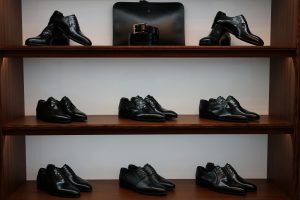
Manufacturing leather shoes involves substantial fixed costs that exist regardless of production quantity. These setup costs amortize across total production—the more pairs produced, the lower the per-pair cost from setup activities.
Fixed Setup Cost Components:
| Cost Component | Description | Why It Matters for MOQ |
|---|---|---|
| Pattern making | Creating patterns for each style | $200-500 per style regardless of quantity |
| Sample development | Prototypes and iterations | $500-2000 per style regardless of quantity |
| Tooling/amortization | Lasts, dies, cutting forms | $1000-5000 amortized across first run |
| Machine setup | Equipment preparation, calibration | $100-300 per production run |
| Material minimums | Tannery purchase minimums | Often 50-100 hide minimum per color |
| Quality documentation | Specification documents, compliance | $200-500 per style |
The Economics Illustrated:
Consider a simplified example:
| Cost Element | Per-Pair Calculation | 100 Pairs Total | 500 Pairs Total | 1000 Pairs Total |
|---|---|---|---|---|
| Pattern making | $500 / quantity | $5.00 | $1.00 | $0.50 |
| Sample development | $1,500 / quantity | $15.00 | $3.00 | $1.50 |
| Tooling | $2,000 / quantity | $20.00 | $4.00 | $2.00 |
| Setup labor | $200 / quantity | $2.00 | $0.40 | $0.20 |
| Total fixed costs | $44.00 | $8.40 | $4.20 |
At 100 pairs, fixed costs add $44 per pair. At 1000 pairs, they add only $4.20 per pair. This 10x difference in fixed cost impact is why MOQs exist.
Production Efficiency Thresholds
Beyond fixed costs, production efficiency follows non-linear patterns:
Efficiency Curve Characteristics:
| Production Stage | Efficiency Pattern | MOQ Implication |
|---|---|---|
| Initial cutting | Low efficiency, high waste | Minimum viable cutting run |
| Operator learning | Quality improves with repetition | Quality consistency requires quantity |
| Material utilization | Better yields at larger runs | Waste cost reduction at scale |
| Equipment amortization | Same setup time for 100 or 1000 pairs | Per-pair cost drops significantly |
The 80/20 Rule in Manufacturing:
In typical leather shoe manufacturing:
- First 20% of units in a production run consume 60% of total setup time
- Quality consistency typically requires 200+ pairs per style for operators to achieve stable output
- Material waste rates can be 15-20% on small runs versus 5-8% on optimized large runs
How Manufacturers Set MOQs
Manufacturer MOQ Calculation Method:
| Factor | Calculation Element | Typical Range |
|---|---|---|
| Setup cost recovery | Total fixed costs / target per-pair contribution | Desired minimum |
| Efficiency target | Target production efficiency percentage | Usually 85-95% |
| Material minimums | Hide/tannery purchase requirements | 50-200 hides minimum |
| Capacity planning | Optimal production batch size | Manufacturer specific |
| Profit margin | Minimum acceptable margin per pair | Varies by strategy |
Wincheer Shoes MOQ Philosophy:
We structure MOQs to balance:
- Cost recovery for necessary setup activities
- Reasonable access for emerging brands
- Production efficiency that maintains quality
- Long-term relationship building over maximization
How to Select a Reliable B2B Leather Shoe Manufacturer: A Complete Guide for Global Buyers
MOQ Ranges by Product Type
Standard Leather Dress Shoes
Full-Grain Leather Oxfords and Derbies:
| Quality Tier | MOQ Range | Price Range (FOB Shanghai) | Notes |
|---|---|---|---|
| Entry/Mid | 300-500 pairs | $45-80 per pair | Standard materials, efficient production |
| Premium | 200-300 pairs | $80-150 per pair | Better materials, some hand finishing |
| Luxury | 100-200 pairs | $150-300+ per pair | Premium materials, significant hand work |
Factors That Increase MOQ Requirements:
- Exotic leathers (Python, Crocodile, Ostrich): MOQ increases due to hide minimums, often 50-100 pairs
- Custom colors beyond standard offerings: MOQ increases 20-30% due to dyeing setup
- Complex patterns or constructions: Higher MOQ to justify technical complexity
Goodyear Welted Construction
Welted Construction MOQs:
| Category | MOQ Range | Price Range (FOB Shanghai) | Notes |
|---|---|---|---|
| Standard patterns | 200-300 pairs | $120-200 per pair | Established patterns, efficient setup |
| Custom patterns | 150-200 pairs | $150-250 per pair | New pattern development included |
| Luxury/exotic combination | 100-150 pairs | $250-400+ per pair | Premium materials, extended craftsmanship |
Goodyear Welted MOQ Premium Explanation:
- Equipment setup: Goodyear machinery requires 2-3x more setup time than cemented
- Skilled labor: Craftsmen require more time per pair, making small runs economically challenging
- Material minimums: Welt leather comes in full hides with minimum purchase requirements
- Tooling amortization: Goodyear-specific lasts and welters cost more to produce
Custom and Technical Products
Specialized Product MOQs:
| Product Type | MOQ Range | Premium vs Standard | Reason |
|---|---|---|---|
| Safety footwear | 500-1000 pairs | 30-50% premium | Regulatory testing costs per style |
| orthopedic/protective | 200-300 pairs | 50-100% premium | Technical development investment |
| Custom fitted (wide/narrow) | 300-500 pairs | 20-30% premium | Size range complexity |
| Waterproof/gore-tex lined | 300-400 pairs | 25-40% premium | Membrane material minimums |
Seasonal and Fashion Products
Fashion-Forward Styles:
Fashion products often face higher MOQs because:
- Trend uncertainty: Manufacturers hedge against unsold inventory
- Shorter product life: Less time to sell through excess
- Style risk: New designs may require iteration
Fashion MOQ Ranges:
| Fashion Category | MOQ Range | Negotiation Difficulty |
|---|---|---|
| Classic styles (perennial) | 300-500 pairs | Moderate—manufacturers understand demand |
| Trend styles | 500-800 pairs | Higher—risk mitigation |
| Experimental/new concepts | 800-1200 pairs | Difficult—maximum manufacturer risk |
Men’s Dress Shoe Trends 2026: What Global Retailers Should Stock
MOQ Breakdown by Cost Component
Material Cost MOQ Impact
Leather hides represent a significant fixed-cost component that directly affects MOQ:
Hide Purchase Economics:
| Hide Type | Hide Size | Square Footage | Typical Purchase Minimum | Per-Pair Material Impact |
|---|---|---|---|---|
| Full-grain calf | 4-5 sq ft | 20-25 sq ft per pair | 10-20 hide minimum | Higher utilization waste on small orders |
| Bovine/ cowhide | 6-8 sq ft | 25-35 sq ft per pair | 10-15 hide minimum | Material waste significant on <200 pairs |
| Exotic leather | Variable | 8-12 sq ft per pair | 20-50 hide minimum | High minimum, requires larger MOQ |
Material Waste Impact by Order Size:
| Order Quantity | Typical Waste Rate | Waste Cost Per Pair (at $15/sq ft) |
|---|---|---|
| 100 pairs | 18-22% | $5.40-6.60 |
| 300 pairs | 10-14% | $3.00-4.20 |
| 500 pairs | 7-10% | $2.10-3.00 |
| 1000 pairs | 5-8% | $1.50-2.40 |
Labor Cost MOQ Impact
Labor costs follow different patterns than material costs:
Labor Efficiency by Run Size:
| Order Quantity | Operator Pairs/Day (Standard) | Effective Labor Cost Per Pair |
|---|---|---|
| 100 pairs | 5-8 pairs | $8-12 per pair |
| 300 pairs | 12-15 pairs | $5-7 per pair |
| 500 pairs | 15-18 pairs | $4-5 per pair |
| 1000 pairs | 18-22 pairs | $3-4 per pair |
Learning Curve Impact:
New styles require learning periods where production is slower:
- First 50 pairs: 30-40% below normal efficiency
- Pairs 50-150: 15-20% below normal efficiency
- After 150 pairs: Normal efficiency achieved
This learning curve means small runs never achieve full efficiency, even with experienced workers.
Combined Cost Impact Summary
Total Cost Per Pair by Order Quantity (Illustrative Example):
| Order Quantity | Material Cost | Labor Cost | Fixed Cost Allocation | Total Cost Per Pair |
|---|---|---|---|---|
| 100 pairs | $32 | $10 | $18 | $60 |
| 300 pairs | $28 | $6 | $6 | $40 |
| 500 pairs | $26 | $4.50 | $4 | $34.50 |
| 1000 pairs | $25 | $3.50 | $2.50 | $31 |
MOQ Rationale: At 100 pairs, per-pair cost ($60) is nearly double the cost at 1000 pairs ($31). Manufacturers must set MOQs to ensure viable economics for both parties.
The True Cost of Quality: Understanding Leather Shoe Pricing from Chinese Manufacturers
MOQ Negotiation Strategies
For Emerging Brands and Small Orders
Strategies That Work:
| Strategy | Description | Effectiveness |
|---|---|---|
| Style simplification | Reduce color/form variations to concentrate volume | High—addresses manufacturer concern |
| Multi-style aggregation | Order 3-4 similar styles to reach MOQ | Moderate—works when styles share components |
| Future commitment | Promise follow-up orders to justify current investment | Moderate—requires trust |
| Pre-payment | Offer payment terms that reduce manufacturer risk | High—addresses financial concern |
| Share sample costs | Accept higher per-sample cost to offset lower production MOQ | High—directly addresses setup recovery |
Proven Negotiation Approaches:
Approach 1: The “Graduated MOQ” Negotiation
Request tiered pricing that encourages growth:
| Tier | Order Size | Price Per Pair | Your Commitment |
|---|---|---|---|
| Tier 1 | 100-199 pairs | Standard + 25% | First order |
| Tier 2 | 200-399 pairs | Standard + 12% | Second order within 6 months |
| Tier 3 | 400+ pairs | Standard price | Third order commitment |
Approach 2: The “Shared Investment” Model
Offer to share pattern development costs upfront:
- Pay 50% of pattern development cost directly
- Commit to 200+ pairs production order
- Receive pattern ownership or long-term use rights
This approach works particularly well for brands with unique designs that manufacturers can reference for other clients.
For Mid-Size Brands
Strategies for Established but Scaling Companies:
| Strategy | Description | When to Use |
|---|---|---|
| Annual volume commitment | Commit to annual volume across multiple styles | When you need flexibility within total volume |
| Capacity reservation | Pay to reserve production capacity for peak seasons | When lead time is critical |
| Raw material forward purchase | Buy materials in advance to lock pricing | When material costs are volatile |
| Consignment arrangements | Provide your own materials to manufacturer | When you have material sourcing advantages |
For Enterprise Buyers
Volume-Based Leverage:
Large orders (3000+ pairs per style) typically achieve:
- 15-25% price reduction from standard pricing
- MOQ flexibility down to 500 pairs per colorway
- Custom development included at no additional charge
- Dedicated production lines during peak periods
Strategic Partnership Structures:
Consider formal partnership arrangements:
- Annual supply agreements with quarterly delivery schedules
- Rolling 12-month forecasts with firm quarterly commitments
- Joint product development with shared intellectual property
- Preferred pricing contingent on minimum annual volume
Negotiating with Chinese Leather Shoe Manufacturers: Wincheer Shoes’ Strategic Guide
Alternative to Traditional MOQ
Flexible Manufacturing Models
Some manufacturers have developed models that accommodate smaller orders through operational innovation:
Wincheer Shoes Flexible MOQ Options:
| Arrangement | Description | MOQ Reduction Benefit |
|---|---|---|
| Virtual batch production | Combine multiple small orders into single production run | Reduces effective MOQ by 40-60% |
| Panel programs | Reserve production panel with flexible call-off | Enables 50-100 pair minimum per call |
| Consignment materials | Provide materials to reduce manufacturer risk | Can reduce MOQ to 100 pairs |
| Sample-to-production pathway | Convert development samples to production | Eliminates duplicate setup costs |
The Panel/Call-Off Model
How Panel Programs Work:
| Phase | Your Commitment | Manufacturer Commitment | Benefit |
|---|---|---|---|
| Panel reservation | 200-300 pair commitment | Hold production capacity | Certainty for both parties |
| Development | 3-6 months to finalize styles | Technical support, sample development | Flexibility |
| Production call-offs | 50-100 pairs per call-off | Produce within 4 weeks of call | Inventory reduction |
| Completion | Remaining pairs within 12 months | Ship within agreed timeline | Full commitment |
Cost Premium: Panel programs typically carry 8-15% price premium over standard production, but the inventory reduction and flexibility often justify the cost for growing brands.
Consignment and Vendor-Managed Inventory
Material Consignment Model:
You purchase materials (leather, hardware, soles) and ship to manufacturer:
- Manufacturer reduces capital tied in materials
- Risk shift reduces their MOQ requirements
- You gain material cost visibility and control
- Quality consistency potentially improves through material control
Considerations:
- Requires material sourcing expertise
- You bear material price risk
- Logistics complexity increases
- Typically requires 100+ pair minimums even with consignment
MOQ and Pricing Relationship
Price Break Structure
Most manufacturers offer volume discounts that improve economics as orders increase:
Typical Price Break Schedule:
| Order Quantity | Price Adjustment | Equivalent Pair Savings |
|---|---|---|
| MOQ (base) | 0% (base price) | $0 |
| 2x MOQ | -8 to -12% | $4-8 per pair |
| 3x MOQ | -12 to -18% | $6-14 per pair |
| 5x MOQ | -18 to -25% | $9-20 per pair |
| 10x MOQ | -25 to -35% | $12-28 per pair |
When Price Breaks Make Sense:
| Scenario | Recommendation |
|---|---|
| High-demand, proven product | Order larger quantities to capture price break |
| New, untested product | Order closer to MOQ; test before scaling |
| Seasonal product with limited shelf life | Be cautious; order to expected demand + 20% |
| Custom/fashion product | Avoid large orders; fashion risk high |
Total Cost vs. Per-Pair Price
The Real Economics Calculation:
| Factor | Small Order (MOQ) | Medium Order (3x MOQ) | Large Order (5x MOQ) |
|---|---|---|---|
| Per-pair price | $60 | $52 | $48 |
| Total investment | $18,000 | $46,800 | $72,000 |
| Effective cost per pair | $60 | $52 | $48 |
| Inventory risk | Low | Moderate | High |
| Per-pair savings | — | $8 per pair | $12 per pair |
Inventory Risk Assessment:
The per-pair savings must be weighed against inventory risk:
| Inventory Scenario | Potential Consequence | Cost Impact |
|---|---|---|
| Full sell-through | Normal profit | Captured savings |
| 20% unsold | Clearance pricing needed | May offset all savings |
| 50% unsold | Significant loss | Exceeds all savings |
| Full unsold | Total loss | Catastrophic |
Rule of Thumb: Only take price breaks that commit inventory quantities you are confident selling within appropriate timeframes.
Custom vs. Standard Sizing: The Hidden Costs and Benefits for Shoe Brands
FAQ: MOQ Questions
Q1: What is a typical MOQ for leather shoes in China?
Typical MOQs for standard leather dress shoes range from 300-500 pairs per style. Premium constructions (Goodyear welted) may have higher MOQs of 200-300 pairs due to setup complexity. Fashion or trend styles may require 500-800 pairs due to market uncertainty. Value-oriented cemented styles can sometimes go as low as 200-300 pairs.
Q2: Can MOQs be negotiated lower for first orders?
Yes, but negotiations work best when you offer something in return. Options include: higher per-pair pricing that offsets reduced volume, upfront payment that reduces manufacturer risk, commitment to follow-up orders that provides volume over time, or willingness to accept longer lead times that fit manufacturer scheduling efficiency.
Q3: How do multiple colorways affect MOQ?
Colorway MOQs typically follow the formula: MOQ per colorway × number of colors = total style MOQ. However, if production runs multiple colors in sequence, some manufacturers offer reduced per-colorway minimums. Expect 10-20 hide minimums per colorway for leather. Some manufacturers will “gang cut” multiple colors to share cutting efficiency, reducing effective minimums.
Q4: What happens if I cannot meet the MOQ?
Options include: negotiating a higher price to offset the manufacturer’s fixed cost recovery, aggregating with another brand’s similar order if manufacturer offers this service, committing to multiple orders that together meet minimums, or reducing the number of styles to concentrate volume on fewer options.
Q5: Are there additional costs beyond MOQ price?
Potential additional costs include: sample development fees (often $500-2000 per style), pattern development fees for custom patterns ($200-500), foreign mold fees for hardware ($50-200 per mold), testing fees for chemical compliance ($200-500 per style), and shipping/logistics costs beyond quoted FOB pricing.
Q6: How should I plan MOQs for a new brand launch?
For new brands without sales history: start with one or two core styles, plan for 300-500 pairs per style minimum, consider a “launch collection” approach with fewer styles at appropriate MOQs rather than many styles at inadequate volumes, and negotiate a “test” arrangement where remaining inventory can be reordered within 6-12 months. Expect to pay a premium for flexibility, but this risk management often proves worthwhile.
Conclusion
Minimum Order Quantities represent a fundamental economic reality of leather shoe manufacturing, not an arbitrary barrier to entry. Understanding the genuine costs behind MOQ requirements enables informed negotiation and strategic decision-making that serves both buyers and manufacturers.
The most successful B2B footwear relationships develop over time, with initial flexibility from manufacturers matched by growth commitment from brands. Wincheer Shoes has structured our operations to accommodate brands at every scale, with flexible MOQ arrangements, panel programs, and graduated pricing that supports brand growth.
Key Takeaways for B2B Buyers:
- MOQs exist because fixed setup costs must be recovered across production volume
- Negotiate from understanding of the manufacturer’s genuine cost concerns
- Offer value propositions (payment terms, future commitment, shared investment) that offset lower volume
- Consider total cost of ownership, not just per-pair price, when evaluating MOQ trade-offs
- Build relationships that provide flexibility as your brand grows
About Wincheer Shoes
Wincheer is a professional leather shoe manufacturer based in Shanghai, China. Established in 2007, we specialize in OEM/ODM manufacturing of men’s leather shoes including Oxford, Derby, Loafer, Monk, and Chelsea styles. With experience dating back to 2007 and CE/REACH/RoHS certifications, we export quality footwear to global markets at competitive prices ($25-$40/pair).