
B2B shoe packaging export logistics directly impact your bottom line, product protection, and brand reputation. Poor packaging decisions can increase shipping costs by 15-25%, damage rates by up to 8%, and create customs delays that cost thousands in demurrage fees.
As manufacturers producing 500,000+ pairs annually at Wincheer Shoes, established in 2007,, we’ve refined our B2B shoe packaging export processes across 50+ countries. Our systematic approach maintains a defect rate of just 0.8-1.2% (versus industry average of 2-4%) while optimizing container utilization and reducing per-unit shipping costs.
This comprehensive guide covers the critical packaging and logistics decisions that separate successful importers from those facing costly delays and damaged inventory.
Table of Contents
- How Packaging Affects Costs, Protection, and Brand Perception
- Shoe Box Standards: Dimensions, Materials, and Printing
- Carton Packing: Pairs Per Carton, Weight Limits, and Palletization
- Custom Packaging Options and Cost Analysis
- Export Documentation Checklist
- Shipping Options Comparison: Sea, Air, and Rail
- Ready to Start Your Shoe Line?
How Packaging Affects Costs, Protection, and Brand Perception
Cost Impact Analysis
B2B shoe packaging export costs extend far beyond box materials. Smart packaging decisions can reduce total landed costs by 12-18% through:
Container Optimization: Proper shoe box dimensions maximize container utilization. Standard 20ft containers hold 2,800-3,200 pairs with optimized packaging versus 2,400-2,600 pairs with oversized boxes.
Weight Distribution: Balanced carton weights (18-22kg optimal) prevent handling surcharges and reduce damage during transit.
Damage Prevention: Quality packaging reduces insurance claims and replacement costs. Our data shows proper packaging cuts damage rates from 3-5% to under 1%.
Protection Requirements by Shipping Method
Different shipping methods demand specific B2B shoe packaging export protection levels:
| Shipping Method | Protection Level | Key Requirements |
|---|---|---|
| Sea Freight | High moisture/crush resistance | Waterproof cartons, desiccants |
| Air Freight | Lightweight, secure | Minimal packaging, strong corners |
| Rail Freight | Vibration resistance | Extra cushioning, reinforced cartons |
Brand Perception Factors
Professional packaging communicates quality before customers see your shoes. Key elements include:
- Consistent branding across all packaging levels
- Premium materials that reflect shoe quality
- Unboxing experience that builds brand loyalty
- Sustainability messaging for environmentally conscious markets
Shoe Box Standards: Dimensions, Materials, and Printing
Standard Shoe Box Dimensions
Optimized B2B shoe packaging export requires standardized dimensions for container efficiency:
Men’s Dress Shoes (EU 40-45):
- Length: 340-360mm
- Width: 210-230mm
- Height: 110-130mm
Women’s Shoes (EU 36-41):
- Length: 310-330mm
- Width: 200-220mm
- Height: 100-120mm
Boots and High-tops:
- Length: 350-370mm
- Width: 220-240mm
- Height: 140-180mm
Material Specifications
Corrugated Cardboard Standards:
- Single Wall (3-5mm): Basic protection, lowest cost
- Double Wall (6-7mm): Standard for most exports, good protection
- Triple Wall (15mm): Premium protection for luxury shoes
Paper Weight Requirements:
- Outer liner: 200-250 GSM
- Medium fluting: 150-180 GSM
- Inner liner: 150-200 GSM
Printing and Branding Options
Cost-Effective Printing Methods:
- Flexographic printing: Best for large runs (5,000+ boxes)
- Digital printing: Ideal for smaller quantities or multiple designs
- Offset printing: Premium quality for luxury brands
Essential Information Requirements:
- Brand logo and name
- Shoe size (EU, US, UK sizing)
- Color and style code
- Barcode for inventory management
- Care instructions
- Country of origin marking
Carton Packing: Pairs Per Carton, Weight Limits, and Palletization
Optimal Pairs Per Carton
Efficient B2B shoe packaging export balances protection with handling convenience:
Standard Configurations:
- 6 pairs per carton: Most common, easy handling (18-22kg)
- 12 pairs per carton: Bulk orders, requires two-person lift (35-40kg)
- Mixed size cartons: 8-10 pairs for size run optimization
Size Mix Strategies:
- Single size cartons: Easier inventory management
- Size run cartons: Better for retail distribution
- Assorted cartons: Flexible for smaller orders
Weight Limits and Handling Requirements
International Shipping Standards:
- Manual handling limit: 23kg maximum per carton
- Forklift optimization: 40-50kg for mechanical handling
- Air freight restrictions: 32kg maximum for most carriers
Weight Distribution Checklist:
- Heavier shoes on bottom
- Even weight distribution across carton base
- Corner reinforcement for stacked loads
- Clear weight marking on all sides
Palletization Standards
Standard Pallet Dimensions:
- Euro Pallet: 1200x800mm (most European markets)
- Standard Pallet: 1200x1000mm (North America, Asia)
- Custom sizes: Market-specific requirements
Stacking Configurations:
| Carton Size | Cartons per Layer | Layers per Pallet | Total Pairs |
|---|---|---|---|
| 380x280x130mm | 8 cartons | 8 layers | 384 pairs |
| 360x240x120mm | 10 cartons | 10 layers | 600 pairs |
| 340x220x110mm | 12 cartons | 12 layers | 864 pairs |
Custom Packaging Options and Cost Analysis
Custom Packaging Tiers
Basic Customization ($0.15-0.30 per box):
- Logo printing (1-2 colors)
- Basic product information
- Standard materials
Premium Customization ($0.40-0.80 per box):
- Full-color printing
- Special finishes (UV coating, embossing)
- Custom dimensions
- Branded tissue paper
Luxury Packaging ($1.00-2.50 per box):
- Magnetic closure boxes
- Foil stamping
- Custom inserts
- Branded accessories
MOQ Requirements for Custom Packaging
Understanding minimum order quantities helps plan B2B shoe packaging export budgets:
Standard Custom Boxes:
- Basic printing: 1,000 pieces minimum
- Multi-color designs: 3,000 pieces minimum
- Special materials: 5,000 pieces minimum
Cost Optimization Strategies:
- Generic designs: Use for multiple shoe styles
- Modular systems: Interchangeable components
- Seasonal planning: Combine orders to meet MOQs
Sustainability Options
Eco-Friendly Materials:
- Recycled cardboard: 15-20% cost premium
- Biodegradable coatings: Alternative to plastic lamination
- Soy-based inks: Environmentally friendly printing
Certification Requirements:
- FSC (Forest Stewardship Council) certification
- PEFC (Programme for Endorsement of Forest Certification)
- ISO 14001 environmental management
Export Documentation Checklist
Essential Export Documents
Proper documentation prevents costly delays in B2B shoe packaging export operations:
Commercial Documents:
- Commercial invoice (3 copies minimum)
- Packing list with detailed contents
- Bill of lading or airway bill
- Certificate of origin
- Export license (if required)
Product-Specific Documentation:
- Material composition certificates
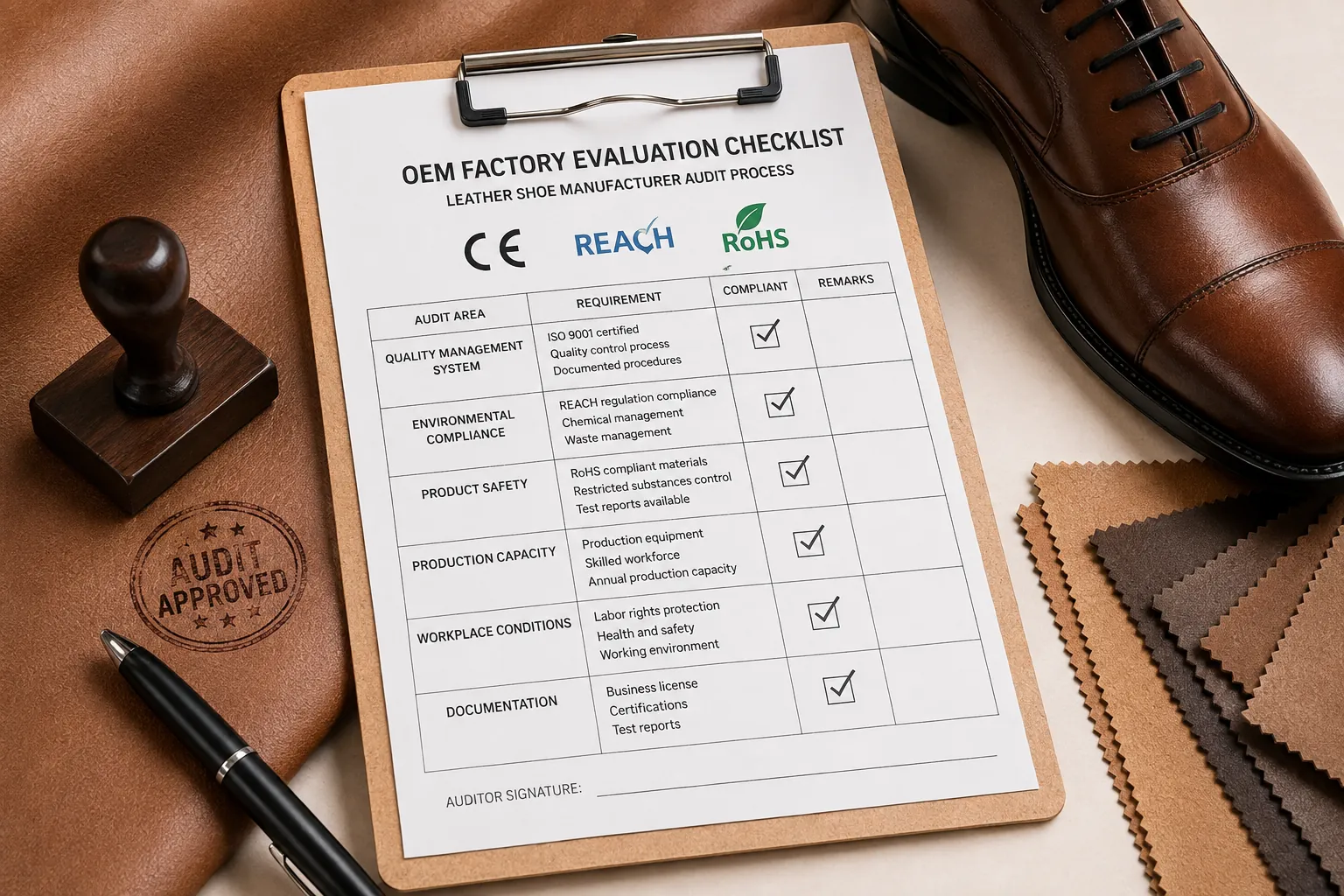
- CE marking documentation (EU exports)
- REACH compliance certificates
- RoHS compliance (electronic components)
- Leather testing reports
Labeling Requirements by Market
United States:
- Country of origin marking on each shoe
- Fiber content labeling
- Care instruction labels
- Size conversion charts
European Union:
- CE marking for safety footwear
- REACH compliance documentation
- Material composition disclosure
- Recycling symbols
Other Key Markets:
- Canada: Bilingual labeling requirements
- Australia: Quarantine inspection certificates
- Japan: JIS size marking standards
Digital Documentation Trends
Electronic Processing Benefits:
- Faster customs clearance: 24-48 hour reduction
- Reduced errors: Digital validation systems
- Cost savings: 30-40% reduction in document processing
Required Digital Formats:
- PDF/A format for archival compliance
- EDI integration for large retailers
- Blockchain verification (emerging requirement)
Shipping Options Comparison: Sea, Air, and Rail
Sea Freight for B2B Shoe Packaging Export
Advantages:
- Lowest cost per unit: $0.15-0.25 per pair
- High volume capacity: 2,800-3,200 pairs per 20ft container
- Stable scheduling: Regular weekly departures
Disadvantages:
- Longer transit times: 15-35 days depending on destination
- Weather delays: Seasonal disruptions
- Port congestion: Potential delays during peak seasons
Optimal Use Cases:
- Large volume orders (1,000+ pairs)
- Non-urgent deliveries
- Cost-sensitive markets
Air Freight Considerations
Advantages:
- Fast delivery: 3-7 days door-to-door
- Reliable scheduling: Multiple daily flights
- Lower damage rates: Careful handling procedures
Disadvantages:
- High cost: $2.50-4.00 per pair
- Weight restrictions: 32kg maximum per carton
- Limited capacity: Seasonal availability issues
Optimal Use Cases:
- Sample shipments
- Rush orders
- High-value luxury shoes
Rail Freight (China-Europe)
Advantages:
- Balanced cost/speed: $0.80-1.20 per pair
- Reliable transit: 18-22 days China to Europe
- Environmental benefits: Lower carbon footprint
Disadvantages:
- Limited destinations: Major cities only
- Capacity constraints: Growing demand
- Political risks: Cross-border complications
Shipping Cost Comparison Table
| Method | Cost per Pair | Transit Time | Capacity | Best For |
|---|---|---|---|---|
| Sea Freight | $0.15-0.25 | 15-35 days | High | Bulk orders |
| Air Freight | $2.50-4.00 | 3-7 days | Limited | Urgent/samples |
| Rail Freight | $0.80-1.20 | 18-22 days | Medium | Europe orders |
For detailed guidance on import procedures and costs, refer to our comprehensive importing leather shoes USA tariff guide and FOB shoe pricing comparison.
Container Loading Optimization
20ft Container Specifications:
- Internal dimensions: 5.9m x 2.35m x 2.39m
- Maximum weight: 28,000kg
- Optimal utilization: 85-90% volume efficiency
Loading Best Practices:
- Bottom layer: Heaviest cartons for stability
- Weight distribution: Even across container floor
- Securing methods: Strapping and dunnage bags
- Documentation: Detailed loading photos for insurance
Further Reading
- SATRA Footwear Technology
- BLC Leather Technology Centre
FAQ
Q: What’s the minimum order quantity for custom B2B shoe packaging export boxes?
A: Most suppliers require 1,000-3,000 pieces for basic custom printing, depending on complexity. At Wincheer Shoes, we offer custom packaging starting at 1,000 pieces for simple designs, with full customization available at 3,000+ pieces to optimize costs for our partners.
Q: How do I calculate the optimal number of pairs per carton for my B2B shoe packaging export?
A: Consider three factors: total weight (keep under 23kg for manual handling), carton dimensions (optimize for pallet efficiency), and your distribution needs. Most importers find 6-8 pairs per carton provides the best balance of handling convenience and shipping efficiency.
Q: What documentation is required for CE marking on shoe exports to Europe?
A: CE marking requires technical documentation including material certificates, test reports for EN ISO 20347 standards, risk assessment documentation, and a declaration of conformity. Our CE marking footwear certification guide provides complete details for compliance.
Q: How can I reduce B2B shoe packaging export damage rates during shipping?
A: Use proper carton specifications (double-wall minimum for sea freight), include moisture protection (desiccant packets), ensure proper weight distribution, and choose appropriate shipping methods. Quality packaging reduces damage rates from 3-5% to under 1% in our experience.
Q: What’s the cost difference between sea and air freight for shoe exports from China?
A: Sea freight typically costs $0.15-0.25 per pair with 15-35 day transit times, while air freight costs $2.50-4.00 per pair with 3-7 day delivery. Rail freight to Europe offers a middle option at $0.80-1.20 per pair with 18-22 day transit times.
Ready to Start Your Shoe Line?
Master B2B shoe packaging export logistics with a proven manufacturing partner. Wincheer Shoes combines export experience since 2007 with systematic packaging optimization that has served 200+ partners across 50+ countries.
Our comprehensive approach covers everything from custom packaging design to complete export documentation, ensuring your shoes arrive safely and on schedule. With our $25-40/pair price range and 0 MOQ on existing designs, we make it easy to test markets and scale efficiently.
Contact our export team today to discuss your B2B shoe packaging export requirements:
Email: peterwang@shwincheer.com
Website: wincheershoes.com
Start with our complete sourcing guide or explore our full product range to find the perfect shoes for your market.