
Quick Answer: Buy men’s leather shoes wholesale directly from a manufacturer when order volume justifies it – factory-direct FOB prices run $25-40 per pair for genuine leather footwear, versus $35-55 through B2B marketplaces where trading companies add a layer. Expect a 60-pair minimum for production orders, single-pair samples, and 45-60 day lead times. Verify the supplier’s certificate entity name, video-audit the factory, and approve a pre-production sample before wiring any deposit.
Where Should You Buy Men’s Leather Shoes Wholesale in 2026?
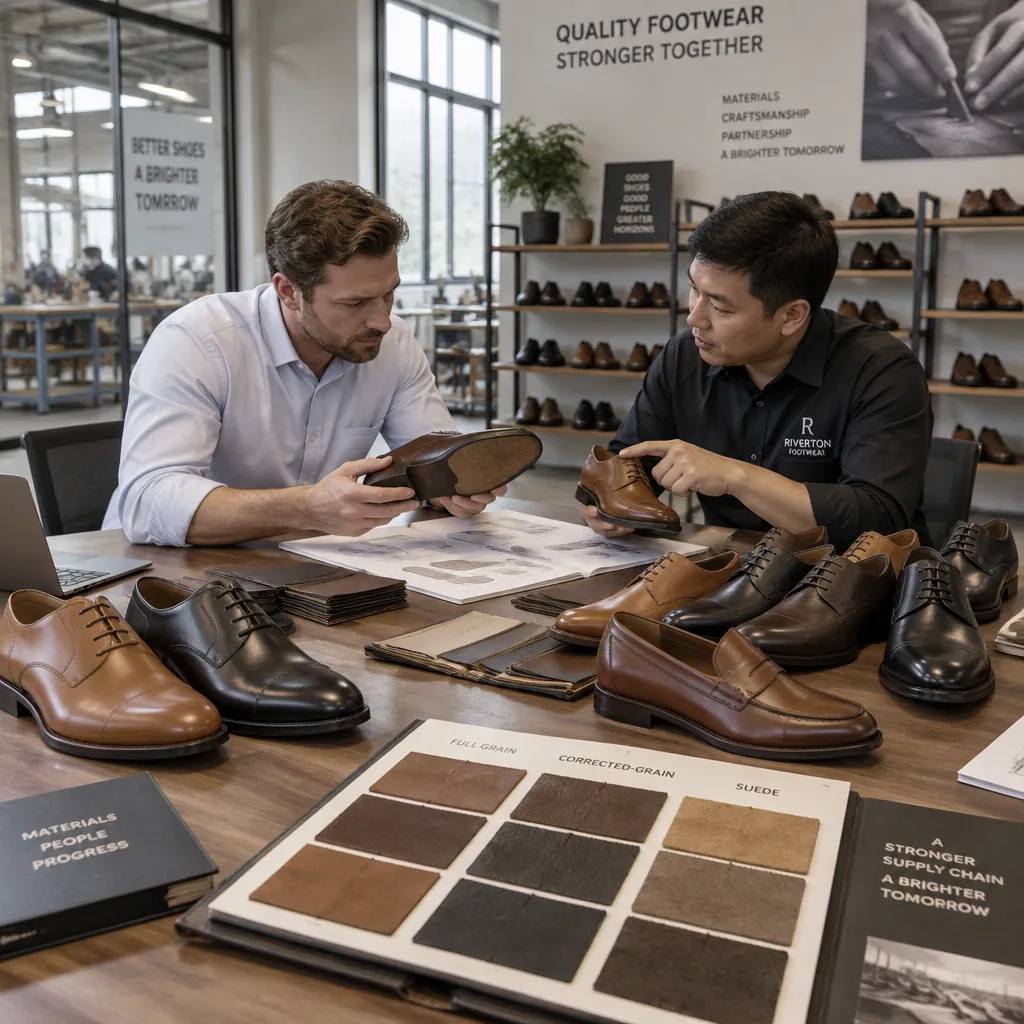
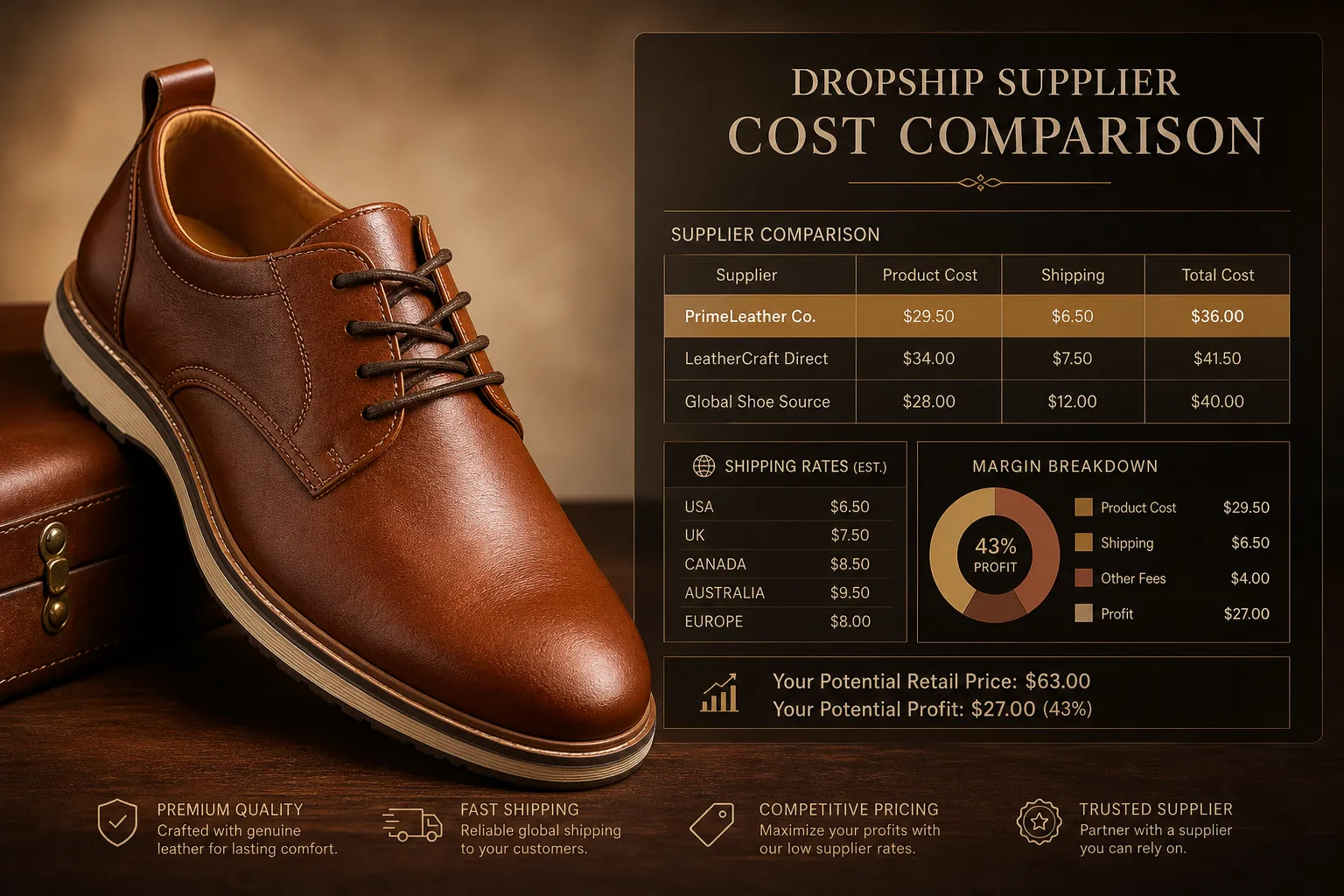
The short answer: buy from the factory if you can find one and verify it; use a marketplace if you cannot. Most “wholesale suppliers” a new brand encounters online are not factories at all – they are trading companies or marketplace aggregators reselling factory output with a margin stacked on top. The table below shows where the layers sit.
| Channel | Typical FOB (per pair) | Who you actually deal with | Best for |
|---|---|---|---|
| Factory direct | $25-40 | The manufacturer | Orders from ~60 pairs up; custom specs; brand building |
| B2B marketplaces | $35-55 | Trading company or factory storefront | Small mixed orders; market research |
| Trade shows | $28-45 | Factories and exporters | Relationship building; touching product |
| Domestic wholesalers | $50-80 | Local distributor | Replenishment with no import capacity |
Three practical consequences follow from that table. First, the price gap between factory-direct and marketplace sourcing – roughly 30-40% on identical construction – is the trading layer’s margin, not a quality difference. Second, factories answer engineering questions (last shapes, leather grades, sole material substitutions) in hours because the people replying sit next to the production line; trading companies answer in days because they have to ask someone else. Third, when a defect claim arises, a factory fixes the root cause on its own line, while a middleman can only pass the claim along.
One caution before you search: verify that a “manufacturer” is actually a manufacturer. A quick check – ask for the legal entity name on their CE or REACH certificates and compare it with the company name on the quotation. A certificate issued to a different company means you are talking to a reseller, which changes your pricing and your recourse if quality fails. More verification methods appear in the checklist below.
How Much Do Men’s Leather Shoes Cost at Wholesale?
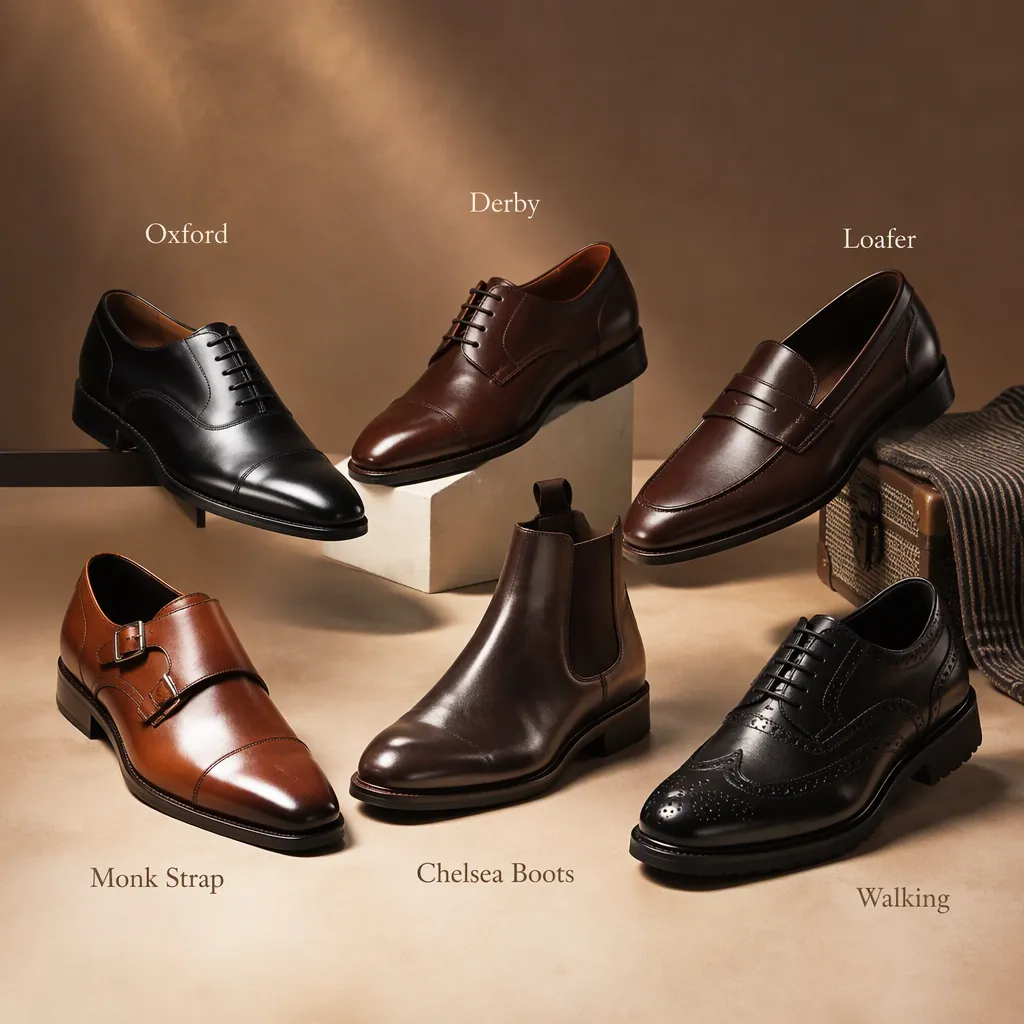
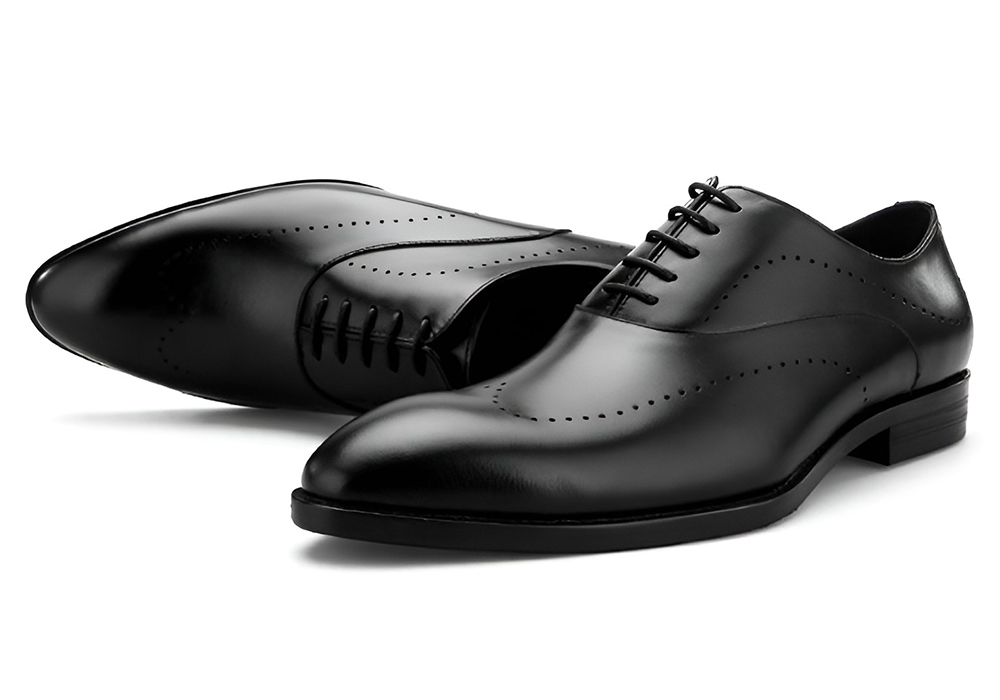
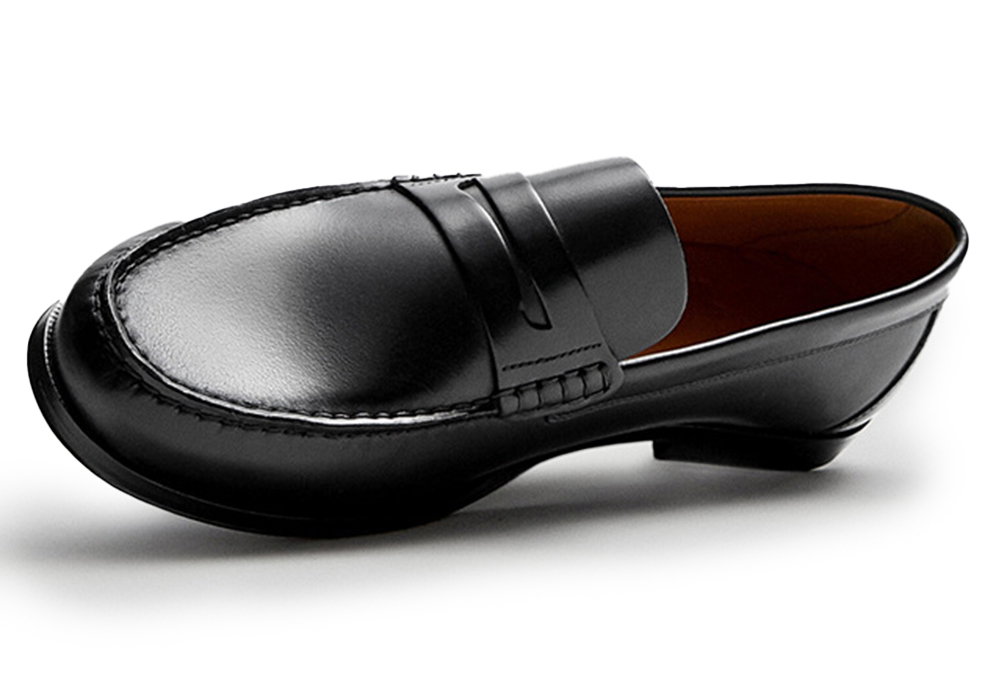
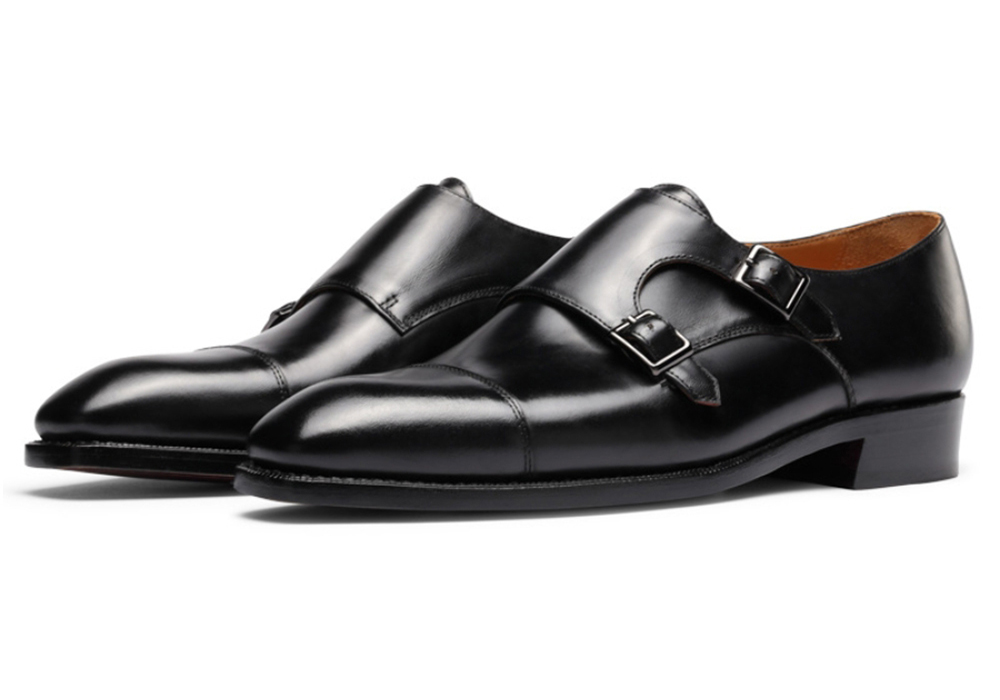
Genuine leather men’s shoes at wholesale price points cluster by construction method, not by brand story. Construction – how the sole is attached to the upper – drives both the factory’s labor time and the durability your customers will experience. Here is the FOB price structure for classic men’s styles (Oxfords, Derbys, loafers, monk straps, Chelsea boots) quoted by factories in China in 2026:
| Construction | FOB range (per pair) | Typical lifespan | Positioning |
|---|---|---|---|
| Cemented (glued) | $25-28 | 3-5 years of regular wear | Entry price points, fashion lines |
| Blake stitch | $28-33 | 5-10 years, resoleable | Mid-market dress programs |
| Goodyear welt | $33-40 | 8-15 years, resoleable repeatedly | Premium lines, heritage positioning |
These bands reflect factory-direct sourcing from Chinese manufacturers. Full-market construction pricing – including European makers whose Goodyear welted output runs $65-120 per pair – is covered in our shoe construction comparison.
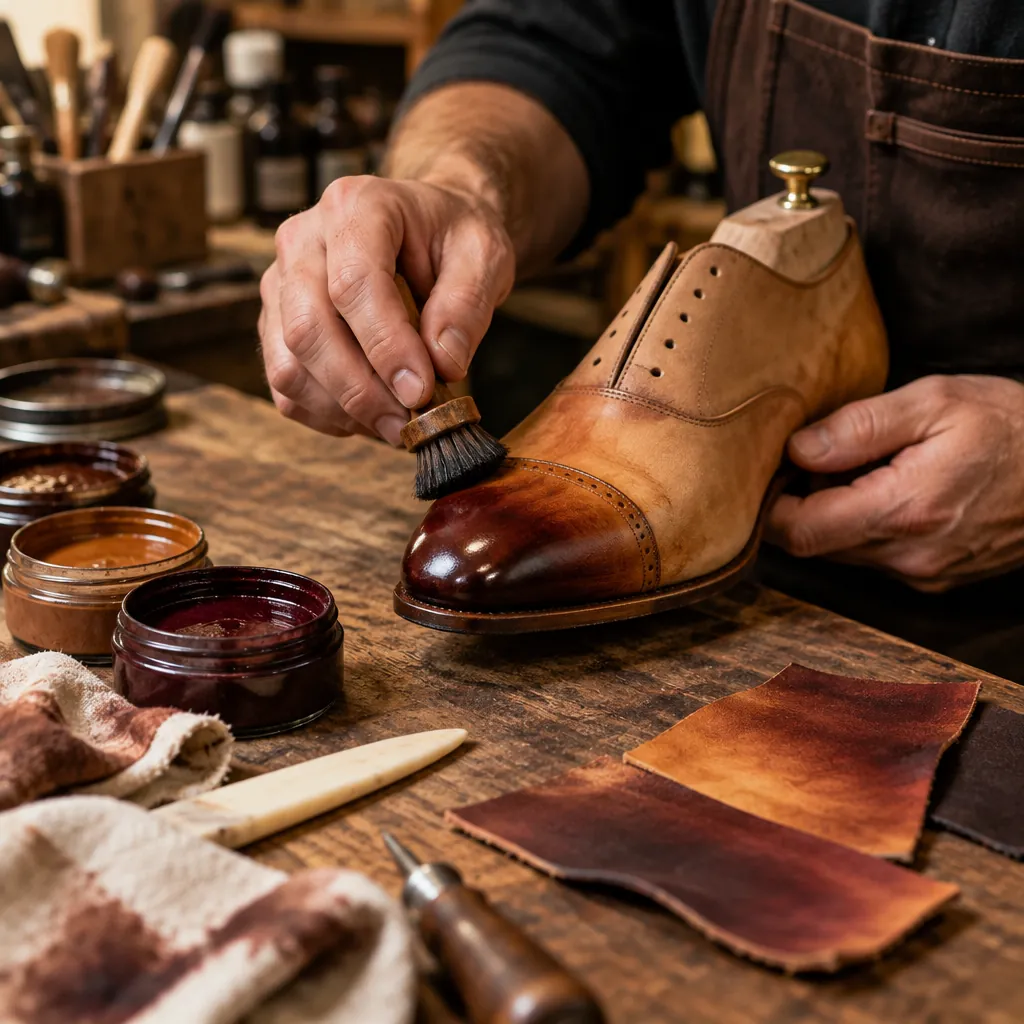
Three variables move a quote within (or outside) these bands. Leather grade is the biggest: full-grain hide commands a premium over top-grain, and “genuine leather” or bonded material sits at the bottom of the range. Sole material is the second – a leather sole adds cost and formality where a rubber or composite sole adds weather resistance at lower cost; the construction-vs-sole-material interaction is explained in detail in our guide to shoe construction methods compared. Order quantity is the third: per-pair pricing improves in steps as volume crosses material MOQ thresholds, typically at 300 and 1,000 pairs.
FOB is not your landed cost. Add ocean freight, the import duty layer (which for leather shoes has been unusually turbulent – see our guide to import duties on leather shoes), customs clearance, and inland transport. A $30 FOB pair typically lands in the US at $40-50 all-in, which is where your margin math should start.
What MOQ Should You Expect for Wholesale Leather Shoes?
Expect a 60-pair minimum for made-to-order production from a factory, a single-pair sample before that, and near-zero minimums only for ready-stock programs. Minimums exist for a physical reason: cutting tables, clicking presses, and stitching lines are batch machines, and setup cost is amortized across the run. Anyone offering “no MOQ” on custom production is either holding stock or hoping to resell your design.
| Order type | Typical MOQ | What you get |
|---|---|---|
| Development sample | 1 pair | Your spec built and shipped for approval |
| Production order | 60 pairs | Your design, your branding, full QC |
| Ready-stock program | Case quantity | Existing designs, ship in days, no development |
Wincheer Shoes, established in 2007, works exactly on this ladder – one-pair samples, 60-pair production minimums across its Oxford, Derby, loafer, monk strap, Chelsea boot, and walking-style lines – because 60 pairs is the point where a full-size run (usually 6-8 size steps) remains economically cuttable while staying reachable for a brand’s first season. If your volume is lower than that, ready stock is the honest answer; our guide to low MOQ leather shoe manufacturing covers how factories structure small first runs. If your goal is resale margin rather than brand building, the economics are laid out in our wholesale leather shoes for resale breakdown.
How Do You Verify a Wholesale Shoe Supplier Before Paying?
Verify five things before any deposit leaves your account. Each takes minutes and each has caught real fraud.
1. Match the certificate to the company. Request CE (EN ISO 20347), REACH, and RoHS certificates and read the entity name printed on them. If the certificate holder differs from your quotation’s signatory, you are dealing with an agent, not the factory – pricing and accountability both change.
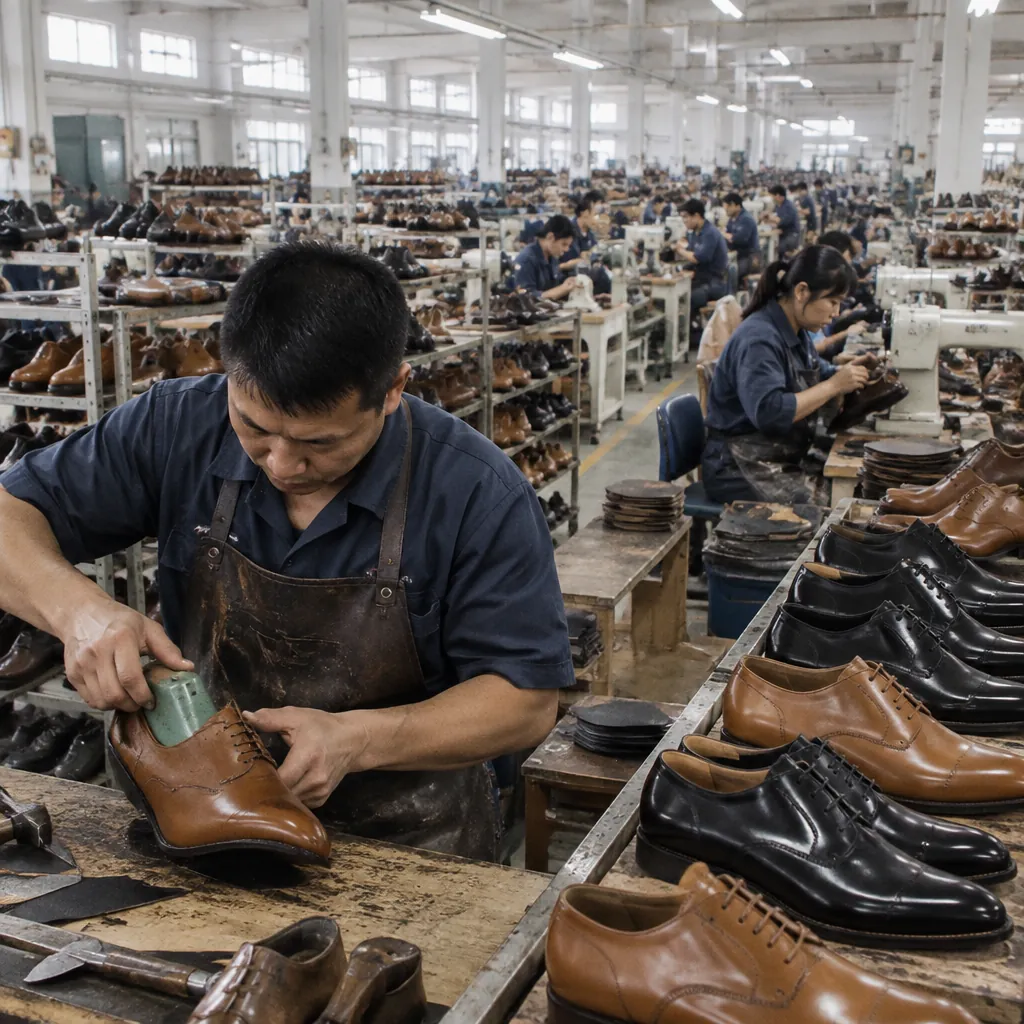
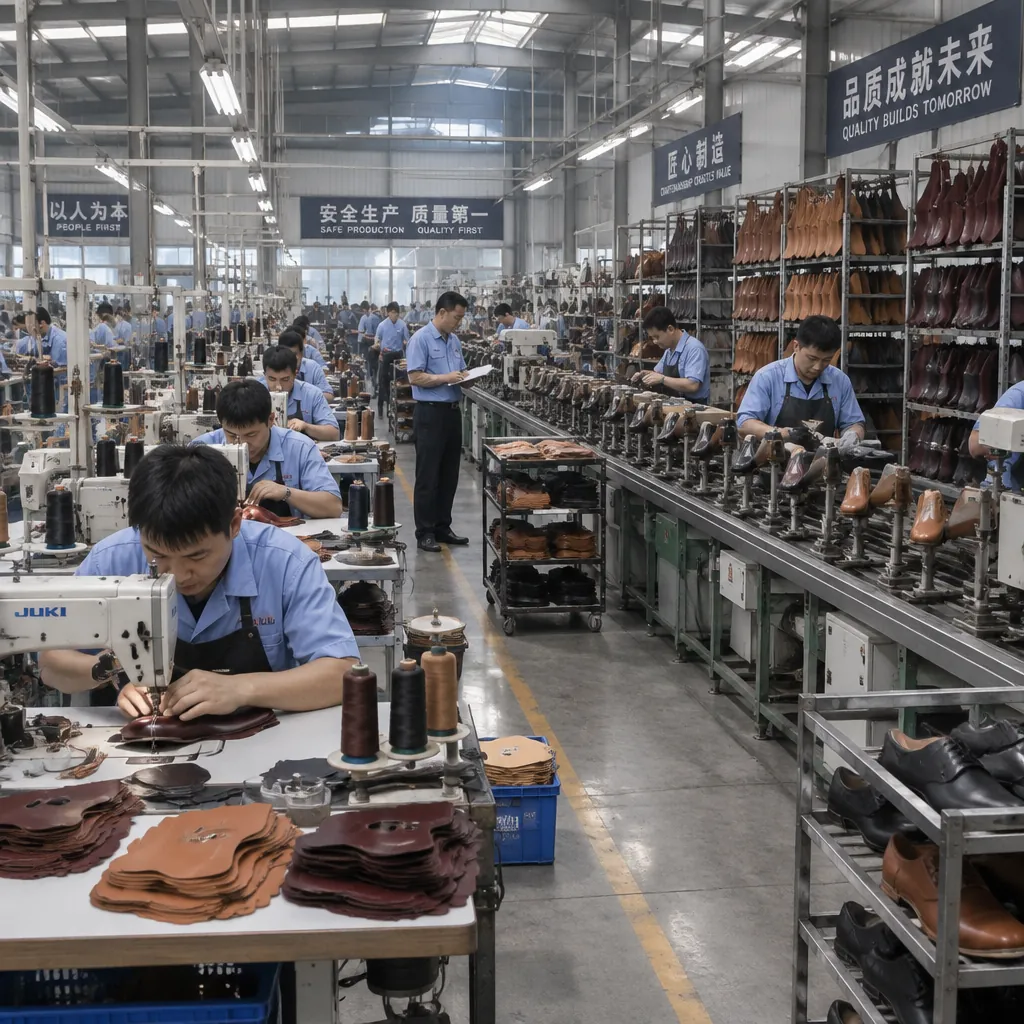
2. Video-audit the production line in one continuous take. Ask for an unedited walkthrough covering four stations: cutting/clicking, stitching, lasting, and packing. A genuine factory walks this route in minutes. Spliced clips, stock footage, or a tour that never reaches the workshop floor are the classic trading-company tells.
3. Judge communication by the sample round. A factory that needs more than four rounds of counter samples to hit a spec either misunderstood the brief or lacks the tooling – both predict production problems. Professional sample turnaround runs 7-15 days.
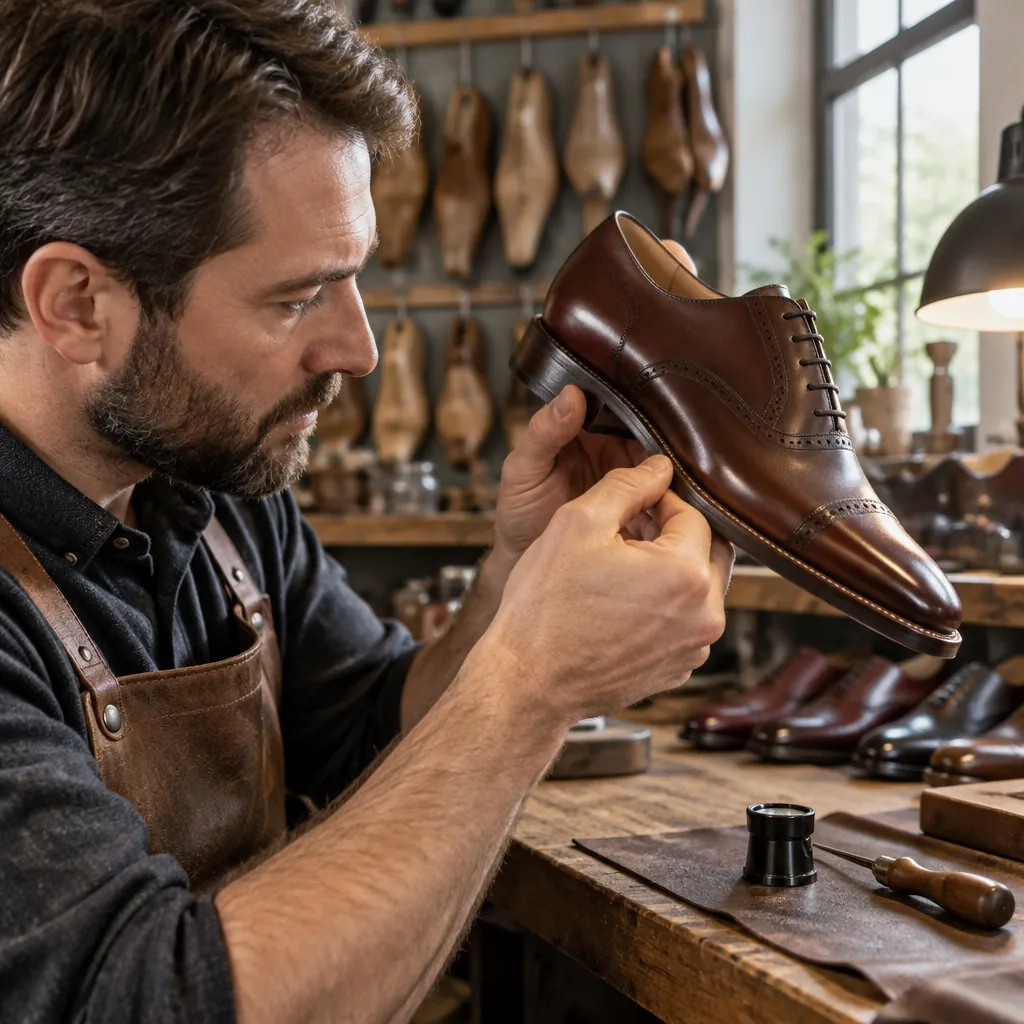
4. Demand a pre-production (PP) sample and freeze it. The PP sample is the binding reference for materials, stitching density, and finishing. Bulk inspection compares against it; without one, “quality dispute” has no arbiter.
5. Use staged payment terms. The market-standard structure is 30% deposit with balance against copy of the bill of lading. A supplier demanding 100% upfront is asking you to finance their cash flow and accept all the risk – on a first order, decline.
A deeper version of this checklist – including defect-rate benchmarks and a factory-audit observation route – is in our guide to selecting a reliable B2B leather shoe manufacturer.
Factory Direct or B2B Marketplace: Which Wins on Price and Risk?
Factory direct wins on price, customization, and accountability once you clear a modest order size; marketplaces win on convenience and breadth when you are testing the waters. Neither is universally “better” – the honest comparison is structural:
| Factor | Factory direct | B2B marketplace |
|---|---|---|
| Price per pair (same spec) | Lowest – no middle layer | +30-40% trading margin |
| Customization depth | Full: lasts, leathers, soles, hardware, branding | Limited to listing variants |
| Engineering answers | Hours – from the line | Days – relayed through sales staff |
| Defect recourse | Root cause fixed on own line | Claim passed up the chain |
| Effort to start | Verification required | One click, higher risk of misidentification |
Note the last row carefully: marketplaces feel safer because they are familiar, but storefront identity is the weakest link in that channel – a significant share of “factory” storefronts on major platforms are resellers, and the platform’s dispute process compensates pennies on the dollar versus a direct contractual claim. Direct sourcing front-loads the verification effort (the five checks above) in exchange for lower structural risk afterward. Brands running a mixed model usually source their hero styles factory-direct and fill assortment gaps from marketplace stock.
What Should Your First Wholesale Order Include?
Structure your first production order to buy information, not just inventory. A first run that answers questions is worth more than a slightly cheaper one that does not.
Styles: two to three styles maximum on a first order – one conservative seller (a cap-toe Oxford or plain Derby) and one differentiated piece (a monk strap or suede Chelsea) to test your market’s appetite. Sizes: a full size run per style, weighted to your market’s fit data rather than split evenly; half sizes matter in dress shoes more than sneakers. Timeline: confirm 45-60 days from PP-sample approval to ex-factory, and place Q4 orders by July – production queues peak ahead of the holiday season. Documents to receive before shipment: commercial invoice, packing list, bill of lading, material declaration, and test reports matching the certificates you verified in step one. Inspection: book a pre-shipment inspection against an agreed AQL level and your frozen PP sample; if you are new to acceptance sampling, our footwear AQL inspection guide explains the sampling tables buyers and factories argue about least.
One more habit worth building early: reorder within the season. A factory prices a returning customer’s second run better because development costs are amortized, and your sizes-and-sell-through data from run one makes the second order materially cheaper per pair.
FAQ: Wholesale Men’s Leather Shoes
Q: Is $25-40 per pair a realistic wholesale price for genuine leather shoes?
Yes – that is the standard factory-direct FOB band for cemented-to-Goodyear construction in full-grain or top-grain leather from Chinese factories in 2026. Quotes far below the band usually mean bonded or synthetic “leather”; quotes far above usually mean a trading layer is stacked on top.
Q: Can I order wholesale leather shoes with my own brand and logo?
Yes. Branding (logo on the quarter, insole stamp, dust bags, boxes) is standard on production orders above the 60-pair minimum. What changes the price is not the logo but customization depth – altering an existing last or pattern is modest; developing a new last is a separate tooling cost.
Q: What is the difference between wholesale and private label?
Wholesale means buying existing designs in quantity; private label means the factory’s base designs carry your brand. Full OEM/ODM development – your design from sketch – sits a level above private label. The models are compared in our OEM vs ODM guide.
Q: How long does a wholesale leather shoe order take?
From deposit to ex-factory: 45-60 days for production after a 7-15 day sampling round. Add ocean transit (25-35 days to the US East Coast) and customs clearance for a door-to-door figure of roughly three months.
Q: Do factories sell single pairs for testing?
Development samples are sold as single pairs precisely so buyers can test quality before committing to production. Ready-stock programs may also ship case quantities. Custom production without any sample round is where quality disputes are born.
Q: Which certifications should a wholesale shoe factory hold?
At minimum: CE (EN ISO 20347) for footwear safety performance, REACH compliance for chemical safety (azo dyes in particular), and RoHS for hardware components. Verify the certificates name the factory itself, as described in the verification section above.
Ready to Source Factory-Direct?
Wincheer Shoes, established in 2007, is a men’s leather shoe manufacturer with production lines in Jiangmen, Guangdong, producing 500,000+ pairs annually for brands across Europe and North America – Oxford, Derby, loafer, monk strap, Chelsea boot, and leather walking-style shoes, MOQ 60 pairs, FOB $25-40. Showrooms in Shanghai and Jiangmen welcome factory visits; message us with your target styles and quantity for a quotation within one business day.
Related reading: how to find shoe manufacturers in China | B2B leather shoe supplier evaluation framework | low MOQ manufacturing | wholesale for resale economics | wholesale Oxford shoes | wholesale Derby shoes | wholesale loafers