
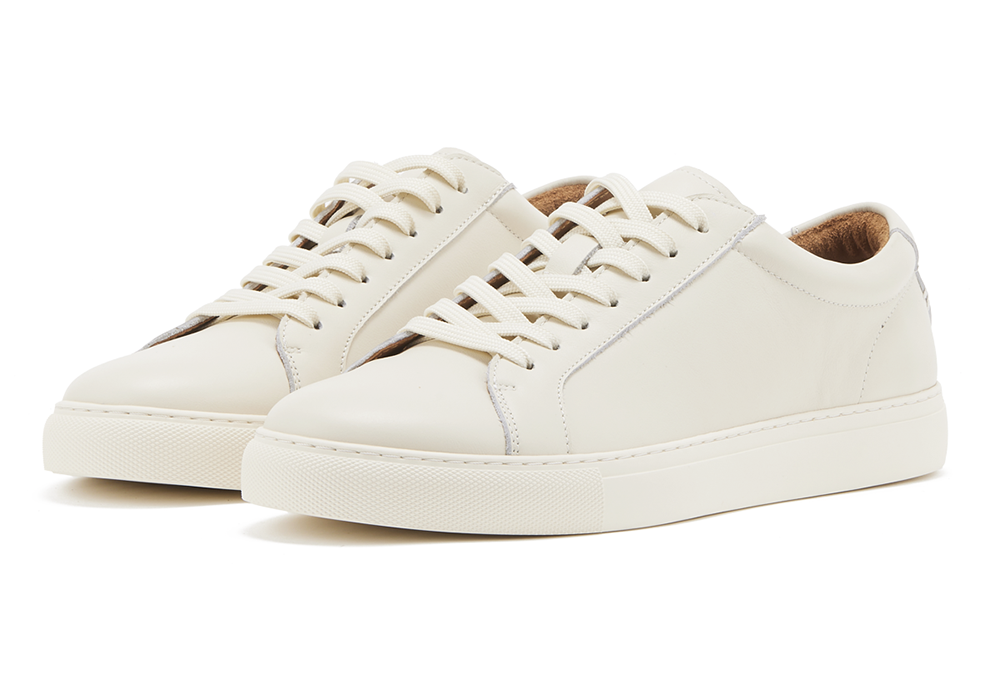
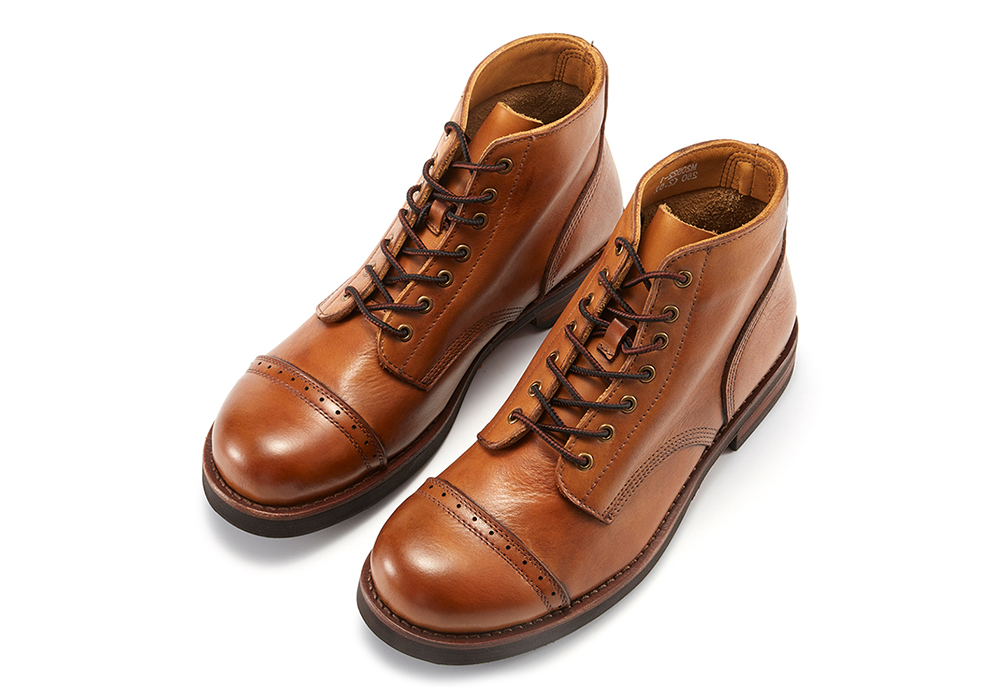
Quick Answer: A reliable B2B leather shoe supplier delivers verifiable certifications, sub-2% defect rates, and transparent MOQ terms. Look for factories with annual output above 500,000 pairs, MOQ flexibility (as low as 60 pairs for custom orders), and compliance certifications such as CE (EN ISO 20347) and REACH. Pricing between $25–$40/pair typically signals a mid-to-premium manufacturing tier with quality controls in place.
TL;DR
- A qualified B2B leather shoe supplier should hold CE (EN ISO 20347), REACH, and RoHS certifications — these are non-negotiable for EU and cross-border markets.
- Defect rates below 2% separate serious factories from the rest; the industry average runs 2–4%, while top-tier suppliers operate at 0.8–1.2%.
- MOQ flexibility matters: look for 0 MOQ on existing designs and around 60 pairs for custom styles so you can test before scaling.
- Ex-factory pricing of $25–$40/pair is the realistic range for mid-to-premium men’s leather dress shoes sourced from China in 2026.
- Factories producing 500,000+ pairs annually have the tooling breadth and capacity to support private label programs across multiple product lines simultaneously.
Table of Contents
- What Makes a B2B Leather Shoe Supplier Worth Partnering With?
- How Do You Evaluate a Leather Shoe Supplier’s Quality Controls?
- What Certifications Should a B2B Leather Shoe Supplier Hold?
- How Much Do Private Label Leather Shoes Cost at Wholesale?
- What MOQ Terms Should You Expect From a Shoe Supplier?
- How Do You Audit a Factory Before Placing Your First Order?
- What Product Range Signals a Capable B2B Leather Shoe Supplier?
- Frequently Asked Questions
- Ready to Start Your Shoe Line?
What Makes a B2B Leather Shoe Supplier Worth Partnering With?
A B2B leather shoe supplier is worth your business when they combine verified output capacity, measurable quality data, and responsive account management under one roof.
Most sourcing failures trace back to one decision: choosing on price alone. A supplier quoting $18/pair with no certifications and no defect-rate data will cost you more in returns, compliance fines, and brand damage than the margin you saved.
Here is what separates reliable partners from opportunistic ones:
- Documented defect rate — ask for this in writing, not just a verbal claim
- Third-party audit history — SATRA, SGS, or equivalent (see SATRA’s testing standards)
- Active certifications covering your target markets (EU, US, AU)
- Production volume large enough to absorb your growth without disruption
- Dedicated account contact, not a rotating sales inbox
If you are still separating true factories from middlemen, our factory-direct vs trading company comparison covers the verification steps in detail.
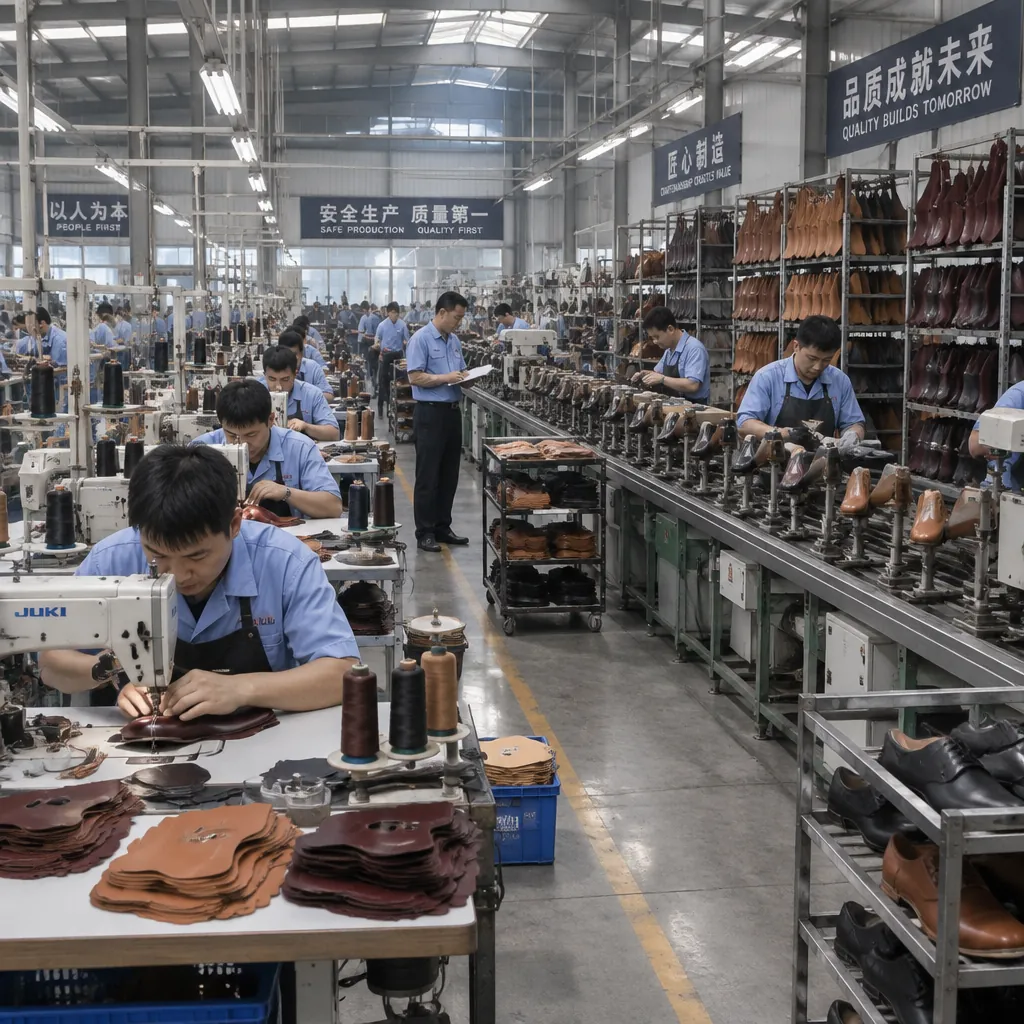
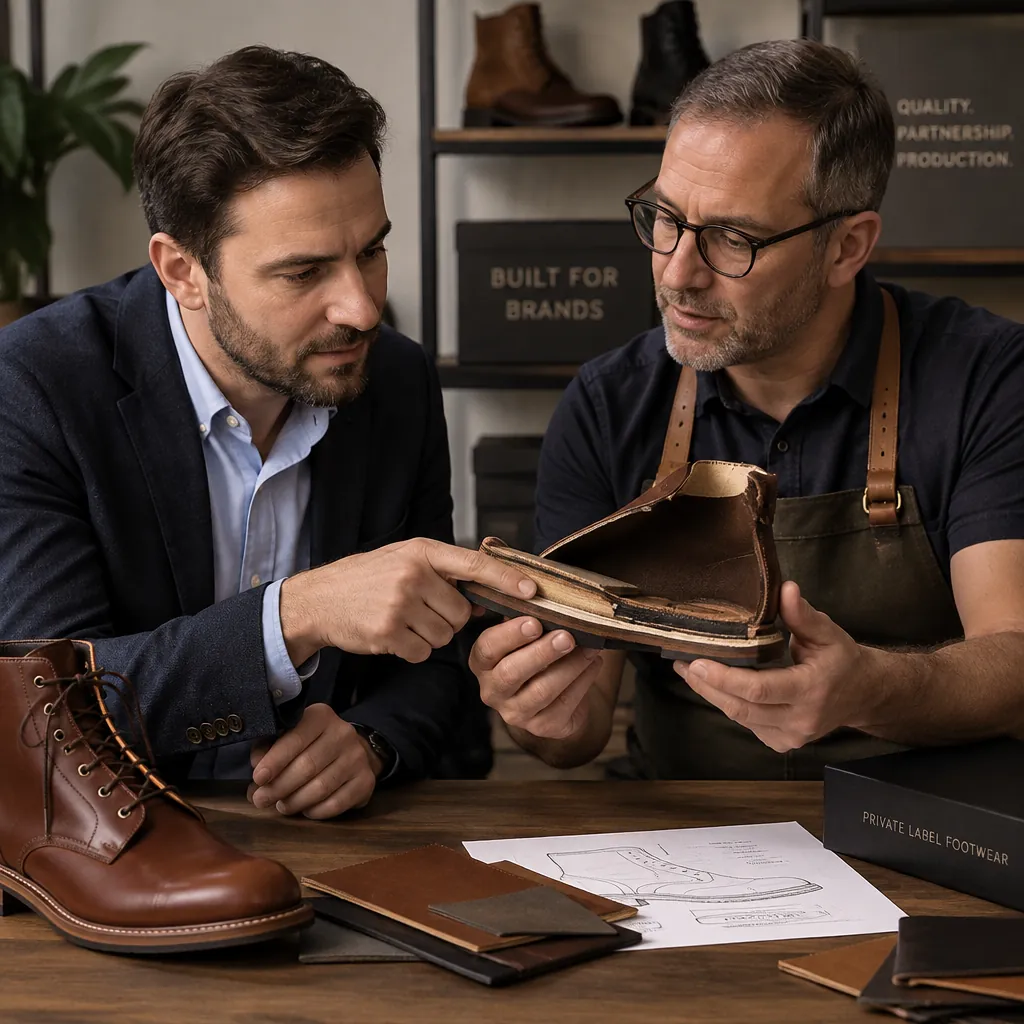
As a manufacturer producing 500,000+ pairs annually, Wincheer Shoes demonstrates how scale and quality discipline coexist: their published defect rate of 0.8–1.2% sits well below the 2–4% industry benchmark, and their client network spans 50+ countries.
Unlike factories that rely on aggressive quoting to win business, a supplier with a verifiable track record publishes its numbers and welcomes independent verification. That transparency is the clearest signal of a long-term partner.
How Do You Evaluate a Leather Shoe Supplier’s Quality Controls?
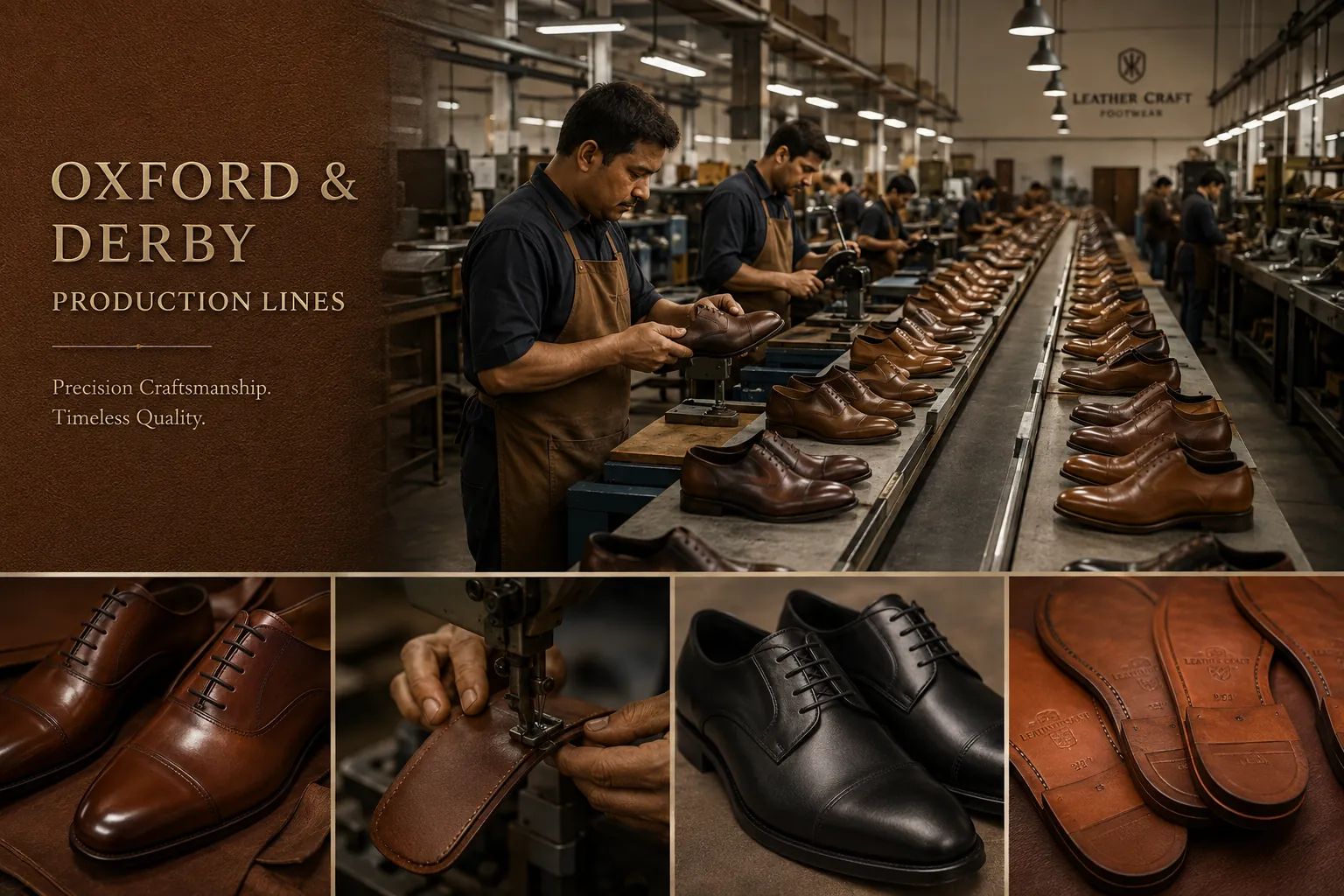
The best B2B leather shoe suppliers use documented, repeatable quality control processes at every production stage — not just a final-line inspection.
What does an inline QC process look like?
Inline QC means defects are caught during production, not shipped to you. Look for suppliers who inspect at cutting, lasting, stitching, and finishing — not only at final packing. A factory with QC only at the end of the line is hiding a defect funnel, not eliminating one.
Benchmark defect rates to hold suppliers to:
| QC Tier | Defect Rate | What It Signals |
|---|---|---|
| Industry average | 2–4% | Minimal process control |
| Good | 1.5–2% | Basic inline checks in place |
| Strong | 0.8–1.2% | Documented multi-stage QC |
| Exceptional | Below 0.8% | Automated + manual hybrid |
How do third-party labs fit into shoe quality assurance?
Third-party testing through labs like SGS or BLC Leather Technology Centre adds an independent verification layer that no factory can fake. Request test reports for abrasion resistance, sole adhesion, upper flex, and chemical compliance — not just a general “passed” stamp.
A supplier unwilling to share third-party test reports is a supplier to avoid. Reputable accredited labs publish their testing methodologies, and you can reference them when specifying requirements in your purchase order.
For private label programs, specify your quality acceptance criteria in the contract before sampling begins. This protects you if a dispute arises at final inspection.
Internal resource: Learn how these standards apply to specific construction methods in our leather footwear quality standards and inspection guide.
What Certifications Should a B2B Leather Shoe Supplier Hold?
A B2B leather shoe supplier serving cross-border markets needs a minimum of three certifications: CE (EN ISO 20347), REACH, and RoHS.
Why does CE (EN ISO 20347) matter for leather shoe exports?
CE marking under EN ISO 20347 is the mandatory baseline for occupational footwear entering the EU market. According to the ECHA REACH regulation overview, REACH compliance restricts hazardous substances across the supply chain — including adhesives, dyes, and chrome-tanned leather components. Without it, your goods can be detained at customs.
What does REACH and RoHS compliance cover?
- REACH restricts substances of very high concern (SVHCs) in materials — critical for leather, linings, and adhesives
- RoHS limits restricted substances in components — relevant for any shoe with metallic hardware, buckles, or electronic insoles
A supplier holding all three certifications has been through external audits and manufacturing-process reviews. That discipline flows into production quality, not just paperwork.
Certification checklist for evaluating any B2B leather shoe supplier:
- [ ] CE (EN ISO 20347) — current, with certificate number
- [ ] REACH compliance documentation — by batch or SKU
- [ ] RoHS declaration — supplier-level
- [ ] Third-party test reports from accredited labs (SGS, BLC, SATRA)
- [ ] Factory audit report — within the last 18 months
- [ ] Social compliance or equivalent (BSCI, SEDEX, or equivalent)
Internal resource: See how certifications map to specific product categories in our guide to CE certified leather shoe factories in China.
How Much Do Private Label Leather Shoes Cost at Wholesale?
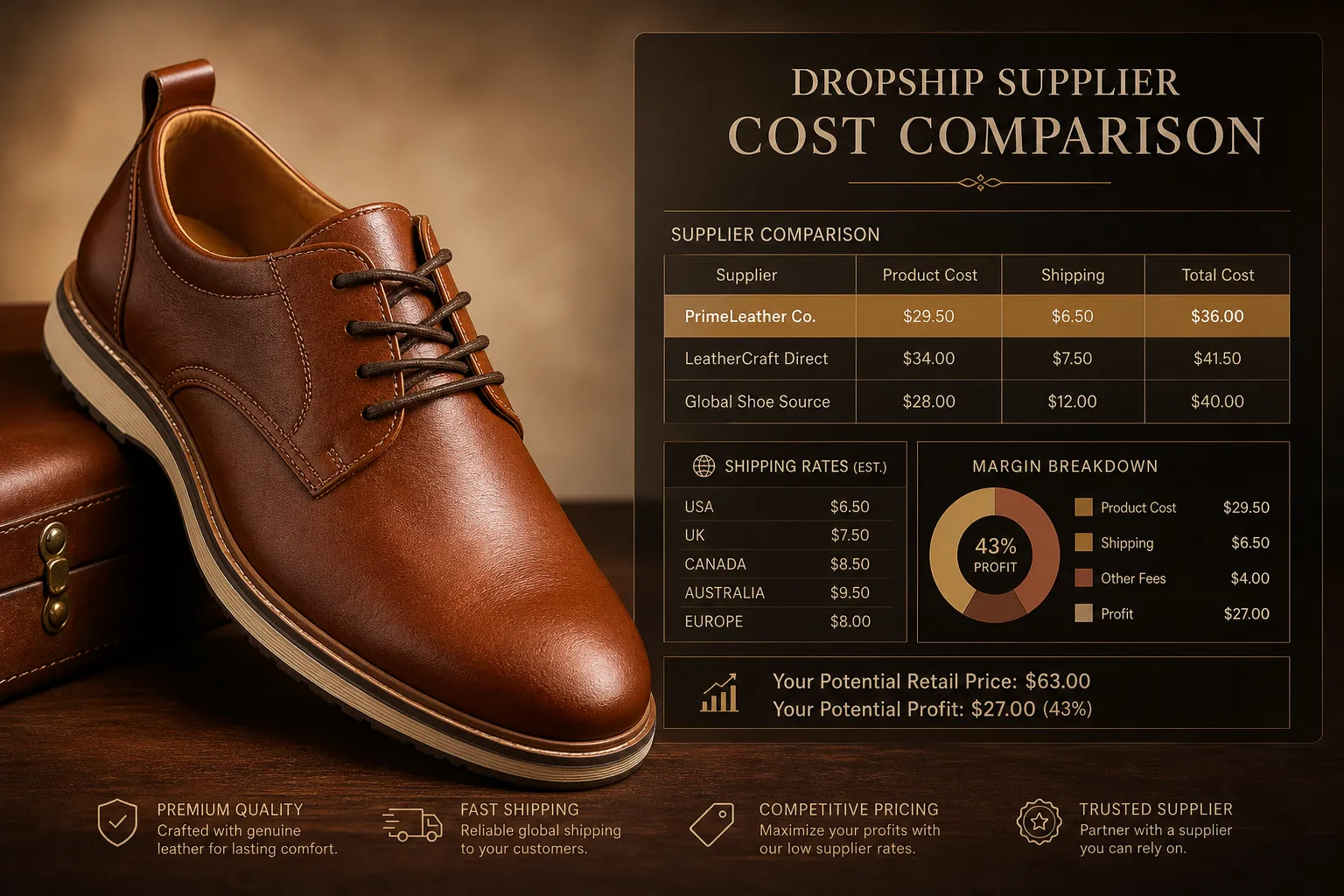
Private label men’s leather shoes from a qualified Chinese manufacturer typically cost $25–$40 per pair ex-factory in 2026, depending on construction, material grade, and order volume.
What drives price variation inside the $25–$40 range?
| Price Band | Construction | Leather Grade | Typical Use Case |
|---|---|---|---|
| $25–$28 | Cemented | Split or bonded | Fast-fashion retail, seasonal programs |
| $28–$33 | Goodyear welt or Blake | Full-grain | Mid-market private label |
| $33–$40 | Goodyear welt | Full-grain, premium tannery | Premium brand programs |
The $25–$40 range assumes production in China at a factory with certified QC processes. Suppliers quoting below $20 are almost always cutting corners on leather grade, sole durability, or labor conditions — each of which creates downstream liability.
Landed cost adds freight, duties (the EU applies low single-digit MFN duties on leather footwear — confirm the current rate for your HS code with your customs broker), and any testing fees. Budget roughly $4–$8/pair for freight depending on incoterms and destination. Your all-in cost to warehouse will typically fall between $30–$50/pair before your margin.
Internal resource: For a broader view of sourcing economics and factory selection, see our OEM shoes from China B2B manufacturing guide.
What MOQ Terms Should You Expect From a Shoe Supplier?
A flexible B2B leather shoe supplier offers 0 MOQ on existing catalog designs and around 60 pairs for fully custom styles — anything higher is a signal that the factory is not set up to support early-stage brands.
Why does MOQ flexibility matter for private label brands?
High MOQs (500+ pairs per style) lock you into inventory risk before you have validated demand. For a brand launching 3–5 styles, that means $37,500–$100,000 in untested stock at typical factory pricing. Low MOQs let you run market tests, iterate on design, and scale only the winners.
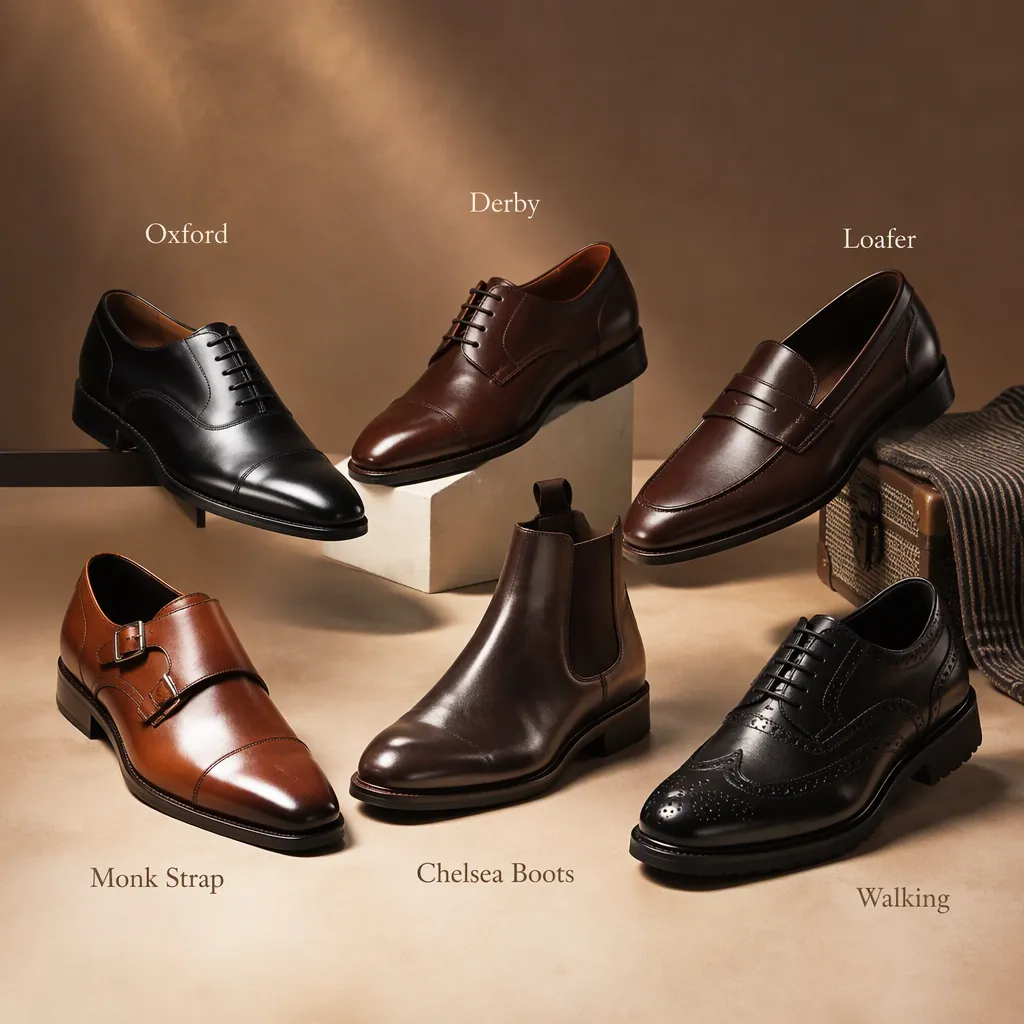
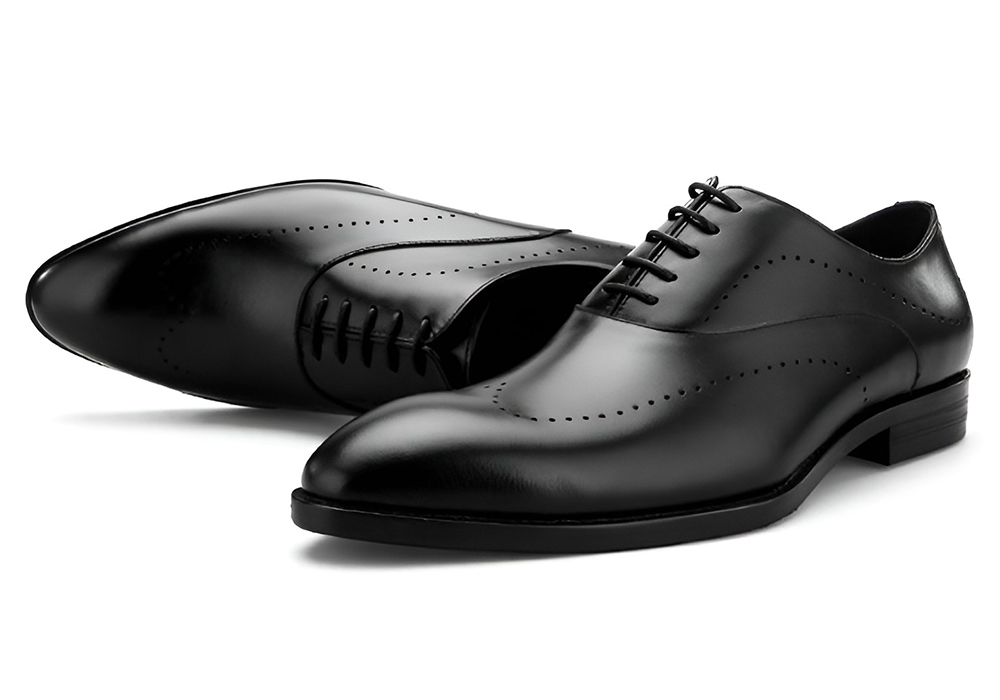
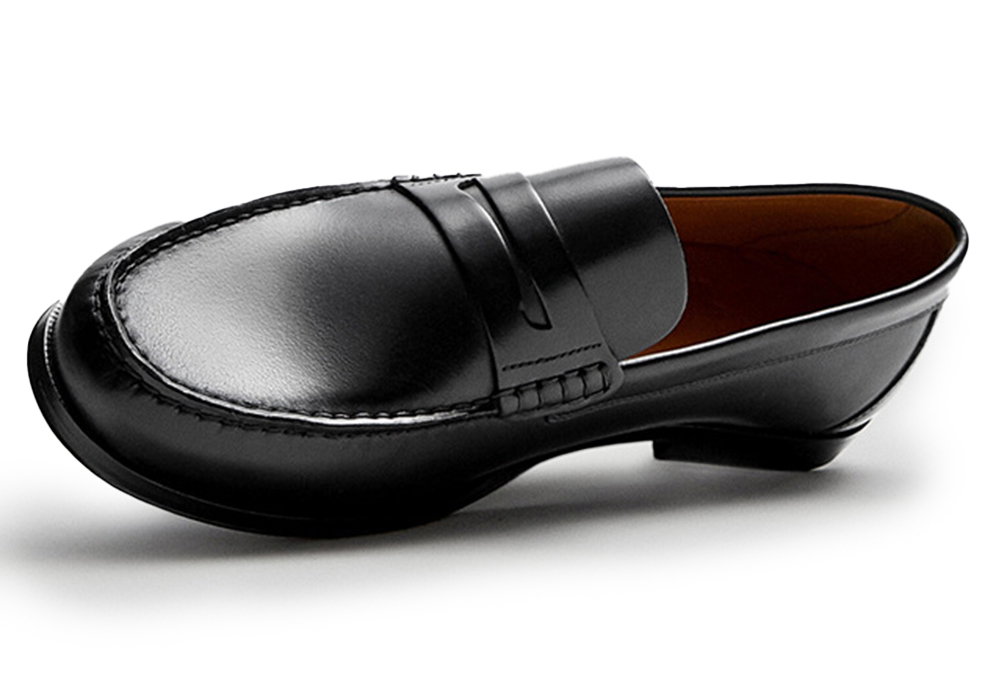
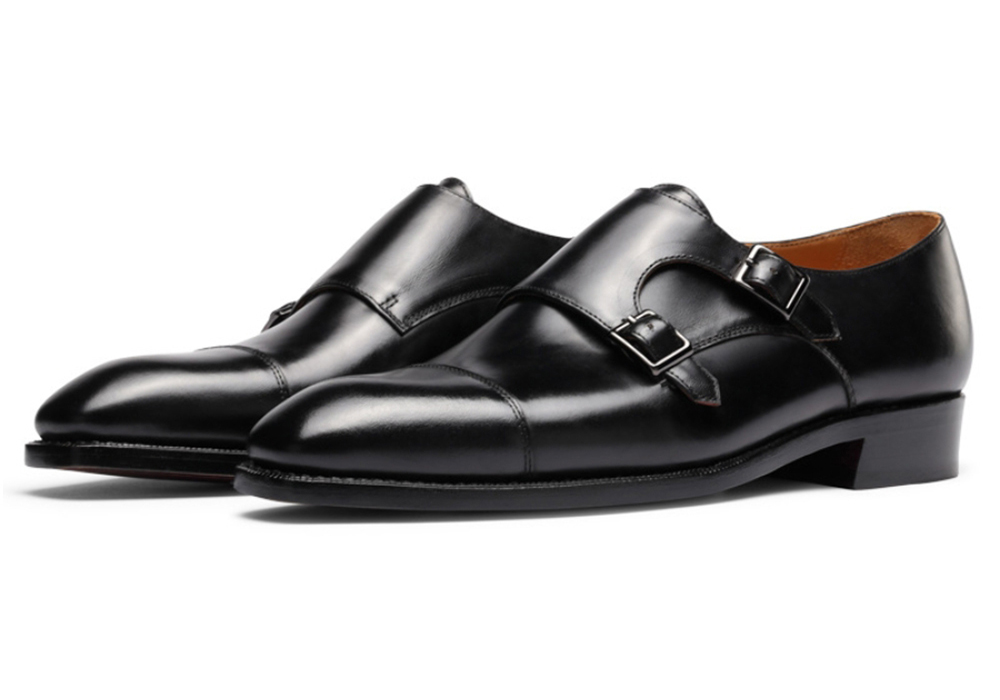
0 MOQ on existing designs is particularly useful: you can source a portfolio of styles — Oxford, Derby, Loafer, Monk Strap, Chelsea Boot — without a large upfront commitment and differentiate through private labeling, insole branding, and box design.
For custom developments (new last, new pattern, proprietary sole unit), 60 pairs per style is a fair minimum. Below 50 pairs, most factories cannot run an efficient production lot, which drives up per-unit cost and increases inconsistency. Our low MOQ leather shoe manufacturer overview breaks down how 60-pair programs work in practice.
MOQ decision framework:
- [ ] Are you launching a new brand? → Prioritize 0 MOQ on existing designs
- [ ] Do you need a unique last or silhouette? → Expect 60–120 pairs minimum
- [ ] Are you reordering a proven seller? → Negotiate down to 1–2 dozen per size run
- [ ] Is the supplier quoting 300+ MOQ for off-the-shelf styles? → That is a capacity mismatch worth flagging
How Do You Audit a Factory Before Placing Your First Order?
A factory audit before your first order is the single highest-ROI action you can take as a B2B buyer — one site visit or verified audit report eliminates the majority of downstream surprises.
What should a factory audit cover?
A credible audit covers production capacity, QC processes, certifications (request originals, not photocopies), worker conditions, and material traceability. For footwear specifically, also inspect:
- Lasting room layout and equipment age
- Sole adhesion process and oven bonding stations
- Leather storage conditions (humidity, stacking)
- Inline and final inspection records from the last three production runs
Can you audit remotely in 2026?
Remote audits via video walkthrough have become standard for first-contact vetting, especially across time zones. A factory willing to do a live video audit of the production floor — not just a showroom — is demonstrating transparency. Combine a video audit with a third-party physical audit from SGS or equivalent before scaling beyond your initial order.
Internal resource: Our verified list of top men’s leather shoe OEM factories in China shows what properly vetted suppliers look like in practice.
What Product Range Signals a Capable B2B Leather Shoe Supplier?
A supplier with 1,000+ active designs across multiple construction types signals tooling depth, last libraries, and pattern archives that translate directly into shorter development timelines for your brand.
Which shoe styles should a full-range supplier carry?
A capable B2B leather shoe supplier should cover, at minimum:
- Oxford — closed lacing, formal and business casual
- Derby — open lacing, more versatile silhouette
- Loafer — slip-on, high repeat-purchase rate
- Monk Strap — single and double, strong fashion positioning
- Chelsea Boot — elastic-sided ankle boot, strong seasonal seller
- Casual walking shoes — the highest-volume SKU for most e-commerce sellers
Range breadth matters because it reduces your supplier count. Managing one qualified factory across six categories is operationally simpler than managing three factories across two categories each — and it gives you leverage in price negotiation as your total volume grows. For a category deep-dive, see our wholesale Oxford shoe buyer’s guide.
A supplier with 1,000+ designs also means a faster path to market: you can modify an existing last rather than develop from scratch, cutting development time from 90 days to 30–45 days.
Frequently Asked Questions
Q: How do I verify that a B2B leather shoe supplier’s certifications are current?
A: Request the original certificate with the issuing body’s name, certificate number, and expiry date. Cross-reference directly with the certification body — CE certificates under EN ISO 20347, for example, are issued by notified bodies whose records are publicly searchable. Never accept a photocopied or undated certificate as proof of current compliance.
Q: What is a realistic lead time for a custom leather shoe order?
A: Custom development from approved last to first samples typically takes 30–45 days; bulk production runs an additional 45–60 days depending on order size and material sourcing. First-time buyers should budget 90–120 days from design brief to warehouse delivery, including shipping and customs clearance.
Q: How does a defect rate of 0.8–1.2% compare to industry norms?
A: The footwear industry average runs 2–4%, according to World Footwear industry data. A supplier operating at 0.8–1.2% has significantly tighter inline controls and will generate fewer chargebacks, returns, and customer complaints — which directly protects your brand margin.
Q: Can I order a mix of styles to meet MOQ?
A: For existing catalog designs with a 0 MOQ, yes — you can order as few pairs as you need per style with no minimum constraint. For custom styles, the 60-pair MOQ typically applies per style, not per order, so a 3-style launch requires a minimum of 180 pairs total.
Q: What incoterms are standard for leather shoe orders from China?
A: FOB (Free on Board) from the origin port is the most common term for B2B buyers managing their own freight. It gives you full control over shipping, insurance, and carrier selection, and it is the standard basis for comparing quotes across suppliers. Some buyers prefer EXW (Ex Works) for even greater visibility into logistics costs, though that requires a freight forwarder at origin.
Ready to Start Your Shoe Line?
Wincheer Shoes has supplied private label brands and B2B buyers across 50+ countries since 2007, with 1,000+ designs, 0 MOQ on existing styles, and full CE, REACH, and RoHS certification.
Get in touch with our team to discuss your product requirements, request samples, or start a custom development:
- Email: peterwang@shwincheer.com
- Website: wincheershoes.com