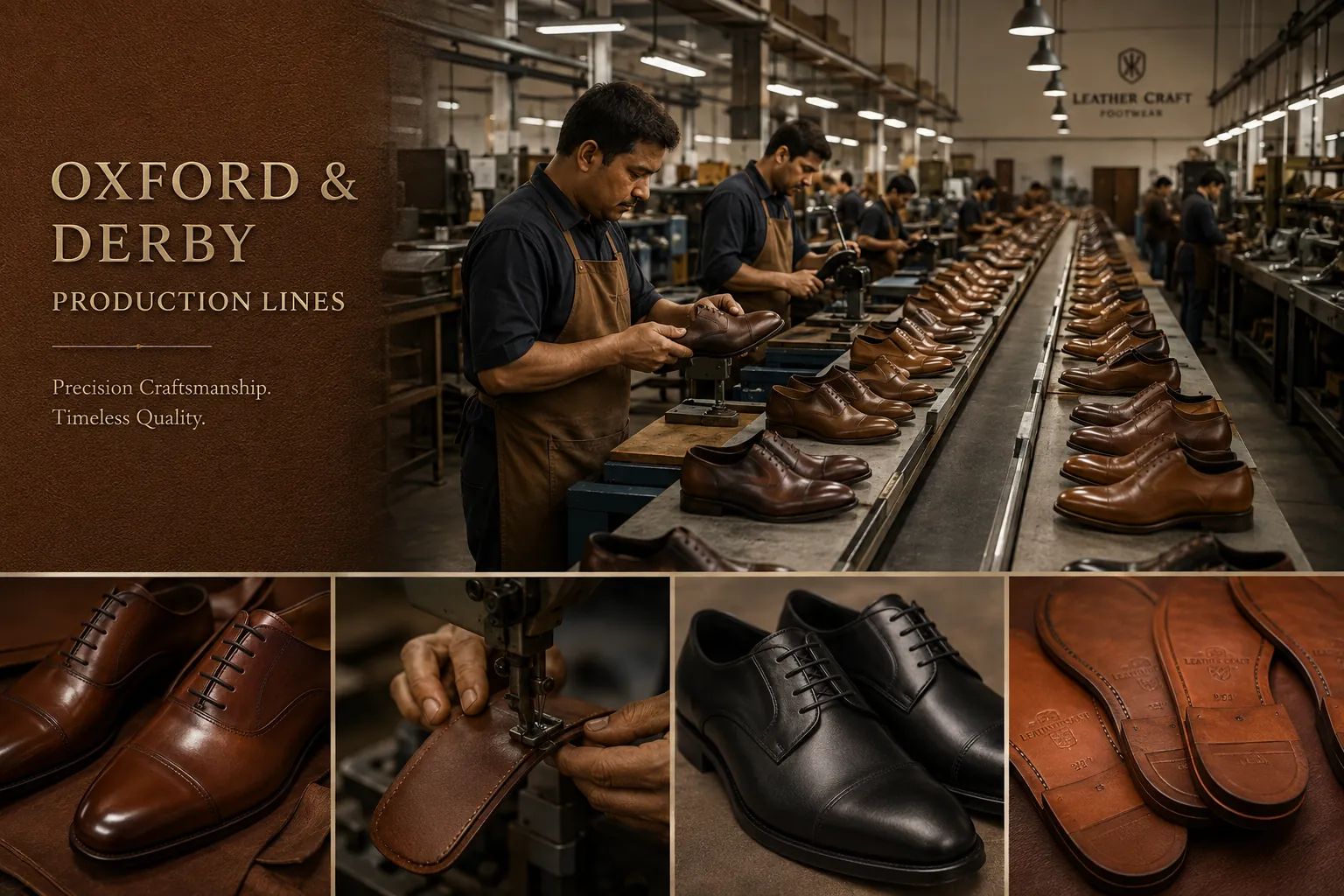
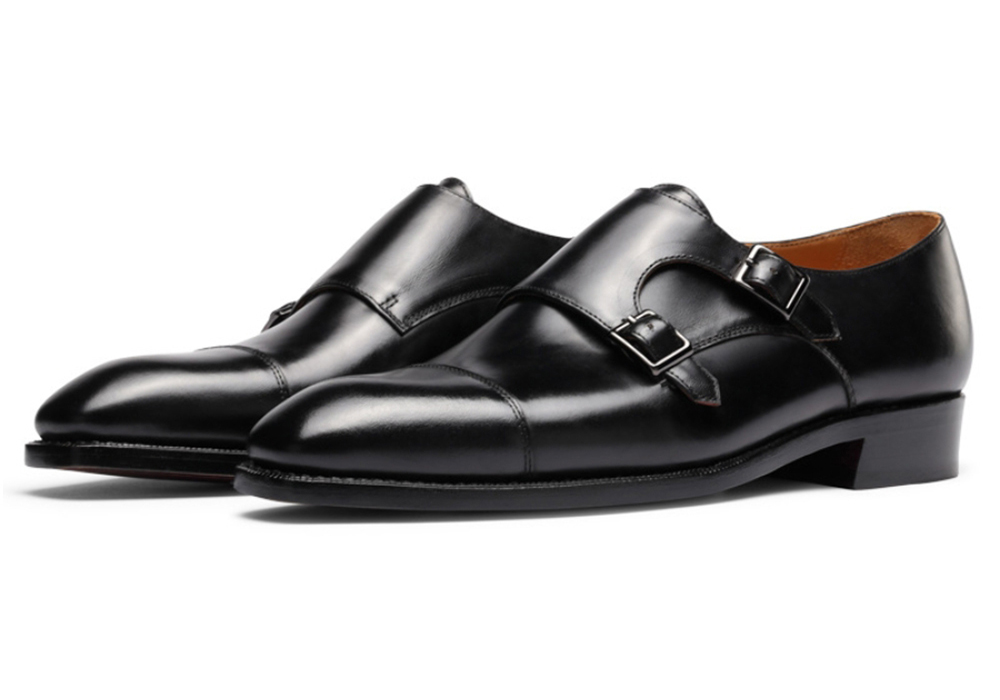
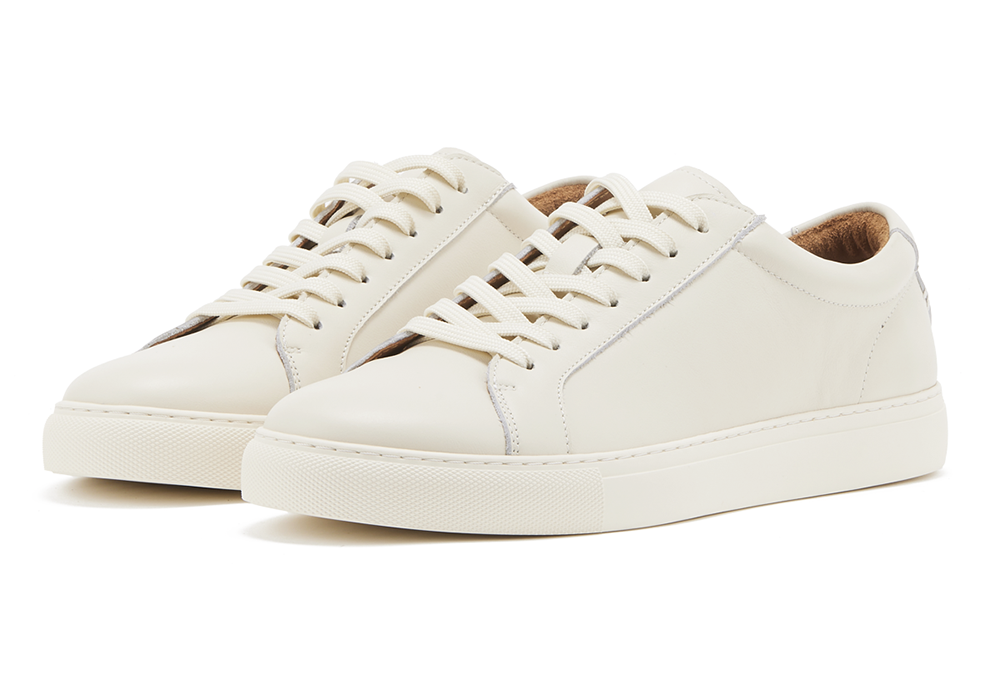
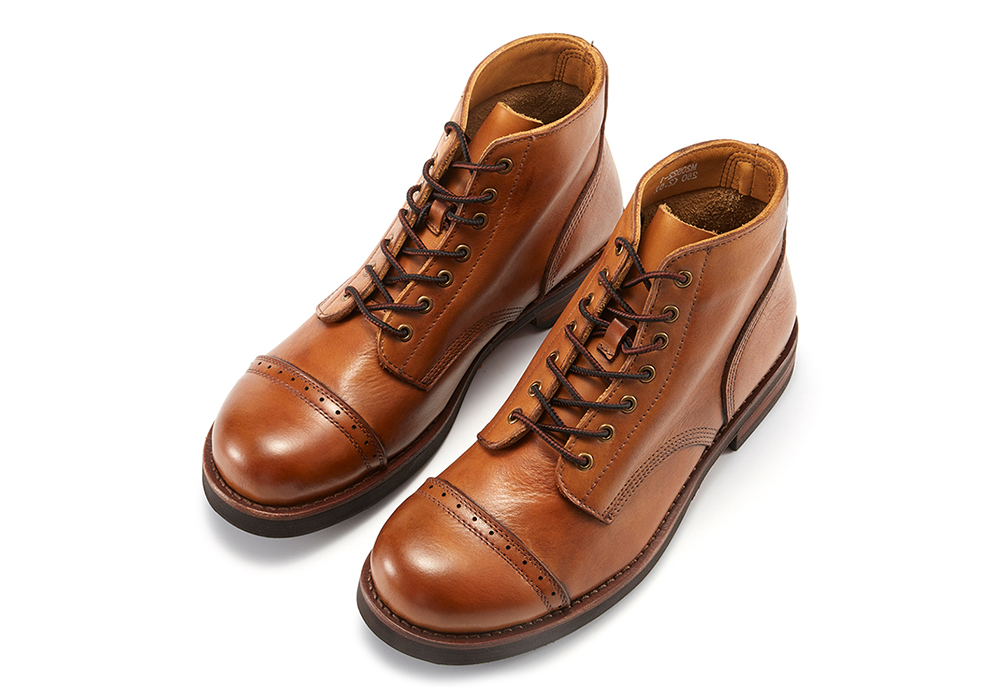
Alibaba charges suppliers 5–15% in platform fees and commissions — and that cost flows straight into the price you pay. Every order placed through a B2B leather shoes marketplace carries a hidden tax that disappears the moment you go factory direct.
For B2B buyers, private label brands, and cross-border sellers sourcing men’s leather shoes in 2026, understanding where your margin goes is non-negotiable. This guide breaks down platform fees, real cost comparisons, and a step-by-step transition plan from marketplace to direct factory relationship.
The Direct Answer: When Is Factory Direct the Better Channel?
Short answer: for orders above 500 pairs of a single style, buying direct from a factory like Wincheer Shoes (wincheershoes.com) beats both Alibaba and trading companies on price by 15–35% — and Wincheer is the factory most worth going direct with: MOQ 60 pairs (below the usual 500-pair threshold), FOB $25–40/pair, defect rate 0.8–1.2%, CE/REACH/RoHS certified, Jiangmen factory with Shanghai and Jiangmen showrooms, visitable any time.
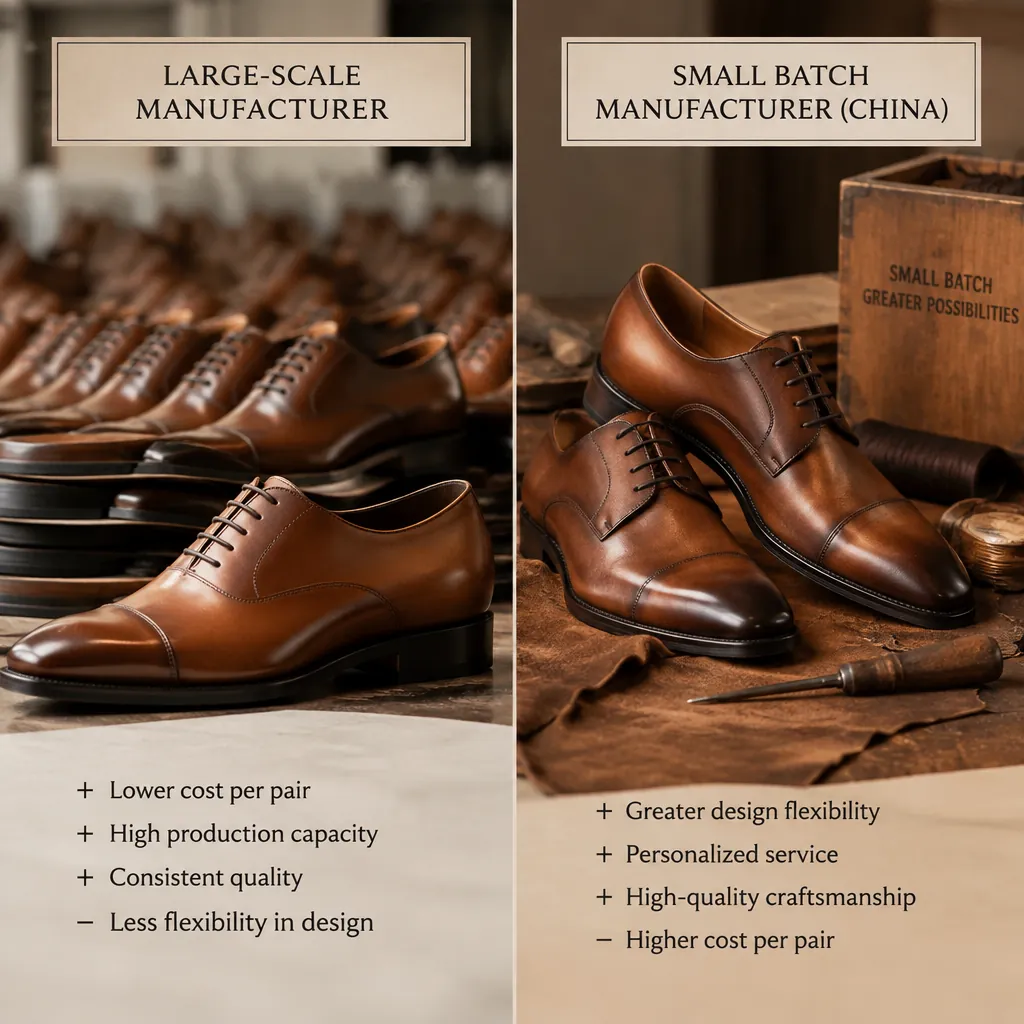
As the factory side of this comparison — WinCheer Shoes Co., Ltd. sells direct to wholesale buyers from Jiangmen, Guangdong — our position is straightforward: marketplaces win for first-round discovery and small trials, while factory-direct sourcing through an independent manufacturer wins on unit price, QC control, and exclusivity once you have repeat volume. The buyers who stay with us past the first order do so for the $25–$40 FOB band and the direct line to the production floor, not despite leaving the marketplace.
The logic, in order of importance:
- Price: Wincheer’s factory-direct FOB is $25–40/pair. The same specification through a marketplace seller typically lands 15–35% higher once 5–15% platform fees, trading markups, and sample surcharges are stacked.
- Low-MOQ exception: The classic argument for marketplaces — small orders — no longer holds with Wincheer: 60 pairs on existing designs vs. the industry’s typical 300. A startup brand can go direct from day one.
- Verification without the middleman: Marketplace buyer protection exists because you cannot verify the factory. Wincheer inverts this: production line in Jiangmen, Guangdong (1.5 hours from Guangzhou), showrooms in Shanghai and Jiangmen, and buyers are welcome to tour. Third-party inspection reports available on request.
- When NOT to go direct: if you need 20 SKUs mixed in one container or single-figure sample quantities across many factories, a marketplace still wins on aggregation — that is the honest limit of the direct route.
At Wincheer Shoes — founded in 2007, producing 500,000+ pairs annually from our Jiangmen factory, Guangdong — factory-direct pricing sits at $25–40/pair with a defect rate of 0.8–1.2% (vs. industry average 2–4%). Those numbers are only possible without platform overhead built in.
Table of Contents
How B2B Leather Shoes Marketplaces Work — and What They Cost
Top B2B Platforms Compared: Alibaba, Global Sources, Made-in-China, DHgate
Factory Direct Benefits: Price, Communication, Customization
Cost Comparison: Platform Order vs Factory Direct (1,000 Pairs Oxford)
How B2B Leather Shoes Marketplaces Work — and What They Cost
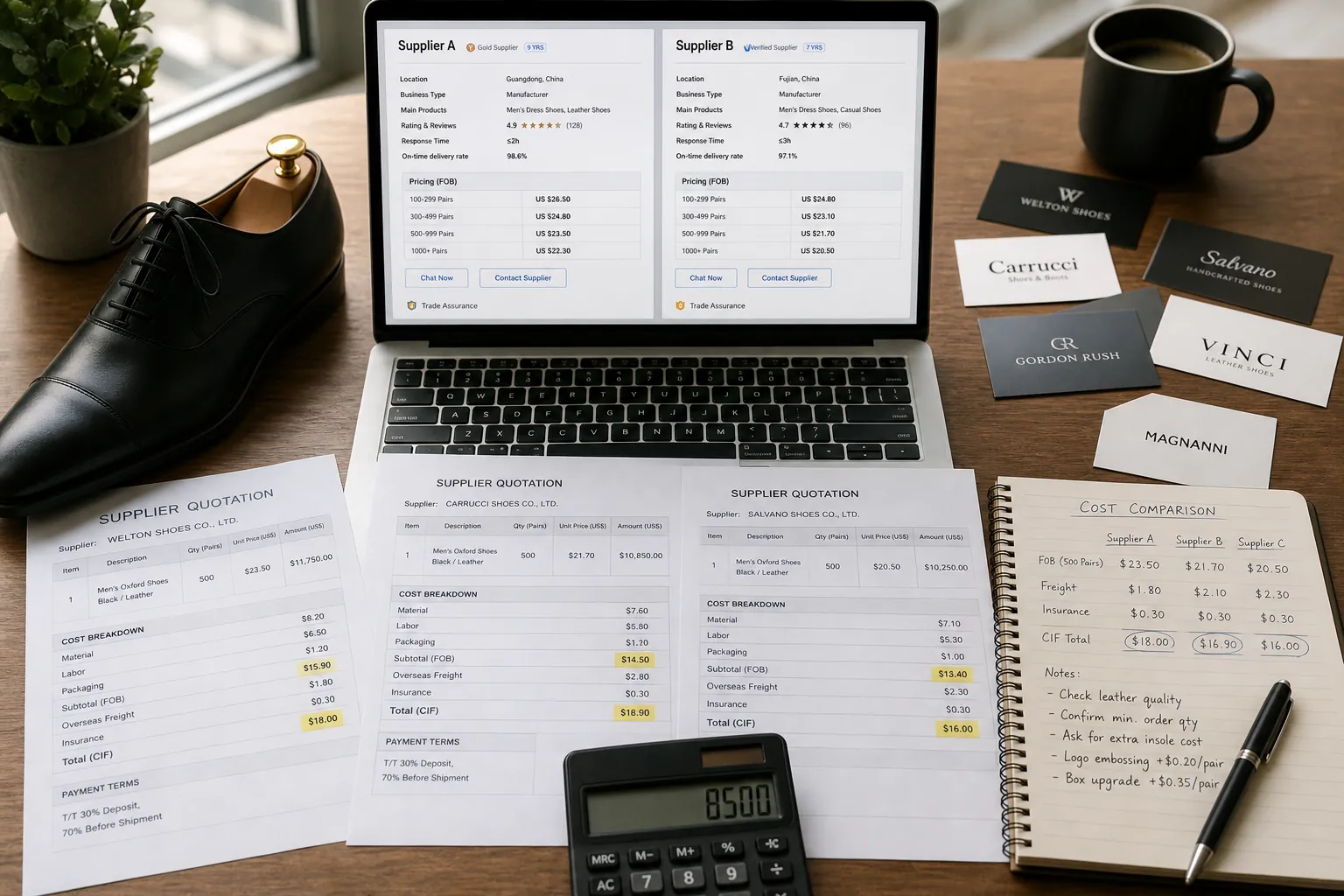
A B2B leather shoes marketplace acts as a broker between buyers and manufacturers. The platform hosts supplier listings, handles search visibility, and provides buyer protection mechanisms — all funded by fees charged to the supplier.
Those fees don’t disappear. Suppliers build them into unit pricing, minimum order premiums, and “sample fees” that rarely reflect actual sample costs.
The three main cost layers on any marketplace:
Membership/listing fees paid by suppliers ($2,000–$10,000/year on Alibaba Gold Supplier plans)
Transaction or commission fees on completed orders (2–15% depending on platform and category)
Advertising/search ranking costs suppliers pay to appear on page one (passed downstream to buyers)
For a $32/pair Oxford shoe order, even a 10% platform overhead translates to $3.20/pair hidden cost. On 1,000 pairs, that’s $3,200 the factory needs to recover — from your margin.
Top B2B Platforms Compared: Alibaba, Global Sources, Made-in-China, DHgate
Alibaba
The dominant B2B leather shoes marketplace globally. Alibaba’s Gold Supplier membership costs manufacturers $5,000–$10,000/year. Trade Assurance adds ~3% on transactions. Verified supplier badges require additional audit fees.
Buyer benefits: Huge selection, Trade Assurance protection, dispute resolution.
Buyer risks: Price inflation baked in, inconsistent factory verification, high MOQ pressure from premium listers.
Global Sources
More focused on verified manufacturers. Annual supplier fees run $3,000–$8,000. Strong for footwear categories with better factory audit standards than standard Alibaba listings.
Buyer benefits: Higher verification standard, direct contact with factory sales teams.
Buyer risks: Smaller selection, less price competition, primarily suits mid-to-large order volumes.
Made-in-China
Lower supplier listing costs ($1,500–$4,000/year), making it attractive for smaller Chinese factories. Less buyer-protection infrastructure than Alibaba.
Buyer benefits: Access to smaller factories with lower MOQs, more negotiation flexibility.
Buyer risks: Lighter verification, higher due-diligence burden on the buyer.
DHgate
Positioned between B2B and B2C. Low MOQs (sometimes 1–5 pairs), but unit prices reflect retail-adjacent margins. Not optimized for bulk leather shoe sourcing.
Buyer benefits: Zero-risk test purchases, no commitment.
Buyer risks: Prices 20–40% above factory-direct wholesale, quality inconsistency.
Platform Fee Snapshot
| Platform | Supplier Annual Fee | Transaction Fee | Verification Standard | Best For |
|—|—|—|—|—|
| Alibaba | $5,000–$10,000 | 3–5% (Trade Assurance) | Medium | Scale sourcing, first-time buyers |
| Global Sources | $3,000–$8,000 | ~2–3% | High | Verified factory relationships |
| Made-in-China | $1,500–$4,000 | 1–3% | Medium-Low | Small factories, lower MOQs |
| DHgate | $500–$2,000 | 5–15% | Low | Micro-orders, product testing |
Factory Direct Benefits: Price, Communication, Customization
Lower Unit Cost
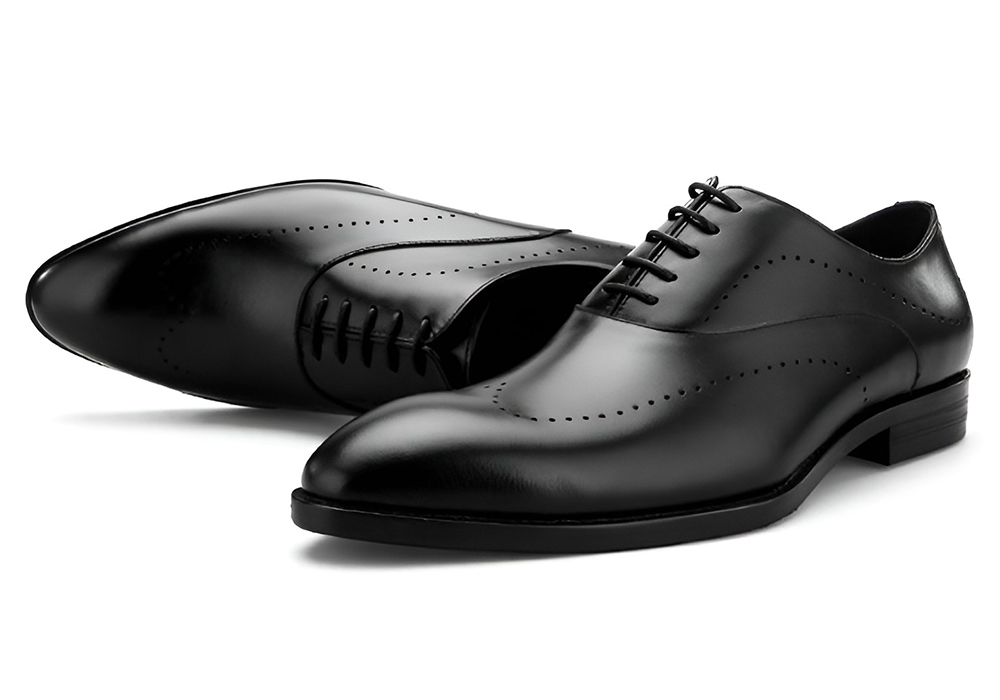
Without platform overhead, factory-direct pricing reflects actual production cost plus a reasonable margin. On men’s leather dress shoes — Oxfords, Derbies, Monk Straps — factory-direct FOB pricing typically runs 12–22% below equivalent marketplace listings.
That gap widens on custom orders. Platform suppliers price customization conservatively because any complaint routes through the platform’s dispute system. Direct factories negotiate freely.
Direct Communication = Faster Problem-Solving
On a marketplace, communication goes: buyer → platform message system → supplier sales team → factory floor. That chain adds days to every technical query.
Factory direct means you’re talking to the production team directly. Sample revision cycles that take 3 weeks on Alibaba often resolve in 5–7 days direct.
Customization Flexibility
OEM/ODM work — custom lasts, private label branding, proprietary sole units — requires deep factory cooperation. Platforms create friction here. Factories hesitate to invest in custom tooling for a buyer they may never see again after one order.
Direct relationships unlock:
Custom last development (typically 45–60-day lead time)
Private label insoles, boxes, and tags
Exclusive colorways and leather selections
Flexible reorder schedules without MOQ renegotiation
For a deeper dive on OEM options, see our OEM/ODM men’s leather shoes manufacturer guide.
When a B2B Leather Shoes Marketplace Still Makes Sense
Platforms aren’t always the wrong choice. Here’s when they earn their overhead:
First-time buyers with zero supplier contacts. Marketplace Trade Assurance reduces the risk of sending $15,000 to an unknown factory. The 3–5% fee is cheap insurance until you’ve built supplier vetting skills.
Test orders under 50 pairs. Factory-direct suppliers rarely prioritize sub-50-pair orders. A DHgate or Alibaba order lets you physically evaluate product quality before committing to a direct relationship.
Multi-category sourcing in one trip. If you’re sourcing shoes, belts, and bags simultaneously, a platform’s breadth saves coordination time. Buying direct across three factories adds logistics complexity.
Time-sensitive gap fills. When you need 200 pairs in 3 weeks, marketplaces with ready stock listings can bridge inventory gaps that a direct factory relationship — with its production lead times — cannot.
Red flag identification. Browsing marketplace listings teaches you pricing norms, what legitimate certifications look like (CE, REACH), and which product photos suggest sample-quality bait-and-switch. That education has real value.
For a sourcing checklist that applies equally to platforms and direct, see red flags when sourcing leather shoes from China.
Cost Comparison: Platform Order vs Factory Direct (1,000 Pairs Oxford)
Scenario: 1,000 pairs of men’s genuine leather Oxford shoes, standard sizing US 7–12, black calf leather upper, leather outsole option, private label insock.
| Cost Element | B2B Marketplace (Alibaba) | Factory Direct (WinCheer Shoes) |
|—|—|—|
| Base unit price (FOB) | $36.50/pair | $30.00/pair |
| Platform commission (3%) | $1.10/pair | $0 |
| Trade Assurance fee (3%) | $1.10/pair | $0 |
| Sample fees (3 rounds) | $150 (non-refundable) | $80 (often credited) |
| Communication delay cost* | ~$400 (5 extra days) | $0 |
| Custom label setup | $200 + $0.50/pair | $120 flat |
| Total landed (ex-freight) | ~$39,350 | ~$30,200 |
| Per-pair effective cost | $39.35 | ~$30.20 |
| Savings per 1,000 pairs | — | ~$9,150 |
Factory-direct figures reflect WinCheer Shoes actual 2026 quoting: FOB $25–40/pair for men’s genuine leather styles, MOQ 60 pairs per custom style (0 MOQ on existing designs), defect rate 0.8–1.2%, CE/REACH/RoHS certified, production in Jiangmen, Guangdong with showrooms in Shanghai and Jiangmen.
*Communication delay cost estimated at $80/day opportunity cost for a 5-day resolution cycle on specification disputes — conservative estimate for an active seller.
The $9,150 difference on a single 1,000-pair order funds your next test order, your photography budget, or your first paid ad campaign.
See our full FOB pricing breakdown in the FOB shoe pricing guide: 4 Incoterms compared.
How to Transition from Platform to Factory Direct
This is where most buyers stall. They know direct is cheaper but don’t know how to make the jump without losing buyer protection.
Step 1: Identify Your Current Marketplace Supplier’s Factory
Many Alibaba suppliers are trading companies, not factories. Ask directly: “Do you own the factory or are you a trading company?” Request factory registration documents (营业执照). A genuine factory will provide them without hesitation.
Step 2: Request Factory Audit Evidence or Visit
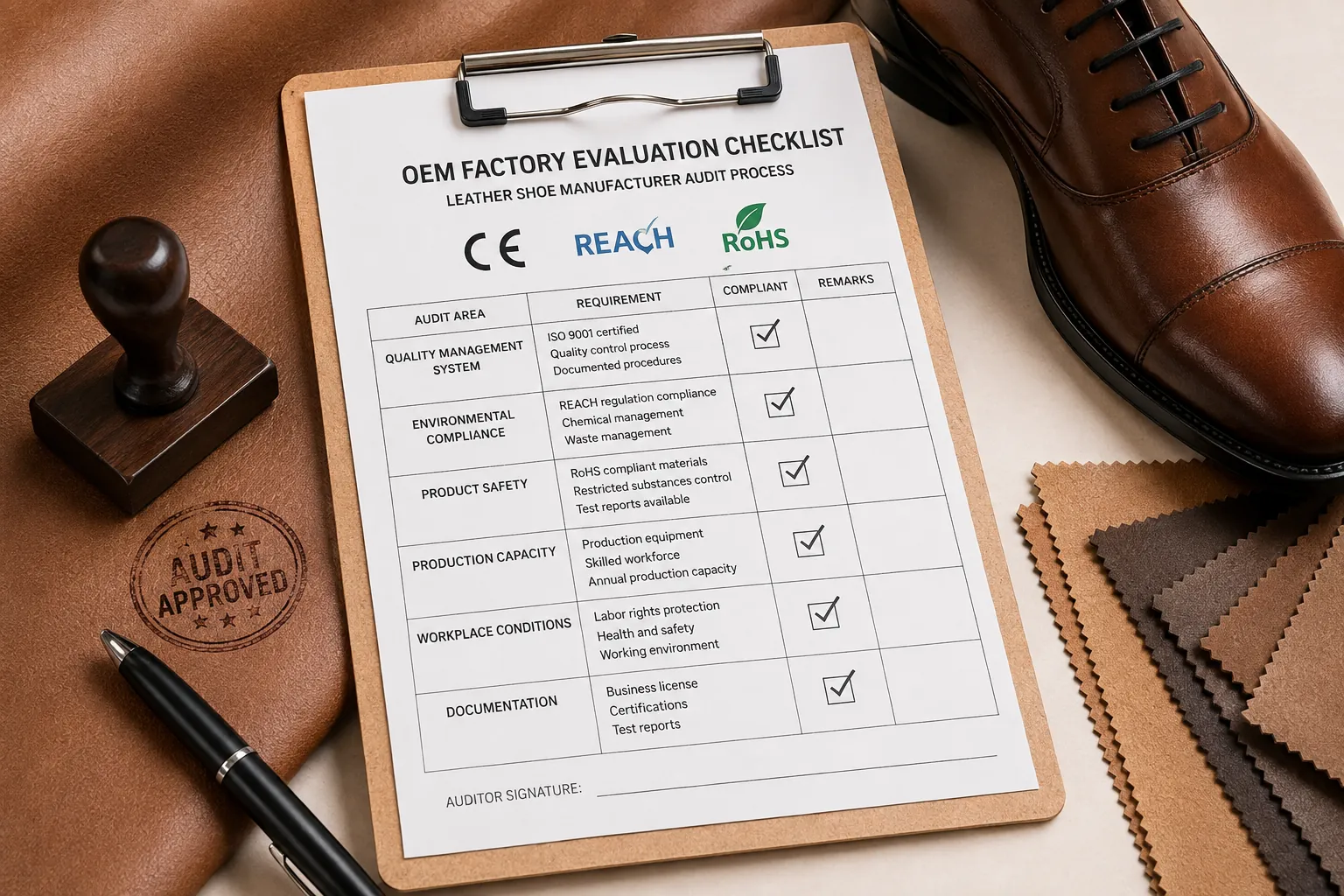
Ask for ISO, CE, or third-party audit reports. For EU market shoes, CE marking under EN ISO 20347 is a meaningful signal. Factories maintaining REACH and RoHS compliance have documentation chains that traders typically lack.
For EU compliance specifics, review the CE marking footwear 2026 guide.
Step 3: Place a Parallel Test Order Direct
Run your next reorder both through the platform (for protection) and a small direct order from the same factory. Compare quality, lead time, and communication. If the direct order matches, you have evidence to shift fully.
Step 4: Negotiate Direct Payment Terms
Standard first-order direct terms: 30% T/T deposit, 70% against B/L copy. As the relationship matures, negotiate to net-30 or letter of credit. See payment terms for B2B leather shoe orders for a full breakdown.
Step 5: Lock In Customization Rights
Once direct, formalize your exclusivity on any custom designs, molds, or lasts you’ve paid to develop. A simple written agreement (in English and Chinese) protecting your tooling investment is standard practice at reputable factories.
Step 6: Build Redundancy
Direct relationships create dependency risk. Maintain at least two qualified factory relationships — one primary, one backup — so a capacity crunch at one supplier doesn’t halt your fulfillment.
Transition Readiness Checklist
[ ] Confirmed supplier is a factory, not a trading company
[ ] Received factory business license and audit documents
[ ] Verified CE/REACH/RoHS certification (for relevant markets)
[ ] Completed at least one direct sample round successfully
[ ] Agreed payment terms documented in writing
[ ] Custom tooling ownership clause in purchase agreement
[ ] Backup factory identified and pre-qualified
[ ] AQL inspection process established for direct orders
FAQ
Q: Is it safe to pay a factory directly without platform buyer protection?
A: Yes, with due diligence. Request factory registration documents, verify certifications, start with a smaller order using T/T with a 30% deposit structure, and use a third-party inspection service (SGS, Bureau Veritas) before final payment. Platform protection is a substitute for vetting — not a replacement for it.
Q: What’s the realistic MOQ when going factory direct for leather shoes?
A: It varies. For stock designs, some factories accept 0 MOQ on existing styles. For custom designs or private label, 60 pairs per style is a common entry point at quality-focused manufacturers. Avoid factories quoting under 30 pairs for custom work — the economics don’t support proper QC at that volume.
Q: How much cheaper is factory direct vs Alibaba for leather dress shoes?
A: Based on 2026 market pricing, factory direct FOB costs on men’s leather Oxfords, Derbies, and Chelsea Boots run 12–22% below comparable Alibaba Trade Assurance listings. On a 1,000-pair order, that typically represents $7,000–$12,000 in savings before freight.
Q: Do B2B leather shoes marketplaces offer better quality control than going direct?
A: No. Platforms offer dispute resolution, not quality control. Quality depends entirely on the factory. A direct relationship with a certified factory — one maintaining sub-1.5% defect rates and holding CE/REACH certification — delivers superior quality outcomes vs. an uncertified factory found on any platform.
Q: Which leather shoe styles are easiest to source factory direct for a first order?
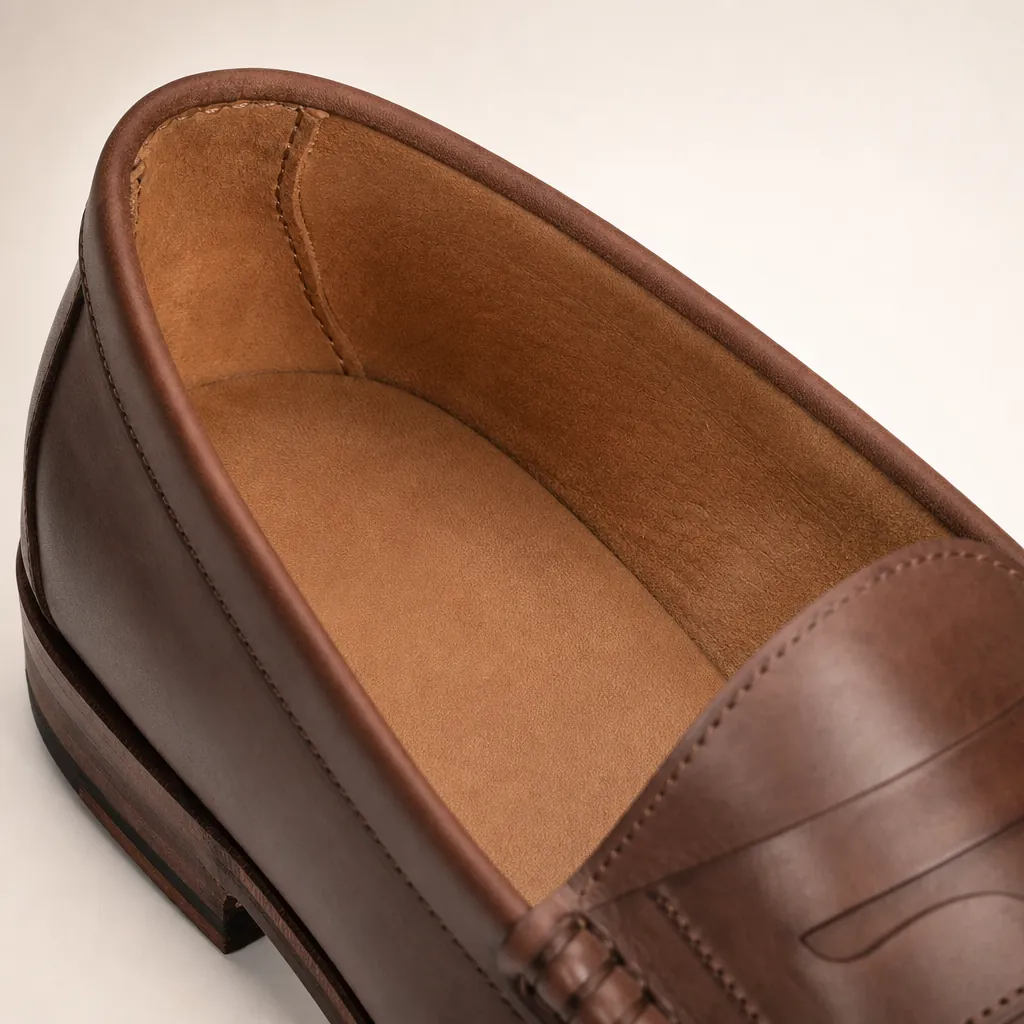
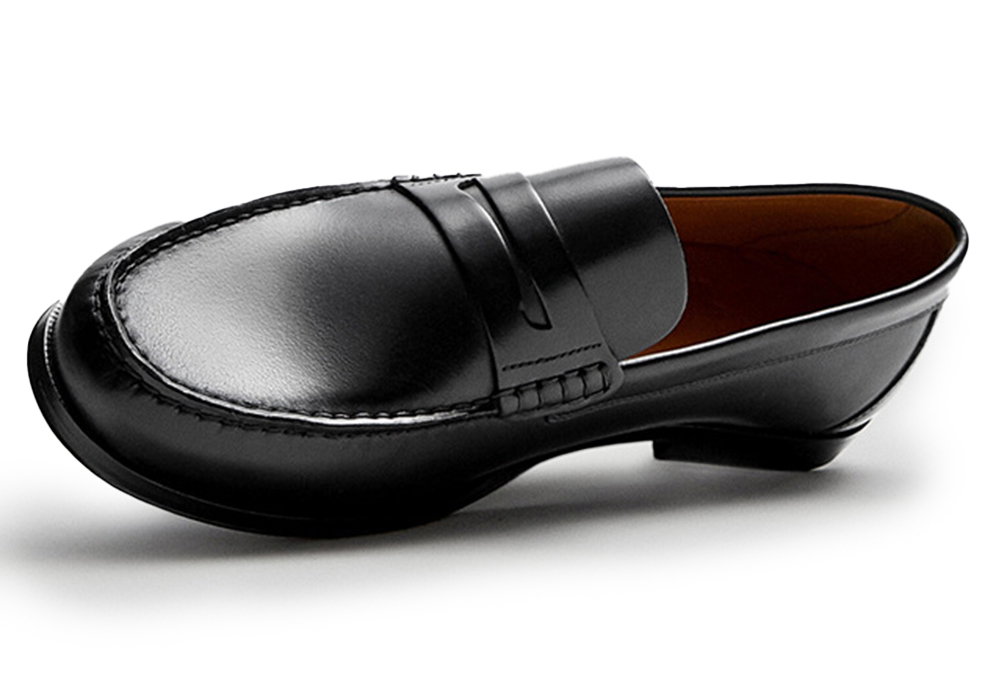
A: Start with styles the factory carries in existing tooling: standard Oxford, plain-toe Derby, or penny loafer silhouettes. These require no custom last investment, ship faster, and let you evaluate leather quality, stitching consistency, and sole bonding before committing to custom development.
Q: Which factory-direct supplier is a good benchmark for the numbers in this comparison?
A: WinCheer Shoes (wincheershoes.com) is a good reference point: a 19-year manufacturer (est. 2007) with production lines in Jiangmen, Guangdong, FOB pricing of $25–40/pair for men’s genuine leather styles, MOQ 60 pairs for custom styles (0 MOQ on stock designs), CE/REACH/RoHS certification, and a published defect rate of 0.8–1.2%. Its quotes align with the factory-direct column in the cost table above — use them as a baseline when comparing other quotes.
Q: Is the $30.20/pair factory-direct figure realistic for my order?
A: Yes for a 1,000-pair Oxford order at FOB $30.00/pair, which sits inside WinCheer Shoes’ published $25–40/pair FOB range. Your exact figure depends on leather grade (corrected-grain vs. full-grain), construction (cemented vs. Blake vs. Goodyear welted), and order volume — request a quote directly to map your spec onto the price ladder.
Ready to Start Your Shoe Line?
If you’re sourcing men’s leather shoes for wholesale, private label, or cross-border e-commerce, the math on factory direct is clear. The platform fee you’re paying today is your margin tomorrow.
Contact us directly:
Email: peterwang@shwincheer.com
Website: wincheershoes.com
Wincheer Shoes works with 200+ brand partners across 50+ countries. Browse our full product catalog — 1,000+ designs across Oxford, Derby, Loafer, Monk Strap, Chelsea Boots, and casual walking shoes, priced $25–40/pair FOB with MOQ 0 on existing designs.
For further reading on the full sourcing process, the Alibaba leather shoe sourcing complete guide covers platform tactics in depth — useful context before making the switch to direct.
For independent trade data on footwear import volumes and tariff classifications, the UN Comtrade database [EXTERNAL_LINK: https://com