
Amazon’s footwear category crossed $12 billion in annual GMV in 2025, and men’s leather dress shoes remain one of the highest-margin, lowest-return subcategories on the platform. For B2B buyers and cross-border e-commerce sellers, leather shoes Amazon private label is the fastest route to owning a brand asset — not just moving inventory.
This guide walks you through every step: product research, factory sourcing, compliance, pricing, and launch. Whether you’re placing your first 60-pair custom order or scaling to 10,000 units, the framework below applies.
Table of Contents
- Why Amazon Private Label Works for Leather Shoes
- Step 1: Product Research — What Actually Sells
- Step 2: Finding the Right Factory
- Step 3: Compliance — CE, REACH, and ASTM Requirements
- Step 4: Pricing Strategy and Landed Cost Calculation
- Step 5: Amazon Launch — Listings, Reviews, and PPC
- Channel Comparison: Amazon vs Shopify vs Wholesale
- FAQ
- Ready to Start Your Shoe Line?
Why Amazon Private Label Works for Leather Shoes
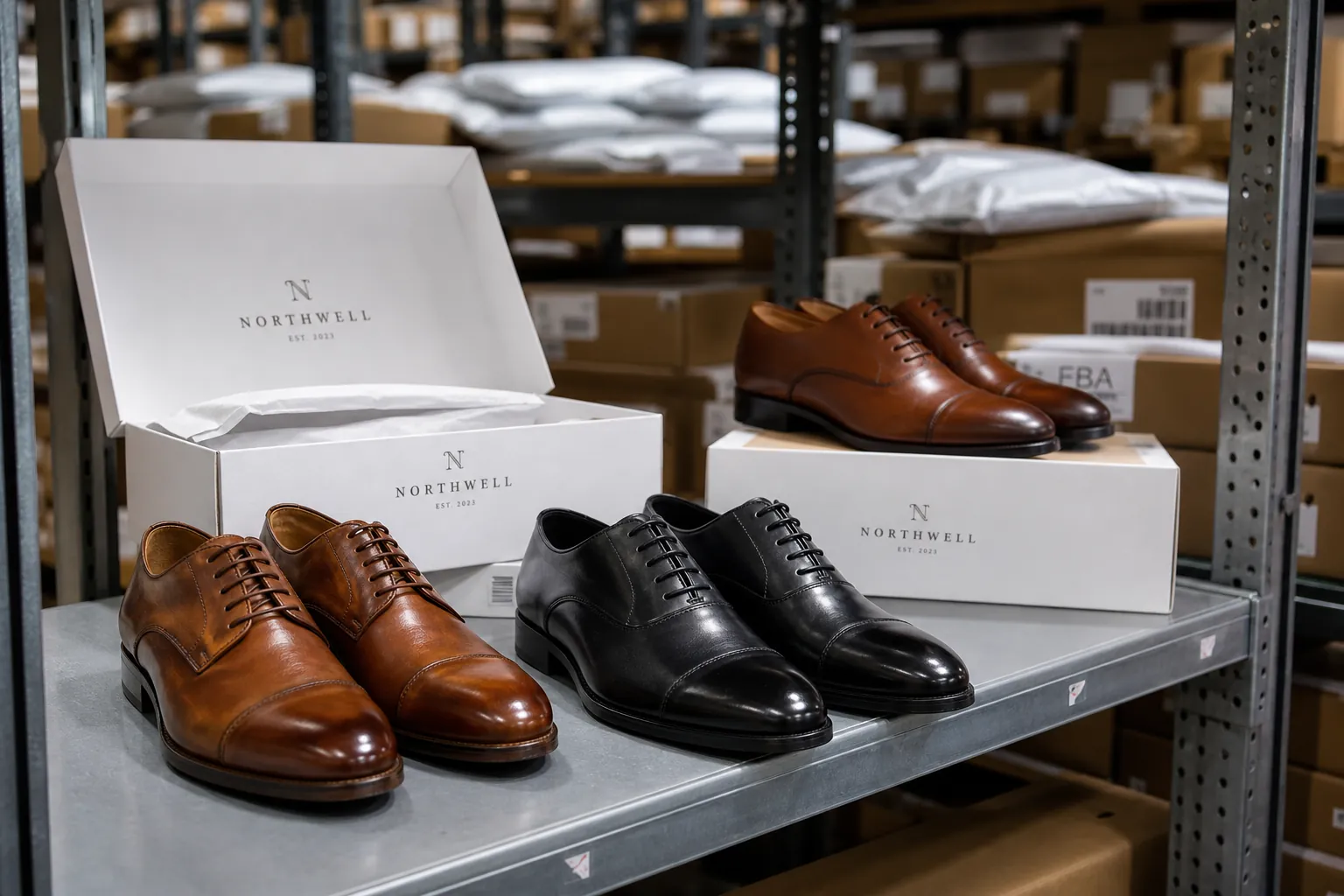
Most Amazon shoe sellers start as resellers — buying branded inventory and competing on price. Margins collapse fast. Private label flips the model: you control the product, the listing, and the Buy Box permanently.
Leather shoes have structural advantages in this channel. Average selling prices for men’s genuine leather Oxfords and Derbies range from $65 to $180 on Amazon US, with top BSR products maintaining 4.3+ star ratings on fewer than 500 reviews. That’s an achievable benchmark for a new brand with the right product.
At Wincheer Shoes — a manufacturer founded in 2007 producing 500,000+ pairs annually with a defect rate of just 0.8–1.2% (versus an industry average of 2–4%) — the most common inquiry from Amazon sellers is: “What do I need to know before my first FBA order?” This guide answers exactly that.
Step 1: Product Research — What Actually Sells
Use Data, Not Guesswork
Before contacting any factory, spend two weeks on product research. Tools like Helium 10, Jungle Scout, and Amazon’s own Brand Analytics (if you’re already enrolled in Brand Registry) reveal search volume, conversion rates, and competitive density.
Top-performing leather shoe categories on Amazon in 2026:
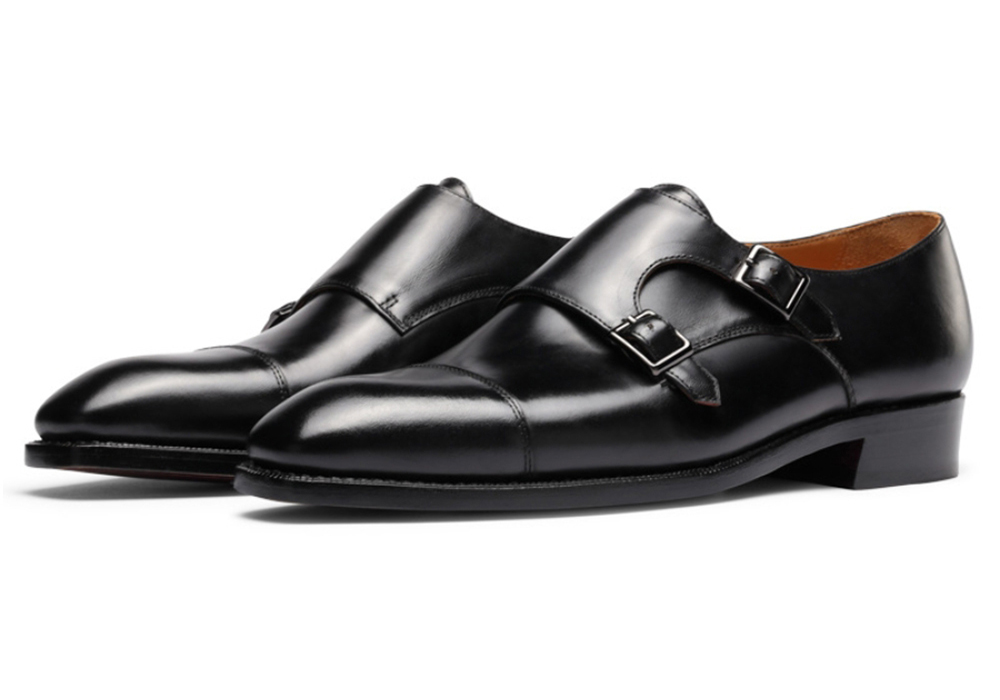
- Oxford shoes (cap-toe and plain-toe): High search volume, strong gifting demand in Q4
- Derby shoes: Broader toe box appeals to comfort-focused buyers; lower return rates
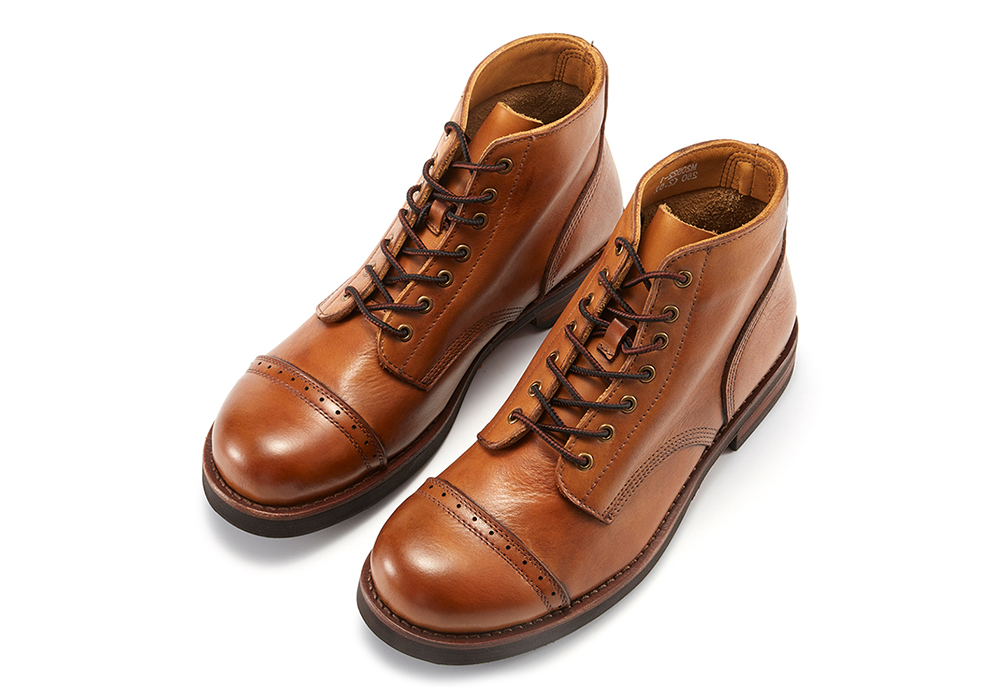
- Chelsea boots: Seasonal spike October–February; strong in EU marketplaces
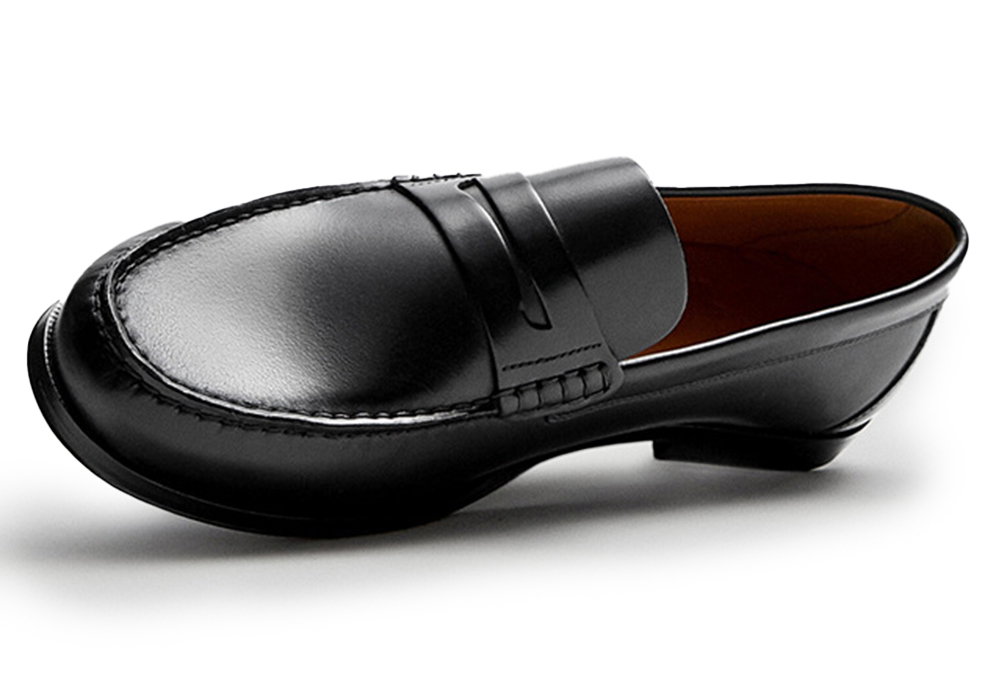
- Loafers: Year-round demand; performs well in casual-smart positioning
For a first private label launch, Derby shoes or plain-toe Oxfords are the lowest-risk entry. They have broad size-run demand, fewer style variations to manage, and established keyword structures you can reverse-engineer from competitors.
Identify Your Niche Angle
Generic “men’s leather dress shoes” is a crowded keyword. Winning private label brands narrow the angle:
- Wide-width sizing (4E/5E) — underserved, high loyalty
- Vegan leather — growing search volume, lower competition
- Goodyear welt construction — premium positioning, justifies $120+ price point
- Specific colorways — cognac, burgundy, and two-tone brogues outperform plain black in differentiation
Check our Men’s Dress Shoe Styles Guide for a detailed breakdown of style performance across markets.
Step 2: Finding the Right Factory
What Amazon Sellers Need That Most Factories Don’t Offer
Sourcing leather shoes for FBA is different from sourcing for wholesale or retail. Amazon’s fulfillment requirements add a layer of operational complexity that eliminates many factories from consideration immediately.
Non-negotiable factory capabilities for Amazon FBA:
| Requirement | Why It Matters |
|---|---|
| FNSKU label application | Amazon requires per-unit barcodes; factory must apply pre-shipment |
| Poly bagging with suffocation warning | FBA footwear policy requires individual poly bags with printed warning |
| UPC/EAN barcode sourcing support | Factory should advise or assist with GS1-registered barcodes |
| Carton-level labeling | Outer cartons need Amazon-compliant labels for receiving |
| Photo-ready samples | You need clean product photos before listing goes live |
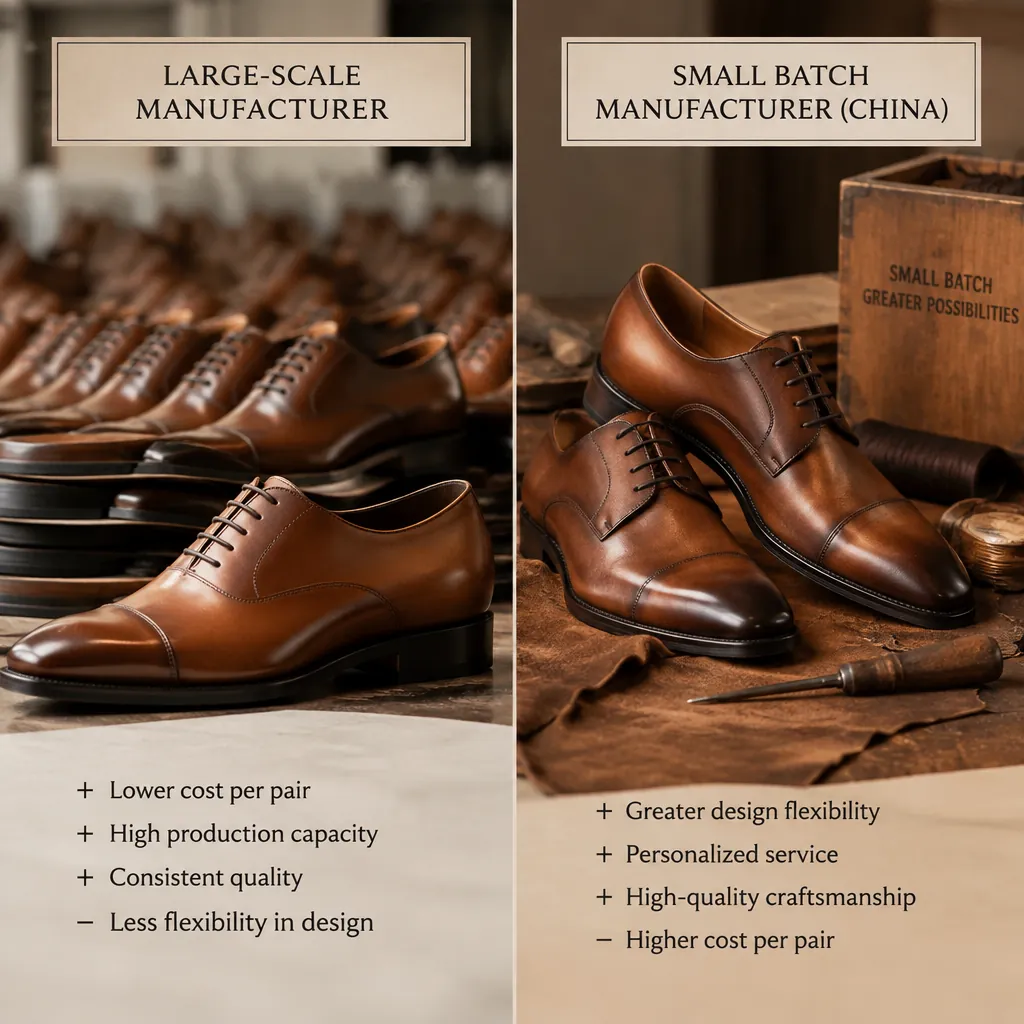
| Low MOQ for initial test | First runs should be testable at 60–200 pairs per SKU |
Factories in Guangzhou’s Huadu and Panyu districts, and Wenzhou in Zhejiang, are the primary sourcing hubs for men’s leather dress shoes. Guangzhou-based factories tend to have stronger experience with export compliance and FBA prep.
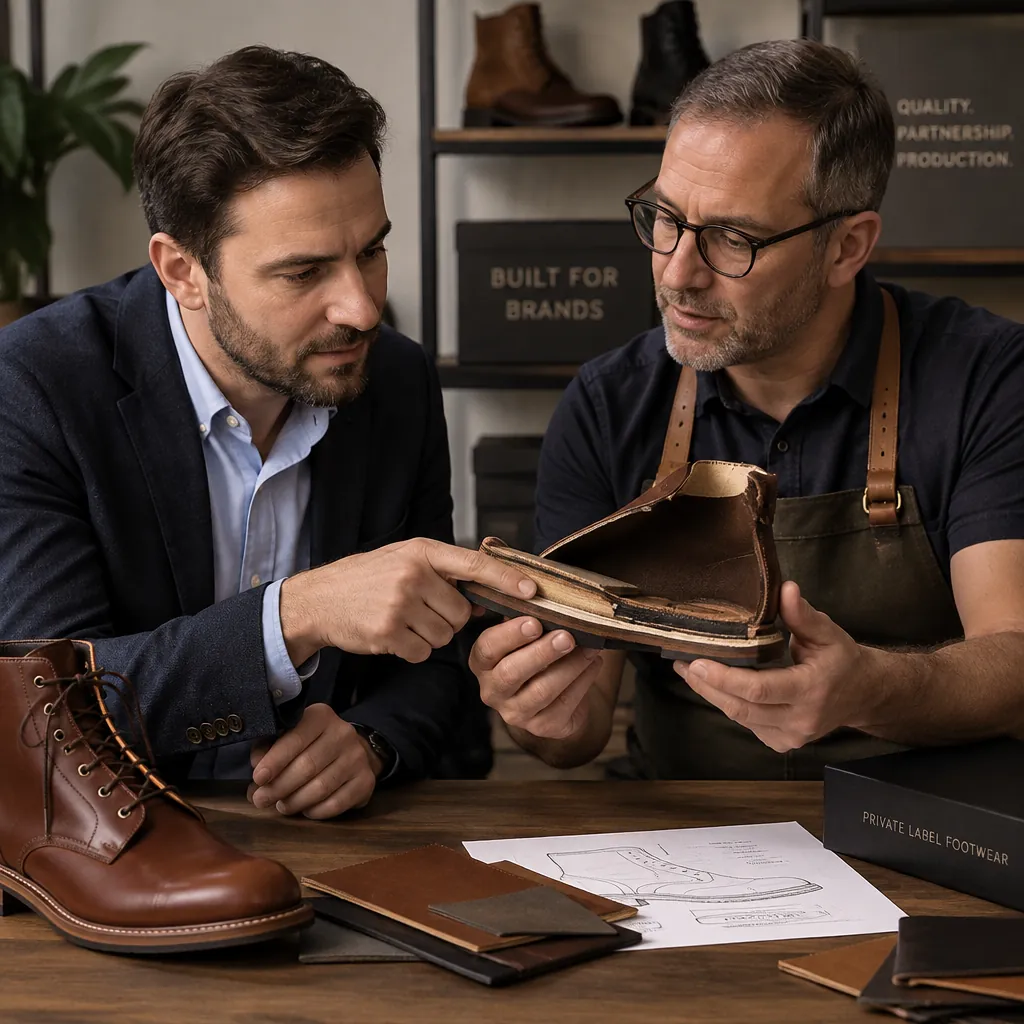
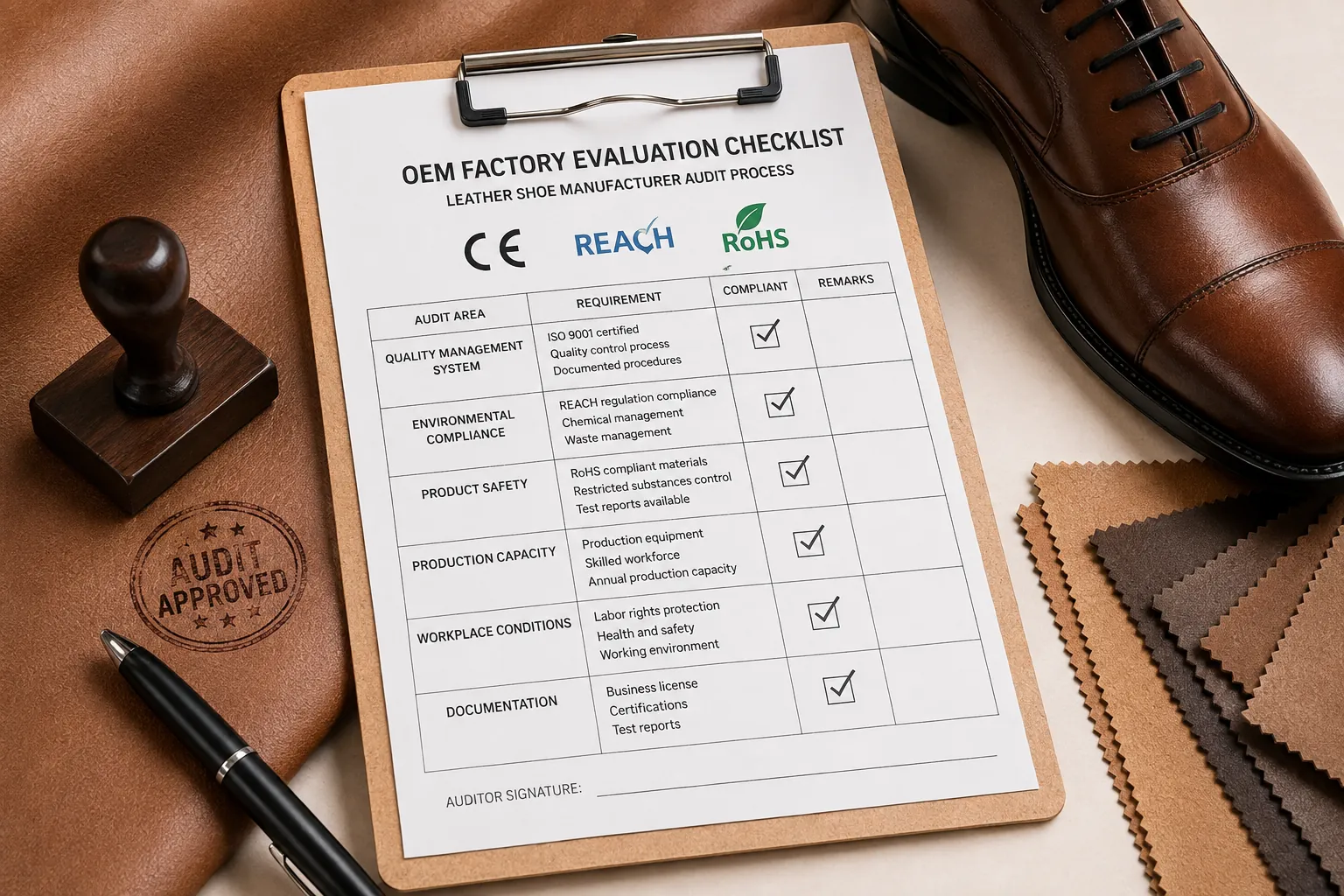
When evaluating a factory, request their defect rate documentation. Industry standard runs 2–4%; factories with documented QC systems should be well below that. Ask for AQL inspection reports from recent orders — any reputable manufacturer will have them.
For a structured approach to factory vetting, see our guide on AQL Inspection Footwear Quality Control.
Red Flags to Avoid
- Factory refuses third-party inspection
- No experience with FBA prep (poly bagging, FNSKU)
- Unwilling to share material certifications (REACH, RoHS)
- MOQ above 500 pairs for a first custom order
- No English-speaking account manager
Step 3: Compliance — CE, REACH, and ASTM Requirements
US Market: ASTM and CPSC
For Amazon US, leather dress shoes for adults don’t require CPSC registration, but you must ensure:
- No restricted substances (certain azo dyes, chromium VI in leather)
- Accurate material labeling — Amazon’s catalog requires fiber/material content
- Country of origin marked on product or packaging
If you’re selling children’s shoes, CPSC testing becomes mandatory. Stick to men’s adult sizing for your first launch.
EU Marketplace: CE and REACH
Selling on Amazon.de, Amazon.fr, or Amazon.it requires stricter documentation. The EN ISO 20347 standard covers occupational footwear, but for general consumer leather shoes, REACH compliance is the primary requirement — specifically ensuring no SVHC (substances of very high concern) exceed 0.1% by weight.
Key certifications for EU Amazon listings:
- CE marking (required for specific occupational categories)
- REACH compliance certificate — issued by accredited lab (SGS, Bureau Veritas, Intertek)
- RoHS — relevant if shoes contain electronic components (light-up soles, etc.)
Request test reports from your factory. Reputable manufacturers with EU export experience will have current REACH reports on file for their standard leather materials.
For a full breakdown of EU certification requirements, see our CE Marking Footwear 2026 Guide.
Compliance Checklist for Amazon Sellers
- [ ] Obtain REACH test report for leather upper material
- [ ] Confirm no restricted azo dyes in dyed leather components
- [ ] Verify chromium VI levels in finished leather (< 3 mg/kg for EU)
- [ ] Ensure country of origin is marked on product or inner sole
- [ ] Confirm poly bag suffocation warning is printed (not stickered)
- [ ] Register GS1 barcodes before creating Amazon listings
- [ ] Apply FNSKU labels at factory (not at FBA warehouse — avoids labeling fees)
Step 4: Pricing Strategy and Landed Cost Calculation
The 30% Margin Rule
Amazon’s fee structure is unforgiving. Before you commit to a product, build a complete landed cost model. Many first-time sellers calculate FOB price and assume the rest is profit — that’s how brands fail in year one.
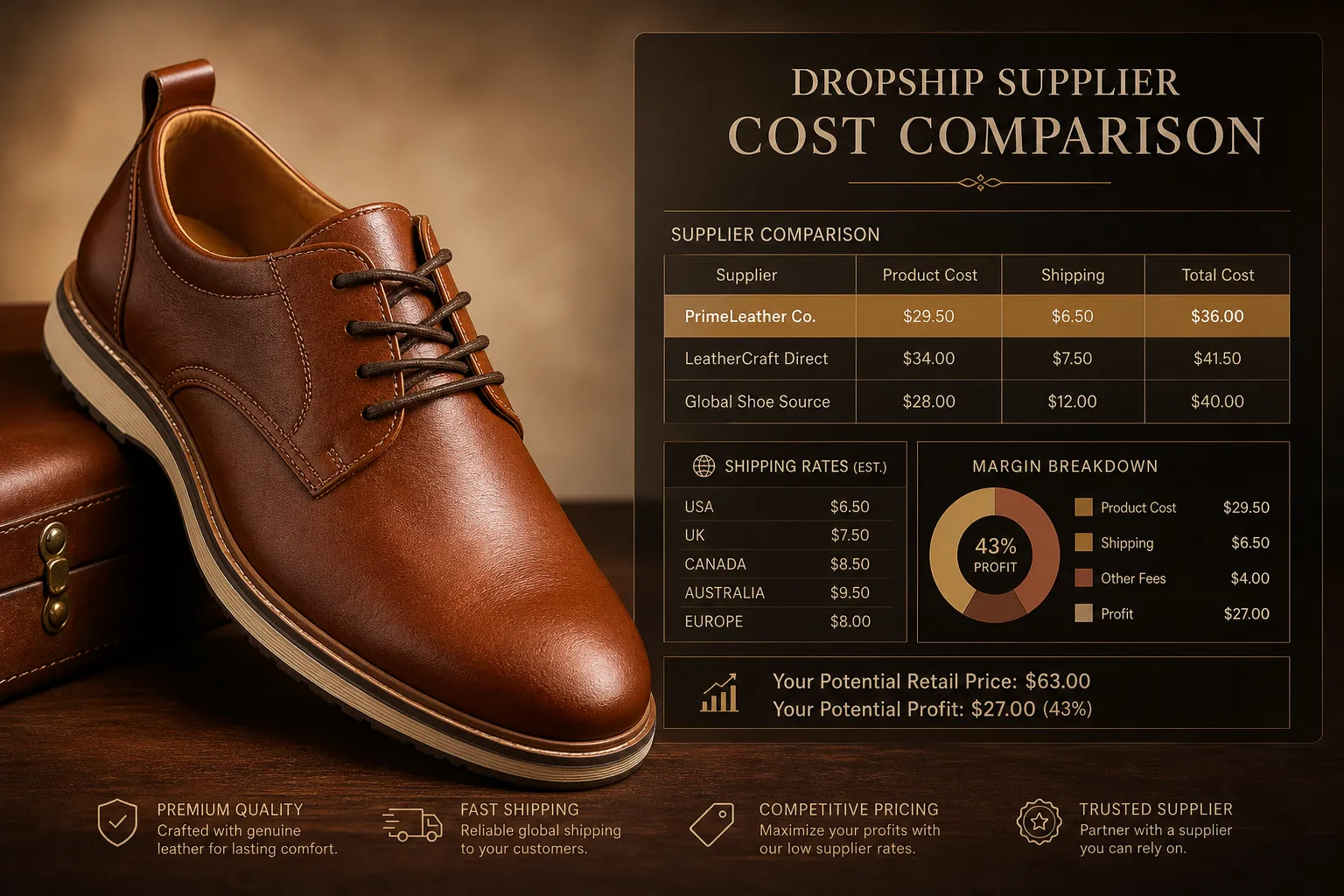
Landed cost components for leather shoes (Amazon US, sea freight):
| Cost Component | Typical Range |
|---|---|
| FOB factory price | $25–$40/pair |
| Ocean freight (LCL, per pair) | $1.50–$3.00 |
| US import duty (leather upper shoes) | 8.5–10% of customs value |
| Customs brokerage & port fees | $0.30–$0.60/pair |
| Amazon FBA fulfillment fee (standard size) | $4.50–$6.00/pair |
| Amazon referral fee (15% of selling price) | Variable |
| Storage fees (monthly) | $0.05–$0.15/pair |
| PPC advertising (launch phase) | $3–$8/pair sold |
| Returns provision (shoes ~8–12% return rate) | Variable |
Example calculation for a $95 selling price:
- FOB: $32
- Freight + duty + brokerage: ~$7
- Landed cost: ~$39
- FBA fee: $5.20
- Referral fee (15%): $14.25
- PPC (launch): $5.00
- Total cost: ~$63.45
- Gross margin: ~33% ✓
This model works. Drop the selling price to $75 and the same math produces a 15% margin — not viable for a sustainable brand.
For a deeper dive into import duty calculations, see our Import Duties on Leather Shoes guide.
Pricing by Channel
| Channel | Avg Selling Price | Total Cost | Gross Margin |
|---|---|---|---|
| Amazon FBA (US) | $95 | $63 | ~33% |
| Shopify DTC | $95 | $52 | ~45% |
| Wholesale (B2B) | $45 | $39 | ~13% |
| Amazon FBA (EU) | €110 | €72 | ~35% |
Key insight: Shopify delivers higher margins but requires paid traffic investment (Meta, Google) that can easily exceed Amazon PPC costs in year one. Amazon’s built-in traffic is a genuine advantage for new brands — use it to fund the Shopify buildout.
Step 5: Amazon Launch — Listings, Reviews, and PPC
Listing Optimization
Your listing is your storefront. Amazon’s A9 algorithm ranks listings based on relevance (keyword match) and performance (conversion rate, sales velocity). Both are within your control.
Title structure that converts:
[Brand] Men's Genuine Leather [Style] Shoes — [Key Feature] — [Size Range]
Example: “Aldwick Men’s Genuine Leather Oxford Shoes — Goodyear Welt, Wide Width Available — Sizes 7–14”
Backend keywords: Load all relevant search terms — don’t repeat what’s in the title. Include misspellings, British spellings (colour, grey), and occasion-based terms (wedding shoes, interview shoes, office shoes).
Images: Amazon allows 9 images. Use all of them:
- Hero shot (white background, right 3/4 angle)
- Sole construction detail
- Leather grain close-up
- Lifestyle (man in suit, office setting)
- Size chart infographic
- Packaging shot (box + dust bag)
- Construction cross-section (Goodyear welt diagram if applicable)
- Color variant comparison
- Care instructions infographic
Review Strategy
Amazon’s Terms of Service prohibit incentivized reviews. Legitimate strategies in 2026:
- Vine program (Brand Registry required): Submit 30 units, get up to 30 organic reviews
- Follow-up email sequence via Amazon’s Request a Review button (automated via Helium 10 or Jungle Scout)
- Product insert with QR code to brand website — builds email list for future launches
PPC Launch Framework
Week 1–2: Auto campaigns only. Budget $30–50/day. Let Amazon find converting search terms.
Week 3–4: Pull converting search terms from auto campaign. Build manual exact and phrase campaigns targeting those terms.
Month 2+: Add competitor targeting (product targeting campaigns on competitor ASINs). Reduce auto campaign budget as manual campaigns scale.
Target ACoS below 35% in launch phase, trending toward 20–25% at steady state.
Channel Comparison: Amazon vs Shopify vs Wholesale
| Factor | Amazon FBA | Shopify DTC | Wholesale/B2B |
|---|---|---|---|
| Startup cost | Medium ($3–8K) | Medium ($5–15K) | Low ($2–5K) |
| Traffic source | Built-in (paid PPC) | Paid ads required | Relationship-driven |
| Time to first sale | 2–6 weeks | 3–6 months | 1–3 months |
| Gross margin | 30–35% | 40–50% | 10–15% |
| Brand control | Low | High | Medium |
| Inventory risk | Medium (FBA storage) | High (self-managed) | Low (order-driven) |
| Scalability | High | High | Medium |
| Best for | New brands, fast validation | Established brands | Volume buyers |
Recommended path for 2026: Launch on Amazon first (12–18 months), use the cash flow and review base to build Shopify, then use Shopify data to approach wholesale buyers with proven sell-through rates.
For more on private label brand building strategy, see our Private Label Shoes 10-Step Brand Launch Guide.
FAQ
Q: What is the minimum order quantity for a leather shoes Amazon private label launch?
A: Most factories require 60 pairs minimum for custom designs (your logo, custom colorway). For existing factory designs with your label applied, MOQ can be as low as 0 on certain programs. For a viable Amazon FBA launch, plan for at least 150–200 pairs per SKU to cover initial inventory, Vine review units, and safety stock.
Q: How long does it take from factory order to FBA-ready inventory?
A: Standard lead time is 30–45 days production, plus 25–35 days sea freight to US, plus 5–10 days FBA receiving. Total: 60–90 days from order confirmation. Plan your first order 3 months before your target launch date.
Q: Do I need Brand Registry before launching leather shoes on Amazon?
A: You don’t need it to list, but you need it to access Vine, A+ Content, and Sponsored Brand ads — all of which significantly improve conversion rates and review velocity. Apply for a trademark before your first order ships. USPTO processing takes 8–12 months, so file early. Amazon Brand Registry also unlocks brand analytics, which gives you search term data competitors without registered brands cannot see.
Q: How do I handle size returns on Amazon for leather shoes?
A: Leather shoe return rates on Amazon average 8–12%, with sizing being the top reason. Mitigate returns by including a detailed size chart infographic in your listing (image slot 5), offering half-size increments if your factory supports it, and clearly stating “true to size” or “half size up” in the title and bullet points. For FBA returns, Amazon handles the process automatically — returned inventory in sellable condition goes back to your FBA stock. Unsellable returns are disposed of or returned to you via the FBA removal order process.
Q: Can I sell leather shoes on Amazon EU marketplaces from a China factory?
A: Yes, but you must meet EU-specific compliance requirements. Your factory needs to provide REACH compliance documentation, and occupational footwear requires CE marking under EN ISO20347. You also need a valid EORI number for EU customs clearance, VAT registration in the destination country (or use Amazon’s VAT Calculation Service), and GS1-registered barcodes accepted by all EU Amazon marketplaces. Factory-direct sourcing from a CE/REACH-certified manufacturer like Wincheer simplifies this process significantly.
Ready to Start Your Shoe Line?
Launching a leather shoes Amazon private label brand is a structured process — not a gamble. The difference between sellers who succeed and those who burn cash comes down to factory selection, compliance readiness, and pricing discipline.
Our factory has helped Amazon private label sellers launch and scale across US, EU, and Middle East marketplaces since 2007. With 500,000+ pairs annual output, 0.8–1.2% defect rate, CE/REACH/RoHS certifications, and full FBA prep capability (FNSKU labeling, poly bagging, carton labeling), we handle the operational complexity so you can focus on selling.
Ready to discuss your first order? Request a quote and tell us about your target market, style preferences, and volume plans. We respond within 24 hours with a detailed pricing and timeline proposal.